Problem-solving abilities Geometry Worksheets for Ages 5-7
4 filtered results
-
From - To
Enhance your child's problem-solving skills with our engaging Geometry Worksheets designed for ages 5-7! These interactive resources help young learners explore shapes, spatial relationships, and measurement concepts, fostering critical thinking and cognitive development. Each worksheet is carefully crafted to challenge students while ensuring they have fun as they learn. With colorful illustrations and age-appropriate exercises, children will practice recognizing, comparing, and classifying geometric figures. Perfect for at-home learning or classroom activities, these worksheets empower young minds to think creatively and solve problems confidently. Boost your child's mathematical abilities and watch their curiosity for geometry grow! Download now to get started!
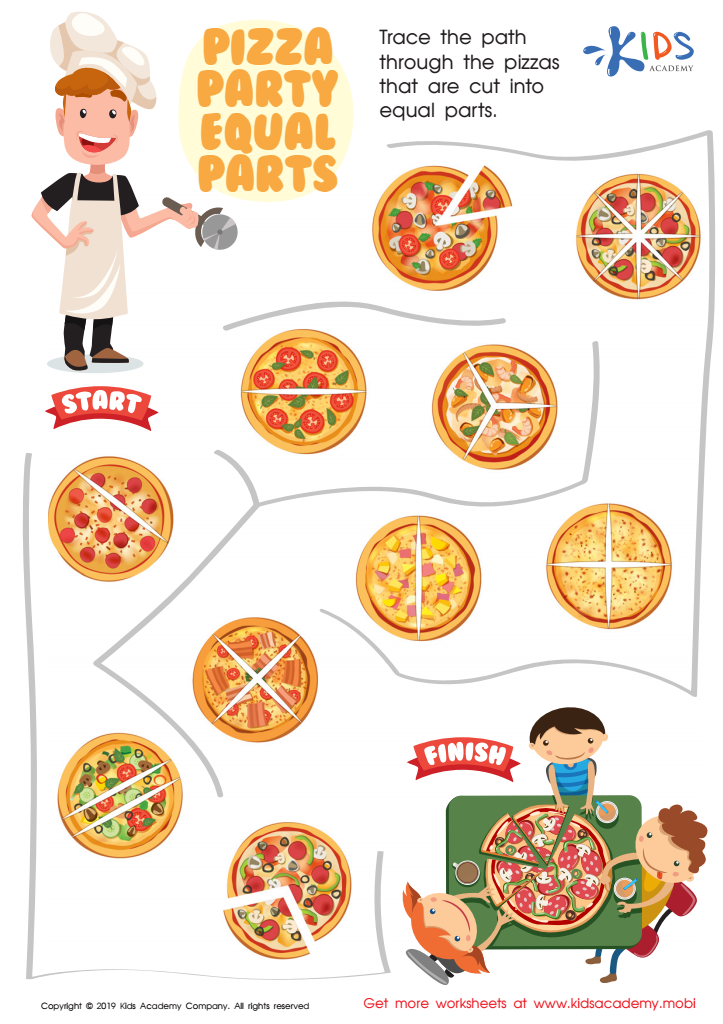
Pizza Party Equal Parts Worksheet
 Assign to My Students











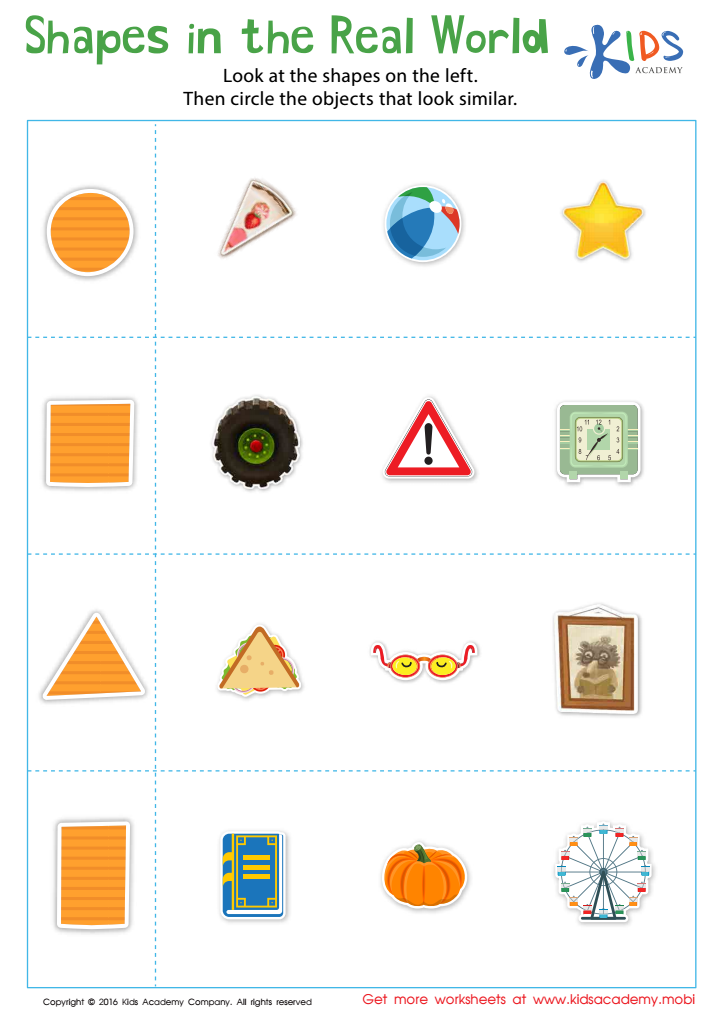
Shapes in the Real World Worksheet
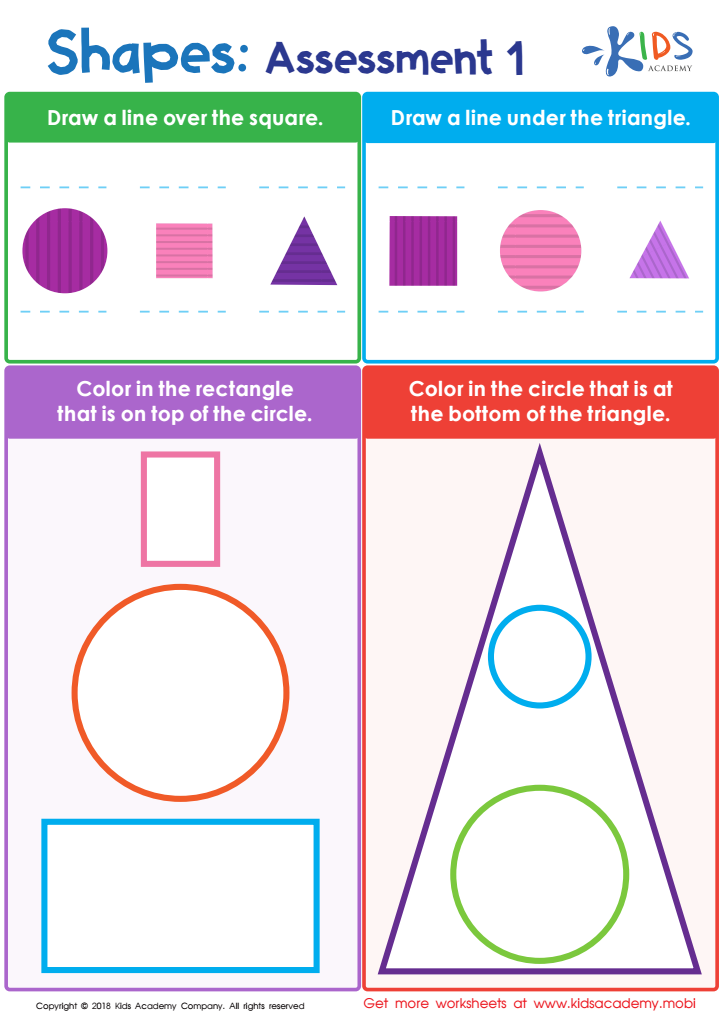
Shapes: Assessment 1 Worksheet
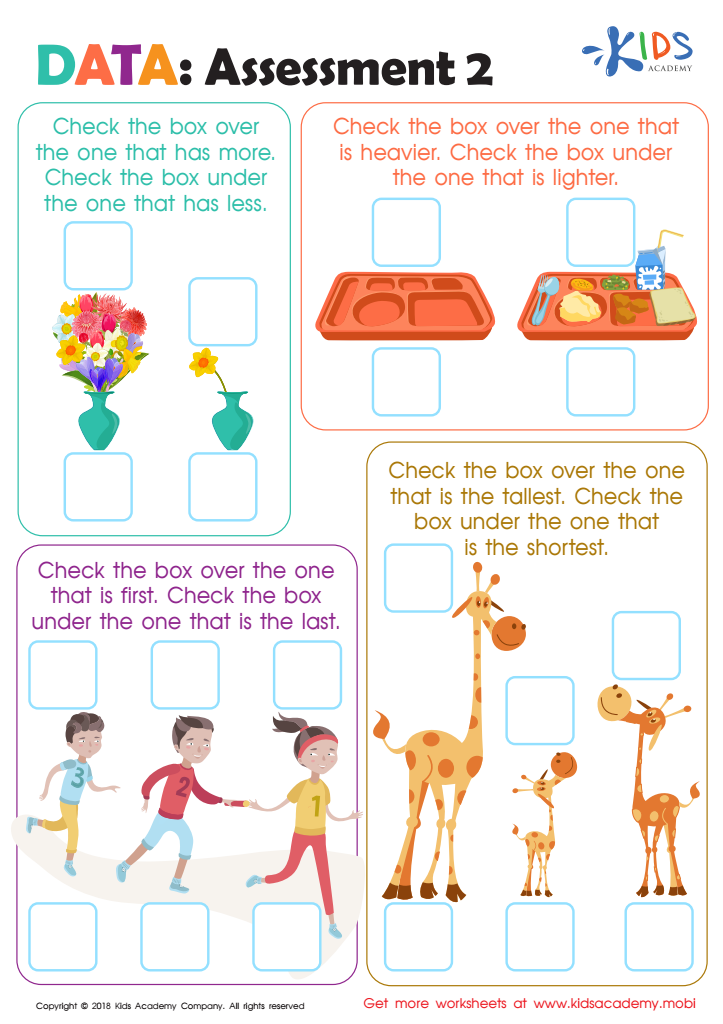
Data: Assessment 2 Worksheet








Problem-solving abilities in geometry at ages 5-7 are essential for several reasons. First, this stage of cognitive development is critical, as children begin to think more abstractly and logically. Engaging with geometric concepts helps them build spatial awareness and reasoning skills, which are foundational for understanding more complex mathematical ideas later.
Additionally, geometry activities enhance critical thinking and encourage kids to explore patterns and shapes, promoting creativity and innovation. When children work through geometric problems, they learn persistence and resilience—skills helpful beyond math.
Moreover, geometry is integral in everyday life. Understanding shapes, sizes, measurements, and spatial relationships supports children in real-world situations, such as art, construction, and even navigating their environment.
Parents and teachers must appreciate these skills not only for academic performance but also for holistic development. Fostering a love for geometry can ignite a lifelong interest in STEM fields, opening doors to future opportunities. Emphasizing problem-solving in geometry, therefore, lays the groundwork for confident, capable learners who can tackle challenges both in school and in life. This focus also creates engaging learning experiences, making math enjoyable and relevant, which is crucial for developing a positive attitude toward learning.








