
Color recognition Numbers Worksheets for Ages 5-7
17 filtered results
Difficulty Level
Grade
Age
-
From - To
Subject
Activity
Standards
Discover our engaging Color Recognition Numbers Worksheets, designed specifically for children aged 5-7! These interactive worksheets blend color recognition with number learning, helping young learners identify and associate colors with numbers effectively. Each worksheet encourages creativity and critical thinking through fun activities, like coloring exercises and number matching. As children enhance their color awareness, they simultaneously strengthen their math skills, setting a solid foundation for future learning. Perfect for home or classroom use, our resources foster a love for learning while ensuring foundational understanding. Explore our colorful collection to make numeracy enjoyable and engaging for your little ones!
Favorites
With answer key
Interactive
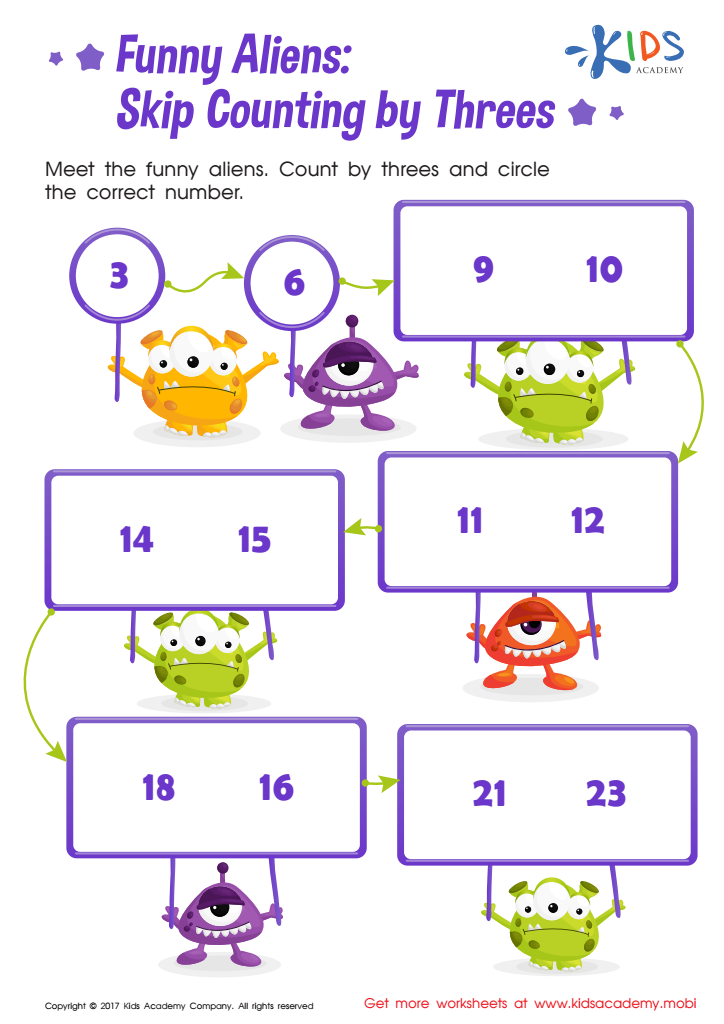
Skip Counting by 3s: Funny Aliens Printable
Blast off to outer space learning fun with this skip counting by 3 worksheet!
Skip Counting by 3s: Funny Aliens Printable
Worksheet
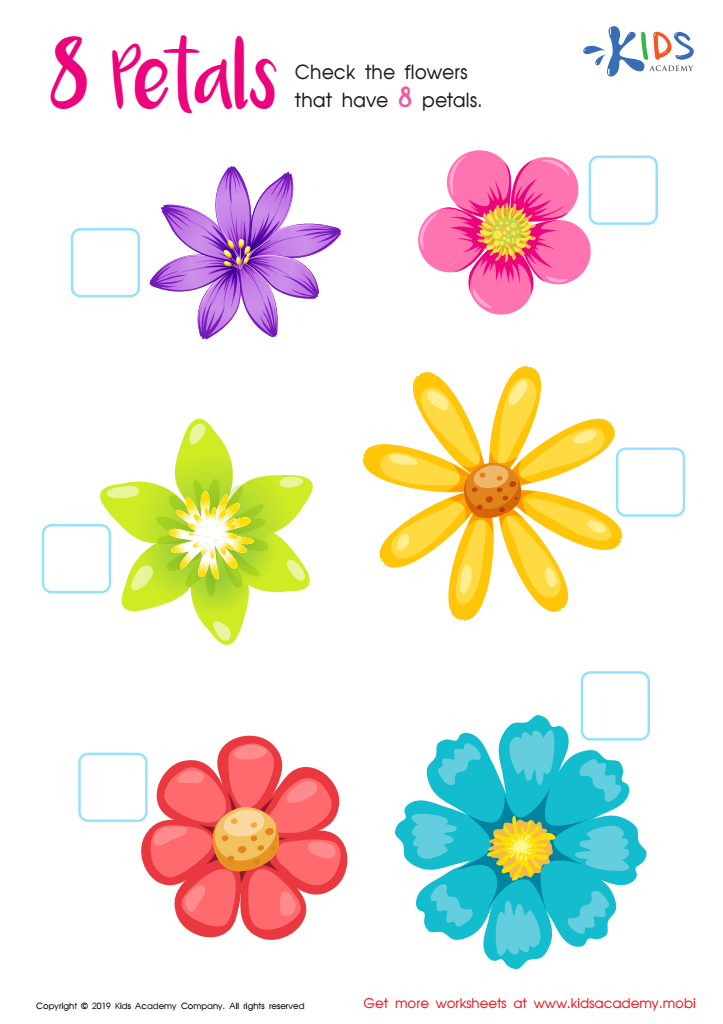
8 Petals Worksheet
Help your children master counting with this fun worksheet. It's filled with colorful flowers and they must count the petals and check the flowers with 8 petals. It's a great way to practice their counting skills and have some fun too!
8 Petals Worksheet
Worksheet
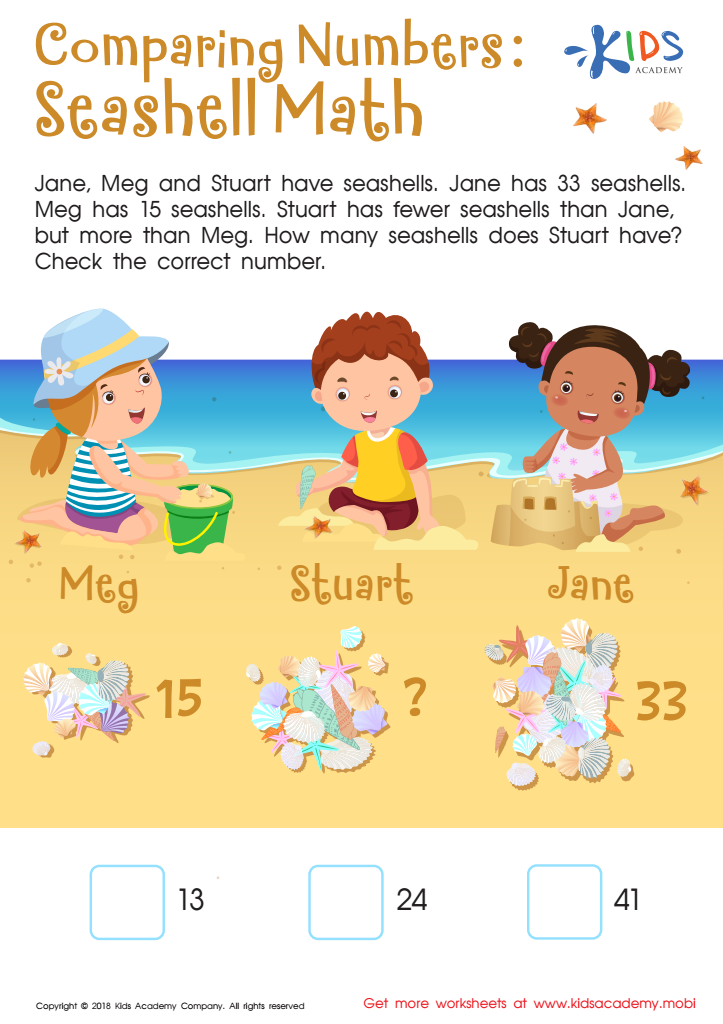
Seashell Collectors Worksheet
Bring beach fun into math with this printable worksheet! Carefully read the text with your child and figure out how many seashells Stuart has - more than Meg's, less than Jane's. Forget boring indoor math; your child won't want to miss out on this fun activity!
Seashell Collectors Worksheet
Worksheet
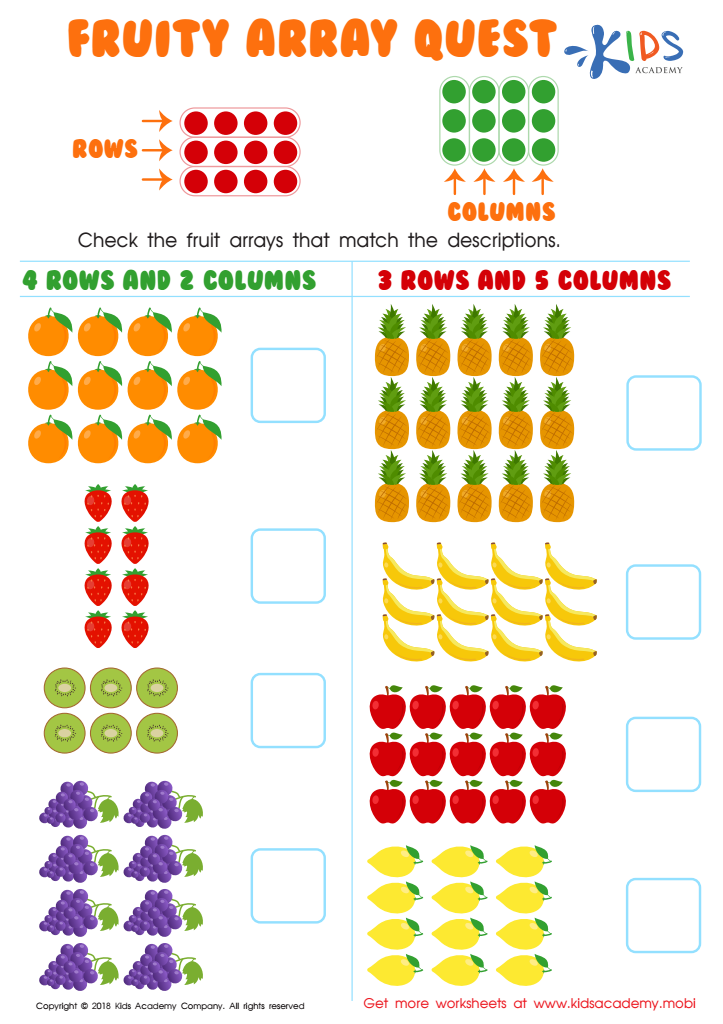
Fruity Array Quest Worksheet
Explain rows (horizontal) and columns (vertical) to your child before starting the worksheet. Show them the picture and the arrows indicating direction. Your child should be able to answer the questions easily after that. Help them match the fruit arrays that match the descriptions.
Fruity Array Quest Worksheet
Worksheet
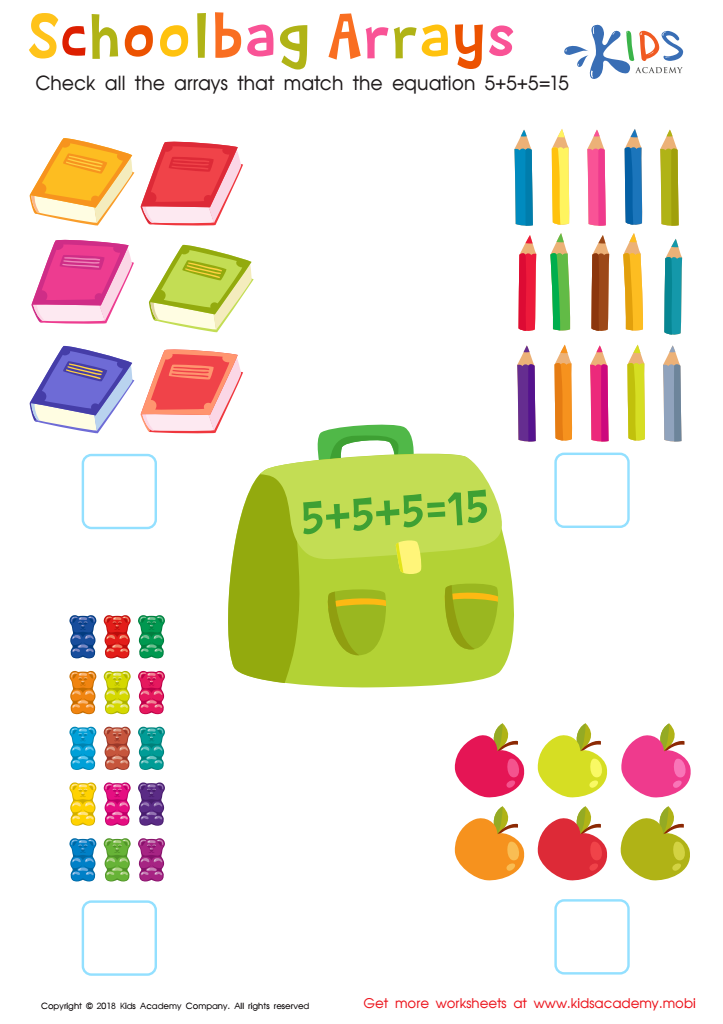
Schoolbag Arrays Worksheet
Help your child spot the correct arrays in this worksheet: having them count the items in each and check the boxes for the ones with 15 objects. Ask them to differentiate between rows and columns and explain which ones match the equation 5+5+5=15.
Schoolbag Arrays Worksheet
Worksheet
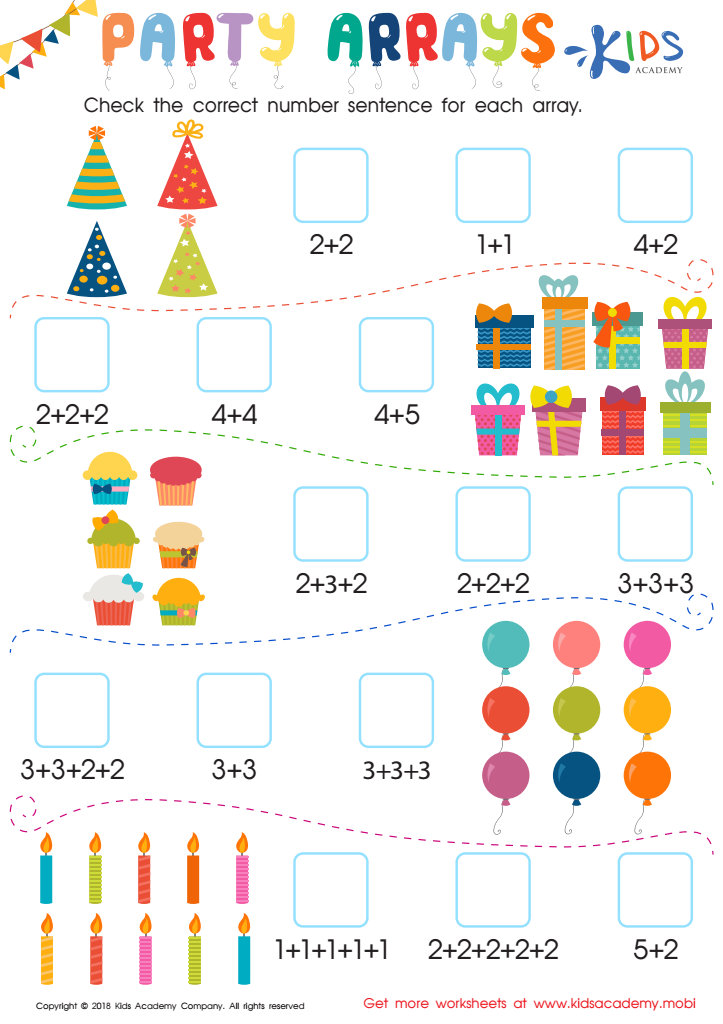
Party Arrays Worksheet
Help your child count the objects in each of the five arrays, then check the correct number sentence for each. This exercise will test their math skills and understanding of number sentences. Guide them to select the appropriate boxes.
Party Arrays Worksheet
Worksheet
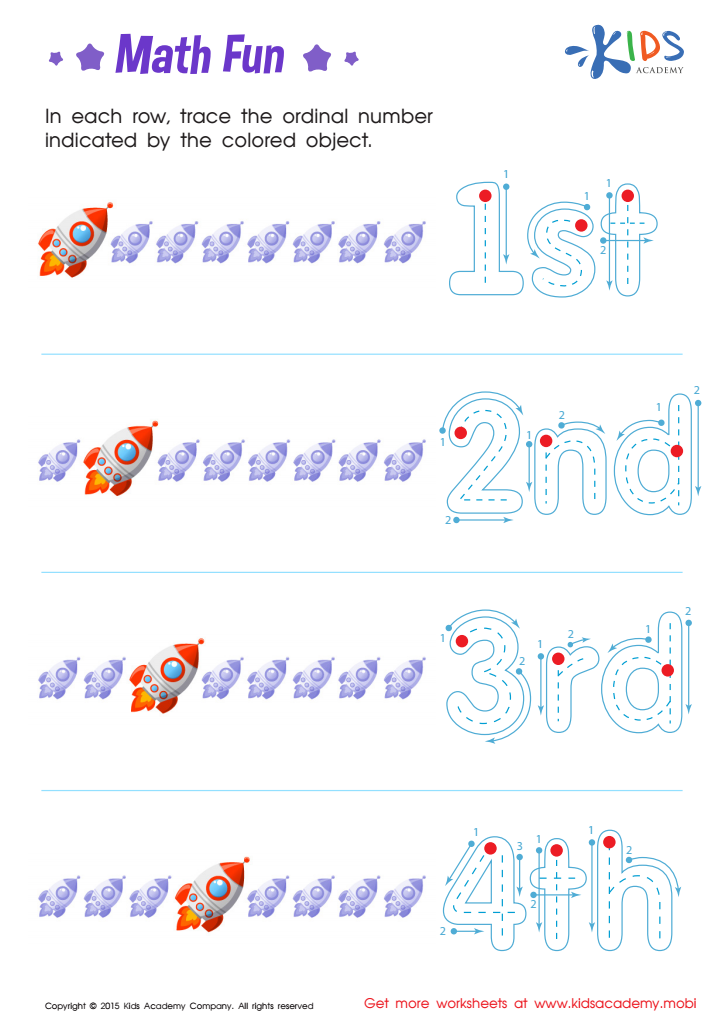
Ordinal Numbers: Math Fun Worksheet
Have fun learning ordinal numbers with our spaceship worksheet! Kids learn best while having fun and with repetition. Featuring vibrant spaceships, your child will understand placement, recognize and write ordinal numbers, and make connections. Understanding ordinal numbers leads to more advanced math concepts. Get your math whiz ready for preschool with our addition/subtraction worksheets! Have fun learning ordinal numbers and master them in no time!
Ordinal Numbers: Math Fun Worksheet
Worksheet
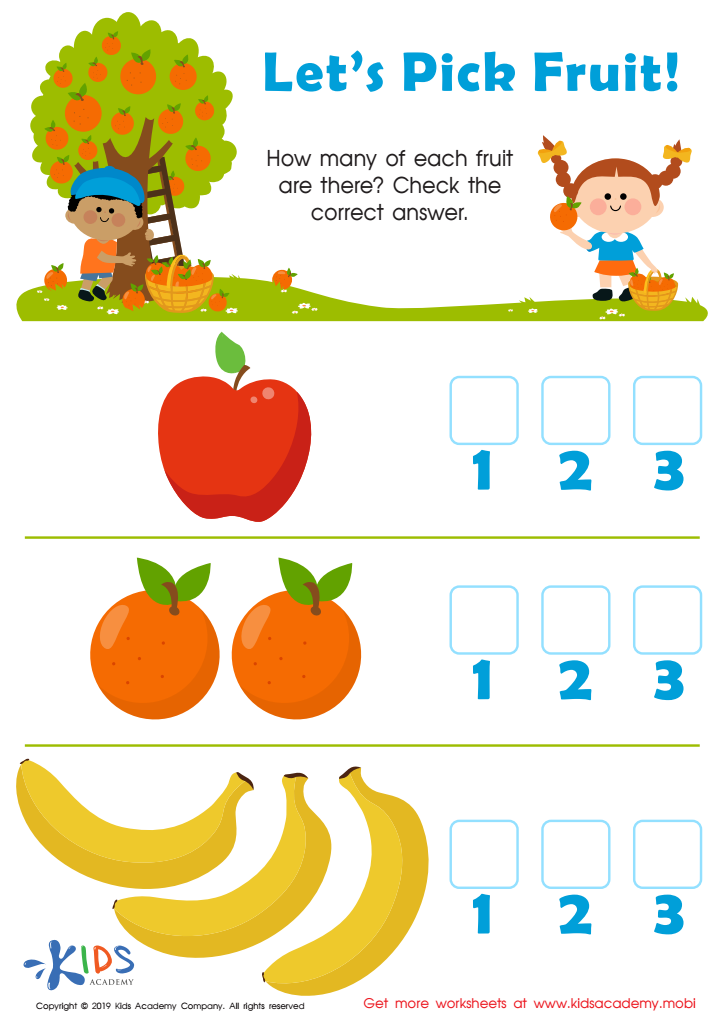
Let's Pick Fruit Worksheet
Picking fruit is fun - and counting it is even better! This free worksheet is perfect for young math learners. They'll use picture representation to count the fruit in each problem and then select the correct answer from the multiple-choice boxes. It's a great way to teach number sense in an easy, fun way!
Let's Pick Fruit Worksheet
Worksheet
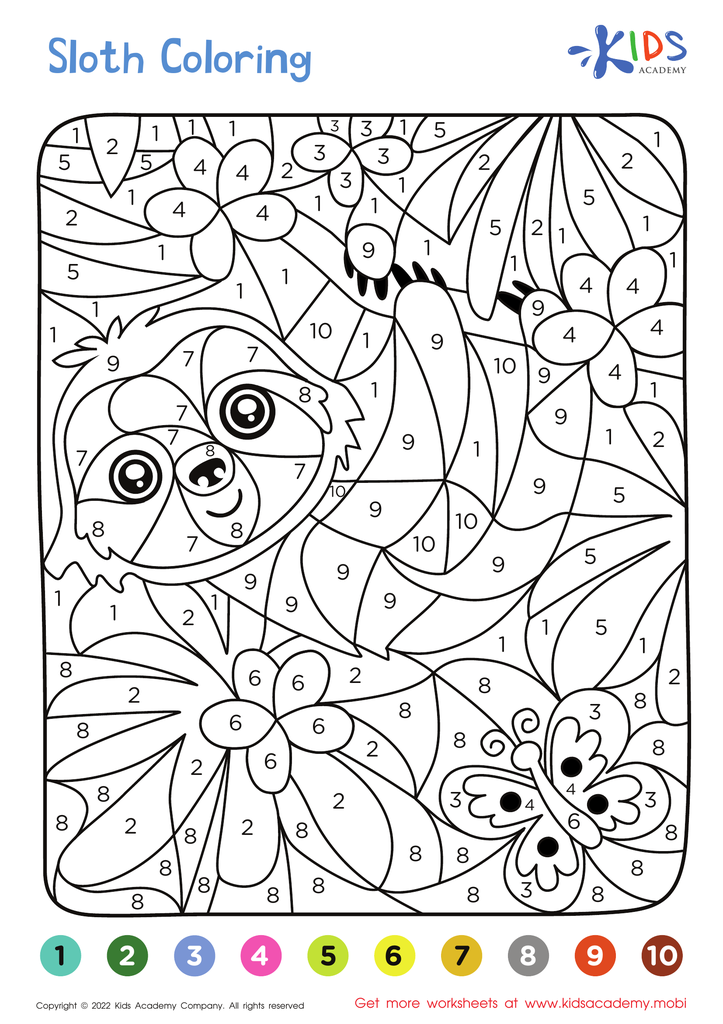
Sloth – Coloring by Numbers
Download our free coloring by numbers PDF page featuring a sloth! This fun activity is for all ages; just match the numbers to the colors and create a masterpiece. Get the entire family involved and see who can create the best sloth.
Sloth – Coloring by Numbers
Worksheet
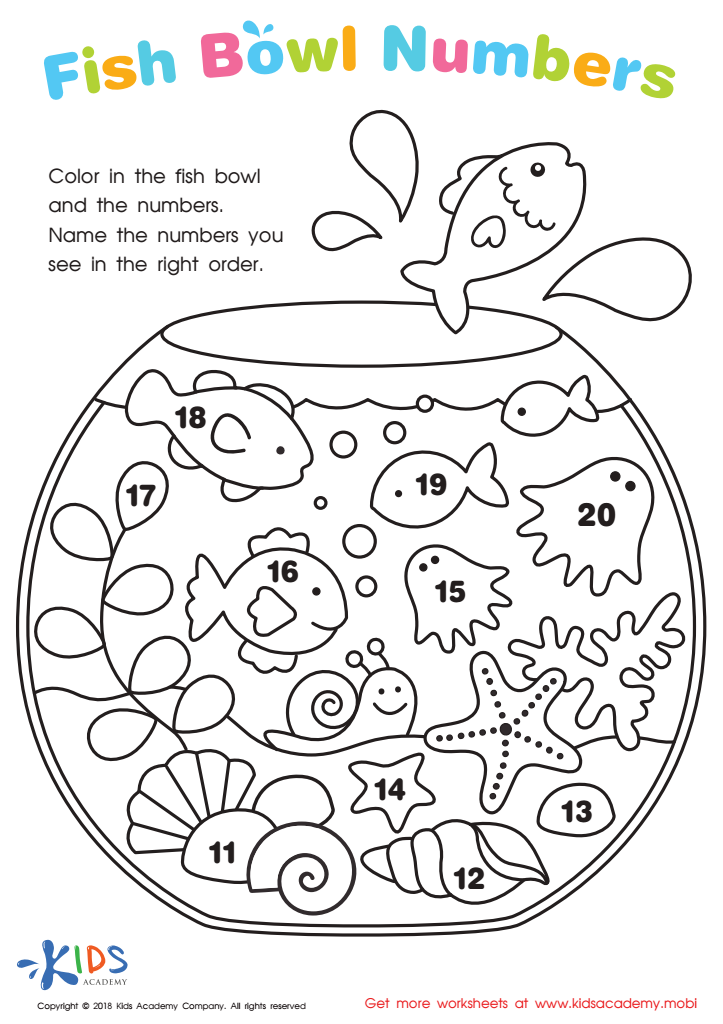
Fish Bowl Numbers Worksheet
Let your kids count and color with this fun exercise! Ask them to read out the numbers in the fish bowl in order, then help them pick out colors for the fish bowl and numbers. An easy-peasy activity for kids who can count - they'll have lots of fun!
Download (PDF)
 Assign to My Students
Assign to My Students
Fish Bowl Numbers Worksheet
Worksheet
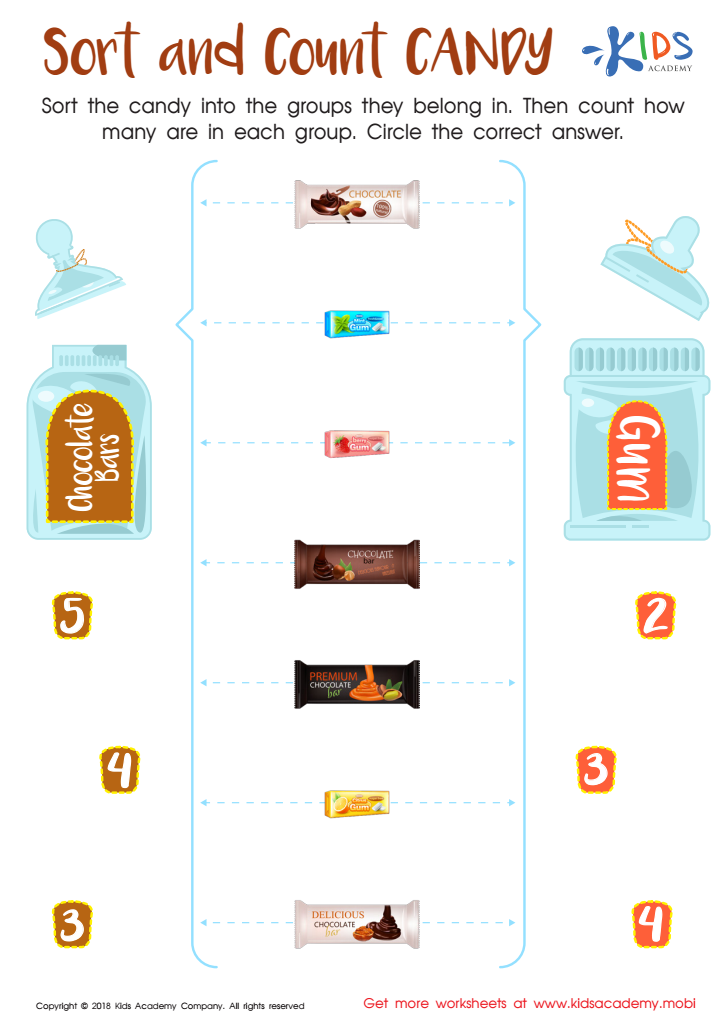
Sort and Count Candy Worksheet
Sort chocolate and candy with your kids! Help them use recognizable items and pictures to sort, practice counting with one-to-one representation, and develop their fine motor skills with the traceable lines. Download this free worksheet to get started. Yum!
Sort and Count Candy Worksheet
Worksheet
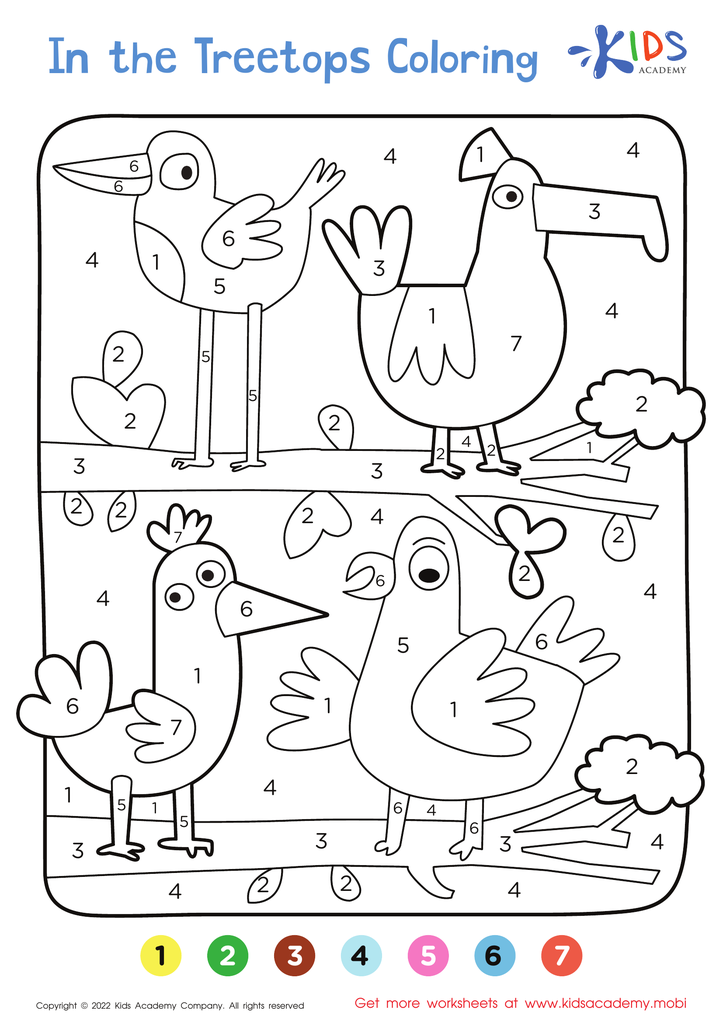
In the Treetops – Coloring Page
Coloring by numbers with a fantasy bird design - free PDF page to download! Get creative and bring the birds to life with color.
In the Treetops – Coloring Page
Worksheet
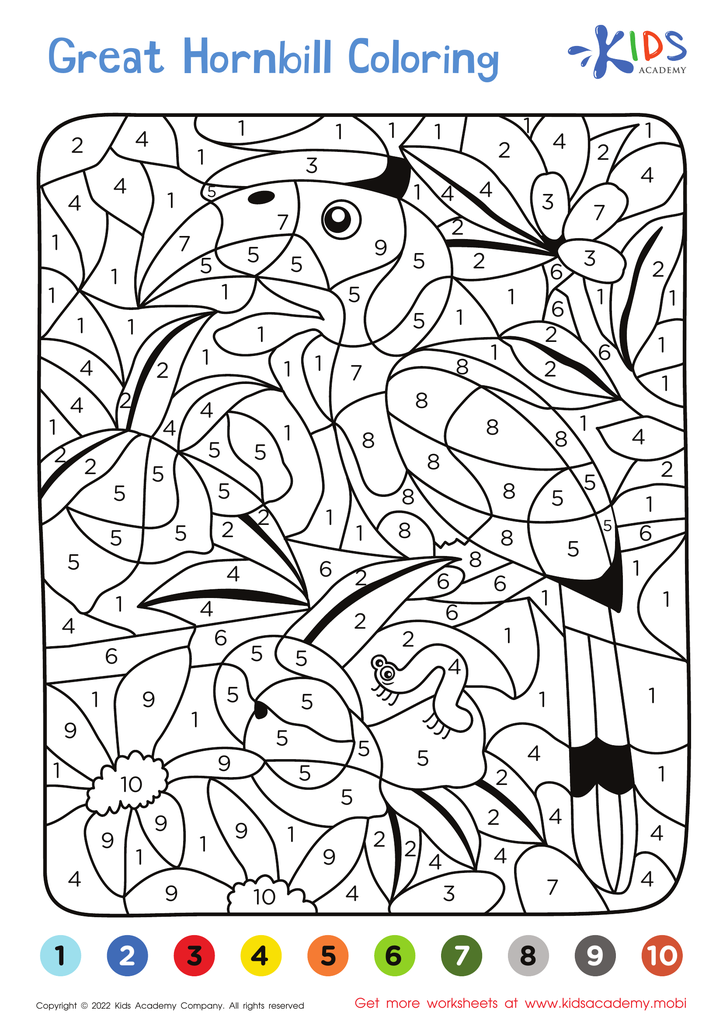
Great Hornbill – Coloring by Numbers
Download our free PDF page, featuring a hornbill for you to color in! Numbers are provided so you can follow along, making the picture come to life. Fun for all ages!
Download our free PDF page and have fun coloring a hornbill according to the numbers! You'll bring the picture to life with every stroke of your creativity. Perfect for all ages!
Great Hornbill – Coloring by Numbers
Worksheet
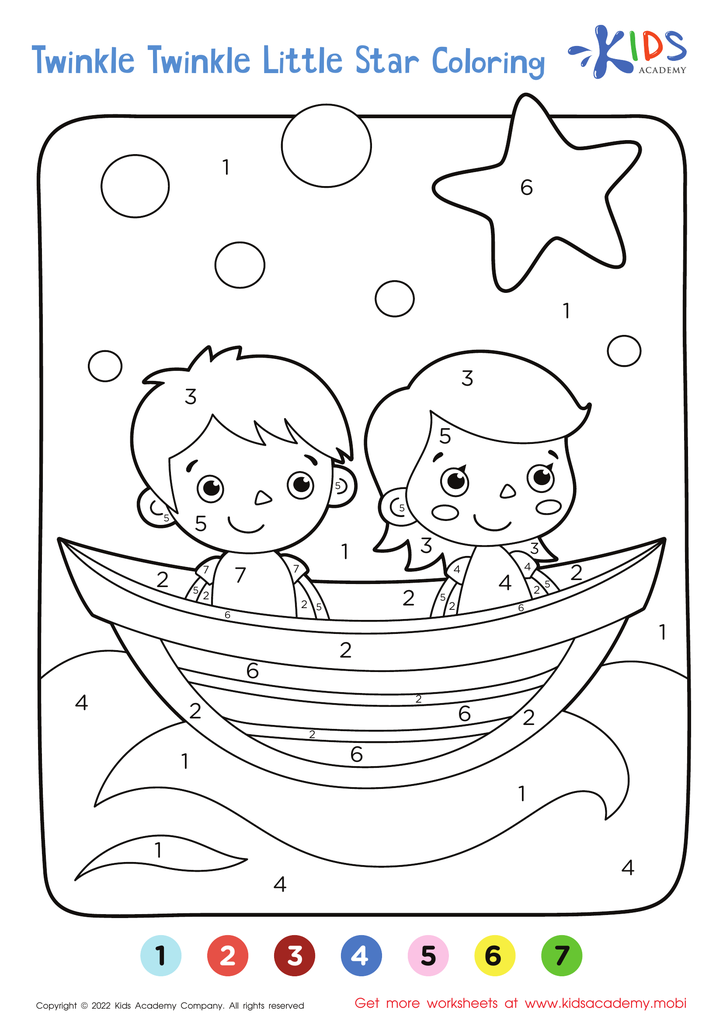
Twinkle, Twinkle, Little Star – Coloring by Numbers
Color a scene from Twinkle Twinkle Little Star with our free coloring page. Download the PDF and use the numbers to bring the nursery rhyme to life. Have fun! (80 words)
Twinkle, Twinkle, Little Star – Coloring by Numbers
Worksheet
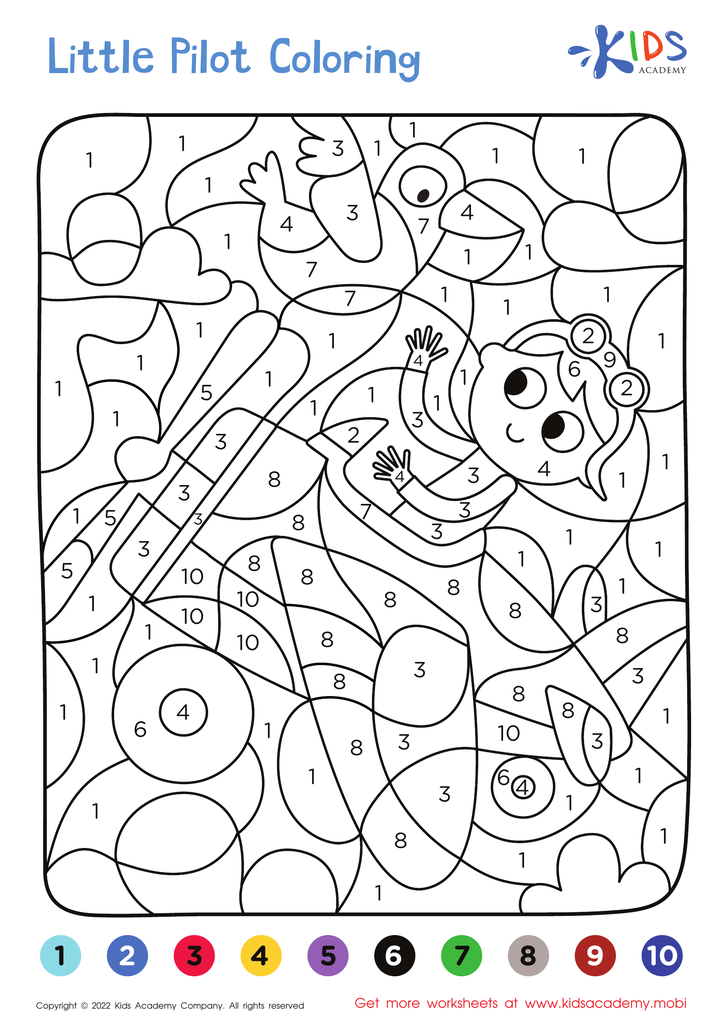
Little Pilot – Coloring by Numbers
Grab your crayons and have fun coloring this free PDF page featuring a pilot. Just match the numbers to the colors and you're ready to go! An excellent activity for young kids and adults alike.
Coloring made easy! Download this free PDF page of a pilot and have fun matching the numbers to the colors. An enjoyable activity for all ages. Get your crayons ready and let the fun begin!
Little Pilot – Coloring by Numbers
Worksheet
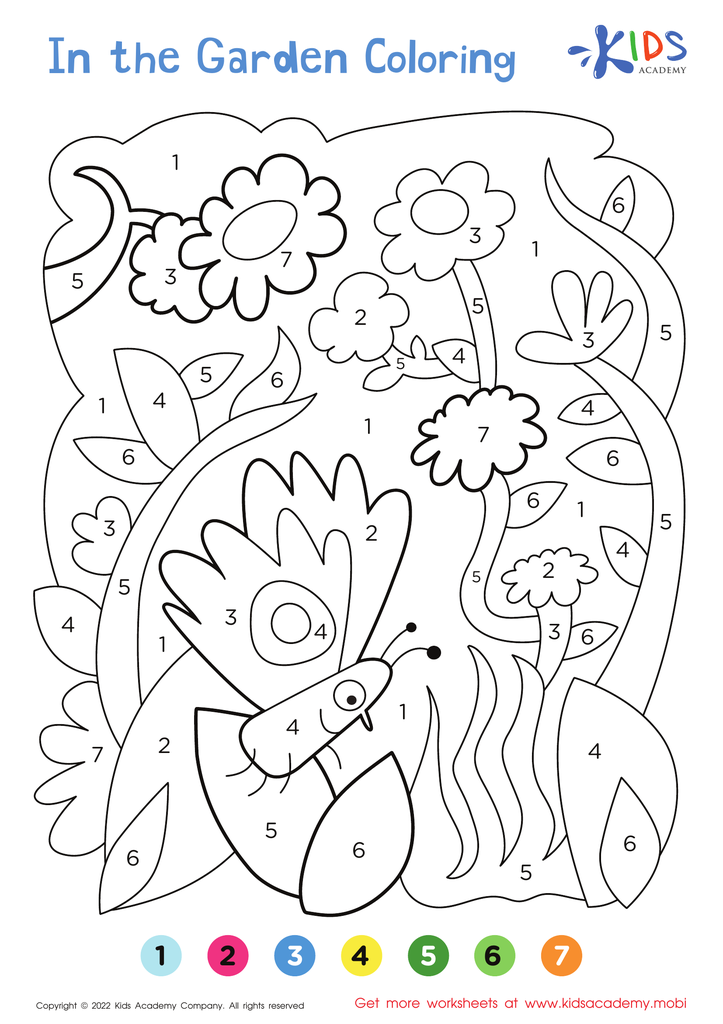
In the Garden – Coloring by Numbers
Download a free PDF page with a beautiful garden scene, perfect for coloring by numbers. Enjoy hours of creative fun and relaxation with this vibrant page.
In the Garden – Coloring by Numbers
Worksheet
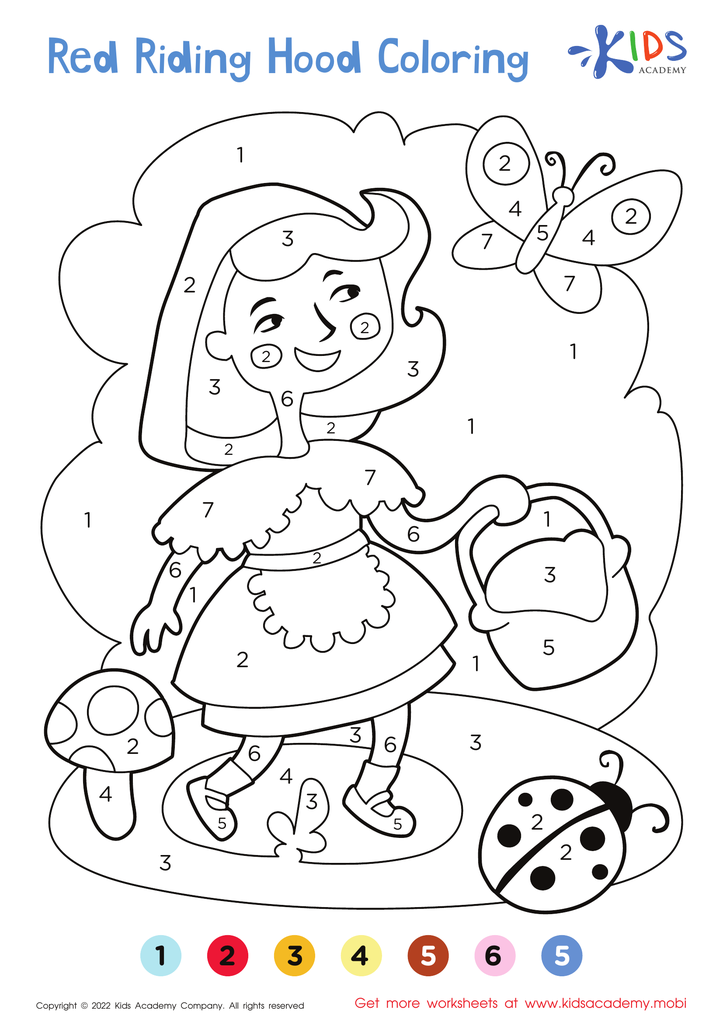
Little Red Riding Hood – Coloring by Numbers
Download this free PDF page and enjoy coloring Little Red Riding Hood. It's an easy and fun activity that everyone can do - just follow the numbers! Get your colored pencils ready and have a blast. 80 words.
Little Red Riding Hood – Coloring by Numbers
Worksheet
Join Kids Academy for Free
Who is primarily going to use this learning content?


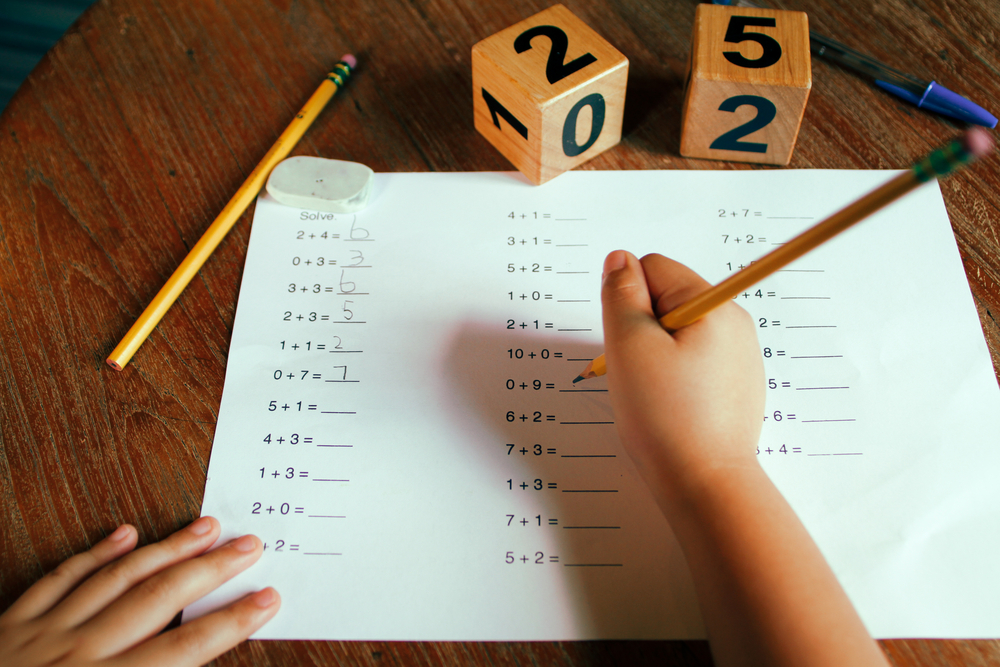




Color recognition and number familiarity are crucial components of early childhood education, especially for children aged 5-7. Mastering these skills lays the foundation for understanding the world around them, promoting cognitive development and problem-solving abilities. Recognizing colors helps children categorize objects, which enhances their communication skills and encourages creativity. For instance, when children learn the names and differences of colors, they can express thoughts and emotions more effectively, aiding in their social interaction with peers.
Number recognition is equally vital as it forms the basis for mathematical understanding. Recognizing numbers empowers children to engage with concepts like counting, addition, and subtraction, necessary skills for future academics. These foundational numeracy skills foster critical thinking and logical reasoning, which are essential not only in math but across various subjects.
Additionally, integrated learning through color and number activities can make education more engaging and fun. Hands-on experiences, such as art projects or counting games, also promote fine motor skills. By prioritizing color and number recognition, parents and teachers can create a rich learning environment, fostering creativity and analytical skills, ultimately setting children up for academic success and self-confidence in their abilities.








