Understanding subtraction Numbers Worksheets for Ages 5-7
4 filtered results
-
From - To
Help your child grasp the vital concept of subtraction with our "Understanding Subtraction Numbers Worksheets," designed specifically for ages 5-7. These engaging worksheets provide a variety of activities that facilitate learning through fun illustrations and real-life examples. Each worksheet encourages hands-on practice, reinforcing essential subtraction skills such as counting backward, identifying the difference, and solving simple problems. Our resources are tailored to cater to different learning paces, ensuring a solid foundation in basic math concepts. Empower your child's mathematical journey and boost their confidence by downloading our interactive worksheets today—making subtraction a delightful experience!
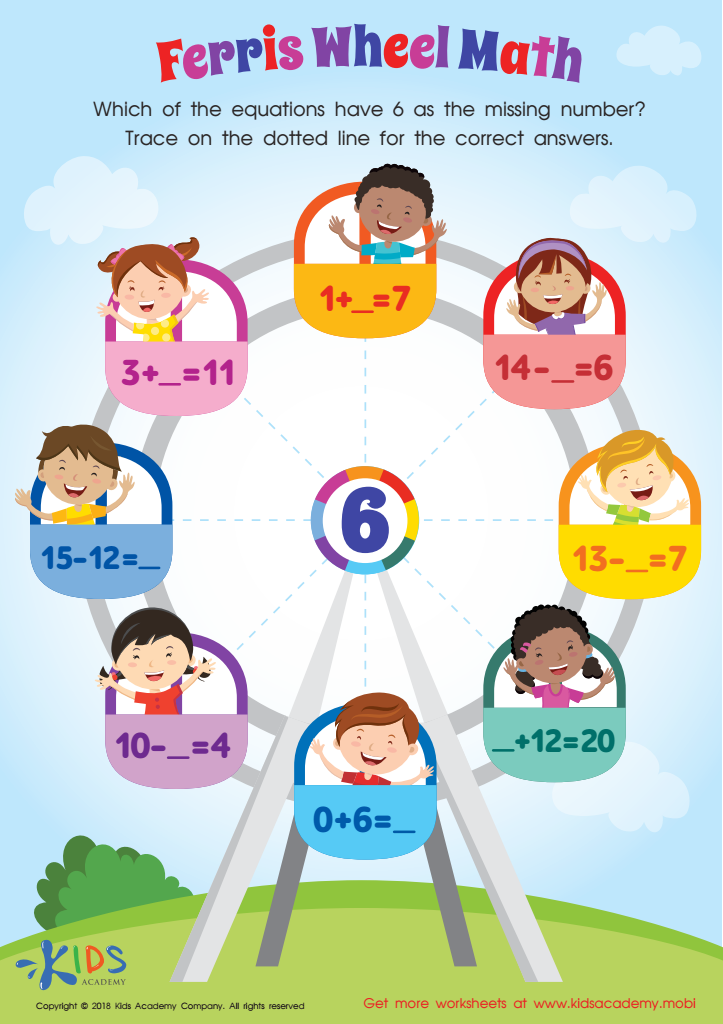
Missing Number: Ferris Wheel Math Worksheet
 Assign to My Students
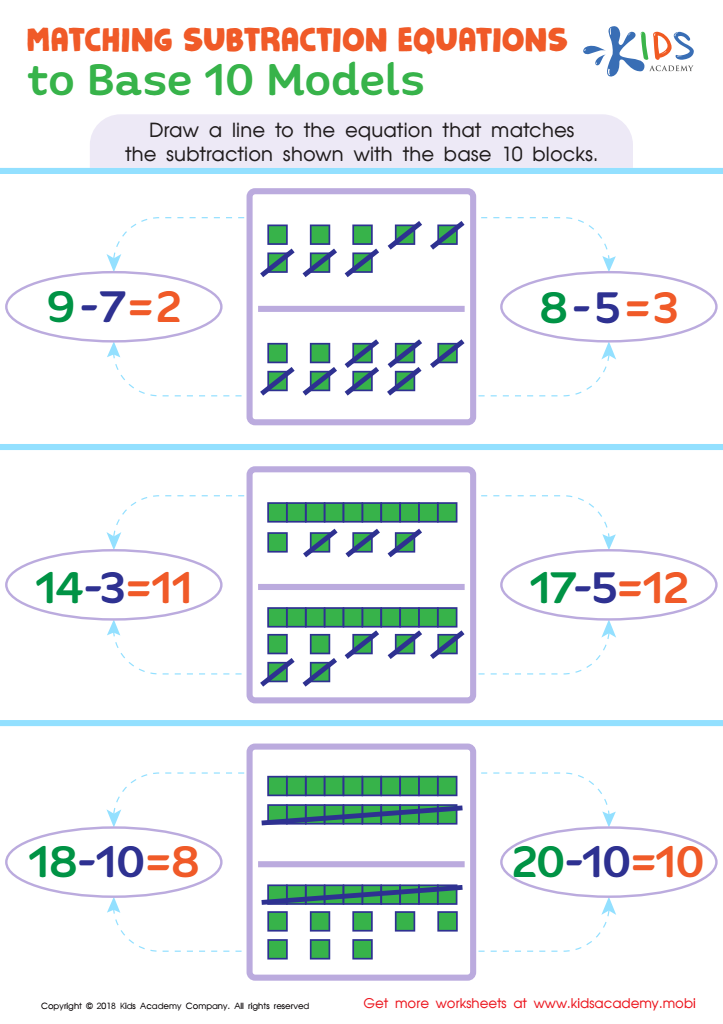
Matching Subtraction Equations To Base 10 Models Worksheet
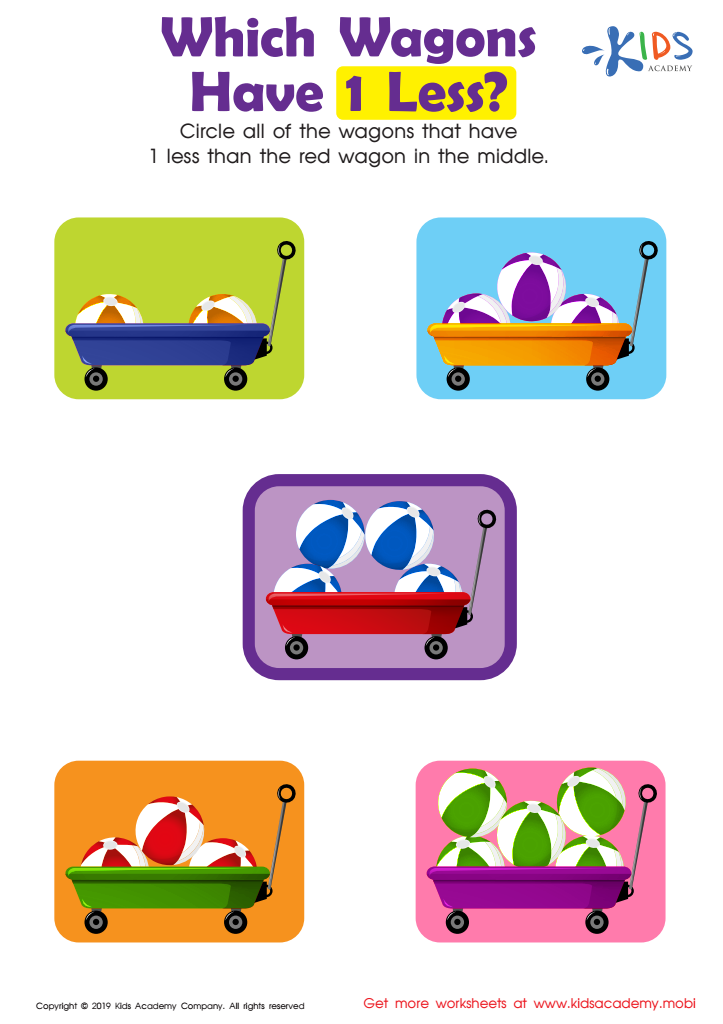
Which Wagons Have 1 Less? Worksheet
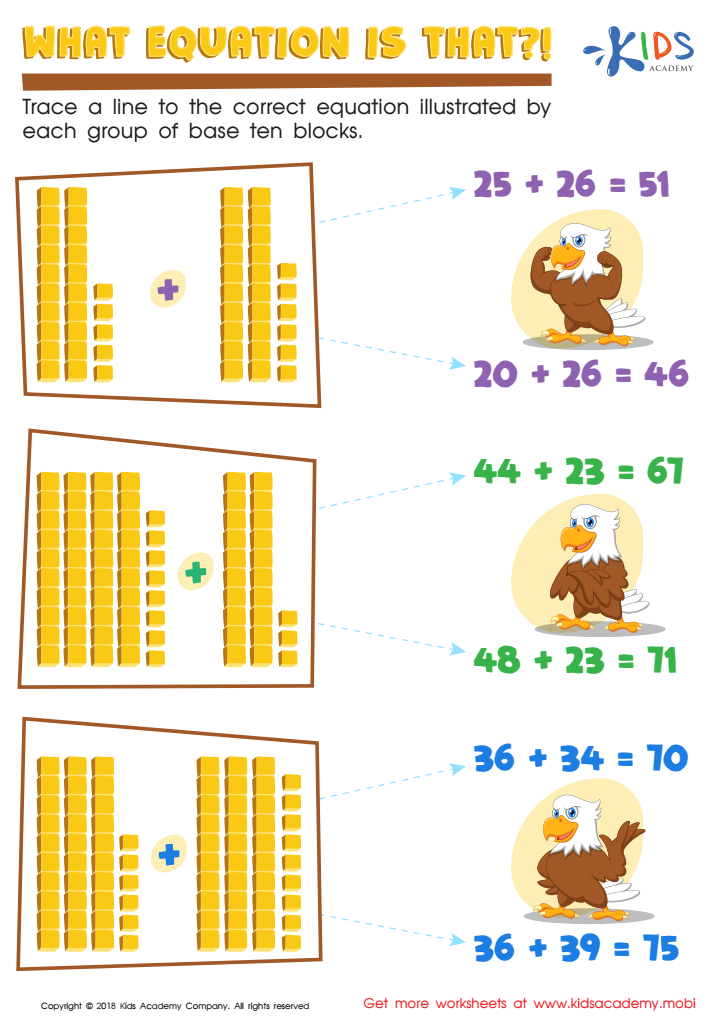
What Equation Is That? Worksheet








Understanding subtraction is crucial for children aged 5-7 as it lays the foundation for more complex mathematical concepts later on. At this developmental stage, children are not just learning numbers, but also how to think critically, solve problems, and make connections between concepts. Subtraction is a fundamental arithmetic operation that helps children comprehend the concept of “taking away,” which is vital in everyday life.
By grasping subtraction, children enhance their reasoning skills and become more confident in tackling mathematical problems. This foundational knowledge supports their ability to understand addition and later advanced math operations, making learning a more continuous process.
Furthermore, promoting subtraction understanding nurtures essential life skills, such as budgeting, planning, and assessing quantities. Engaging children with practical, real-life examples of subtraction can spark their interest in math, showing them its importance beyond just the classroom.
Teachers and parents play a crucial role in this process. By creating supportive learning environments, using hands-on materials, and leveraging everyday situations, they can make subtraction an enjoyable discovery rather than a chore. When children see math as a tool for understanding their world, they develop positive attitudes towards learning that last a lifetime.








