
Visual representation of fractions Math Worksheets for Ages 5-7
5 filtered results
Difficulty Level
Grade
Age
-
From - To
Subject
Activity
Standards
Unlock the power of fractions for young learners with our Visual Representation of Fractions Math Worksheets, perfect for ages 5-7. These engaging resources transform abstract concepts into fun, visual math activities that make learning fractions easy and enjoyable. Our expertly designed worksheets help children grasp the basics of fractions through colorful graphics, hands-on activities, and interactive exercises. By seeing fractions visually, kids build a strong foundation in essential math skills while developing critical thinking and problem-solving abilities. Ideal for classroom use or at-home learning, these worksheets make mastering fractions feel like play. Download and start exploring today!
Favorites
With answer key
Interactive
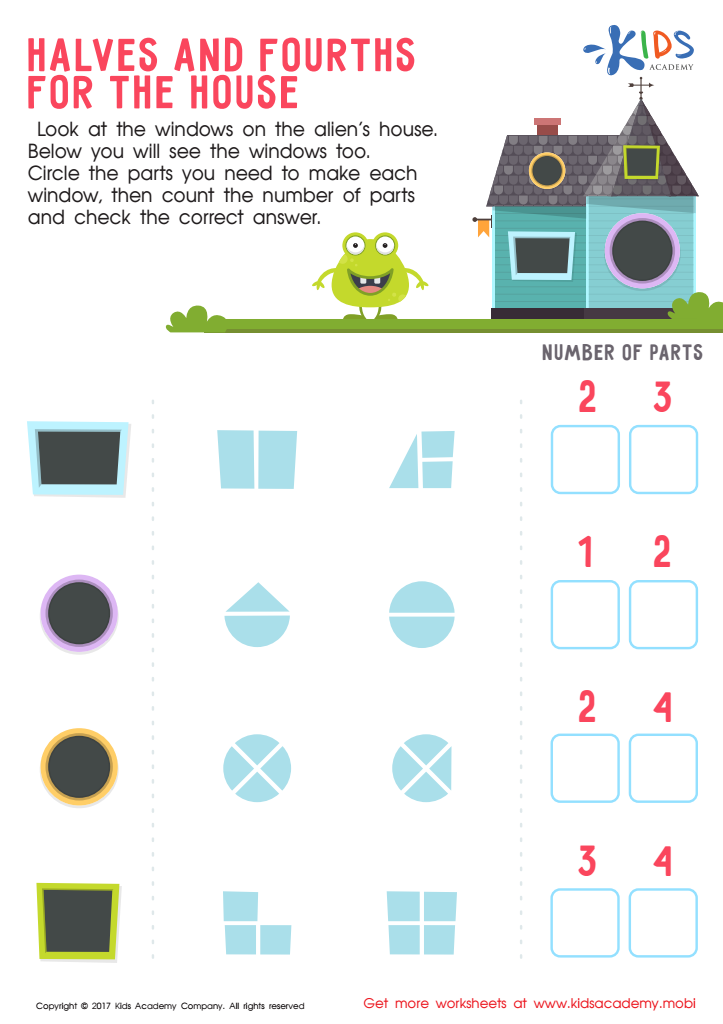
Halves and Fourths for the House Worksheet
Help your child become friends with the alien in this worksheet! If they're fans of alien books and movies, they'll love it. Ask them to circle the parts at the bottom that make each window, then count the number of parts and check the correct answer.
 Assign to My Students
Halves and Fourths for the House Worksheet
Worksheet
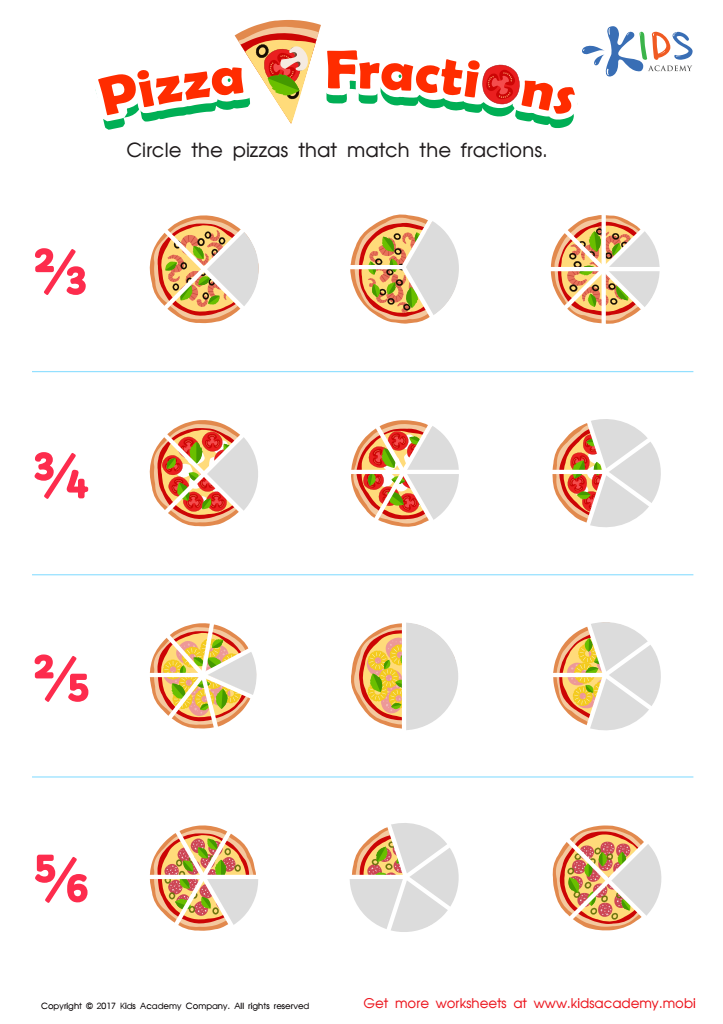
Fractions: Pizza Printable
Fractions can be tricky for kids, but this pizza fractions printable can help! Kids can understand fractions by seeing them, as they use one of their favorite foods. It helps them grasp the concept and gain a deeper understanding of what fractions represent. Extend their learning by quizzing them when you order pizza next time.
Fractions: Pizza Printable
Worksheet
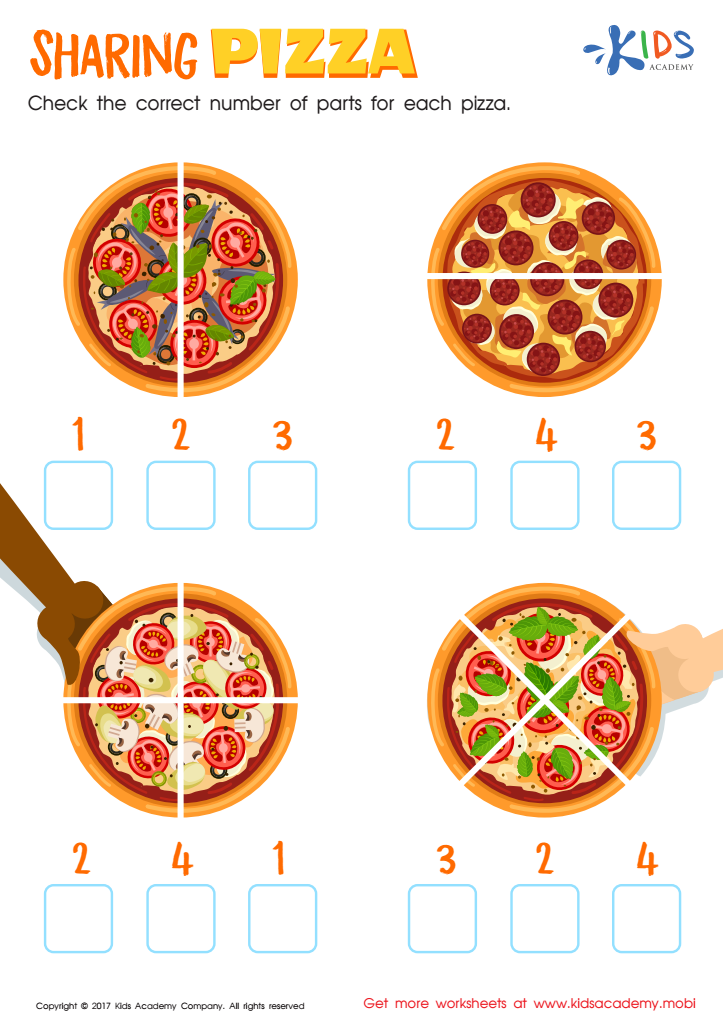
Sharing Pizza Worksheet
Show your child the four pizzas in this worksheet. Ask them to count the number of slices each one has. Help them count and check the answer for the first pizza, then do the same for the rest. Have fun counting the slices and see if they can spot the pizza!
Sharing Pizza Worksheet
Worksheet
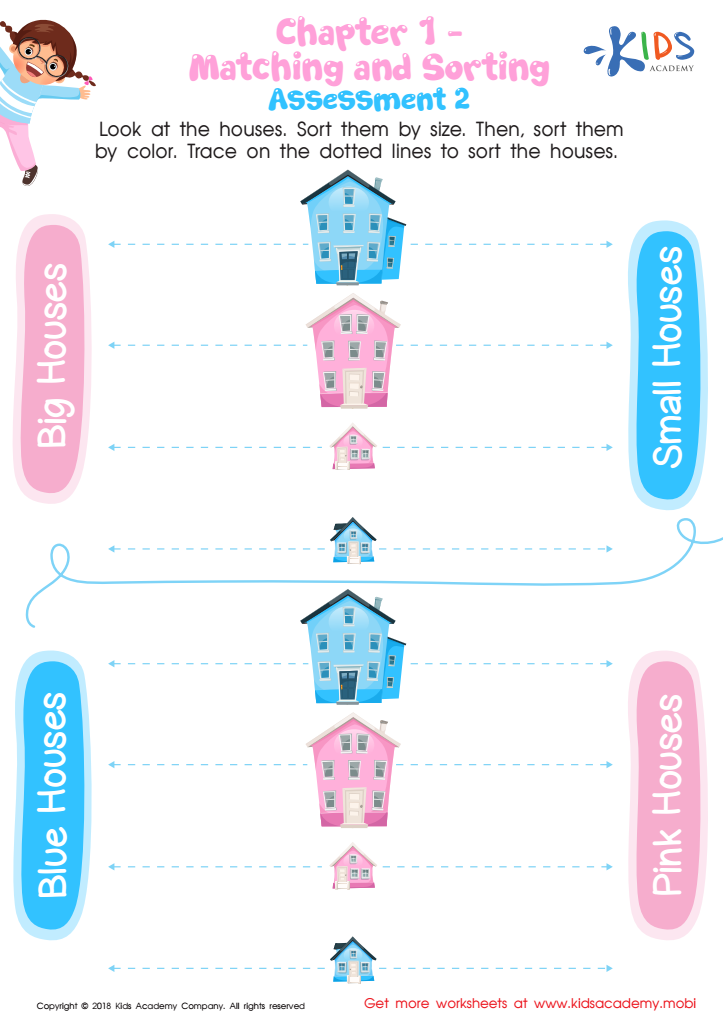
Matching and Sorting for Preschool: Assessment 2 Worksheet
Encourage your kids to take a look at the colorful pictures. Ask them to name the objects. Next, point out any differences between the houses and let them sort them according to color and size. Finally, help them trace the houses on the dotted lines.
Matching and Sorting for Preschool: Assessment 2 Worksheet
Worksheet
Join Kids Academy for Free
Who is primarily going to use this learning content?




.jpg)
Visual representation of fractions is crucial for young learners, particularly those aged 5 to 7, because it builds a foundational understanding of mathematical concepts in a concrete and intuitive manner. At this early stage, children are just starting to grasp abstract ideas, and visual aids make these concepts more accessible.
Using visuals like pie charts, fraction bars, or manipulatives helps demystify fractions by showing kids what fractions mean in a way that words or numbers alone can't. For example, dividing a pizza into equal slices can be a tangible way for a child to see what "half" or "quarter" truly represents. This not only aids in comprehension but also in retention. When children can visualize a concept, they're more likely to remember it and understand it deeply, rather than just memorizing rules.
Additionally, visual representation accommodates diverse learning styles. Some children are more visual learners and may struggle with traditional numerical approaches. By including visuals, we offer multiple pathways to understanding, ensuring that all children have the tools they need to succeed.
In essence, caring about the visual representation of fractions means supporting a solid educational foundation, fostering inclusiveness in learning styles, and encouraging a positive, confident approach toward math from an early age. It paves the way for more complex mathematical thinking in later years.








