Logical Reasoning Matching Worksheets for Ages 5-7
5 filtered results
-
From - To
Introduce your child to the fun world of logic with our "Logical Reasoning Matching Worksheets for Ages 5-7". These educational activities are designed to sharpen young minds by enhancing critical thinking and problem-solving skills. Each worksheet presents engaging matching exercises that challenge children to identify patterns, sequences, and relationships. Perfect for kindergarten and early elementary school students, these colorful, easy-to-follow worksheets support cognitive development while making learning fun. Give your child a head start in math and logical reasoning with these expertly crafted resources. Available for instant download at Kids Academy.
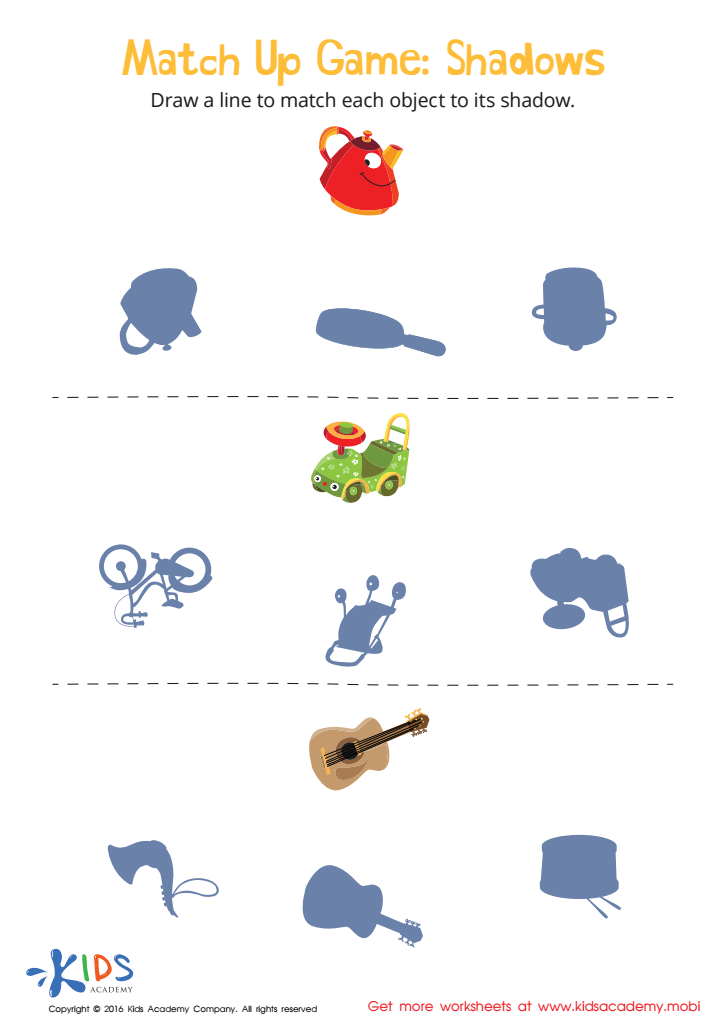
 Assign to My Students
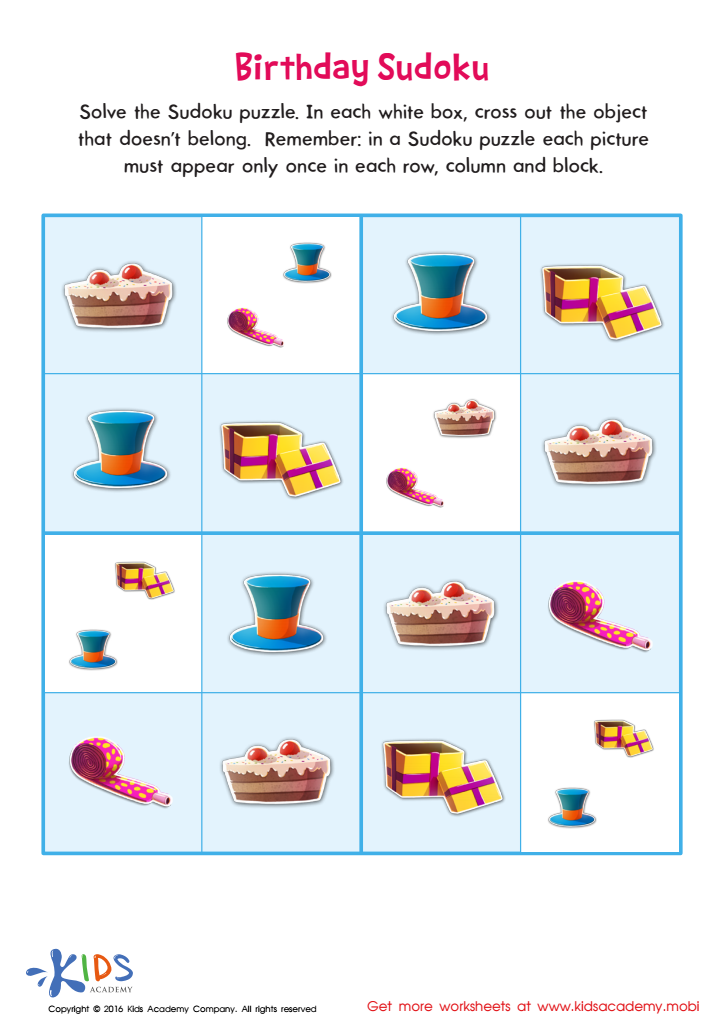
Birthday Sudoku Sorting Worksheet
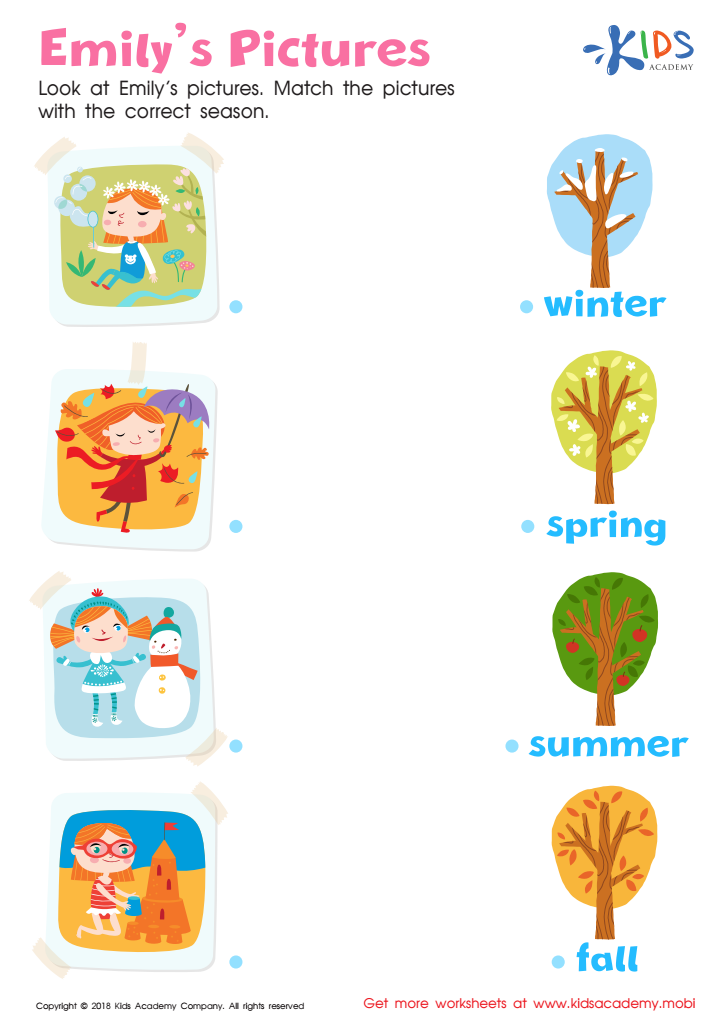
Emily's Pictures Worksheet
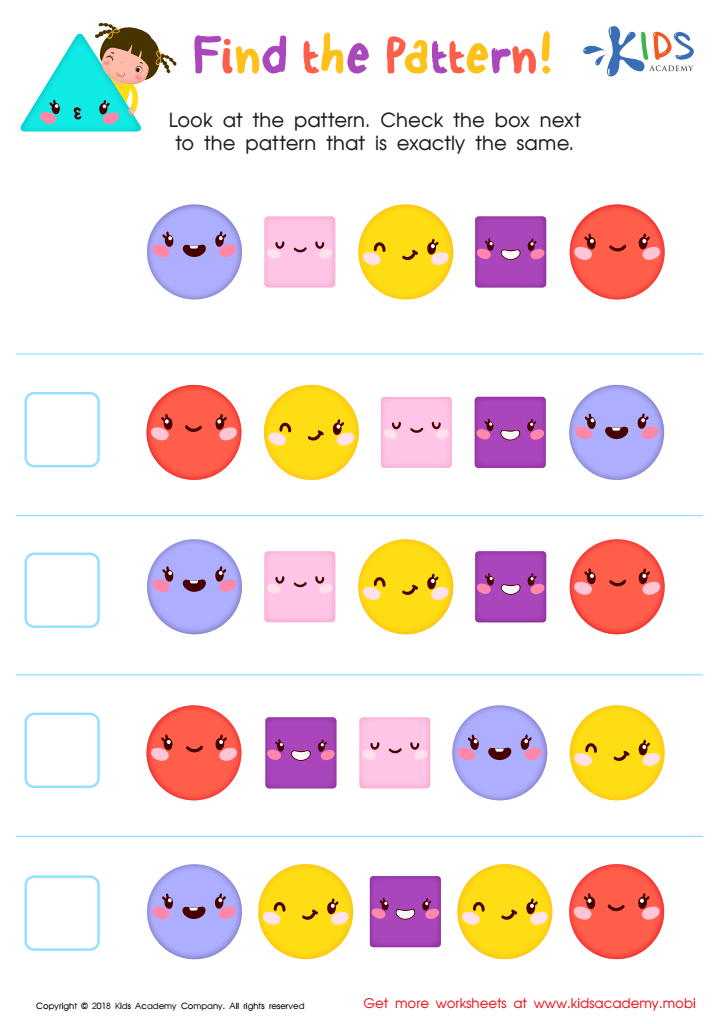
Find the Pattern Worksheet
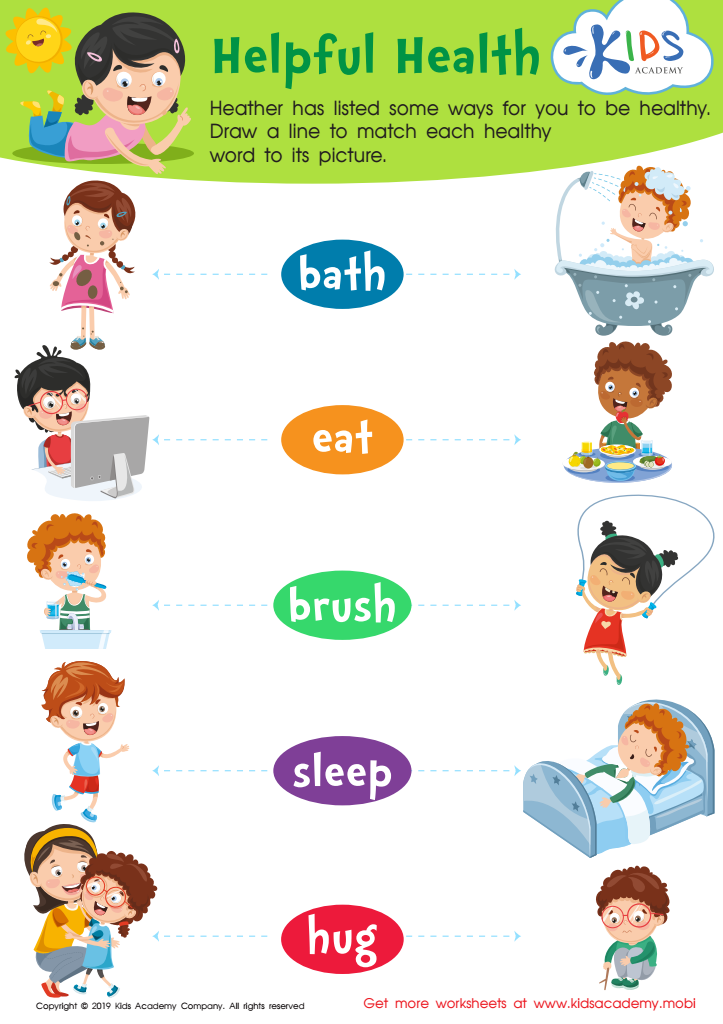
Helpful Health Worksheet








Logical reasoning is a foundational skill that supports a child's cognitive development, and parents and teachers should place a strong emphasis on cultivating it in children aged 5-7. At this age, children’s brains are highly receptive to new ways of thinking and learning, making it a prime time to develop their logical reasoning capabilities.
One key method to enhance logical reasoning is through matching activities. These tasks not only engage children but also require them to identify relationships and patterns, categorize objects, and make connections based on attributes like size, shape, color, or function. Such activities strengthen critical thinking and problem-solving skills. For example, when children match a picture of a dog with the word "dog," they are learning to make connections between visual and verbal information, an essential precognitive skill.
Furthermore, developing logical reasoning early helps in building a solid foundation for more complex subjects such as mathematics and science, where pattern recognition and analytical thinking are crucial.
From a developmental perspective, sharpening these skills also aids in enhancing memory, attention to detail, and language acquisition, as children learn to describe their thought processes and reasoning out loud. By prioritizing logical reasoning matching, parents and teachers can ensure children develop essential skills that will support their future academic success and overall intellectual maturity.








