Counting skills Subtraction Worksheets for Ages 5-7
11 filtered results
-
From - To
Our Counting Skills Subtraction Worksheets for ages 5-7 are specifically designed to enhance young learners' foundational math skills. Filled with engaging and educational activities, these printable worksheets make learning subtraction fun and interactive. Young students will develop counting skills, grasp subtraction concepts, and build numerical confidence through a variety of exercises that cater to their developmental needs. Perfect for classroom or home use, these worksheets provide a hands-on approach to mastering subtraction, ensuring students are well-prepared for more advanced math topics. Help your child succeed in math with our expertly crafted subtraction worksheets tailored for early learners.
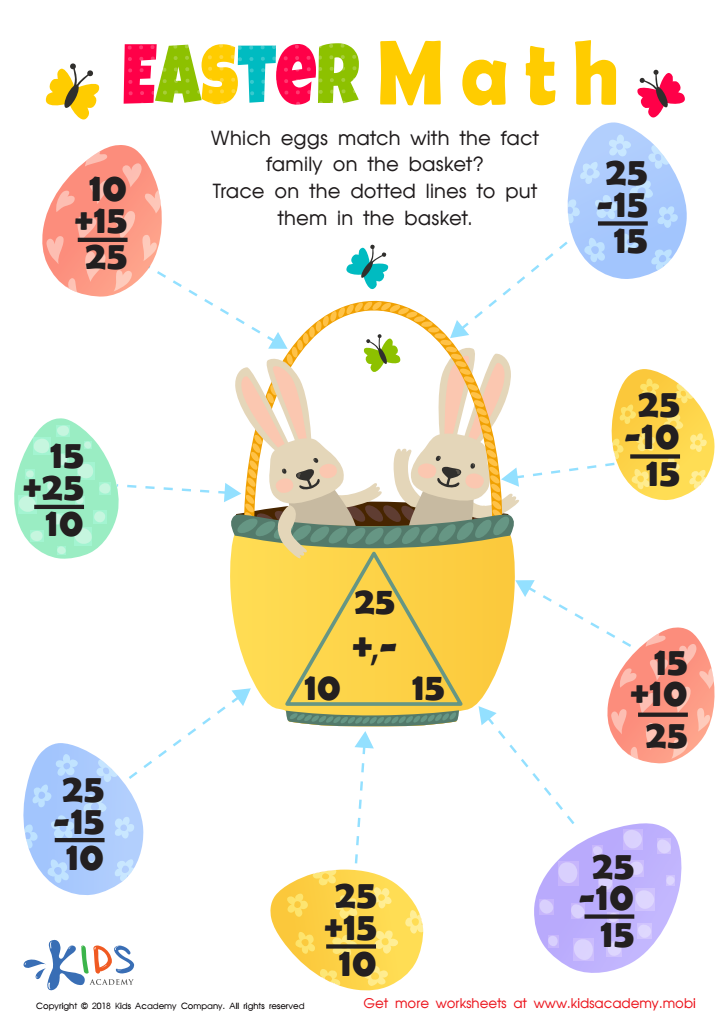
Fact Families: Easter Math Worksheet
 Assign to My Students
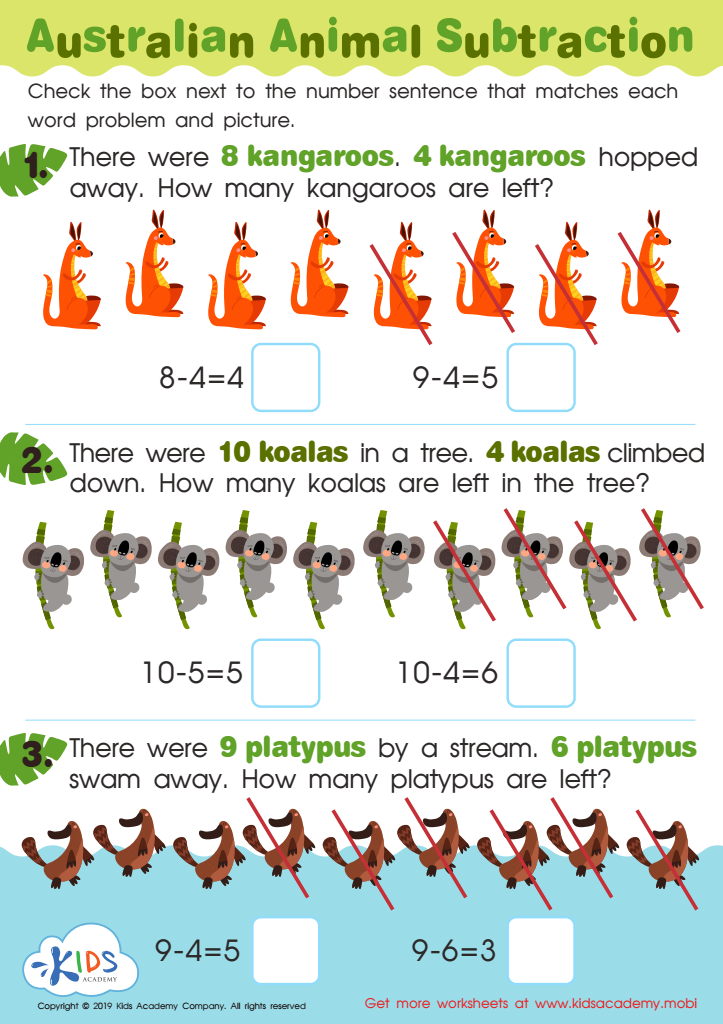
Australian Animal Subtraction Worksheet
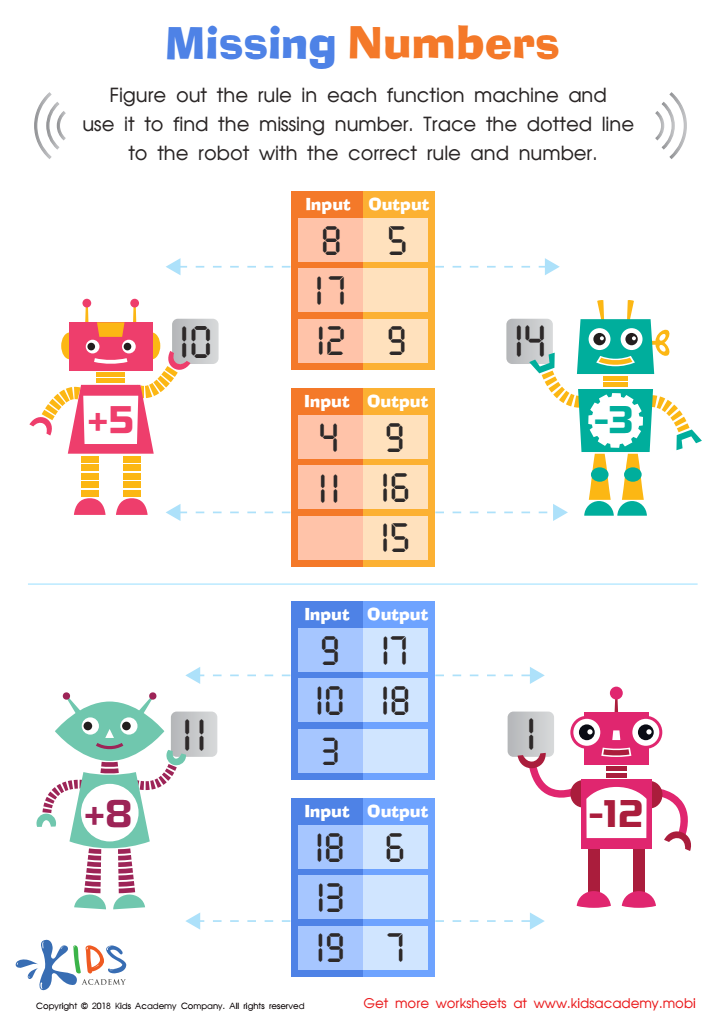
Missing Numbers Worksheet
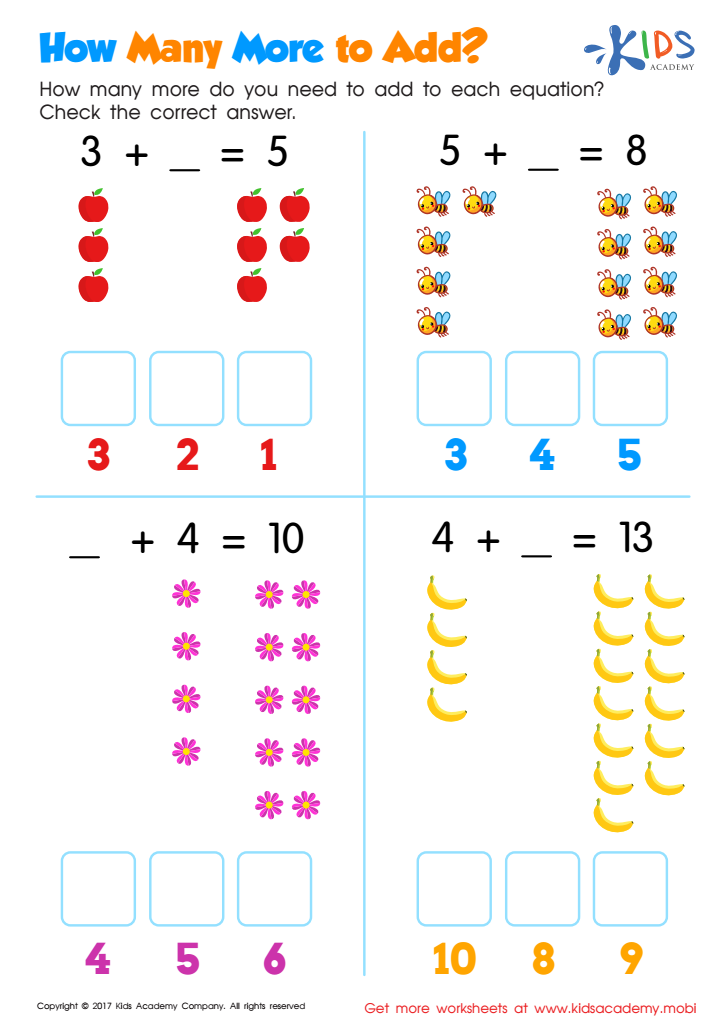
How Many More to Add Worksheet
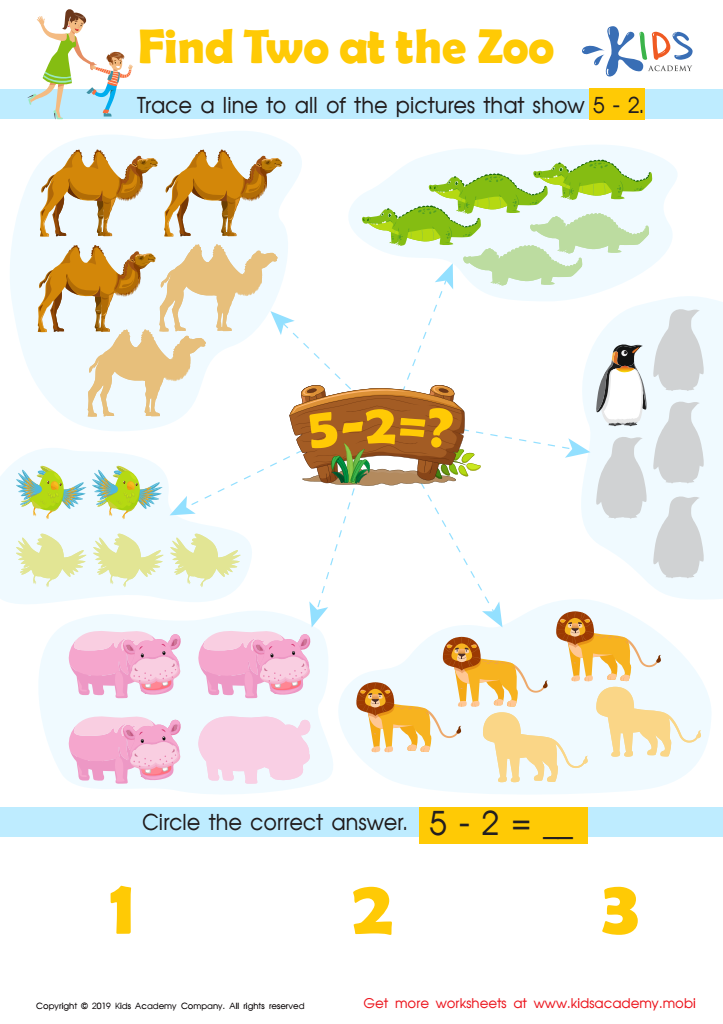
Find Two at the Zoo Worksheet
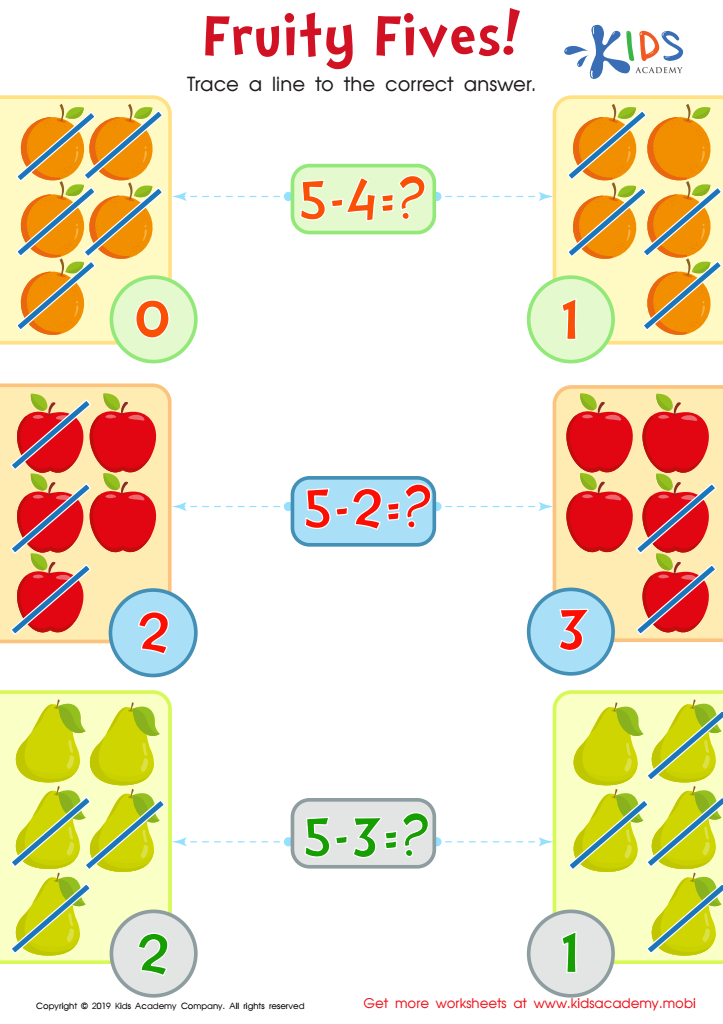
Fruity Fives! Worksheet
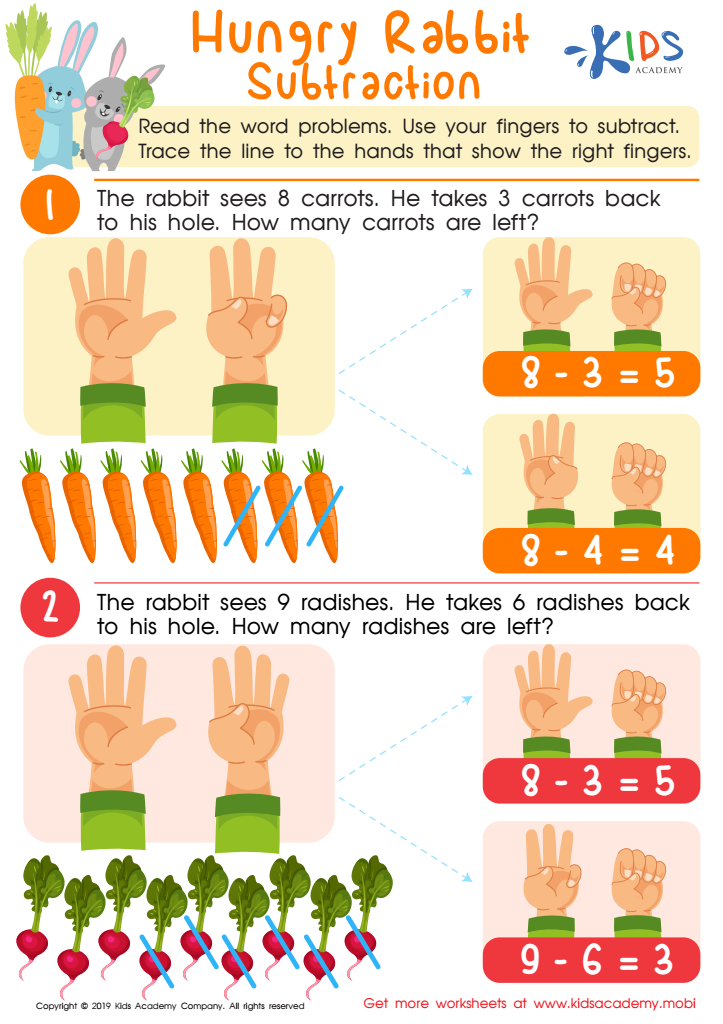
Hungry Rabbit Subtraction Worksheet
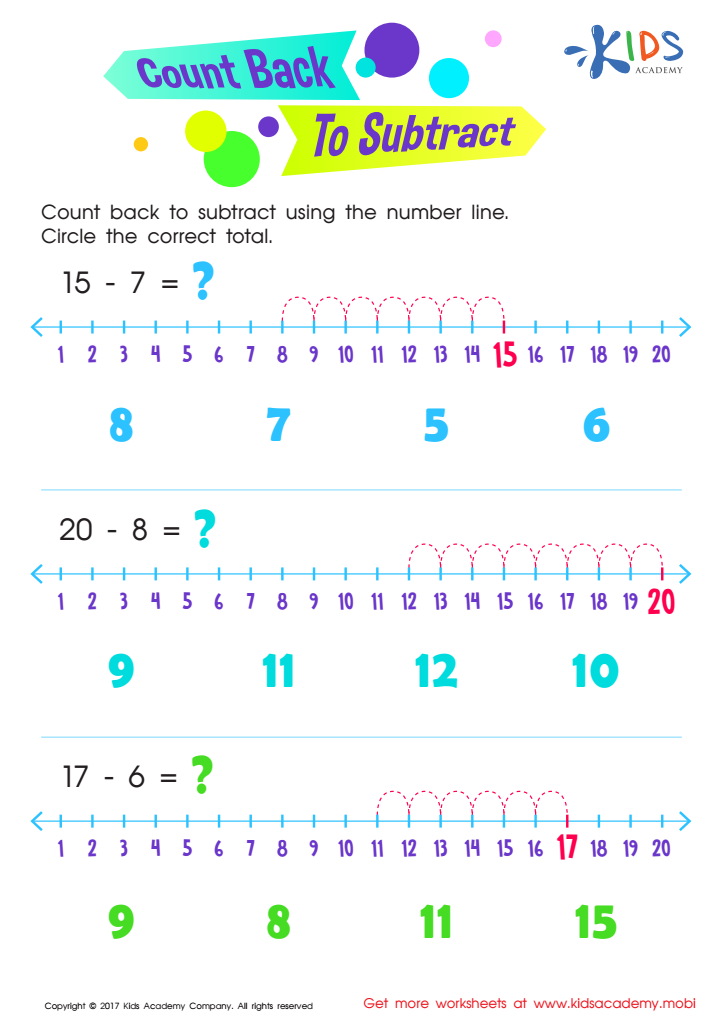
Count Back to Subtract Substraction Worksheet
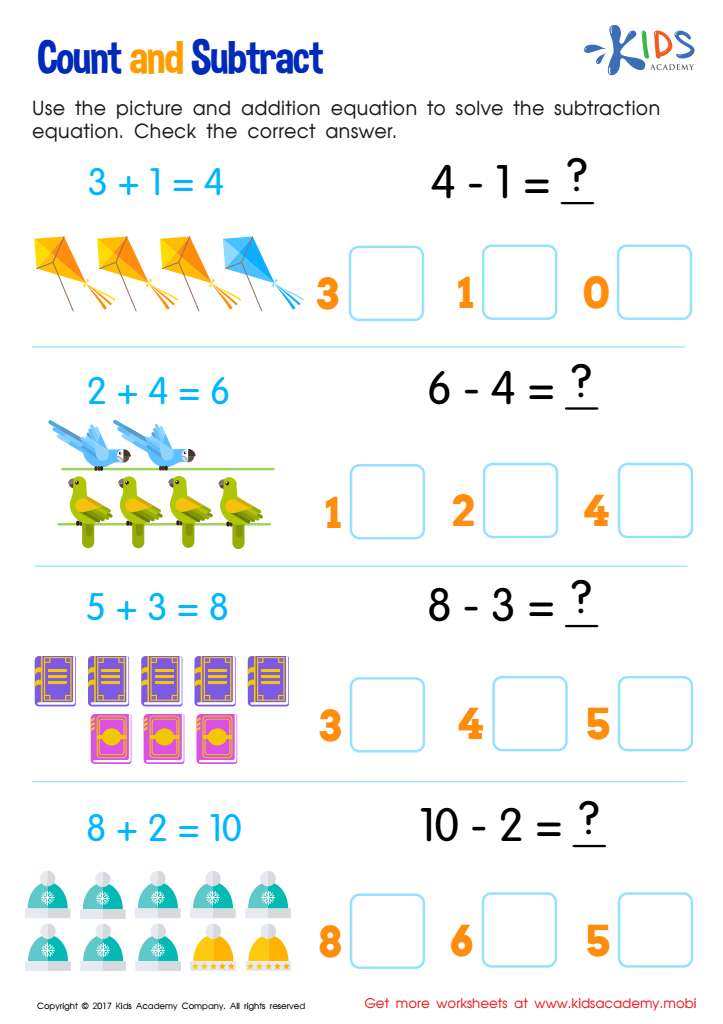
Count and Subtract Worksheet
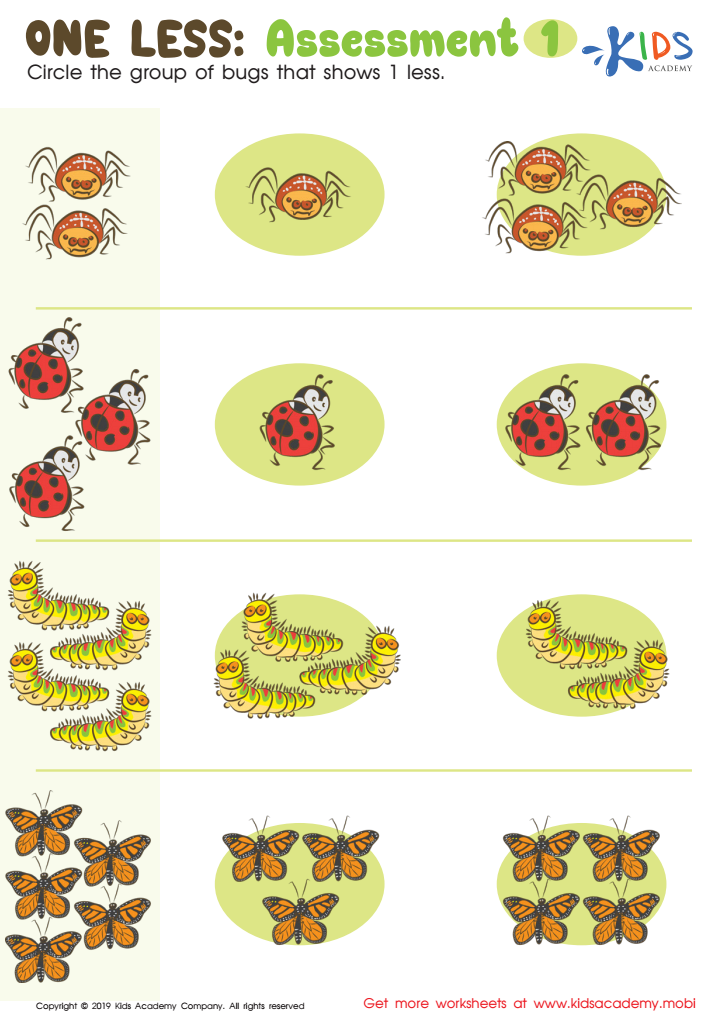
One Less: Assessment 1 Worksheet
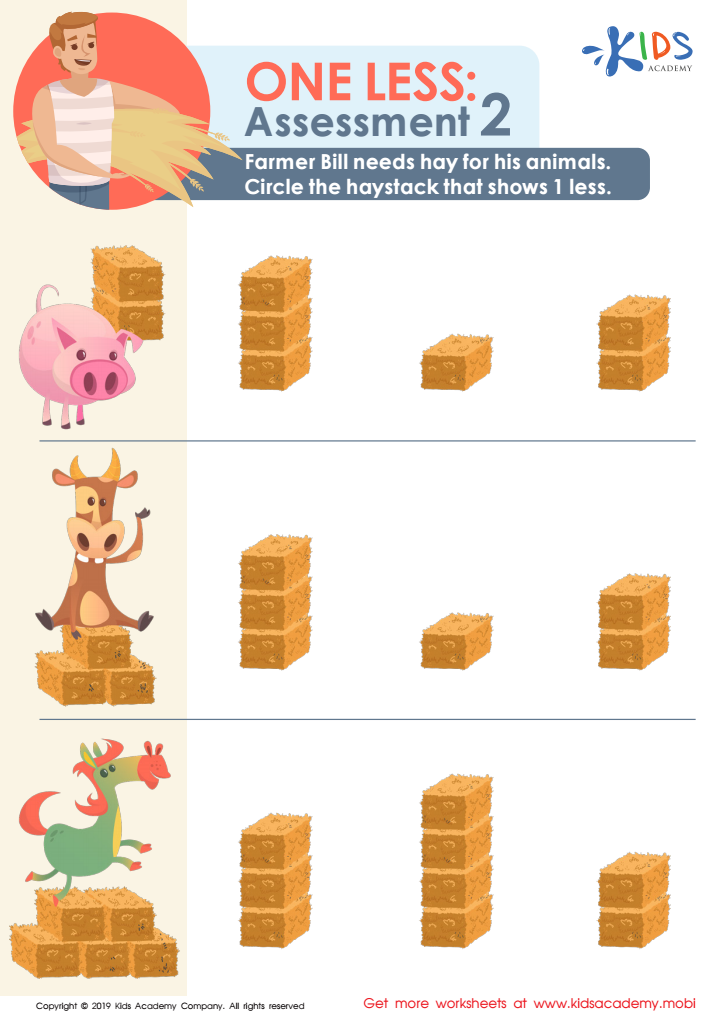
One Less: Assessment 2 Worksheet








Counting skills and understanding subtraction are foundational elements in a child’s early mathematical development, particularly for ages 5-7. At this stage, children are generally in kindergarten or early primary school, exploring basic numeracy concepts that will support more advanced learning.
First, mastering counting lays the groundwork for all subsequent math skills. Counting teaches children the sequence of numbers, the concept of quantity, and one-to-one correspondence, where each object being counted corresponds to one number. This is essential for understanding addition, subtraction, and even more complex concepts like multiplication and division later on.
Subtraction skills are equally crucial. Subtraction helps children understand the concept of 'taking away’ or ‘difference,’ which is fundamental not just in math but also in everyday problem-solving situations. For instance, if a child knows they have 5 apples and someone eats 2, understanding subtraction lets them quickly determine they have 3 apples left.
Incorporating games and practical exercises around these skills can significantly enhance a child's engagement and understanding. Parental or teacher involvement is vital because these early math skills are often reinforced through everyday activities. Cooking with ingredients, playing board games, or simply counting objects around the house are interactive ways to develop these skills.
Ensuring that young children develop strong counting and subtraction skills sets the stage for their confidence and their ability to tackle more complex math concepts in later years, fostering a positive attitude towards learning in general.








