Mathematical reasoning Subtraction Worksheets for Ages 5-7
6 filtered results
-
From - To
Unlock your child's potential with our engaging Mathematical Reasoning Subtraction Worksheets designed specifically for ages 5-7! These interactive worksheets help young learners develop essential subtraction skills while fostering critical thinking and problem-solving abilities. Featuring a variety of fun, age-appropriate activities, children will enjoy tackling subtraction challenges that promote a deeper understanding of mathematical concepts. Perfect for homeschooling or additional practice, our worksheets combine creativity with learning to keep your child motivated. Let your little ones explore the world of numbers and enhance their reasoning skills today with our thoughtfully crafted subtraction resources! Explore, learn, and grow in a fun-filled mathematical adventure!
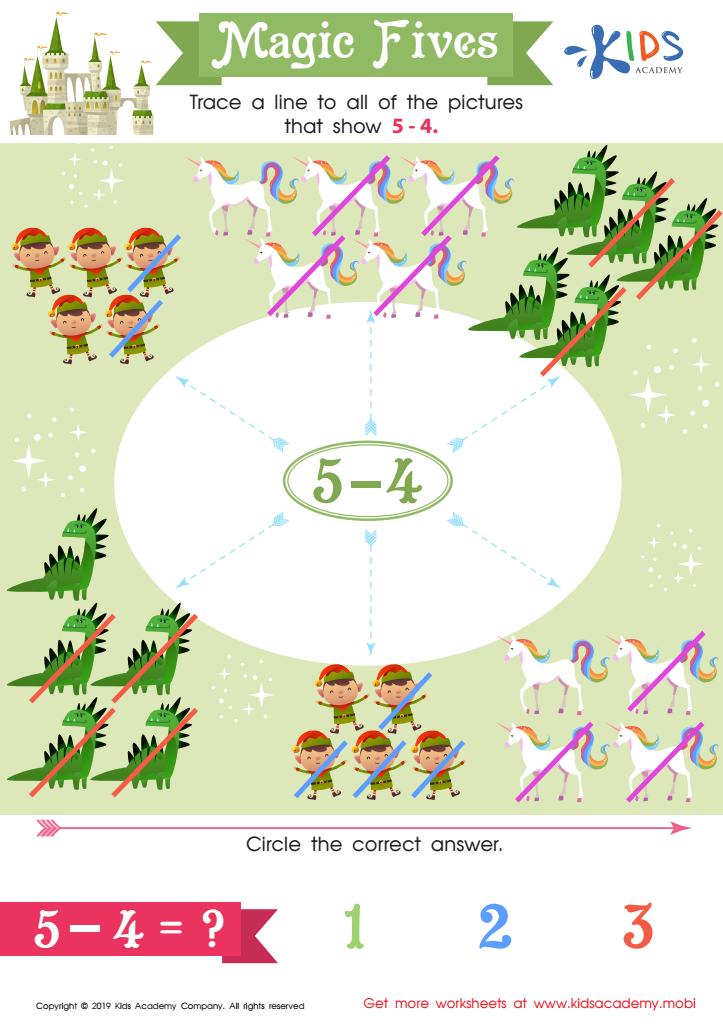
Magic Fives Worksheet
 Assign to My Students
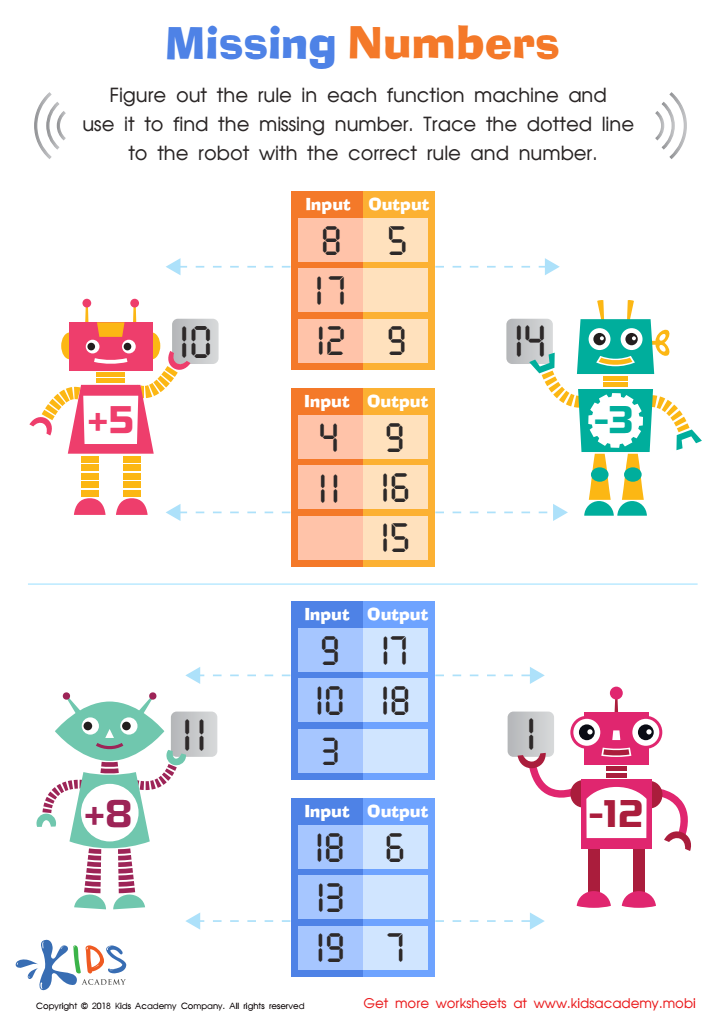
Missing Numbers Worksheet
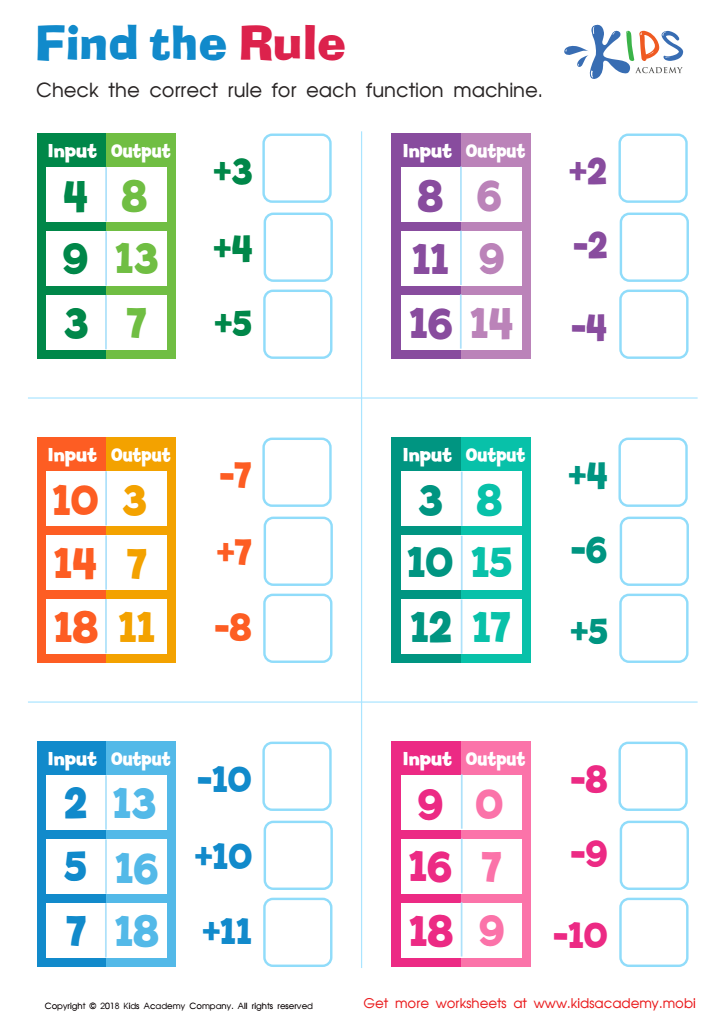
Find the Rule Worksheet
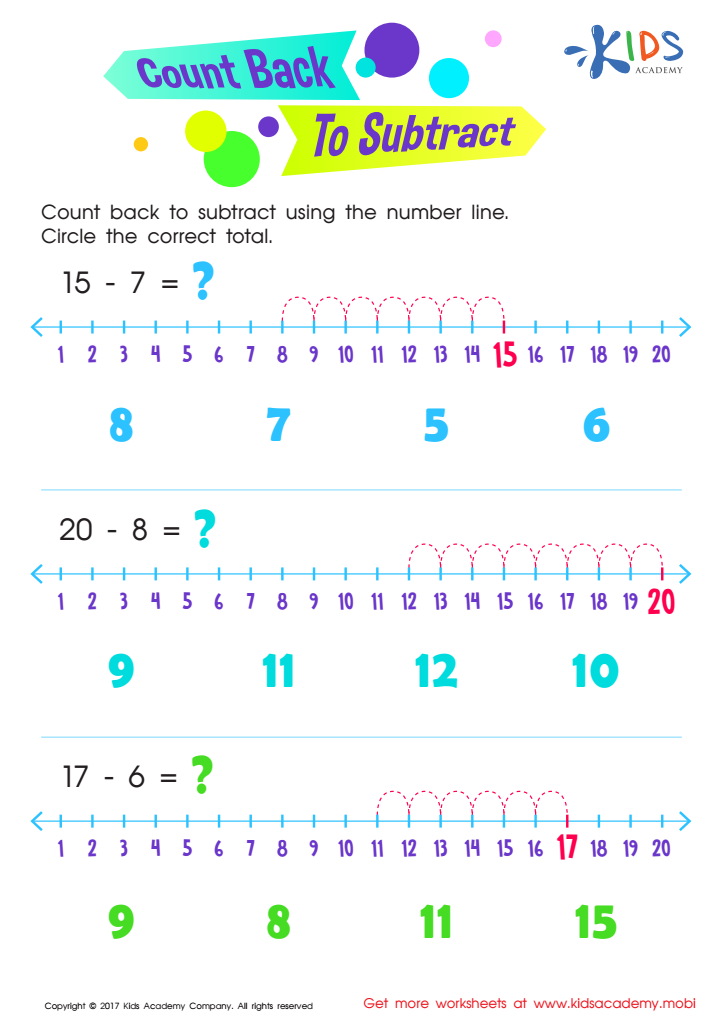
Count Back to Subtract Substraction Worksheet
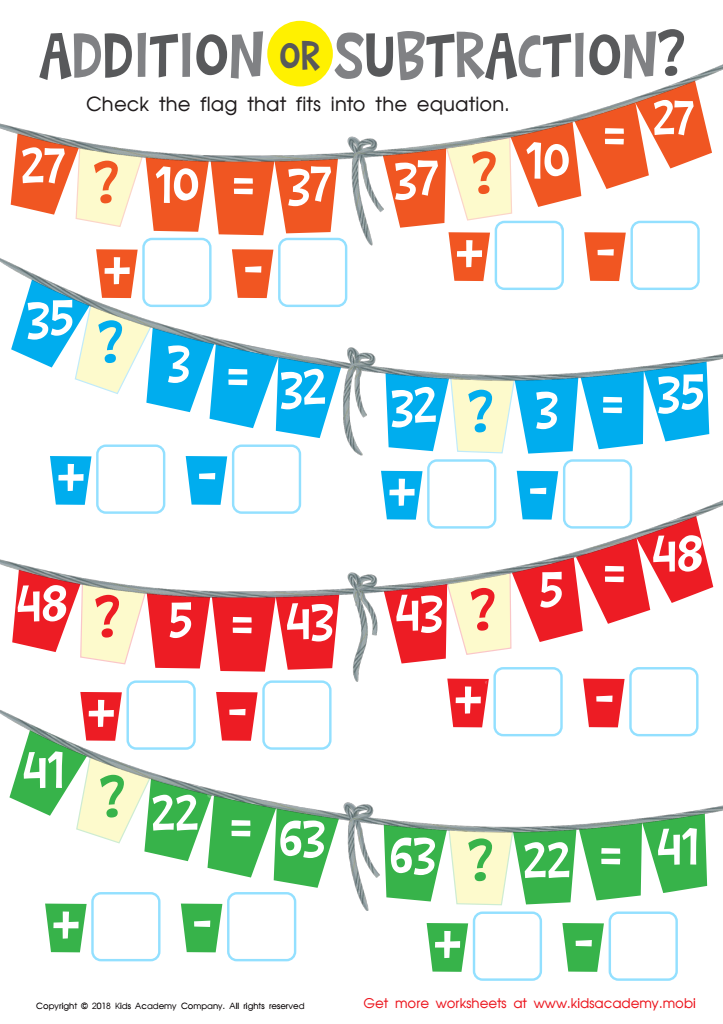
Addition or Subtraction? Worksheet
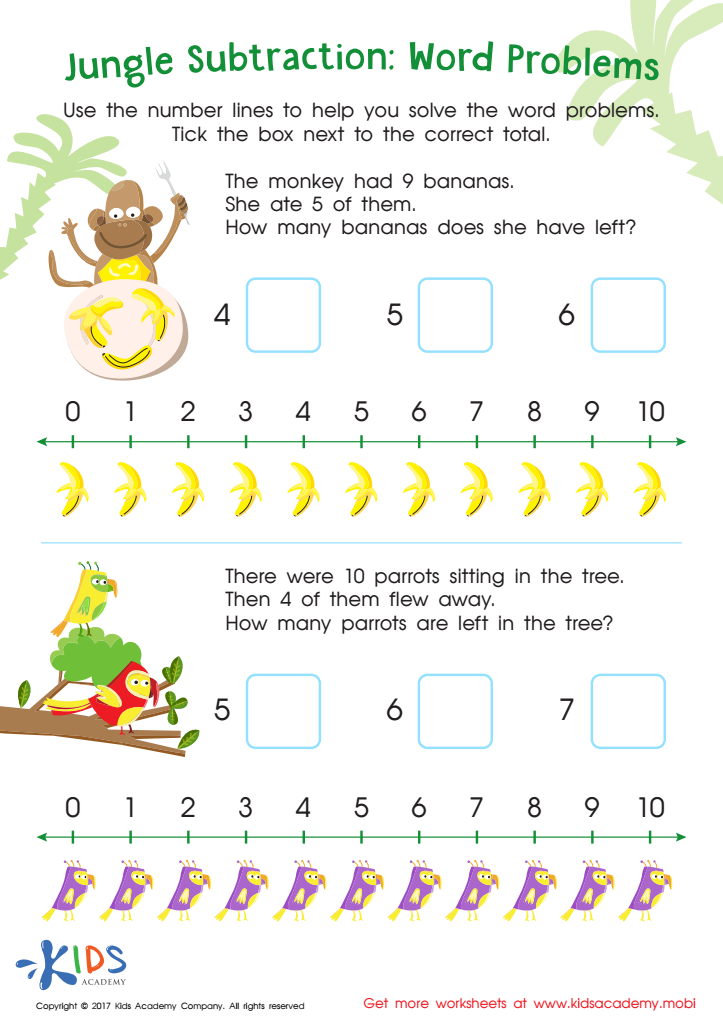
Jungle Subtraction Word Problems Substraction Worksheet








Mathematical reasoning in subtraction is crucial for children ages 5 to 7, as it lays the foundation for their overall mathematical understanding. At this developmental stage, children are not just memorizing subtraction facts; they are learning to think critically and solve problems conceptually. Subtraction is not merely the act of taking away; it involves understanding relationships between numbers, recognizing patterns, and applying logic.
Caring about students' mathematical reasoning in subtraction equips them with essential life skills. Children learn how to approach challenges methodically, reason through problems, and arrive at solutions independently. Furthermore, building a solid grasp of subtraction bolsters their confidence, engaging them in math and encouraging a positive attitude toward learning.
Additionally, strong mathematical reasoning nurtures collaborative skills. Group activities around subtracting numbers foster communication and teamwork. Parents and teachers can encourage the use of manipulatives or visual aids, making learning engaging and helping children visualize abstract concepts.
By prioritizing mathematical reasoning in subtraction during these formative years, parents and teachers help foster critical thinking, enhance problem-solving abilities, and equip children for more advanced mathematical concepts in the future. This foundational skill promotes not just academic success but also lifelong analytical abilities.








