Number Recognition Subtraction Worksheets for Ages 5-7
12 filtered results
-
From - To
Unlock your child's mathematical potential with our engaging Number Recognition Subtraction Worksheets designed for ages 5-7! These worksheets provide a fun and interactive way for kids to develop their number recognition skills while practicing subtraction. Each activity combines visual elements and colorful designs to keep young learners motivated and excited about math. By reinforcing essential concepts, children will build a solid foundation in both subtraction and their ability to recognize numbers. Perfect for classroom practice or home learning, these printable resources ensure that students gain confidence and proficiency. Explore our wide variety of worksheets to make math an enjoyable adventure today!
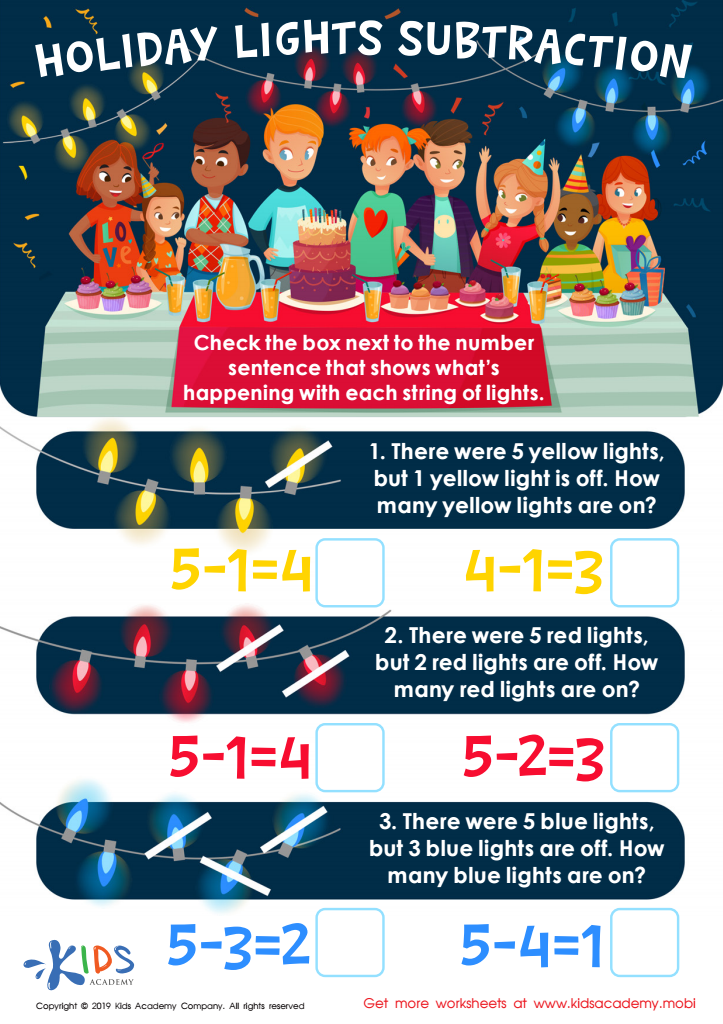
Holiday Lights Subtraction Worksheet
 Assign to My Students
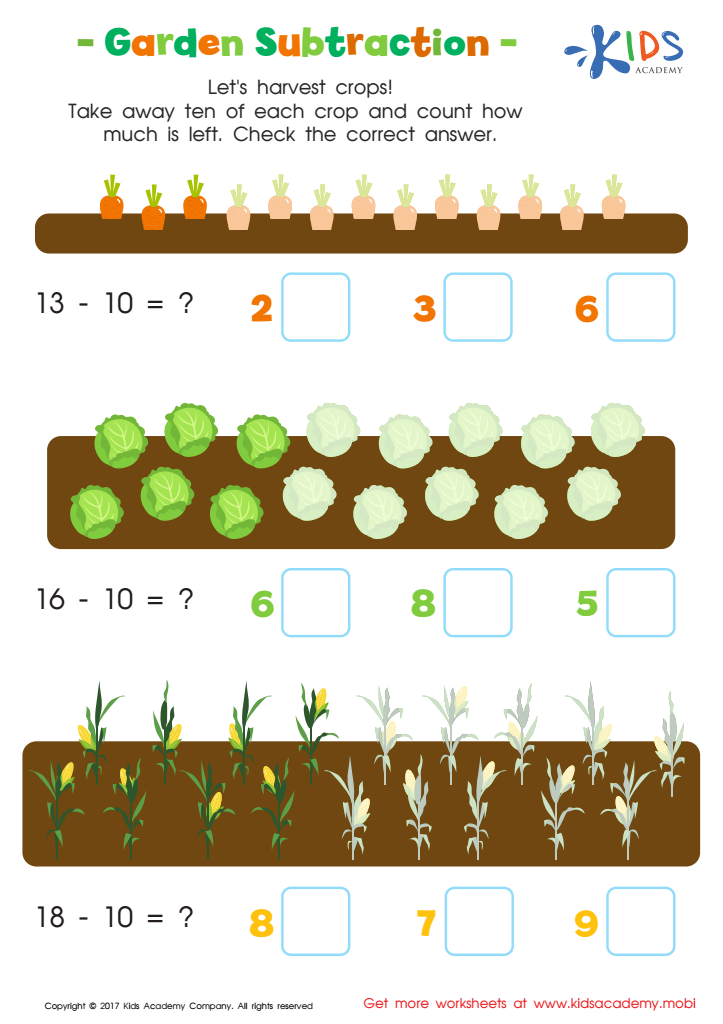
Garden Subtraction Worksheet
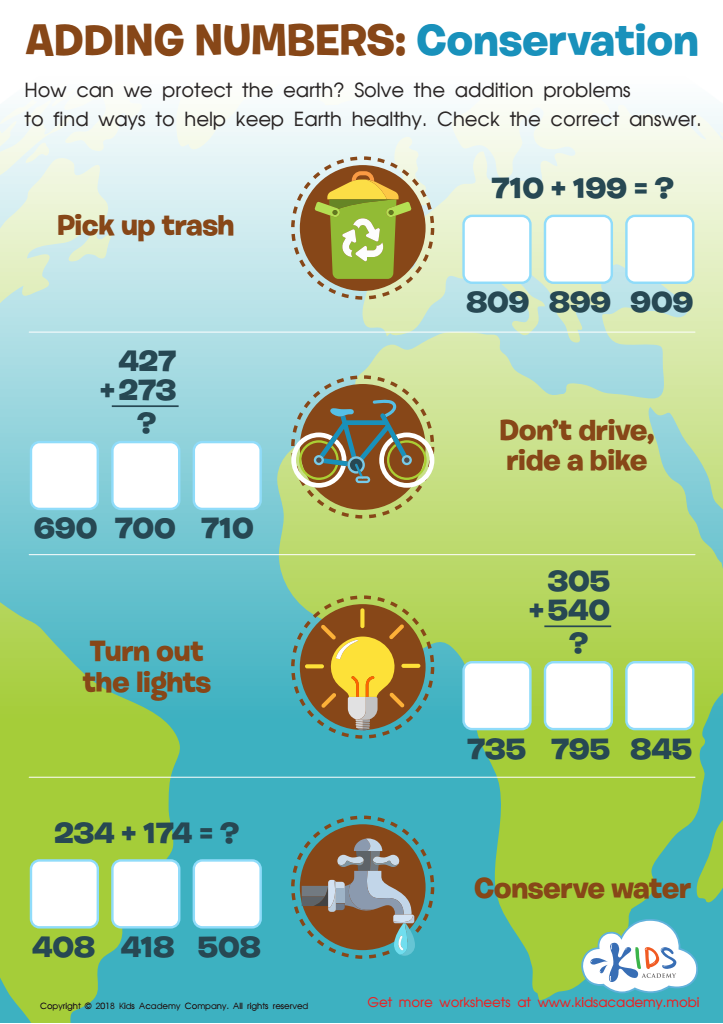
Adding Numbers: Conservation Worksheet
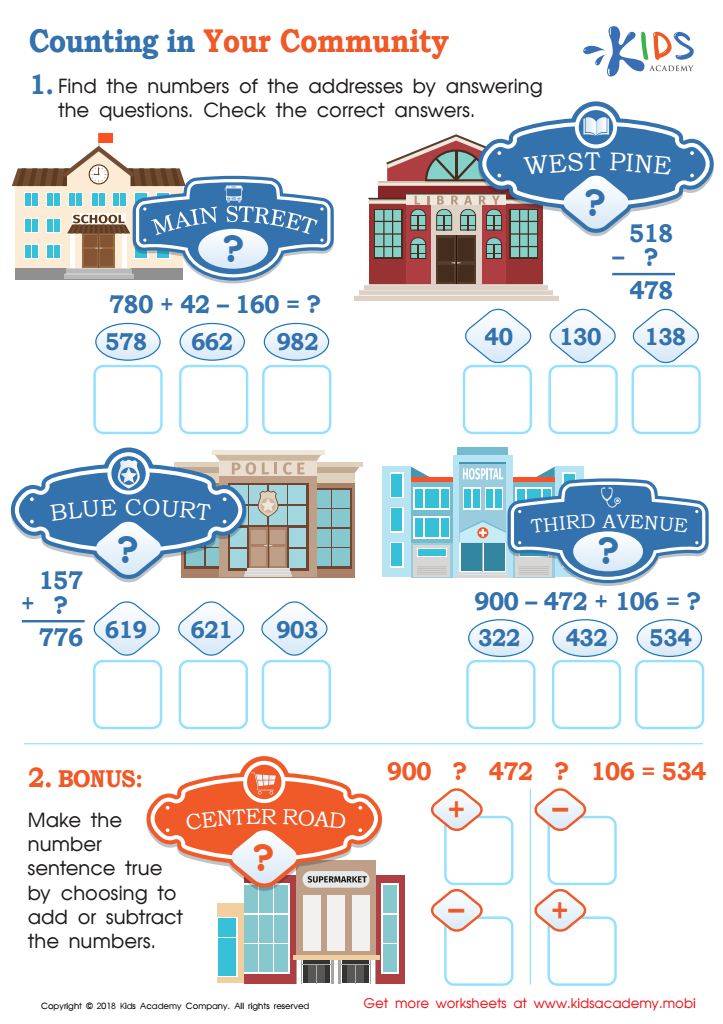
Counting in Your Community Worksheet
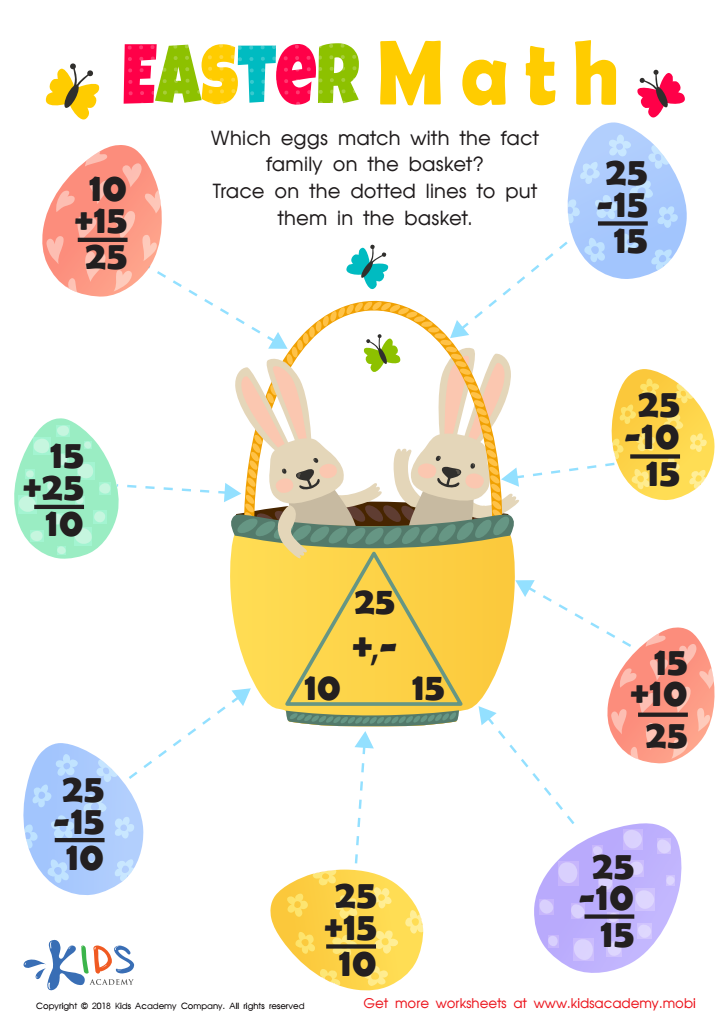
Fact Families: Easter Math Worksheet
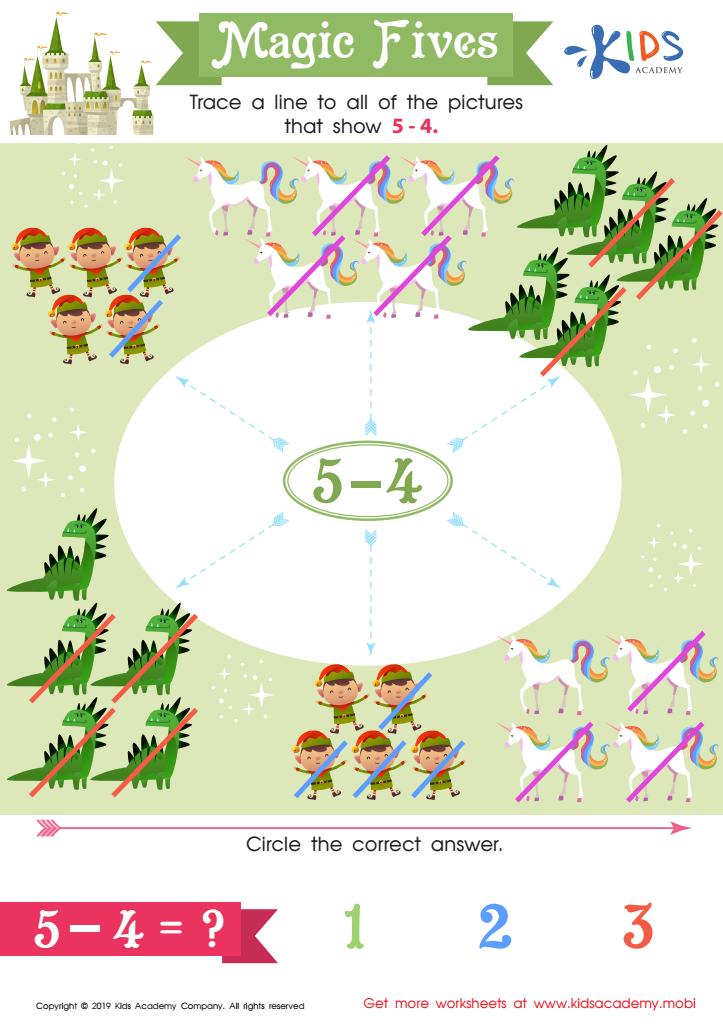
Magic Fives Worksheet
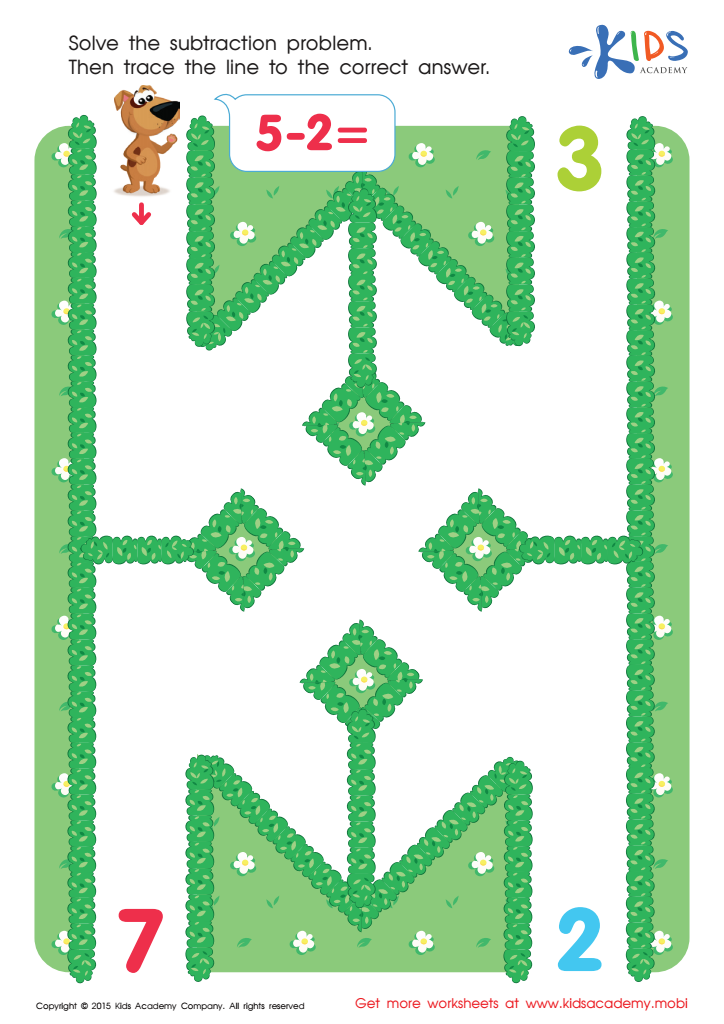
Five Minus Two Worksheet
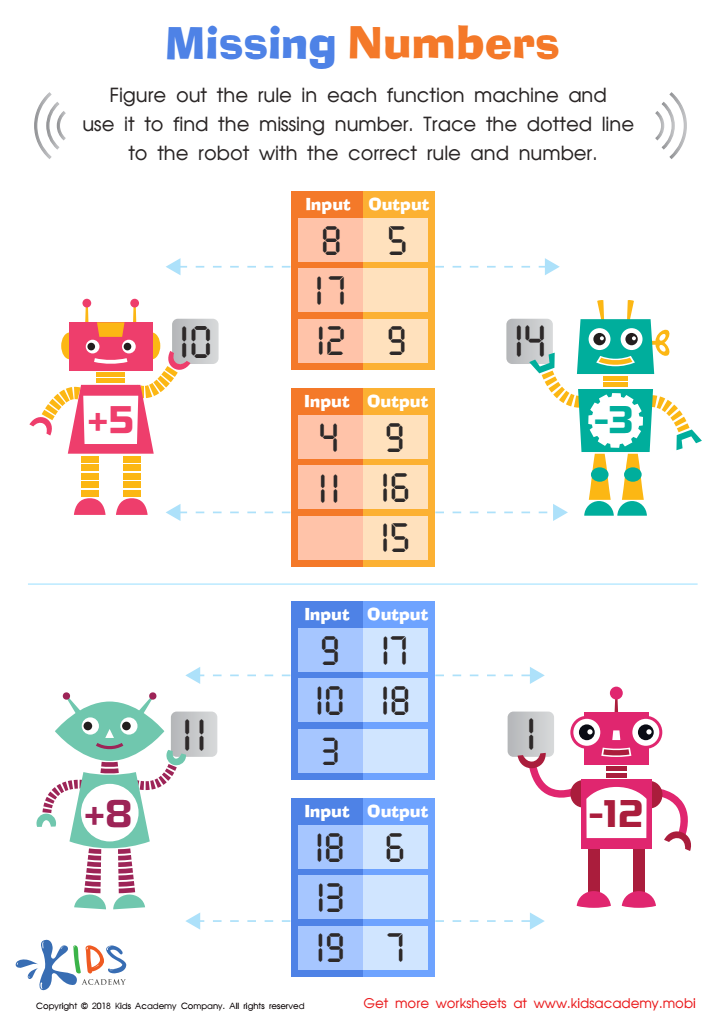
Missing Numbers Worksheet
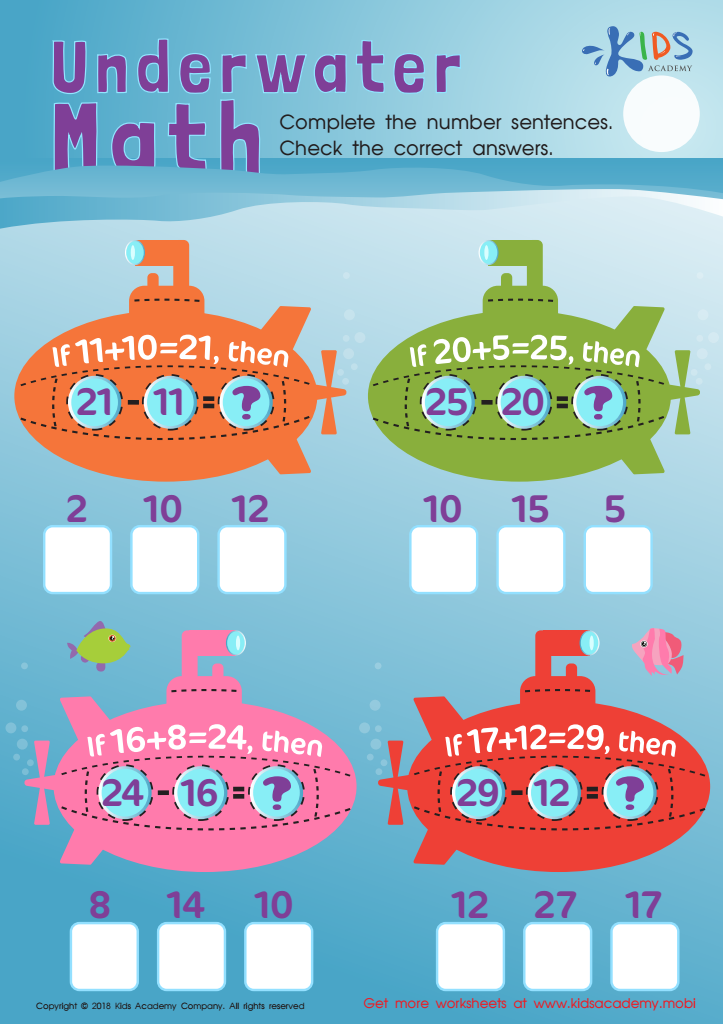
Addition and Subtraction: Underwater Math Worksheet
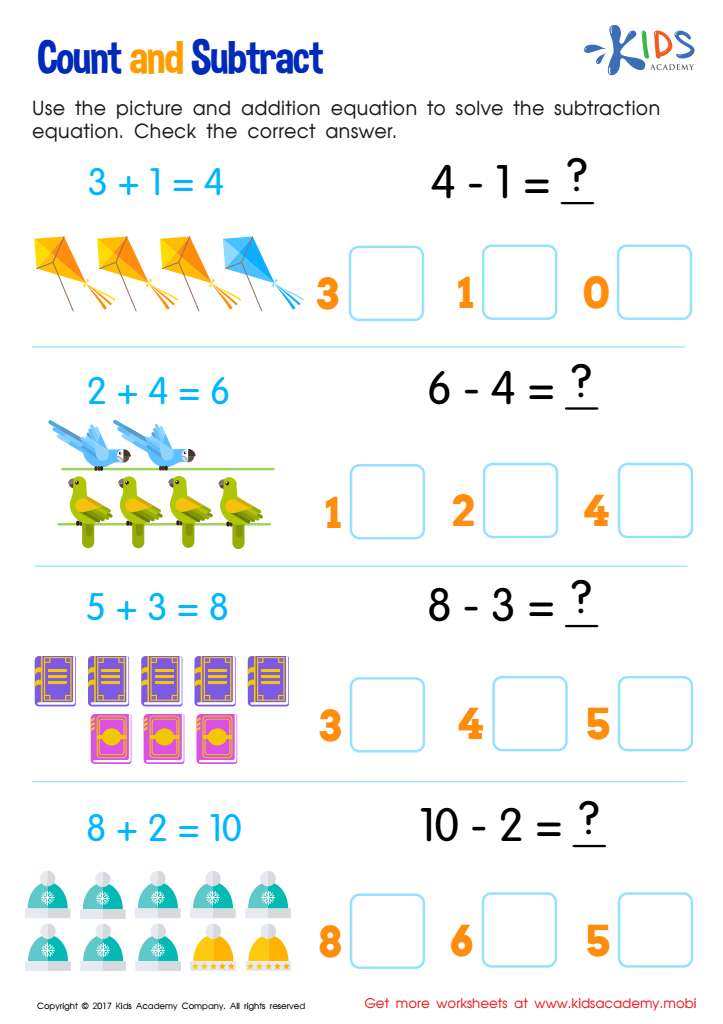
Count and Subtract Worksheet
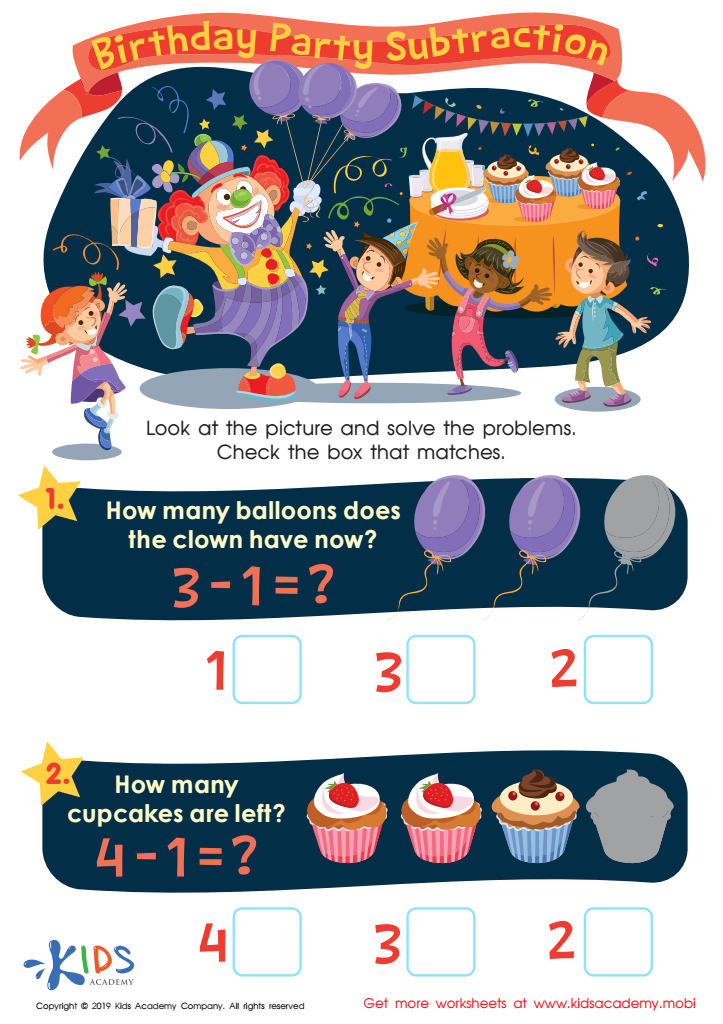
Birthday Party Subtraction Worksheet
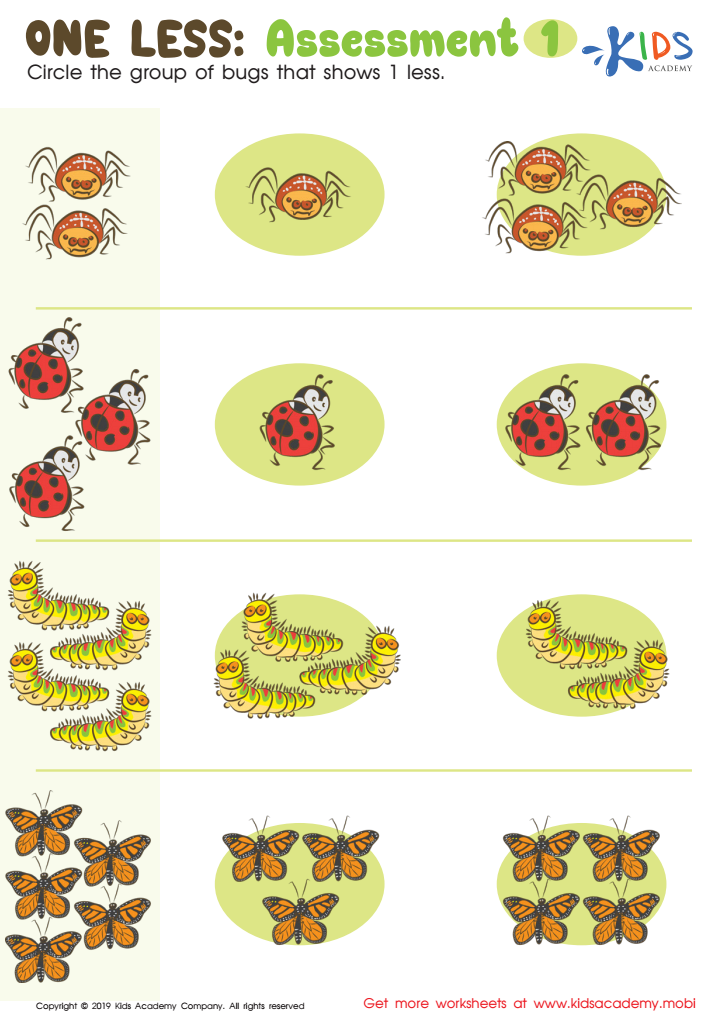
One Less: Assessment 1 Worksheet








Number recognition and subtraction are critical skills for children aged 5-7 because they form the foundation for more advanced mathematical concepts. At this developmental stage, children begin to understand basic numerical values and relationships, making it essential for parents and teachers to cultivate these skills.
Number recognition allows children to identify and understand numbers, which helps them make sense of their world. By familiarizing youngsters with numbers, they can better grasp concepts like quantity and ordering, essential for daily activities such as counting objects or telling time.
Subtraction, on the other hand, introduces the idea of taking away or comparing quantities, promoting critical problem-solving skills. As they learn to solve simple subtraction problems, children develop logical thinking and learn the importance of persistence when faced with challenges.
Moreover, mastering these skills boosts confidence and enhances their overall academic foundation. Early mastery in number identification and basic arithmetic lays the groundwork for success in future math learning, fostering positive attitudes toward the subject.
Ultimately, when parents and teachers prioritize number recognition and subtraction, they empower children with essential cognitive tools, setting them up for lifelong learning and a robust understanding of mathematics.








