Understanding landforms Science Worksheets for Ages 5-7
3 filtered results
-
From - To
Explore our "Understanding Landforms Science Worksheets" designed for children aged 5-7! This engaging collection introduces young learners to various landforms like mountains, rivers, valleys, and deserts through fun and interactive activities. Each worksheet encourages discovery and understanding of the Earth's surface, fostering a sense of curiosity and exploration. Your child will enjoy vibrant illustrations, simple explanations, and hands-on tasks that support cognitive development and enhance early science education. Perfect for classrooms or at-home learning, these worksheets make understanding landforms exciting and accessible for young minds. Start exploring the wonders of our planet's various landscapes today!
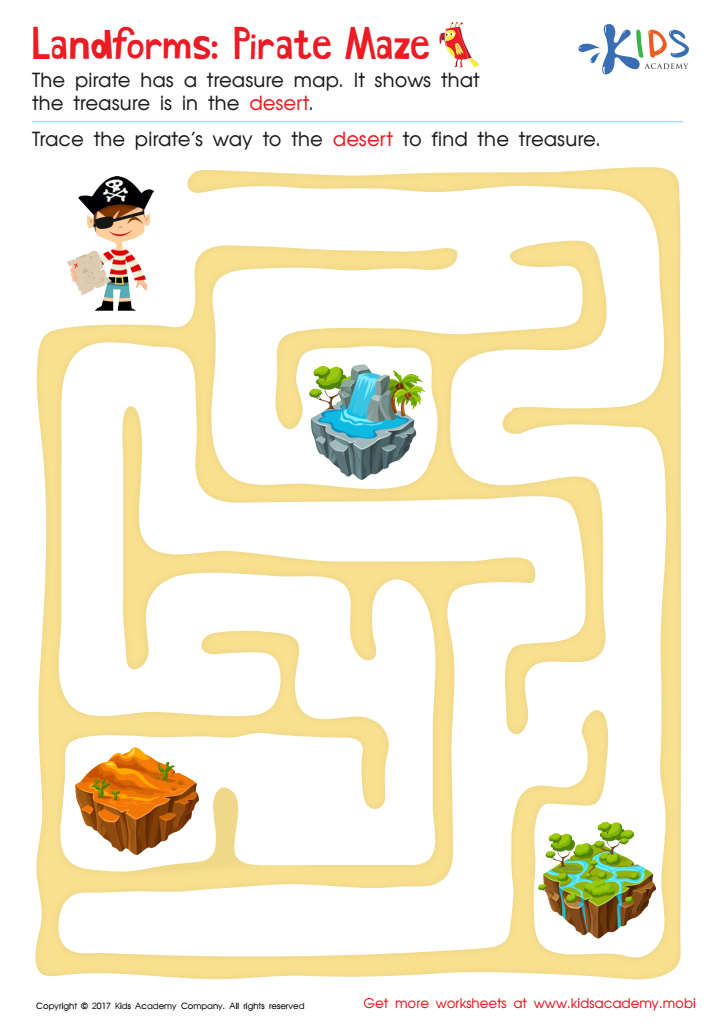
Landforms: Pirate Maze Printable
 Assign to My Students
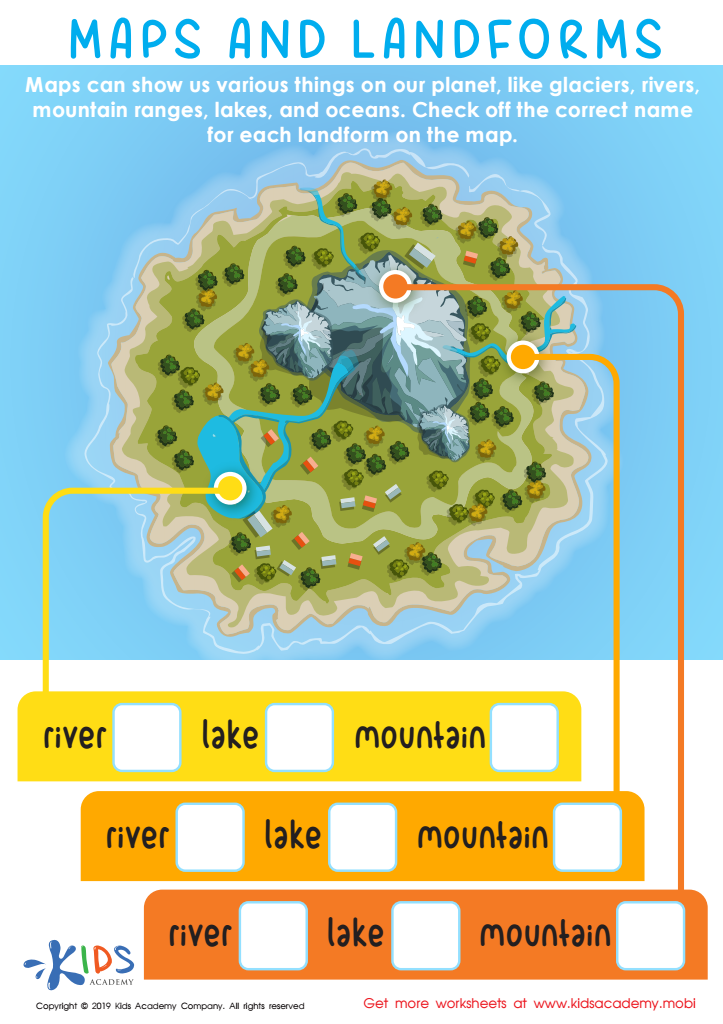
Maps and Landforms Worksheet
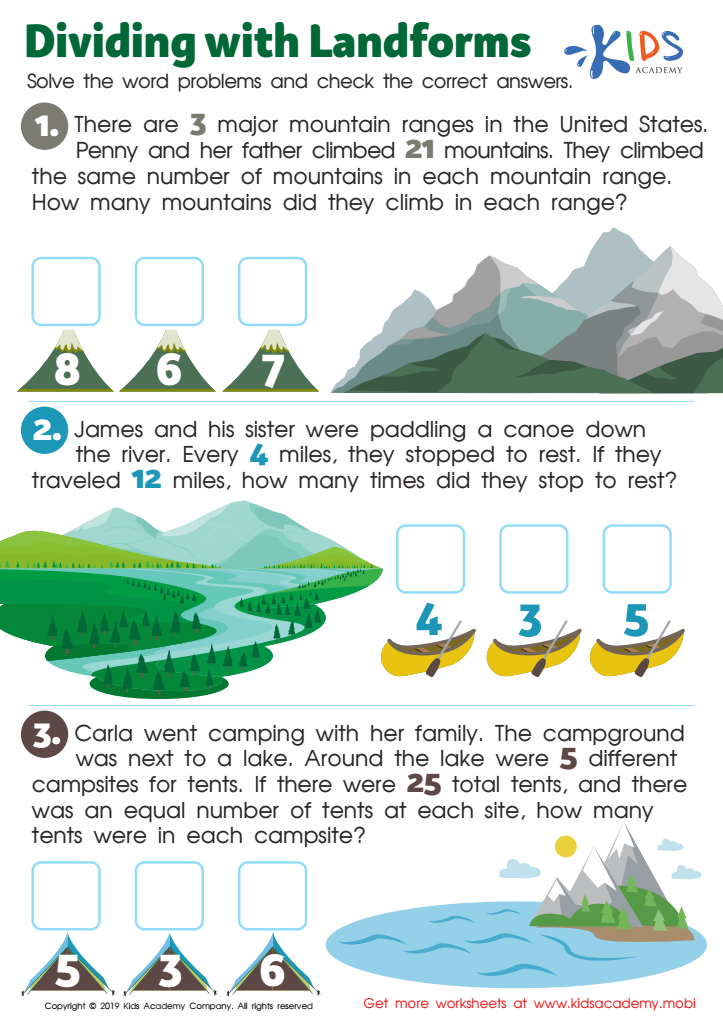
Dividing with Landforms





.jpg)

Understanding landforms is essential for children ages 5-7, as it lays the foundation for their awareness of the natural world. By learning about various landforms—such as mountains, rivers, valleys, and plateaus—children develop important observational skills and begin to grasp how geography affects human life and ecosystems.
For parents and teachers, fostering an early interest in landforms encourages curiosity and promotes critical thinking. Science education in early childhood supports the overarching goal of nurturing responsible stewards of the environment. When children learn about landforms, they gain insight into natural processes and learn about weather, habitats, and biodiversity, enhancing their overall comprehension of the world around them.
Moreover, discussing landforms creates opportunities for hands-on learning, such as nature walks and experiments, which humanize abstract concepts and keep kids engaged. Through activities related to landforms, children can strengthen social skills by working in groups and sharing ideas. Nurturing this exploration fosters a sense of responsibility towards the Earth and its ecosystems. Thus, understanding landforms is vital not only for cognitive development but also for instilling a love for nature, encouraging inquiry, and preparing young minds for more complex environmental topics in the future.







