
Critical Thinking Life Science Worksheets for Ages 5-7
3 filtered results
Difficulty Level
Grade
Age
-
From - To
Subject
Activity
Standards
Explore our engaging Critical Thinking Life Science Worksheets designed for children ages 5-7! These fun and interactive activities facilitate the development of crucial problem-solving skills while diving into the wonders of life science. Your young learners will enjoy colorful illustrations and age-appropriate challenges that encourage them to think critically about the natural world. Topics include understanding ecosystems, plant life, animal habitats, and basic biology concepts. Perfect for home or classroom use, these worksheets provide an excellent way to inspire curiosity and foster a love for science in early learners. Let your child embark on a learning adventure today!
Favorites
With answer key
Interactive
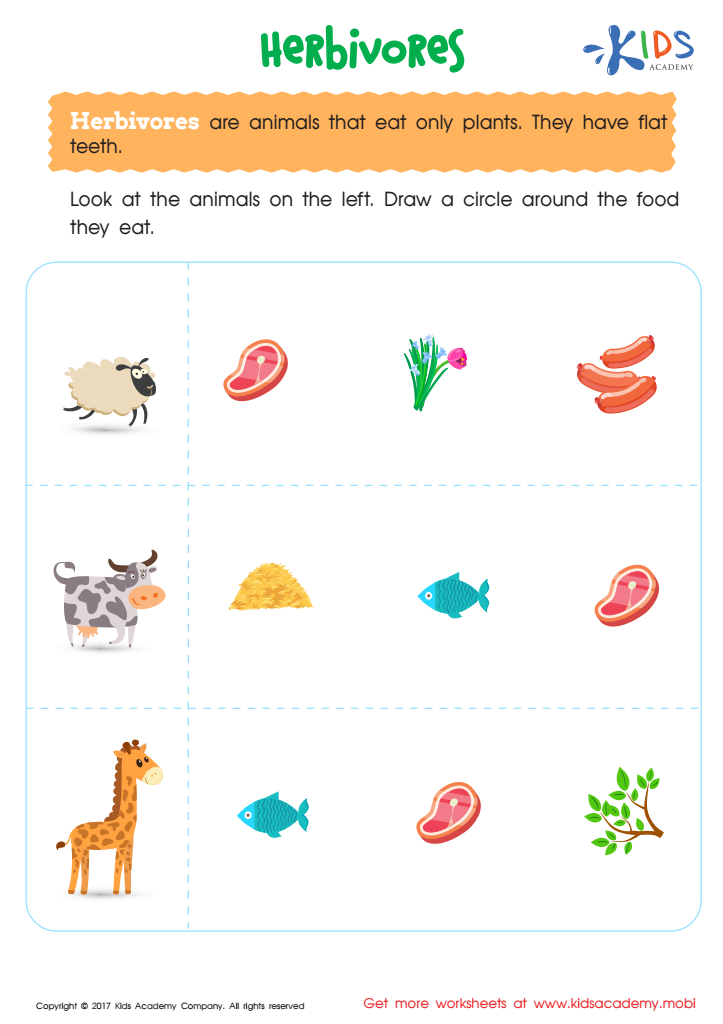
Herbivores Printable
Strengthen their vocab with these fascinating creatures, as they explore an intriguing aspect of beloved animals.
 Assign to My Students
Herbivores Printable
Worksheet
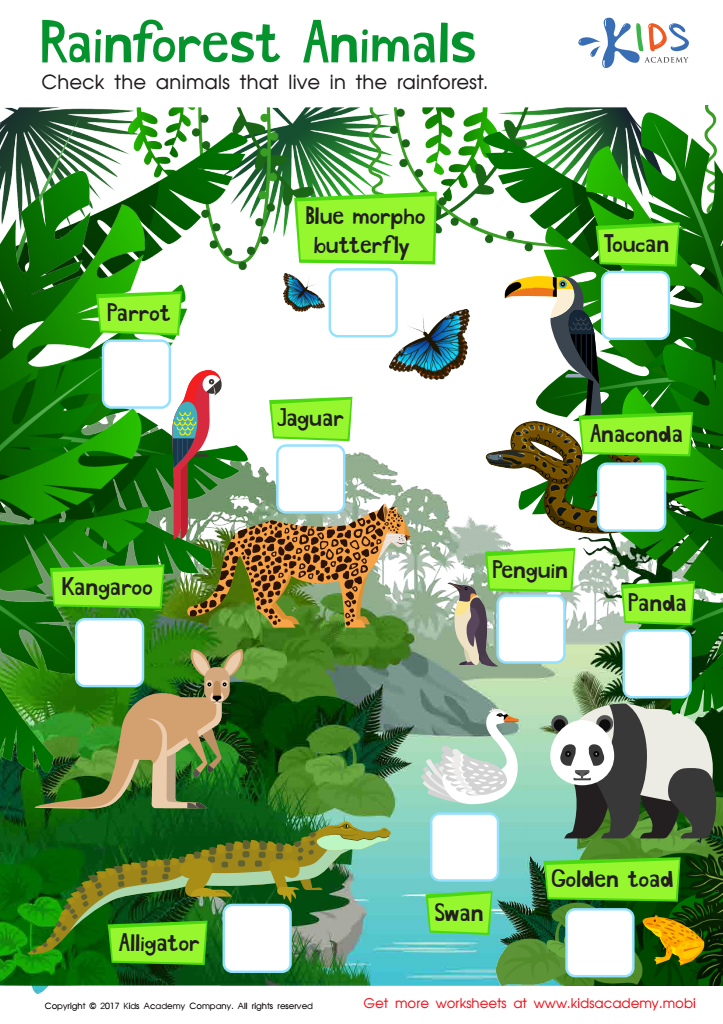
Rainforest Animals Worksheet
Kids love the bright, vivid pics of rainforest animals in this worksheet. It fuels their interest in life science and brings joy to their learning. It encourages them to study these animals in detail.
Rainforest Animals Worksheet
Worksheet
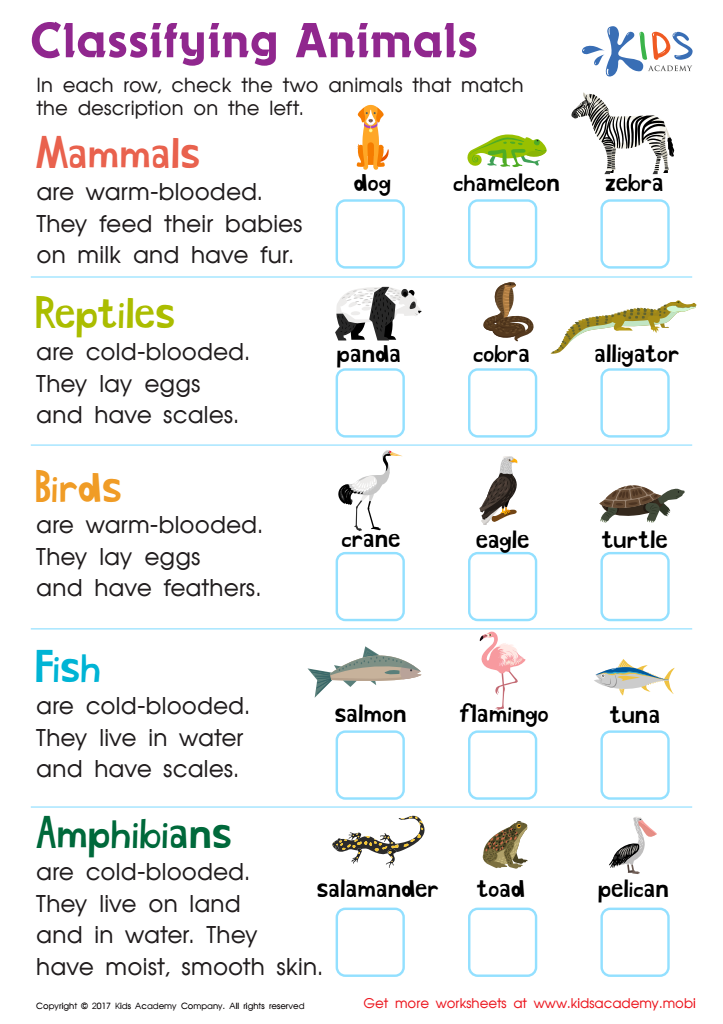
Classifying Animals Worksheet
Print the 2nd grade animal classification worksheet and help kids study the differences between mammals, reptiles, birds, fish and amphibians. Let them pick two examples from the options given.
Classifying Animals Worksheet
Worksheet
Join Kids Academy for Free
Who is primarily going to use this learning content?



.jpg)

Parents and teachers should prioritize critical thinking in life science for children aged 5-7 because it lays the foundation for informed decision-making, problem-solving, and an appreciation for the natural world. At this developmental stage, children are naturally curious and eager to explore. Introducing critical thinking helps them to inquire about their surroundings, ask questions, and connect concepts in meaningful ways.
In life science, discussing topics like ecosystems, plants, and animals helps children understand the interconnectedness of living things. Engaging in discussions and hands-on activities can sharpen their observational skills and encourage them to think analytically. This fosters not only knowledge but also a sense of responsibility toward the environment and living organisms.
Moreover, cultivating critical thinking skills supports academic success across subjects. Children learn to evaluate information, draw conclusions, and articulate their thoughts clearly—essential skills for lifelong learning.
By nurturing a questioning mindset and promoting inquiry-based learning in life science, parents and teachers are not just preparing children to excel academically but also instilling values of curiosity, empathy, and sustainability. These early lessons have lasting implications, shaping how children perceive the world and respond to challenges as they grow.








