Vowel Recognition Alphabet Worksheets for Ages 5-8
23 filtered results
-
From - To
Discover our engaging Vowel Recognition Alphabet Worksheets designed for kids aged 5-8! These fun, educational sheets are crafted to enhance your child's understanding of vowel sounds, vital for early reading skills. Each worksheet features interactive activities, helping young learners recognize, differentiate, and pronounce vowels within words. Perfect for preschool to early elementary students, our exercises blend play with learning, encouraging independent practice and confidence. Ideal for both classroom and at-home use, these printable resources support your child's reading journey, fostering strong phonetic foundations. Download now and watch your child's literacy skills flourish!
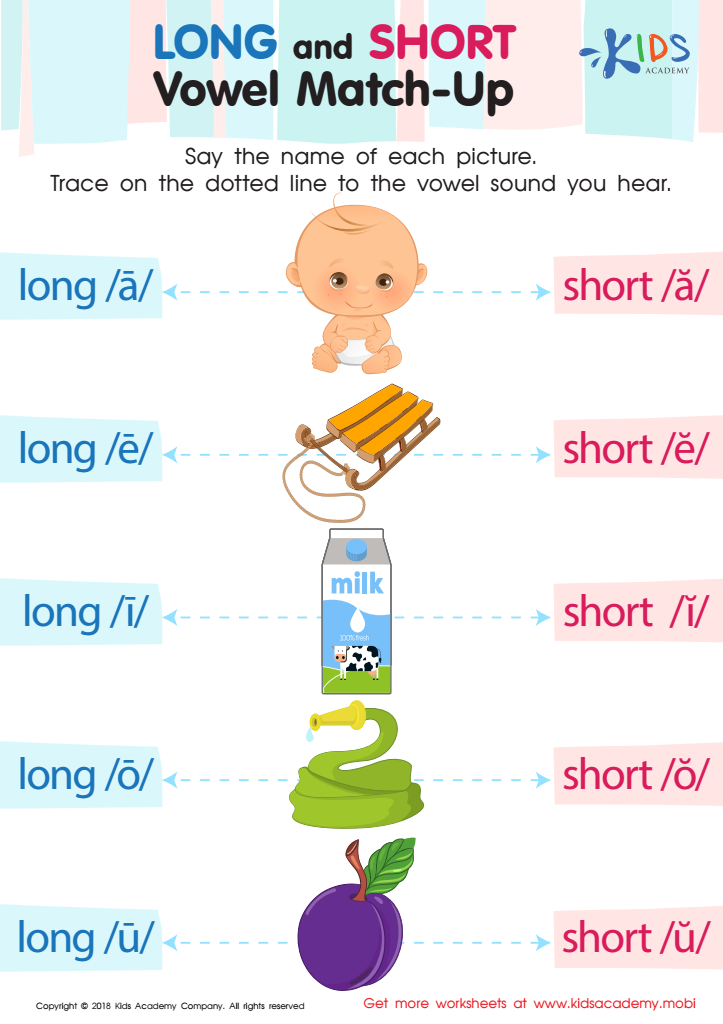
Long and Short Vowel Match up Reading Worksheet
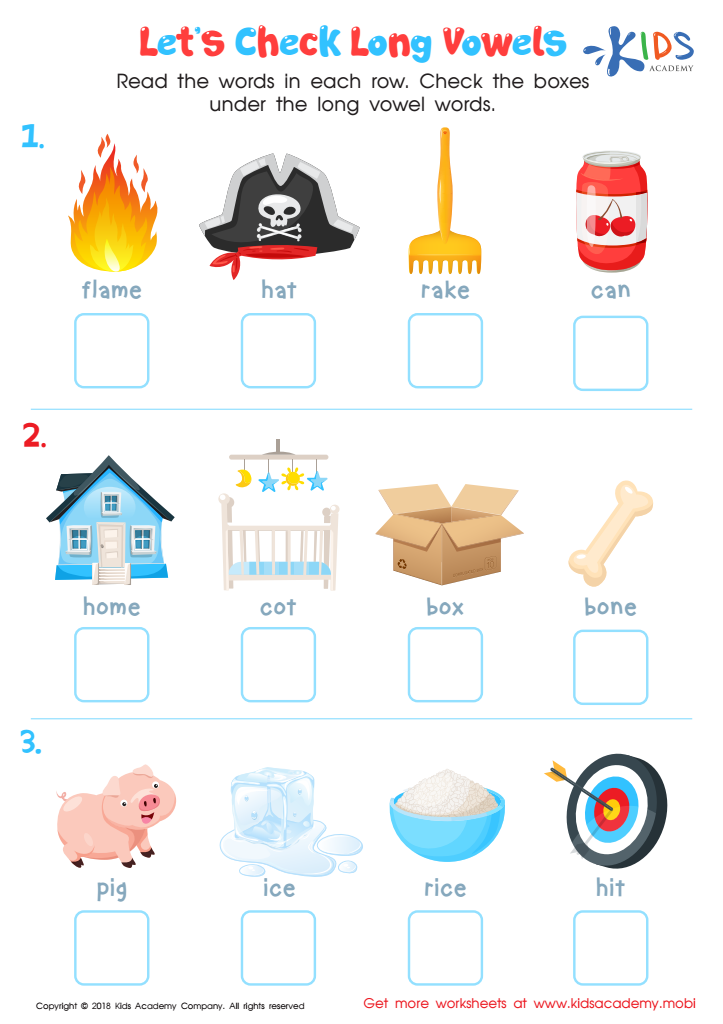
Let's Check Long Vowels: Assessment Worksheet
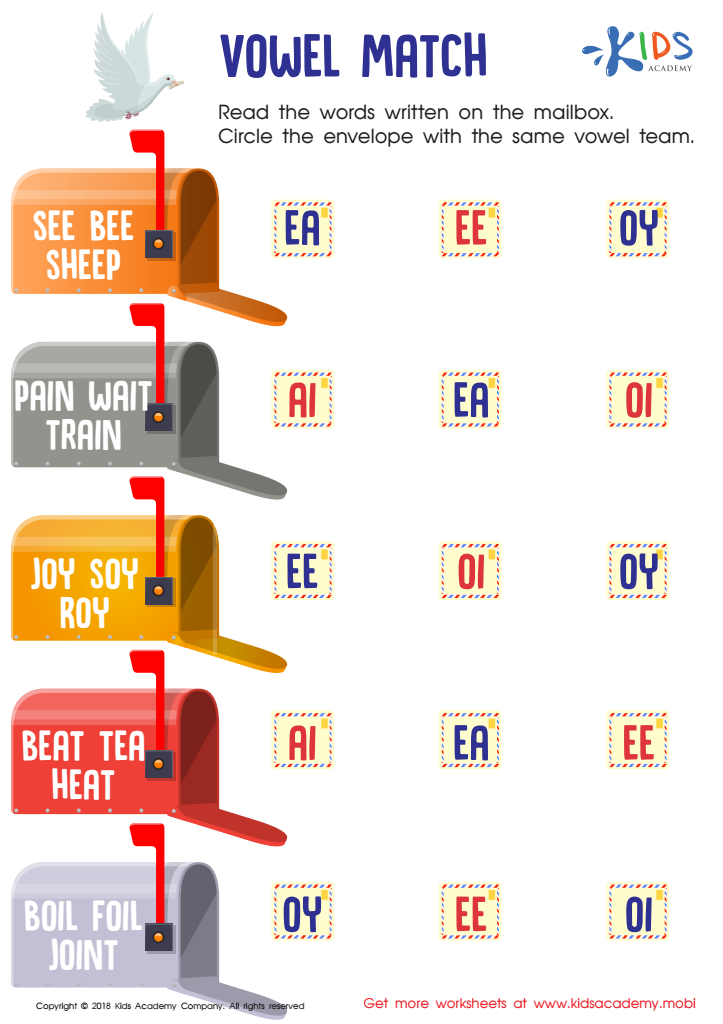
Vowel match Worksheet
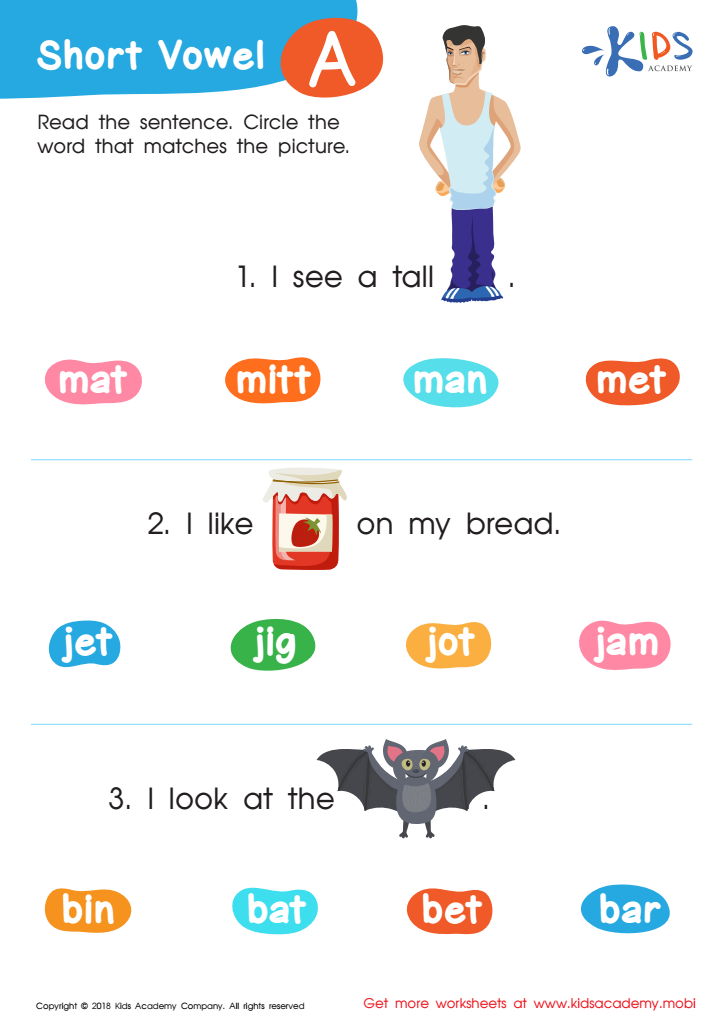
Short Vowel /a/ Worksheet
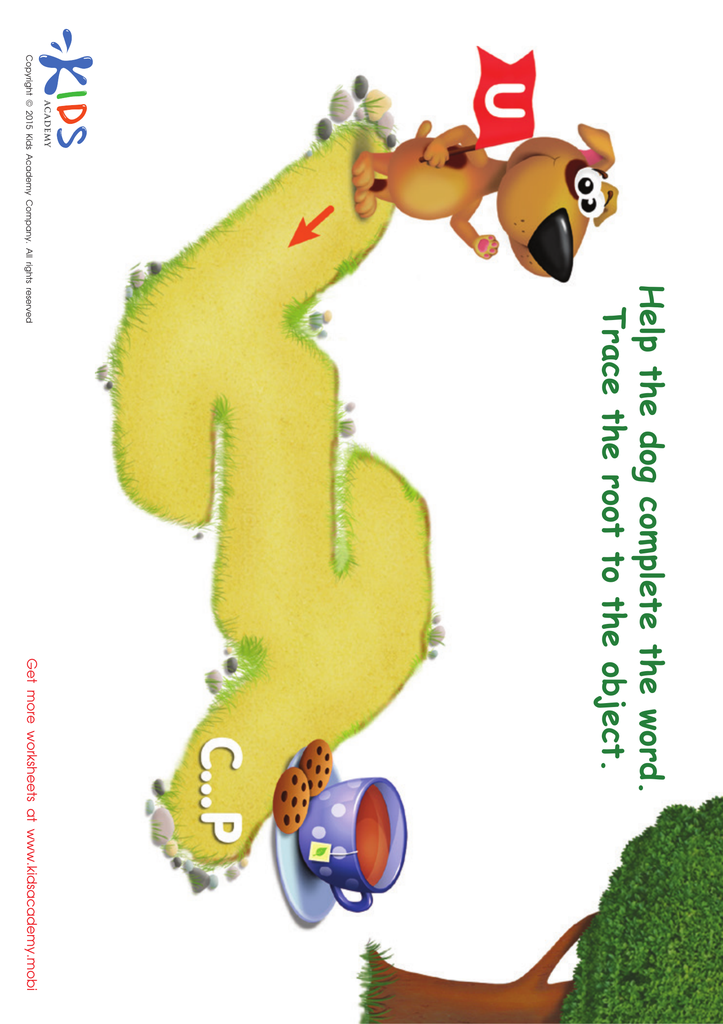
Short Vowel Sound U Worksheet Worksheet
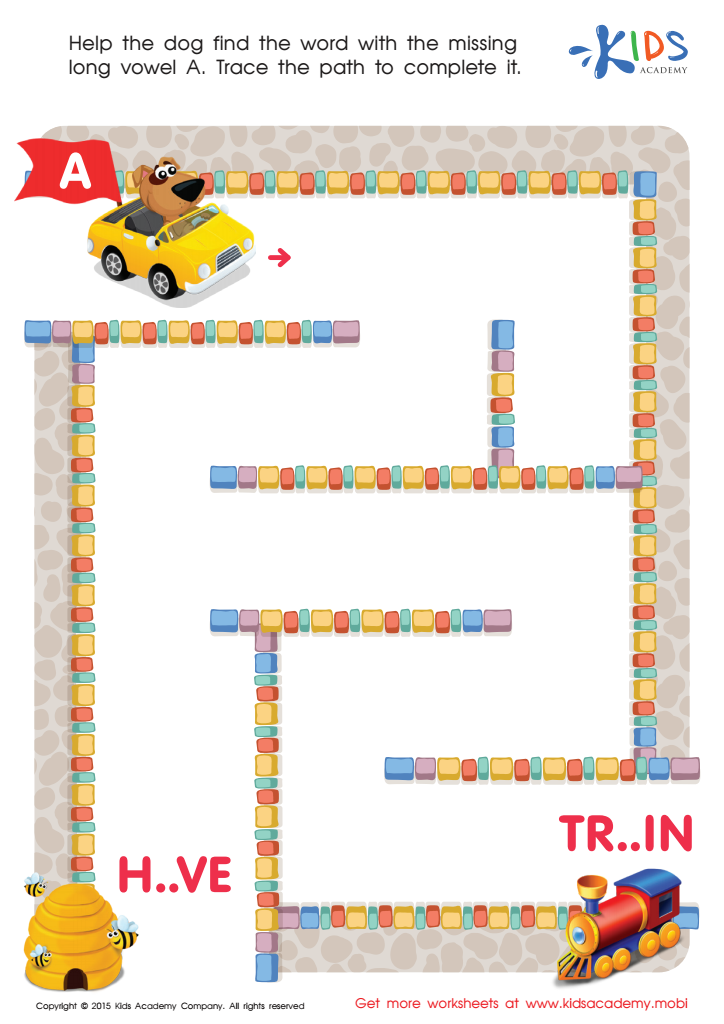
Long Vowel Sound A Worksheet
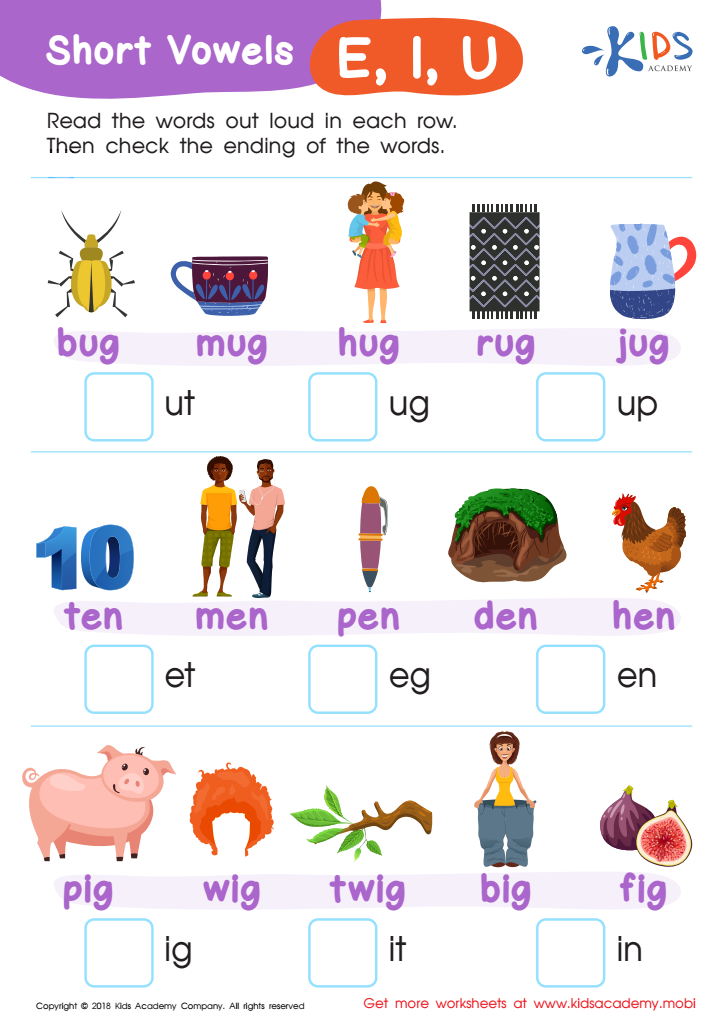
Short Vowels /e/, /i/, and /u/ Worksheet
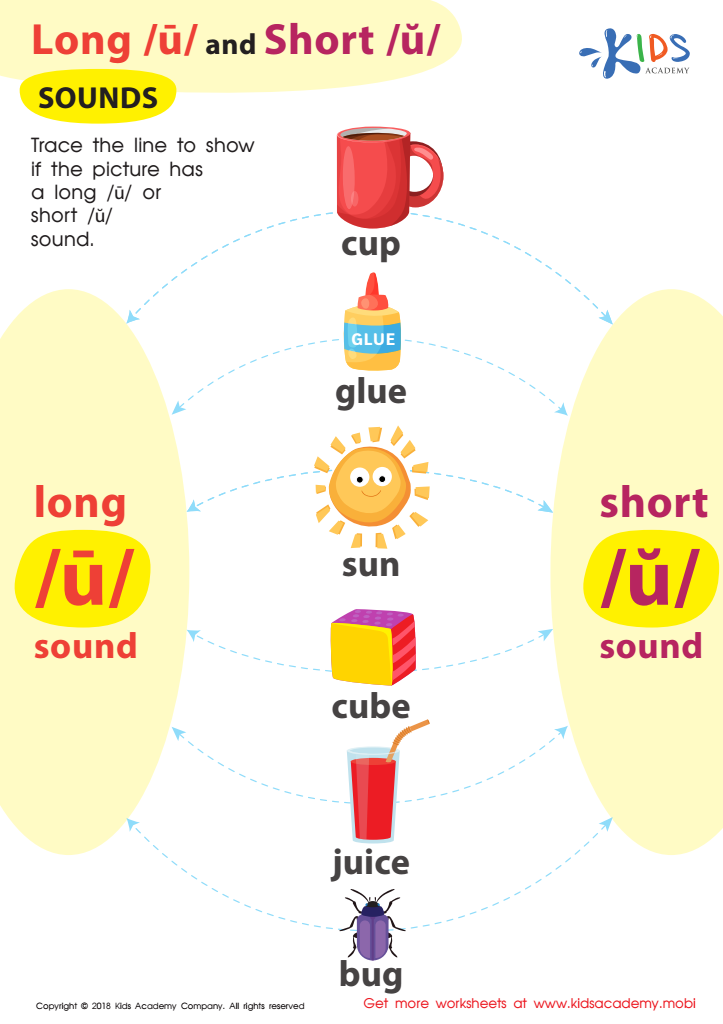
Reading: Long U and Short U Sounds Worksheet
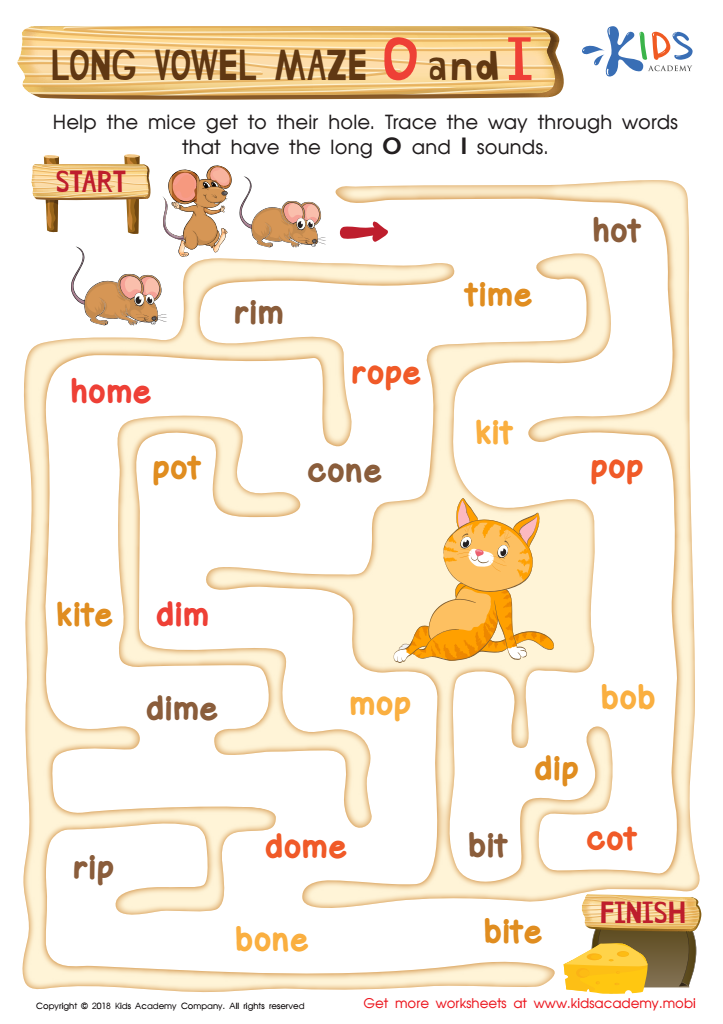
Long Vowel Maze /o/ and /i/ Worksheet
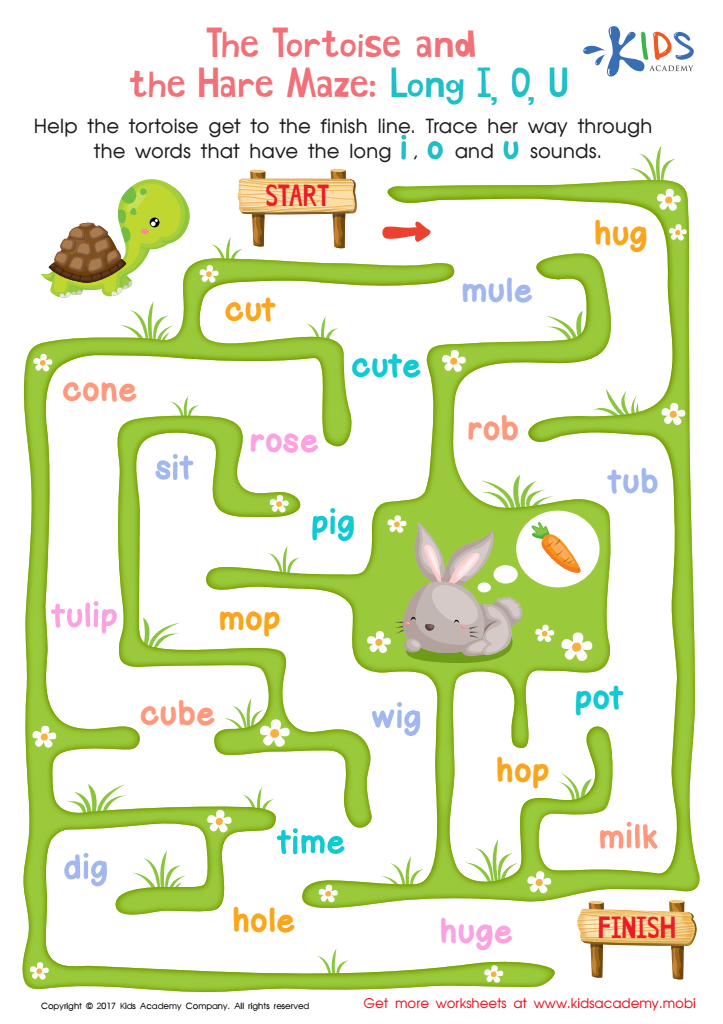
Long I, O, U Words Worksheet
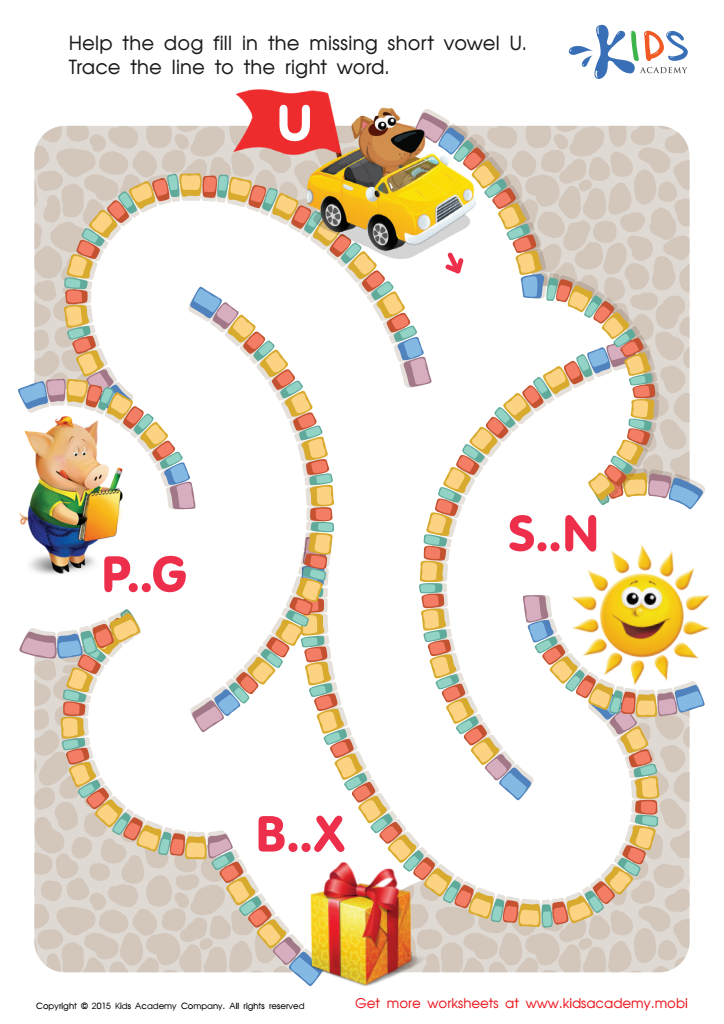
Short Vowel Sound U Worksheet
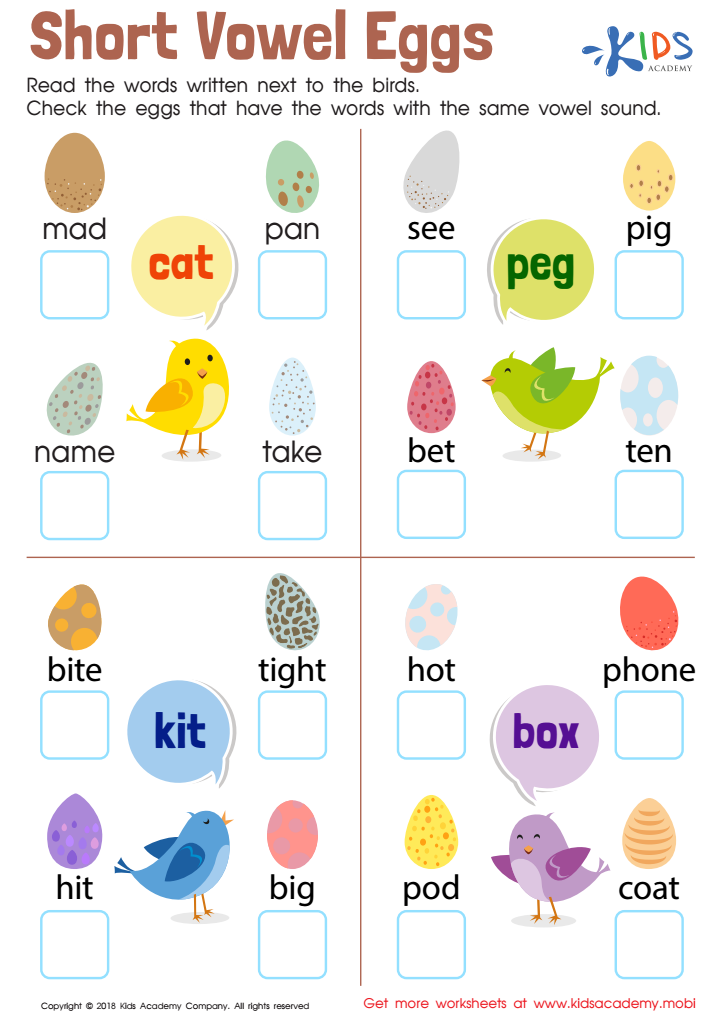
Short Vowel Eggs Worksheet
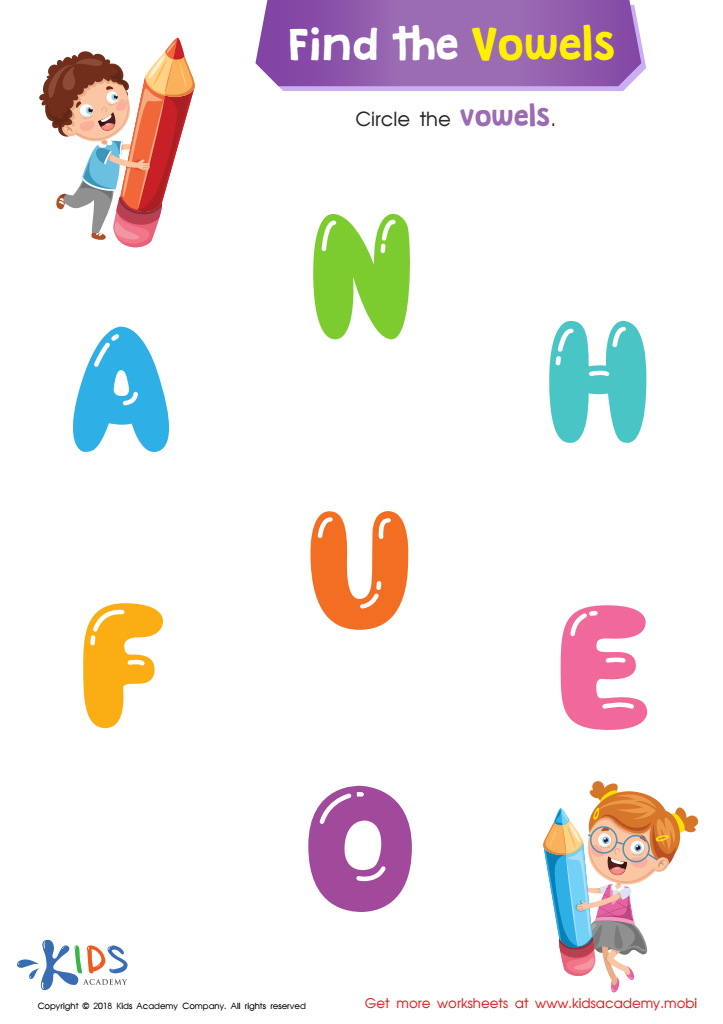
Find the Vowels Reading Worksheet
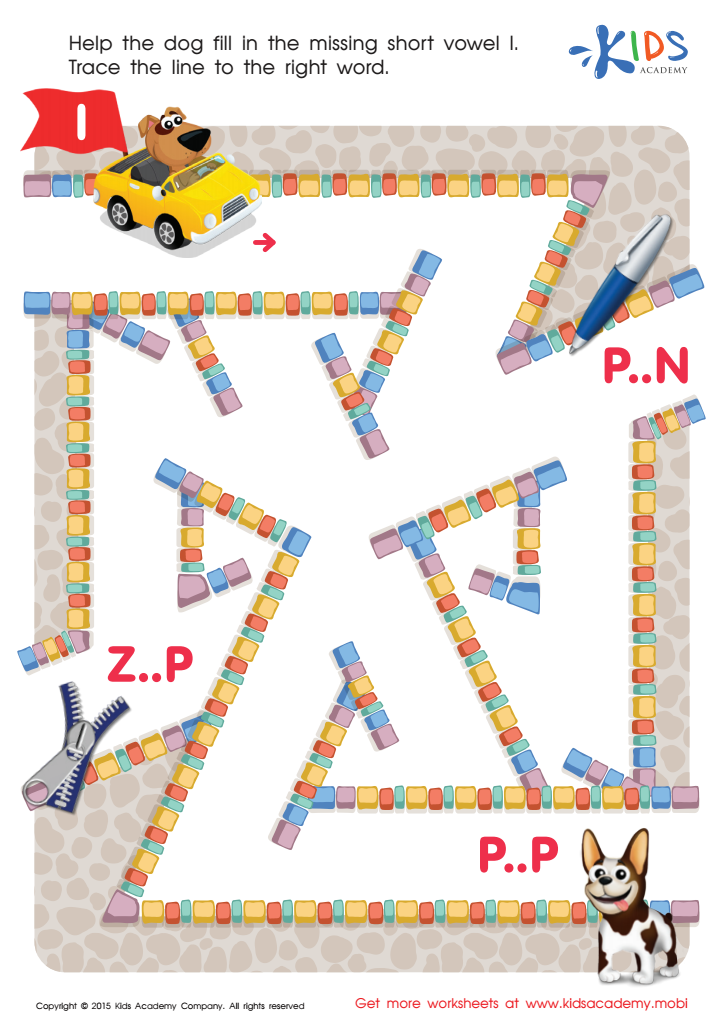
Short Vowel Sound I Worksheet
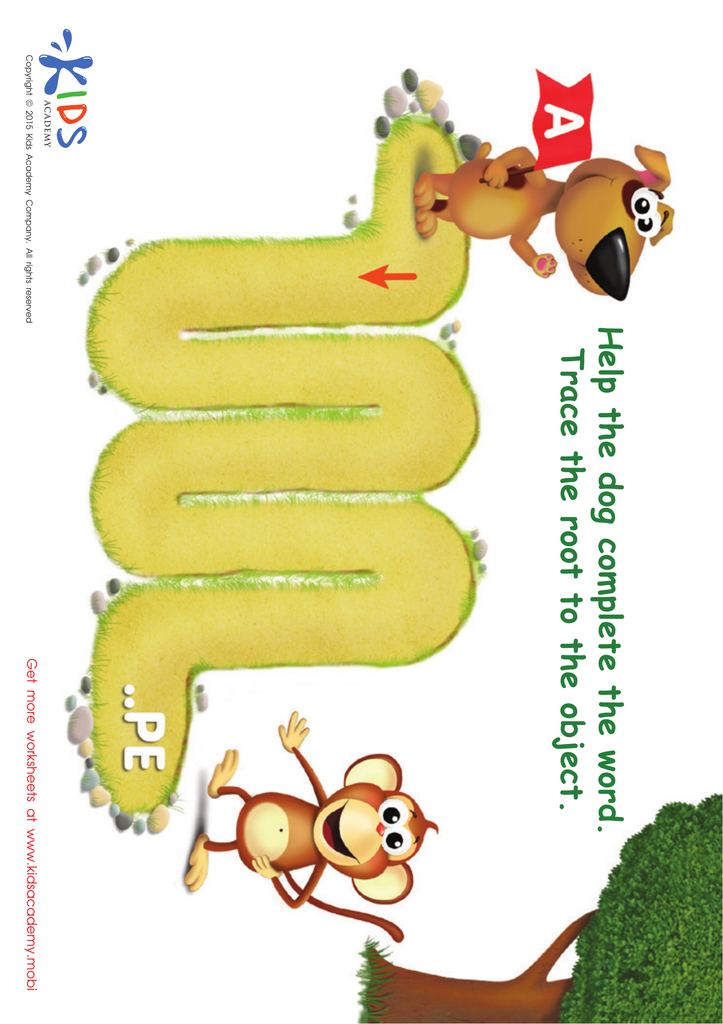
Long Vowel Sound A Worksheet Worksheet
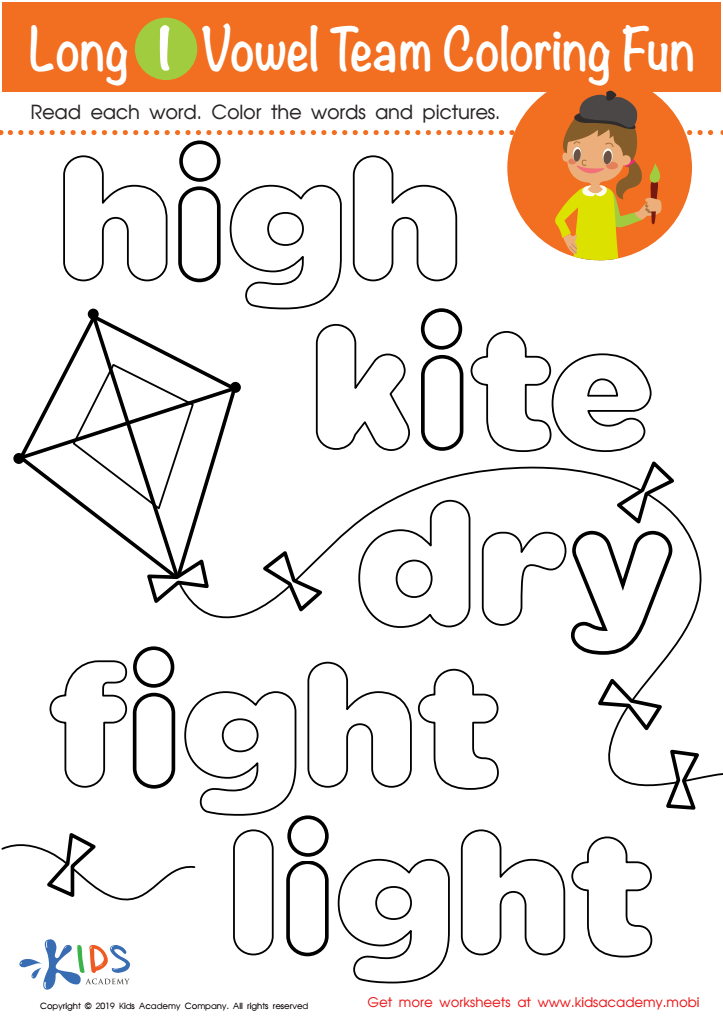
Long I Vowel Team Coloring Worksheet
 Assign to My Students
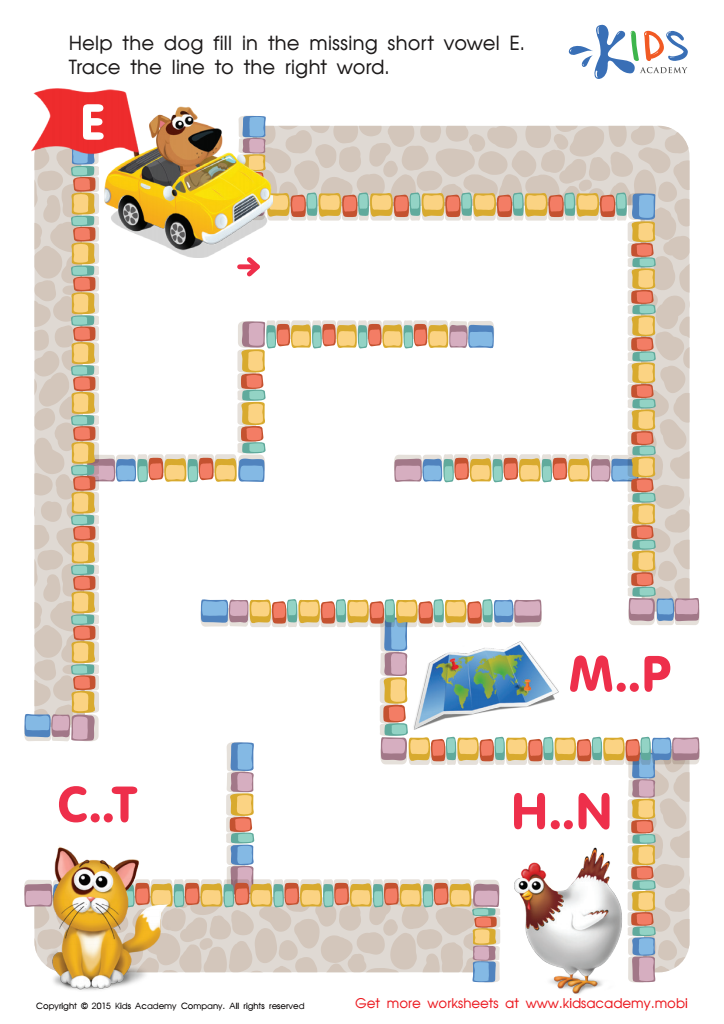
Short Vowel Sound E Worksheet
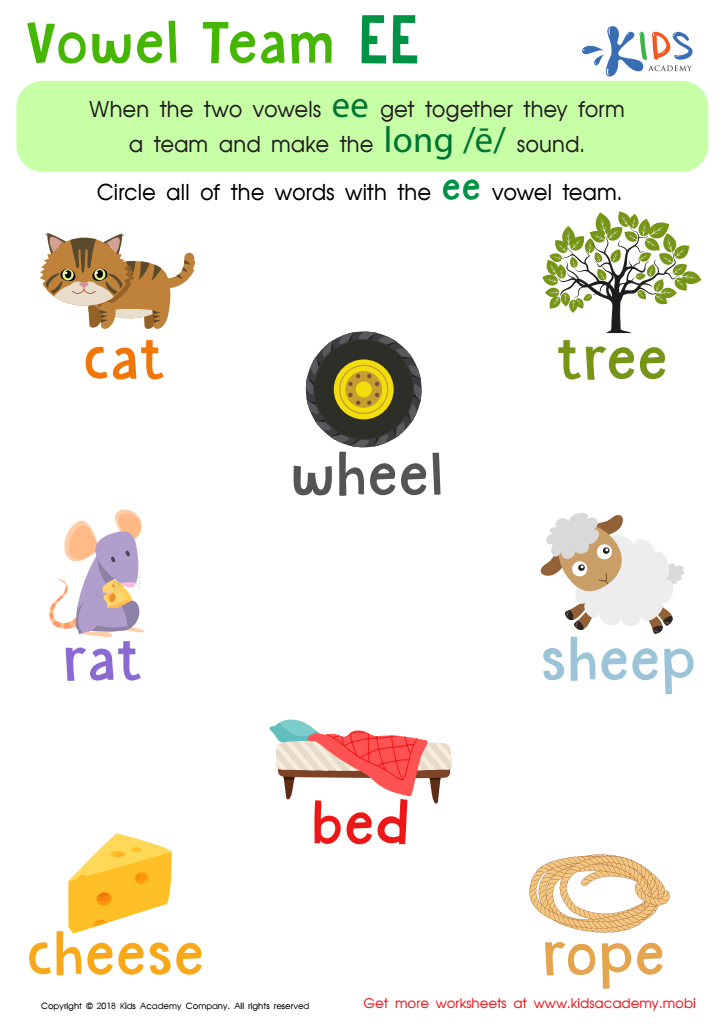
Reading: Vowel Team EE Worksheet
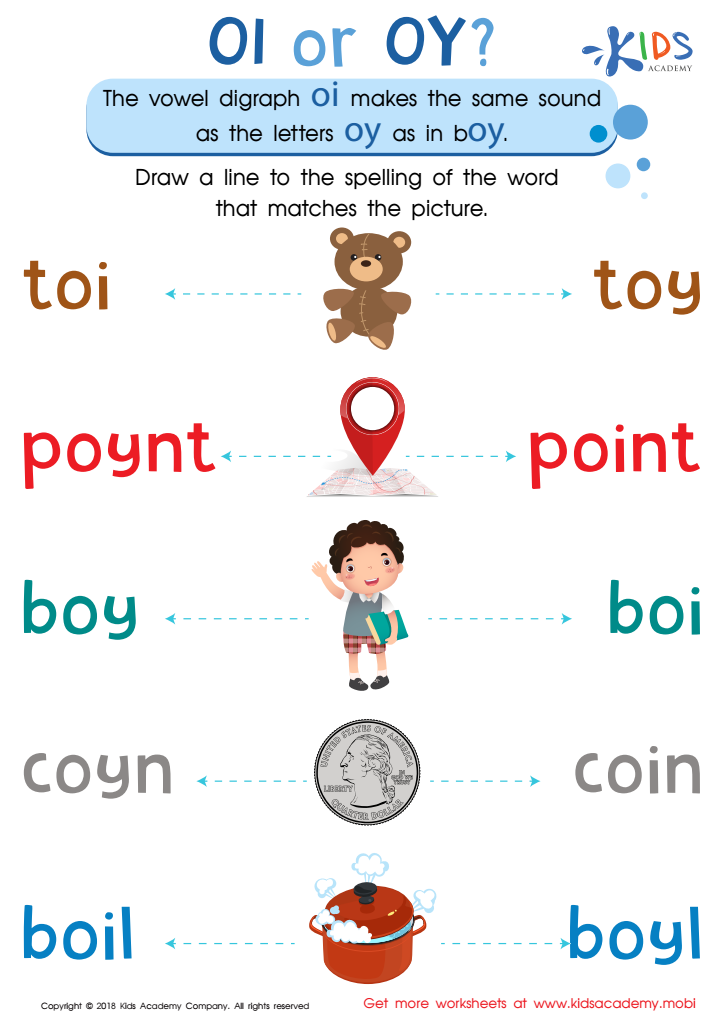
Reading: OI and OY Worksheet
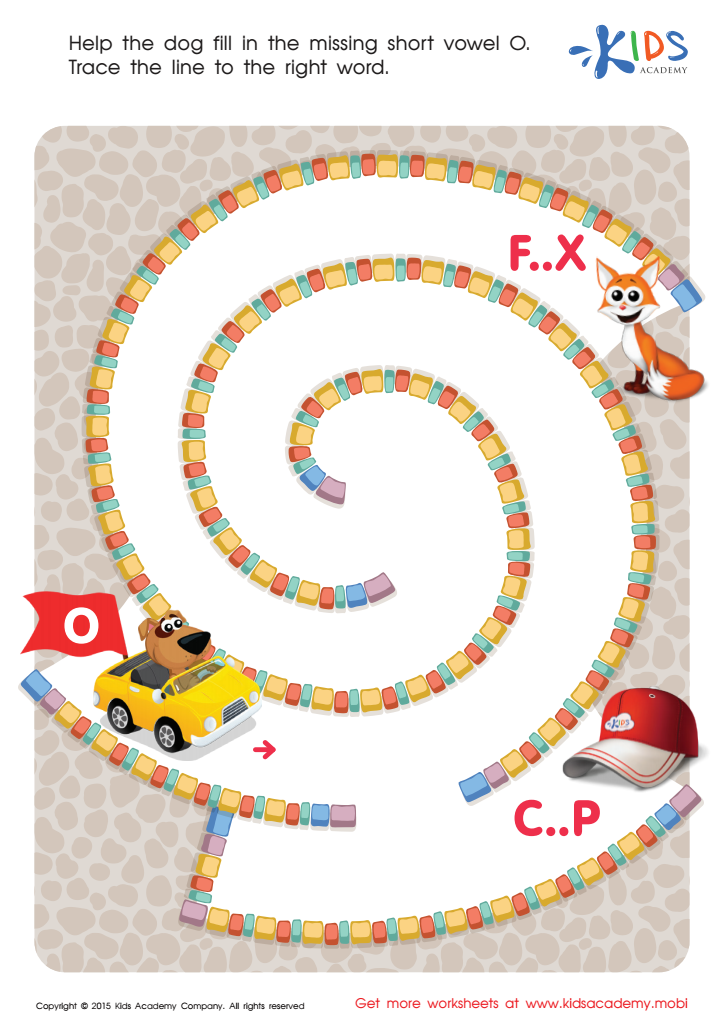
Short Vowel Sound O Worksheet
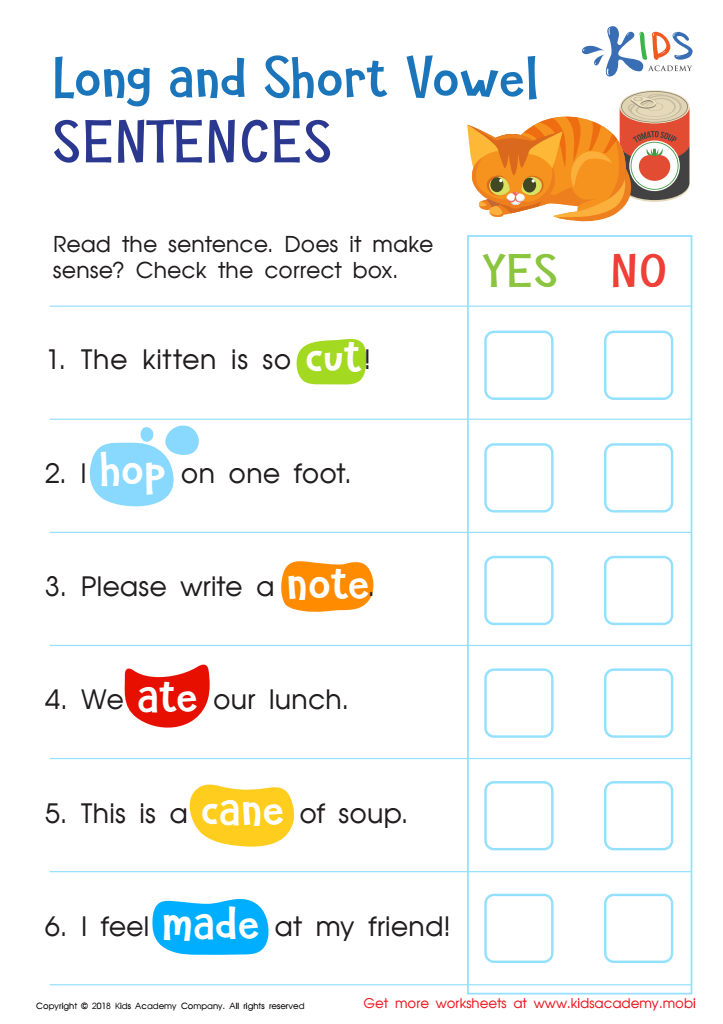
Long and Short Vowel Sentences: Assessment Worksheet
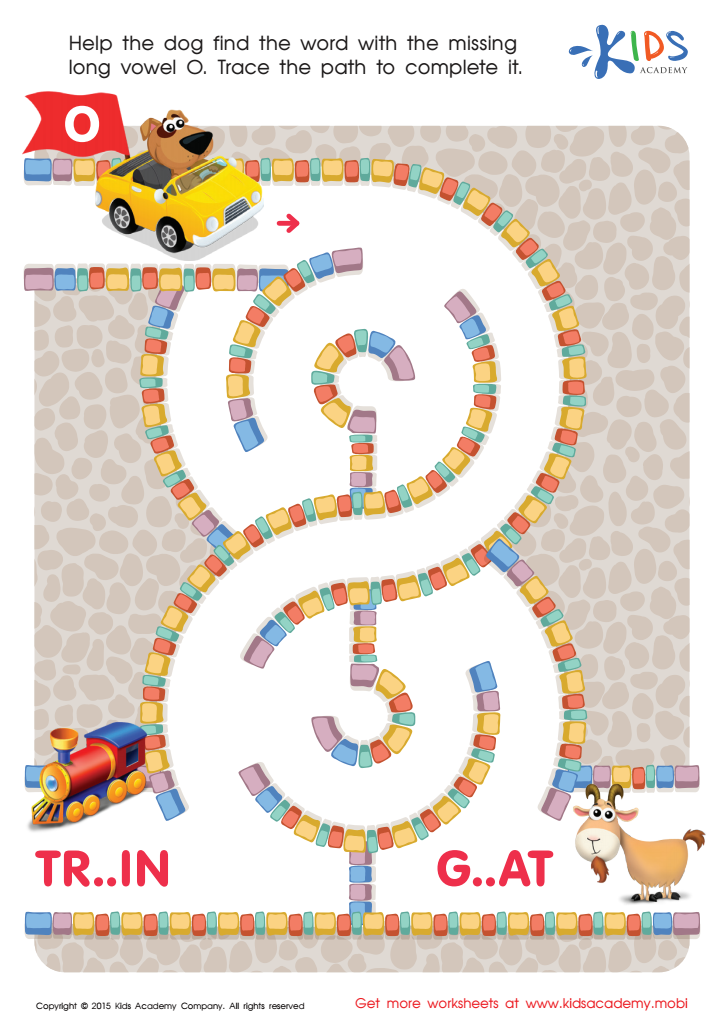
Long Vowel Sound O Worksheet
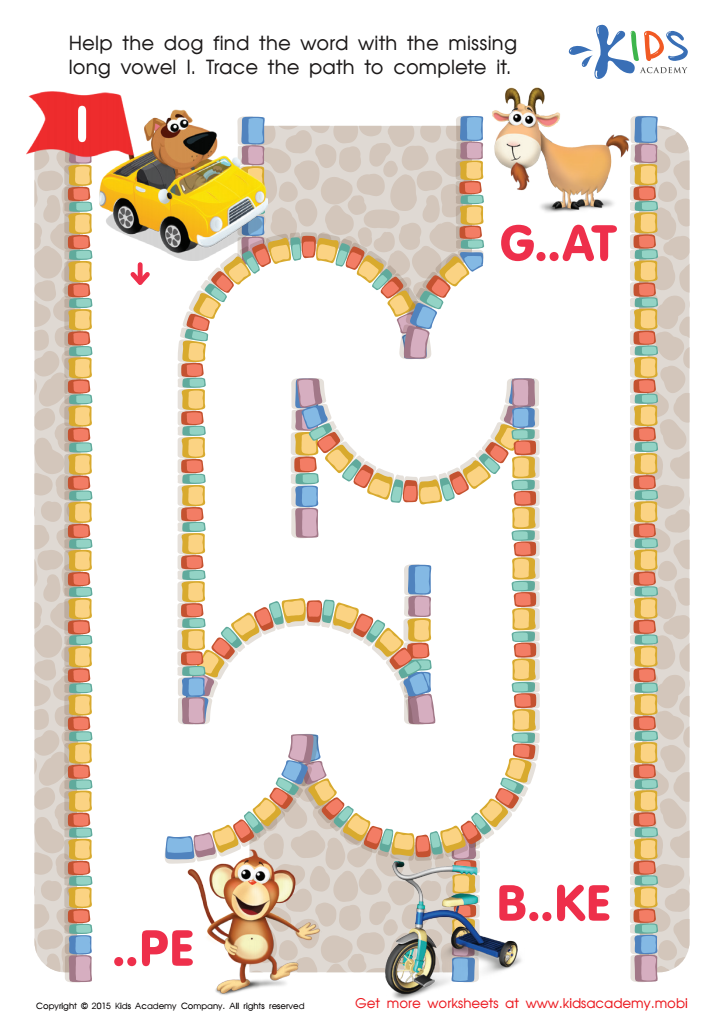
Long Vowel Sound I Worksheet





Vowel recognition is a fundamental skill for children aged 5-8 because it paves the way for successful reading and writing development. This age range is critical as children transition from recognizing letters to forming words and sentences. Vowels form the core of the majority of English words, and understanding them is essential for phonemic awareness, which is the ability to hear, identify, and manipulate individual sounds in spoken words.
When parents and teachers emphasize vowel recognition, they contribute significantly to a child's reading fluency and accuracy. For example, knowing how vowels behave in different contexts helps in decoding words more easily—understanding that vowels can make short or long sounds enables more efficient word recognition and pronunciation.
Moreover, mastering vowel sounds aids in spelling. Children who can identify and understand vowel patterns are better prepared to spell unfamiliar words correctly. This also helps with writing skills, as kids can form coherent and accurate sentences.
Furthermore, early grasping of vowel recognition promotes language comprehension and boosts self-confidence in communication. When children are aimed at mastering vowels at an early stage, they are setting a solid foundation for all future literacy endeavors, underpinning academic success across all subjects. Therefore, active involvement from parents and teachers in nurturing this skill ensures long-term educational benefits.







