
Critical thinking development Worksheets for Ages 5-8
21 filtered results
Difficulty Level
Grade
Age
-
From - To
Subject
Activity
Standards
Unlock your child's potential with our "Critical Thinking Development Worksheets for Ages 5-8"! Designed to engage young minds, these worksheets help children build essential problem-solving and reasoning skills through fun, interactive activities. Tailored for ages 5-8, our resources promote creativity and logical deduction, ensuring a solid foundation for future learning. Each worksheet encourages exploration and experimentation, making critical thinking a natural part of your child's development. Perfect for both classroom and home use, our worksheets blend education with play, fostering a love for learning in an enjoyable way. Start nurturing your child's critical thinking skills today for a brighter tomorrow!
Favorites
With answer key
Interactive
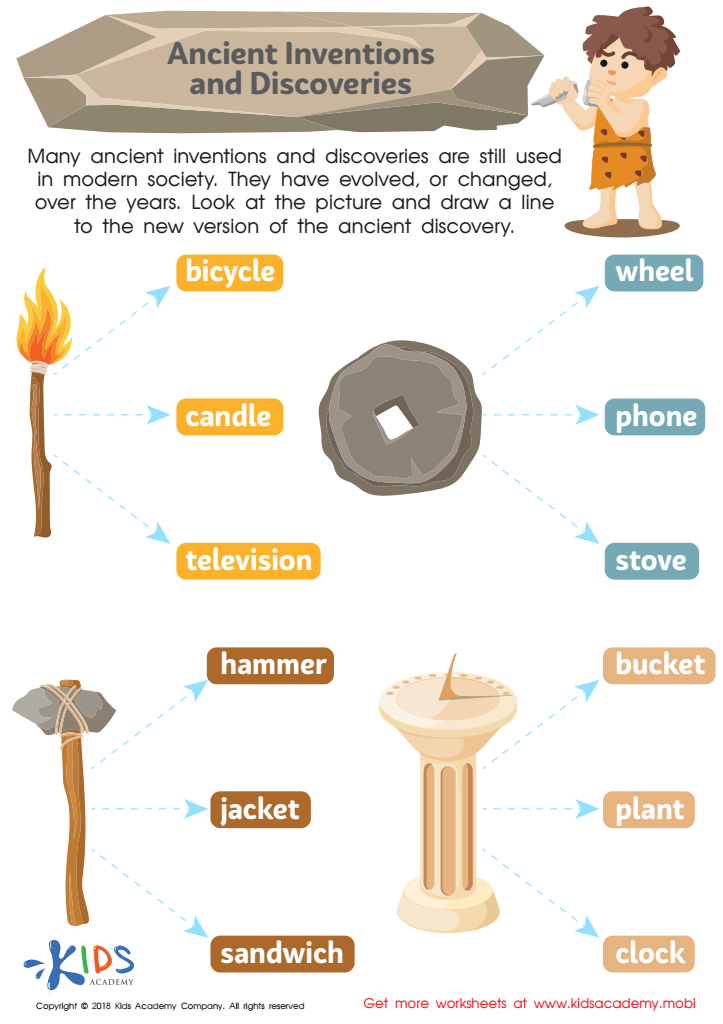
Ancient Inventions and Discoveries Worksheet
Kids may think inventions are high-tech, but many of the world's most important inventions are ancient! This Kids Academy worksheet helps kids learn about the wheel, clock, tools and candles - inventions that changed the world! Kids will simply review the pictures and trace the dotted lines to the right answers. Great for social studies!
 Assign to My Students
Ancient Inventions and Discoveries Worksheet
Worksheet
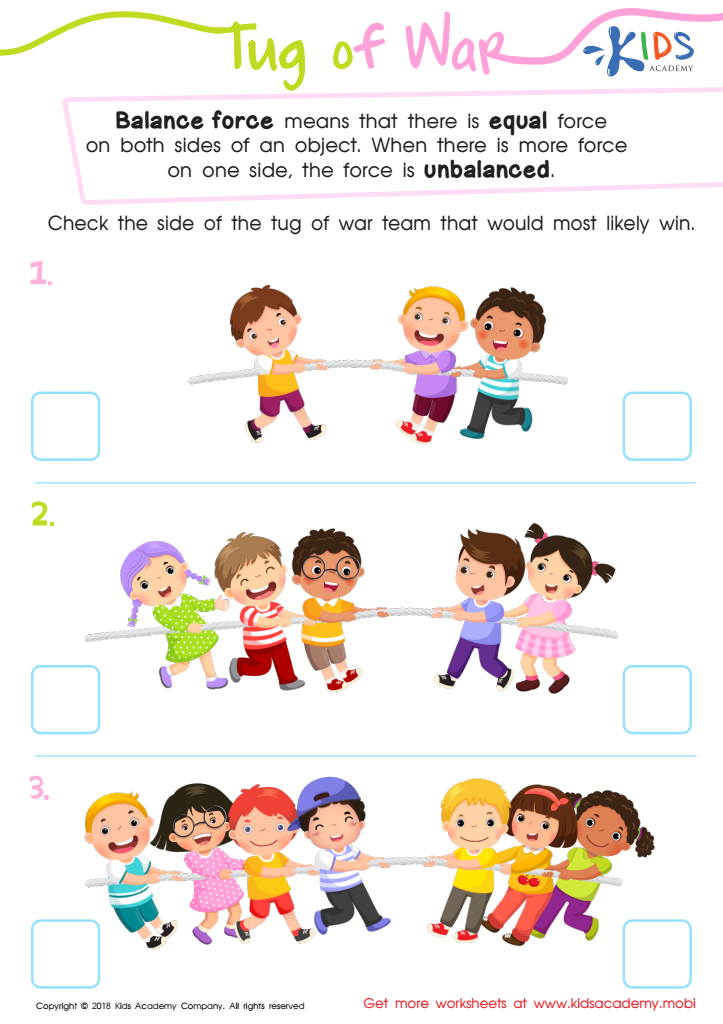
Balanced Forces Worksheet
Ready for a fun game? This worksheet will balance the forces so your kids can decide who will win their tug of war! With the right number of kids on each side of the rope, the forces will be equal. Help your little ones decide who will prevail in the game. Ready, set, go!
Balanced Forces Worksheet
Worksheet
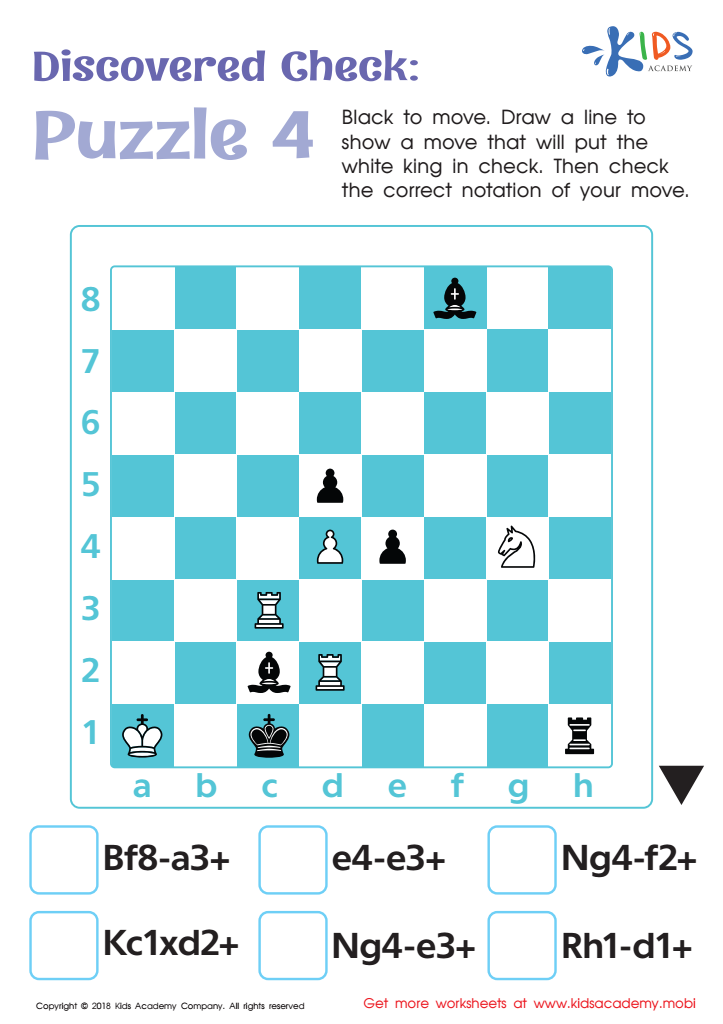
Discovered Check: Puzzle 4 Worksheet
Let your child test their chess skills with this easy worksheet. Have them take control of the black pieces and try to put the white king in checkmate. Ask them to draw a line from their chess piece to the white king, showing the move they'll make, then check the correct answer.
Discovered Check: Puzzle 4 Worksheet
Worksheet
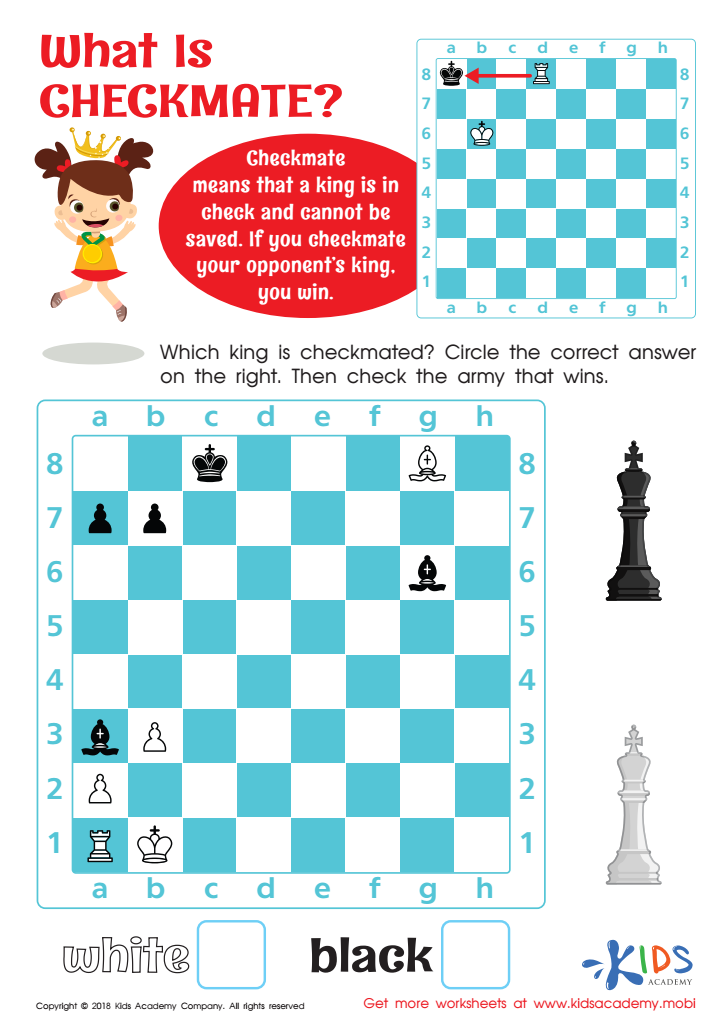
What is Checkmate? Worksheet
This downloadable PDF worksheet lets your child practice identifying when a king is checkmated and how it looks on a chessboard. Checkmate is the best move and with this colorful worksheet, they'll learn that it means their opponent's king is in check and cannot be saved, so they can win!
What is Checkmate? Worksheet
Worksheet
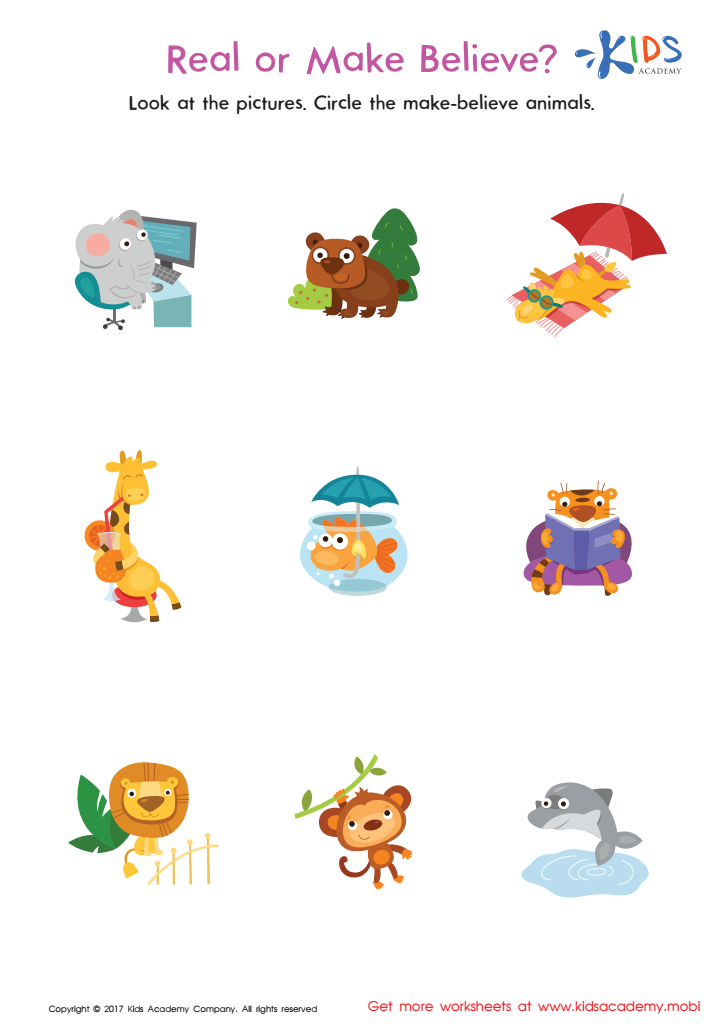
Fact or Make Believe Worksheet
This fun and funny worksheet challenges your child to decide if each animal can do the activity listed. Can a camel go sunbathing? Separating fact from fiction can be entertaining! Motivate your child while they complete this PDF worksheet.
Fact or Make Believe Worksheet
Worksheet
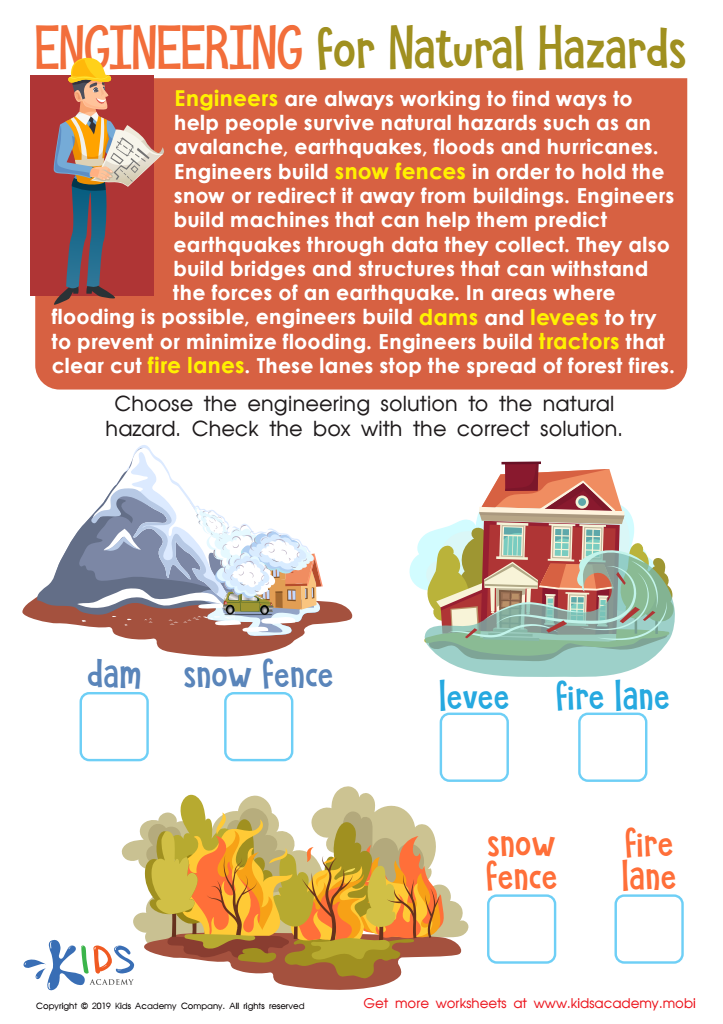
Engineering Natural Hazards Worksheet
Natural hazards can be lessened with precautions. This free worksheet engages kids with informative text on how engineers protect us and lets them practice reading comprehension by choosing the right option.
Engineering Natural Hazards Worksheet
Worksheet
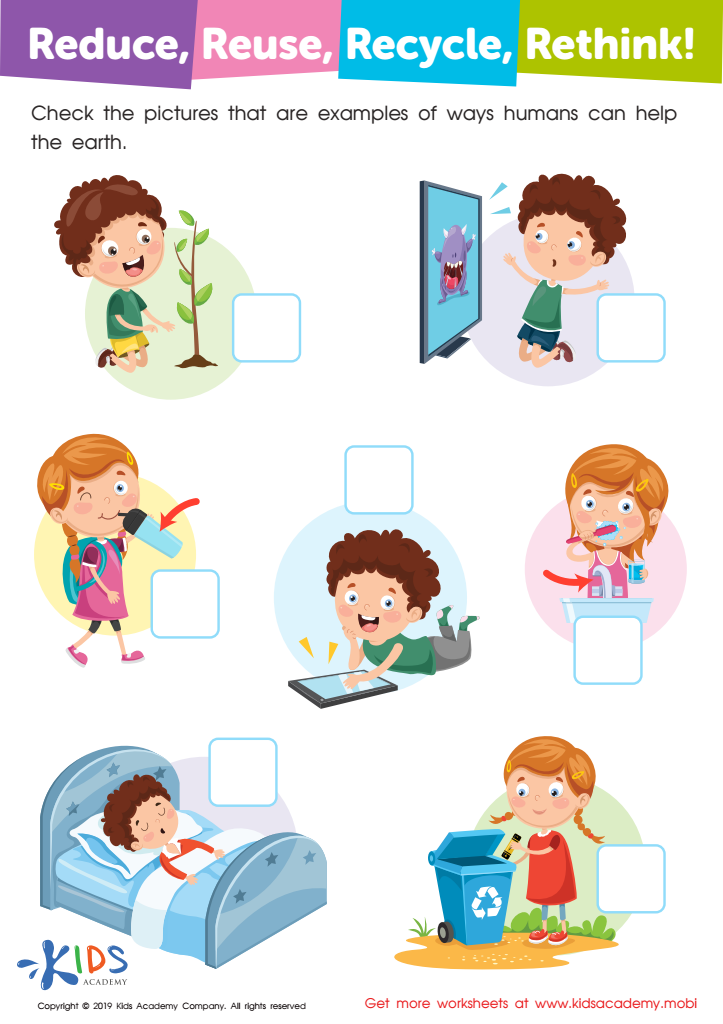
Reduce, Reuse, Recycle, Rethink Worksheet
Recycling is a great way to reduce waste and help our planet — instead of throwing away a can of soda, recycle it! Look at the pictures in the worksheet — what are the kids doing? They're learning about ways to help the environment. Check the pictures for examples of how to help the earth.
Reduce, Reuse, Recycle, Rethink Worksheet
Worksheet
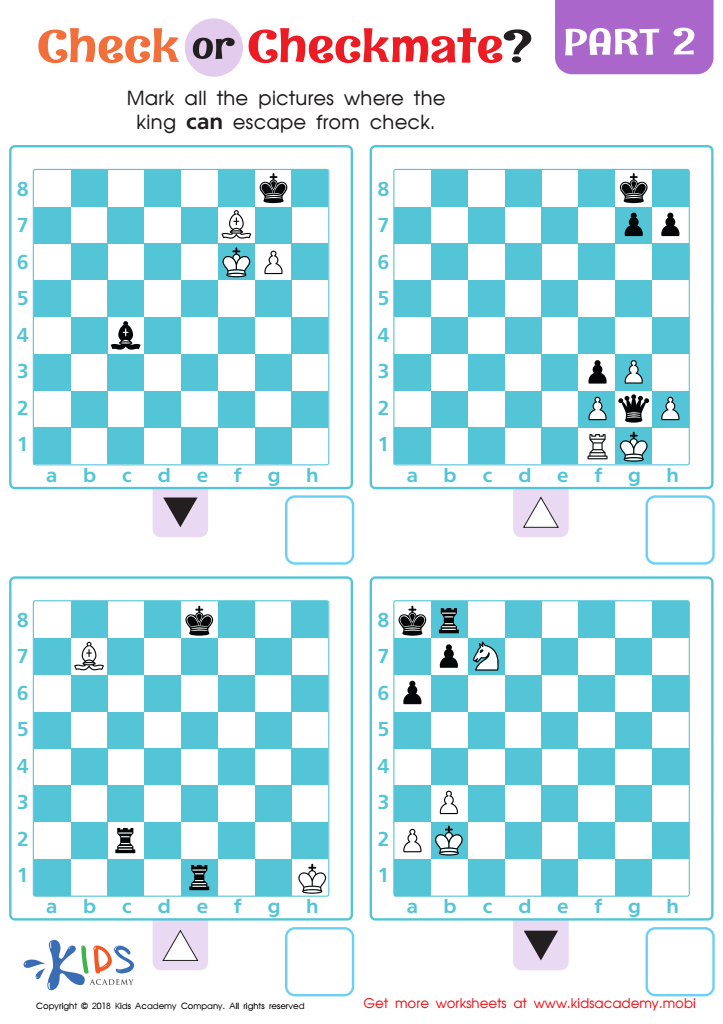
Check or Checkmate: Part 2 Worksheet
Chess is a fun and competitive way for your child to practice strategic thinking, problem-solving and critical reasoning. This free PDF will help them sharpen their skills, by analyzing boards and marking ones where the king can escape check. An invaluable skill when playing on real boards.
Check or Checkmate: Part 2 Worksheet
Worksheet
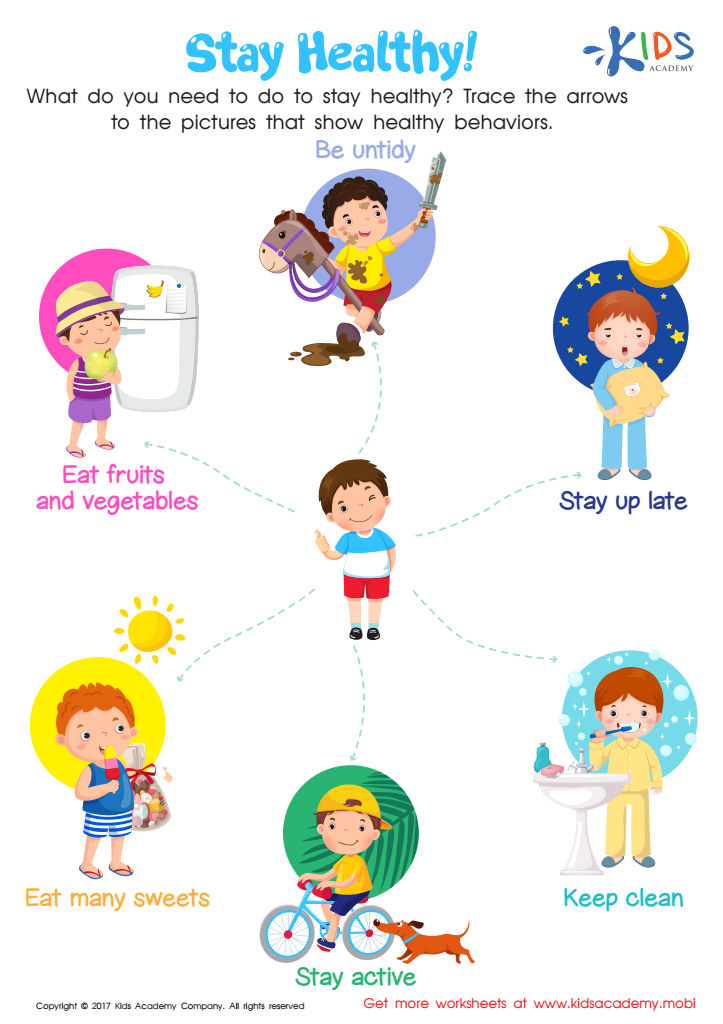
Healthy and Unhealthy Behaviors Worksheet
Assist your youngster to recognize beneficial habits for a joyful, healthy life with this healthy/unhealthy behaviors worksheet! After they finish, motivate them to follow the tips on the worksheet to show healthy habits.
Healthy and Unhealthy Behaviors Worksheet
Worksheet
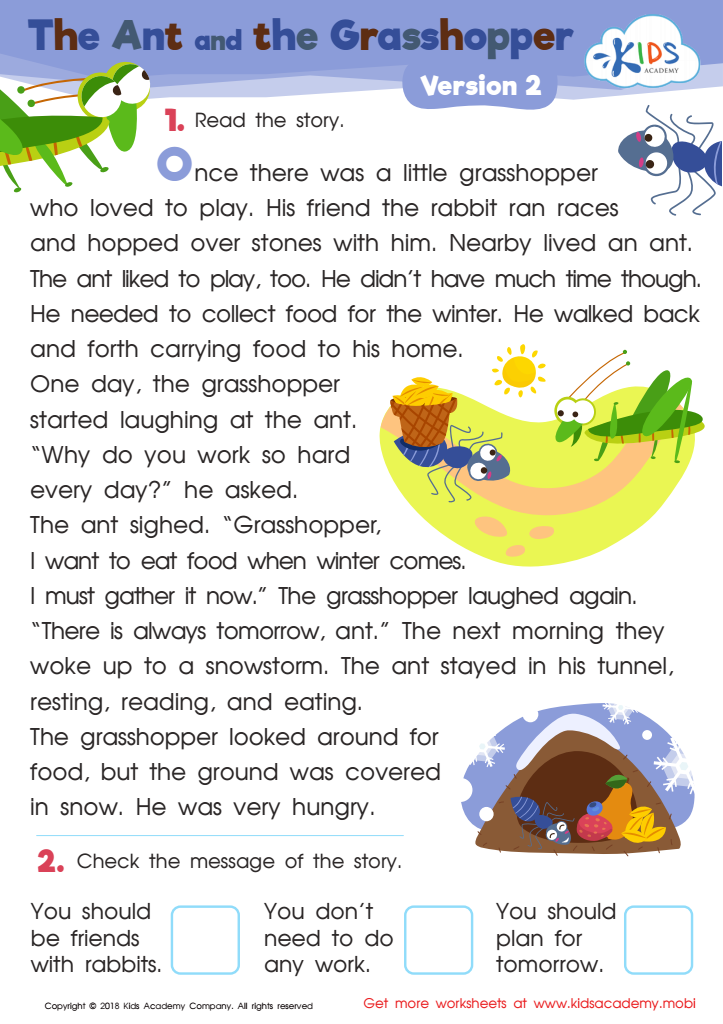
The Ant and The Grasshopper Version 2 Worksheet
Story time is a great way to bond with kids and share a fun story. The Ant and the Grasshopper is a classic with a lesson for everyone. Listen together and then ask your students what the message of the story was. Prompt them with choices from the worksheet and see which one they select. It's a great way to increase their vocabulary and help them learn important lessons.
The Ant and The Grasshopper Version 2 Worksheet
Worksheet
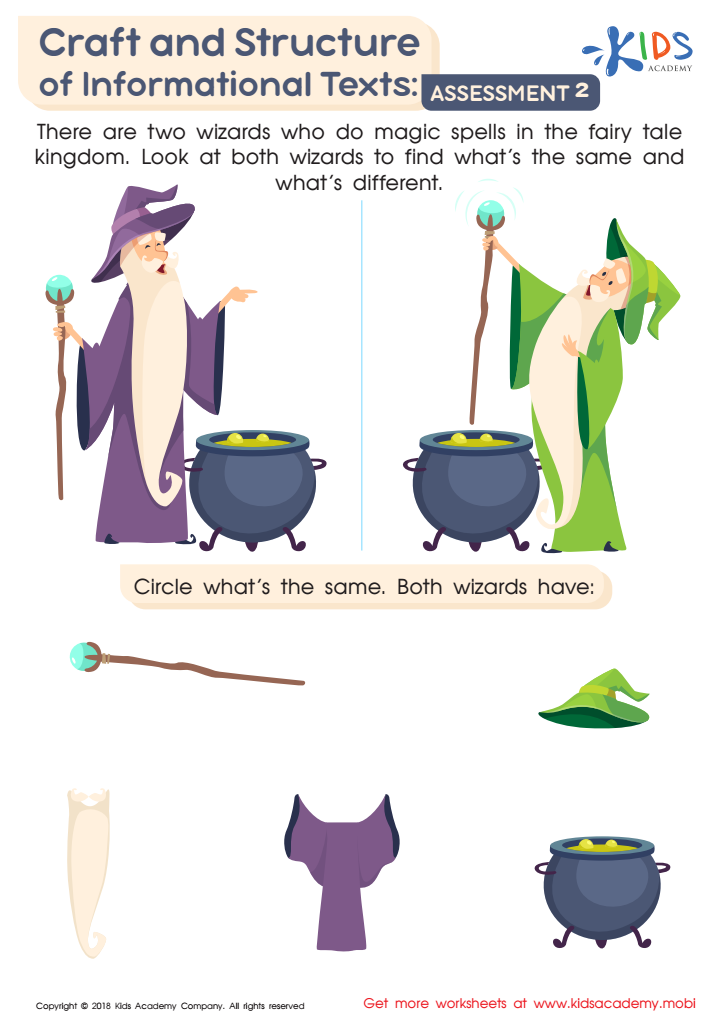
Craft and Structure of Informational Texts: Assessment 2 Worksheet
This assessment has kids looking at two similar fairy tale wizards, focusing on their visuals to find the similarities and differences. Then, they'll circle the things they both have. It's a great way to help children hone their detail-oriented comprehension skills, which is essential when using informational texts.
Craft and Structure of Informational Texts: Assessment 2 Worksheet
Worksheet
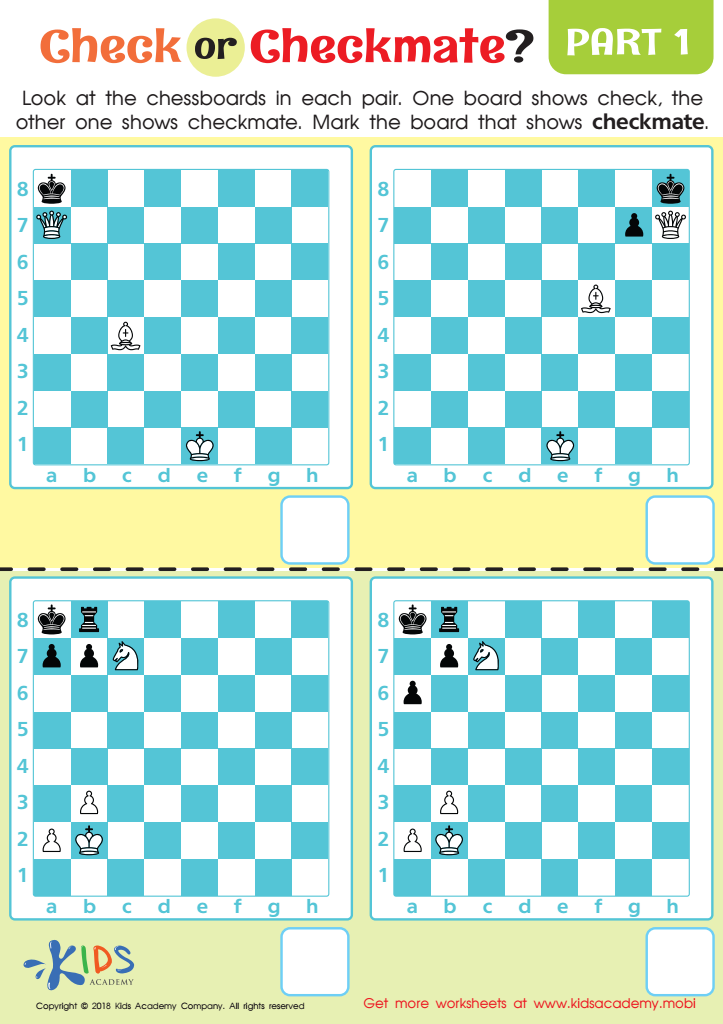
Check or Checkmate: Part 1 Worksheet
Kids can learn and strengthen problem-solving and strategic thinking skills with this free chess worksheet. They'll have fun as they look at the pair of chessboards and decide which is check and which is checkmate. It's the perfect way to get them playing the game and making checkmates without even realising they're exercising their brains!
Check or Checkmate: Part 1 Worksheet
Worksheet
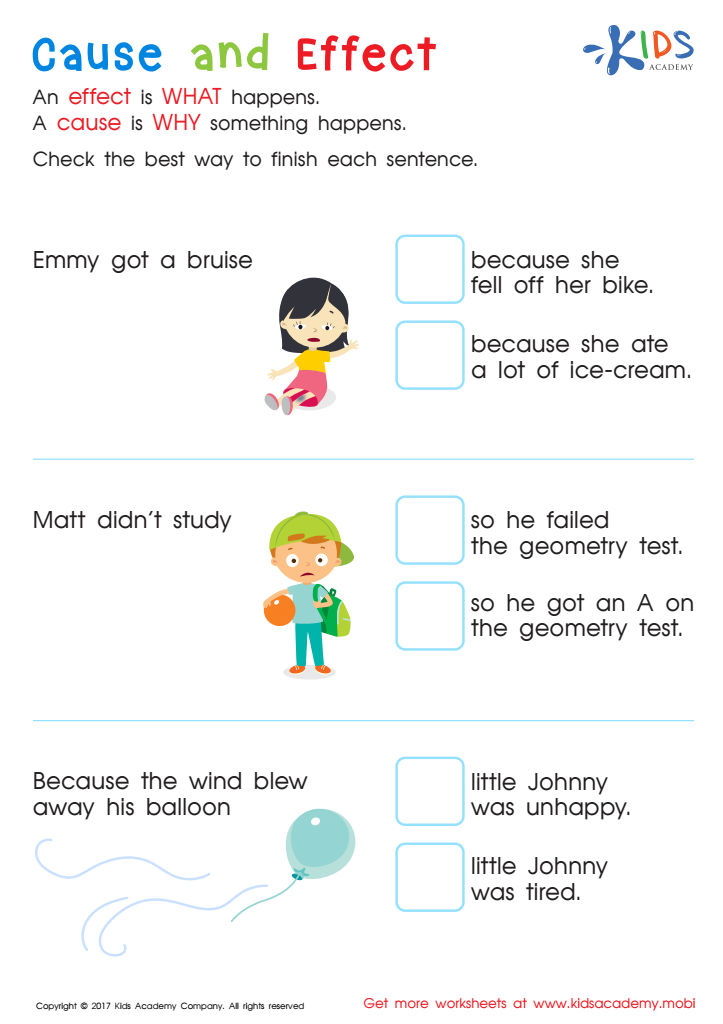
Cause and Effect Worksheet
Improve your child's reading comprehension and critical analysis skills with this cause and effect worksheet PDF! Have your child use the examples to create their own story, strengthening their understanding of the concept.
Cause and Effect Worksheet
Worksheet
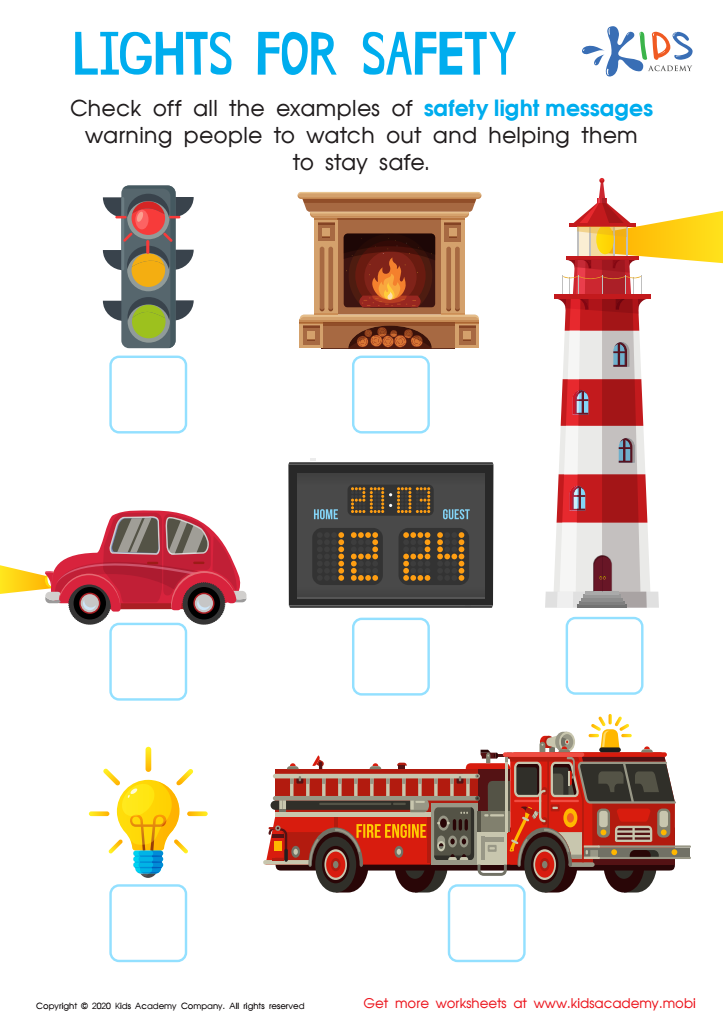
Lights for Safety Worksheet
Teach kids safety light messages to stay safe. Print this worksheet and ask students to identify the objects in the pictures. Then, ask them to check off the safety light messages which warn people to watch out. This helps keep kids safe at all times.
Lights for Safety Worksheet
Worksheet
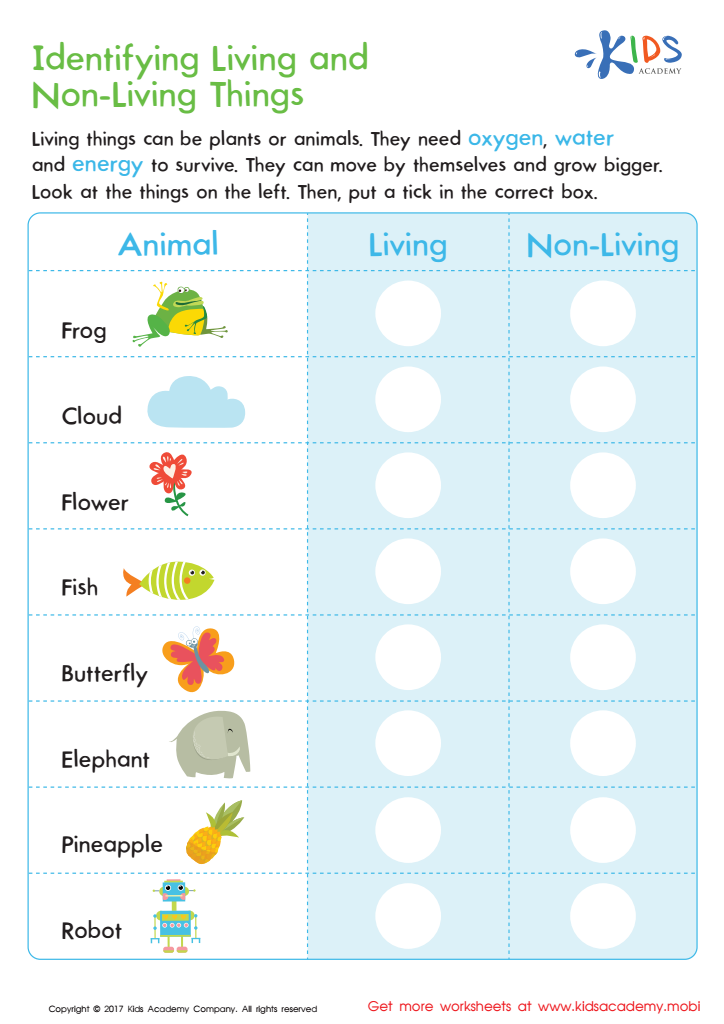
Identifying Living or Non–living Worksheet
Help your child learn to sort and categorize in a new way! Teach them to classify things as living or non-living using this worksheet. It's the perfect way to build their scientific understanding, and to have some learning fun! Print this worksheet and watch them discover the world of science!
Identifying Living or Non–living Worksheet
Worksheet
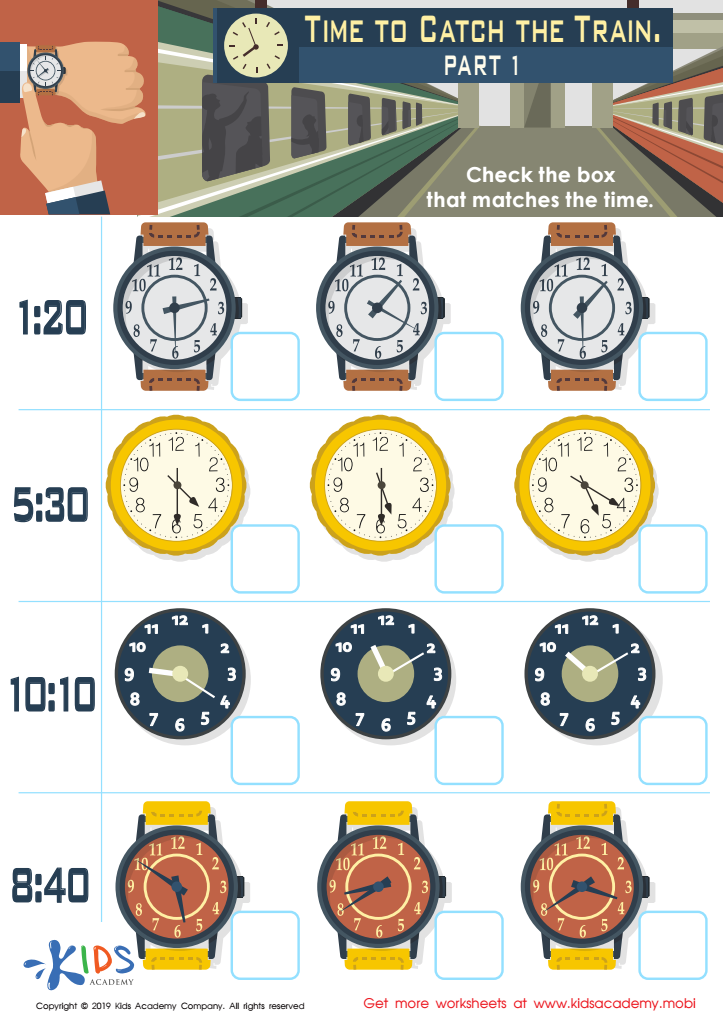
Time to Catch the Train Part 1 Worksheet
Time is essential for us; it lets us know when to do various things. Your kids likely wake up at a specified hour and prepare for the school bus. Demonstrate to them that time-telling is vital, and show them there are multiple ways to show time. Point to the time written on the left and the watches in the picture. Assist your children to check the box that corresponds to the time.
Time to Catch the Train Part 1 Worksheet
Worksheet
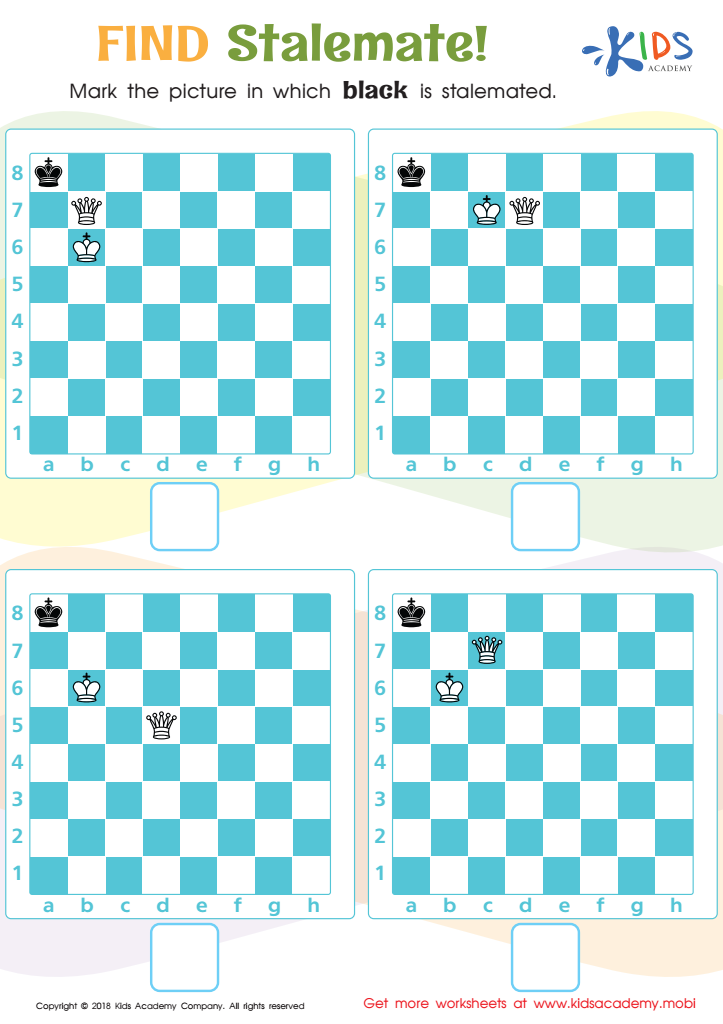
Find Stalemate! Worksheet
Teach your kids Chess and give them more than a hobby - equip them with critical thinking, rationale and problem-solving skills! This free worksheet helps them understand stalemates by examining various sample boards. By providing visual discernment and the joy of the game, your child's logical skills will soar!
Find Stalemate! Worksheet
Worksheet
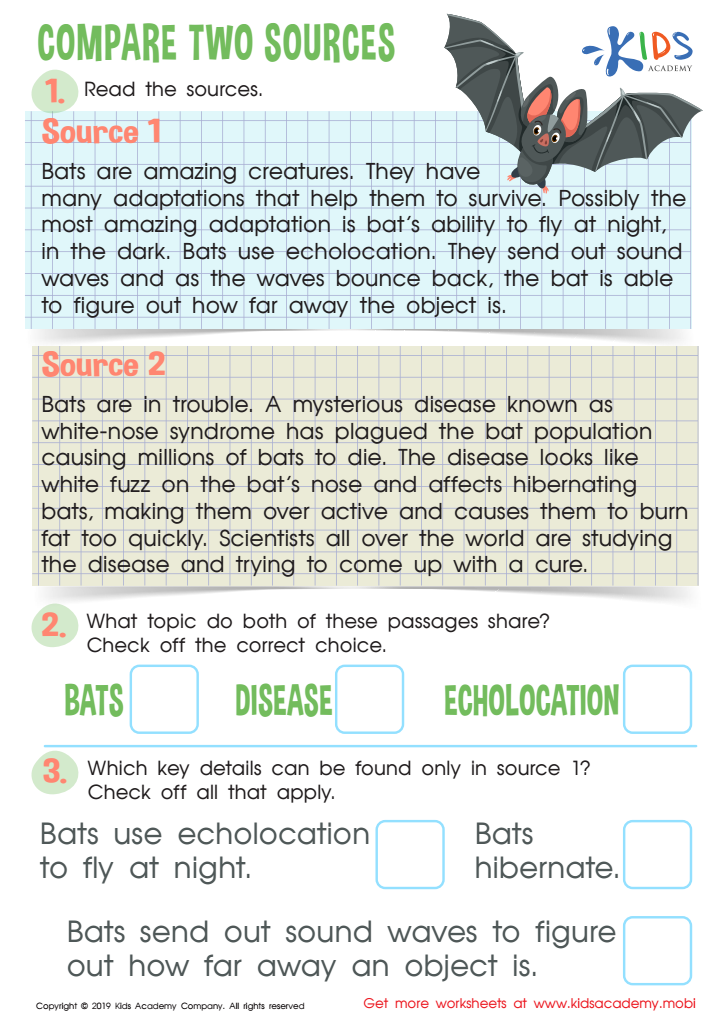
Compare Two Sources Worksheet
Reading exposes us to new words, spelling, and info about different topics. Kids can practice their reading skills, and learn about bats, with this worksheet. Read the two sources in the picture, then help your kids answer the questions at the bottom.
Compare Two Sources Worksheet
Worksheet
Join Kids Academy for Free
Who is primarily going to use this learning content?





Critical thinking is crucial for children aged 5-8 as it lays the foundation for effective problem-solving, decision-making, and independent reasoning skills. At this developmental stage, children are naturally curious and eager to understand the world around them. Encouraging critical thinking helps them articulate their thoughts, question assumptions, and evaluate information, fostering a love for learning and exploration.
Parents and teachers play a vital role in nurturing these skills. By engaging children in discussions that promote thinking, such as asking open-ended questions or encouraging them to explain their reasoning, adults can help young learners develop analytical abilities. This age is a prime time for creating a safe space for children to express their ideas, learn from failures, and approach challenges with a resilient mindset.
Moreover, critical thinking prepares children for future academic success and social interactions. It helps them navigate complex situations, understand diverse perspectives, and communicate effectively. By prioritizing this development, parents and teachers not only enrich children's current educational experiences but also equip them with the essential skills needed to thrive in an increasingly complex world. Ultimately, fostering critical thinking contributes to shaping confident, thoughtful, and responsible individuals who are prepared for lifelong learning.








