Text analysis Worksheets for Ages 5-8
4 filtered results
-
From - To
Unlock the world of text analysis for young learners with our engaging worksheets designed specifically for ages 5-8! These activities foster essential reading comprehension skills, allowing children to delve into stories, identify characters, and understand key elements. Each worksheet combines fun and education, encouraging kids to express their thoughts and predictions while enhancing their vocabulary and critical thinking abilities. Perfect for home or classroom use, our friendly and colorful materials make learning enjoyable. Help your child build confidence in reading through interactive exercises that spark imagination and promote analytical skills. Start exploring the joy of text analysis today!
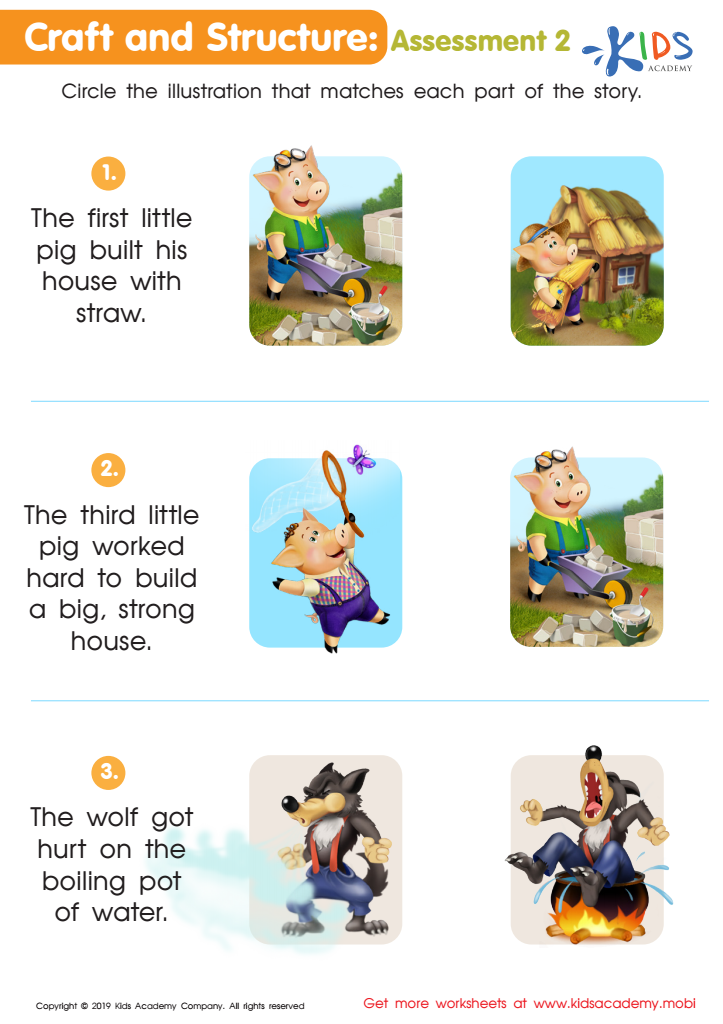
Craft and Structure: Assessment 2 Worksheet 2
 Assign to My Students
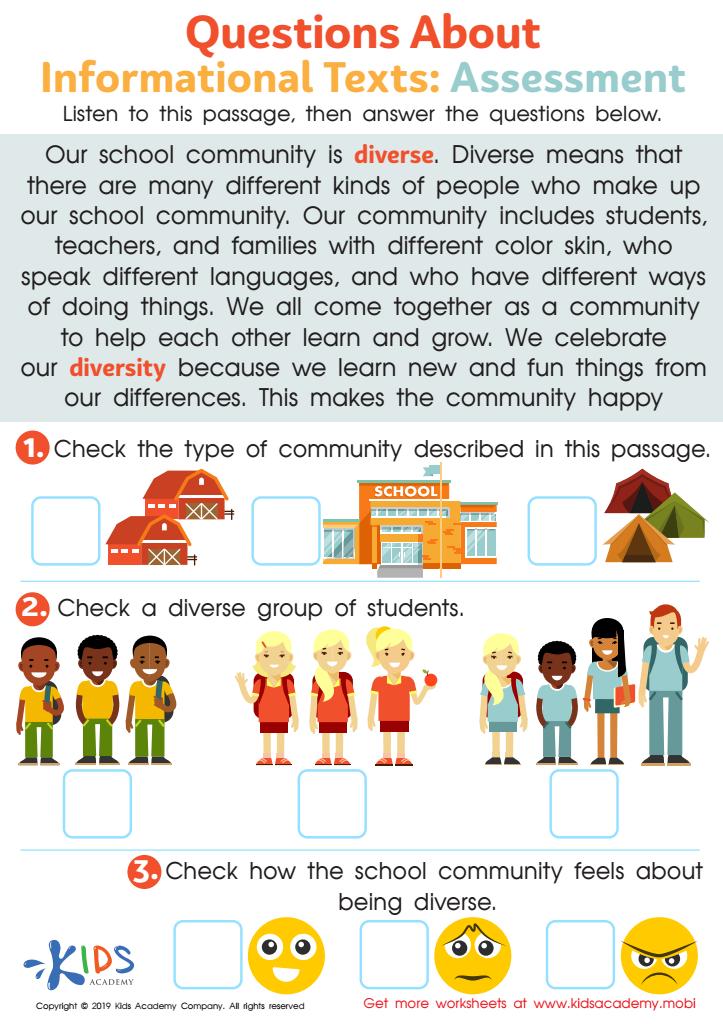
Questions About Informational Texts: Assessment 1 Worksheet
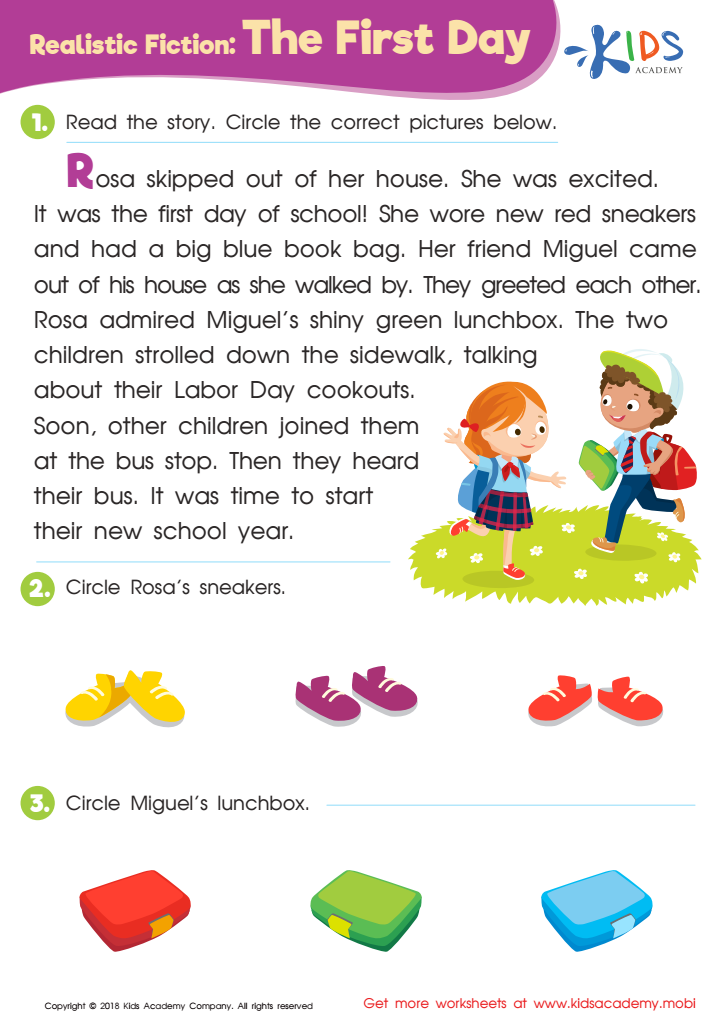
Realistic Fiction: The First Day Worksheet
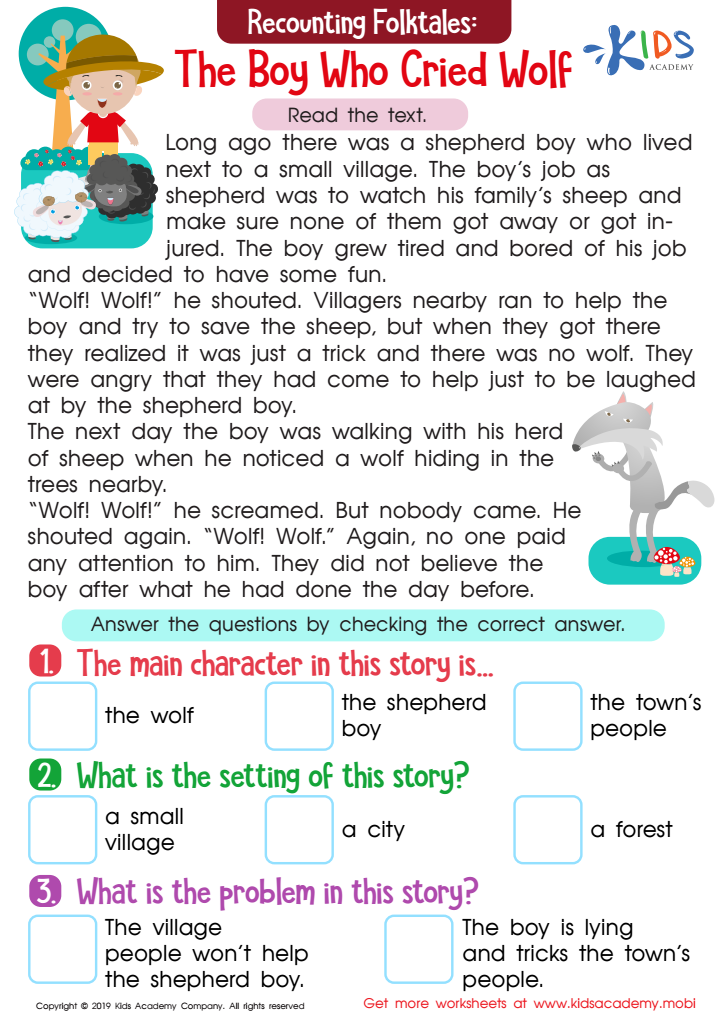
The Boy Who Cried Wolf Part 1 Worksheet








Text analysis for ages 5-8 is essential for nurturing early literacy skills and fostering a love for reading. At this developmental stage, children begin to recognize language patterns, vocabulary, and story structures. Engaging in text analysis helps them develop critical thinking skills as they learn to interpret meaning, identify themes, and draw connections between texts and their lives.
Parents and teachers should care about text analysis because it aids in promoting comprehension, which is pivotal for academic success. By analyzing stories or texts together, adults can guide children in making inferences, summarizing key ideas, and discussing characters' motivations. This active engagement with texts also cultivates deeper emotional understanding and empathy.
Moreover, text analysis aligns with educational standards, supporting a child's readiness for future reading and writing tasks. Encouraging collaborative discussions about texts fosters communication skills and confidence in expression. Parents can enhance learning at home by integrating simple analysis activities, such as asking open-ended questions or comparing different stories.
In conclusion, emphasizing text analysis at this early age can significantly impact a child's literacy development, critical thinking, and overall academic achievement, paving the way for lifelong learning habits.








