Understanding comparisons Worksheets for Ages 5-8
6 filtered results
-
From - To
Dive into "Understanding Comparisons Worksheets" designed for children ages 5-8 at Kids Academy! Our engaging worksheets help young learners grasp early mathematical concepts, such as bigger vs. smaller, longer vs. shorter, and more vs. less. Each activity nurtures critical thinking and problem-solving skills through fun exercises featuring colorful illustrations and relatable scenarios. Watch as your child builds a strong foundation in math while enjoying the learning process. Perfect for classroom or home use, these printables make understanding comparisons a joyful experience. Explore our collection today and set your child on the path to academic success!
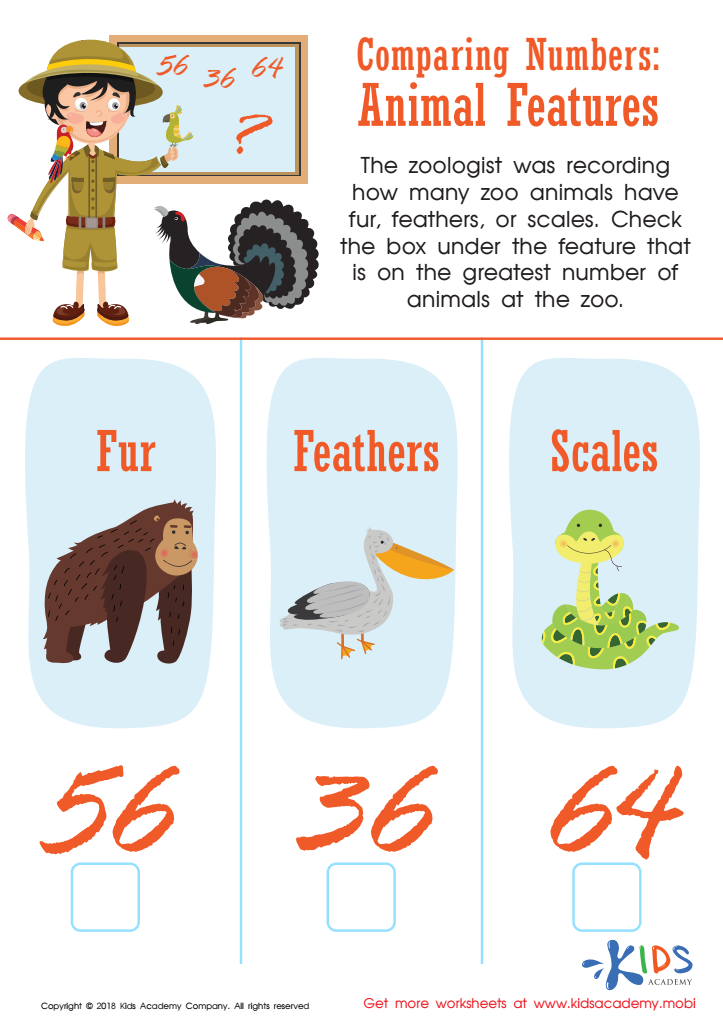
Animal Features Worksheet
 Assign to My Students
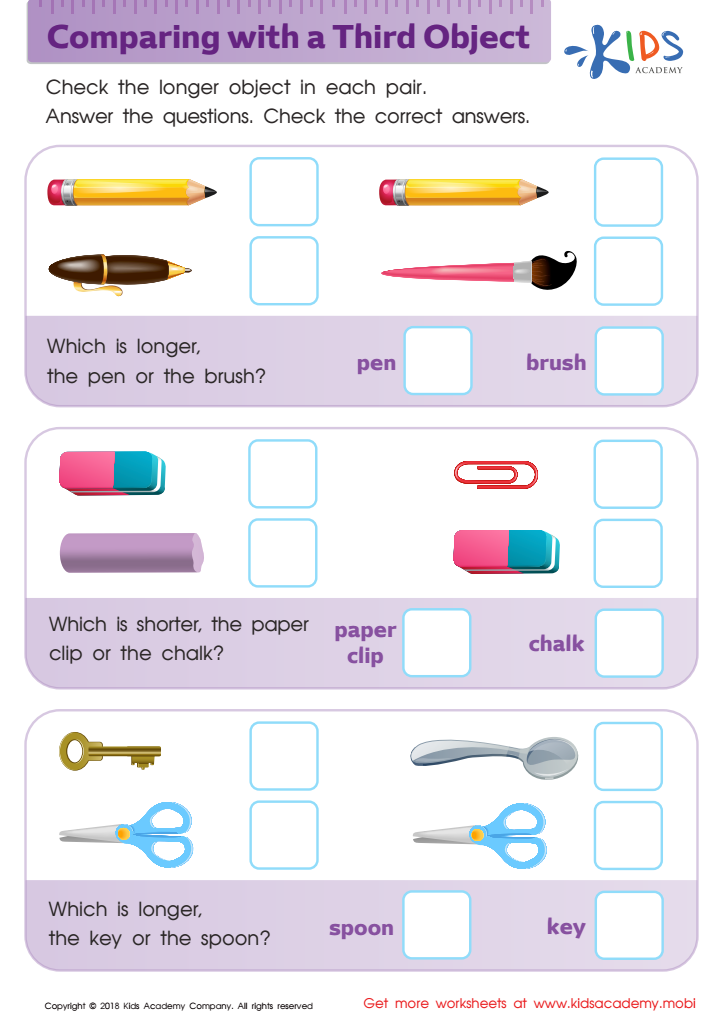
Comparing with a Third Object Worksheet
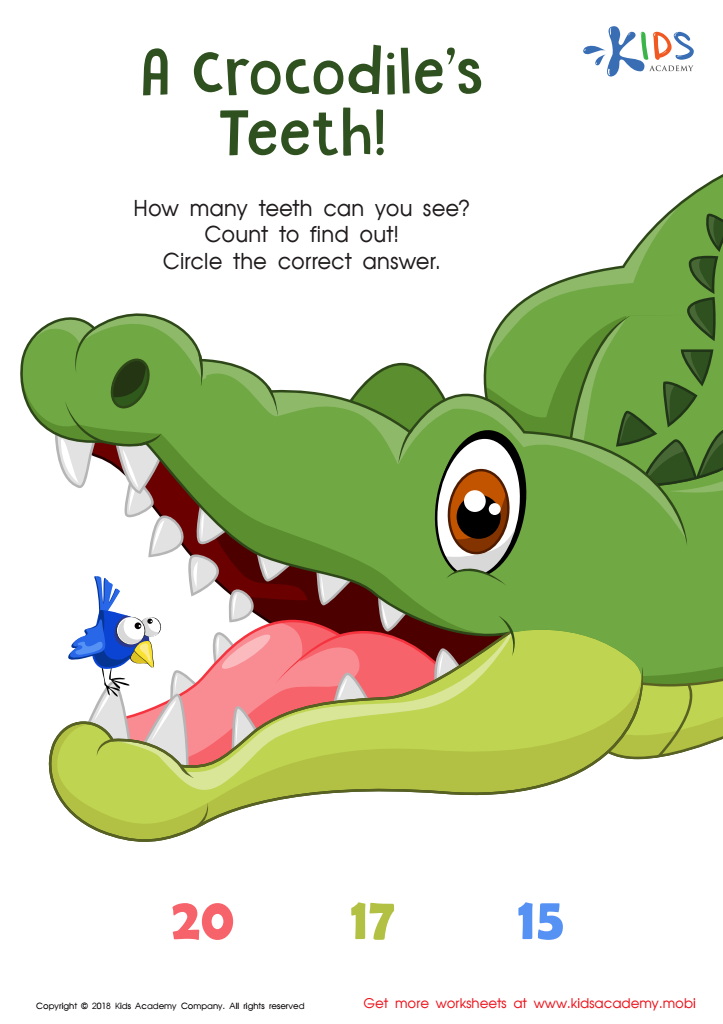
A Crocodile's Teeth Worksheet
Matching: Classifying Toys by Size Worksheet
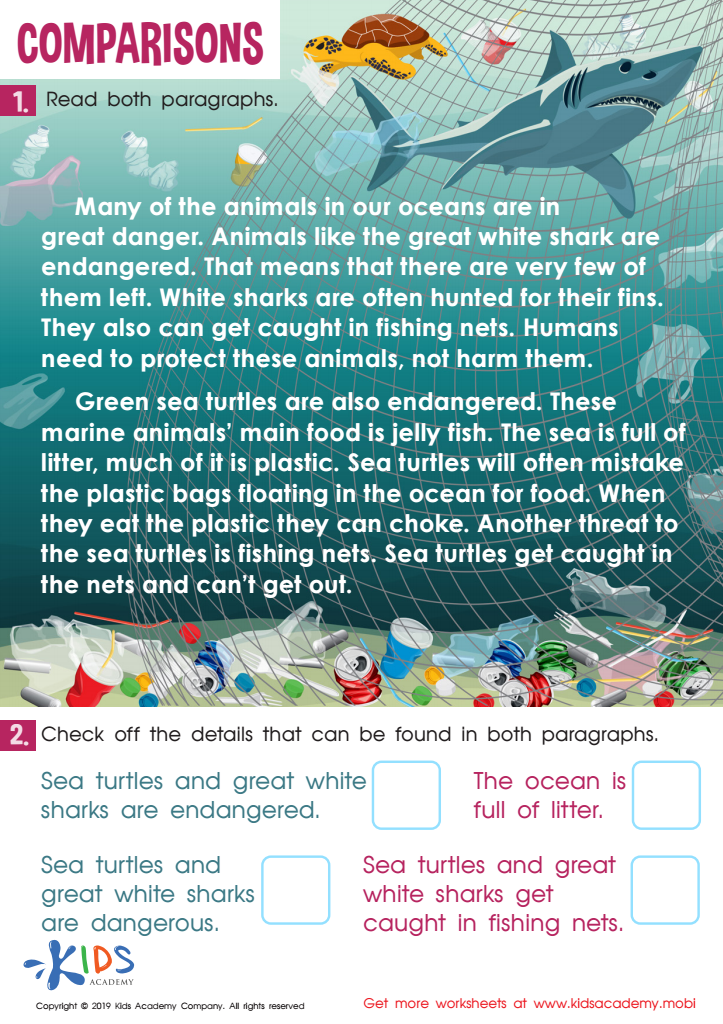
Comparisons Worksheet
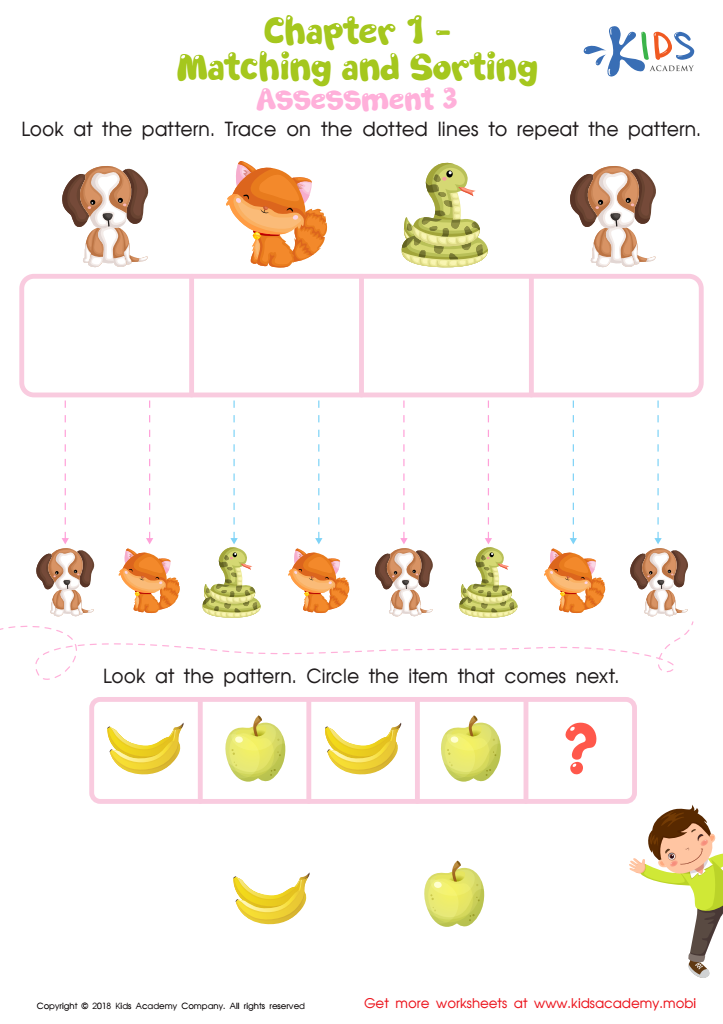
Matching and Sorting for Preschool: Assessment 3 Worksheet





.jpg)

Understanding comparisons is fundamental for young children aged 5-8, as it is a skill that extends across academic, social, and practical domains. In mathematics, the ability to make comparisons—such as understanding more and less, bigger and smaller—forms the basis for more complex mathematical concepts including addition, subtraction, and measurement. These operations are the building blocks for future math skills. Comparisons also play a key role in language development. When children learn to compare objects, they enhance their vocabulary, comprehension, and communication skills.
From a social perspective, the ability to compare promotes critical thinking and problem-solving. For instance, when children compare their own experiences, they develop empathy and an understanding of differences and similarities among people, which are critical social skills. Physically, comparisons help children understand spatial relationships—grasping concepts like nearer vs. farther and taller vs. shorter, influencing their interaction with the surrounding environment.
Teachers and parents can use everyday moments to teach comparison skills, thus embedding them naturally into a child's cognition. Activities like comparing toy sizes, food quantities, or distances in a park can make learning these concepts both fun and ingrained in daily life. Understanding comparisons thus supports academic readiness while also contributing to a child's overall intellectual and social development.








