Understanding subtraction Worksheets for Ages 5-8
22 filtered results
-
From - To
Introduce your child to the foundations of arithmetic with our “Understanding Subtraction Worksheets for Ages 5-8.” These interactive printable worksheets are designed to make learning subtraction engaging and enjoyable. Featuring colorful illustrations and simple exercises, children will develop critical thinking and problem-solving skills while mastering basic subtraction concepts. Perfect for home or classroom use, these resources cater to varying learning styles and paces, ensuring every child can confidently progress. Empower your young learner with the right tools to excel in math through our carefully curated collection, fostering a genuine love for numbers and learning.
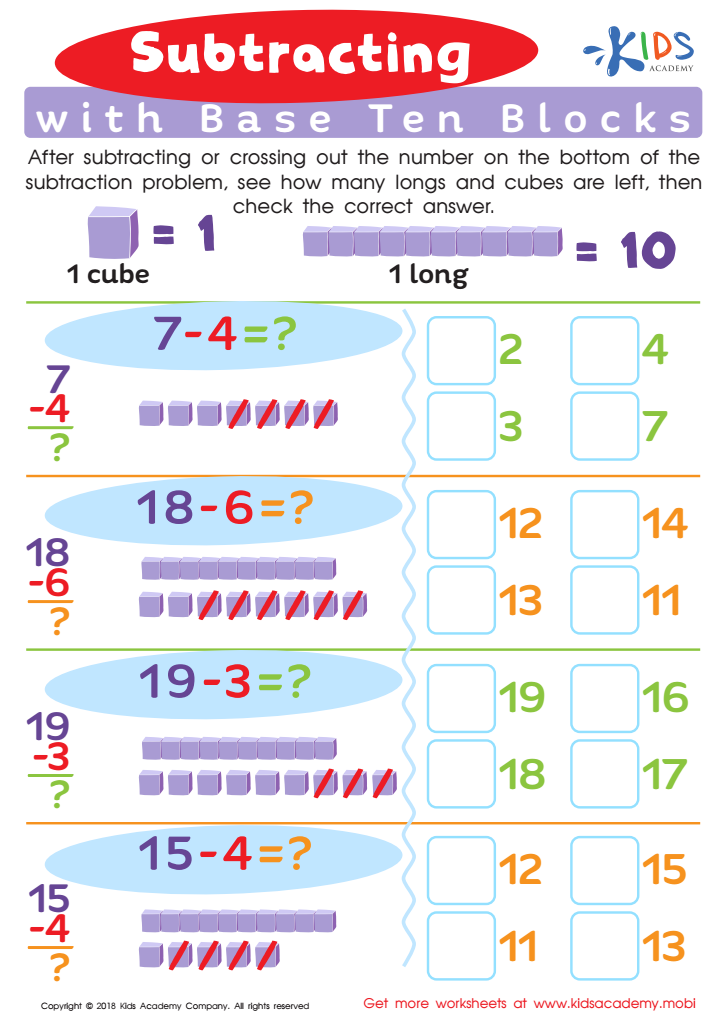
Subtracting With Base 10 Blocks Worksheet
 Assign to My Students
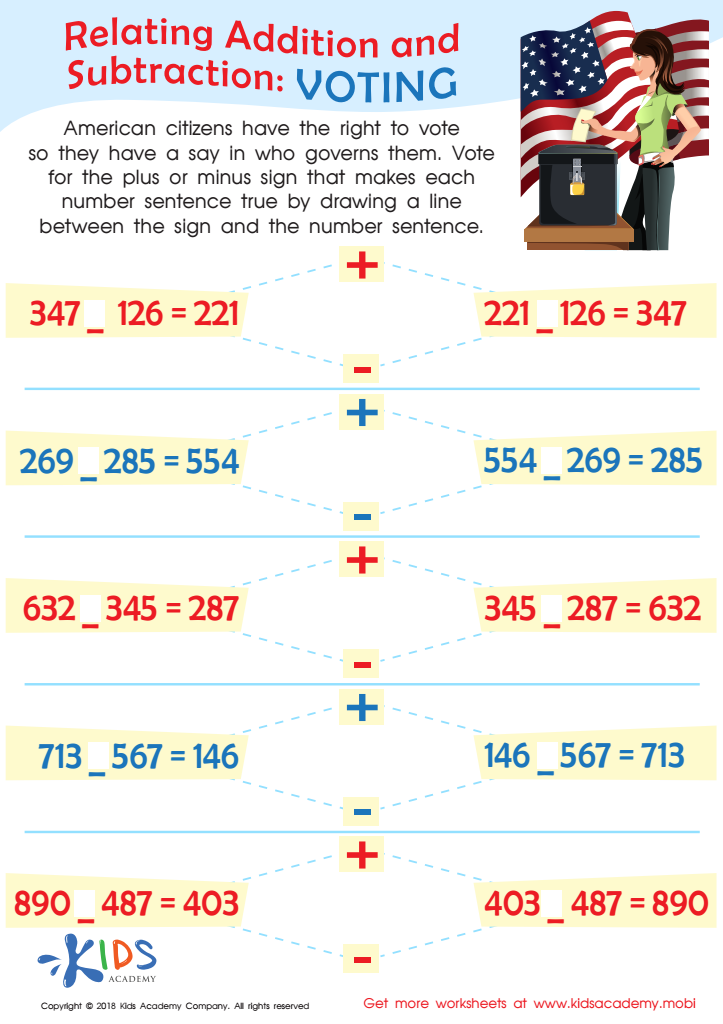
Voting Worksheet
Flying Planes Worksheet
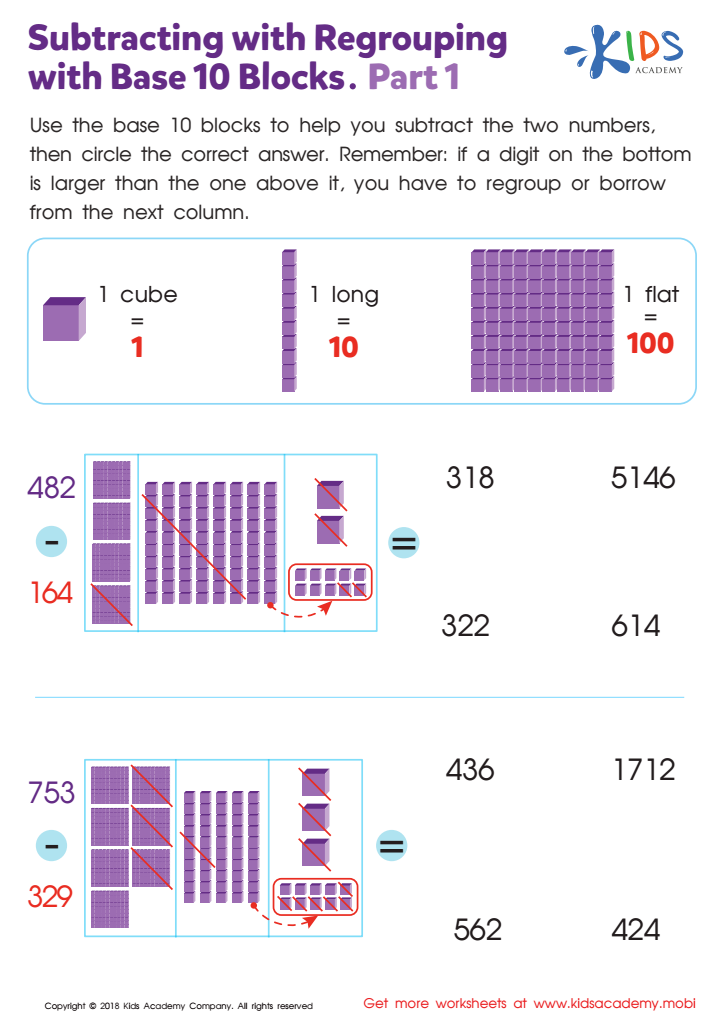
Subtracting with Regrouping with Base 10 Blocks. Part1 Worksheet
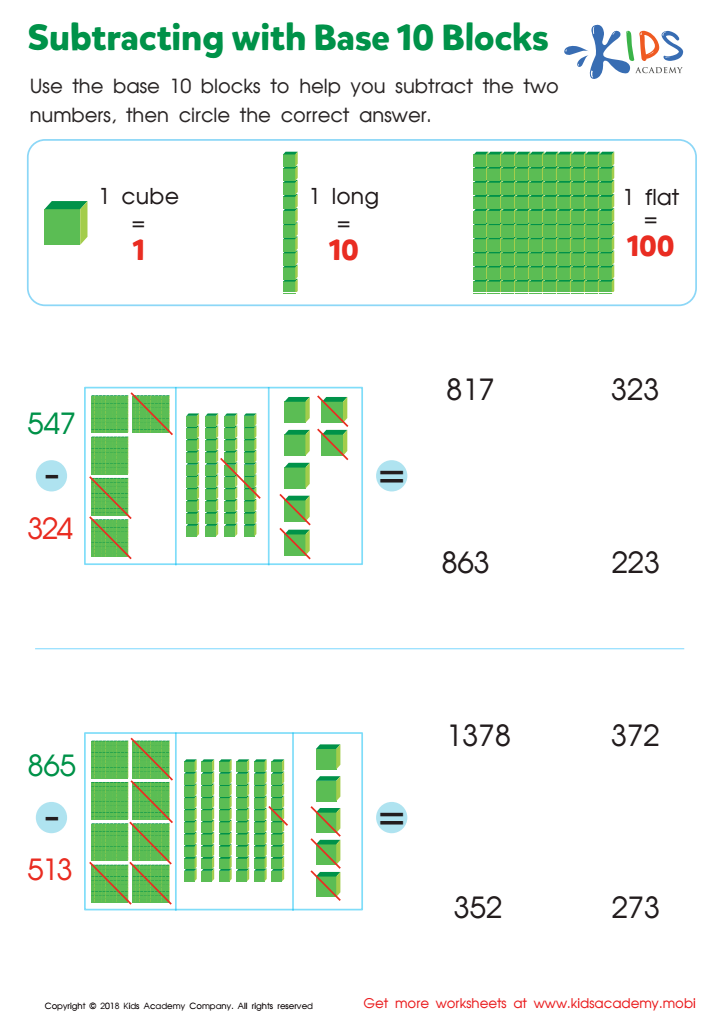
Subtracting with Base 10 Blocks Worksheet
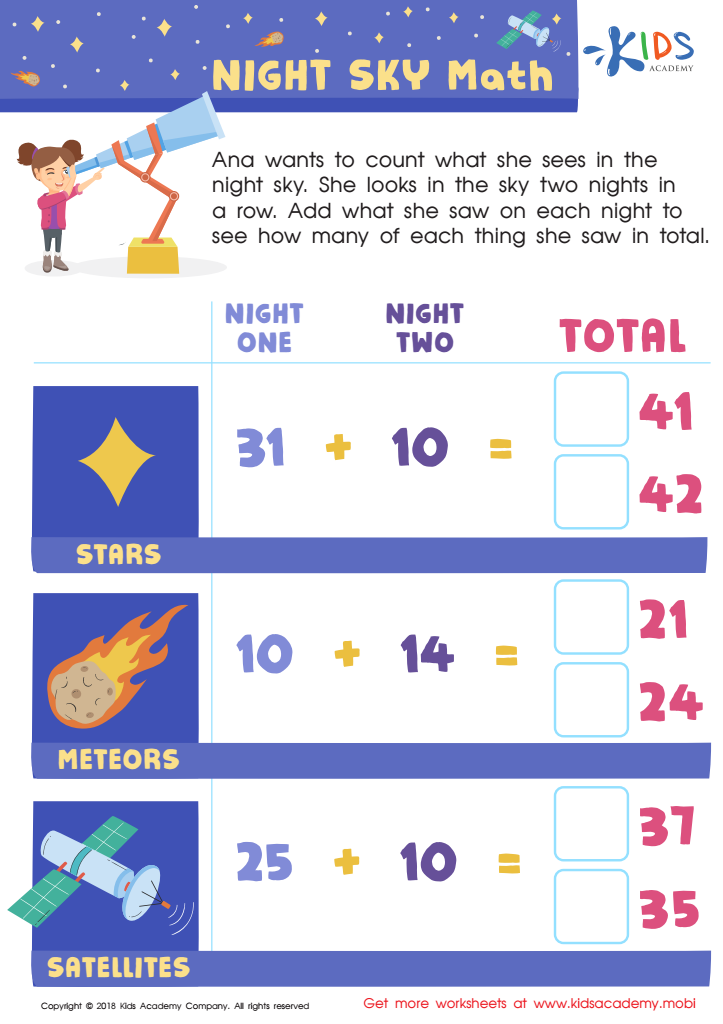
Night Sky Math Worksheet
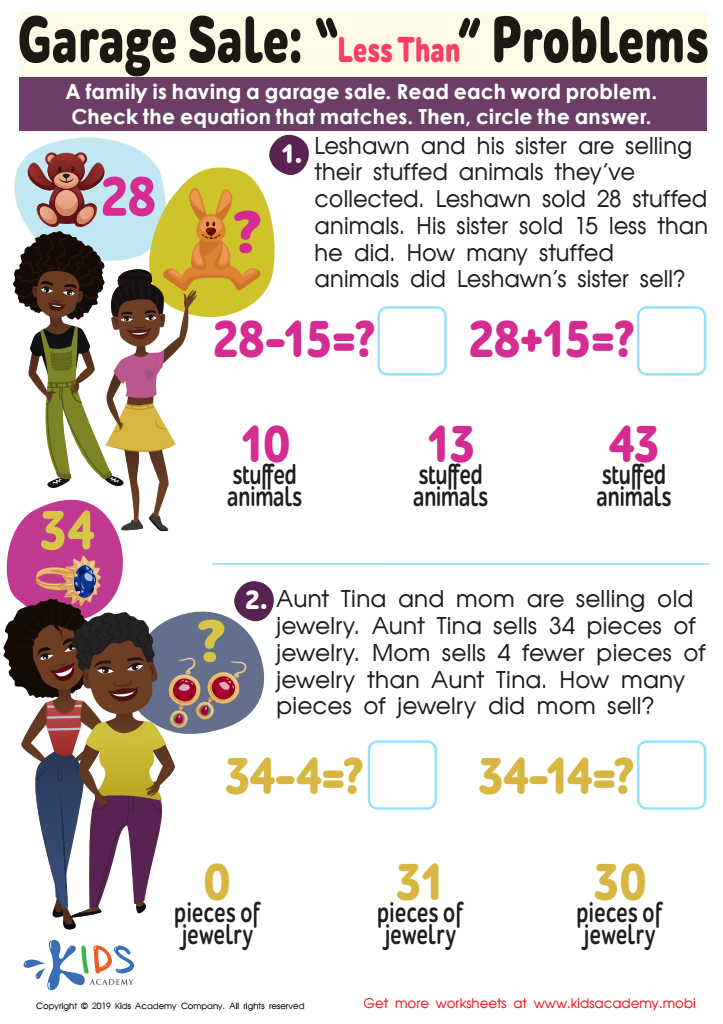
Garage Sale Less Than Worksheet
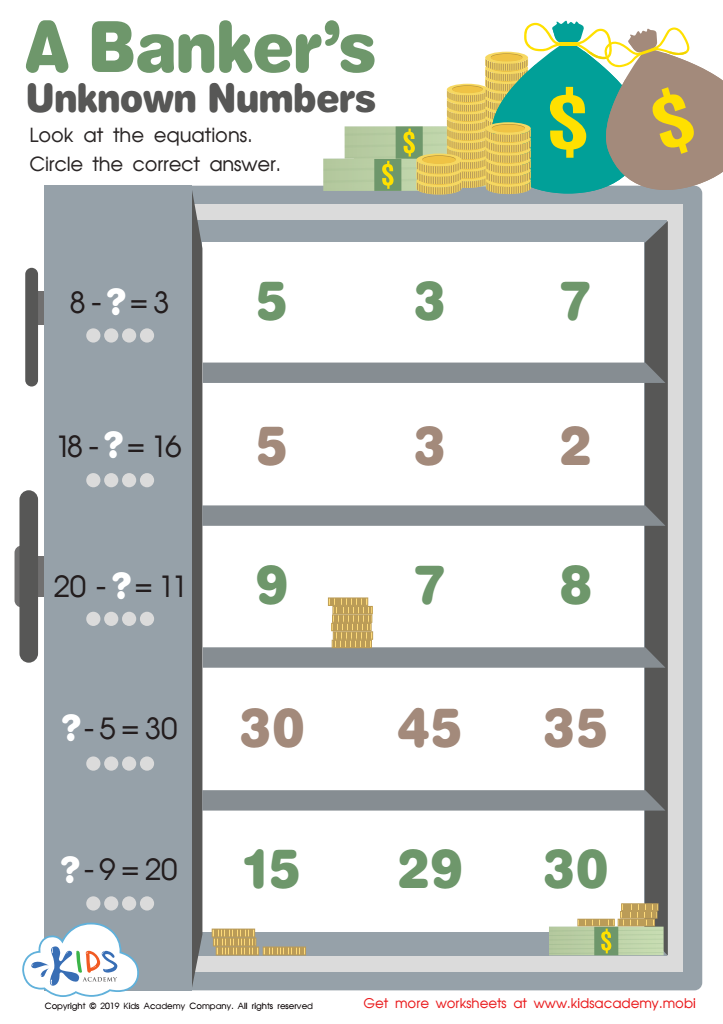
A Banker's Unknown Numbers Worksheet
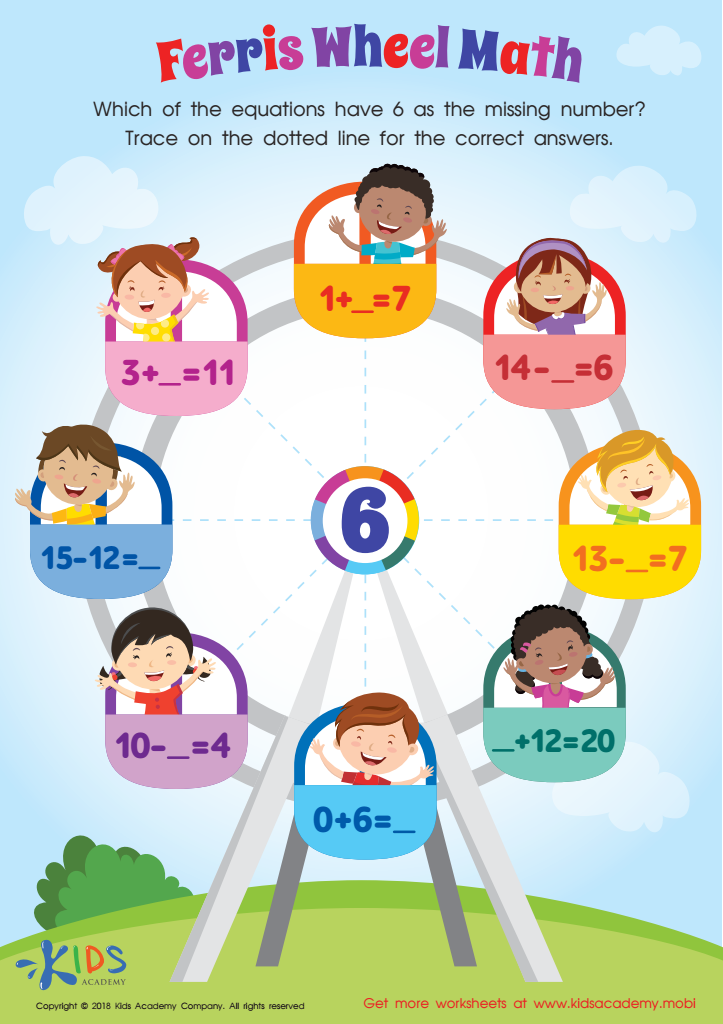
Missing Number: Ferris Wheel Math Worksheet
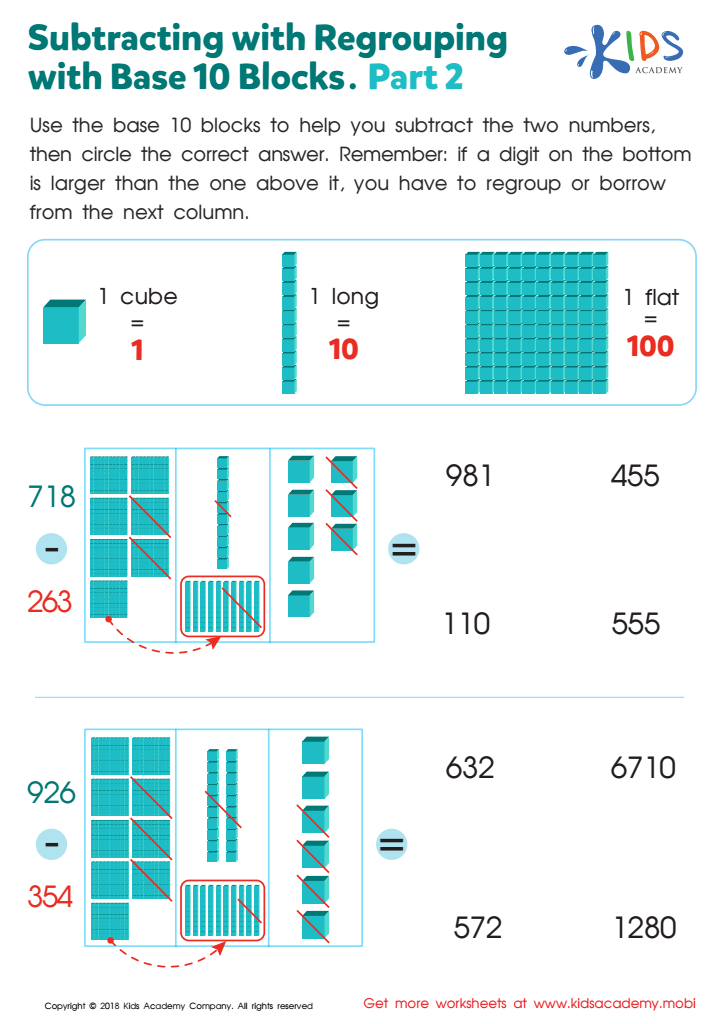
Subtracting with Regrouping with Base 10 Blocks. Part 2 Worksheet
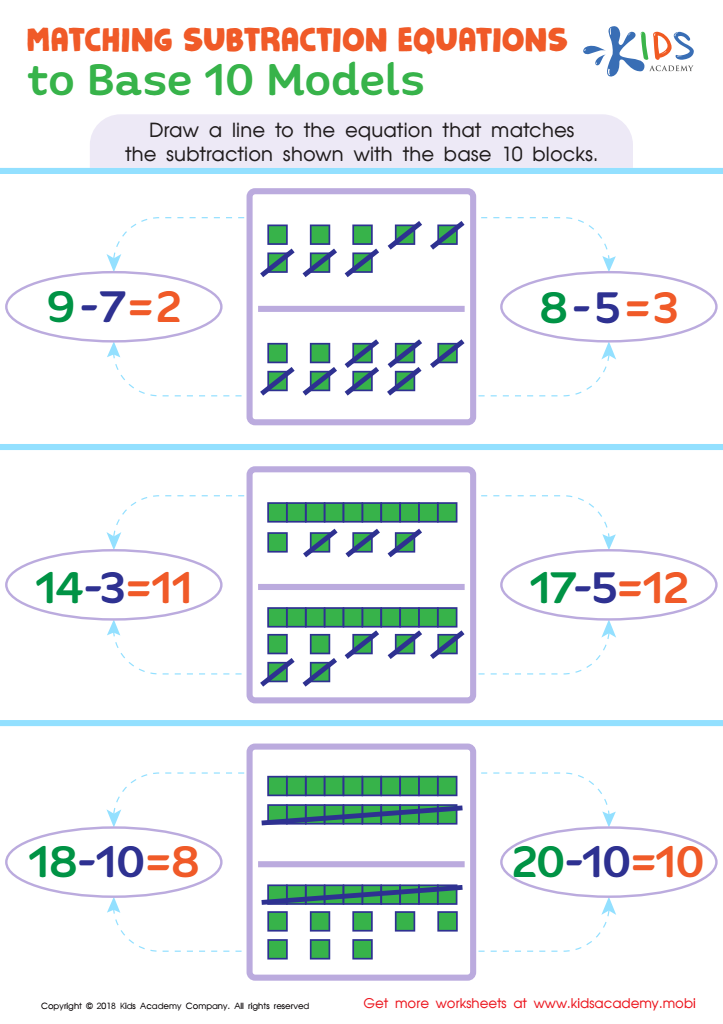
Matching Subtraction Equations To Base 10 Models Worksheet
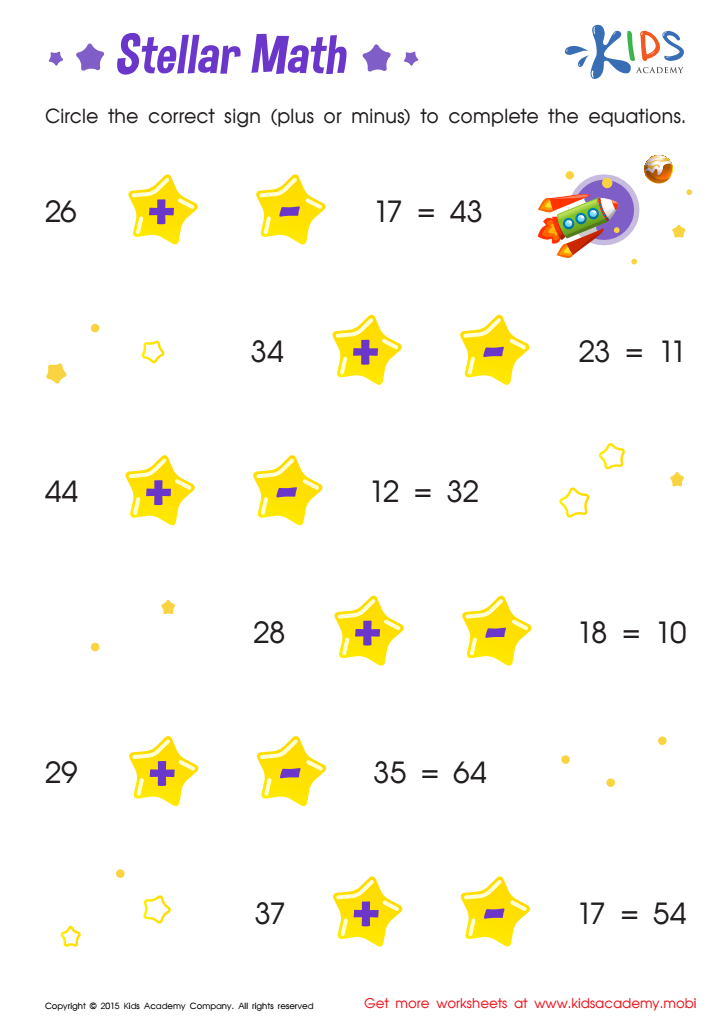
Stellar Math Substraction Worksheet
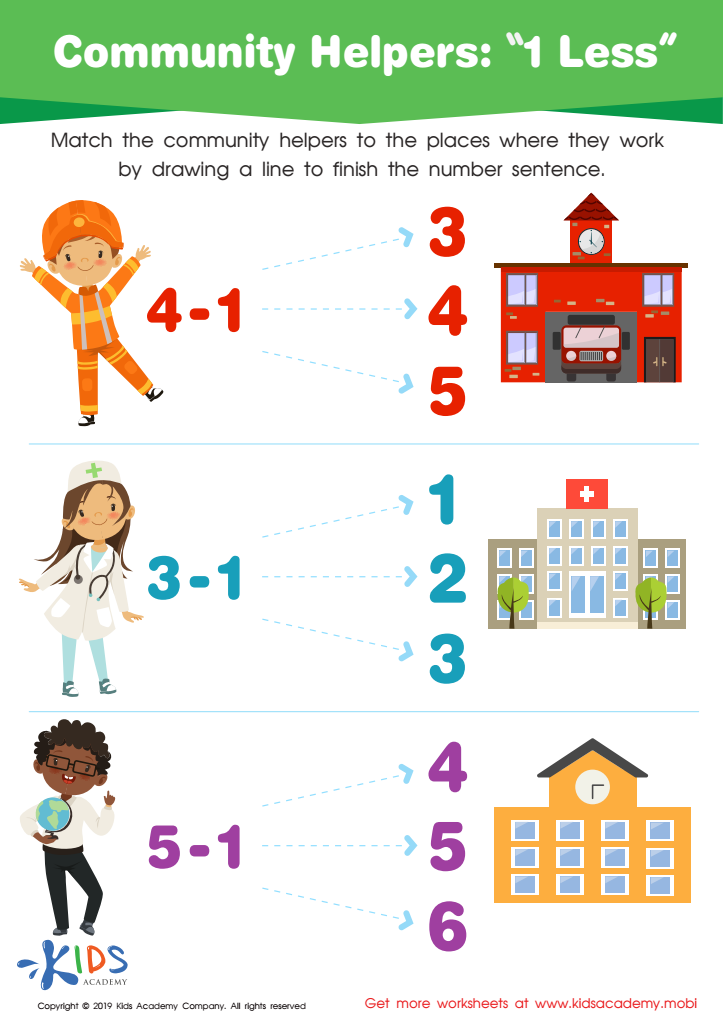
Community Helpers: 1 less Worksheet
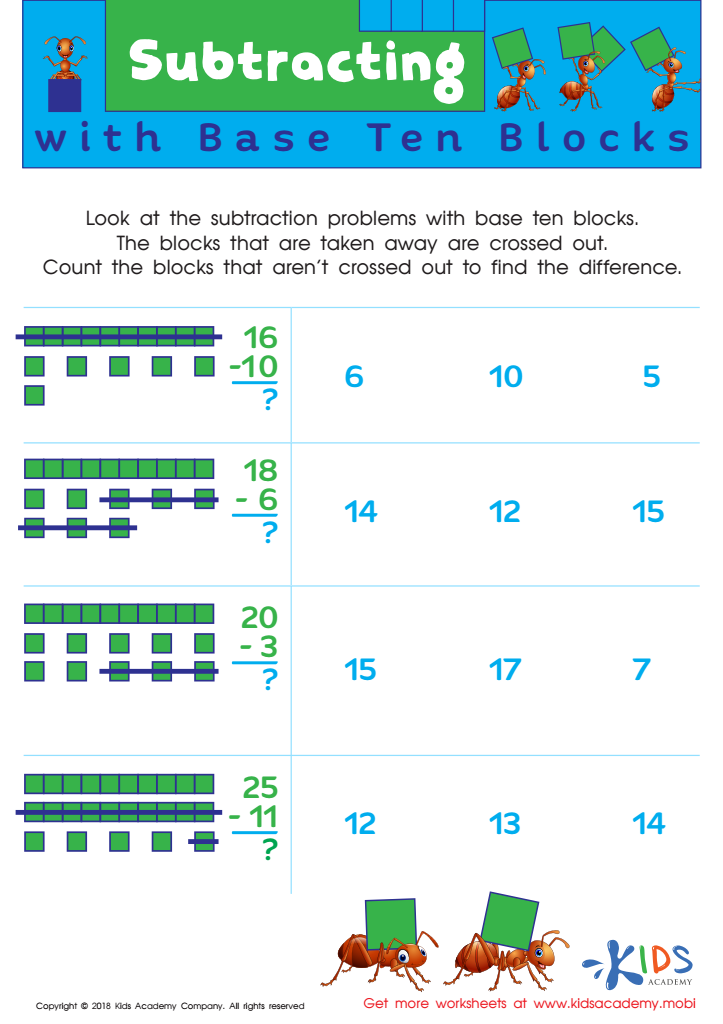
Subtracting with Base Blocks Worksheet
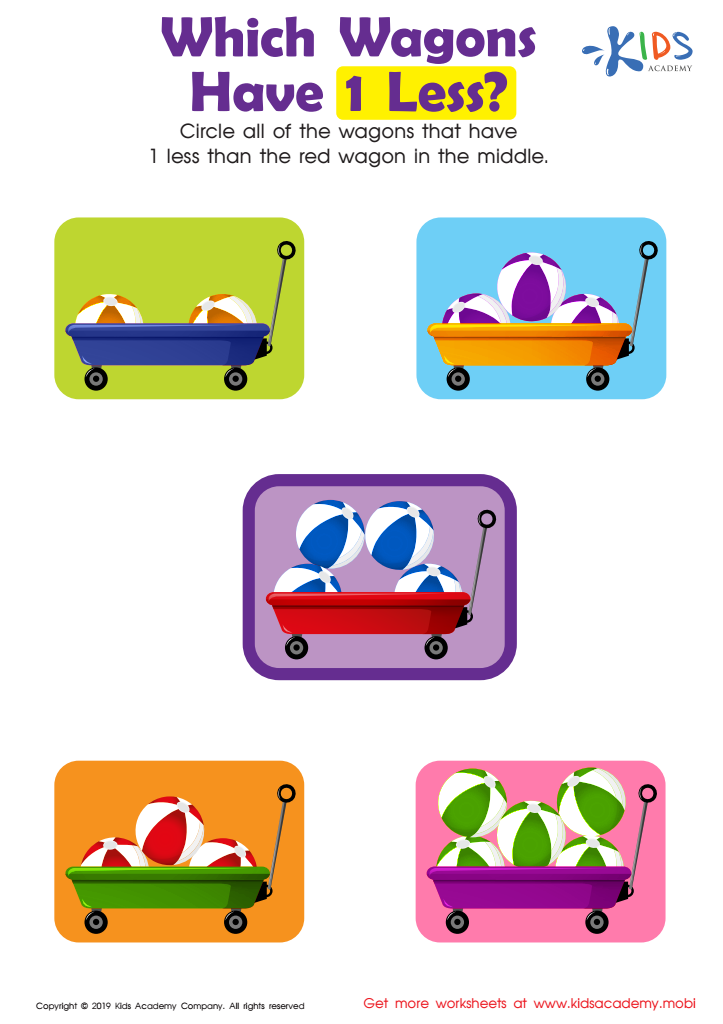
Which Wagons Have 1 Less? Worksheet
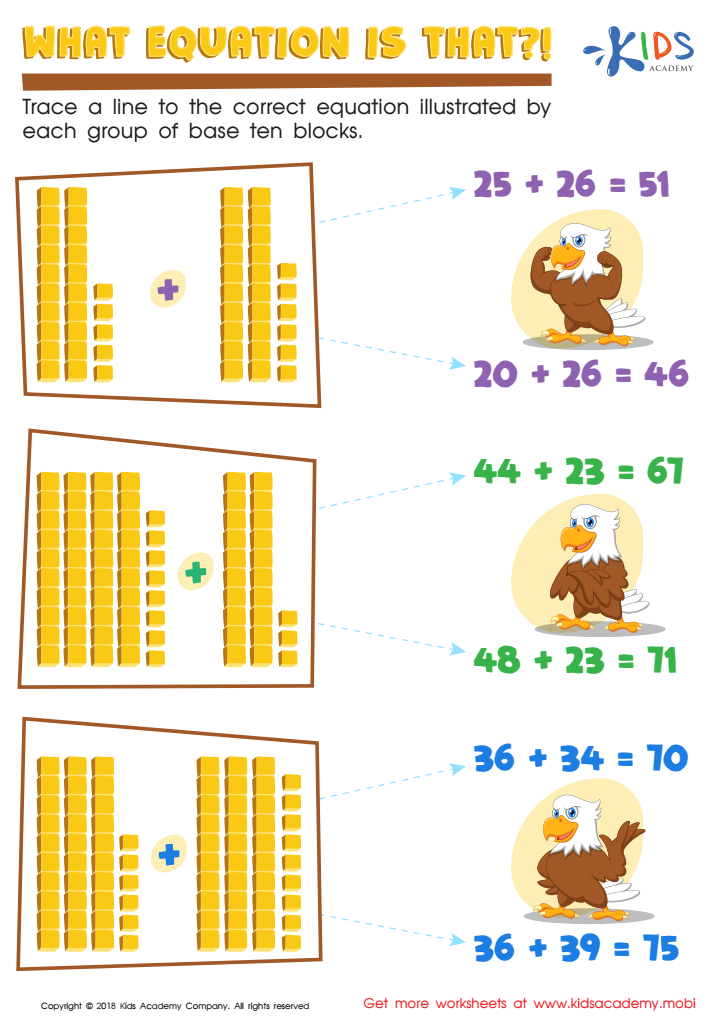
What Equation Is That? Worksheet
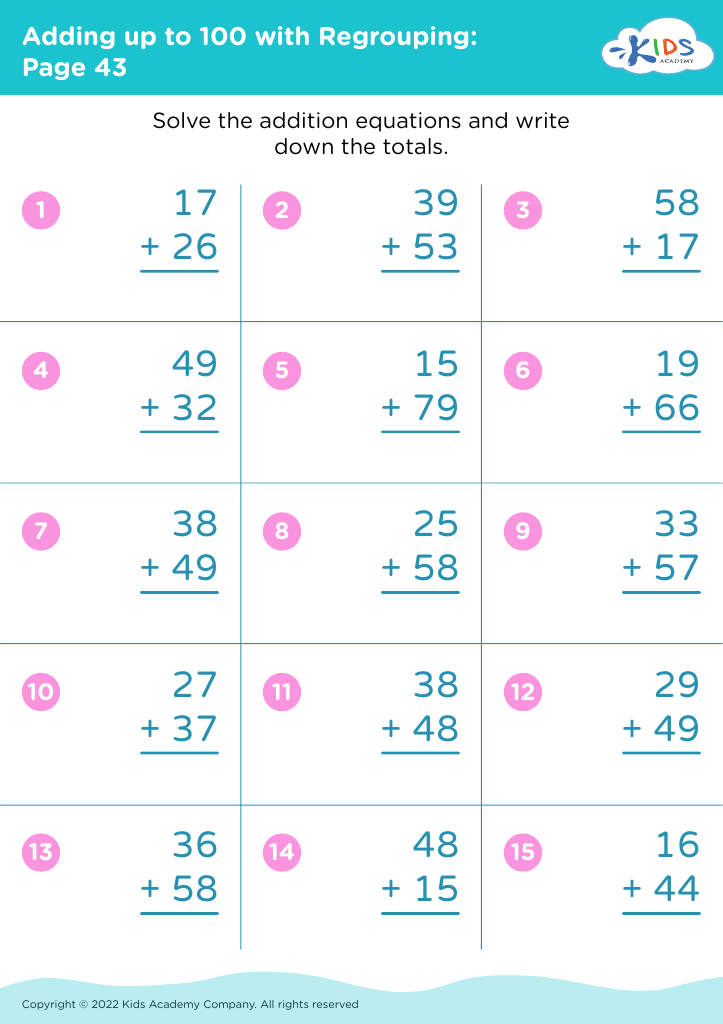
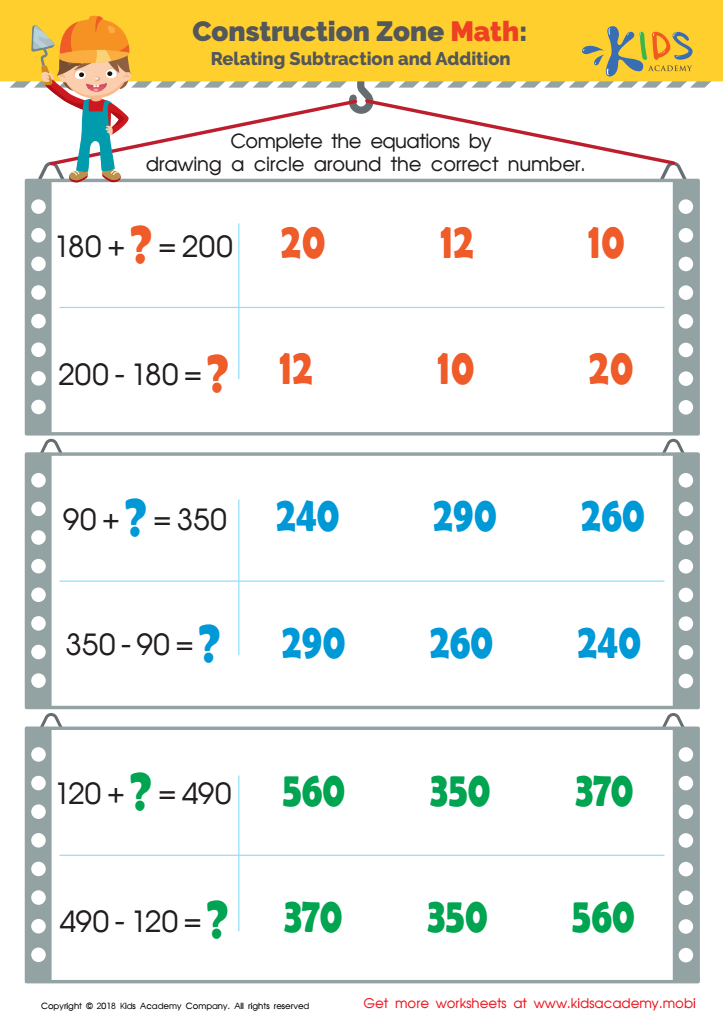
Construction Zone Math: Relating Subtraction and Addition Worksheet



.jpg)



Understanding subtraction is crucial for children ages 5-8 because it forms a fundamental building block for future math skills and overall cognitive development. During these formative years, children are developing their sense of number relationships and spatial reasoning. Grasping how subtraction works enables them to understand the concept of taking away and finding what remains, which is a skill that extends beyond math and into everyday problem-solving situations.
Subtraction helps in building critical thinking and decision-making skills. When children engage in subtraction exercises, they practice thinking in reverse, which strengthens their mental agility and flexibility. This skill translates to other areas of learning and real-life situations, where they need to consider alternatives and outcomes.
Moreover, competence in subtraction is essential for mastering more advanced mathematical concepts. Without a strong foundation in basic arithmetic—addition, subtraction, multiplication, and division—students may struggle with more complex math topics in later grades., this fear can snowball, causing anxiety or a lack of confidence in their math abilities.
Therefore, parents and teachers should pay close attention to how children understand and apply subtraction. By providing support and resources, they can ensure that children not only achieve proficiency in subtraction but also develop a positive attitude toward mathematics as a whole.








