Filters

17 filtered results

Clear all filters
Favorites
With answer key
Interactive

17 filtered results

Difficulty Level

Grade


Welcome to our Enhance Comprehension Addition Worksheets for Ages 5-8! Designed to support young learners in mastering addition, these worksheets emphasize comprehension and problem-solving skills. Our engaging activities help children understand the concepts behind addition, ensuring they grasp not just how to add but why it matters. With a variety of colorful and interactive exercises, kids will stay motivated while building confidence in their math abilities. Ideal for use at home or in the classroom, these worksheets cater to different learning styles and can easily supplement any curriculum. Start your child's journey to math mastery with our fun addition resources today!
Check out this FREE Trial Lesson on Addition for age 5-8!

Exactly the Same, or Not

Favorites
With answer key
Interactive
  • 5-8
  • Enhance comprehension
  • Addition
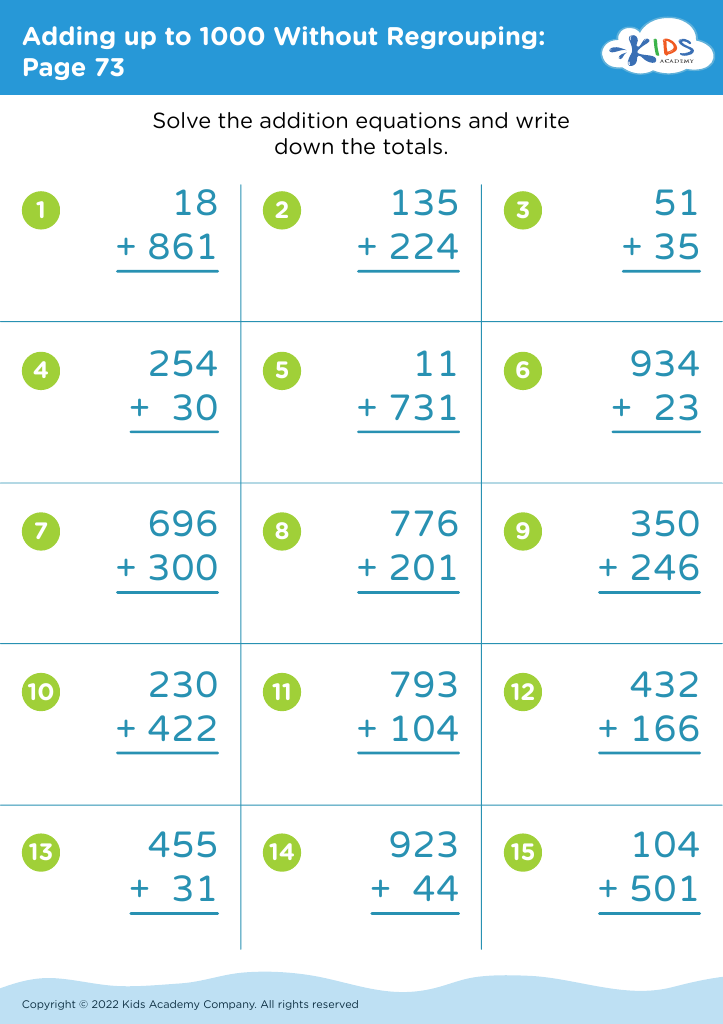
Adding up to 1000 Without Regrouping: Page 73
Worksheet
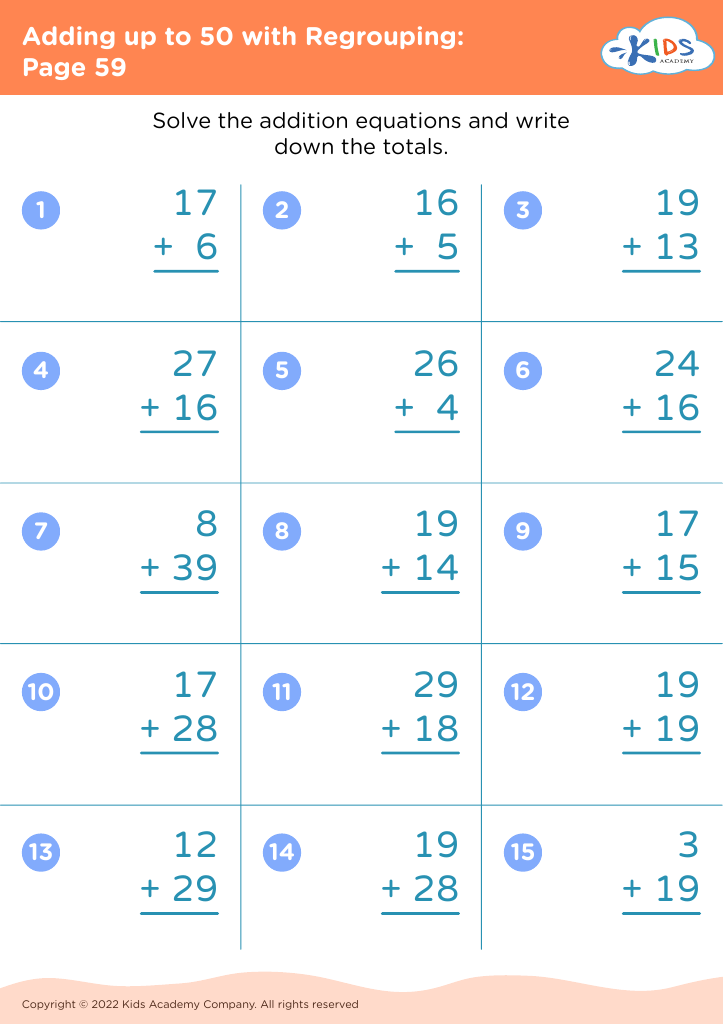
Adding up to 50 with Regrouping: Page 59
Worksheet
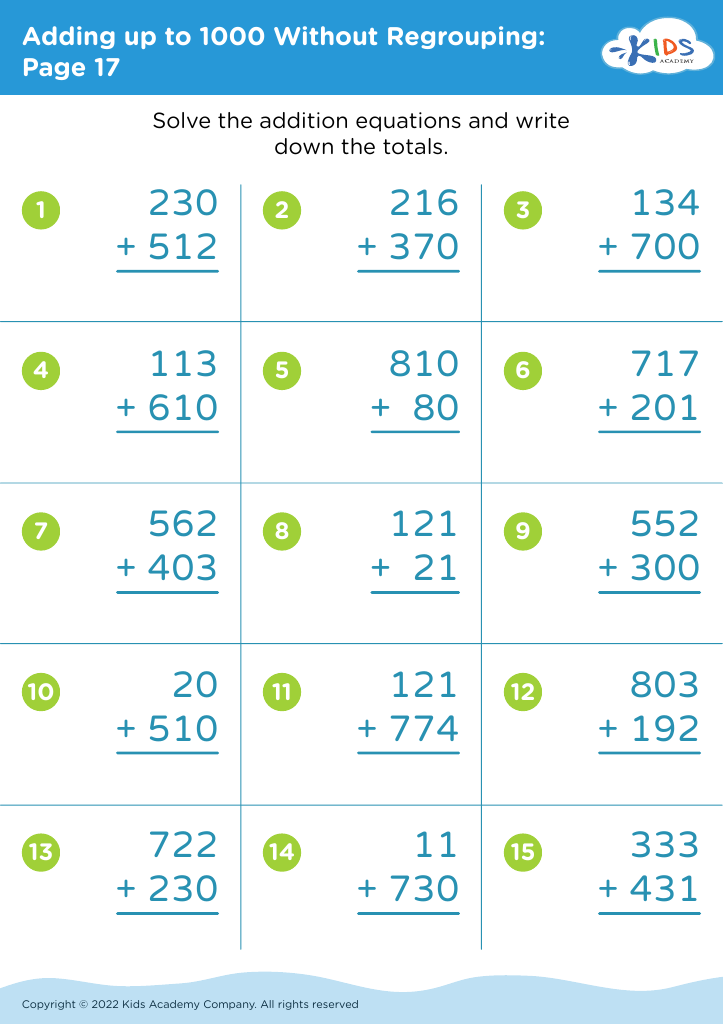
Adding up to 1000 Without Regrouping: Page 17
Worksheet
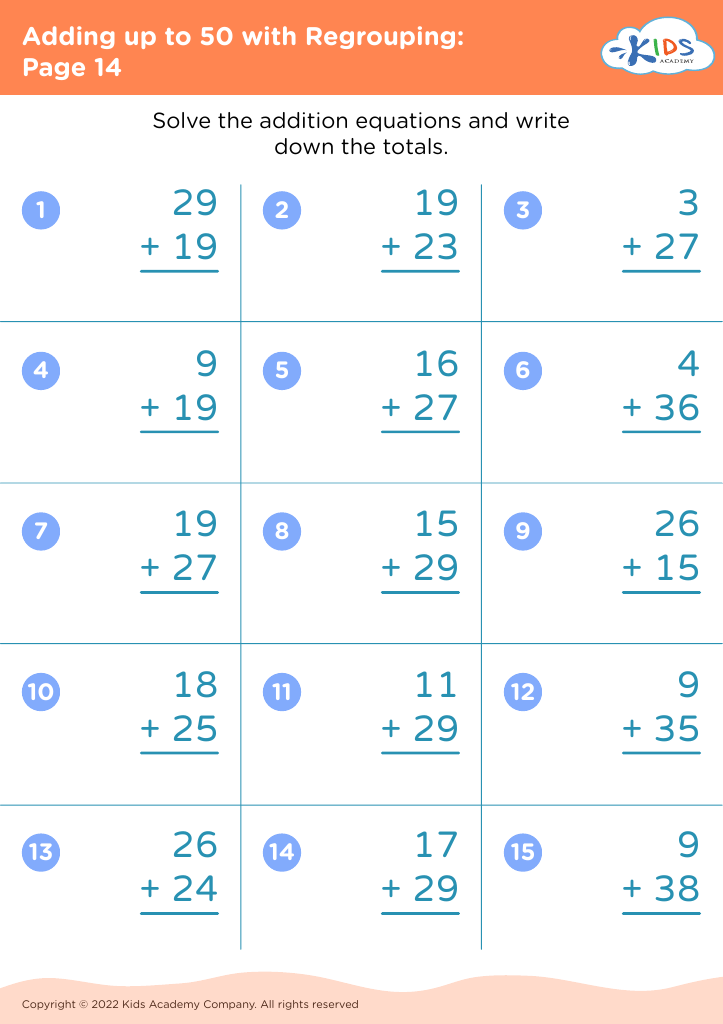
Adding up to 50 with Regrouping: Page 14
Worksheet
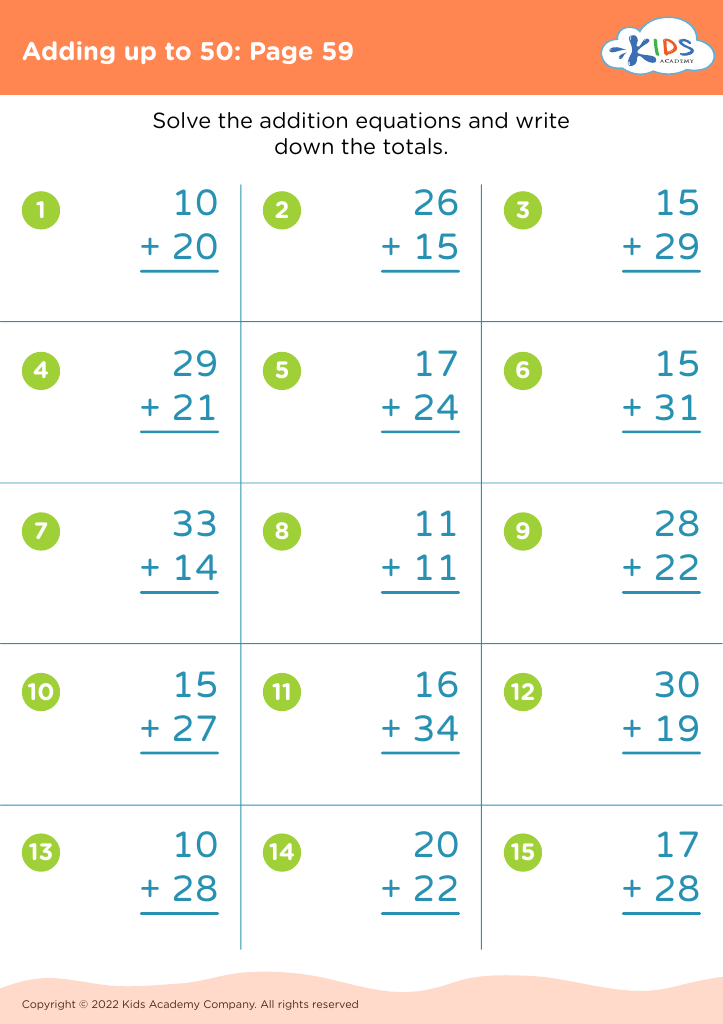
Adding up to 50: Page 59

Adding up to 50: Page 59

Adding up to 50: Page 59
Worksheet
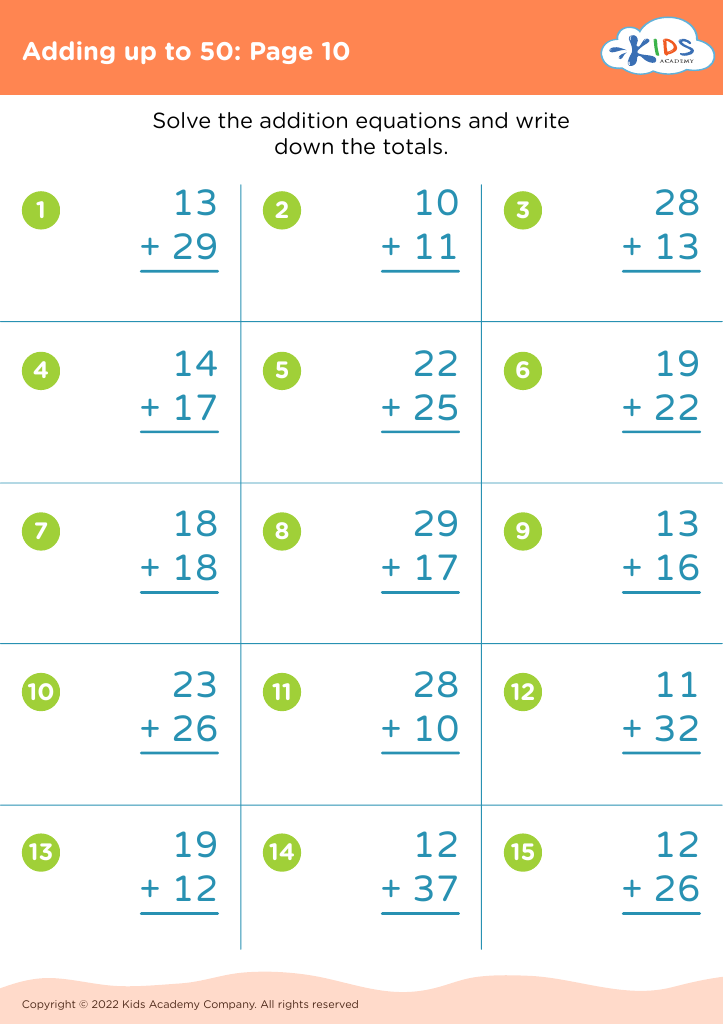
Adding up to 50: Page 10

Adding up to 50: Page 10

Adding up to 50: Page 10
Worksheet
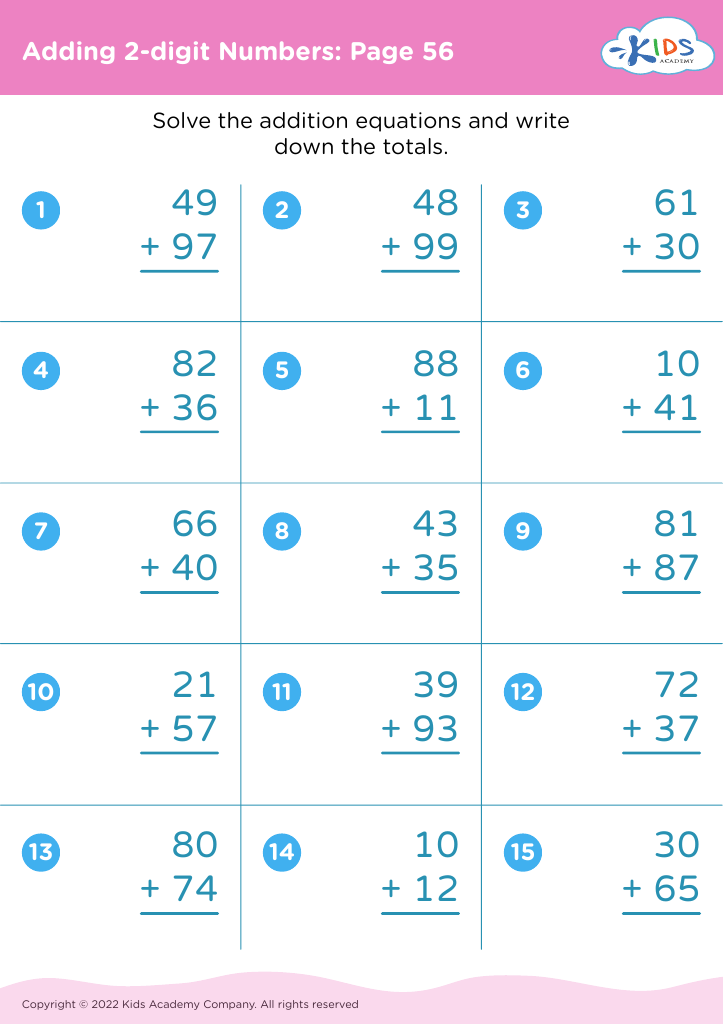
Adding 2-digit Numbers: Page 56

Adding 2-digit Numbers: Page 56

Adding 2-digit Numbers: Page 56
Worksheet
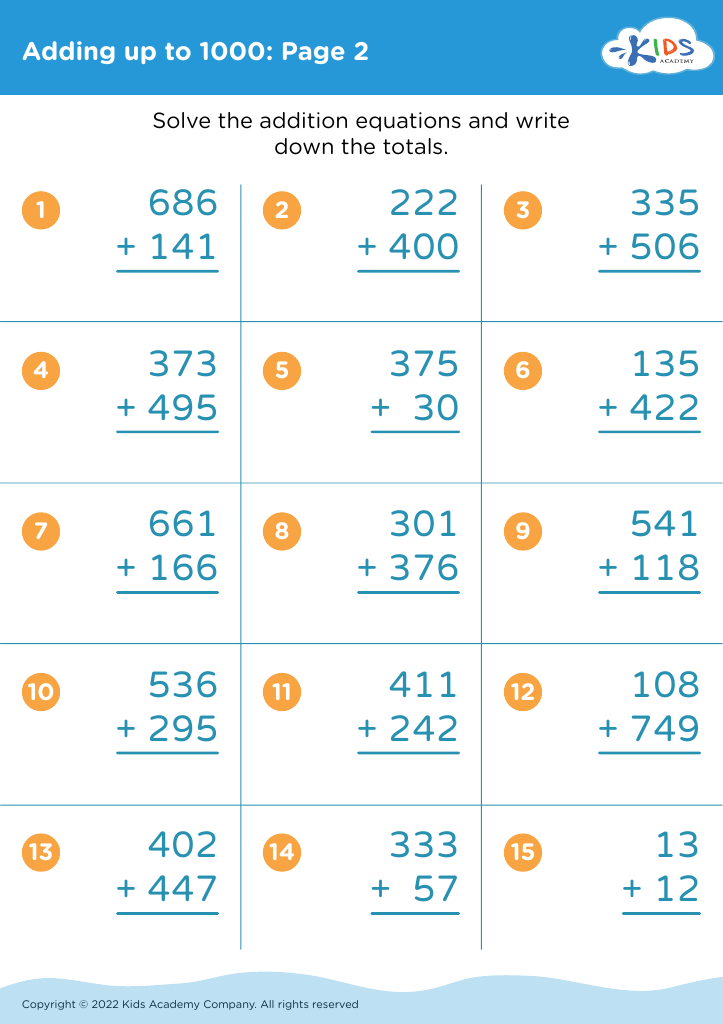
Adding up to 1000: Page 2

Adding up to 1000: Page 2

Adding up to 1000: Page 2
Worksheet
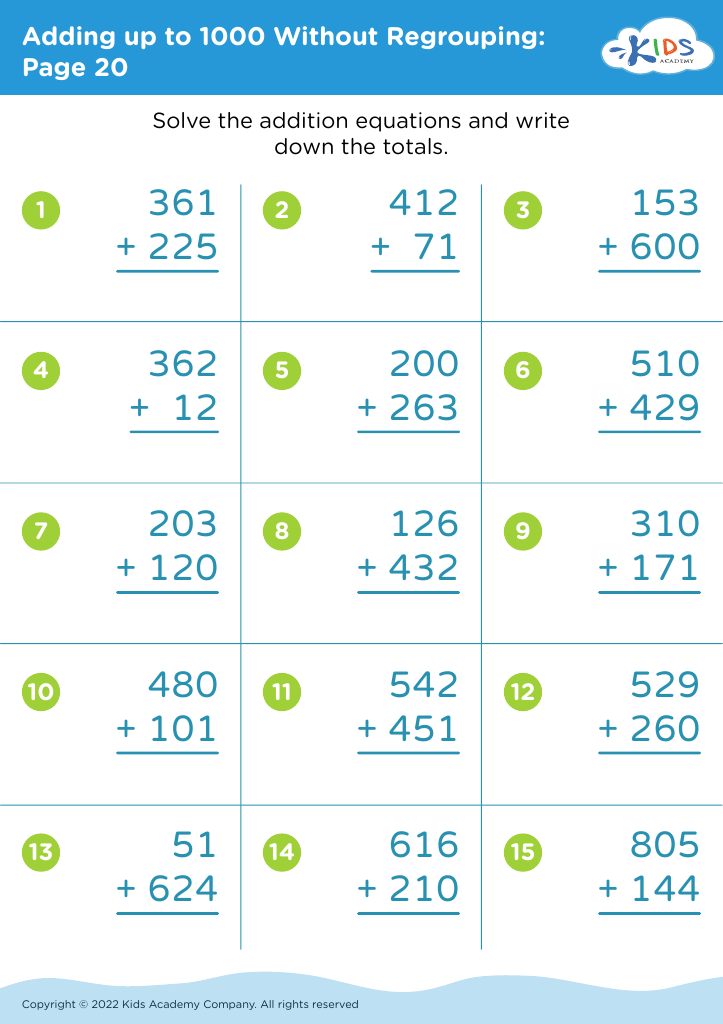
Adding up to 1000 Without Regrouping: Page 20
Worksheet
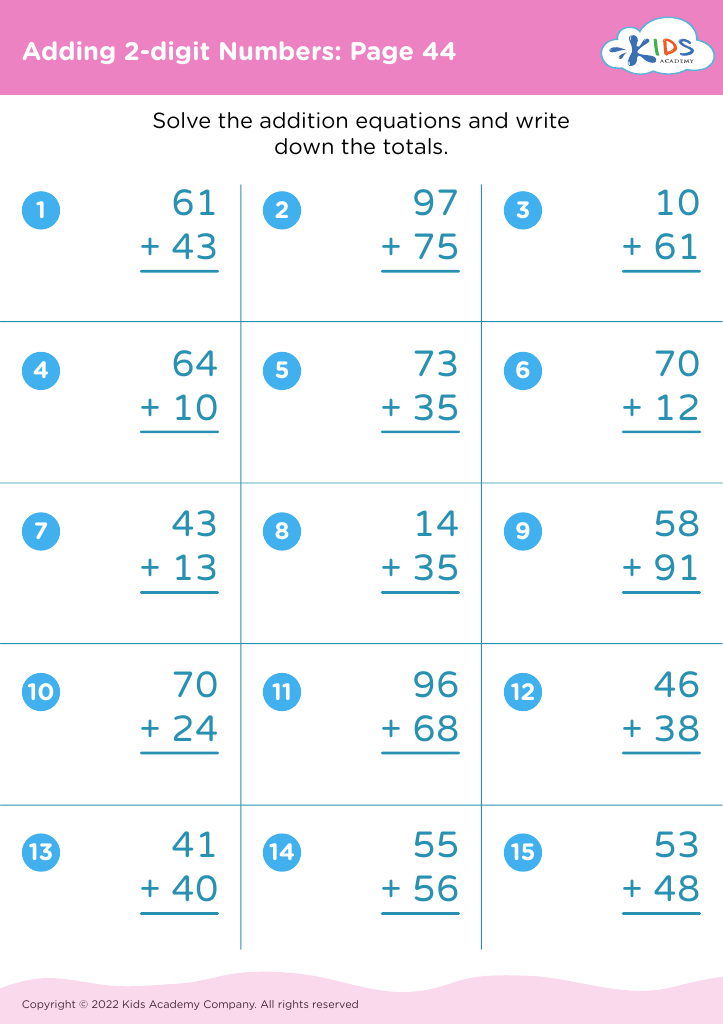
Adding 2-digit Numbers: Page 44

Adding 2-digit Numbers: Page 44

Adding 2-digit Numbers: Page 44
Worksheet
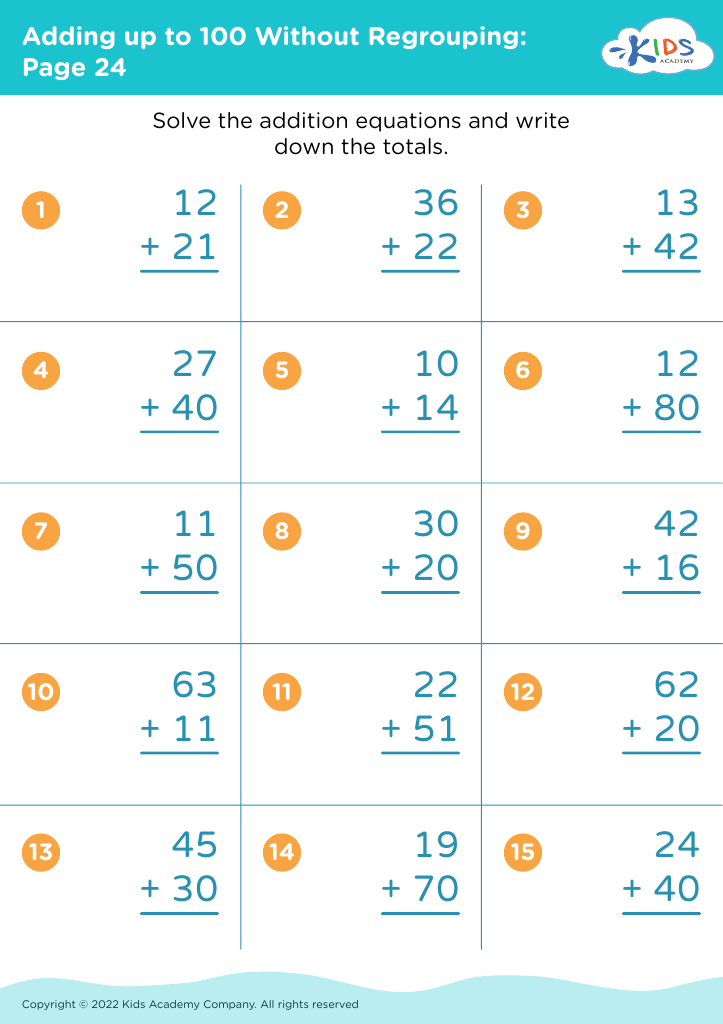
Adding up to 100 Without Regrouping: Page 24
Worksheet
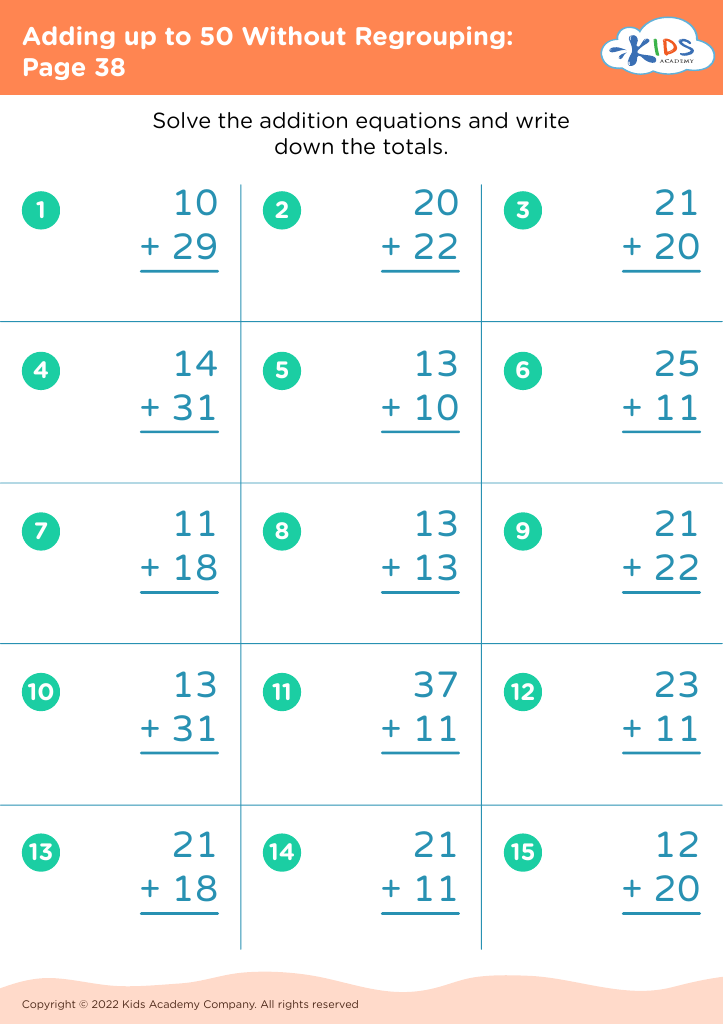
Adding up to 50 Without Regrouping: Page 38
Worksheet
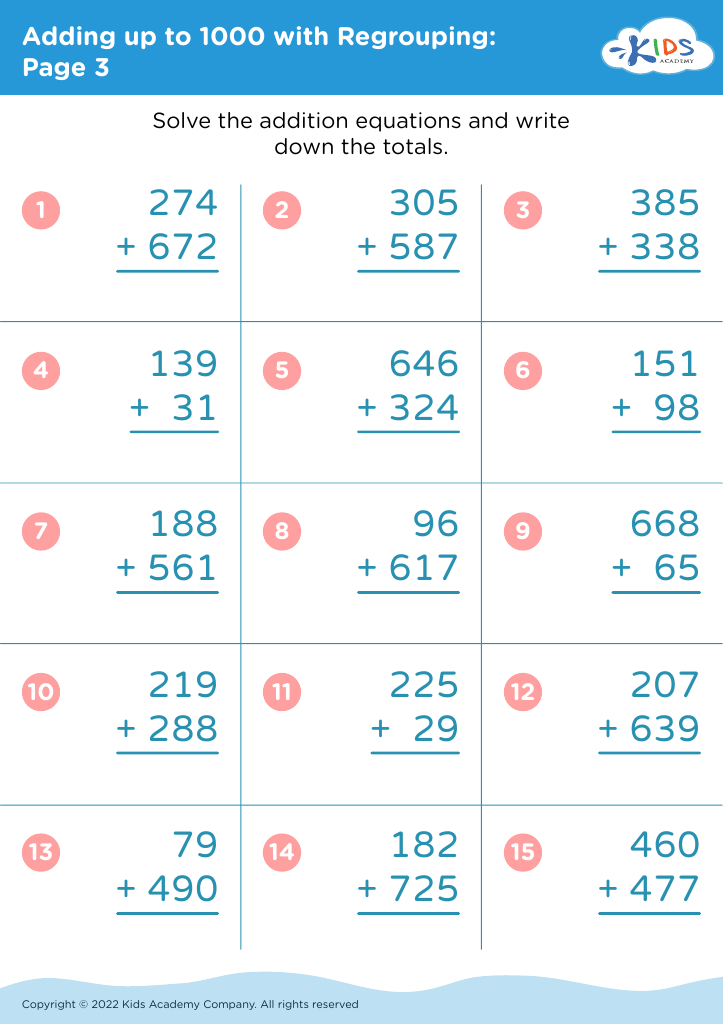
Adding up to 1000 with Regrouping: Page 3
Worksheet
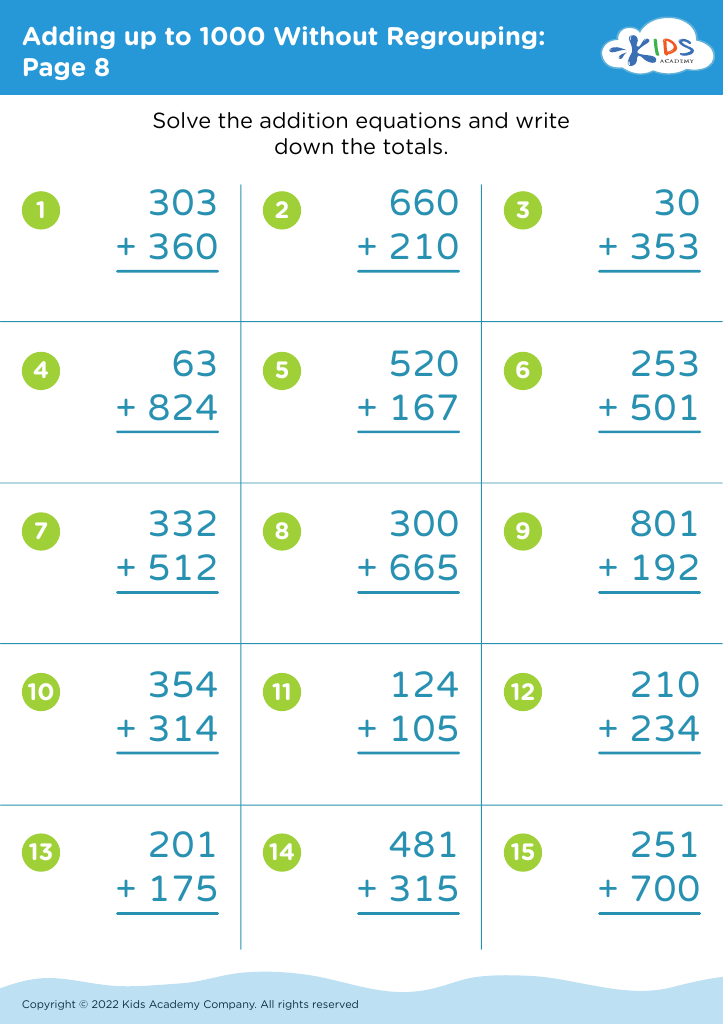
Adding up to 1000 Without Regrouping: Page 8
Worksheet
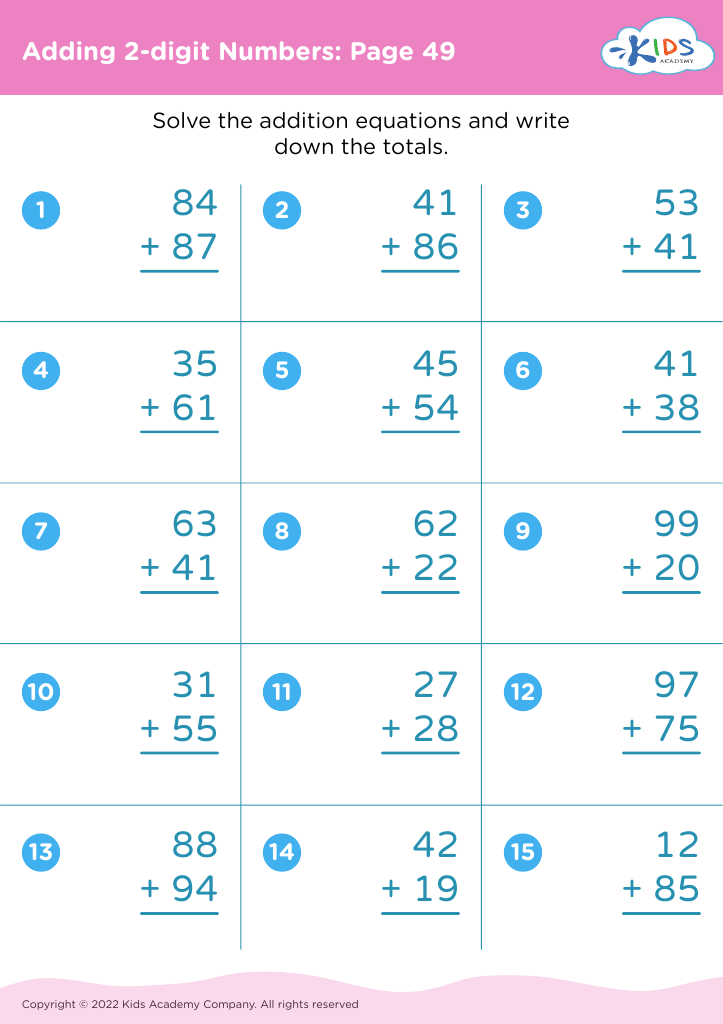
Adding 2-digit Numbers: Page 49

Adding 2-digit Numbers: Page 49

Adding 2-digit Numbers: Page 49
Worksheet
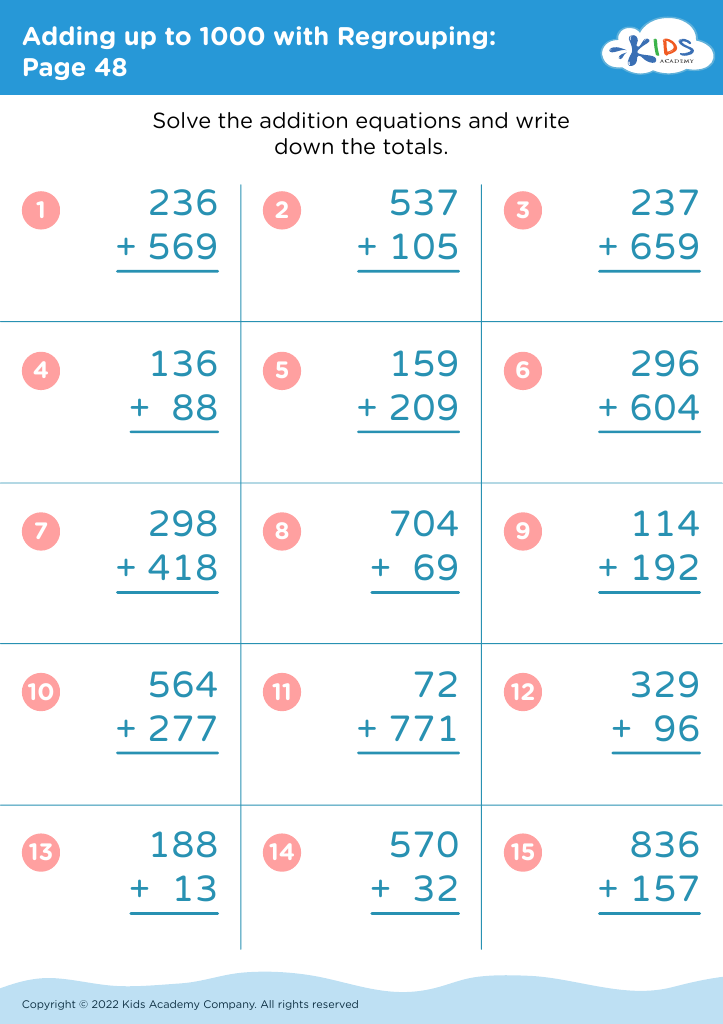
Adding up to 1000 with Regrouping: Page 48
Worksheet
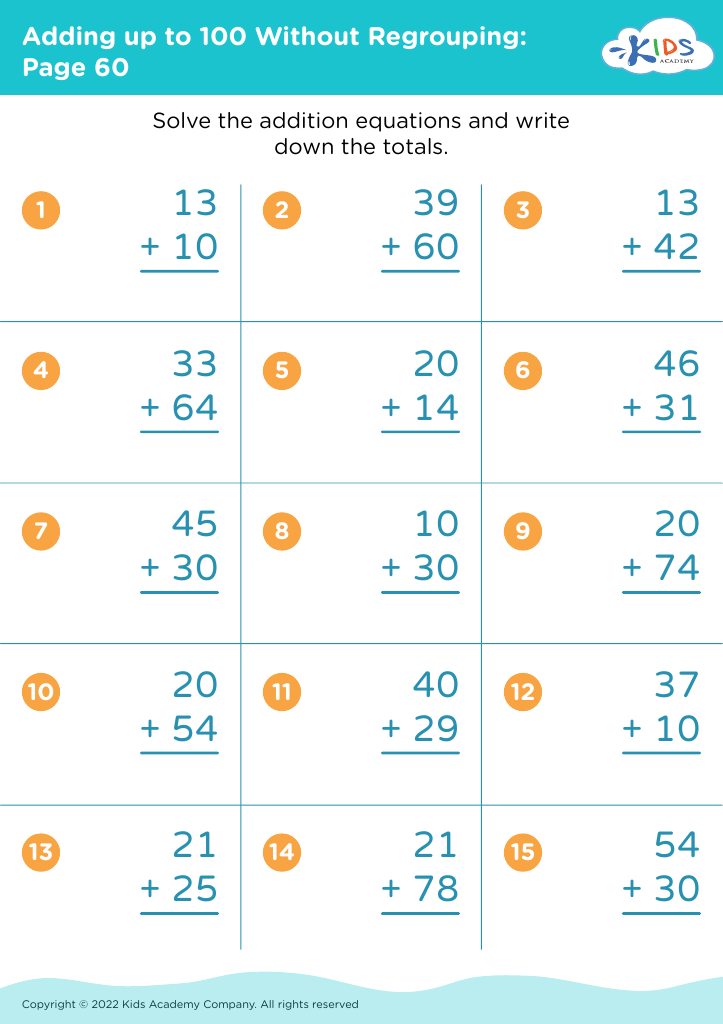
Adding up to 100 Without Regrouping: Page 60
Worksheet


Enhancing comprehension in addition for children ages 5-8 is crucial for several reasons. First, this foundational mathematical skill sets the stage for future academic success. Children are at a prime age for developing cognitive abilities, and a solid understanding of addition fosters critical thinking and problem-solving skills as they progress through their education.

Moreover, by enhancing comprehension in addition, educators and parents can help children develop a deeper understanding of numbers and relationships. This understanding moves beyond rote memorization of facts, encouraging students to see patterns, make connections, and employ strategies that support lifelong learning.

Additionally, mastery of addition boosts children's confidence in their mathematical abilities, which reduces anxiety associated with math for many learners. Confidence is closely tied to motivation; students who feel competent are more likely to engage with and enjoy math, turning challenges into opportunities for growth.

Finally, as math is increasingly integrated with everyday living, effective comprehension of addition aids children in practical situations, such as budgeting, understanding time, and measuring ingredients during cooking. By focusing on enhancing these skills at an early age, parents and teachers can ensure a well-rounded education that prepares children for a bright, numerically confident future.