Matching skills Geometry Worksheets for Ages 5-8
9 filtered results
-
From - To
Unlock the joy of early geometry with our Matching Skills Geometry Worksheets, designed for children ages 5-8. Perfectly crafted to engage young learners, these worksheets help kids enhance their budding skills in recognizing and matching shapes, patterns, and spatial concepts. Our resources align with educational standards, providing fun and educational activities that improve cognitive development and fine motor skills. Whether you're a parent looking to supplement your child's education or a teacher in need of quality classroom activities, explore our collection to nurture your child’s geometric understanding and set a solid foundation for lifelong learning.
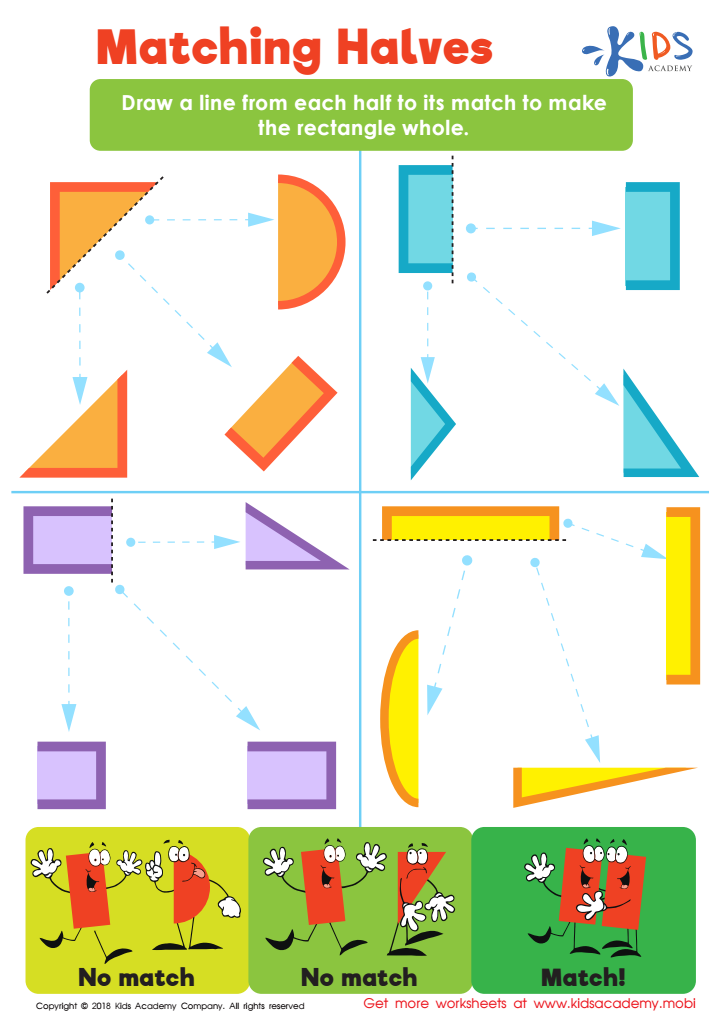
Matching Halves Worksheet
 Assign to My Students











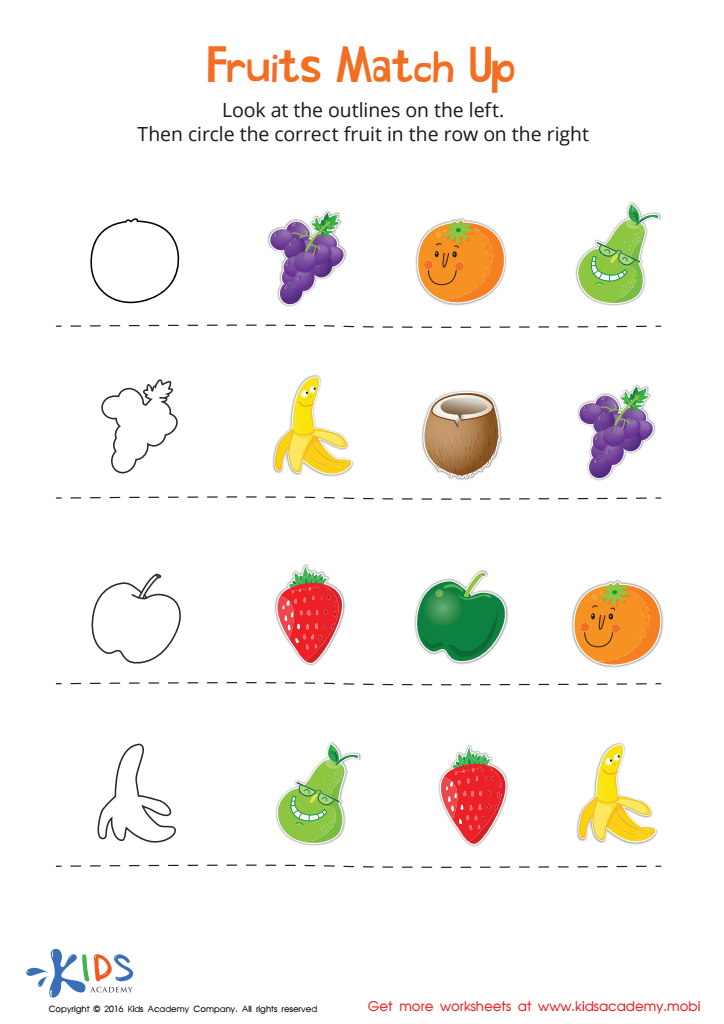
Fruits Match Up Worksheet
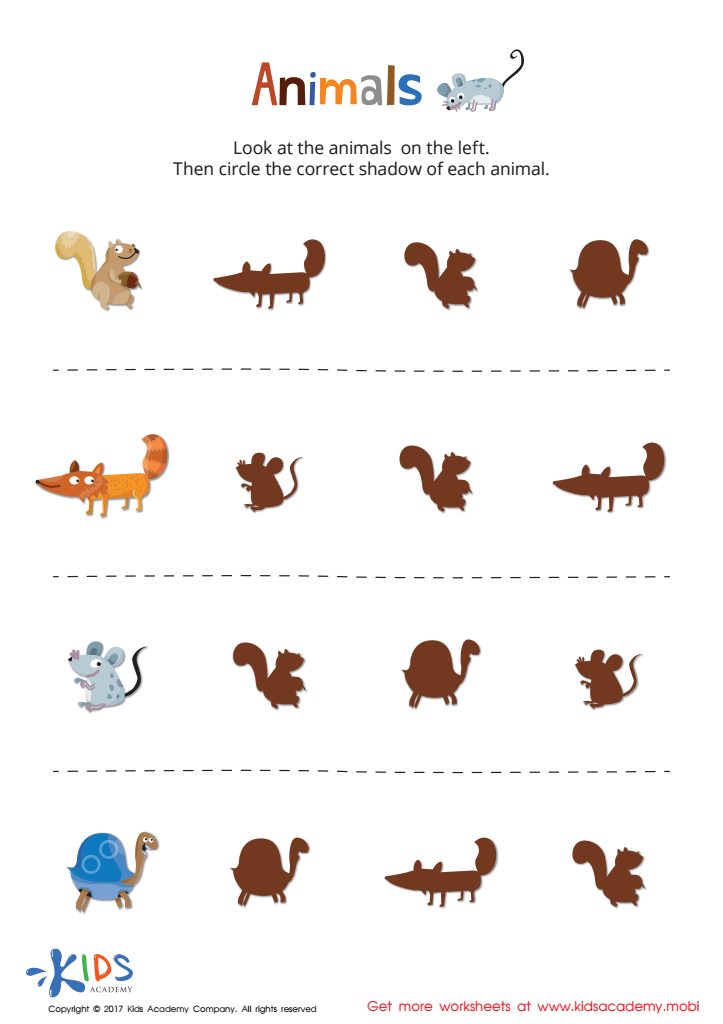
Animal Shadows Sorting Worksheet
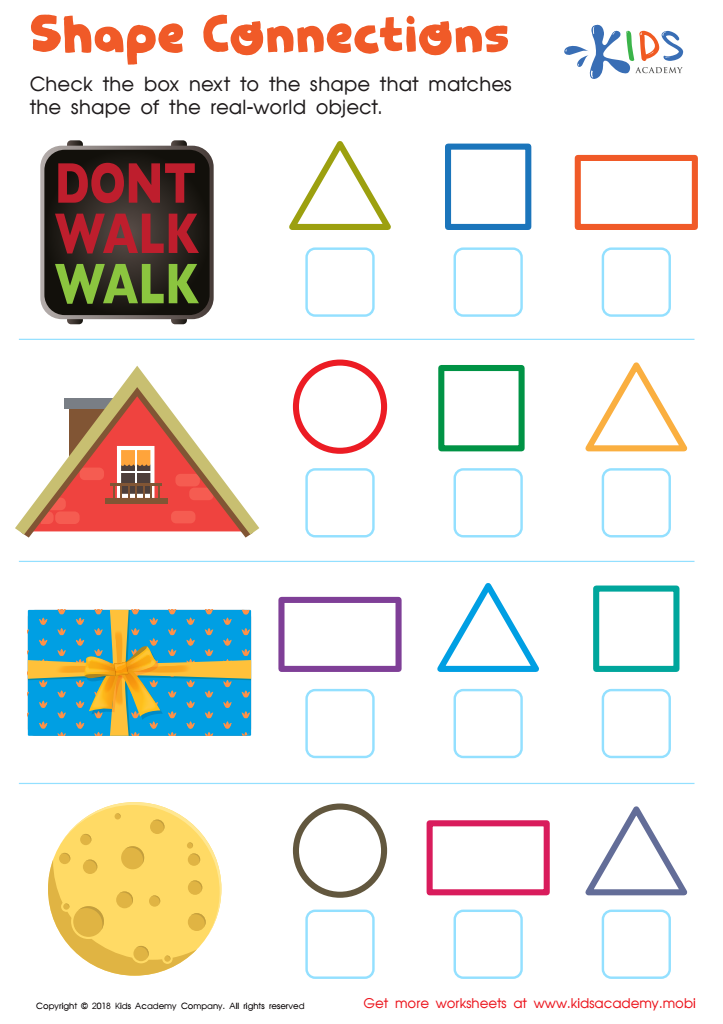
Shape Connections Worksheet
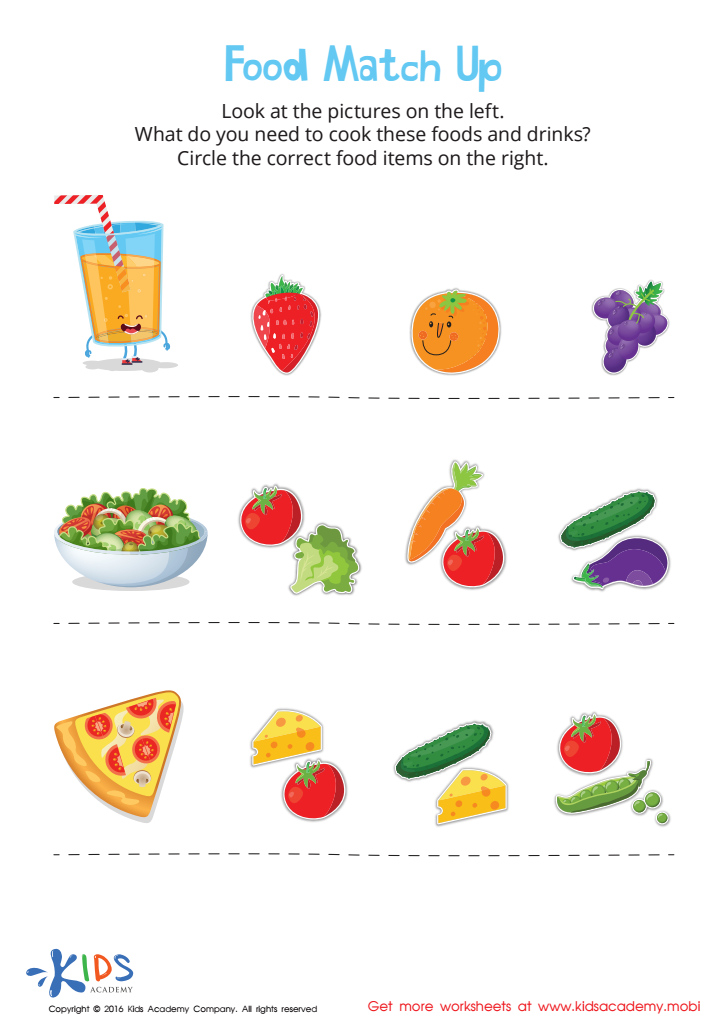
Food Match Up Worksheet
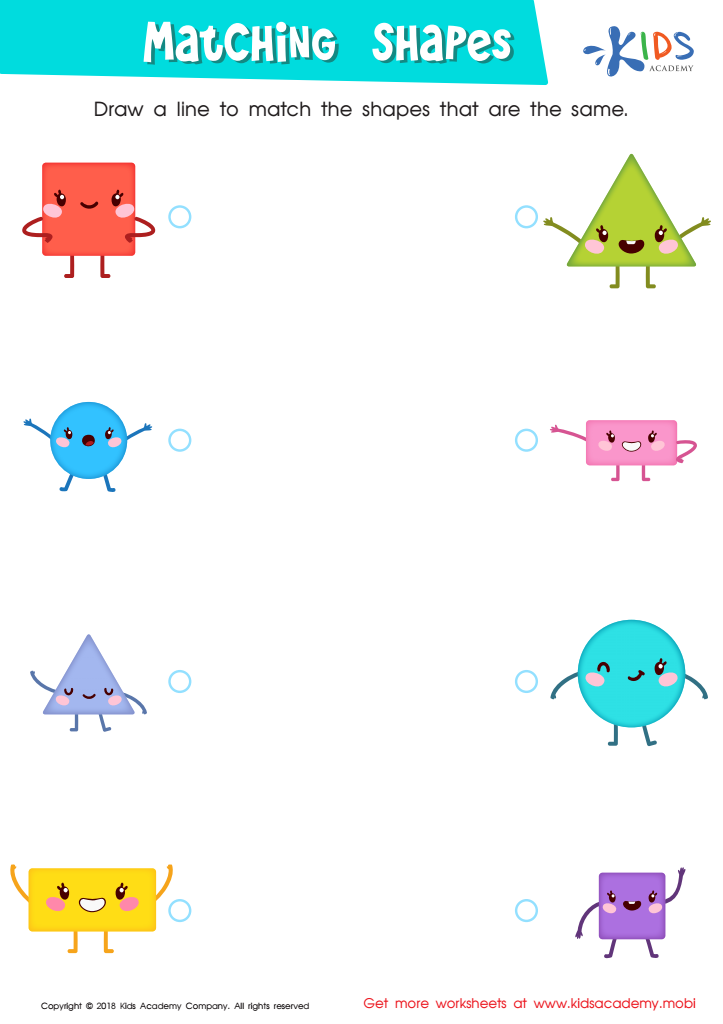
Matching Shapes Worksheet
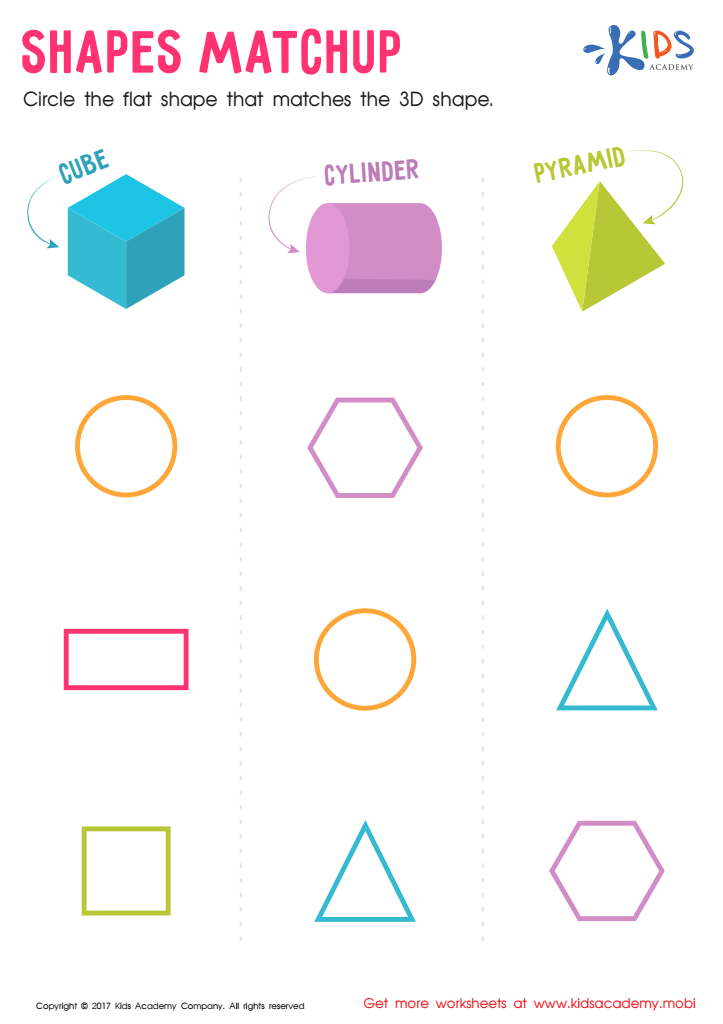
Shapes Matchup Worksheet
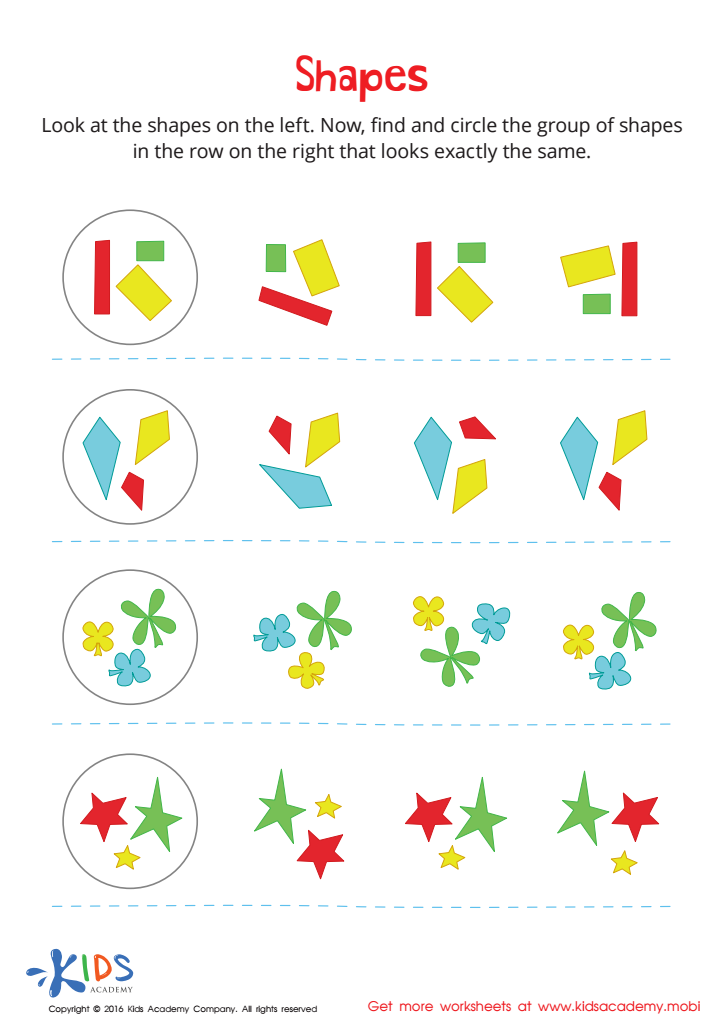
Shapes Worksheet
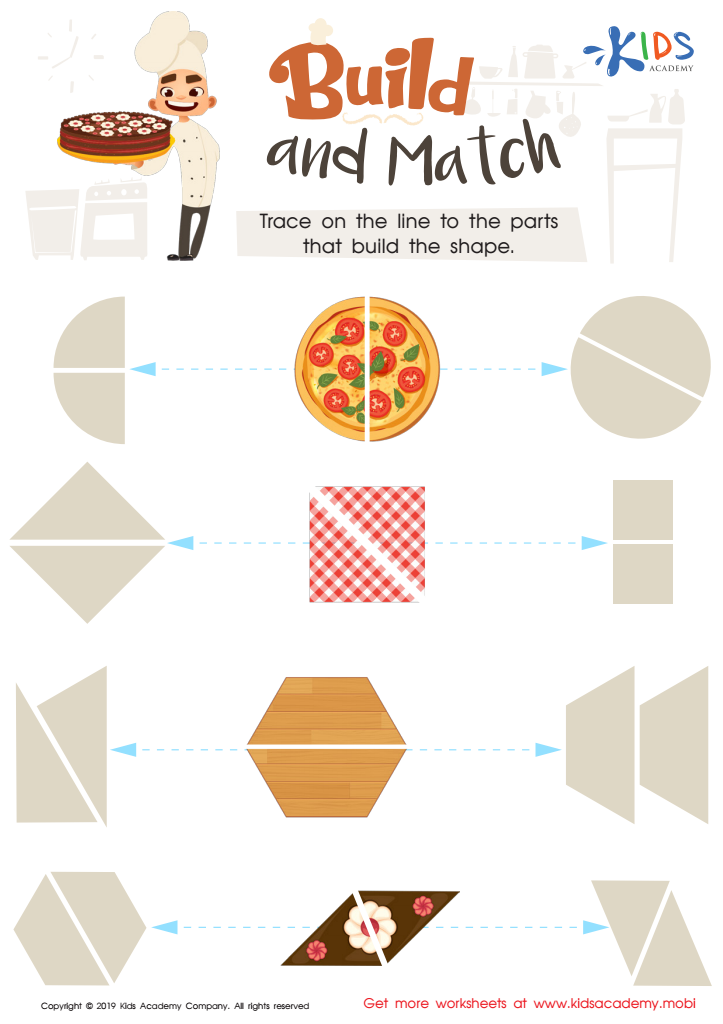
Build and Match Worksheet








Matching skills in geometry for children aged 5–8 is crucial for a variety of reasons, making it essential for parents and teachers to pay attention to this aspect of early childhood education. At this stage, kids are developing their cognitive abilities and understanding of the world around them. Engaging in geometry helps children improve their spatial reasoning, which is vital not only for math but also for understanding concepts in science, technology, and everyday problem-solving.
Learning to match shapes helps kids recognize patterns and builds a foundation for more complex mathematical concepts. It sharpens their ability to compare and contrast different objects, which is a skill they will apply in many academic subjects and real-life situations. Through games and activities that involve matching shapes and patterns, children develop critical thinking and analytical skills.
Additionally, incorporating geometry in early learning boosts children’s confidence in their abilities to grasp mathematical concepts later in their schooling. It supports fine motor skills development since activities often involve manipulating and arranging shapes. Therefore, a strong focus on matching skills in early geometry ensures a holistic developmental approach, promoting a blend of cognitive, motor, and emotional growth in young learners. By fostering these skills early on, parents and teachers prepare children for future academic success and a deeper appreciation for the world around them.








