Graphs Worksheets for Ages 5-8 - Page 2
27 filtered results
-
From - To
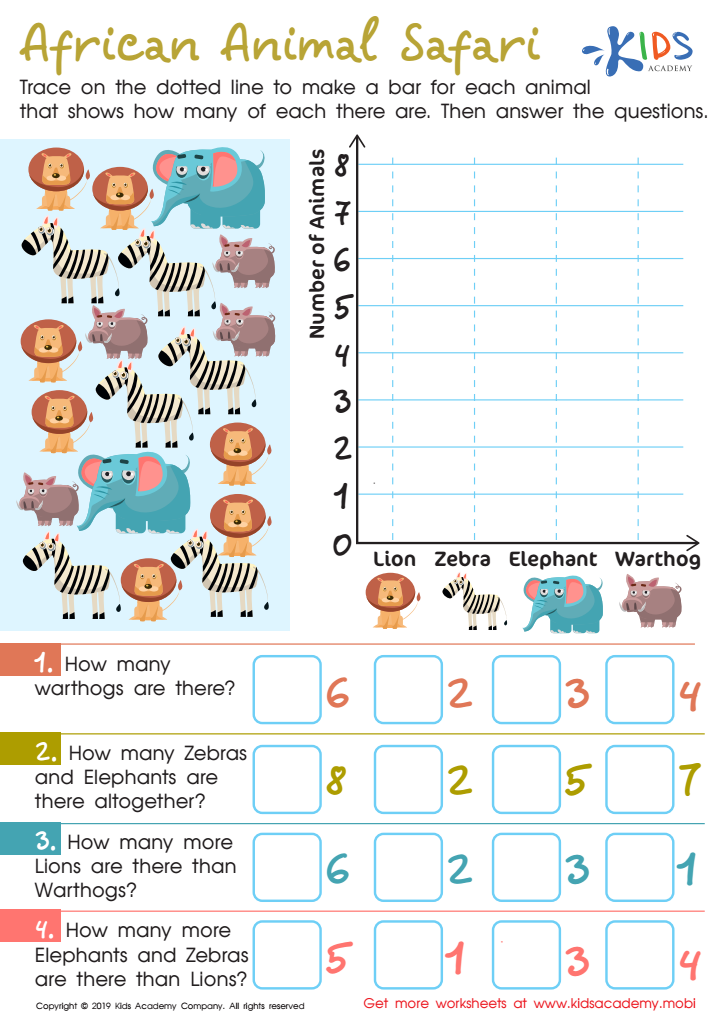
African Animal Safari Worksheet
 Assign to My Students
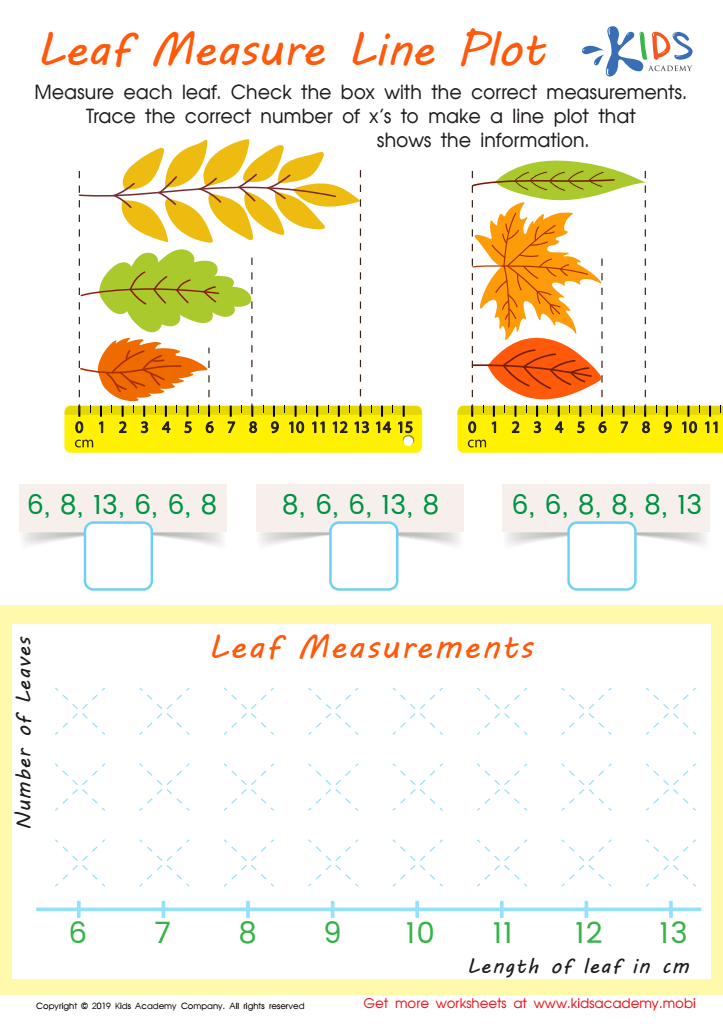
Leaf Measure Line Plot Worksheet
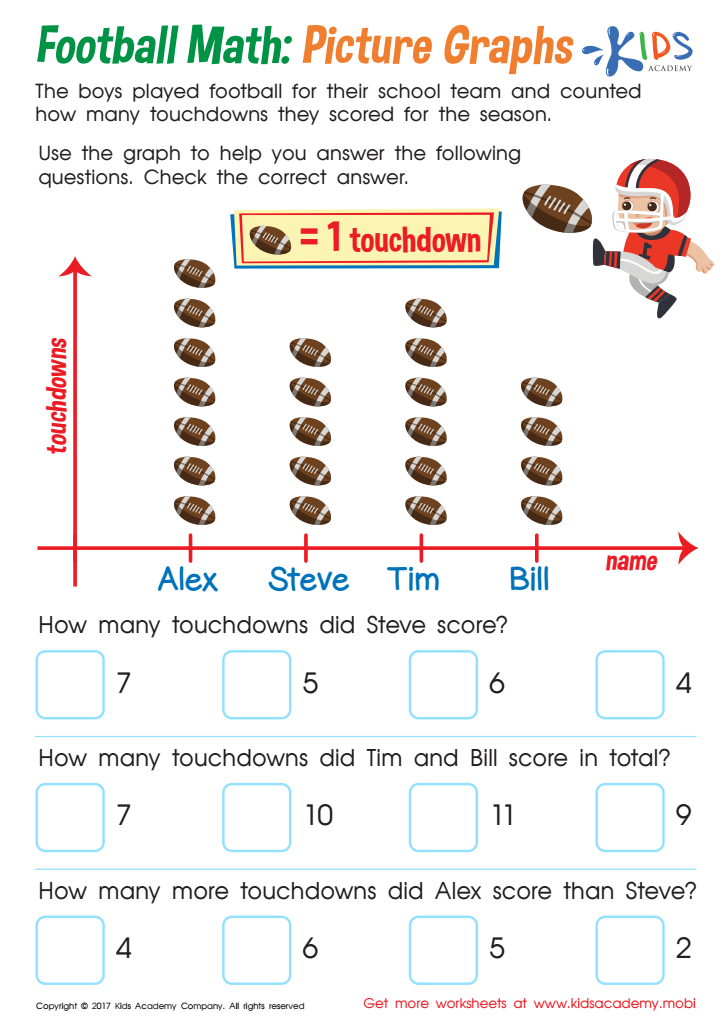
Football Math Worksheet








Graphs are crucial learning tools for children aged 5-8 as they enhance their understanding of data representation, critical thinking, and problem-solving skills. At this early age, children are naturally curious and eager to explore the world around them. Introducing graphs provides them with a visual method to organize and interpret information, making abstract concepts more tangible.
Parents and teachers should care about graphs because they foster essential numeracy skills. Children learn to tally, sort, and visually compare quantities, which lays the groundwork for more advanced mathematics in later years. Graphs enhance storytelling abilities, as children can interpret data and share findings in a narrative format, promoting communication skills.
Additionally, using graphs in classroom activities encourages collaboration and discussion among peers, promoting social skills and teamwork. When children engage with graphs in practical scenarios—like tracking daily weather or class participation—they see real-world applications of math, which enhances their motivation to learn.
Ultimately, graphs cultivate a mindset of inquiry and exploration, equipping children with the analytical skills necessary in our data-driven world. Thus, introducing graphs to young learners is not just about math; it's about nurturing engaged, well-rounded thinkers.








