Counting skills Numbers Worksheets for Ages 5-8 - Page 8
172 filtered results
-
From - To
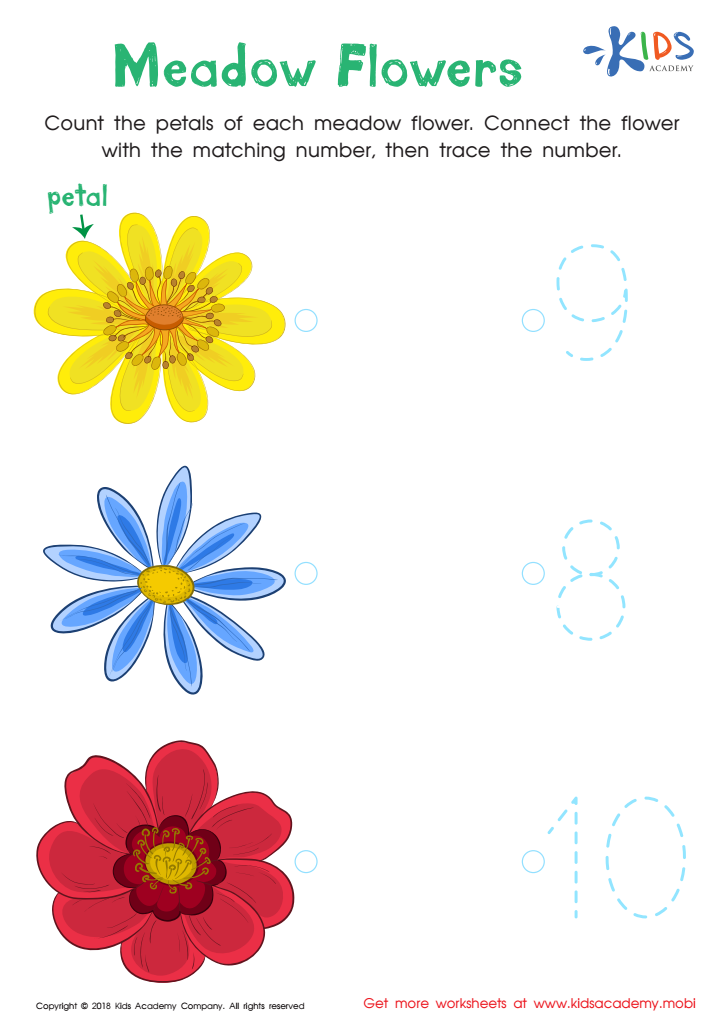
Kindergarten Number Tracing: Medow Flowers Worksheet
 Assign to My Students
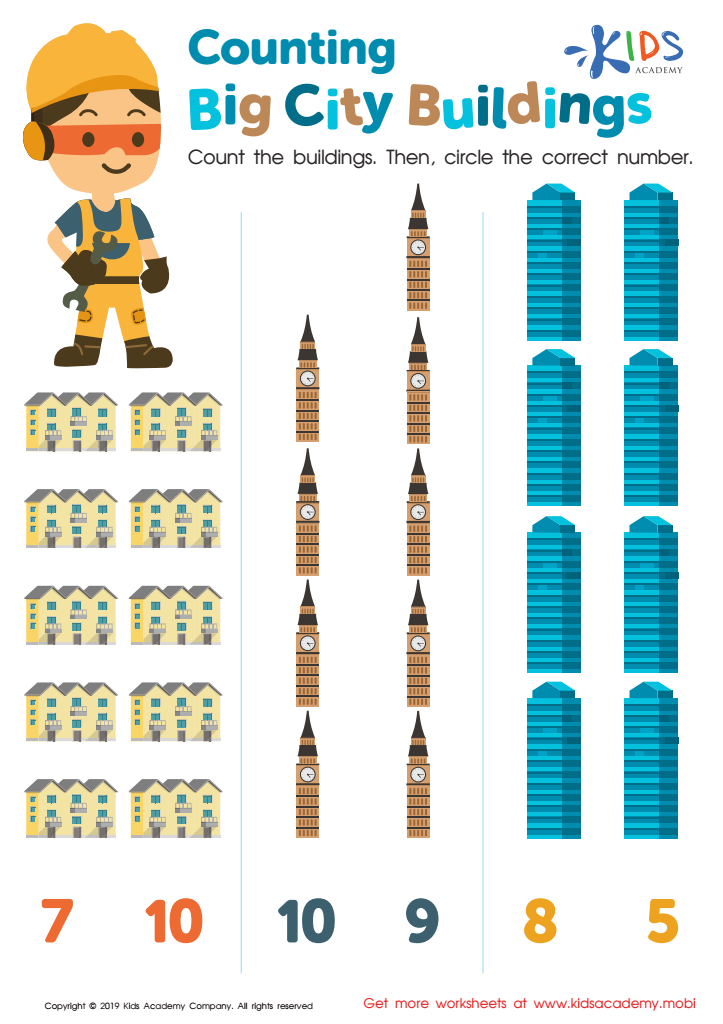
Counting Big City Buildings Worksheet
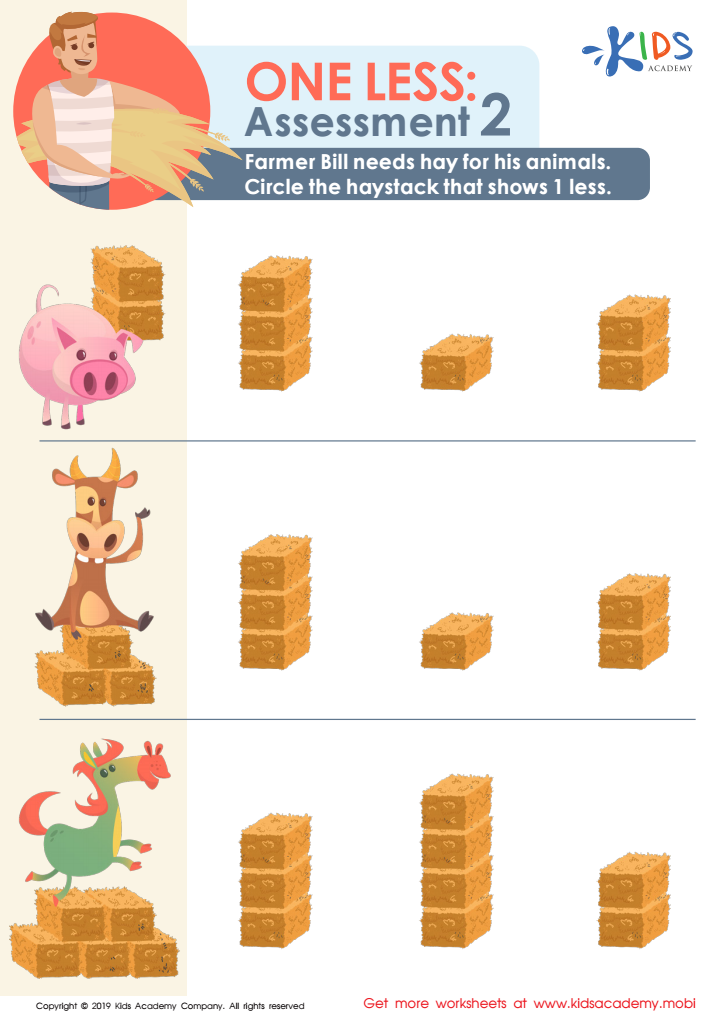
One Less: Assessment 2 Worksheet

Night Sky Numbers Worksheet







Counting skills are foundational to a child's mathematical development and critical for their overall academic success. Between the ages of 5 and 8, children transition from simple number recognition to more complex mathematical concepts, making this a crucial period for nurturing counting abilities. Parents and teachers should prioritize counting skills for several reasons.
Firstly, counting provides a practical framework for understanding basic mathematics. It forms the basis for addition and subtraction, enabling children to grasp these concepts more easily. As they learn to count, they also develop problem-solving and logical thinking skills.
Secondly, strong counting abilities enhance a child's confidence and willingness to engage with numbers, fostering a positive attitude towards math. This is essential in combating math anxiety that can emerge as they progress in their education.
Moreover, counting skills are not confined to mathematics. They support sorting, classifying, and pattern recognition—skills vital in various subjects and real-life situations.
By actively promoting counting skills, parents and teachers can create a solid foundation for a child's future learning, encouraging academic curiosity and competence that will benefit them throughout their educational journey. Investing time in counting activities is not merely a math concern; it's about cultivating critical thinking and lifelong learning skills.








