Understanding place value Numbers Worksheets for Ages 5-8
12 filtered results
-
From - To
Discover our comprehensive "Understanding Place Value Numbers Worksheets" designed for children ages 5-8. These engaging worksheets help young learners grasp the fundamentals of place value, a critical math concept. Through colorful illustrations and interactive exercises, children will explore tens and ones, enhancing their number recognition and counting skills. Perfect for home or classroom use, these worksheets provide varied levels of difficulty to support each child's learning journey. Foster a strong mathematical foundation with activities that make learning both fun and effective. Dive into the world of numbers and help your child excel in understanding place value today!
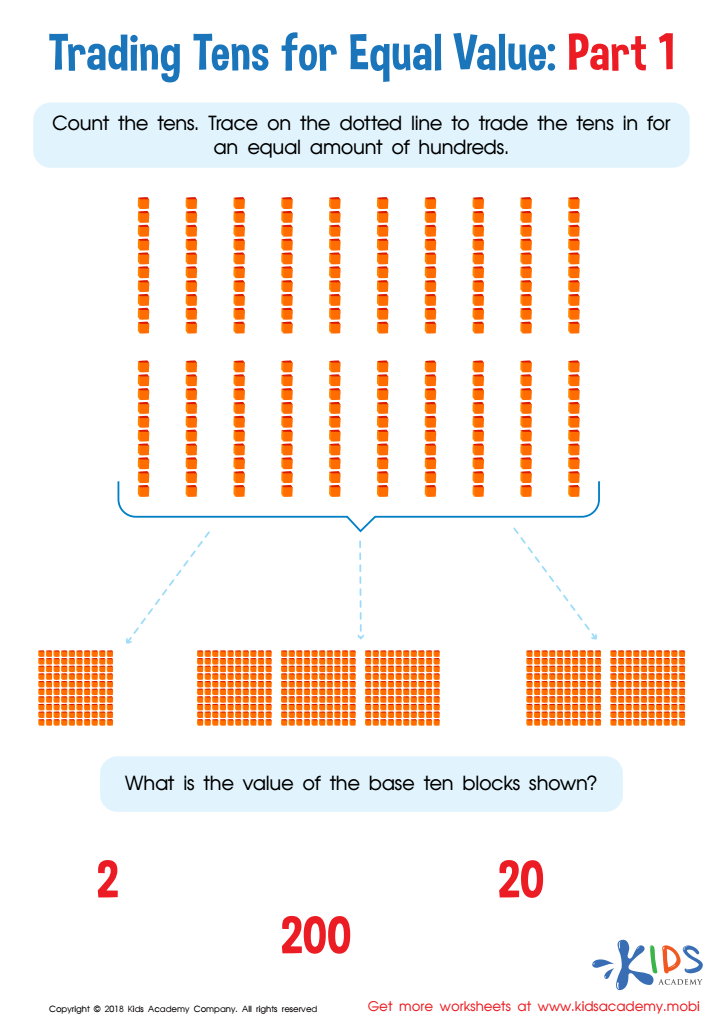
Trading Tens for Equal Value Worksheet: Part 1
 Assign to My Students
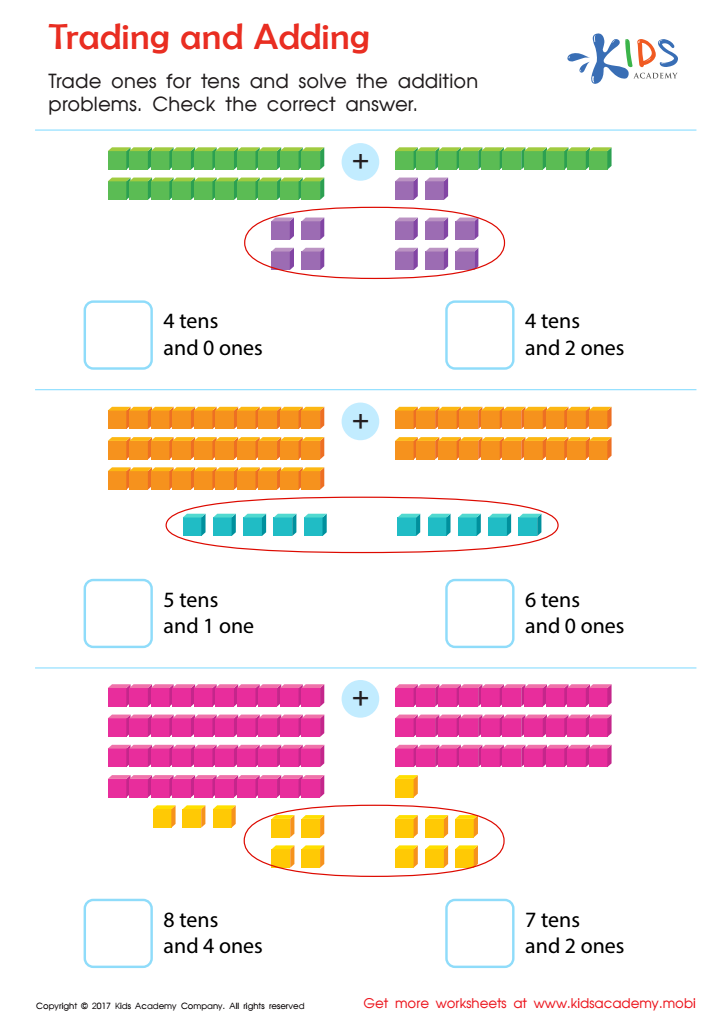
Trading and Adding Worksheet
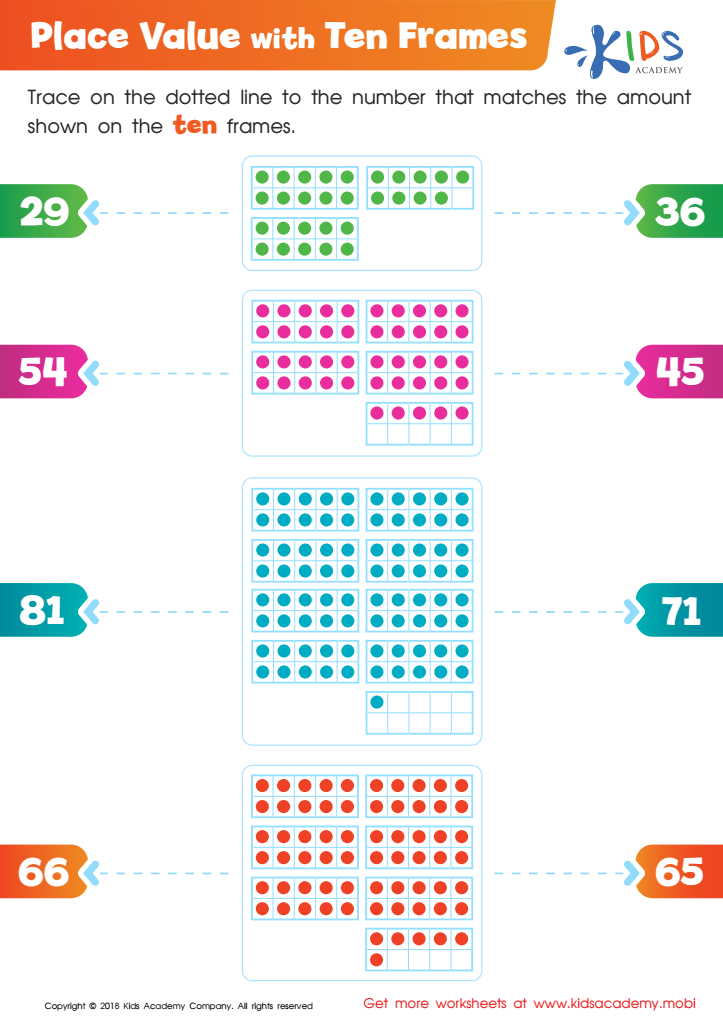
Place Values with Ten Frames Worksheet
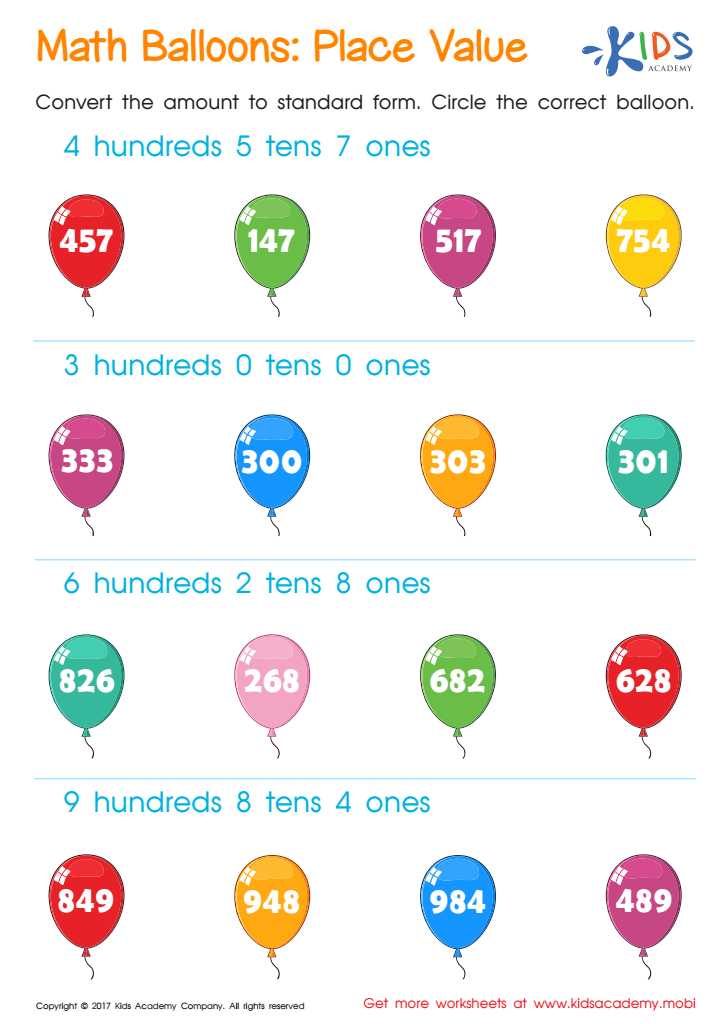
Place Value Printable Worksheet
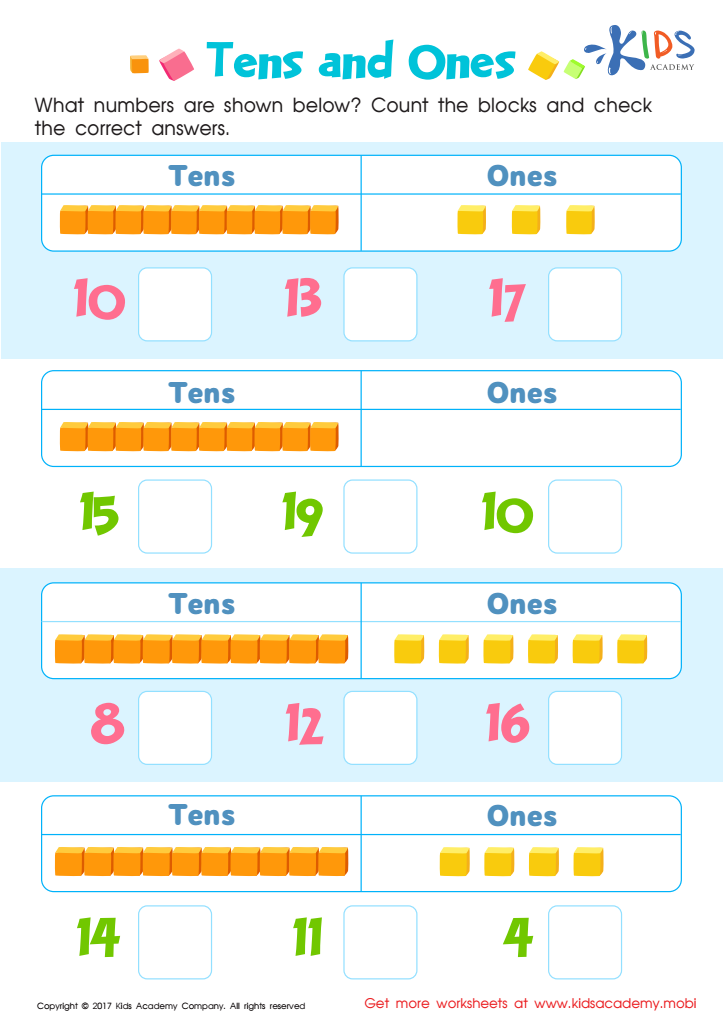
Tens and Ones Worksheet
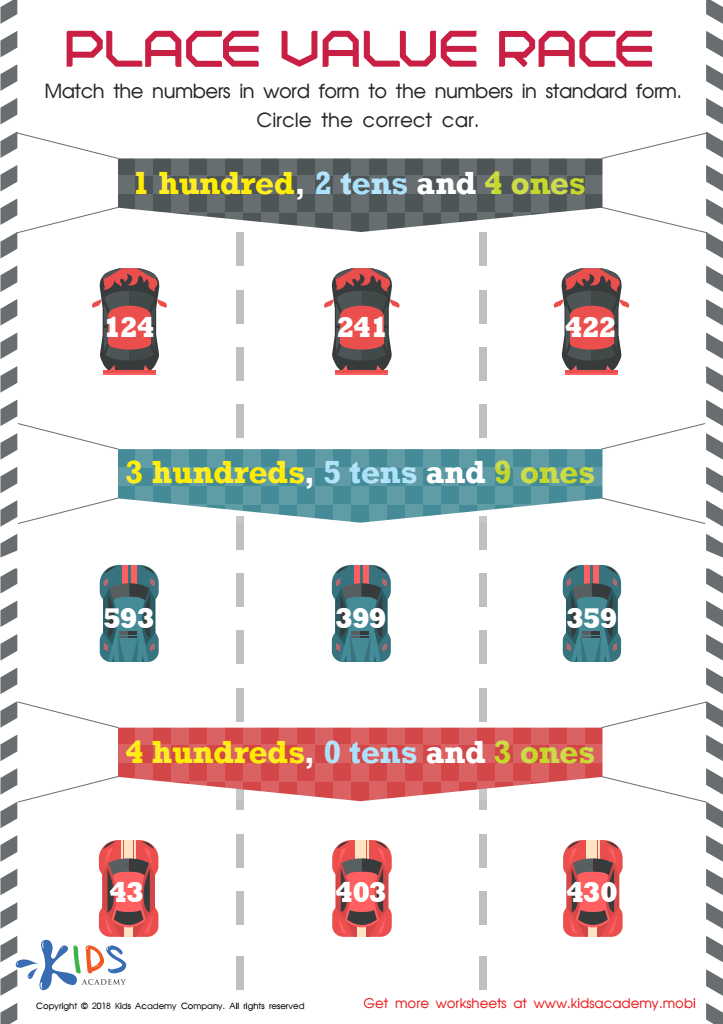
Place Value Race Worksheet
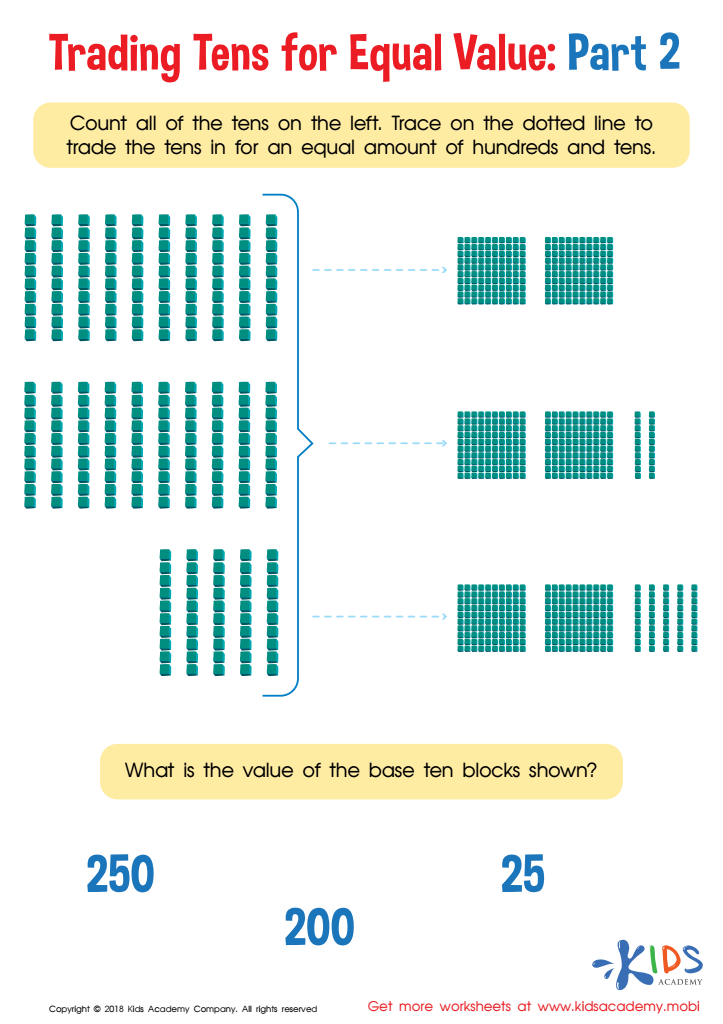
Trading Tens for Equal Value Worksheet: Part 2
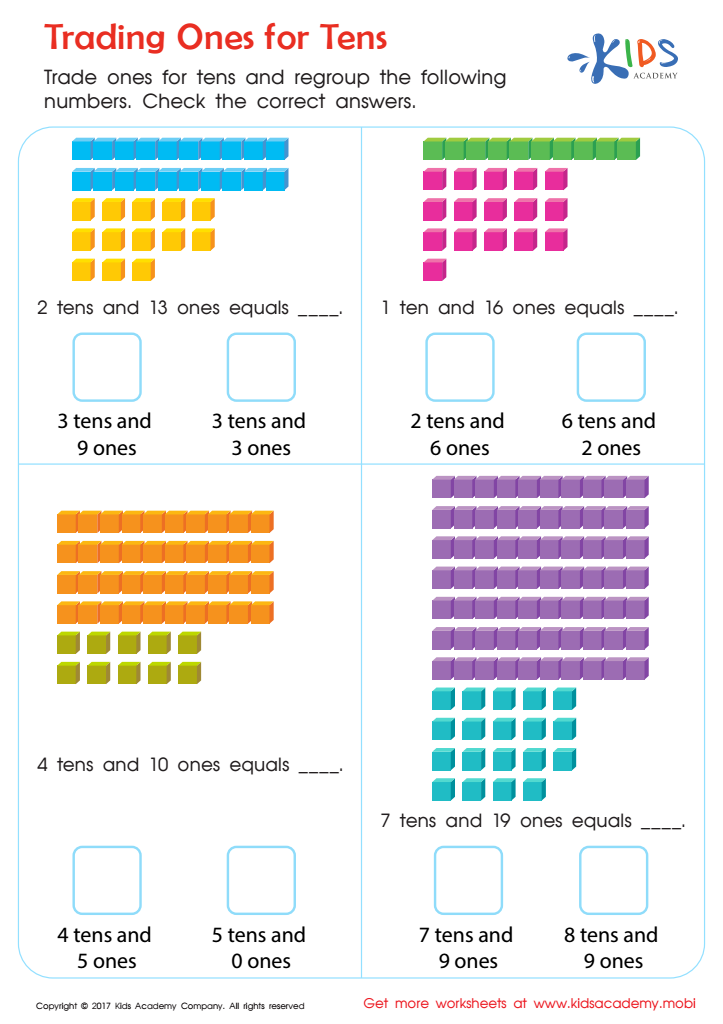
Trading Ones for Tens Worksheet
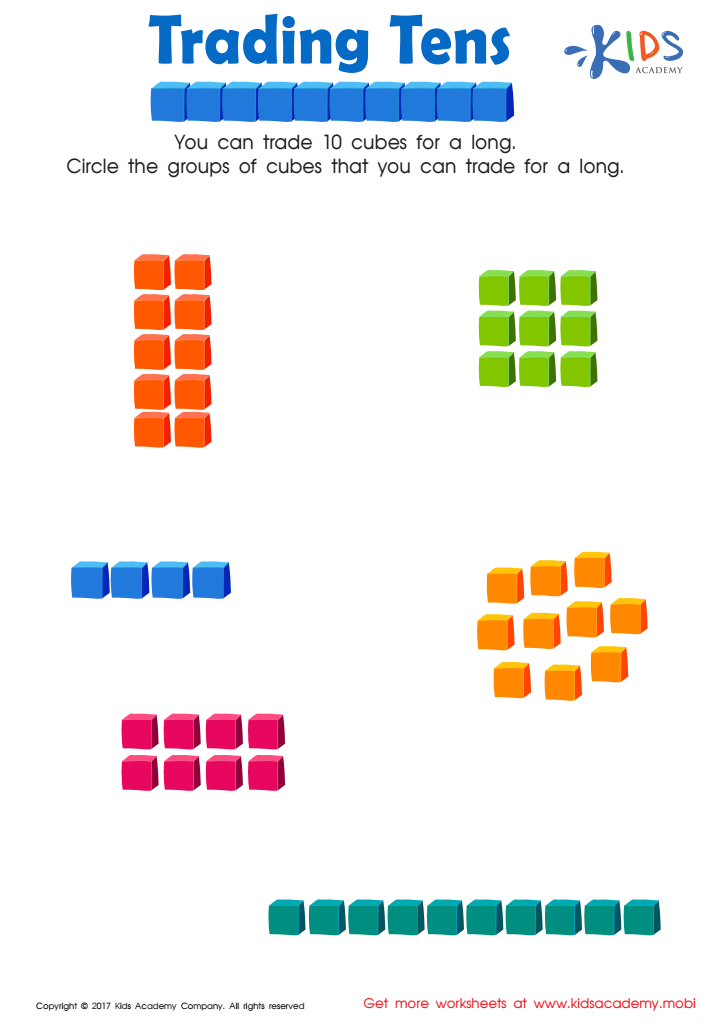
Trading Tens Worksheet
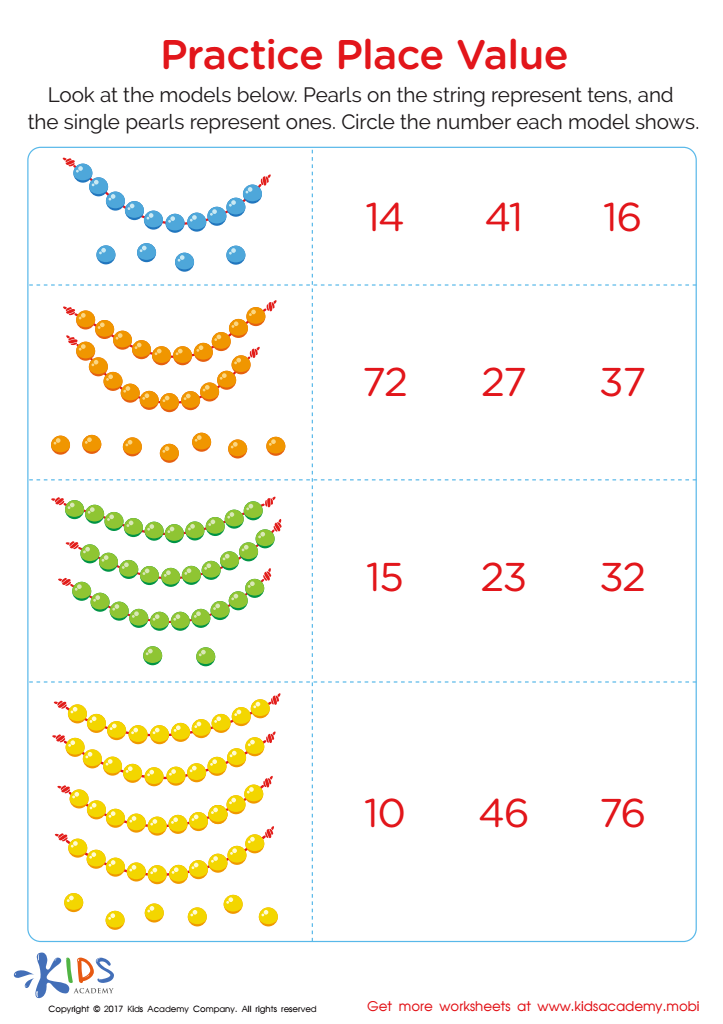
Practice Place Value Printable
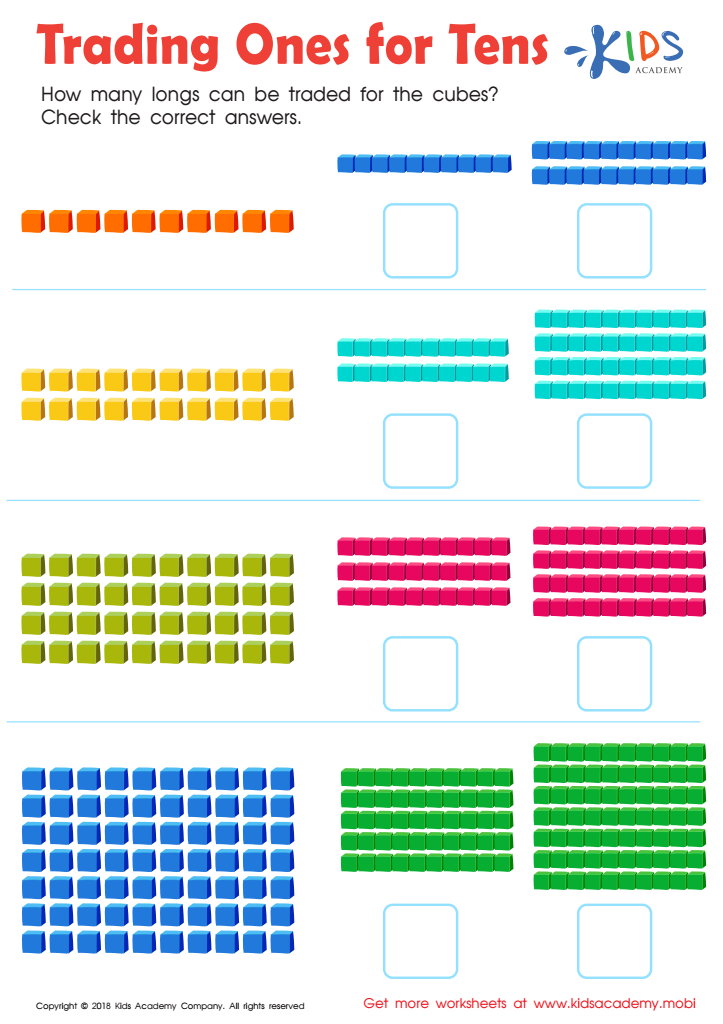
Trading Ones for Tens Worksheet: Part 2
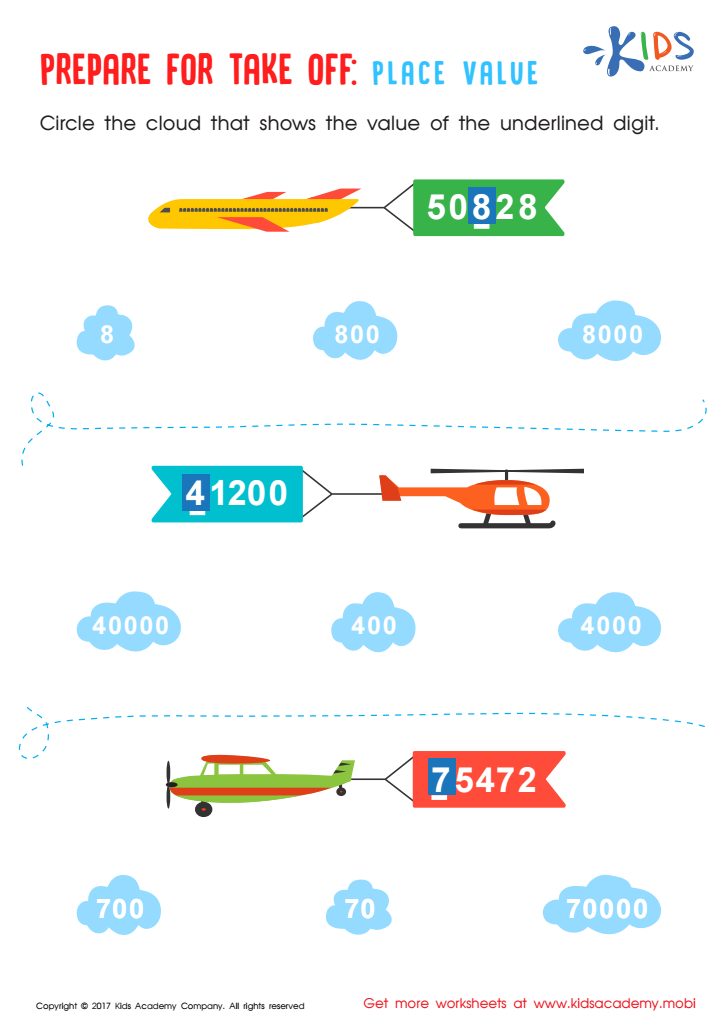
Free Place Value Worksheet for 3rd Grade




.jpg)



Understanding place value is crucial for children aged 5-8 as it serves as the foundation for all future mathematical learning. It helps children grasp the concept that the position of a digit influences its value. For example, in the number 42, the 4 represents 40, while the 2 represents 2, showing that the same digit can represent different values depending on its position.
Mastering place value is critical for developing competence in addition, subtraction, and eventually multiplication and division. Children who internalize these concepts are more likely to feel confident in their mathematical abilities, reducing anxiety and enhancing participation in math-related activities. Moreover, a strong understanding of place value facilitates a smoother transition to more complex mathematical concepts such as decimals and fractions in later grades.
For parents and teachers, fostering this understanding helps cultivate a strong arithmetic foundation, supporting overall academic success. Engaging activities, such as using manipulatives or playing place value games, make learning enjoyable and memorable. Effective communication between parents and teachers about developmental milestones in numerical literacy encourages a cohesive approach, ensuring that children not only understand but also appreciate the beauty of numbers in everyday life. Prioritizing place value education paves the way for a lifetime of quantitative reasoning skills.








