Time reading skills Math Worksheets for Ages 5-8
12 filtered results
-
From - To
Introduce young learners to the essential skill of time reading with our specially crafted Math Worksheets for Ages 5-8. At Kids Academy, our engaging and educational worksheets make it easy and fun for your child to grasp the concept of time. Featuring colorful images, interactive exercises, and step-by-step instructions, our resources help build confidence in reading clocks, understanding hours and minutes, and recognizing time-related concepts. Perfect for preschool to early elementary students, these printable worksheets are designed to align with school curriculums and support at-home learning. Help your child master time reading skills with joy and ease today!
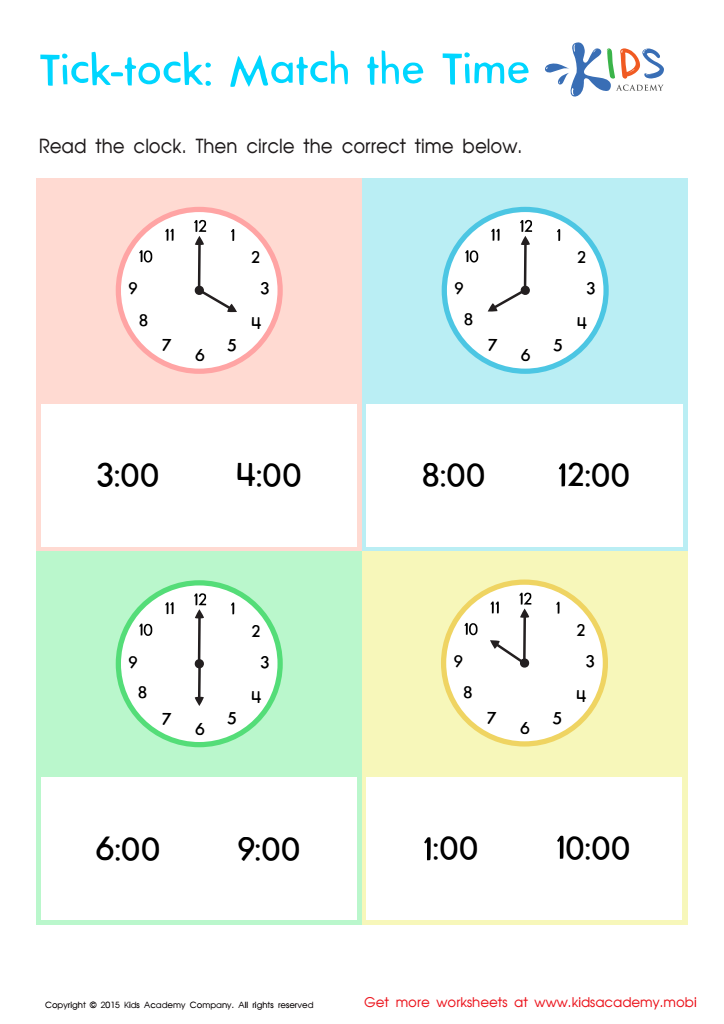
Telling The Time Worksheet: Part 4
 Assign to My Students
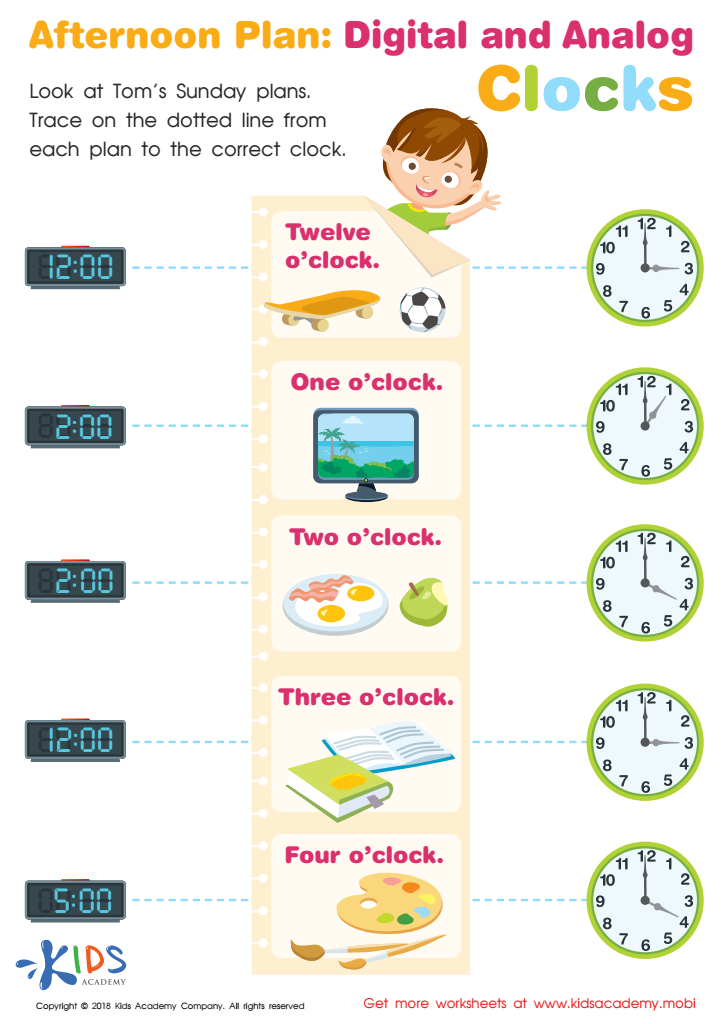
Afternoon Plan: Digital and Analog Clocks Worksheet
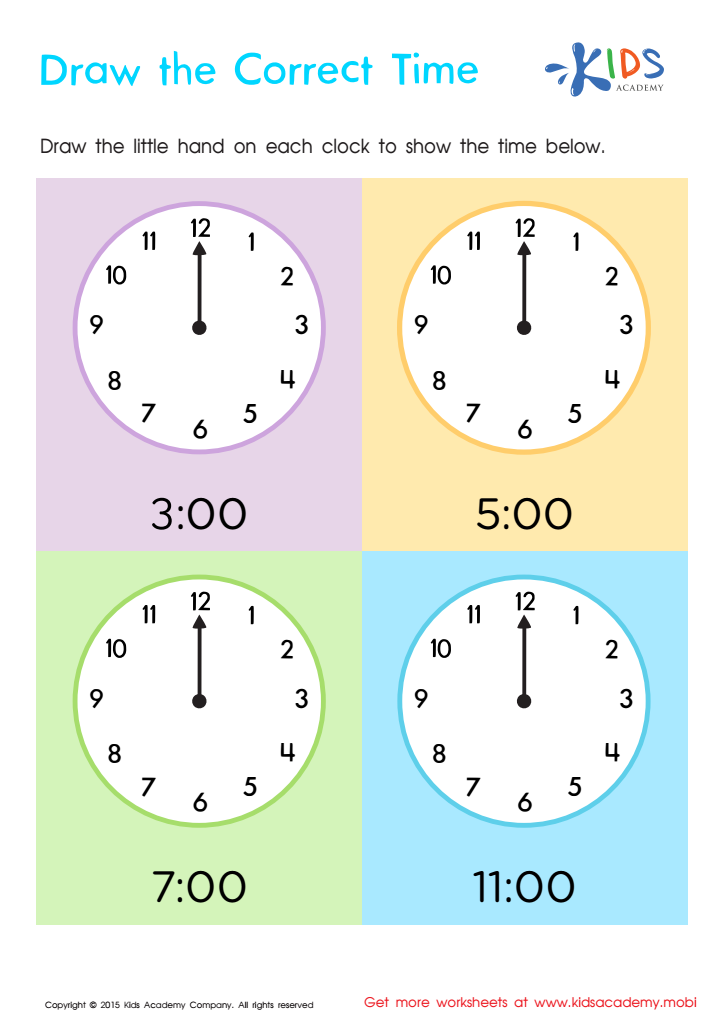
Telling The Time Worksheet: Part 1
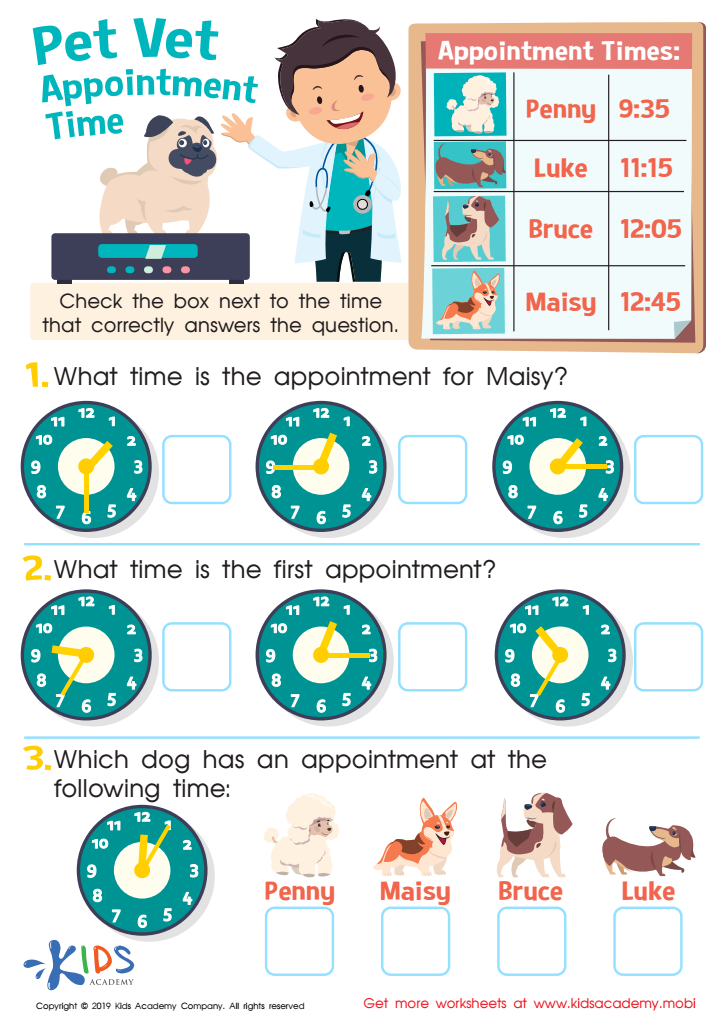
Pet Vet Appointment Time Worksheet
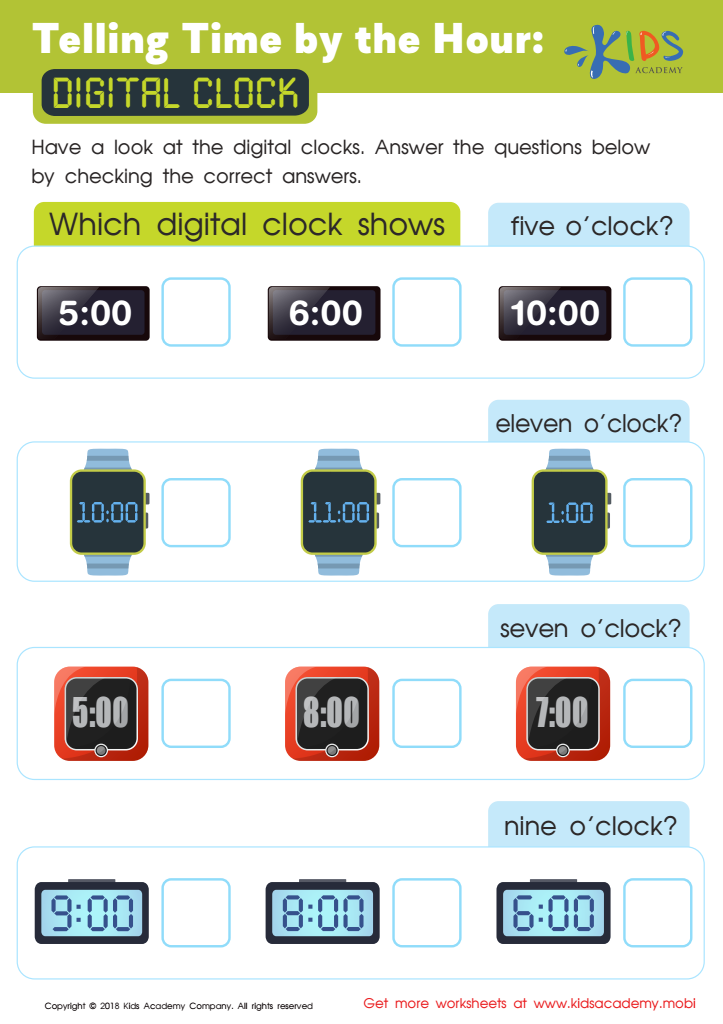
Telling Time by the Hour: Digital Clock Worksheet
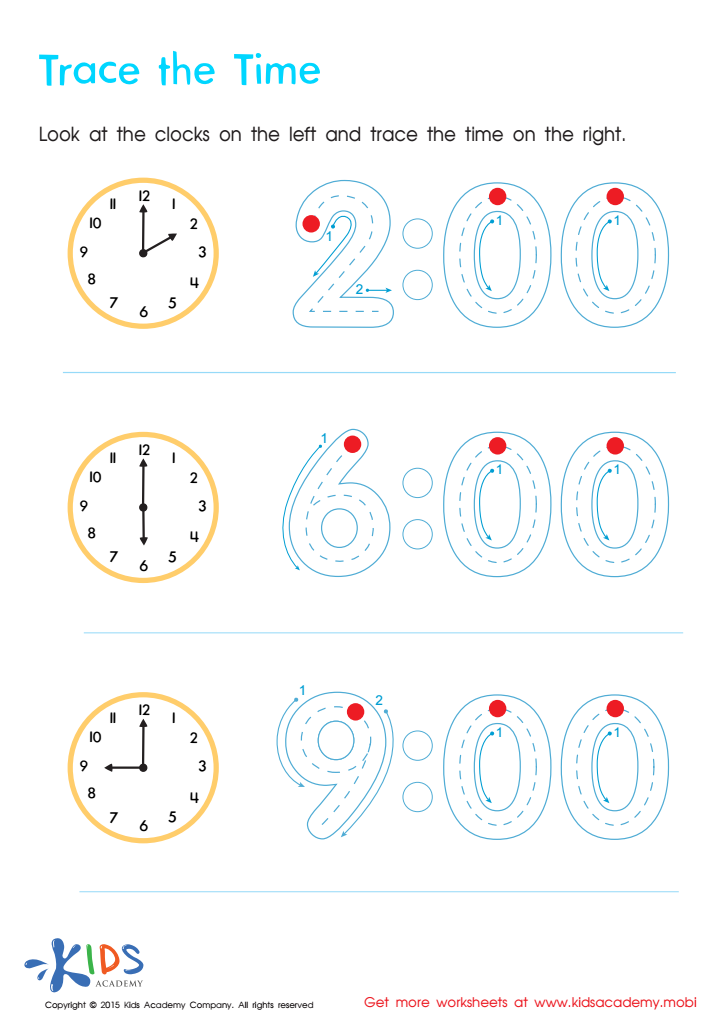
Telling The Time Worksheet: Part 2
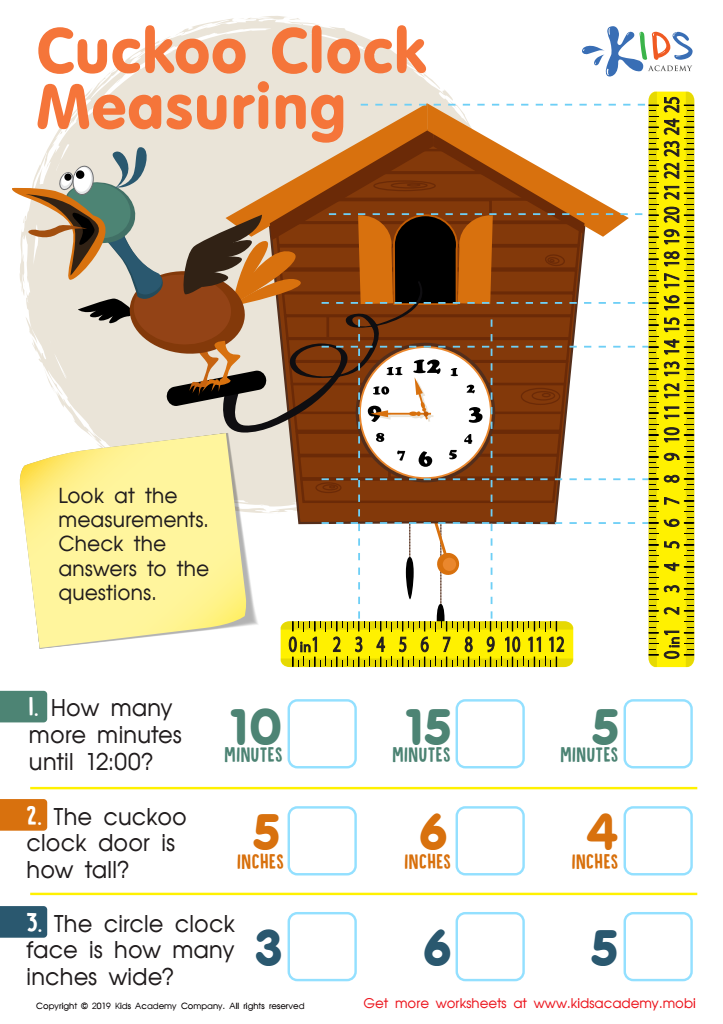
Cuckoo Clock Measuring Worksheet
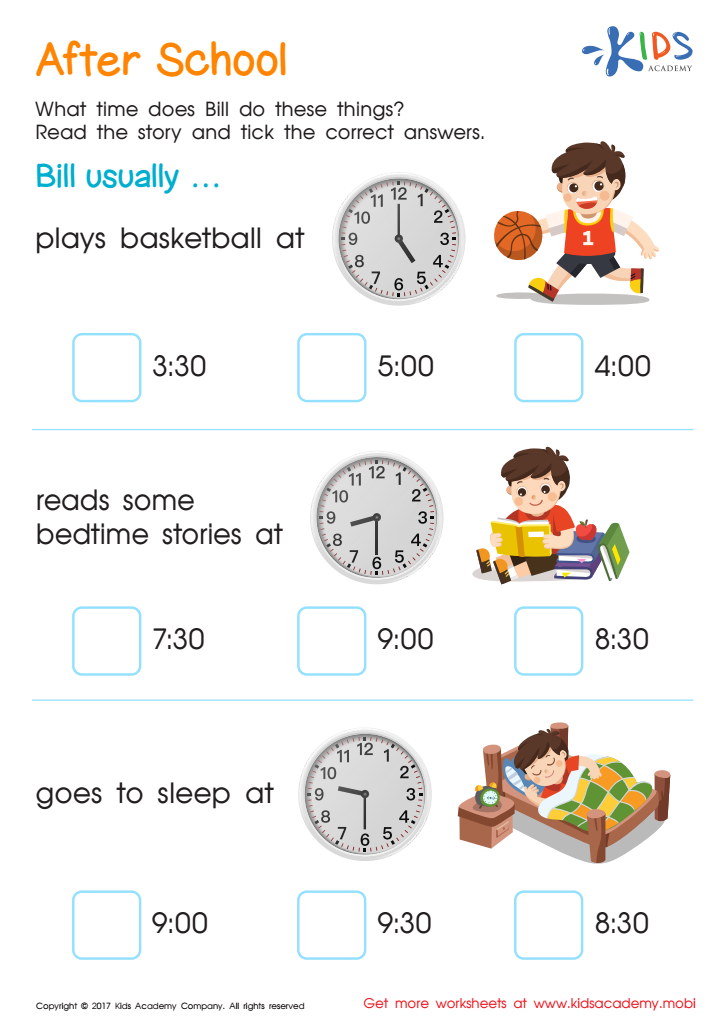
After School Time Printable
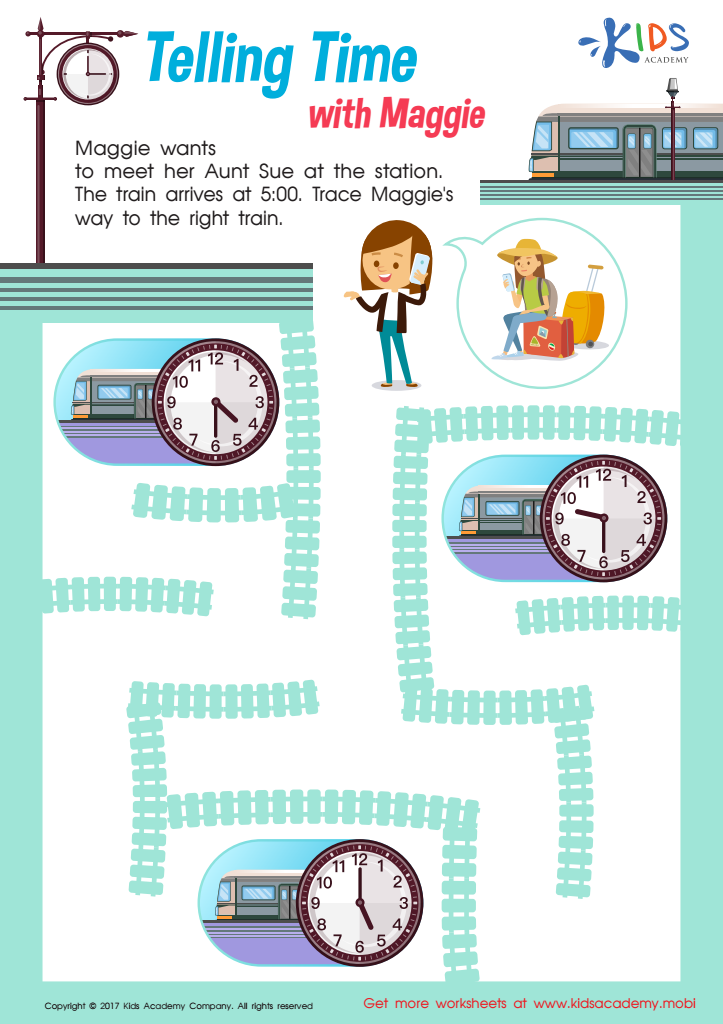
Telling Time With Maggie Time Worksheet
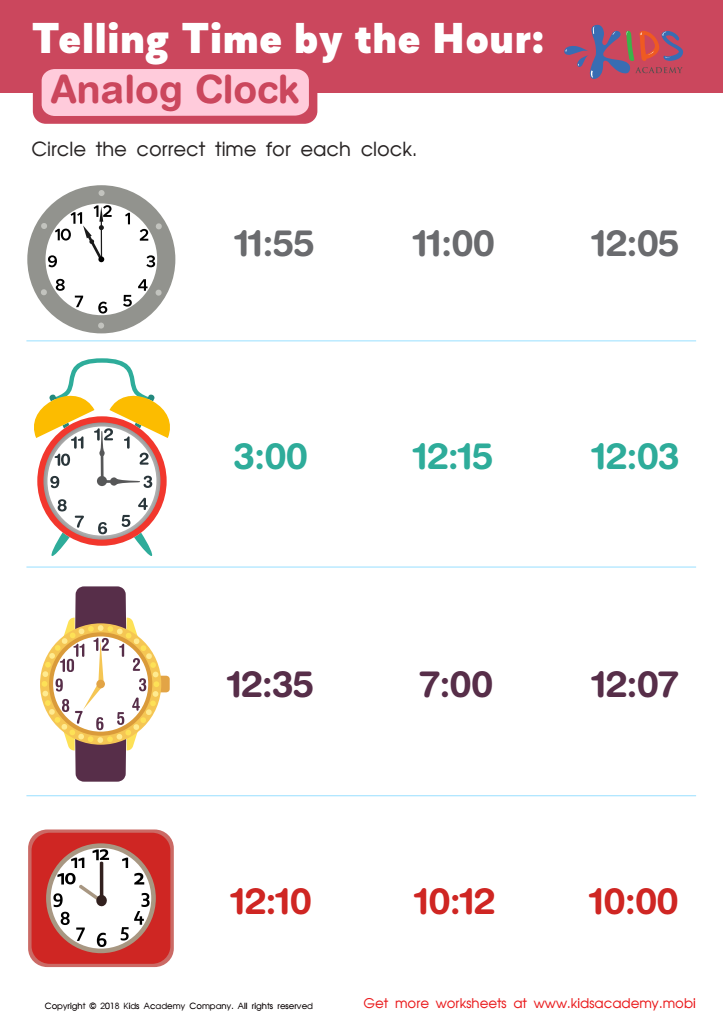
Telling Time by the Hour: Analog Clock Worksheet
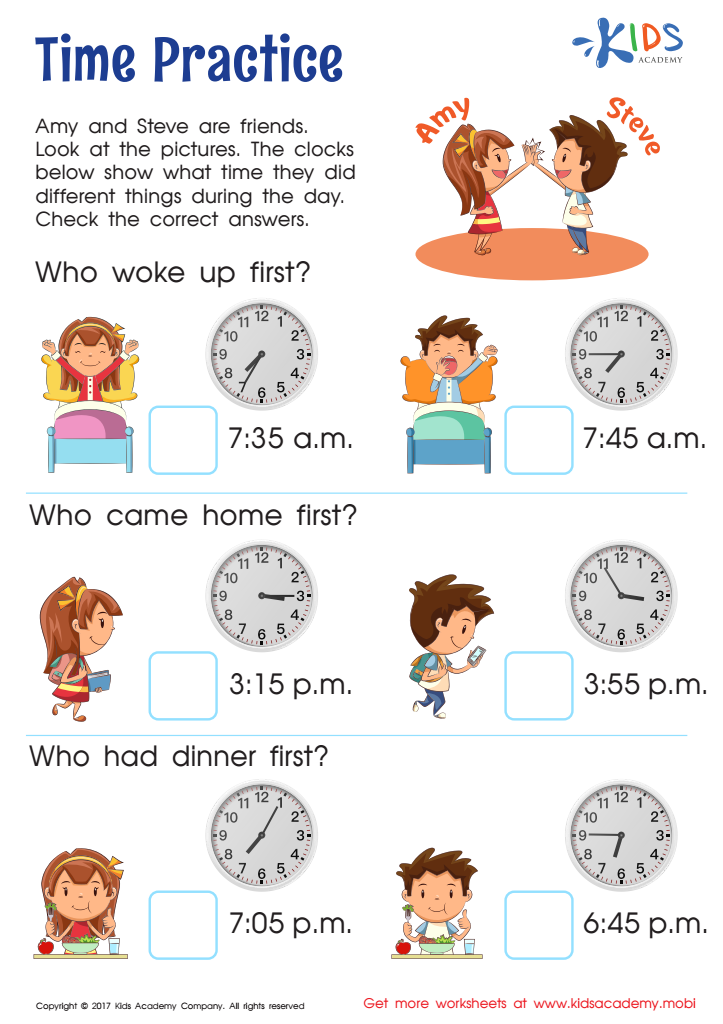
Time Practice Worksheet
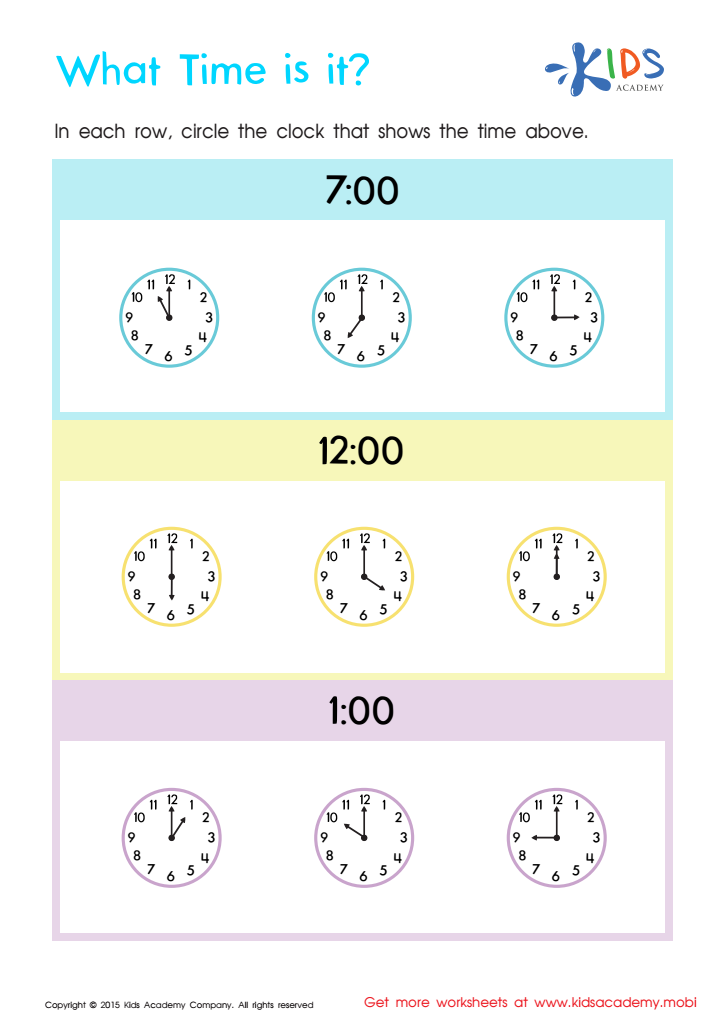
Telling The Time Worksheet: Part 3






Building time-telling skills in young children (ages 5-8) is crucial for several reasons. Firstly, it promotes early numeracy by helping kids understand foundational math concepts like sequencing (hours, minutes), counting, addition, and subtraction. Recognizing hours and minutes enhances their grasp of numerical order and calculations, forming a base for more complex math skills later on.
Secondly, learning to tell time fosters a sense of responsibility and independence. Children begin to understand daily routines, manage their activities, and comprehend the importance of punctuality. This skill cultivates self-discipline and helps them transition smoothly into school environments where time management is key.
Moreover, time-telling skills integrate cross-curricular learning. Activities like reading an analog clock comprehension blend reading skills with math. Discussing the day's events or using timers can enrich vocabulary and cognitive development.
Additionally, teaching time connects children to real-life applications, making learning tangible and relevant. This relevance can spark curiosity and engagement, leading to a more positive attitude toward learning in general.
Ultimately, by focusing on time-telling, parents and teachers set the foundation for practical life skills, academic success, and well-rounded intellectual growth, making it an invaluable part of early education.








