Understanding area Math Worksheets for Ages 5-8
3 filtered results
-
From - To
Unlock the world of spatial understanding for young learners with our "Understanding Area Math Worksheets" designed for ages 5-8. Our engaging worksheets aim to introduce fundamental concepts of area in a fun and interactive way. These printables help children grasp the basics through colorful illustrations and hands-on activities, fostering a love for math. Perfect for classrooms or home learning, our worksheets provide a solid foundation in measuring spaces, allowing kids to explore and visualize how area works. Enhance your child's math skills while making learning enjoyable and effective with our expertly crafted materials from Kids Academy.
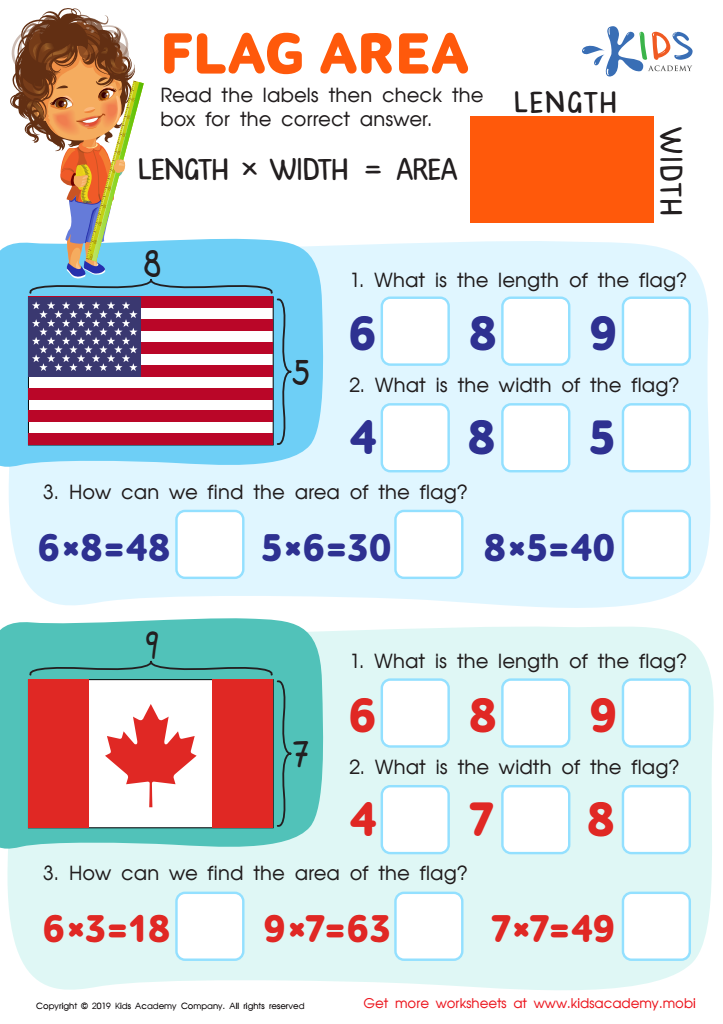
Flag Area Worksheet
 Assign to My Students
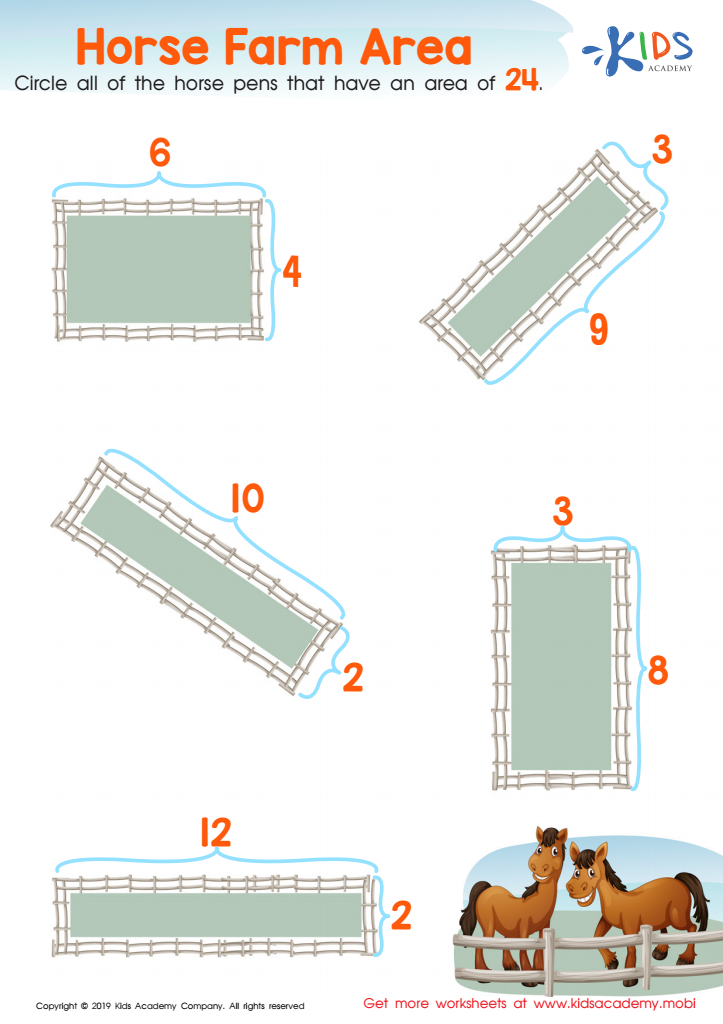
Horse Farm Area Worksheet
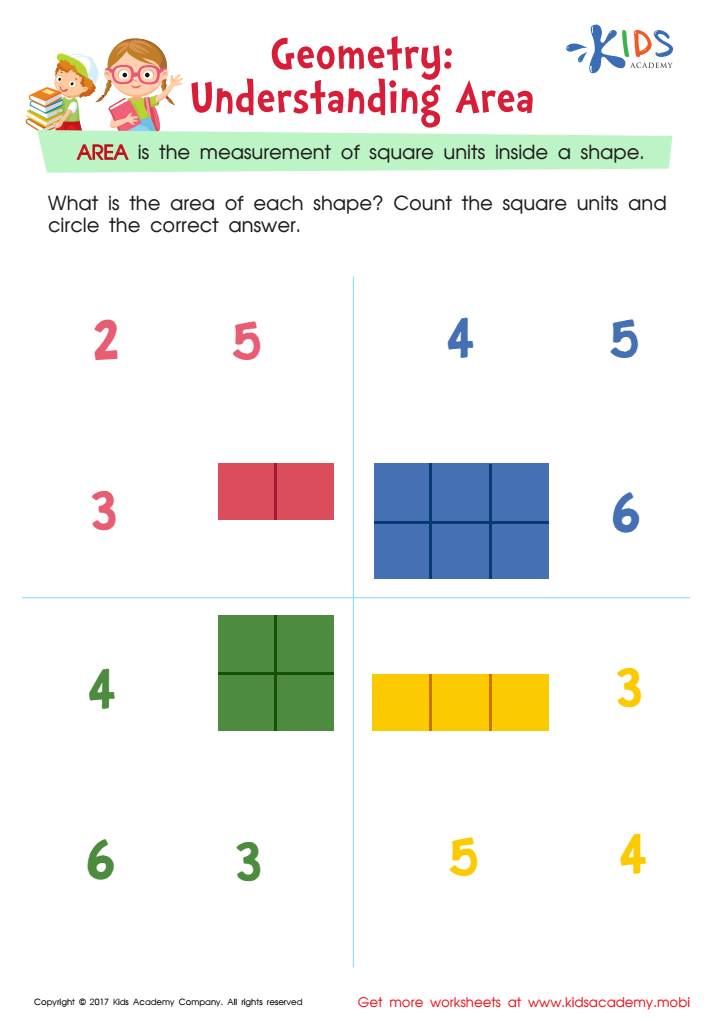
Understanding Area Worksheet






Understanding the concept of area is fundamental for young learners aged 5-8 as it lays the groundwork for essential math and real-life skills. Mastery of area not only introduces basic geometric and spatial reasoning, but also facilitates better comprehension of complex subjects in the future.
Firstly, the concept of area strengthens key mathematical abilities, such as addition, multiplication, and measurement. By learning to measure and calculate the space a shape occupies, children enhance their number sense and problem-solving skills, which are vital in more advanced math topics.
Secondly, grasping area helps children navigate the physical world. From understanding how much space a garden bed needs to fitting toys in a storage box, kids begin to see the relevance of math in their daily lives. This relevance can foster engagement and a positive attitude toward learning.
Additionally, developing these skills through hands-on activities like measuring classroom objects or drawing shapes helps improve fine motor skills and fosters creativity. Practical exercises reinforce learning and make abstract concepts tangible.
In conclusion, cultivating an early understanding of area is critical. It not only paves the way for future academic success but also equips children with practical tools for everyday problem-solving. Therefore, parents and teachers alike should prioritize teaching this fundamental concept.








