
Sentence construction Reading Worksheets for Ages 5-8
20 filtered results
Difficulty Level
Grade
Age
-
From - To
Subject
Activity
Standards
Discover our engaging Sentence Construction Reading Worksheets designed specifically for children ages 5-8. These printable worksheets from Kids Academy are crafted to enhance young learners’ reading skills by focusing on building and understanding sentences. Children will enjoy diverse, fun activities that include unscrambling sentences, completing sentences based on images, and more. These exercises not only foster reading comprehension but also boost critical thinking and vocabulary skills. Perfect for classroom or home use, our worksheets are designed to provide a strong foundation in sentence construction, helping kids become confident, independent readers. Download and start your child's reading adventure today!
Favorites
With answer key
Interactive
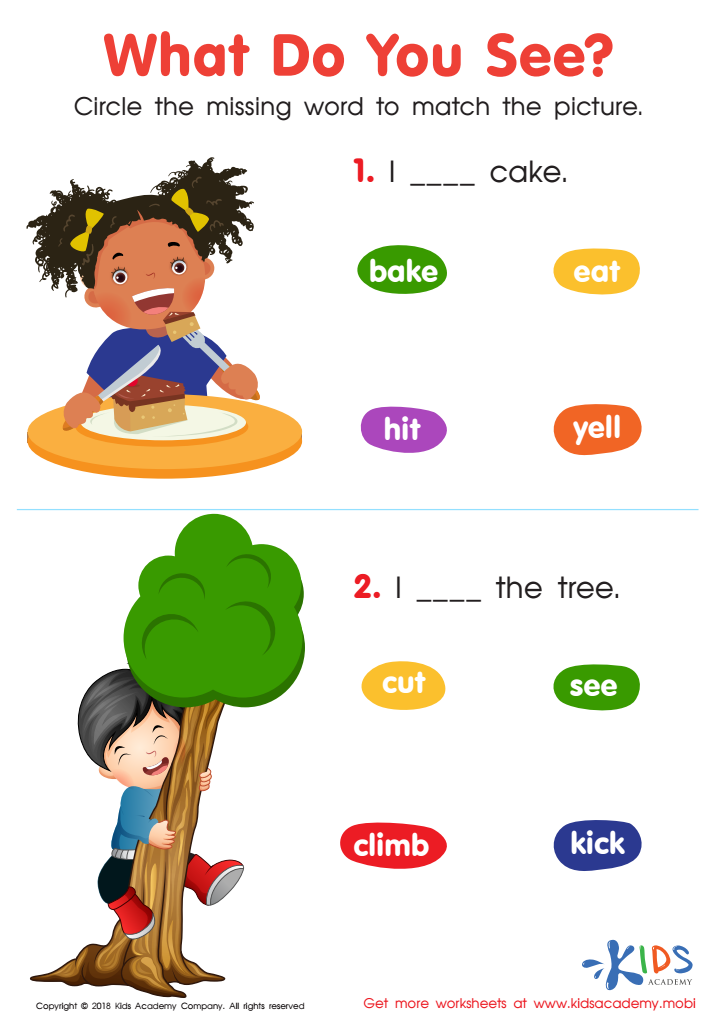
What Do You See? Reading Worksheet
New readers can use the attractive pictures and high-frequency words on this worksheet to practice expressive language skills and decode as they fill in the blanks. As they circle the correct words, they'll feel like reading superstars!
 Assign to My Students
What Do You See? Reading Worksheet
Worksheet
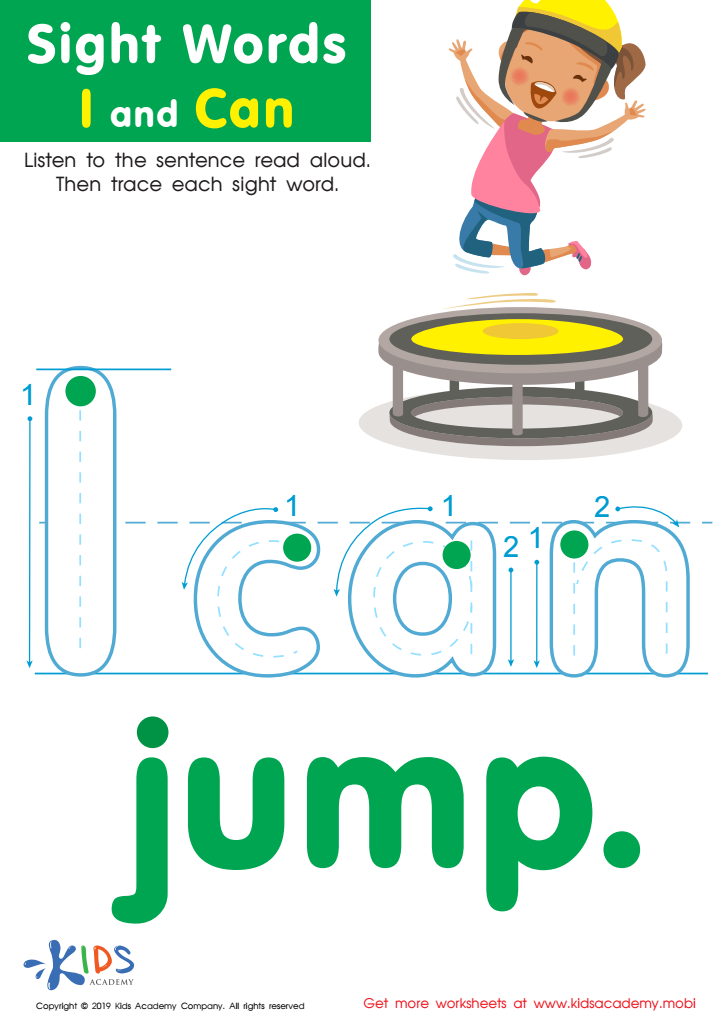
Sight Words I Can Worksheet
Emerging readers can build confidence and improve reading skills with this free worksheet! They'll trace the lines to complete the "I Can" phrase then use the picture clue to decode the last word. This activity encourages reading and writing, and is empowering for kids as they explore all the things they can do!
Sight Words I Can Worksheet
Worksheet
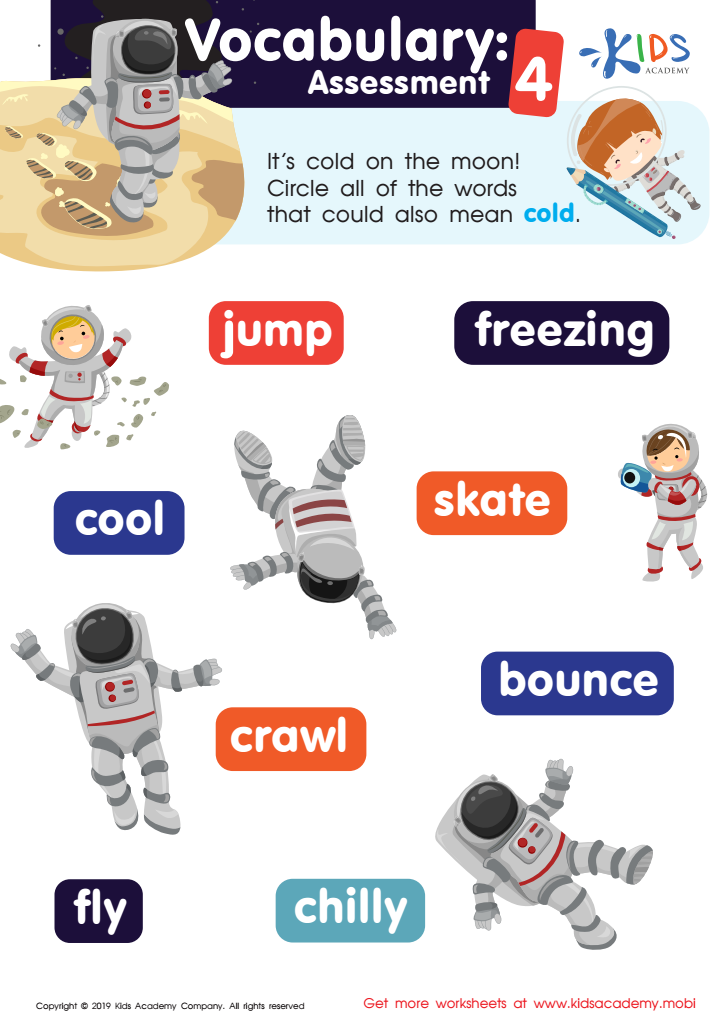
Vocabulary: Assessment 4 Worksheet
Download this free worksheet and have your child explore outer space with our charming astronauts! Help them find the right words to describe the chilly moon. Have fun with synonyms as they circle the right words to match "cold". Let your child's imagination run wild as they discover the wonders of space with this Kids Academy exercise!
Vocabulary: Assessment 4 Worksheet
Worksheet
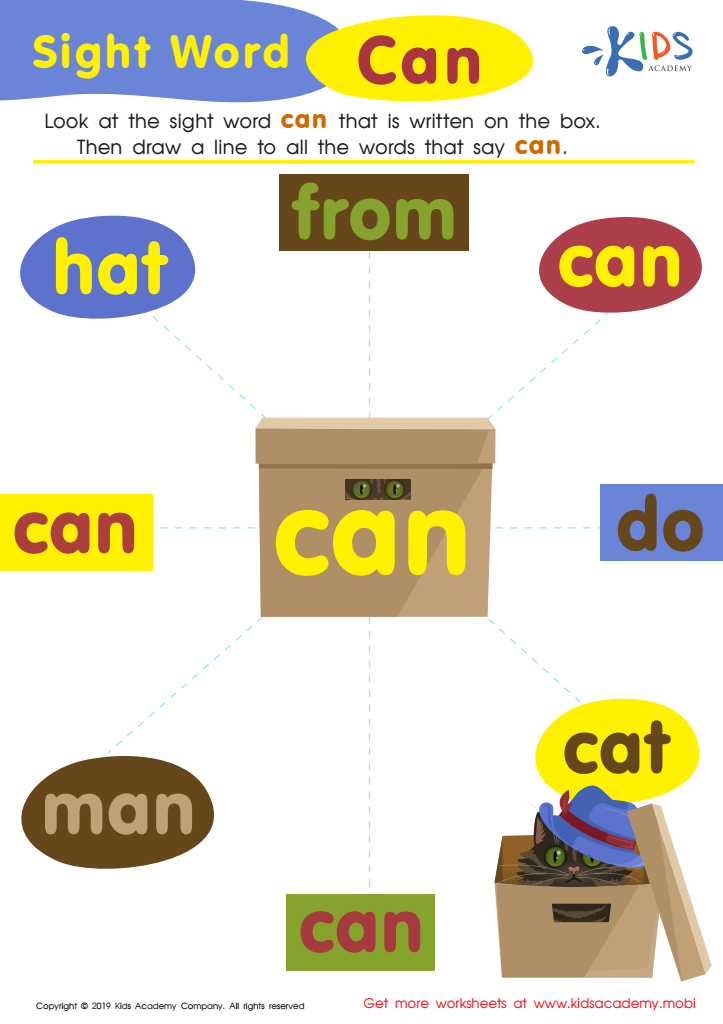
Sight Word Can Worksheet
Learning sight words is key for strong readers. Kids with large word bases find reading simpler, since they don't have to decode words they already know. This free worksheet uses the word 'can' to help kids improve their visual discrimination and refine motor skills, while providing pictures to help them along.
Sight Word Can Worksheet
Worksheet
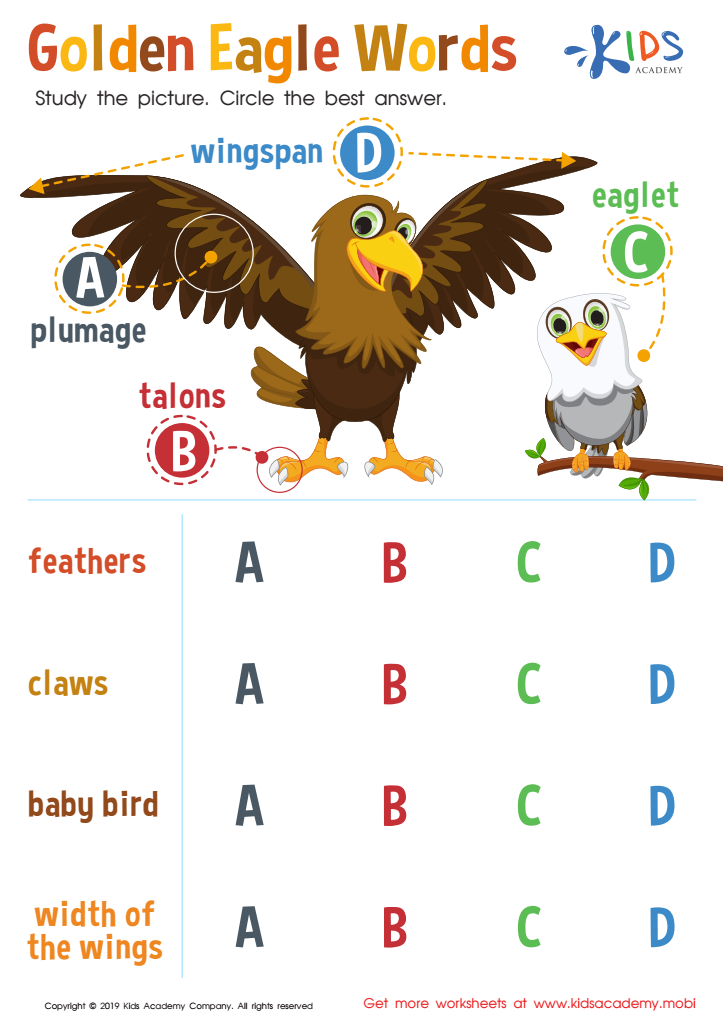
Golden Eagle Words Worksheet
Learning about animals is fun and this worksheet makes it more exciting! An adorable image of a golden eagle's wings is at the top, followed by new vocabulary words. Help your child match them by circling the correct answer. It's a great way to learn about the regal bird and its baby!
Golden Eagle Words Worksheet
Worksheet
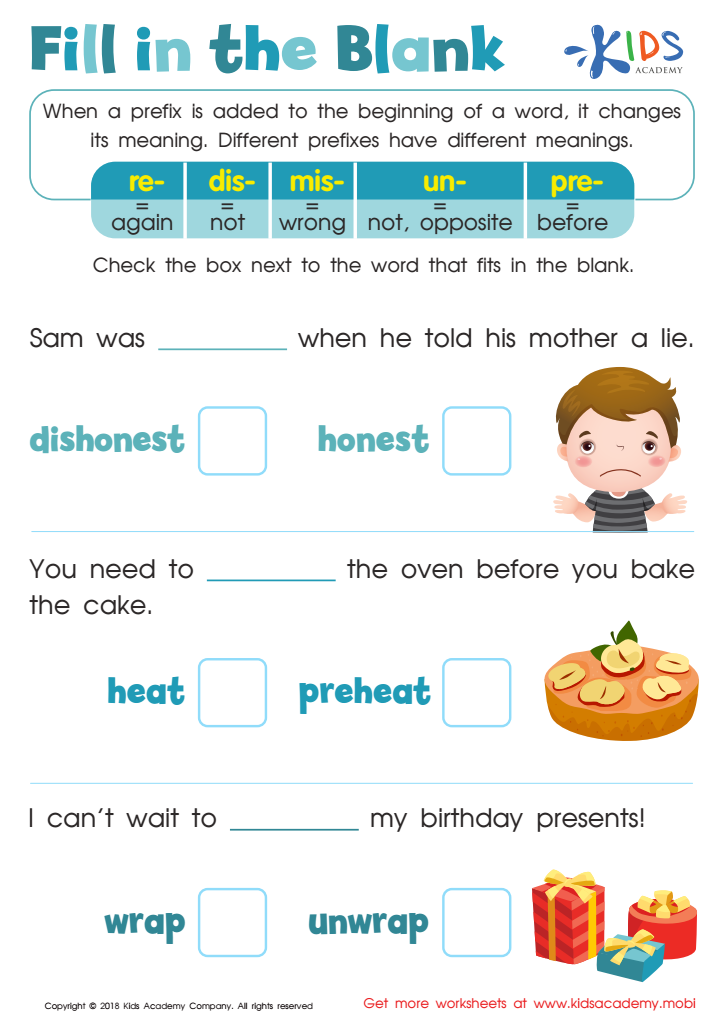
Reading: Fill in the Blank Worksheet
Students can practice understanding the meaning of common prefixes with this worksheet. They read sentences and pick the correct word with the appropriate prefix to complete it. Downloadable and a great addition to reading and vocabulary resources, this helps improve comprehension with mastery of the skill!
Reading: Fill in the Blank Worksheet
Worksheet
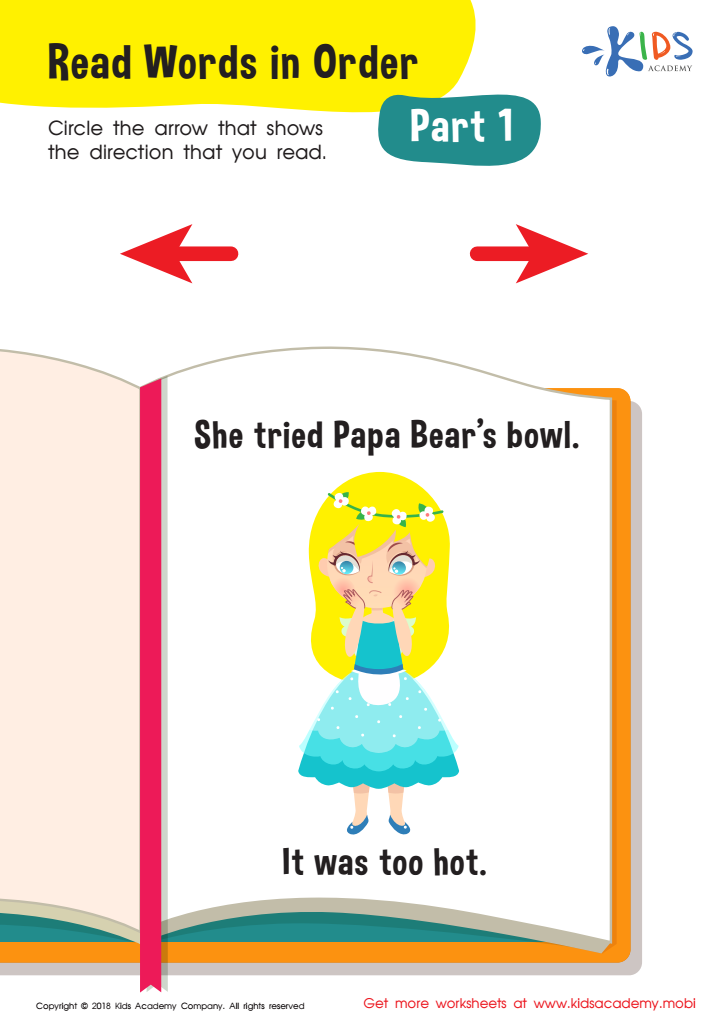
Read Words Order Part 1 Worksheet
Is your child just starting out with reading or having trouble? This worksheet is perfect! It'll help them learn the right way to read. Ask them to circle the arrow that shows the right direction to read. With this exercise, your child can overcome some of their reading challenges.
Read Words Order Part 1 Worksheet
Worksheet
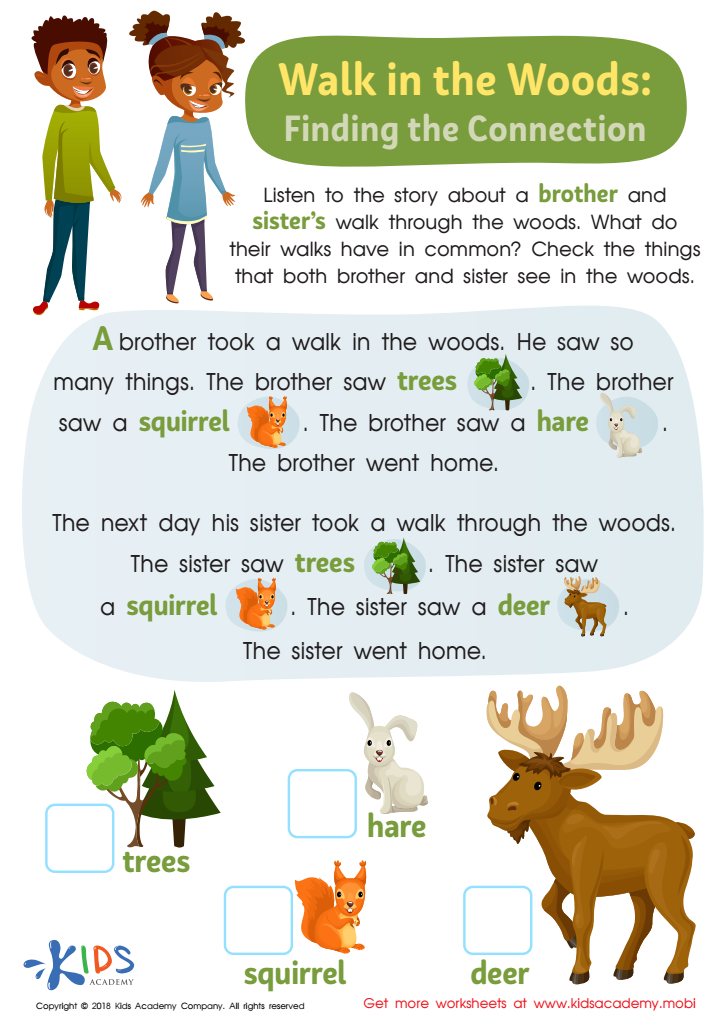
Walk In the Woods: Finding Connections Worksheet
Brother and sister took a walk in the woods to connect with nature and get some exercise. As they went, they noted different things like birds and plants, which they share in this story. Read it to your little ones, and help them check off the items the two saw. It's a great way to learn about nature and enjoy the outdoors.
Walk In the Woods: Finding Connections Worksheet
Worksheet
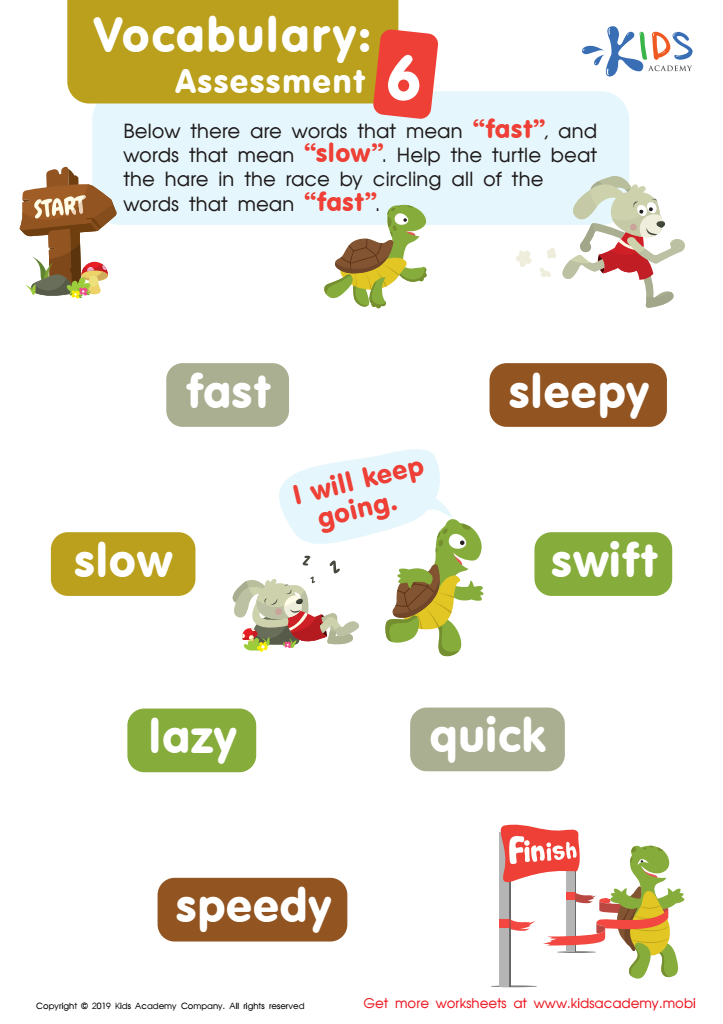
Vocabulary: Assessment 6 Worksheet
Read our turtle a tale of an old classic: the tortoise and the hare! Help him win by circling the fastest synonyms on this printable vocabulary worksheet. Each word is a synonym for either "slow" or "fast". Give our turtle a boost - circle the correct words and complete the page!
Vocabulary: Assessment 6 Worksheet
Worksheet
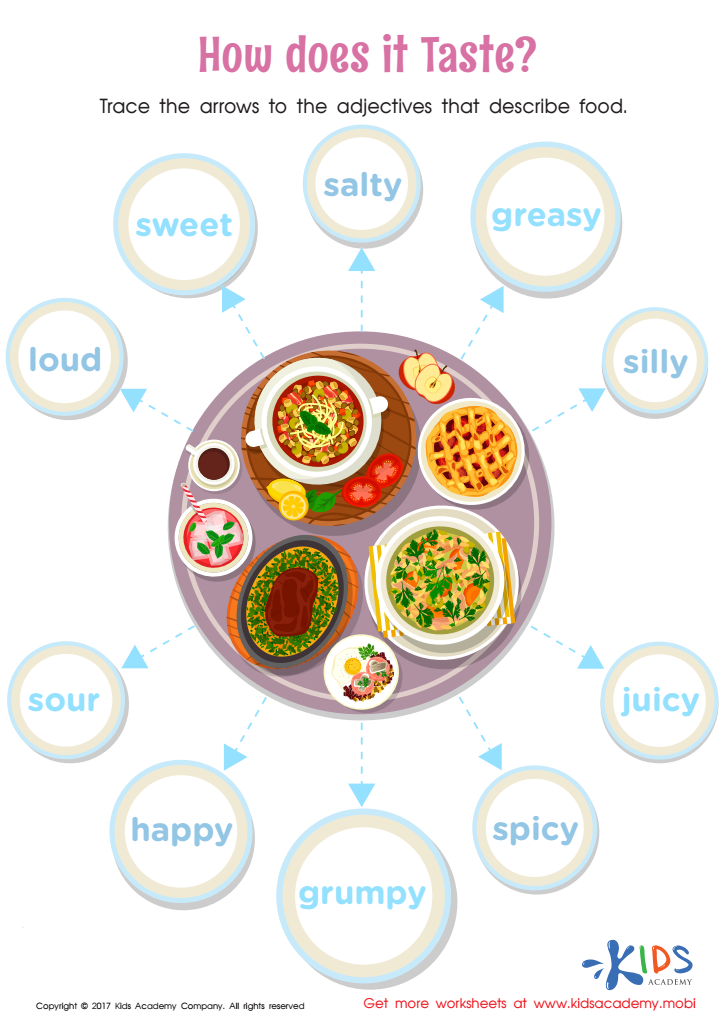
Food Adjectives Worksheet
Here’s a fun PDF worksheet to get your child’s taste buds tingling and help build descriptive language skills!
Food Adjectives Worksheet
Worksheet
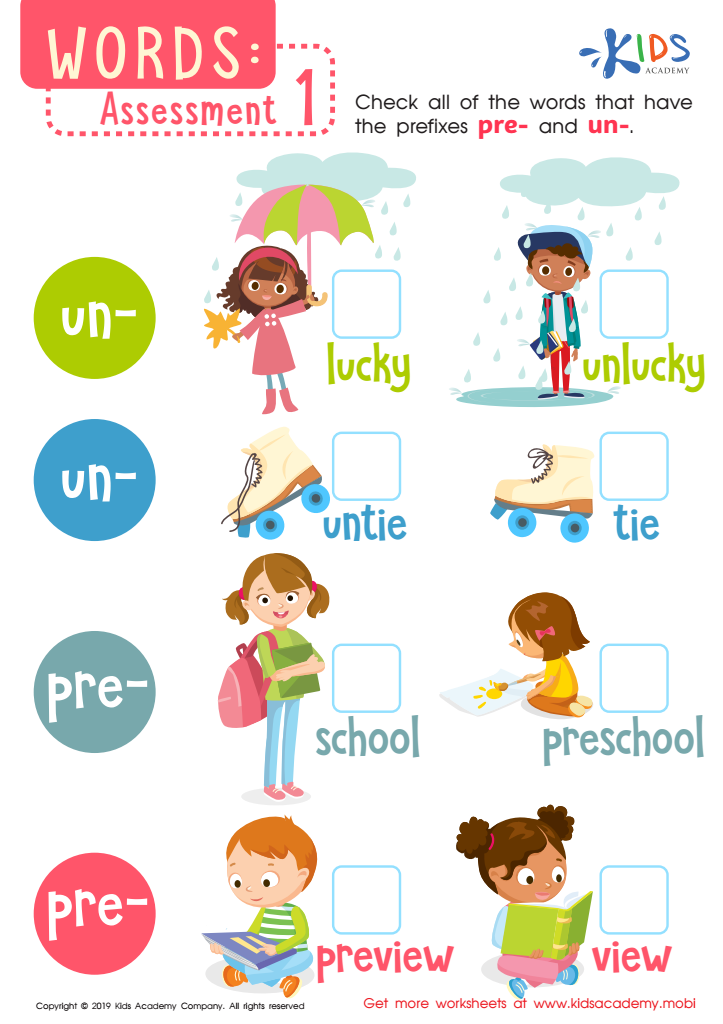
Words: Assessment 1 Worksheet
Help your child develop their knowledge of prefixes and suffixes with Kids Academy! This worksheet can test their understanding of pre- and un-. Have them view the illustrations and read the words to find the targeted prefix in each row. This is a great way to enhance their words and clarify meanings!
Words: Assessment 1 Worksheet
Worksheet
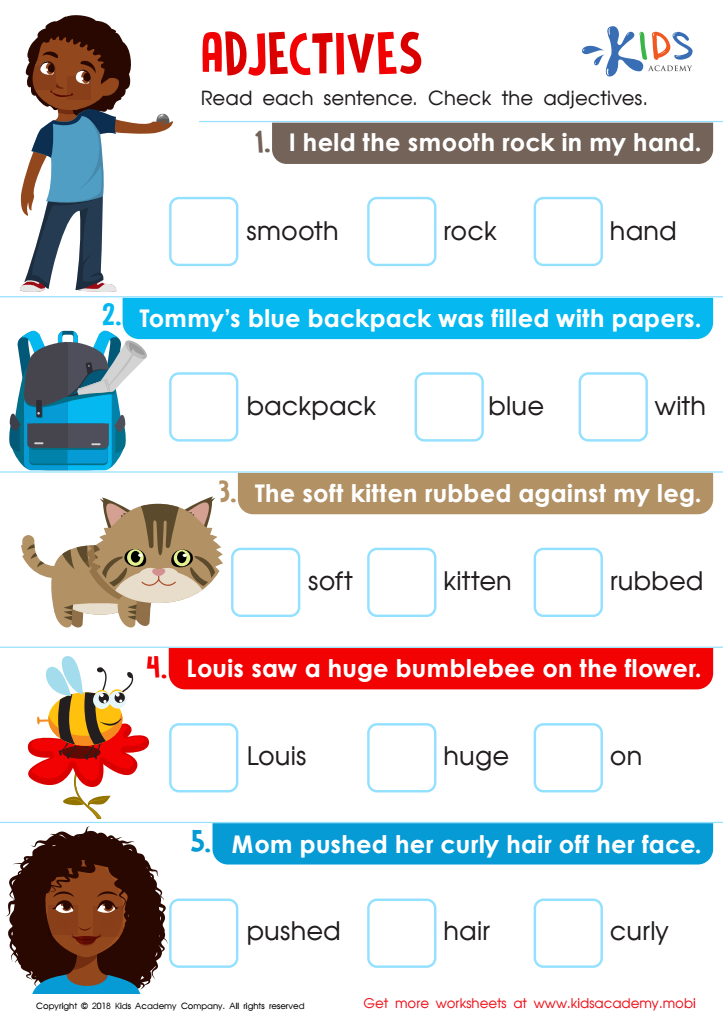
Adjectives Worksheet
Adjectives are words that describe a noun. Examples include "beautiful" and "good". Ask your students to use these adjectives in a sentence and have them identify the adjectives in five sentences on a worksheet. Point out that adjectives are essential to understand, and have them check their answers.
Adjectives Worksheet
Worksheet
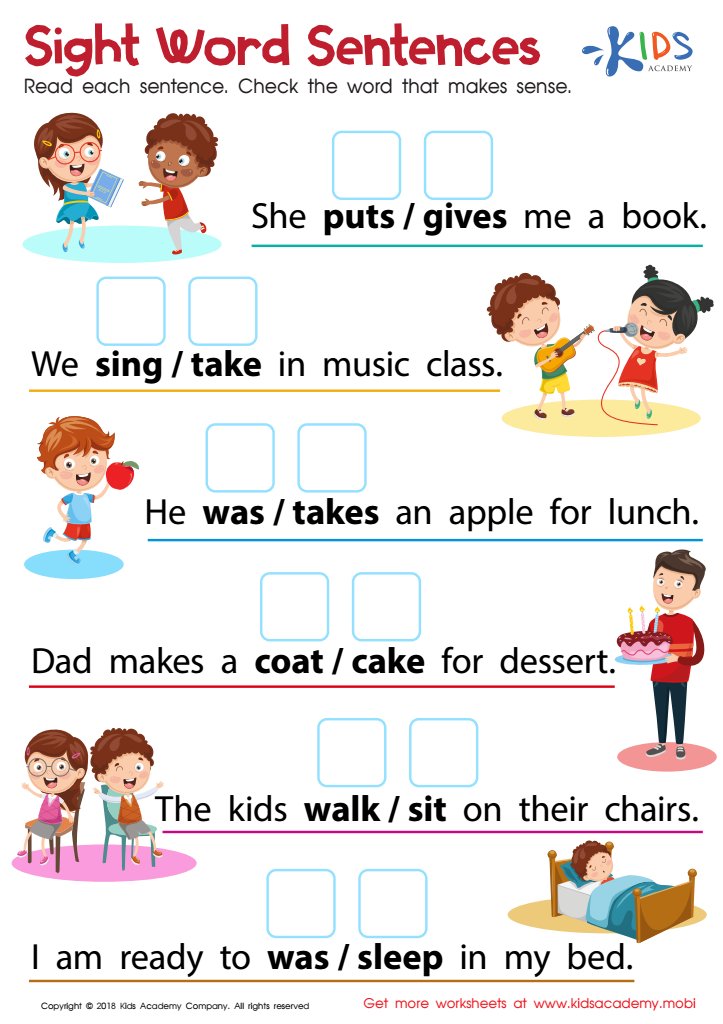
Sight Words Sentences Worksheet
It's important for kids to practice recognizing sight words in print. This PDF provides fun practice with sentences and engaging picture clues. As they work with sight words, they'll become more familiar and automatic. Help your kids build literacy skills!
Sight Words Sentences Worksheet
Worksheet
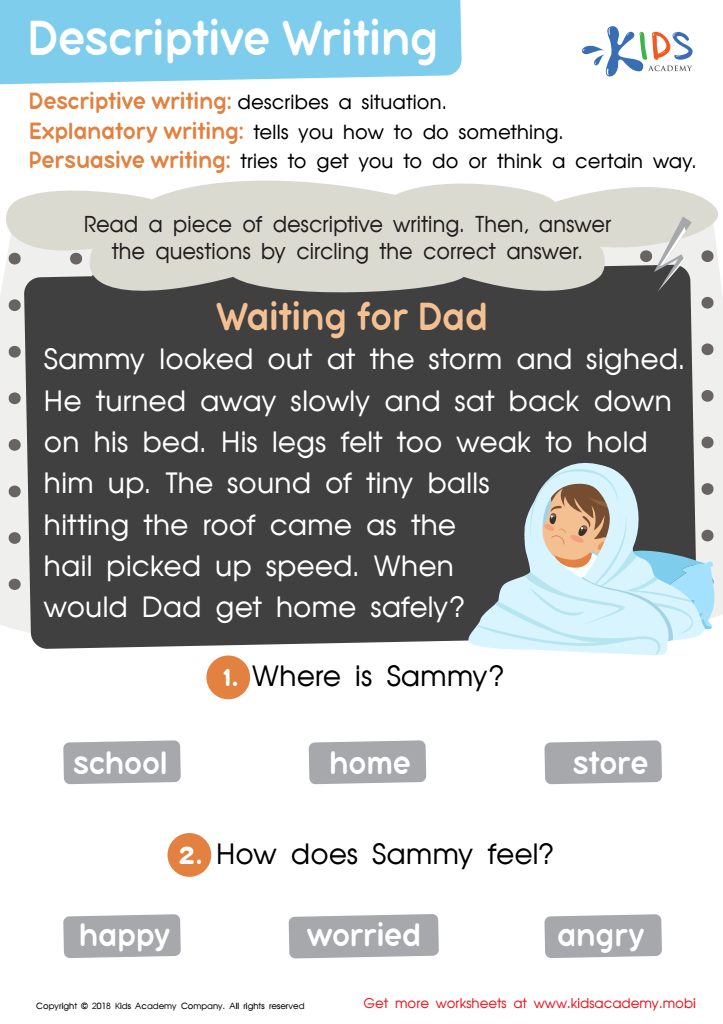
Descriptive Writing Worksheet: Part 2
In this worksheet, your kids will explore writing styles like descriptive, explanatory and persuasive. Read them the descriptive text, then have them answer the questions. Writing is an art – it's a way to express emotions, tell stories and share information.
Descriptive Writing Worksheet: Part 2
Worksheet
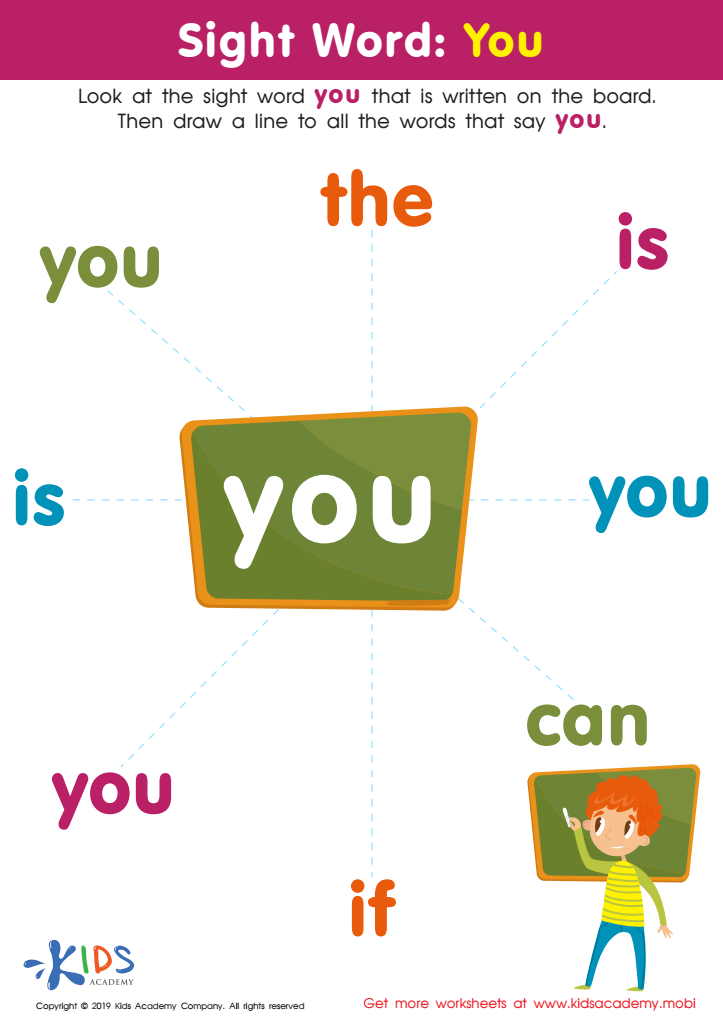
Sight Word You Worksheet
This free worksheet features the word 'you' and helps beginning readers practice visual-discriminatory skills. Using traceable lines and different colored words, it's an easy way to reinforce their identification of the word and build fluency.
Sight Word You Worksheet
Worksheet
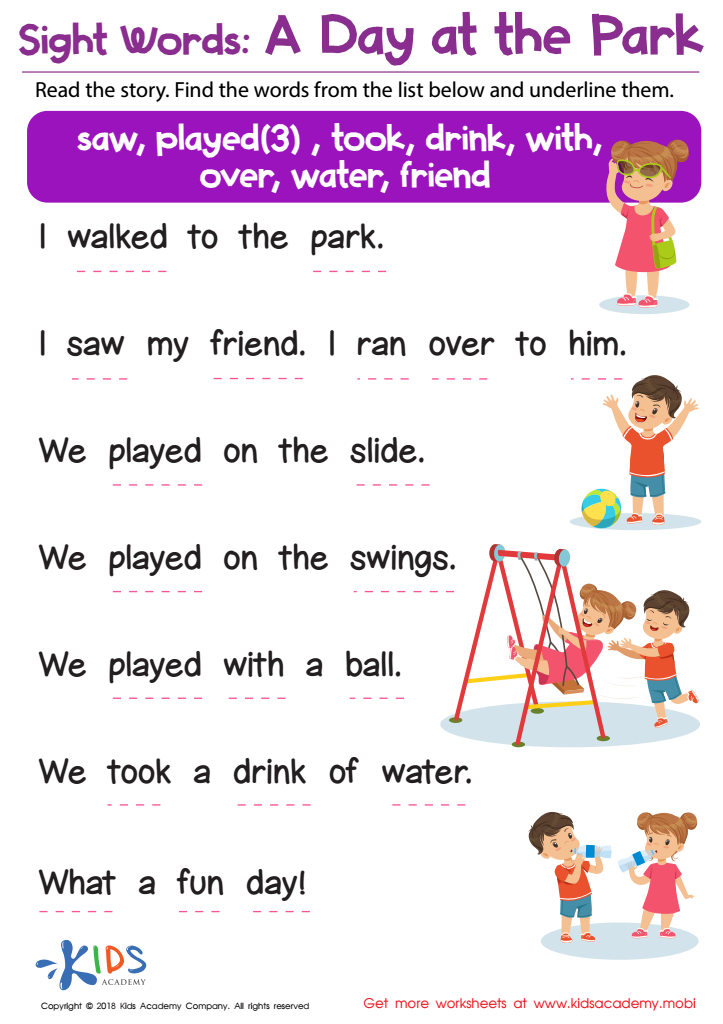
Sight Words: A Day at the Park Worksheet
This worksheet offers kids practice reading sight words in a story. With picture clues and repetitive wording, they'll work with words that can't be sounded out to reinforce their learning. This is an important step in the reading process that helps kids become more confident readers.
Sight Words: A Day at the Park Worksheet
Worksheet
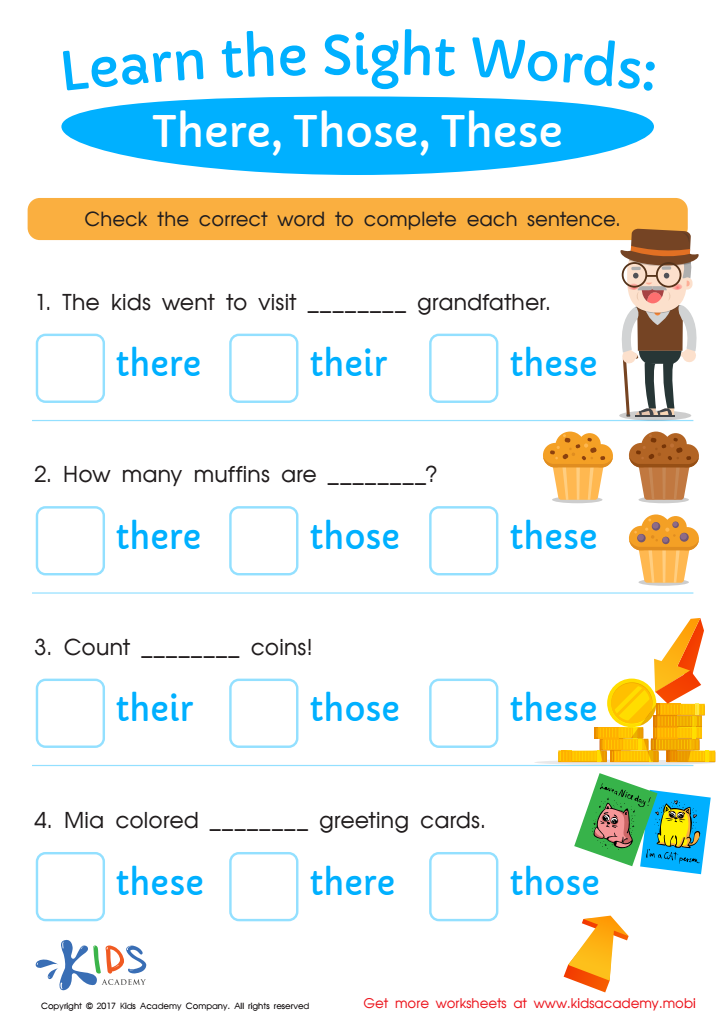
There, Those and These Sight Words Worksheet
Help teach your child to read and use tricky demonstrative pronouns. Use this 2nd grade sight words worksheet: there, those, these. Have them read each sentence and choose the right pronoun by looking at the pictures.
There, Those and These Sight Words Worksheet
Worksheet
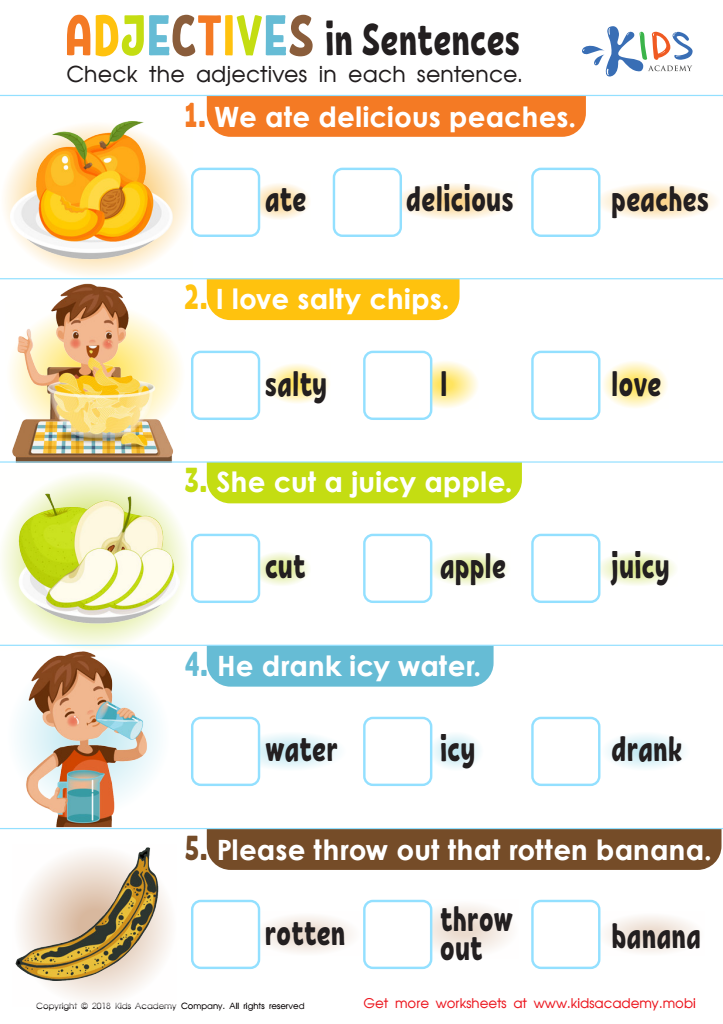
Adjectives in Sentences Worksheet
Our learners can find it hard to use writing to add detail, but adjectives can help. With this fun worksheet, kids can identify adjectives that describe food and drink. Guide them through each sentence, discussing the words and having them choose the one that gives information about the food/drink.
Adjectives in Sentences Worksheet
Worksheet
Join Kids Academy for Free
Who is primarily going to use this learning content?




.jpg)



Sentence construction is a critical aspect of early childhood literacy, and it's essential for both parents and teachers to prioritize it for children aged 5-8. During these formative years, children are learning the building blocks of language, which include vocabulary, grammar, punctuation, and the ability to form coherent sentences. Mastery of sentence construction not only enhances a child's reading and writing skills but also fosters clear communication and critical thinking.
When young children are exposed to well-constructed sentences, they begin to understand how words work together to convey meaning. This understanding is crucial for reading comprehension and fluency. As they practice constructing sentences, children improve their ability to express ideas clearly and logically, an important skill for academic success and personal interactions.
Furthermore, strong sentence construction skills lay the foundation for more complex writing tasks they will encounter in later grades, such as essays and reports. Encouraging daily reading and writing practice, employing interactive activities that focus on sentence structure, and providing positive reinforcement can all contribute to a child's literacy development.
Ensuring children develop robust sentence construction skills equips them for lifelong communication, boosts their confidence in both spoken and written language, and enriches their cognitive and academic growth. Parents and teachers play a vital role in making this aspect of learning engaging and accessible.








