Categorization skills Science Worksheets for Ages 5-8
5 filtered results
-
From - To
Empower young minds with our Categorization Skills Science Worksheets designed for ages 5-8. Our engaging and interactive worksheets help children develop crucial scientific thinking by sorting and classifying various objects, animals, and materials. Through fun activities, kids learn to recognize patterns and make connections, fostering observation and analytical skills vital for their educational growth. Perfect for both classroom and home use, these printable resources make learning enjoyable and rewarding. Visit Kids Academy to unlock your child's scientific potential today!
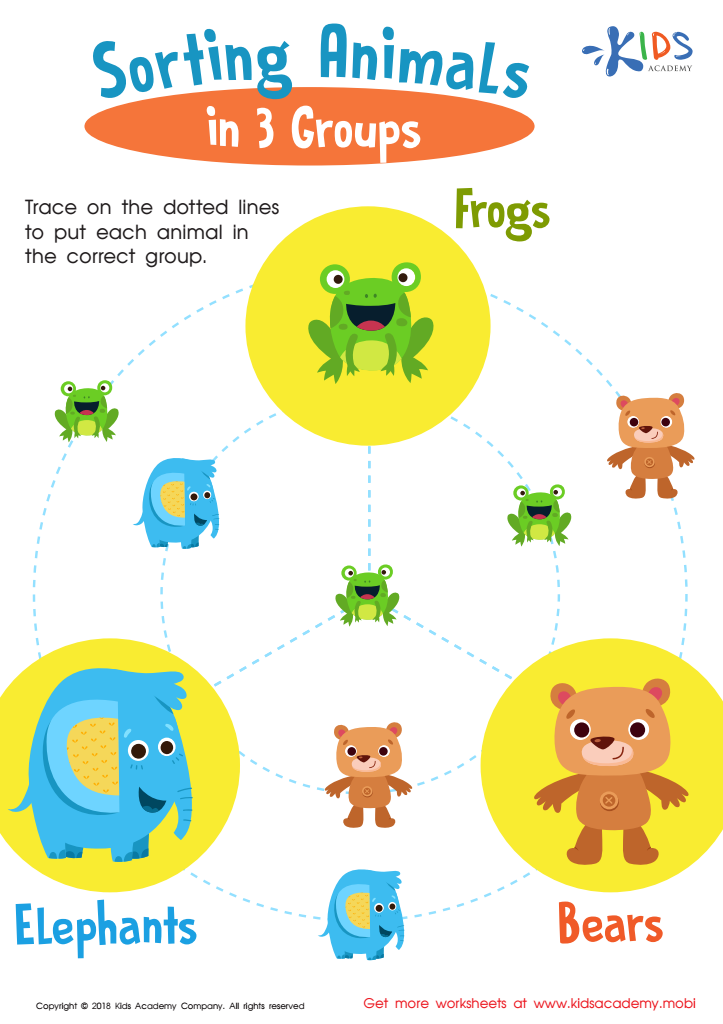
Sorting Animals in 3 Groups Worksheet
 Assign to My Students
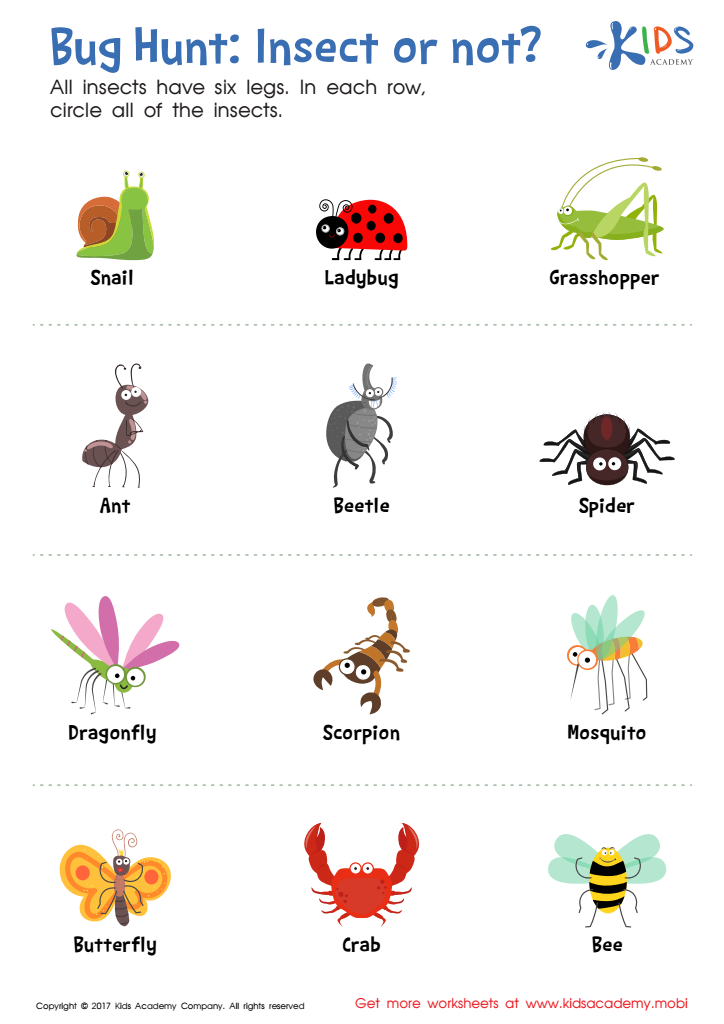
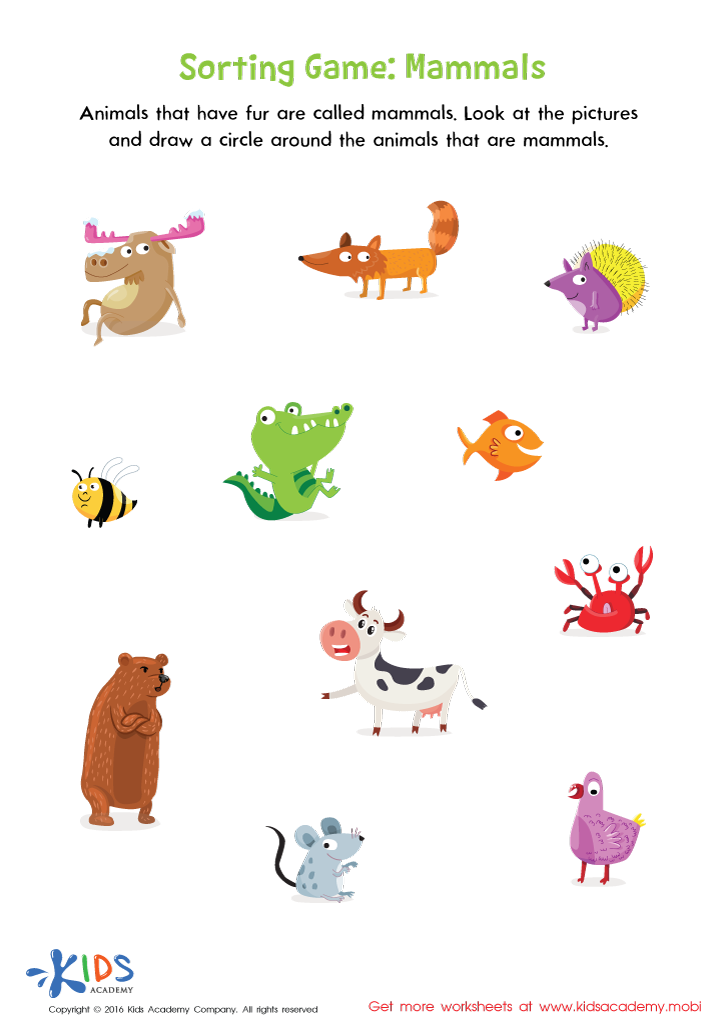
Mammals Sorting Worksheet
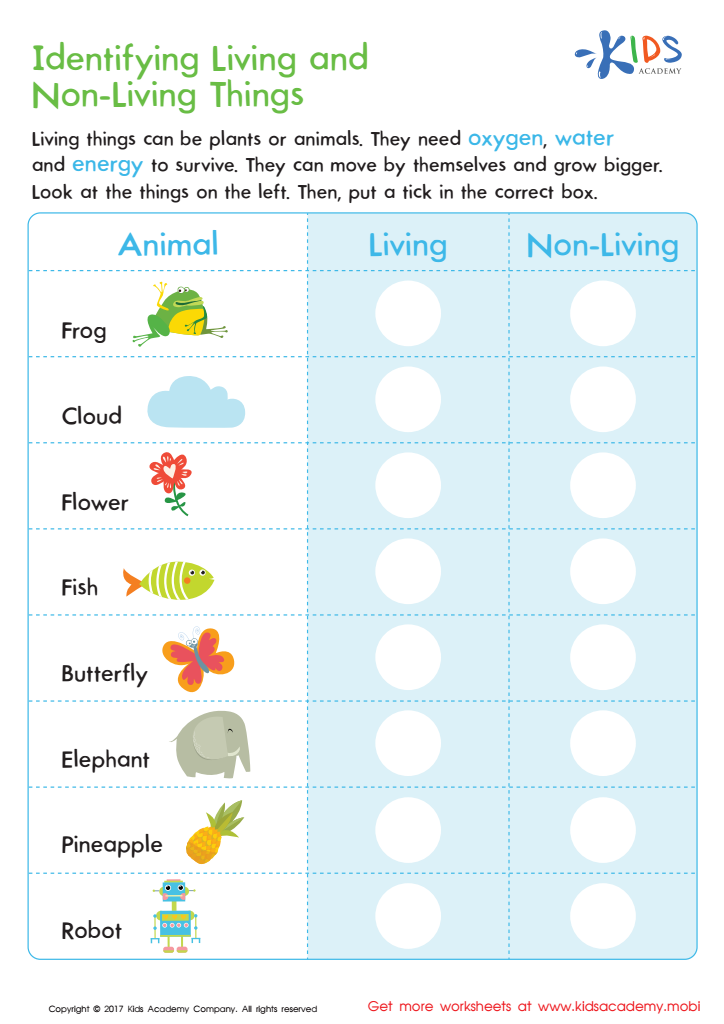
Identifying Living or Non–living Worksheet
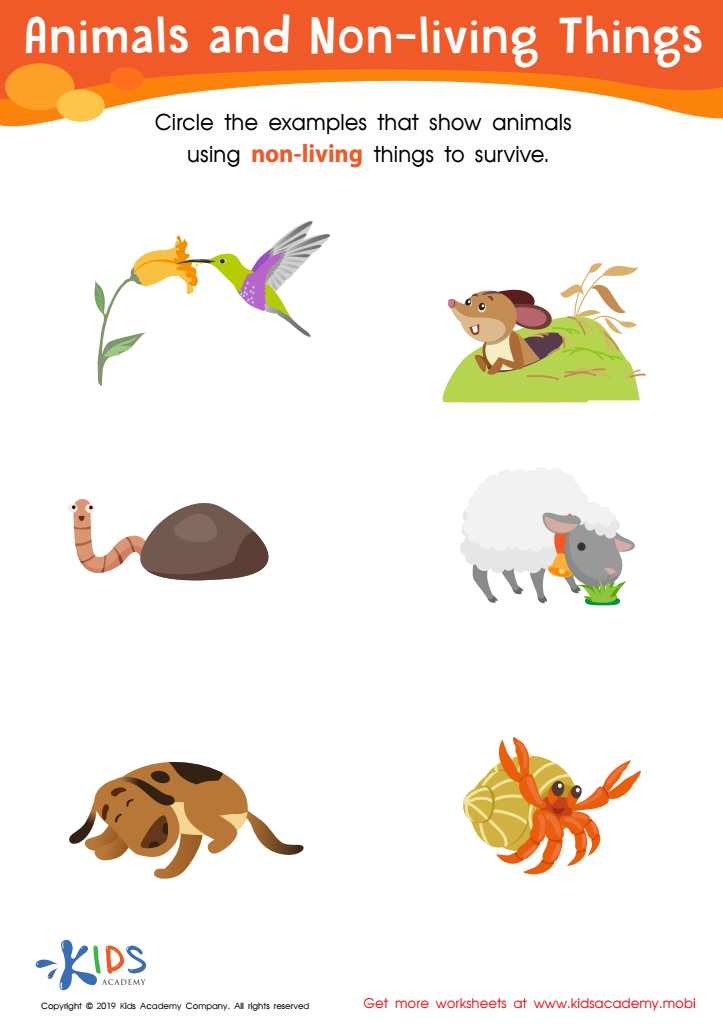
Animals and Non-Living Things Worksheet








Categorization skills are a fundamental aspect of cognitive development in children ages 5-8, and nurturing these skills can have far-reaching benefits for both academic and everyday life. For one, categorization helps children make sense of the world around them. By grouping objects, animals, or concepts based on similarities and differences, children learn to organize their environment, making it less overwhelming and more comprehensible. This foundational skill not only aids in memory retention by creating structured mental frameworks but also fosters critical thinking and problem-solving abilities.
In a science context, categorization helps children understand natural phenomena and scientific concepts more effectively. For instance, sorting objects into living and non-living categories can lay the groundwork for more complex biological concepts later on. Parents and teachers who encourage categorization are essentially empowering children to spot patterns, make predictions, and draw conclusions—skills that are central to scientific inquiry and discovery.
Furthermore, these skills are transferable to other subject areas, enhancing overall academic performance. Evidence suggests that children who develop strong categorization abilities often excel in reading, mathematics, and logical reasoning. By prioritizing categorization skills, parents and teachers are not just focusing on one area of development but are nurturing well-rounded, capable learners prepared for future challenges.







