Understanding symmetry Science Worksheets for Ages 5-8
3 filtered results
-
From - To
Unlock the world of symmetry for young learners aged 5-8 with our engaging Understanding Symmetry Science Worksheets! Designed to captivate curious minds, these worksheets introduce essential concepts of symmetry through fun activities and vibrant illustrations. Kids will explore mirror images, shapes, and patterns while enhancing their observation and spatial awareness skills. Perfect for teachers and parents alike, our worksheets provide a hands-on approach to learning, making complex ideas accessible and enjoyable. Foster creativity and mathematical thinking as children discover symmetry in nature and everyday life. Dive into this fascinating topic online and watch young learners shine with confidence in their science knowledge!
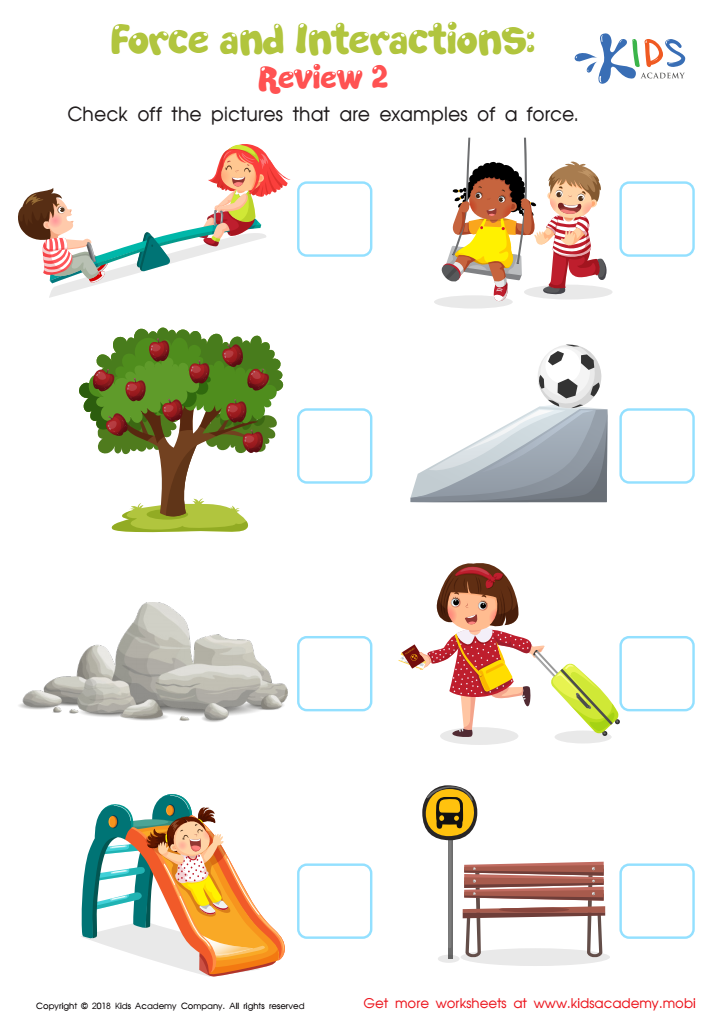
Force and Interactions: Review 2 Worksheet
 Assign to My Students
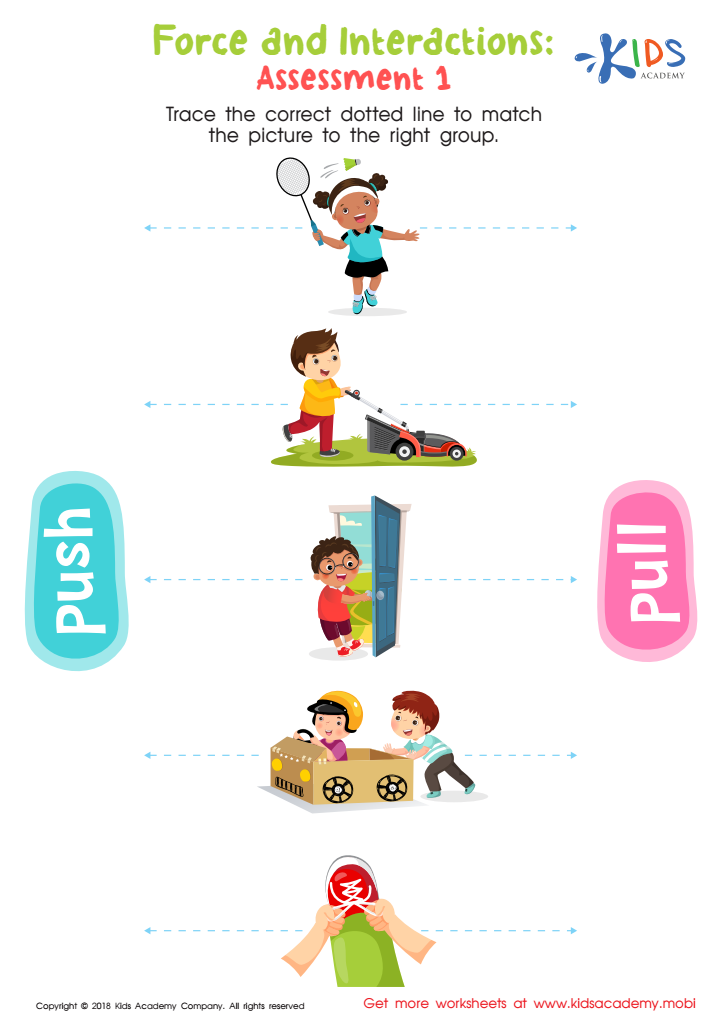
Force and Interactions: Assessment 2 Worksheet
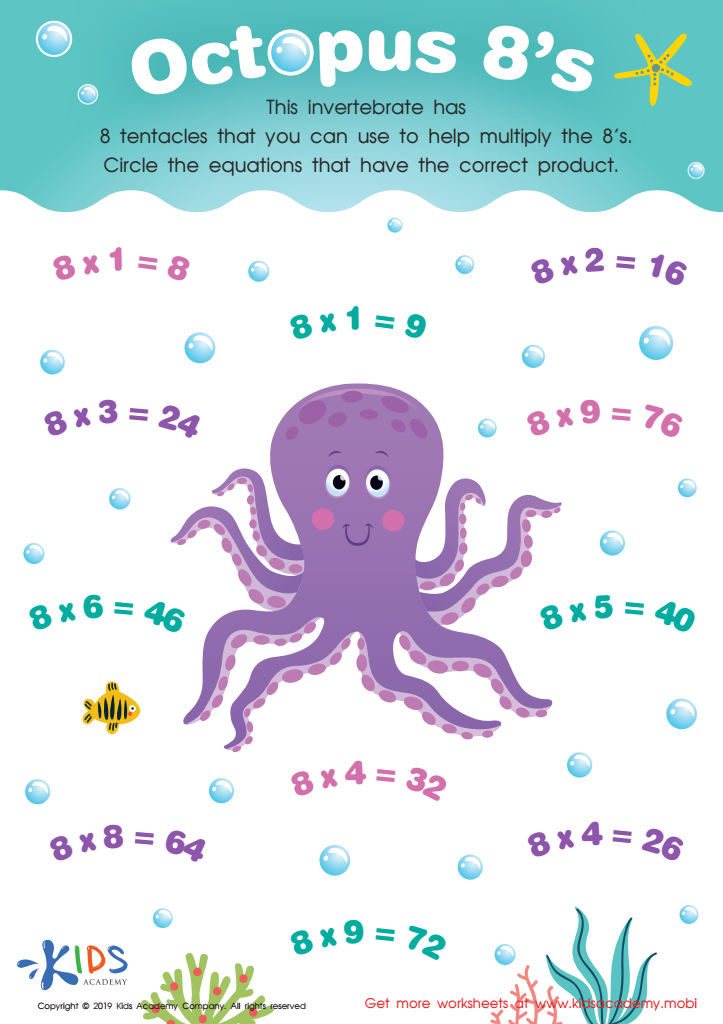
Octopus 8’s Worksheet








Understanding symmetry is crucial for children aged 5-8 as it lays a foundational aspect of mathematical and scientific reasoning. At this early age, children's cognitive abilities are highly receptive, making it an ideal time to introduce concepts of balance and harmony found in symmetry. Parents and teachers should care about this because recognizing and creating symmetrical patterns directly relates to critical thinking and problem-solving skills.
Symmetry appears in nature, art, and everyday objects, which provides rich opportunities for hands-on learning and exploration. For instance, through simple activities like folding paper to create identical shapes or identifying mirrored images in the environment, children enhance their observational skills and develop a sense of spatial awareness.
Furthermore, symmetry plays a role in more complex subjects like geometry, making it easier for learners to grasp concepts such as congruence and transformations later on. Encouraging children to observe and use symmetry fosters creativity, as they learn to appreciate perspectives in design and spatial arrangement.
In essence, integrating symmetry into early education equips young learners with essential skills, promotes inquisitiveness, and enhances their ability to connect mathematical principles to real-world applications, making it a fundamental component of their learning journey.







