Plants Worksheets for Ages 5-8 - Page 2
25 filtered results
-
From - To
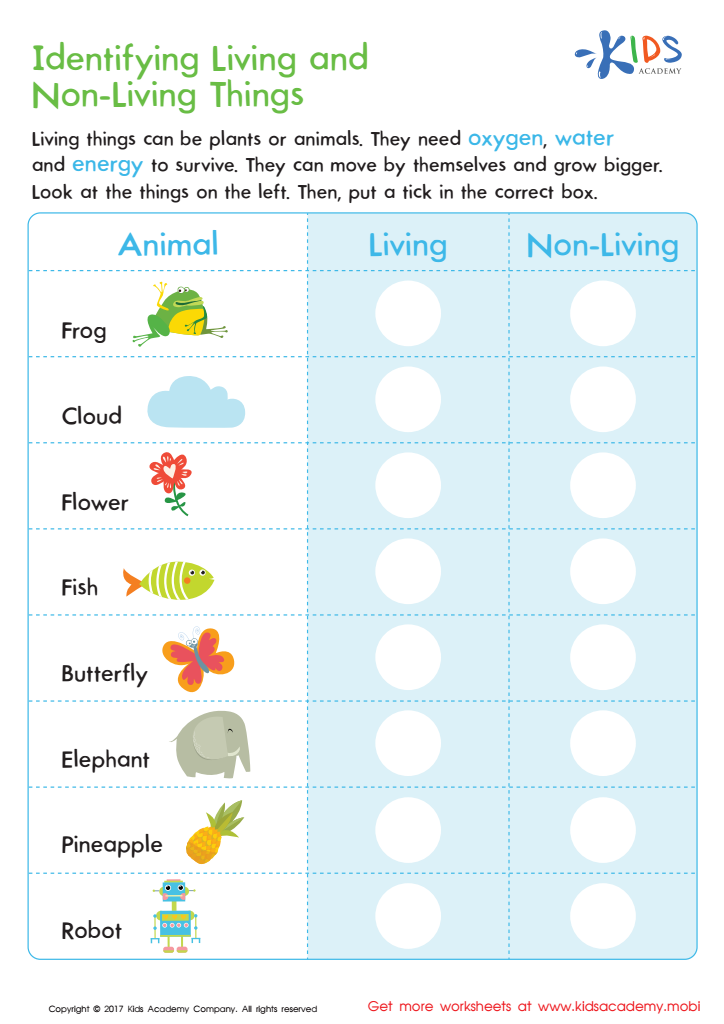
Identifying Living or Non–living Worksheet
 Assign to My Students









Caring about plants is fundamental for children aged 5-8, as it plays a significant role in their development and learning. For parents and teachers, engaging kids with plants can foster a love for nature and instill important environmental values. This early introduction helps children develop a sense of responsibility and care for living things. Moreover, interacting with plants enhances sensory skills through touch, smell, and sight, offering experiential learning beyond traditional textbooks.
Involving children in planting activities can stimulate curiosity and enhance understanding of basic scientific concepts, such as photosynthesis, plant lifecycles, and ecosystems. Hands-on gardening activities can improve fine motor skills, patience, and perseverance. Plant care tasks also offer practical lessons in observation, recording results, and categorizing different plant species, aligning well with early science education curricula.
Further, spending time around plants has been shown to reduce stress and improve overall well-being, contributing to a positive learning environment. Children who regularly engage with nature may exhibit better focus, attention, and creativity. Therefore, prioritizing plant-related activities not only introduces essential scientific knowledge but also supports children's holistic development. Both parents and teachers should recognize these multifaceted benefits to nurture confident, nature-loving, and environmentally aware future generations.