Weather Vocabulary Weather Worksheets for Ages 5-8
4 filtered results
-
From - To
Explore our comprehensive Weather Vocabulary Worksheets for children aged 5-8. Designed to make learning fun, these educational resources help young learners grasp essential weather-related terms and concepts. Each worksheet is crafted to engage kids through colorful illustrations, interactive activities, and easy-to-understand language. Ideal for in-class lessons or at-home practice, our worksheets cover topics like sunny, rainy, windy, and snowy weather. Foster your child’s scientific curiosity while building their vocabulary and comprehension skills. Make weather vocabulary both enjoyable and educational with our expertly designed printable worksheets.
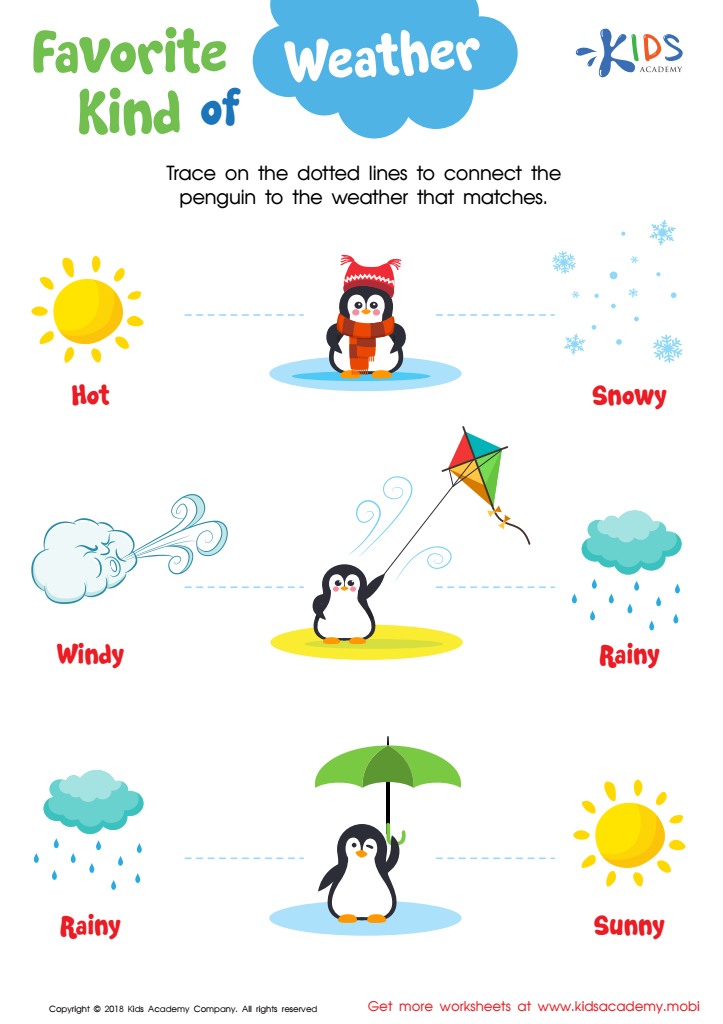
Favorite Kind of Weather Worksheet
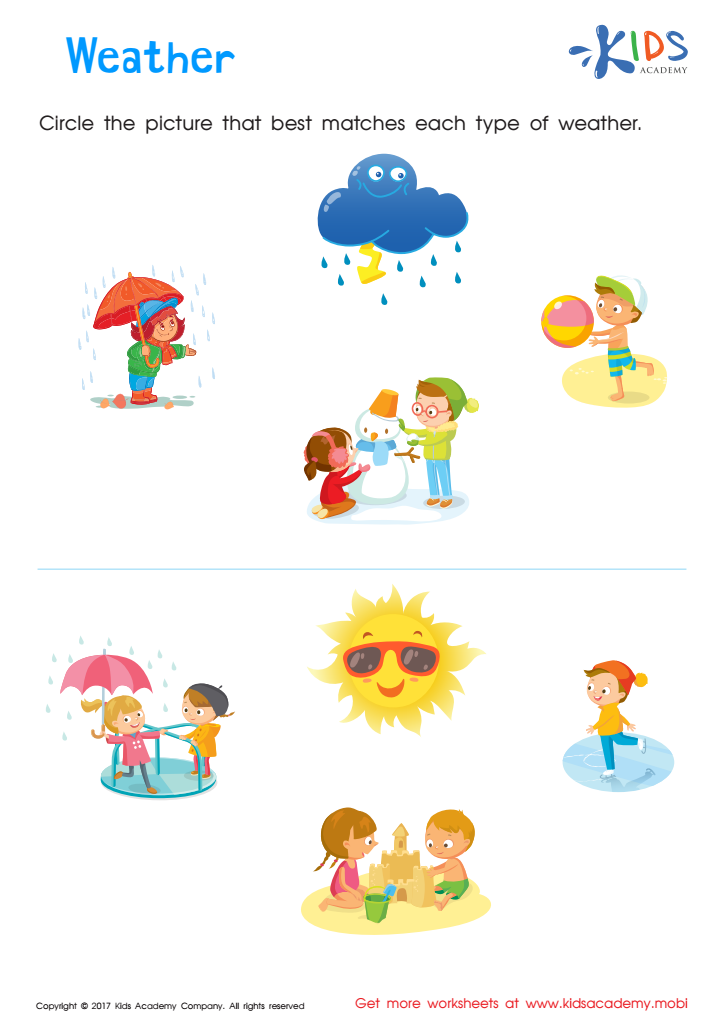
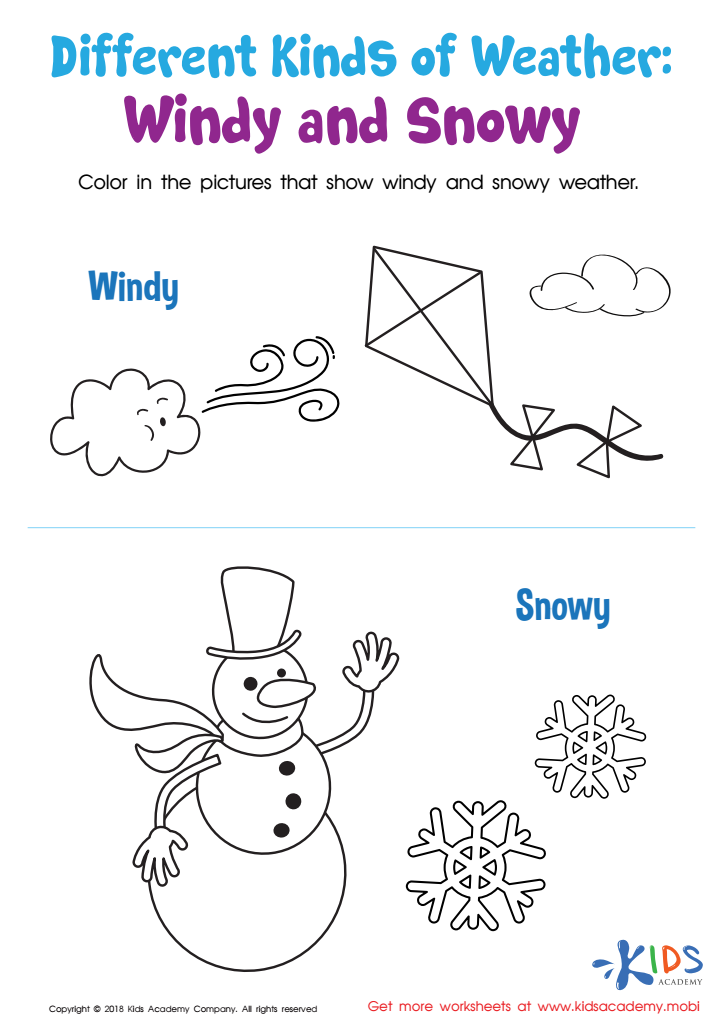
Different Kinds of Weather: Windy and Snowy Worksheet
 Assign to My Students
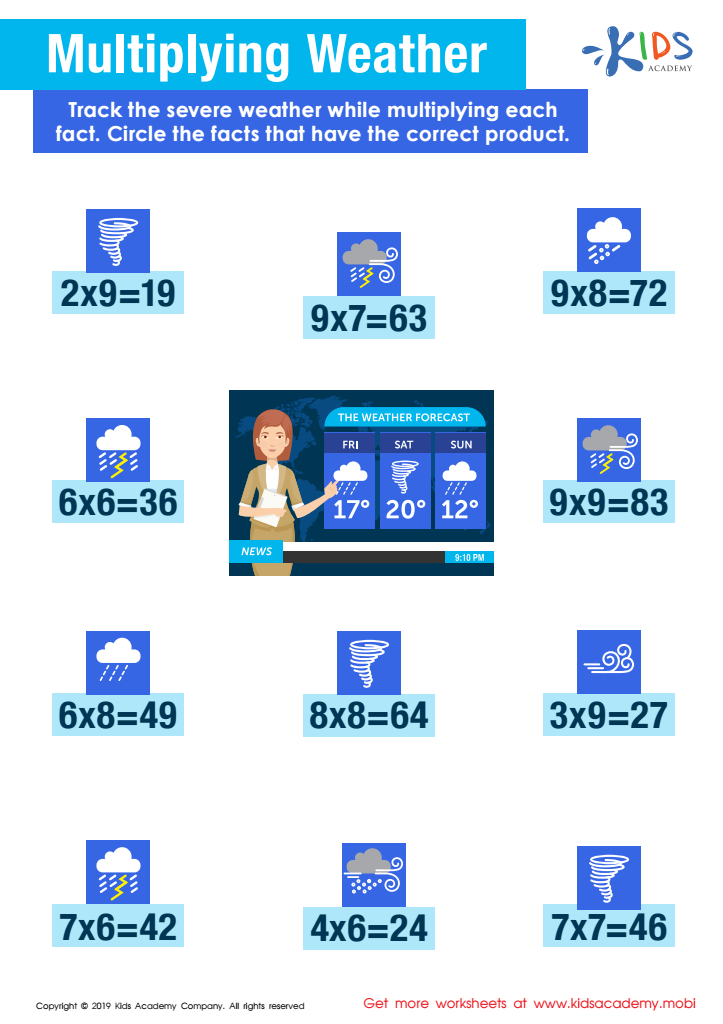
Multiplying Weather Worksheet








Understanding weather vocabulary is vital for young children because it lays the foundation for their practical knowledge and critical thinking skills. For children ages 5-8, learning terms like "sunny," "rainy," "cloudy," "windy," and "stormy" not only builds their descriptive language but also enhances their observational skills. When parents and teachers emphasize this vocabulary, they are fostering curiosity about the world around them, encouraging kids to notice, ask questions, and learn from their environment.
Moreover, weather directly affects daily life and safety. Knowing what these words mean helps children better understand and react to weather forecasts. For instance, recognizing that "stormy" weather suggests staying indoors can contribute to their personal safety.
Integrating weather vocabulary in early education also supports cross-curricular learning. It's a gateway to science through discussions on seasons, climate, and the water cycle. It sharpens cognitive skills as children predict weather patterns and recognize changing atmospheric conditions. Additionally, reading weather-related stories or participating in weather-themed activities enhances literacy and makes learning more engaging.
Collaborative learning about weather can also strengthen family and classroom bonds. Discussing the day's weather can be a routine that keeps young minds engaged, connected to the real world, and primed for lifelong learning. Thus, prioritizing weather vocabulary in early education is essential for intellectual and practical growth.







