Critical Thinking Community Worksheets for Ages 5-8
6 filtered results
-
From - To
Discover our engaging Critical Thinking Community Worksheets designed specifically for children aged 5-8! These worksheets foster essential critical thinking skills while helping young learners explore their communities. Engaging activities encourage children to analyze, evaluate, and make informed decisions about their surroundings. Tailored to be age-appropriate, our worksheets promote creativity and problem-solving through fun exercises, stimulating questions, and interactive tasks. Perfect for classroom use or at home, these resources create a solid foundation for lifelong learning. Start empowering the critical thinkers of tomorrow today with our thoughtfully crafted worksheets! Explore more at Kids Academy!
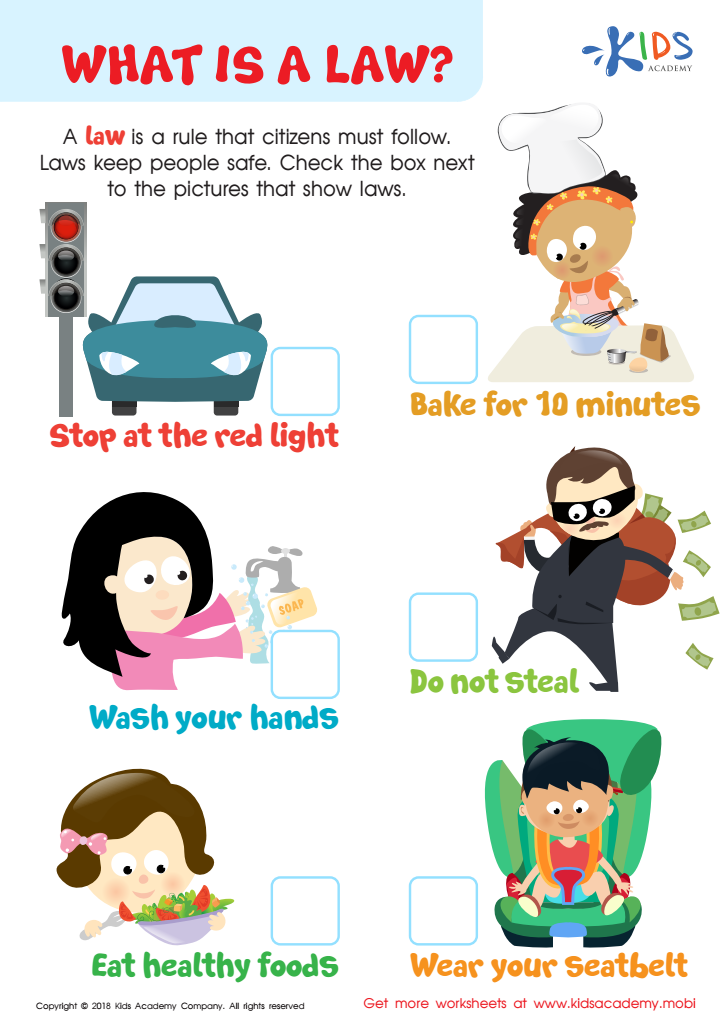
What is a Law? Worksheet
 Assign to My Students
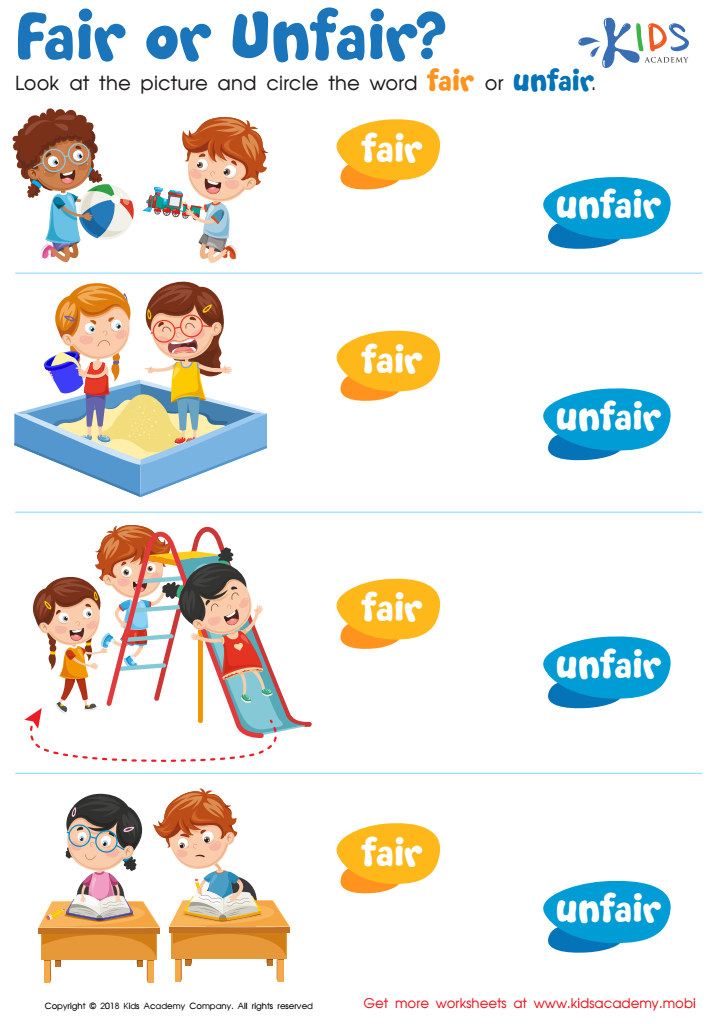
Fair or Unfair Worksheet
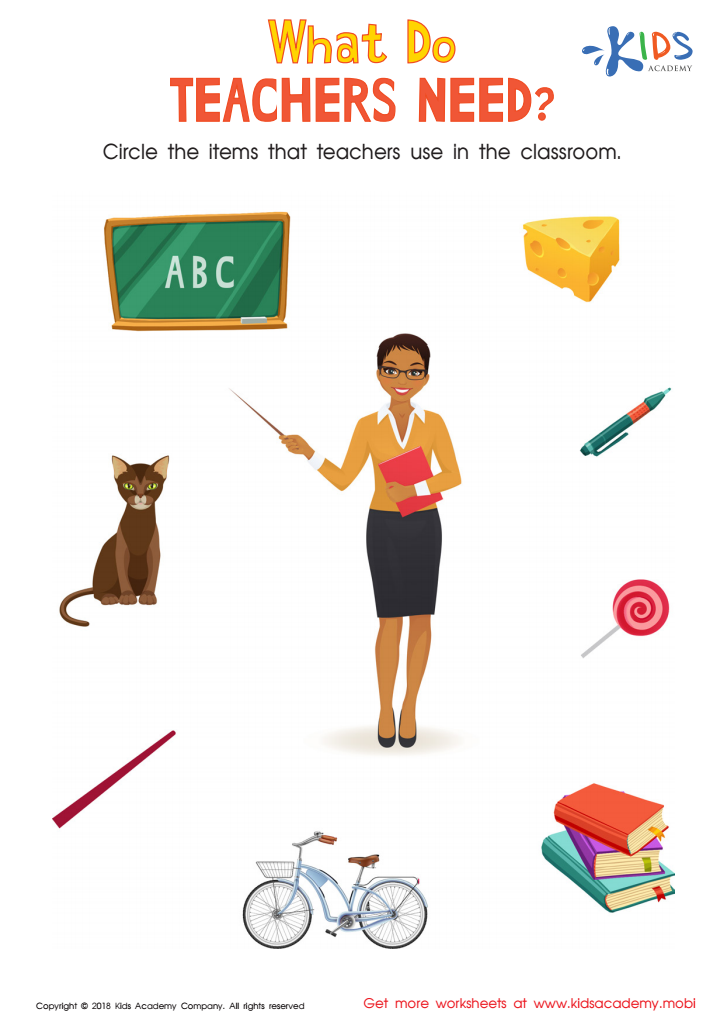
What Do Teachers Need Worksheet

Traditional Music Worksheet
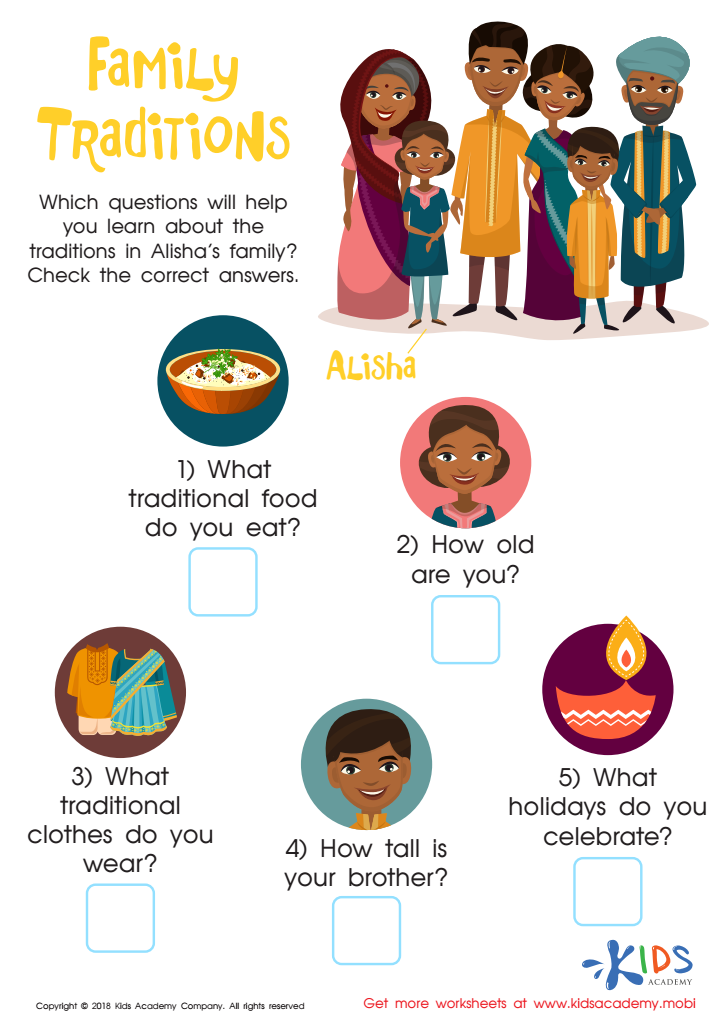
Family Traditions Worksheet
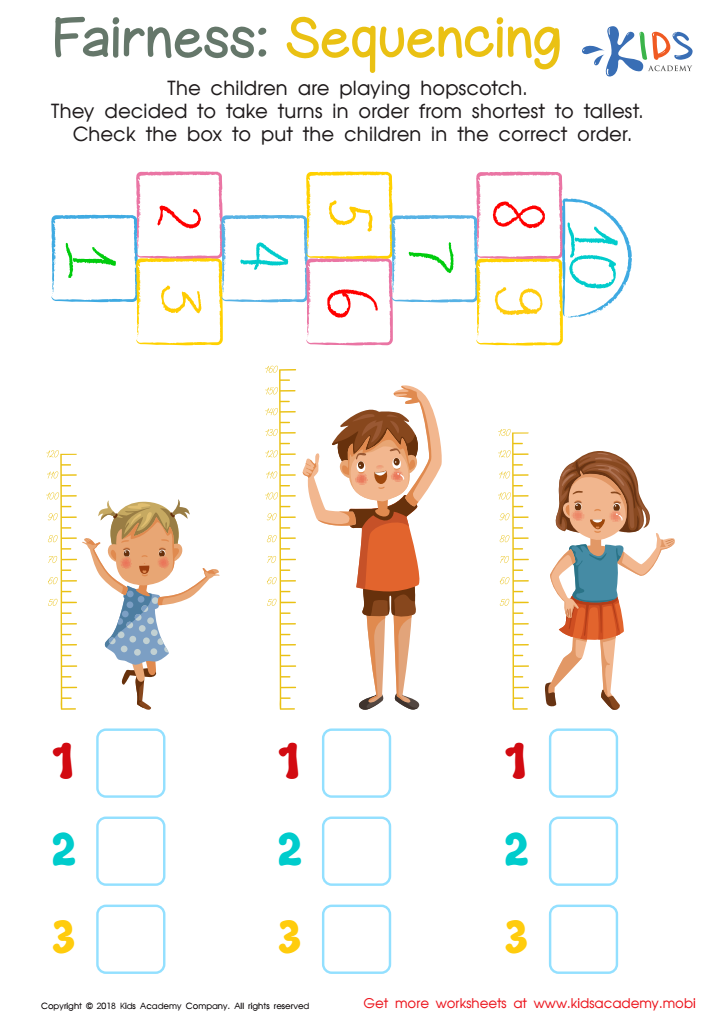
Fairness: Sequencing Worksheet








Parents and teachers should care about the Critical Thinking Community for Ages 5-8 because it lays the foundation for essential lifelong skills. At this critical developmental stage, children are naturally curious and open to exploration. Engaging them in critical thinking activities helps to nurture this curiosity, encouraging them to ask questions, analyze situations, and solve problems independently. It promotes cognitive development by enhancing reasoning skills and creativity.
Moreover, critical thinking empowers children to make thoughtful decisions and understand the consequences of their actions. In a rapidly changing world, fostering these skills enables young learners to adapt to new challenges and think beyond the binary of right and wrong. It enhances their ability to communicate effectively, collaborate with peers, and engage in meaningful discussions.
Additionally, introducing critical thinking at a young age contributes to emotional and social growth. Children learn to consider multiple perspectives, leading to greater empathy and respect for others. A critical thinking community supports educators and parents in creating an environment that values inquiry, dialogue, and innovation, ultimately shaping well-rounded individuals ready to contribute positively to society. Prioritizing critical thinking now ensures children are equipped to navigate complexities in the future.








