Comparing Numbers Worksheets for Ages 5-9 - Page 3
52 filtered results
-
From - To
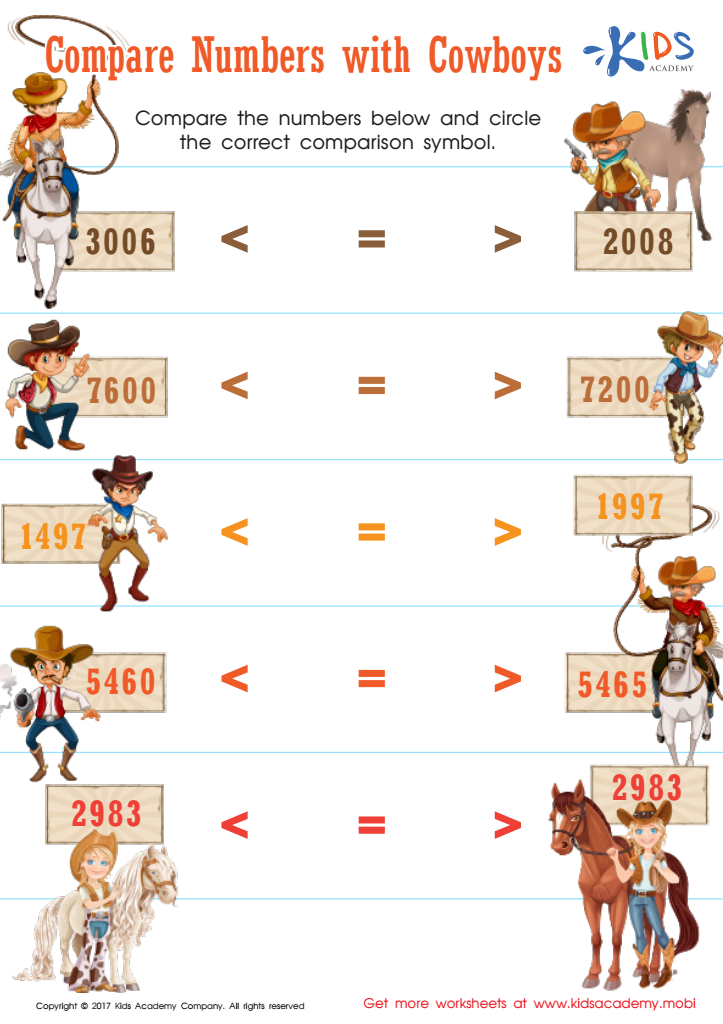
Compare Numbers Worksheet for 3rd Grade
 Assign to My Students
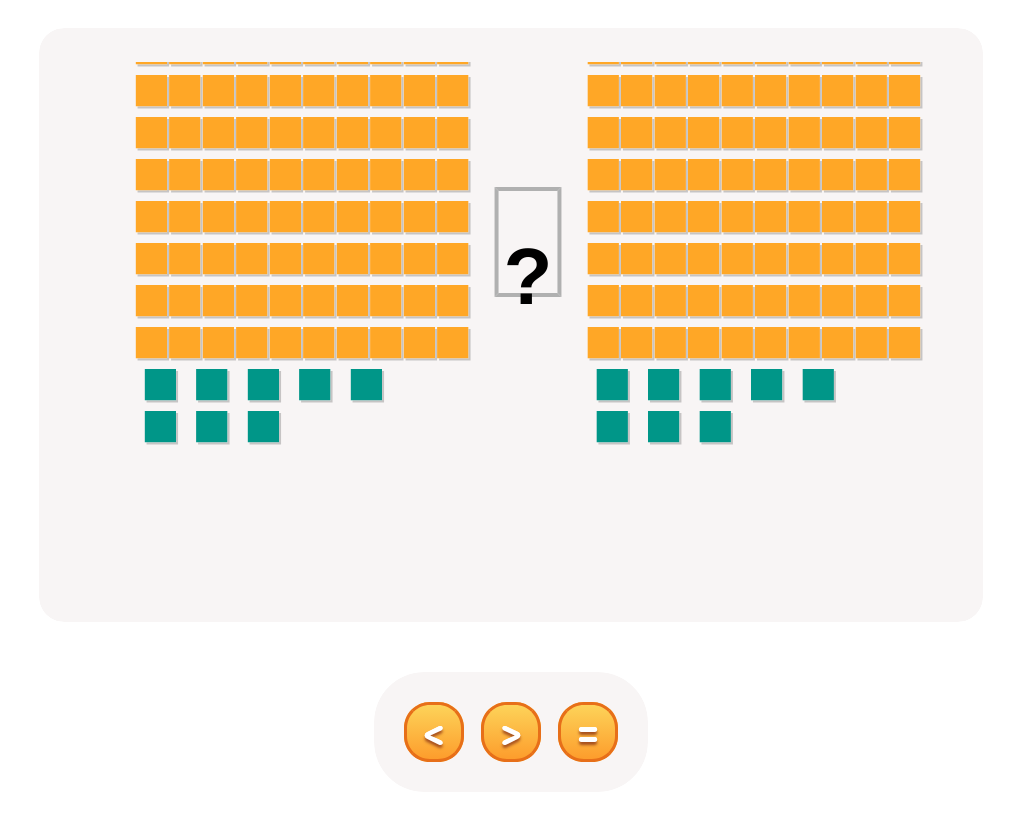

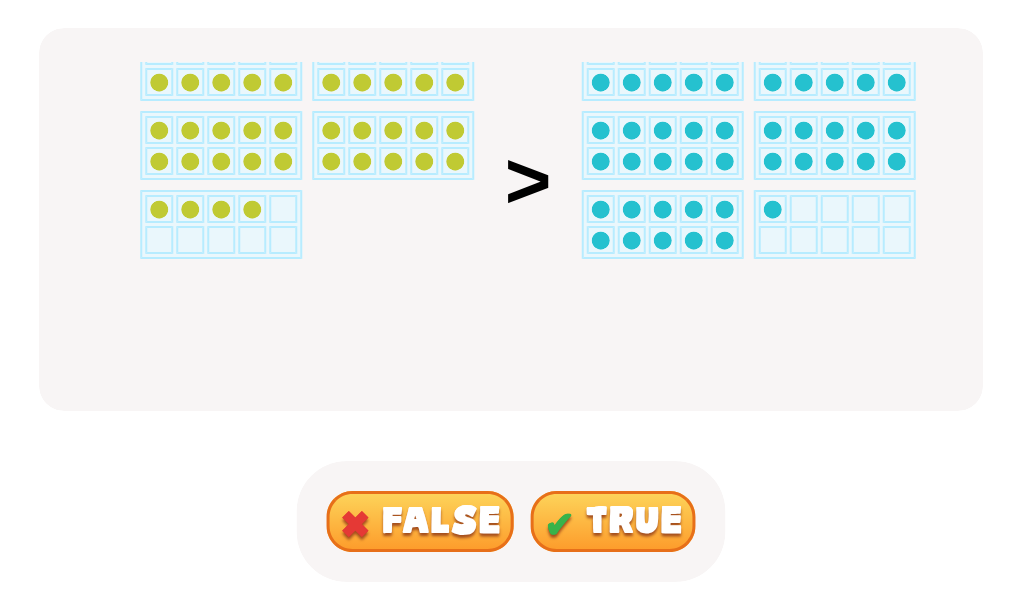
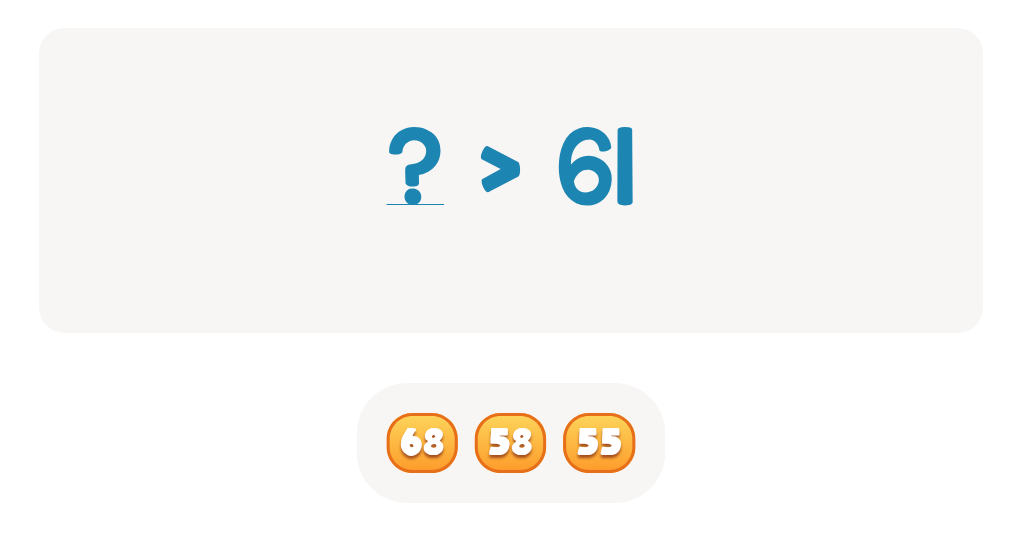
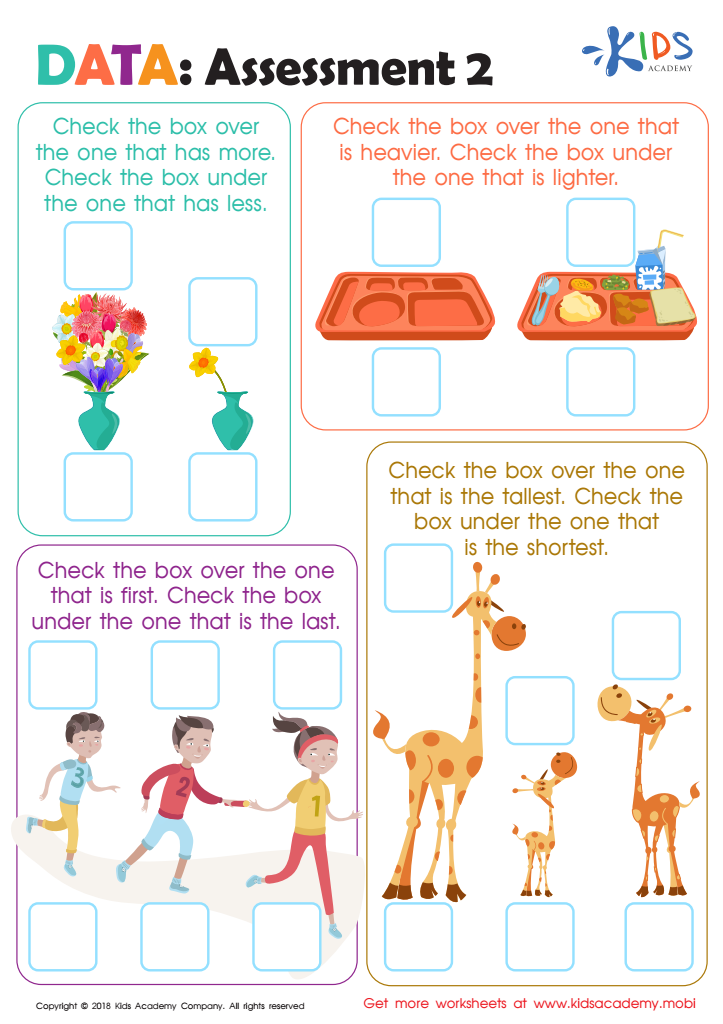
Data: Assessment 2 Worksheet
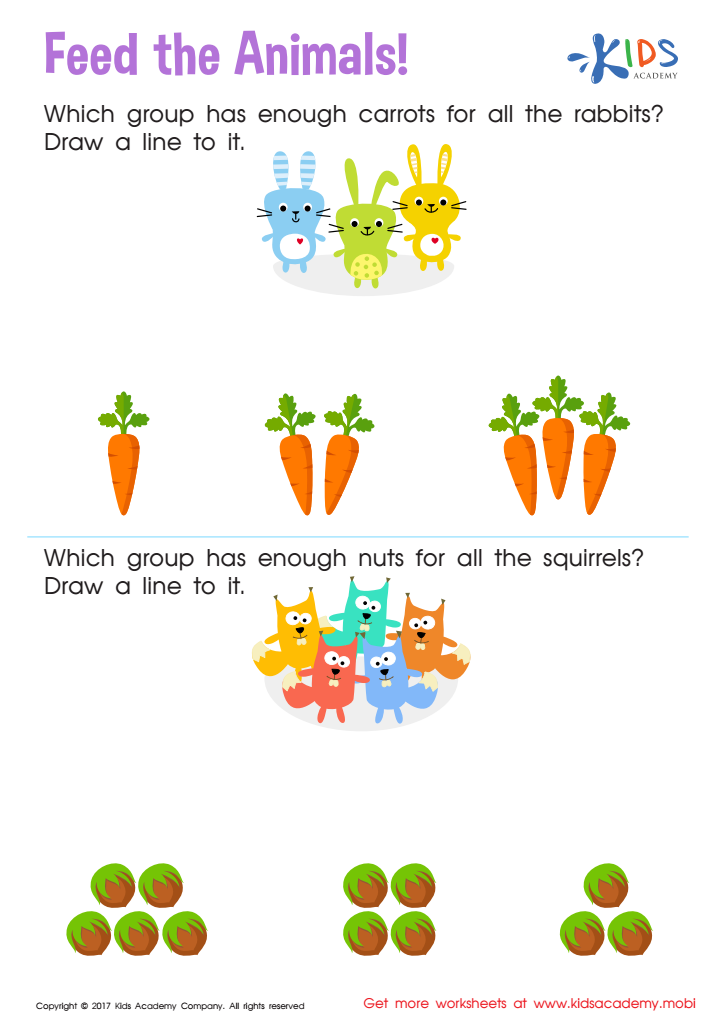
Count and Match: Feed the Animals Worksheet
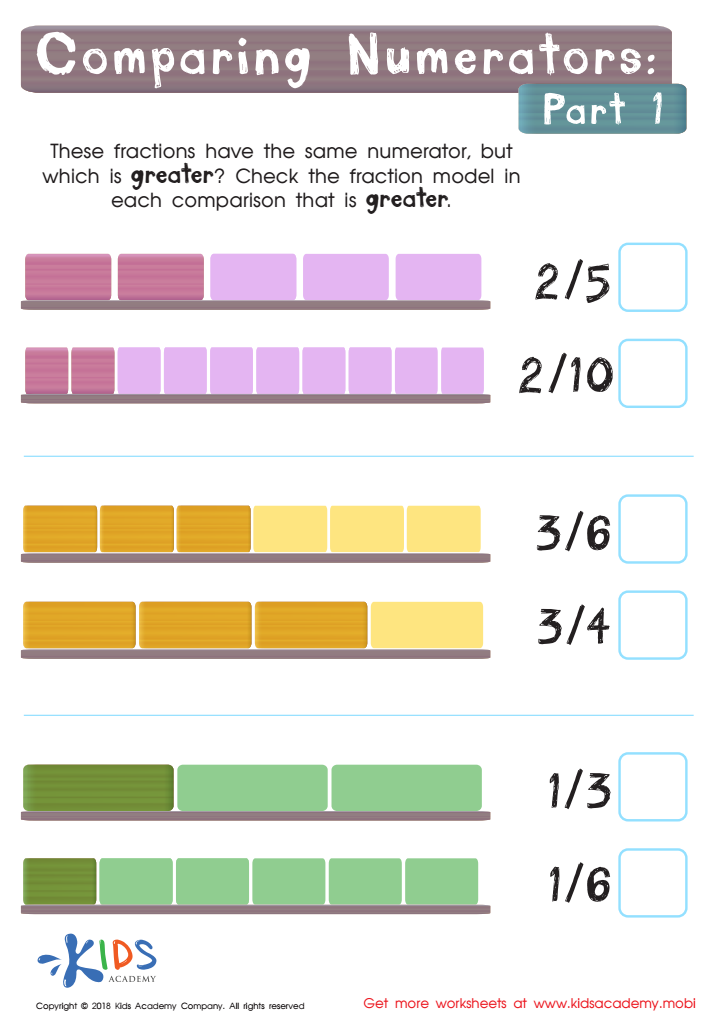
Comparing Numerators Part 1 Worksheet








Comparing numbers is a fundamental math skill crucial for children's cognitive development between the ages of 5 and 9. At this young age, brains are highly receptive to foundational concepts because they help build the groundwork for more advanced mathematical thinking. Understanding the concept of comparing numbers—knowing which numbers are greater, smaller, or equal—equips children with crucial problem-solving skills.
First, comparing numbers solidifies their understanding of numerical order and place value, which are key elements for accurately performing addition, subtraction, and later more complex operations like multiplication and division. These early skills translate directly into everyday contexts such as comparing quantities, identifying sequences, and making more informed decisions.
Moreover, mastering this concept boosts a child's confidence in using numbers, enhancing their academic performance not only in math but across all subjects. It trains them to pay attention to detail and fosters analytical thinking, encouraging them to look for patterns and relationships.
By encouraging children to compare numbers, parents and teachers help them develop a positive relationship with math, reduce math anxiety, and lay a solid educational foundation. This early investment in their numerical skills can result in more confident, capable, and curious learners as they progress through their schooling years.








