Graphs Worksheets for Ages 5-9 - Page 2
27 filtered results
-
From - To
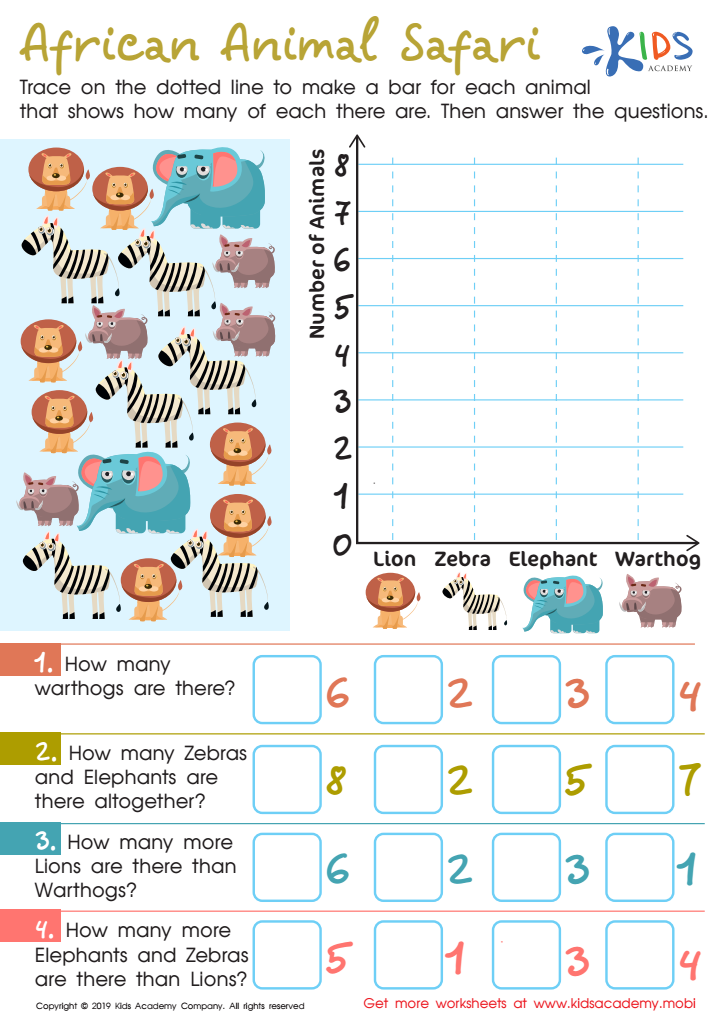
African Animal Safari Worksheet
 Assign to My Students
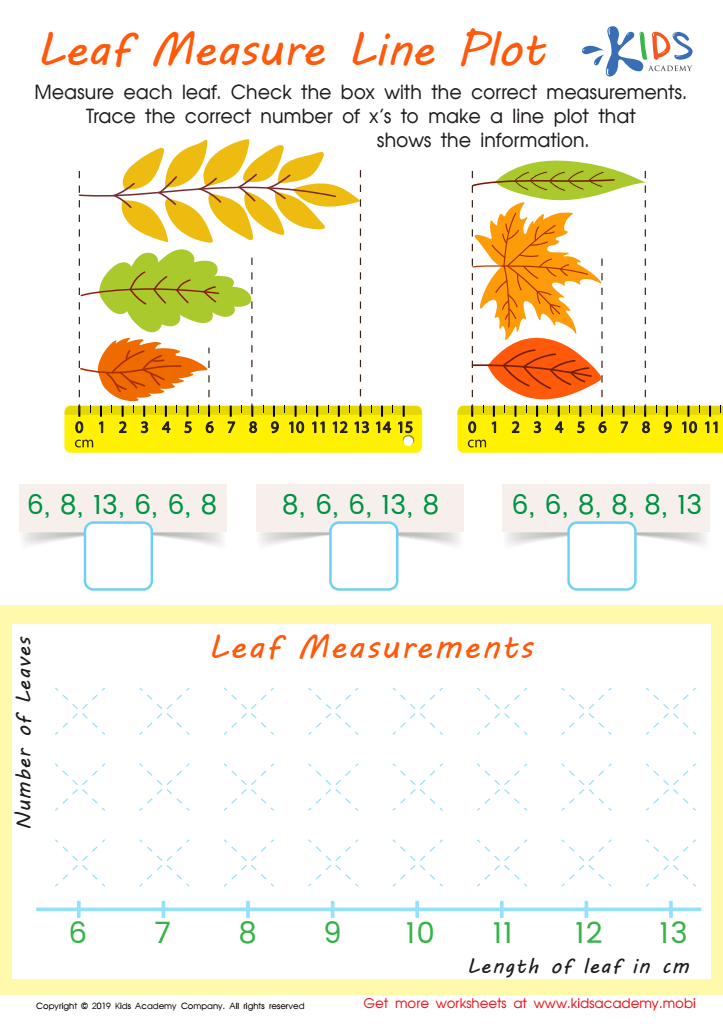
Leaf Measure Line Plot Worksheet
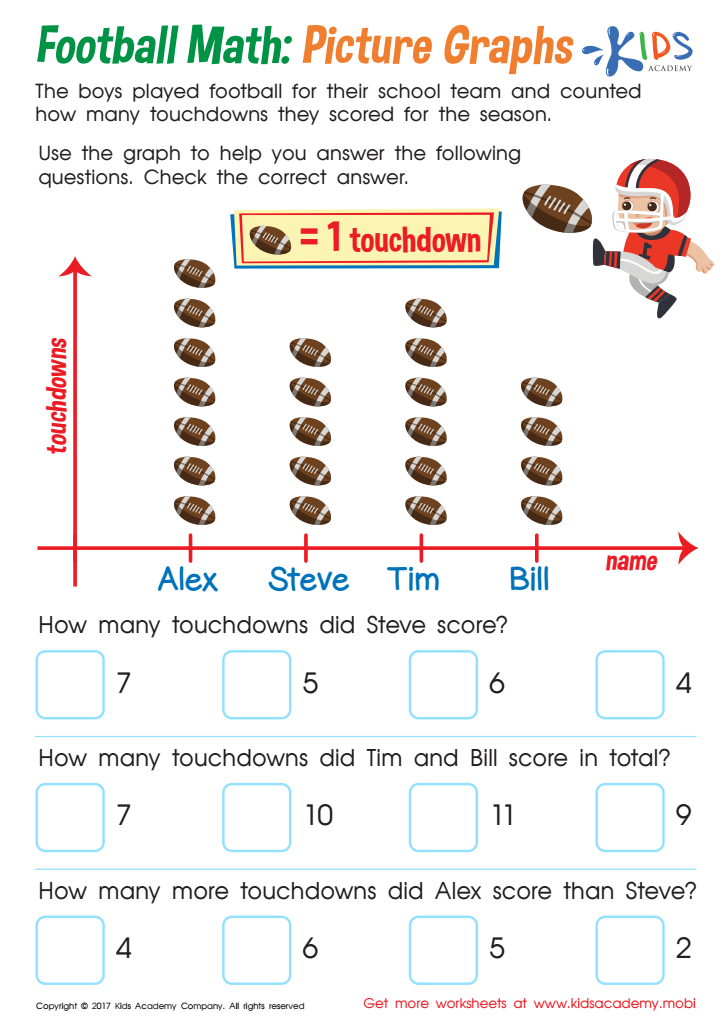
Football Math Worksheet








Graphs are essential tools for understanding and organizing information, making them vital for children aged 5-9. Parents and teachers should care about graphs because they introduce young learners to foundational concepts in mathematics and critical thinking early on. Graphs visually represent data, allowing children to see relationships and patterns that may not be obvious in text alone.
Learning to interpret graphs helps children develop essential skills such as analysis, prediction, and reasoning. It fosters curiosity about the world around them, encouraging students to ask questions based on visual data representations. Moreover, interacting with graphs serves as an engaging way to enhance literacy in mathematics, enhancing overall learning experiences.
Furthermore, as children explore various types of graphs—such as bar graphs, pie charts, and pictographs—they learn to communicate their ideas and findings effectively. This skill is crucial for their future education and daily life, where data-driven decision-making is increasingly relevant.
By incorporating graph activities in classrooms or at home, parents and teachers can provide children with a valuable literacy tool, nurturing their ability to understand and interpret information clearly. Ultimately, caring about graphs is about equipping young learners with skills that will benefit them throughout their academic journeys and beyond.








