Understanding tens Numbers Worksheets for Ages 5-9
4 filtered results
-
From - To
Discover the essential "Understanding Tens Numbers Worksheets" designed for children aged 5-9. These engaging printables help young learners grasp the concept of tens in a fun and interactive way. By reinforcing number recognition, counting skills, and basic math principles, our worksheets make learning accessible and enjoyable. Students can explore different activities that involve grouping, visual representation, and real-life applications of tens, promoting a strong foundation for future math success. Perfect for both classroom and home learning, these resources empower kids to build confidence in their mathematical skills while cultivating a lifelong love for learning. Explore the exciting world of numbers today!
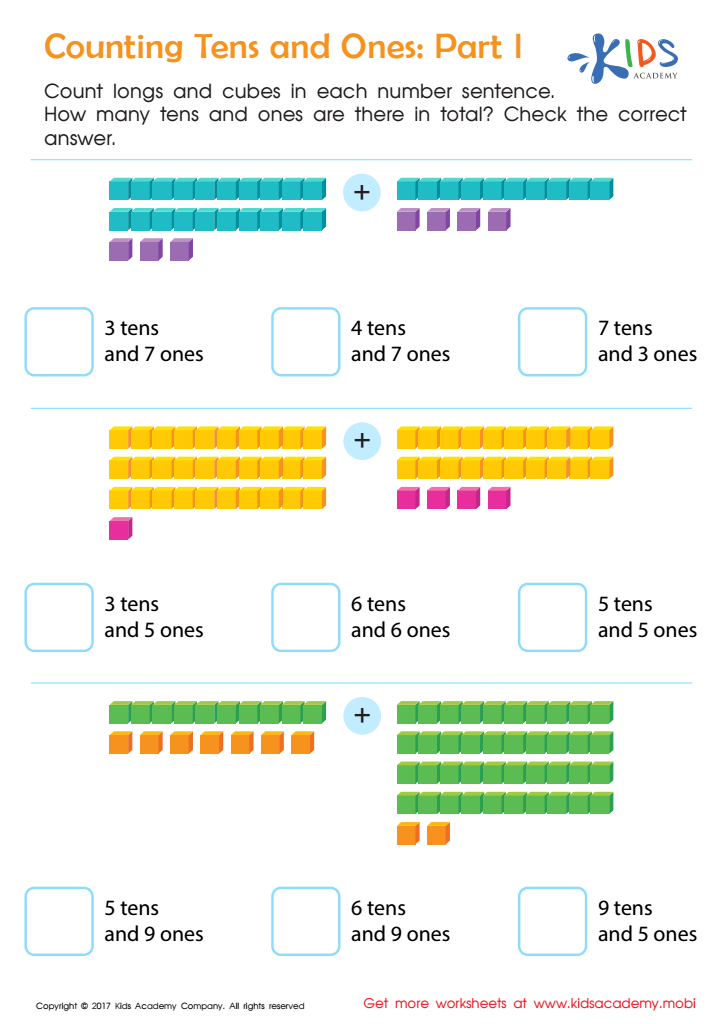
Counting Tens and Ones: Part 1 Worksheet
 Assign to My Students
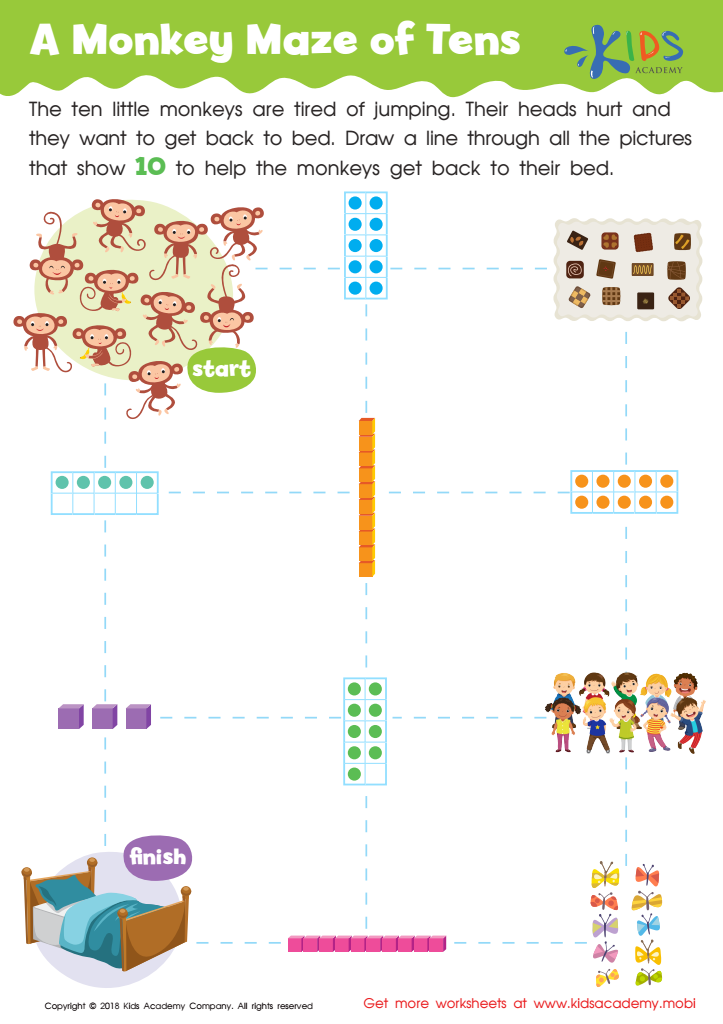
A Monkey Maze of Tens Worksheet
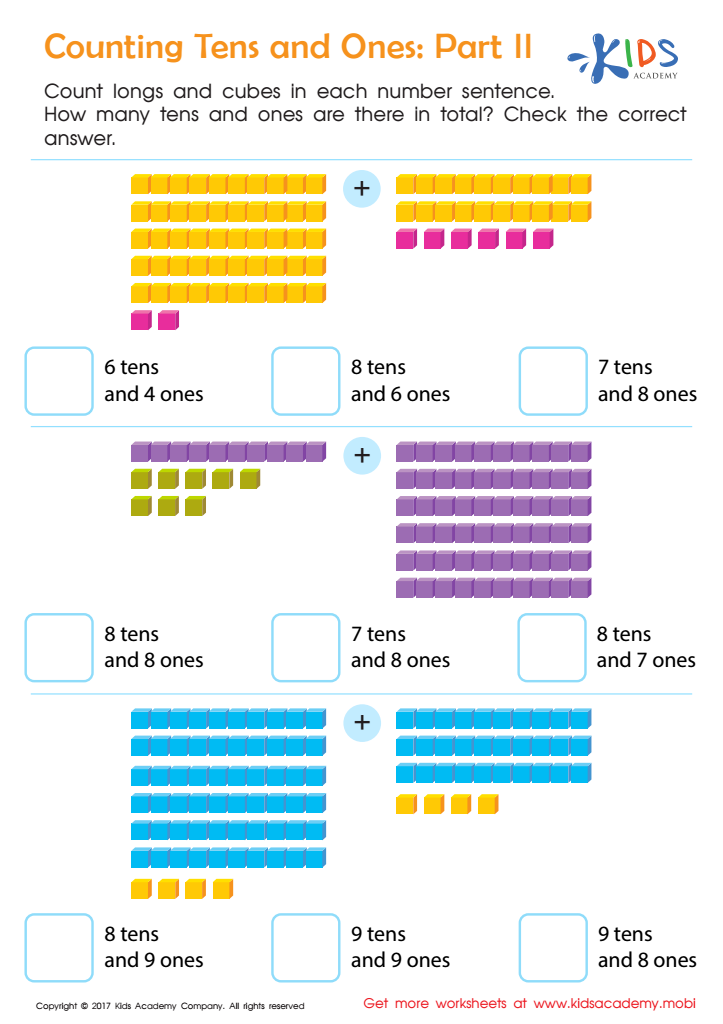
Counting Tens and Ones: Part 2 Worksheet
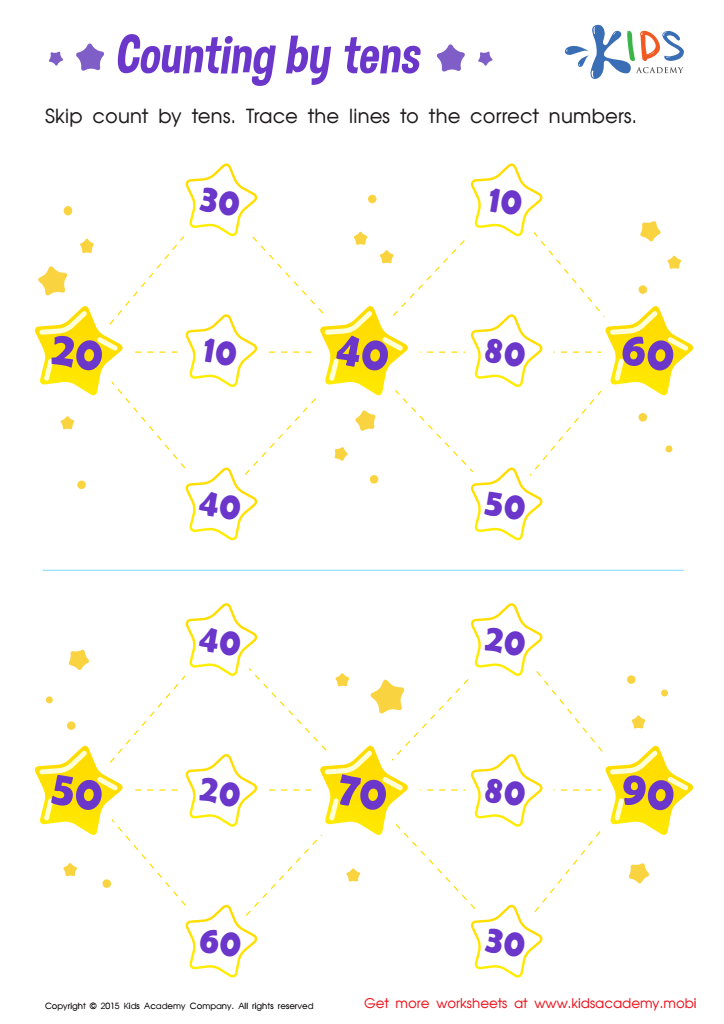
Learn Dozens: Counting by Tens Printable








Understanding tens numbers is crucial for children aged 5-9 as it lays the foundation for numerical literacy, which is essential in everyday life and future academic success. Mastery of tens allows children to grasp the concept of place value, enhancing their ability to understand larger numbers. When children learn to group and count by tens, they develop strong mental math skills, which aids in quick calculations and problem-solving.
Moreover, a solid understanding of tens helps children recognize patterns in numbers, promoting logical thinking and enhancing their overall number sense. This comprehension is vital when they encounter more complex math concepts in later grades.
For parents and teachers, fostering an understanding of tens can lead to increased confidence in math, reducing anxiety around the subject. Engaging young learners with hands-on activities involving tens, such as using blocks or drawings, makes learning enjoyable and memorable. This engagement not only reinforces mathematical concepts but also fosters a positive attitude towards math. As children grasp these foundational skills early, they become more adept at tackling varied mathematical challenges, setting them on a path for academic success and a lifelong appreciation for mathematics.








