Hand-eye Coordination Addition & Subtraction Worksheets for Ages 6-7
14 filtered results
-
From - To
Enhance your child's learning experience with our engaging Hand-eye Coordination Addition & Subtraction Worksheets designed specifically for ages 6-7. These worksheets integrate essential math skills with fun activities that promote hand-eye coordination, helping young learners develop essential motor skills while practicing addition and subtraction. Each worksheet features colorful illustrations, interactive tasks, and diverse problem types to keep children motivated and excited about math. Ideal for home-schooling or classroom use, our resources provide a perfect blend of learning and play. Equip your child with the skills they need for academic success while making math a fun and enjoyable experience! Explore our collection today!
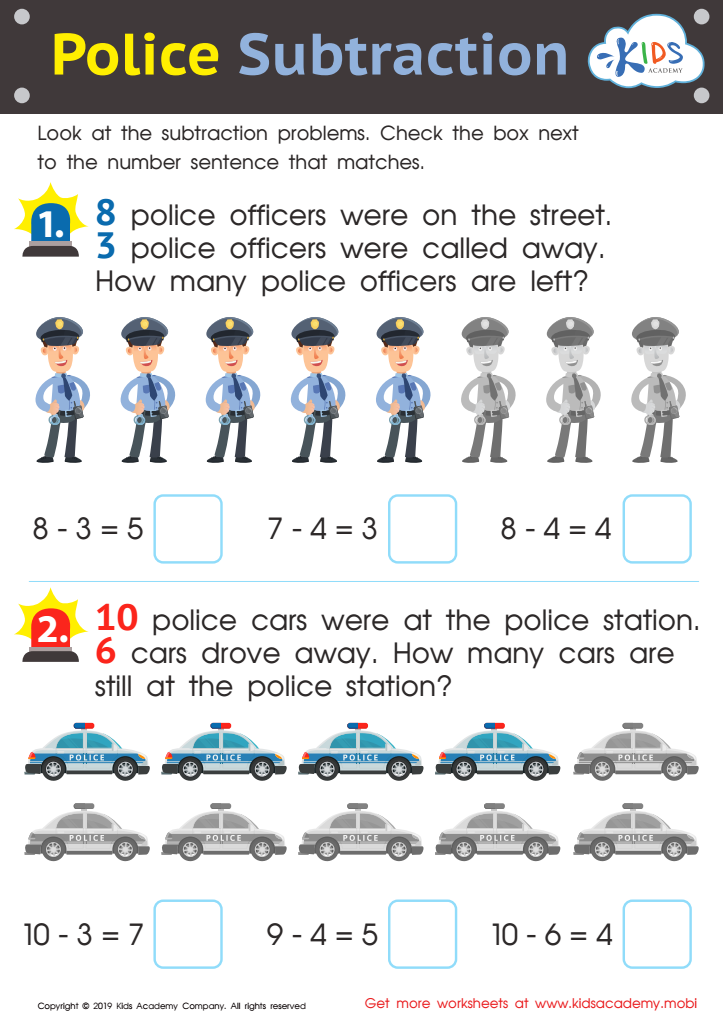
Police Subtraction Worksheet
 Assign to My Students
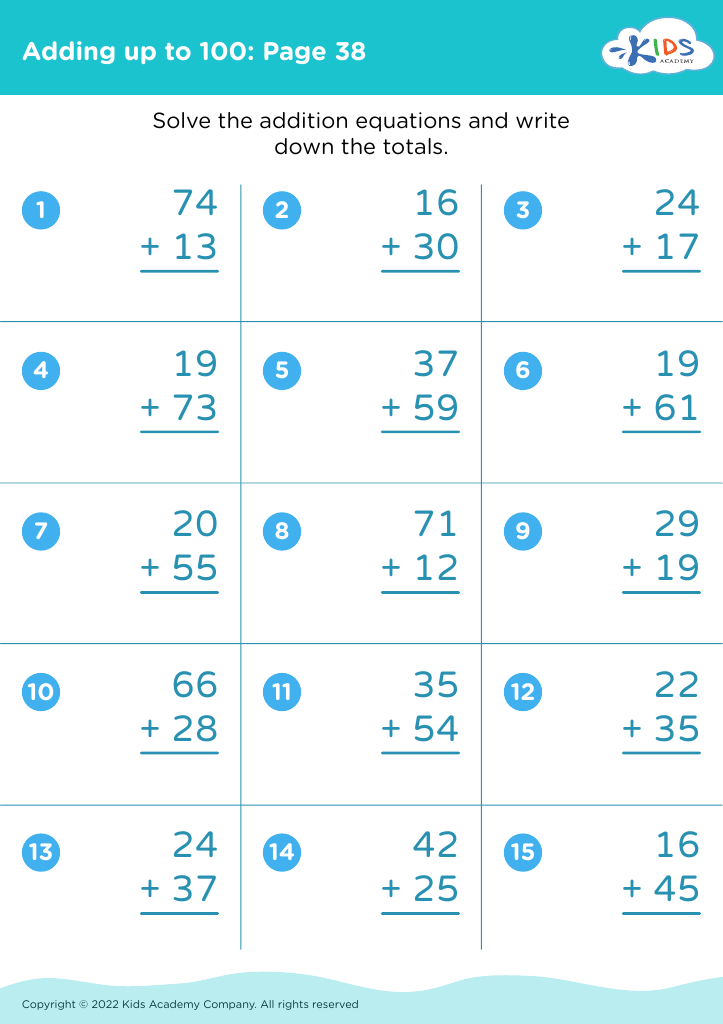
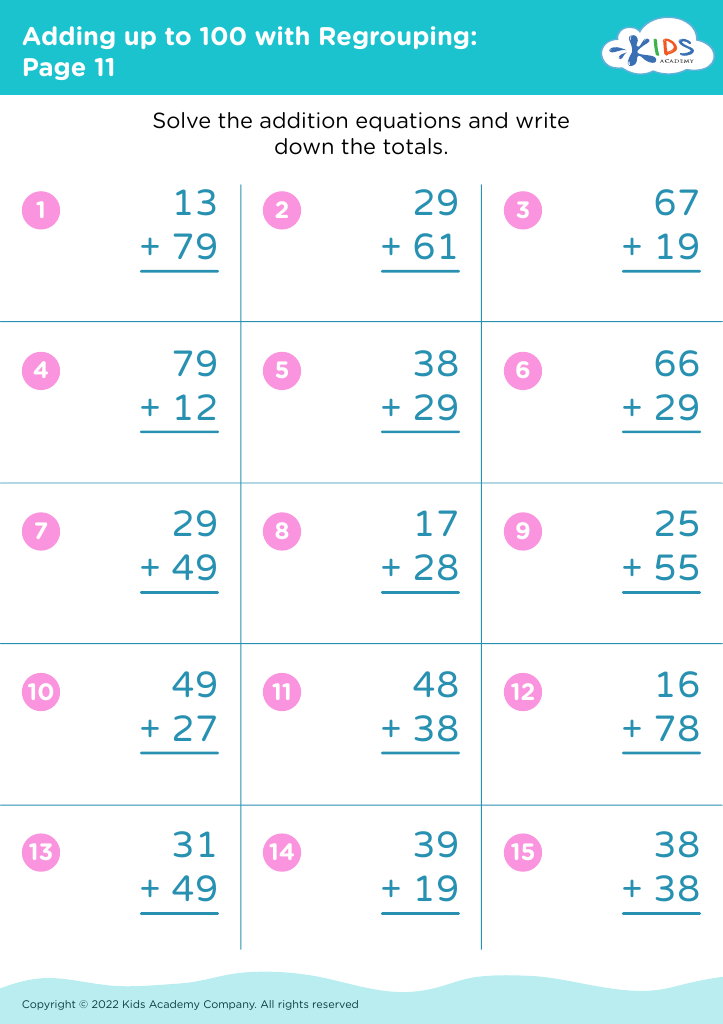
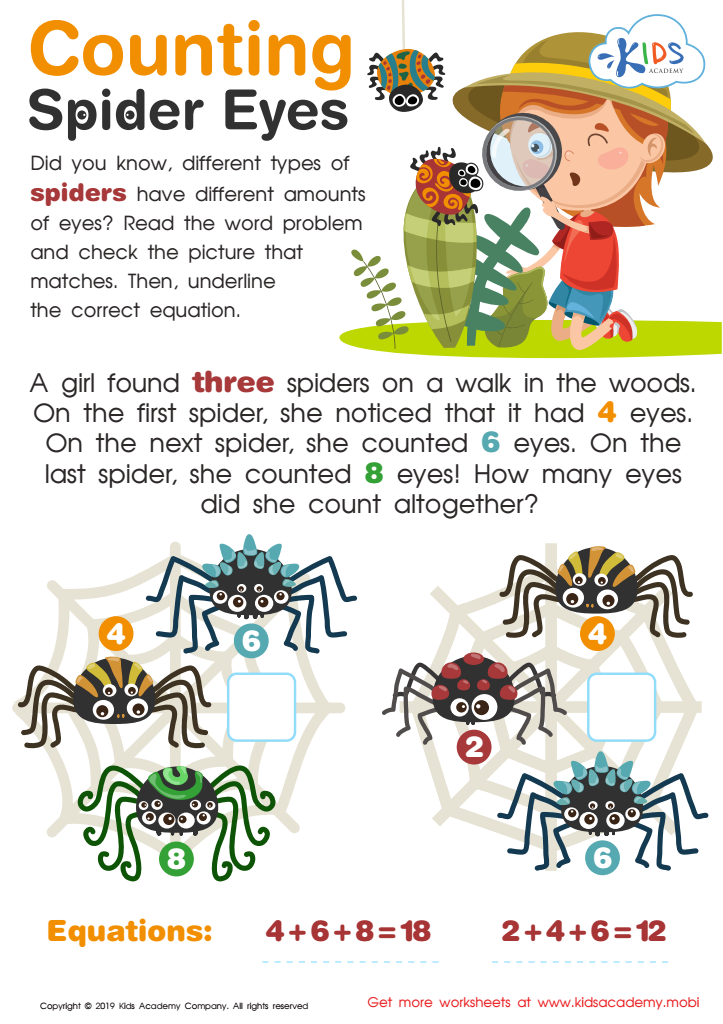
Counting Spider Eyes Worksheet
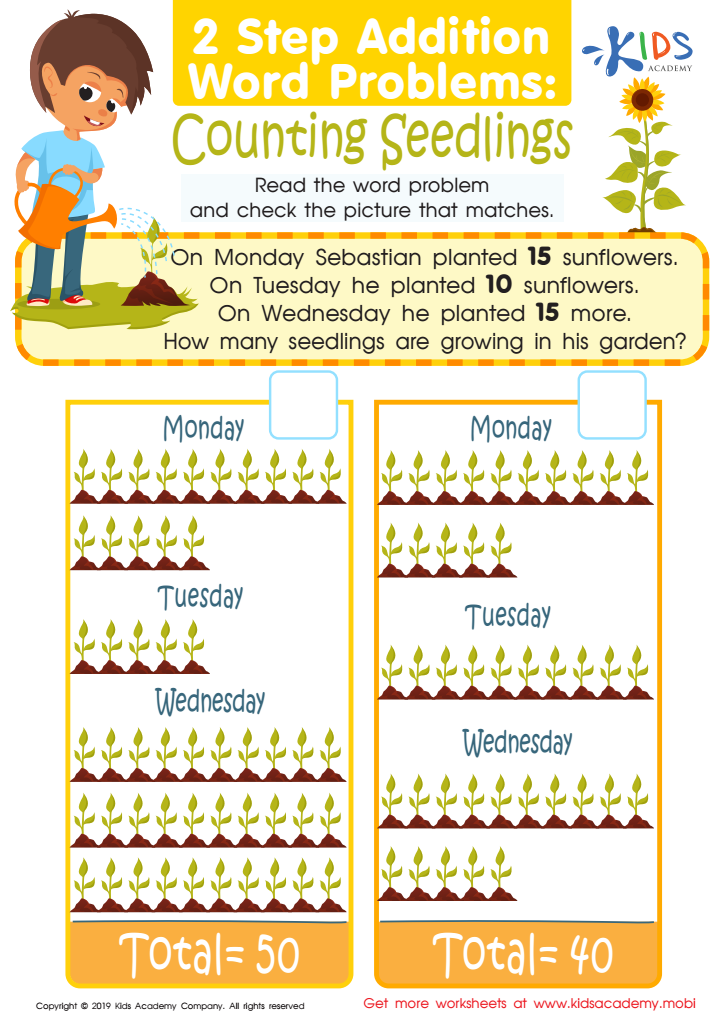
Counting Seedlings Worksheet
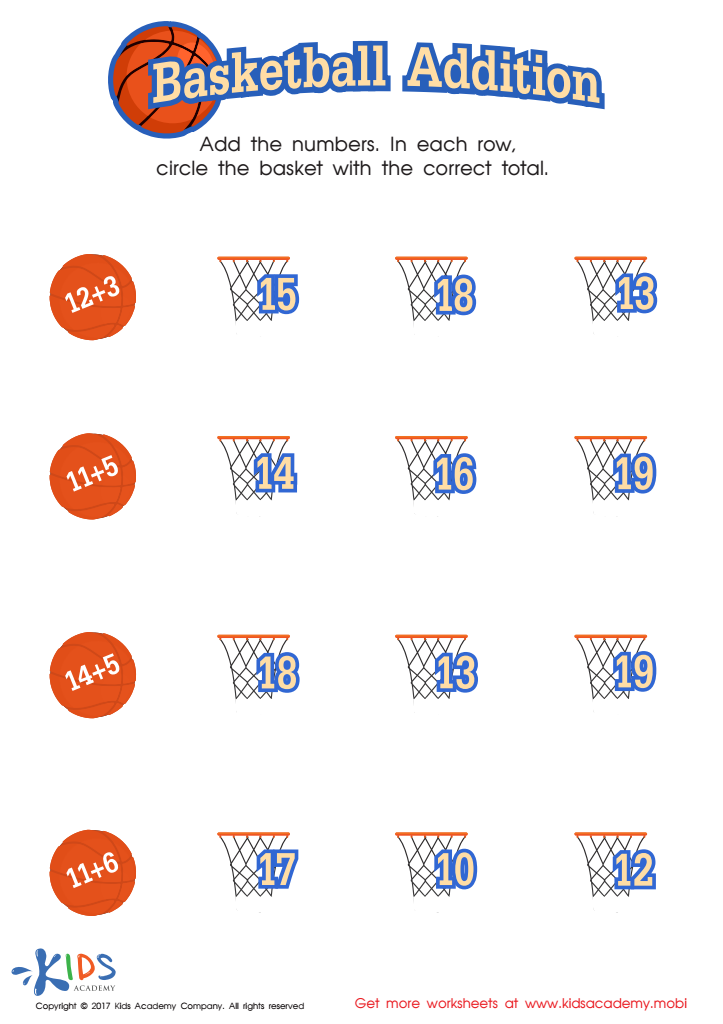
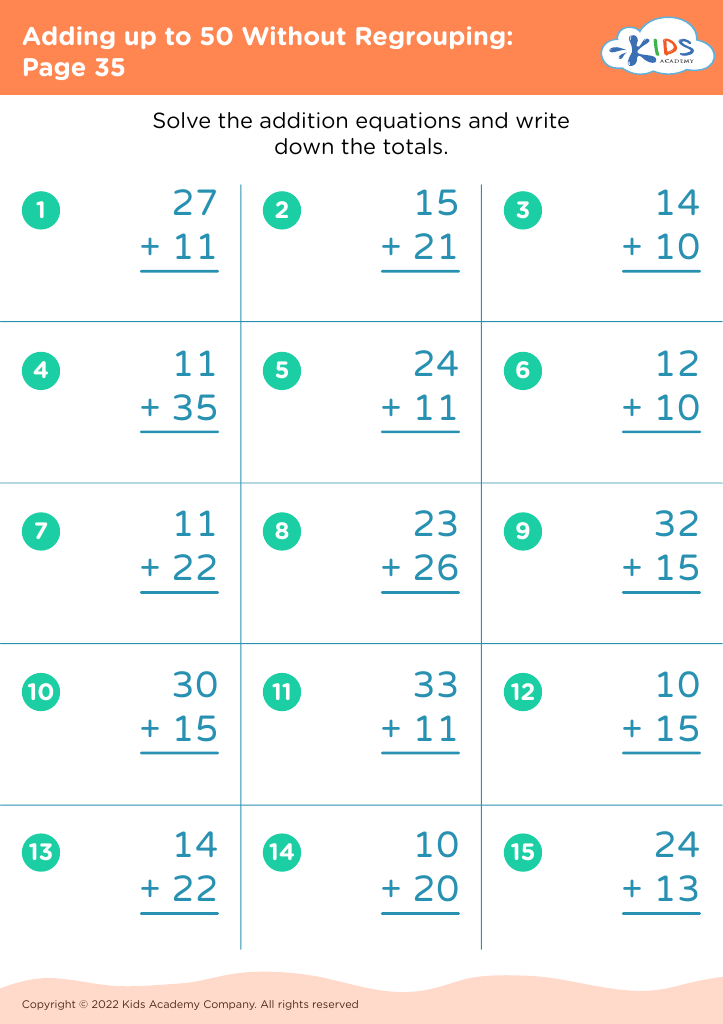
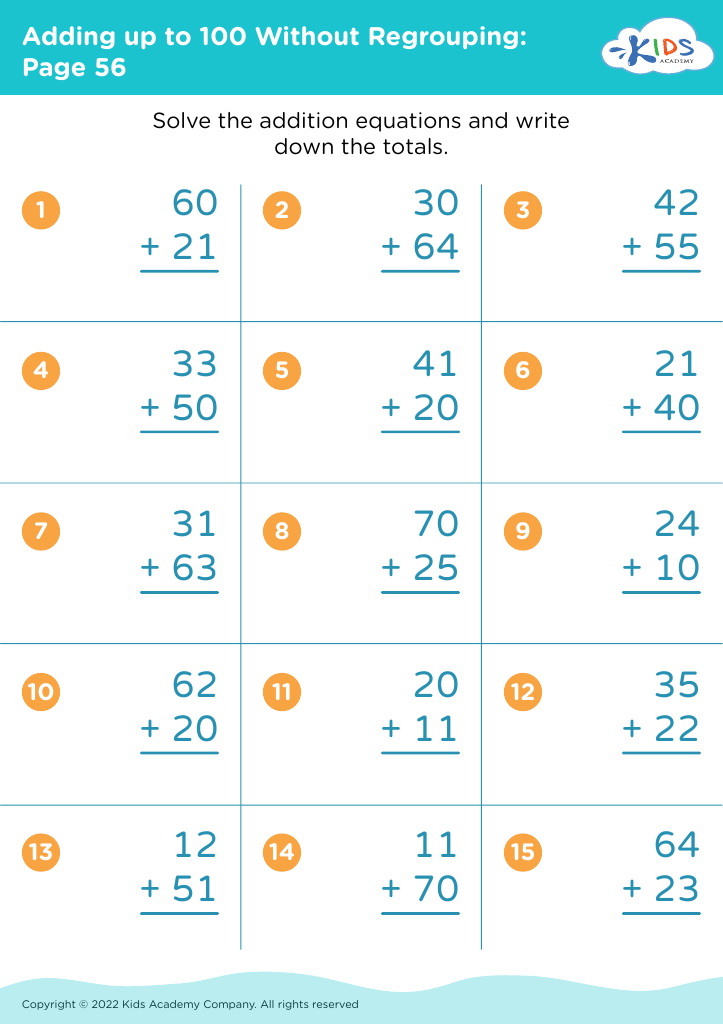
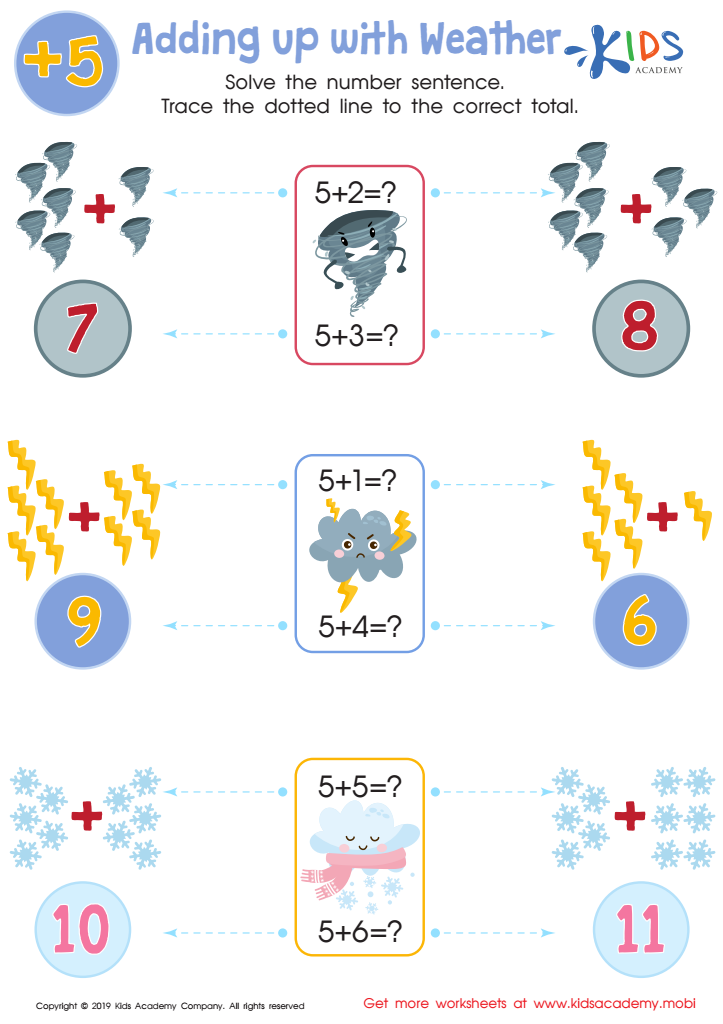
Adding up With Water Worksheet
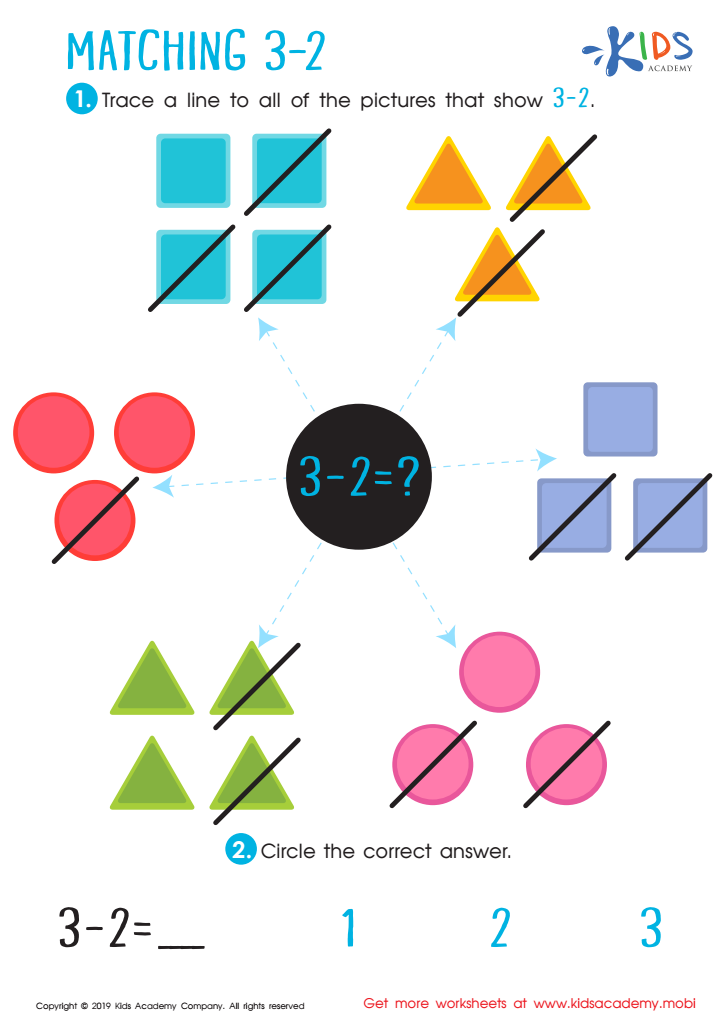
Matching 3-2 Worksheet
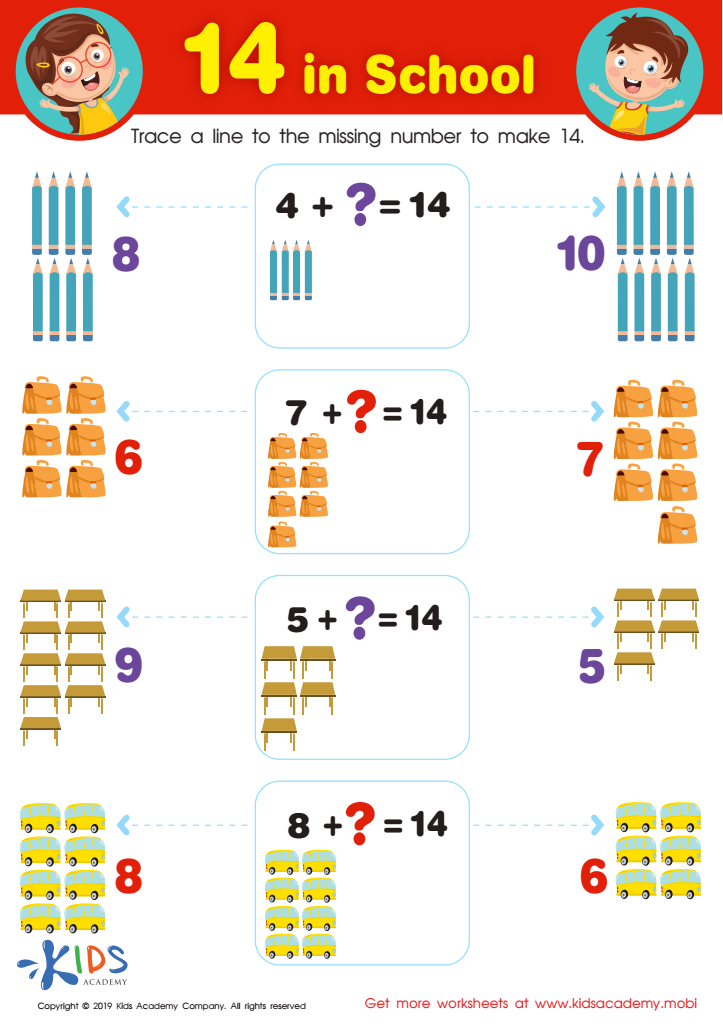
14 in School Worksheet
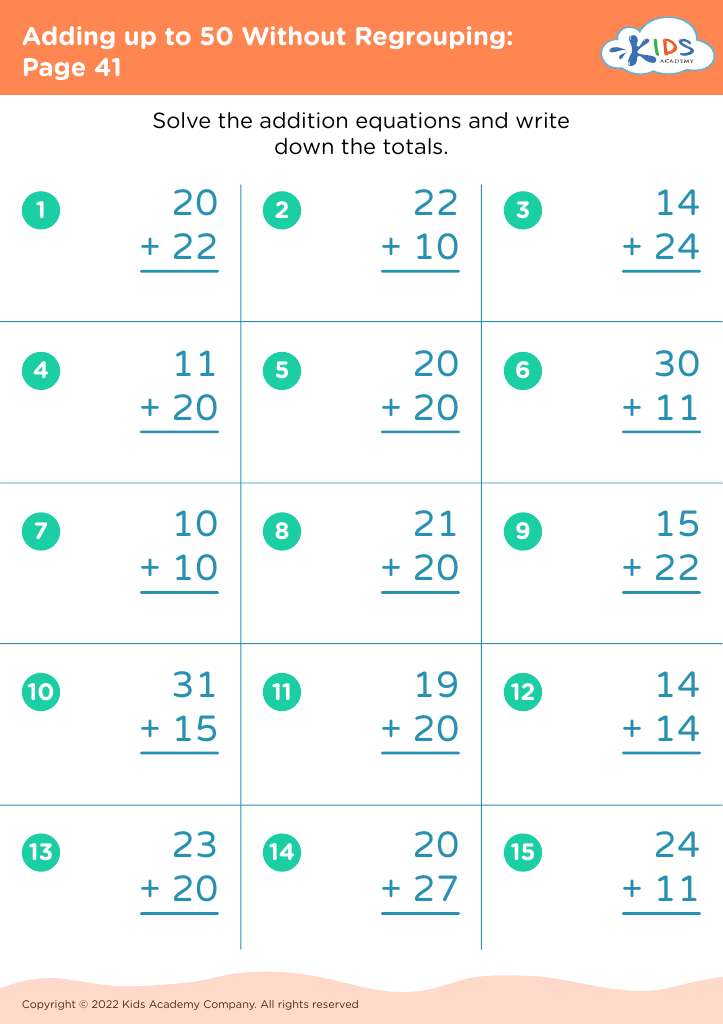








Hand-eye coordination and the development of basic math skills, such as addition and subtraction, are crucial for children aged 6-7. At this age, children are developing foundational skills that will support their future learning and daily activities. Strong hand-eye coordination contributes to a child’s ability to perform physical tasks, such as writing, drawing, and manipulating tools or objects. This coordination enhances fine motor skills, which are essential for academic success and self-sufficiency.
Moreover, incorporating hand-eye coordination activities into math lessons helps engage young learners. When children physically interact with numbers—like counting objects or using manipulatives—they can visualize mathematical concepts more concretely. This multi-sensory approach reinforces their understanding, leading to better retention and fluency in basic math operations.
Additionally, fostering these skills encourages a child’s confidence, making them more willing to participate in classroom activities and tackle challenges. Parents and teachers play a vital role in creating enriching environments where cognitive and physical skills practice seamlessly integrate, instilling a love for learning in children. Emphasizing hand-eye coordination alongside math skills not only prepares children for more complex subjects in the future but also develops essential life skills that transcend academic boundaries.








