Problem-Solving Skills Reading Worksheets for Ages 6-7 - Page 2
29 filtered results
-
From - To
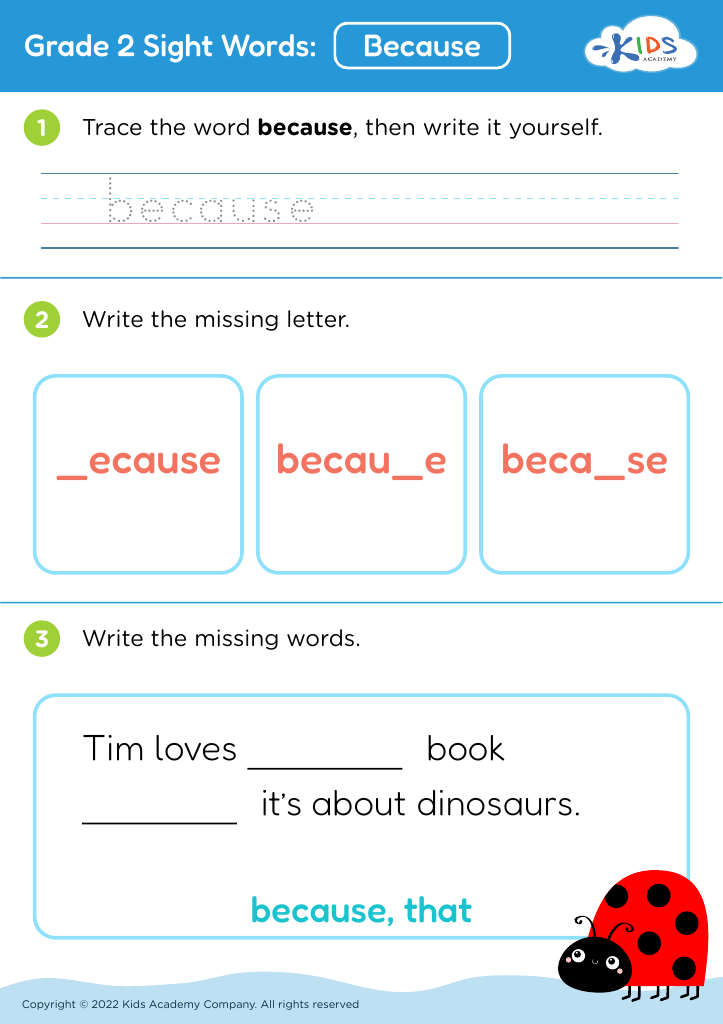








Parents and teachers should prioritize problem-solving skills in reading for children ages 6-7 because these skills are foundational for academic success and everyday life. At this age, children are developing critical thinking abilities that facilitate comprehension and analytical reasoning. By encouraging problem-solving during reading activities, educators can help children learn to identify the main idea, understand cause-and-effect relationships, and draw inferences—essential strategies for making sense of texts.
Additionally, fostering problem-solving skills in reading promotes engagement and curiosity. When children confront challenges in a story, their attempts to resolve these can lead to deeper discussions and improved comprehension. This not only nurtures a love for reading but also builds resilience, as they learn that struggles can lead to discoveries and solutions.
Moreover, these skills are transferable; they help with math, science, social studies, and real-world situations. Teaching children how to approach problems rationally empowers them to tackle challenges autonomously. Ultimately, by nurturing problem-solving skills through reading, parents and teachers equip children with valuable tools for lifelong learning, critical thinking, and confident decision-making, establishing a strong foundation for their future academic and personal journeys.








