
Word identification Reading Worksheets for Ages 6-7
5 filtered results
Difficulty Level
Grade
Age
-
From - To
Subject
Activity
Standards
Unlock the magic of reading with our Word Identification Reading Worksheets for Ages 6-7! Tailored to young learners, these engaging printable worksheets help children enhance their word recognition, vocabulary, and reading comprehension skills. Each worksheet is thoughtfully designed to make word identification a fun and interactive experience, covering a wide range of topics to keep kids excited about learning. Perfect for both classroom and home use, our worksheets provide the essential practice needed to boost reading confidence and fluency. Explore our collection and watch your child become a more proficient and enthusiastic reader!
Favorites
With answer key
Interactive
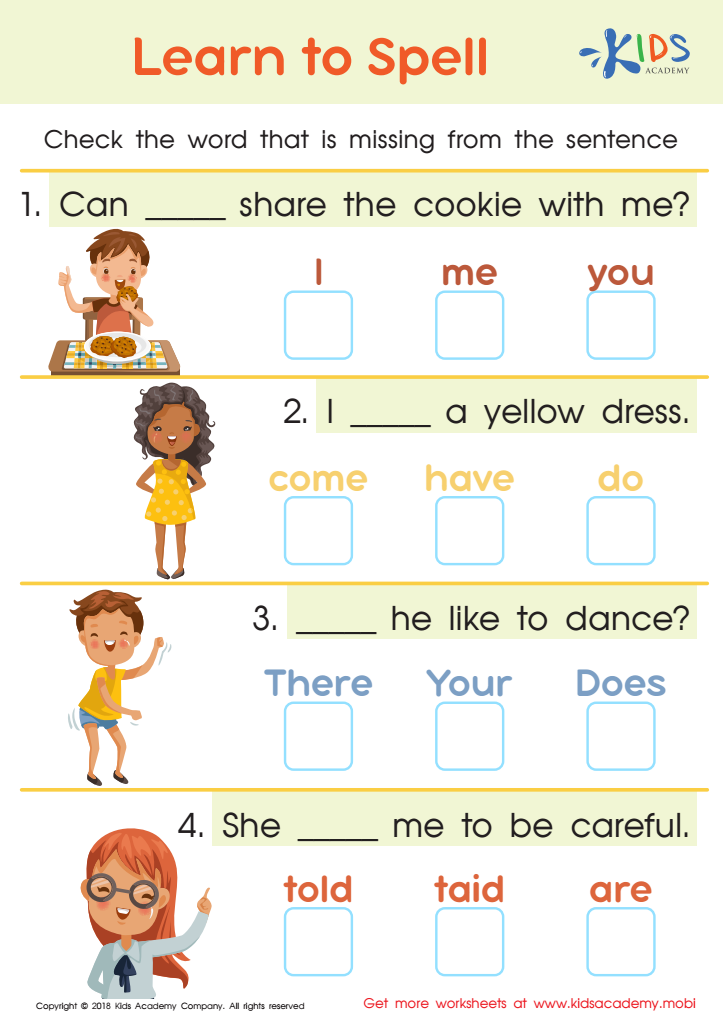
Learn to Spell Worksheet
Help sharpen spelling skills with a simple worksheet. Read sentences aloud and show which word is missing. Ask students to pick the correct word from the options. Ensure they check the missing word for accuracy.
 Assign to My Students
Learn to Spell Worksheet
Worksheet
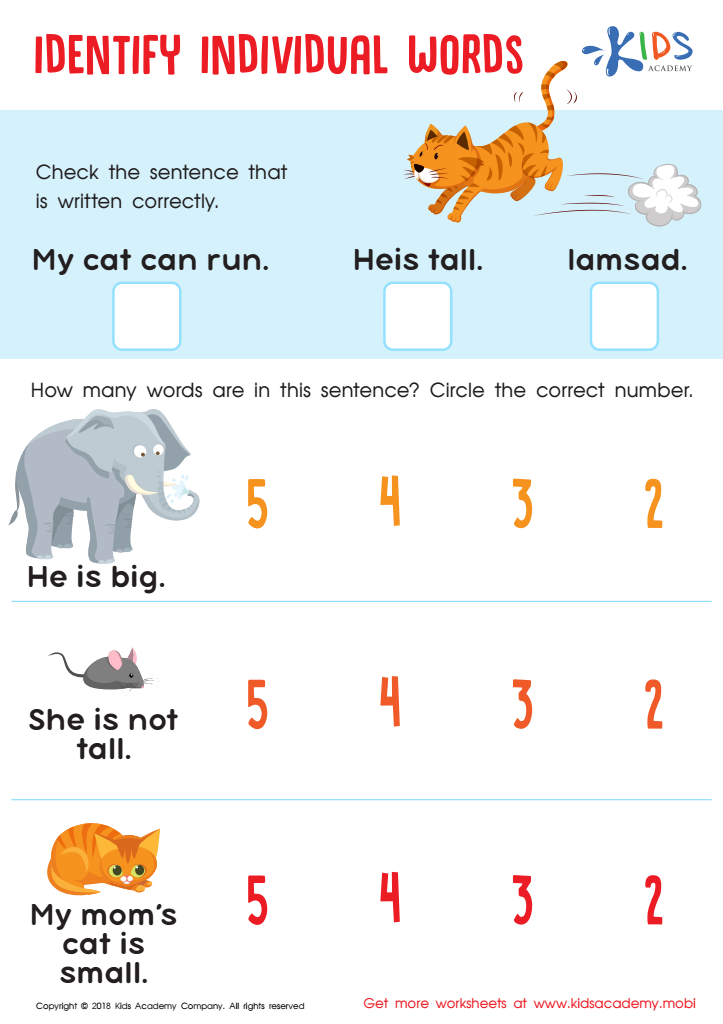
Identify Individual Words Worksheet
Does your child have trouble constructing sentences? Check out this worksheet! It will help them identify words that make up sentences and assess how well they can read and answer questions. The first part tests how well they can recognize a written sentence. The second part has them read questions and circle the correct number of words. Give it a try!
Identify Individual Words Worksheet
Worksheet
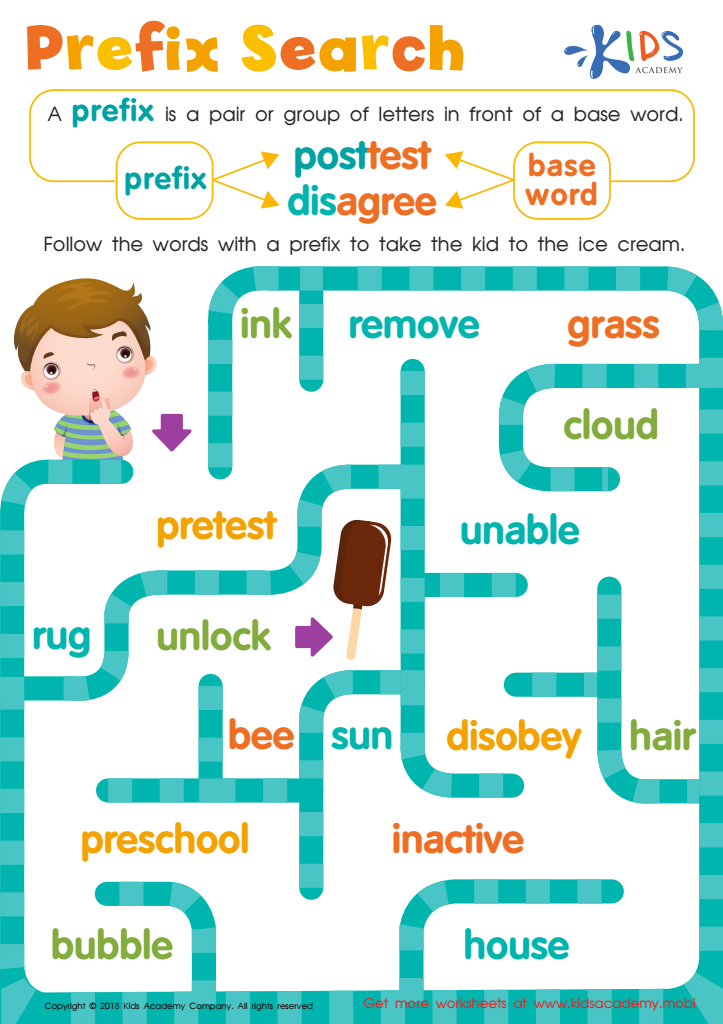
Reading: Prefix Search Worksheet
Maze your way through prefixes! This worksheet helps students practice reading new words with a prefix and figuring out the base word. An understanding of prefixes gives students the skills to comprehend new words. A fun and useful activity for the reading classroom!
Reading: Prefix Search Worksheet
Worksheet
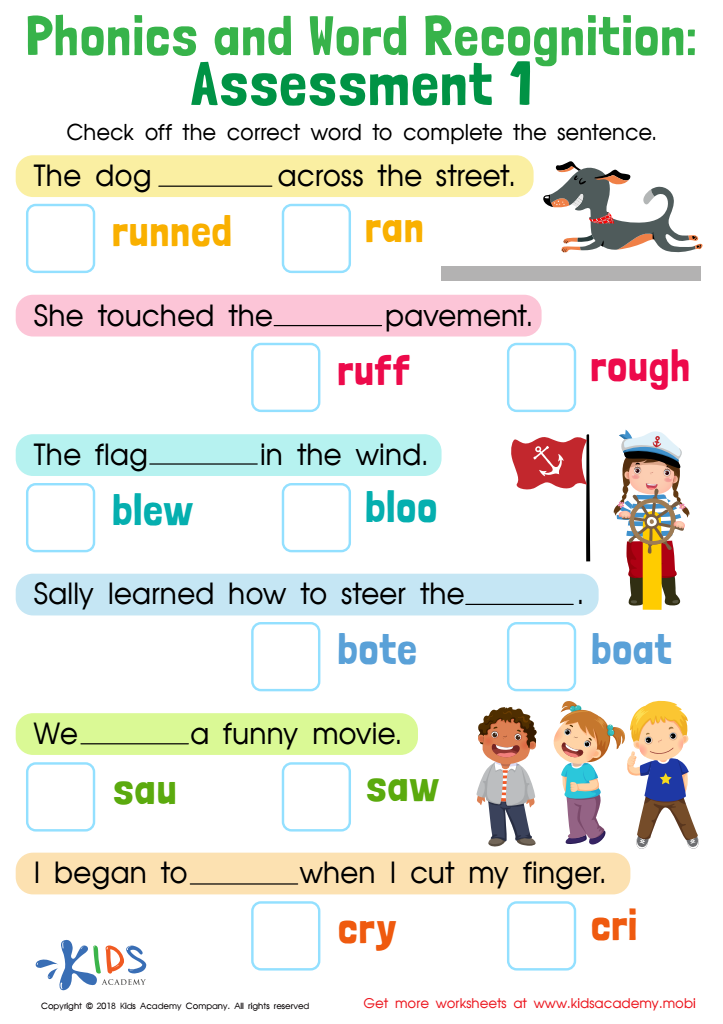
Phonics and Word Recognition: Assessment 1 Worksheet
This worksheet tests phonetics and word recognition. Students should be familiar with past tense verbs. Read incomplete sentences, then read multiple options and help students select the correct one.
Phonics and Word Recognition: Assessment 1 Worksheet
Worksheet
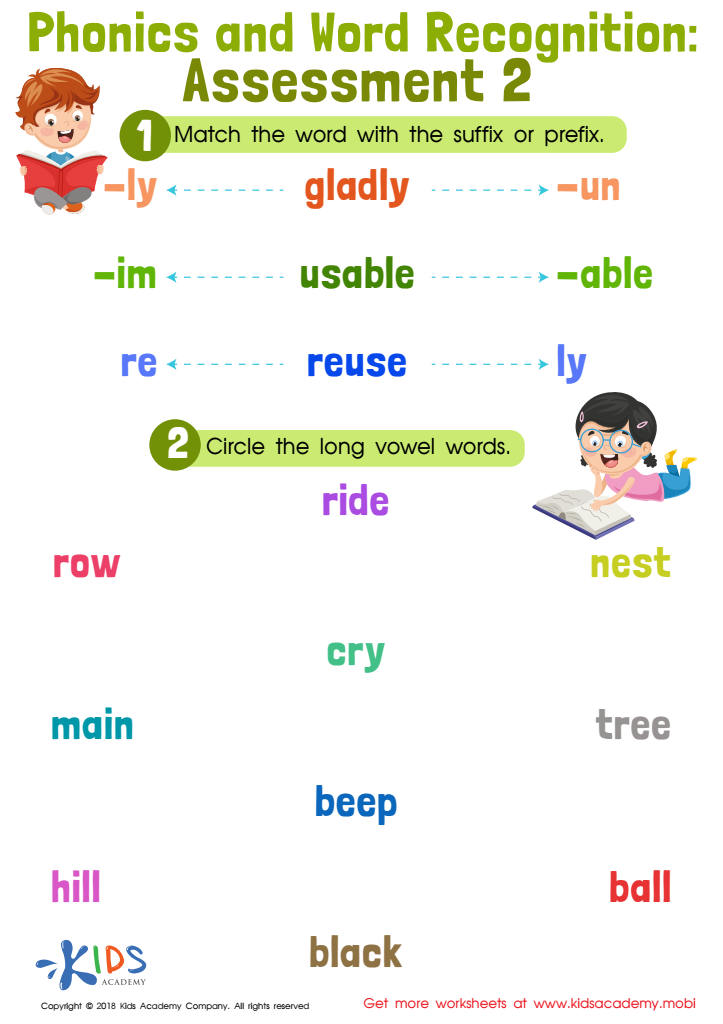
Phonics and Word Recognition: Assessment 2
Give kids common examples of suffixes and prefixes, such as "un-," "unhappy," "ness," "happyness." Ask them to match each word in the word recognition exercise to the correct suffix or prefix. Test phonetic understanding by having them circle the long vowel sounds.
Phonics and Word Recognition: Assessment 2
Worksheet
Join Kids Academy for Free
Who is primarily going to use this learning content?







Word identification is a critical skill for children aged 6-7 as it forms the foundation of their reading abilities. During these early academic years, children transition from recognizing and naming letters to understanding that letters combine to form words that carry meaning. This stage is essential because fluent word recognition frees cognitive resources, enabling children to focus on comprehending content rather than decoding each word laboriously.
Parents and teachers play a vital role in supporting word identification because early success in reading strongly influences later academic performance, self-esteem, and a lifelong love of learning. Effective word identification allows children to read more quickly and with greater accuracy, making reading a more enjoyable and less frustrating experience. When children struggle with recognizing words, they may become disengaged, leading to a reluctance to read and potential setbacks in other subjects that require reading skills, such as math, science, and social studies.
Providing children with a strong foundation in word identification can prevent future reading difficulties, support the development of vocabulary and language skills, and promote overall academic success. Engaging children in activities such as phonics games, shared reading, and word recognition exercises can make the learning process both effective and enjoyable, setting them on a path to proficiency and a lifetime of reading enjoyment.








