Improving comprehension Science Worksheets for Ages 6-7
3 filtered results
-
From - To
Enhance your child's scientific understanding with our "Improving Comprehension Science Worksheets for Ages 6-7." These engaging worksheets, designed for early learners, help build foundational science knowledge through interactive reading passages and related exercises. Each worksheet aims to develop critical thinking and comprehension skills, encouraging curiosity about the natural world. Perfect for both home and classroom use, our materials are tailored to captivate young minds, making learning science enjoyable and effective. Visit Kids Academy to give your child a head start in scientific literacy with our expertly crafted worksheets, supporting their journey towards academic success.
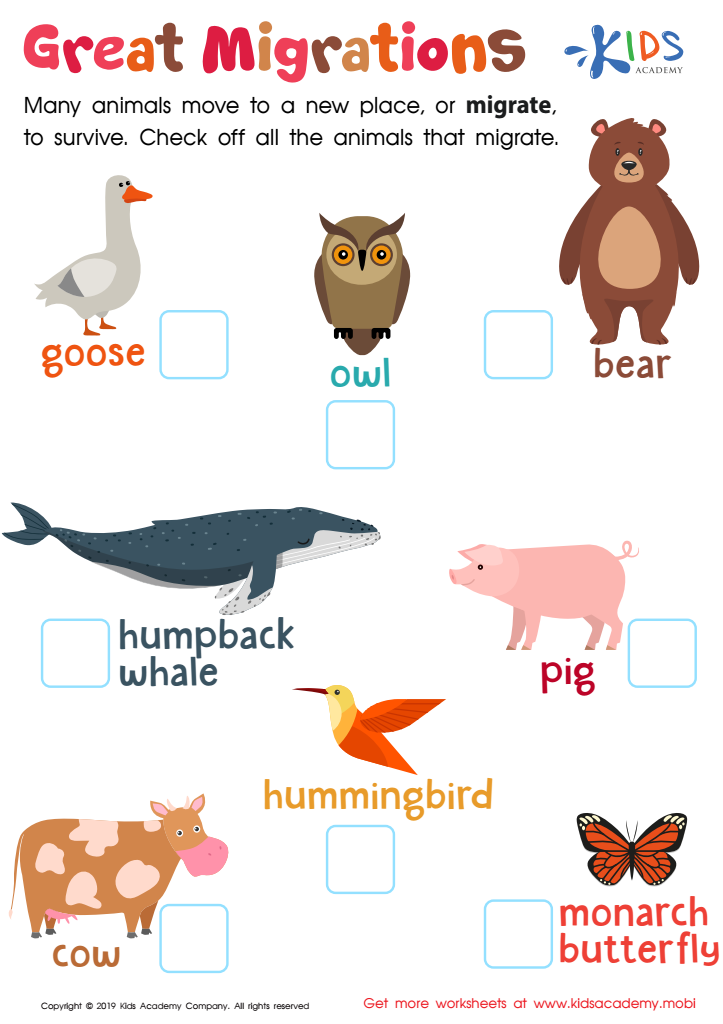
Great Migrations Worksheet
 Assign to My Students
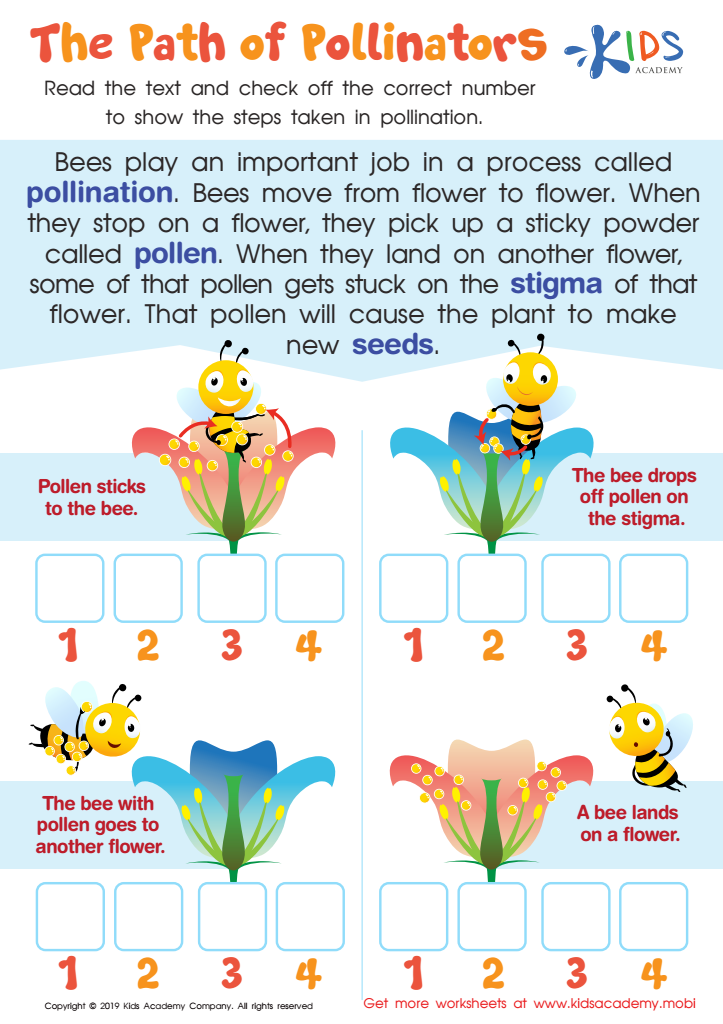
The Path of Pollinators Worksheet
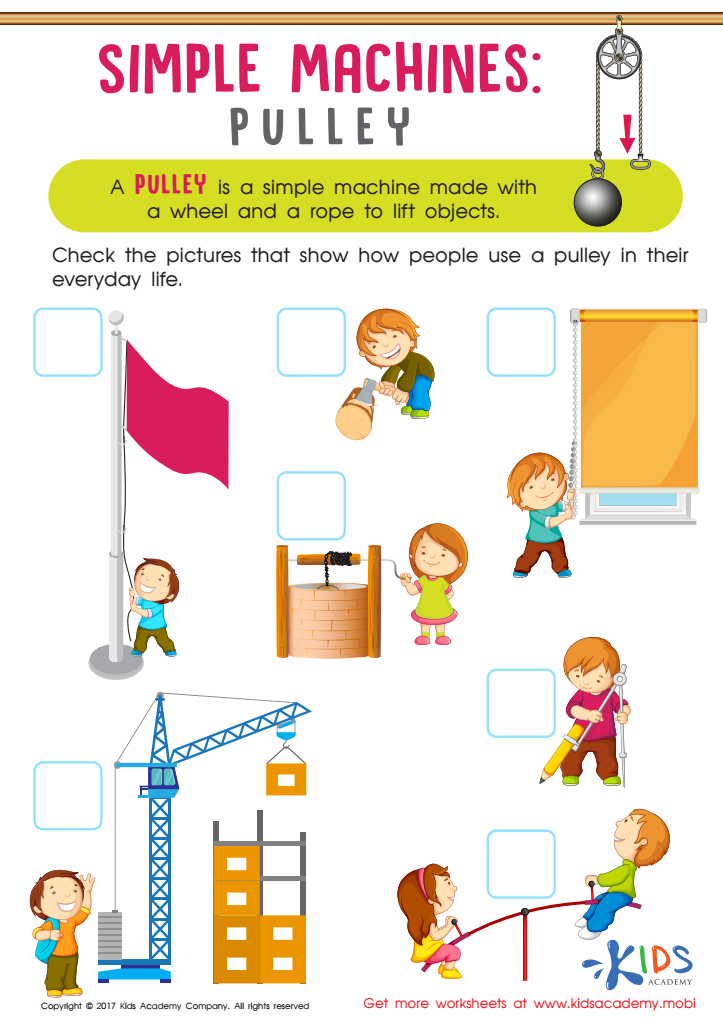
Simple Machines Pulley Worksheet






Improving science comprehension in children aged 6-7 is fundamental for several reasons. At this formative stage, young minds are exceptionally curious and open, making it the prime time to introduce the basics of scientific thinking. Exposure to science at this age cultivates a sense of wonder and curiosity about the natural world. Understanding science encourages children to ask questions, seek answers, and develop problem-solving skills.
Moreover, early science education builds a foundation for future learning across different subjects. It enhances literacy and numeracy as children learn to follow instructions, understand complex texts, and interpret data. By engaging with science material, children can improve their critical thinking skills, which are not only crucial for scientific pursuits but also invaluable for making informed decisions in daily life.
Parental and teacher support in fostering a love for science can also inspire future educational and career interests in the STEM (Science, Technology, Engineering, and Mathematics) fields. A strong early comprehension sets the stage for more advanced education later, making learning more accessible and enjoyable.
Furthermore, children who experience success and find joy in learning about science build confidence in their academic abilities. This foundation can lead to long-term educational success and a lifelong appreciation of learning. Encouraging scientific comprehension at this age is, therefore, an investment in the child's future.







