
Sequencing Skills Plants and Animals Worksheets for Ages 6-7
4 filtered results
Difficulty Level
Grade
Age
-
From - To
Subject
Activity
Standards
Enhance your child's understanding of nature with our "Sequencing Skills: Plants and Animals" worksheets, tailored for ages 6-7. These engaging activities help young learners grasp essential sequencing concepts while exploring the fascinating worlds of plants and animals. Our comprehensive collection is designed to develop critical thinking and comprehension skills, ensuring kids can identify, arrange, and understand life cycles and growth patterns. Perfect for classroom or home use, these worksheets blend education with fun, encouraging a love for science in early years. Equip your child with foundational knowledge and inspire future explorers with Kids Academy’s expertly crafted materials.
Favorites
With answer key
Interactive
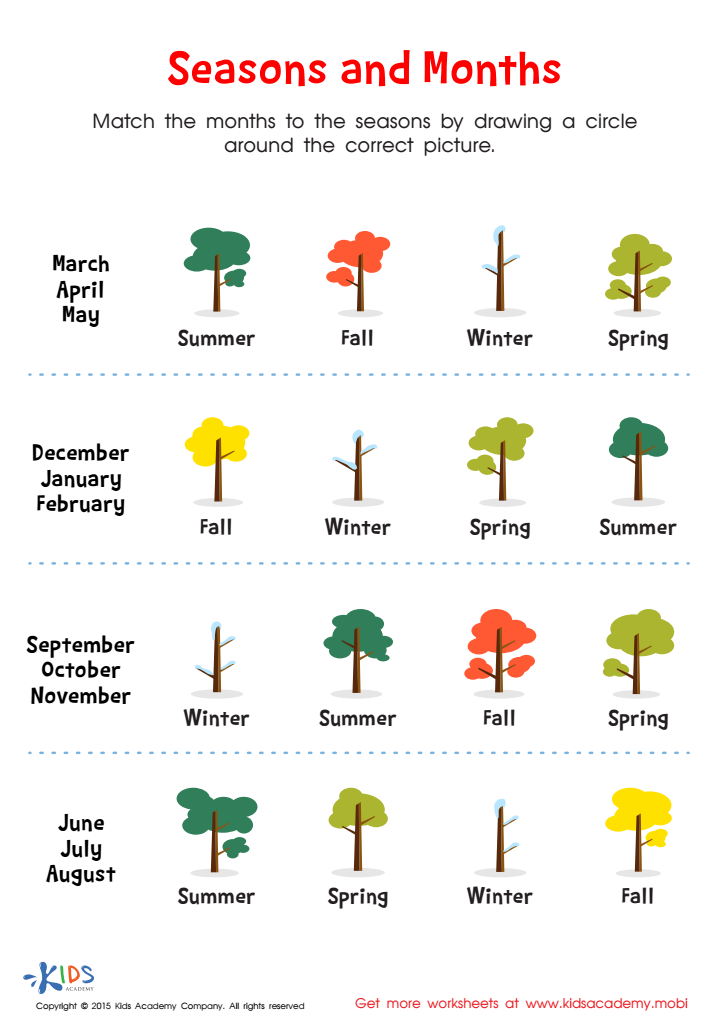
Seasons and Months Worksheet
Help your child explore the world around them with this fun seasons and months printable worksheet. It'll help them understand the months of the year and the seasons connected to them, teaching valuable science knowledge and skills. Plus, engaging in conversations about the current month and season will extend their learning!
 Assign to My Students
Seasons and Months Worksheet
Worksheet

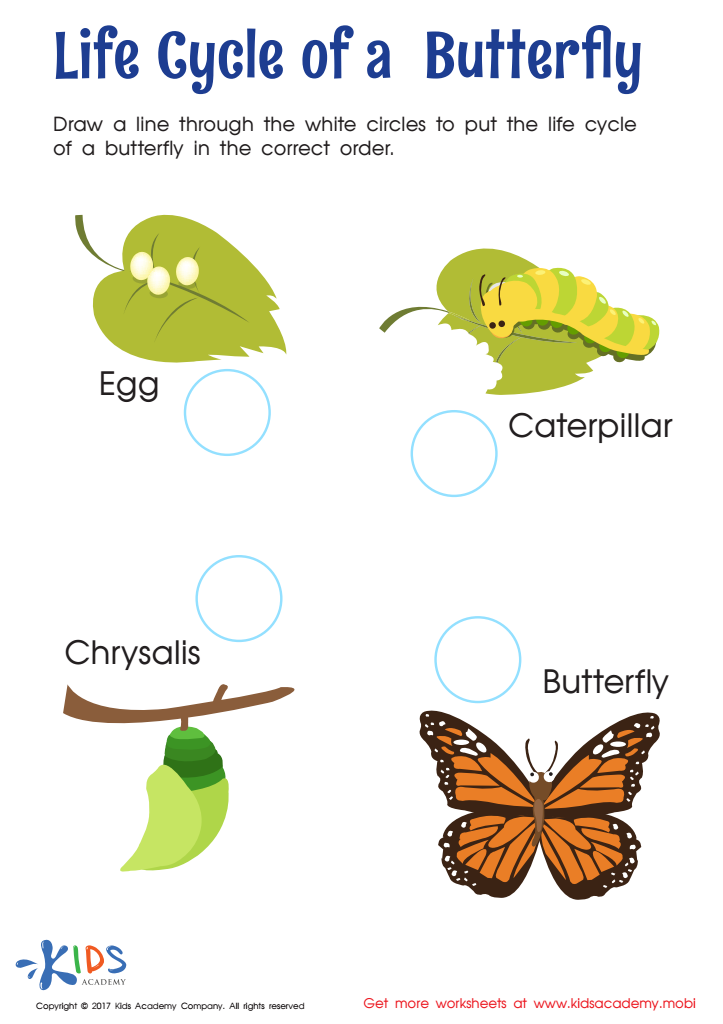
Life Cycle of Butterfly Worksheet
Kids Academy offers an exciting activity – a Life Cycle of a Butterfly Worksheet PDF. It shows four stages in the lifecycle of a butterfly with vivid pictures. Kids put the stages in the correct order to study the lifecycle.
Life Cycle of Butterfly Worksheet
Worksheet
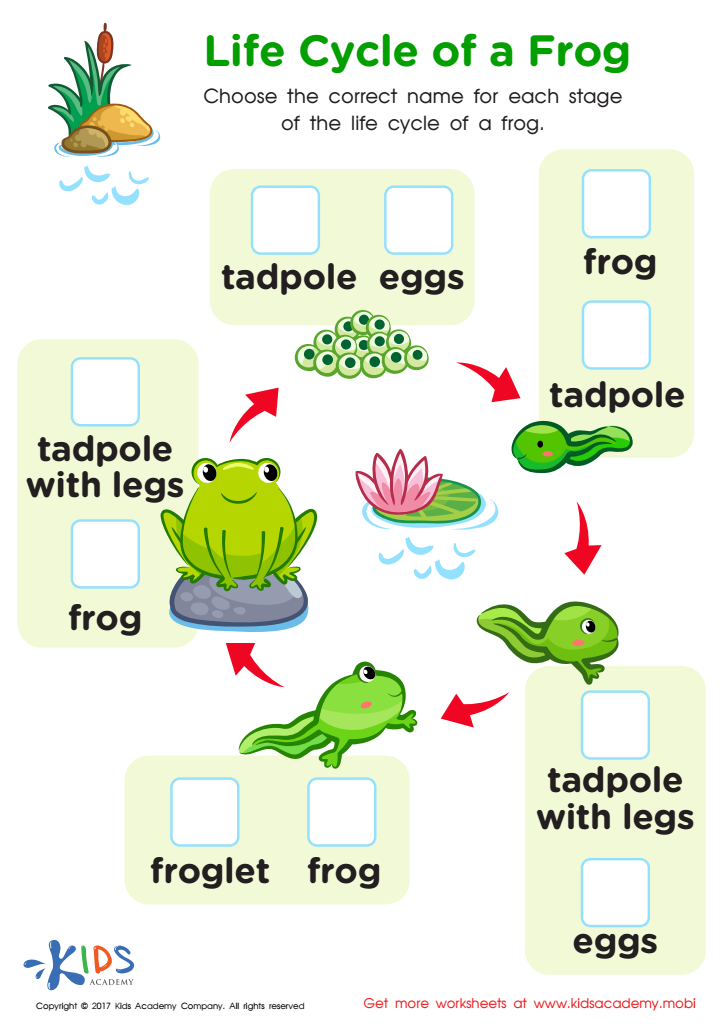
Life Cycle Frog Printable
Kids can explore the life cycle of frog with this fun worksheet! Draw lines from one stage to the next to follow the transformation from tadpole to frog and learn about the cycle of life.
Life Cycle Frog Printable
Worksheet
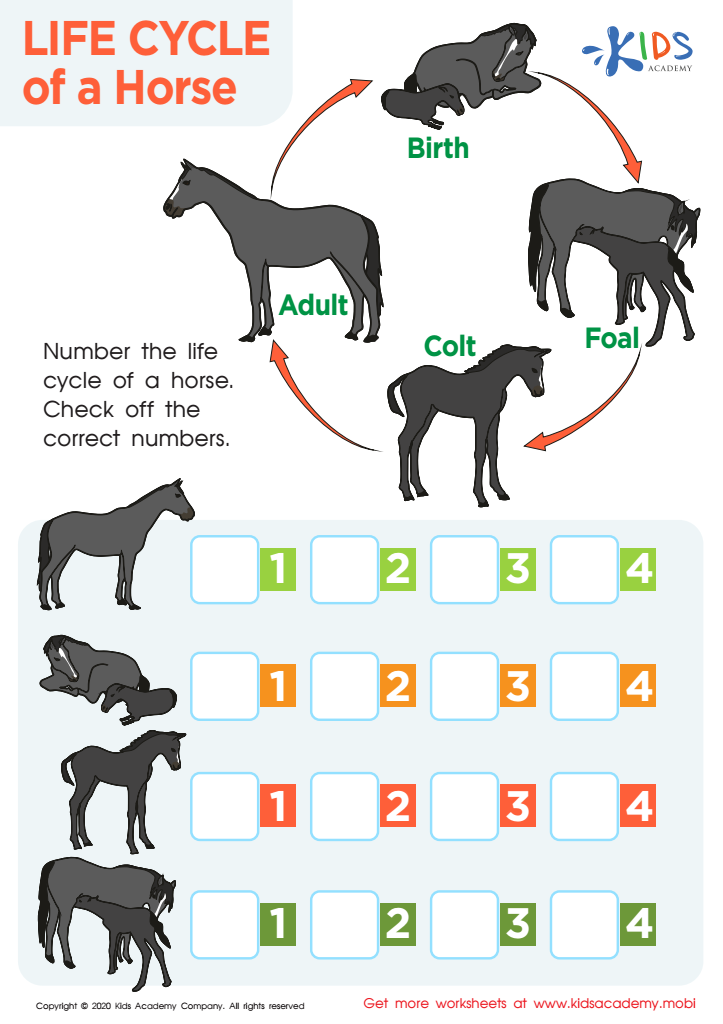
Life Cycle of a Horse Worksheet
Kids Academy's science worksheet on horses' lifecycles offers an engaging way for kids to learn! They'll study the diagram and label each stage of life, from birth to adulthood, and then number the pictures to mark the correct sequence. Fun and educational - a perfect way to get your kids learning!
Life Cycle of a Horse Worksheet
Worksheet
Join Kids Academy for Free
Who is primarily going to use this learning content?








Sequencing skills are crucial for children ages 6-7 as they lay a foundational understanding for many key cognitive and language abilities. Teaching these skills within the context of plants and animals not only makes learning more engaging but also merges scientific knowledge with cognitive development.
Firstly, sequencing involves arranging information in a logical order, a fundamental critical thinking skill. When children learn to sequence the life cycles of plants and animals, such as how a caterpillar becomes a butterfly or how a seed grows into a plant, they understand the sequential processes that are intrinsic to nature. This augments their analytical skills and reinforces concepts of cause and effect.
Secondly, sequencing aids in improving children’s narrative skills. For instance, by recounting the stages of a frog's life cycle, children practice organizing their thoughts coherently, thereby fostering better communication and storytelling abilities.
Moreover, understanding natural sequences teaches patience and appreciation for the gradual progress in nature, indirectly nurturing a child's emotional development. As children observe and learn about the growth stages of plants and animals, they also develop a sense of responsibility towards the environment.
Overall, focusing on sequencing skills using plants and animals cultivates a well-rounded developmental experience, blending cognitive growth with an awareness and appreciation of the natural world. Parents and teachers, therefore, should regard this as an essential part of early education.








