Enhance your child's learning with our Contextual Understanding Worksheets for ages 6-8. These engaging resources help young learners develop vital reading comprehension skills by teaching them to interpret information within context. Featuring a variety of exercises, our worksheets cover overemphasized concepts such as identifying key details, understanding connections between ideas, and deciphering vocabulary through context clues. Designed by educational experts, these printables are effective tools for both classroom and homeschool settings, ensuring that children build a solid foundation in literacy. Boost your child’s confidence and abilities in reading with delightful and captivating practice sheets from Kids Academy today!

Check out this FREE "Contextual understanding" Trial Lesson for age 6-8!

Suffixes –ful, -less

Favorites
With answer key
Interactive
  • 6-8
  • Contextual understanding
Prometheus story worksheet

Prometheus Story Worksheet

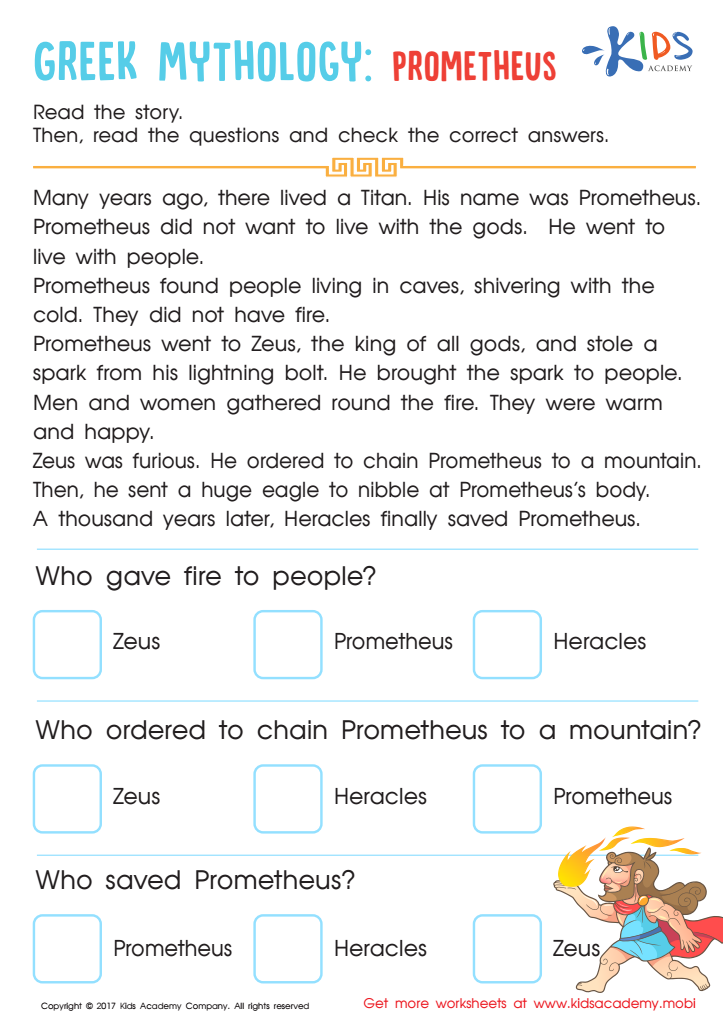
Help kids improve reading comprehension with this Prometheus story worksheet! Learn about this classic mythological tale and break down the plot into understandable parts. By doing so, children will understand the story each step of the way.
Prometheus Story Worksheet
Worksheet
What's the Meaning? Worksheet

What's the Meaning? Worksheet

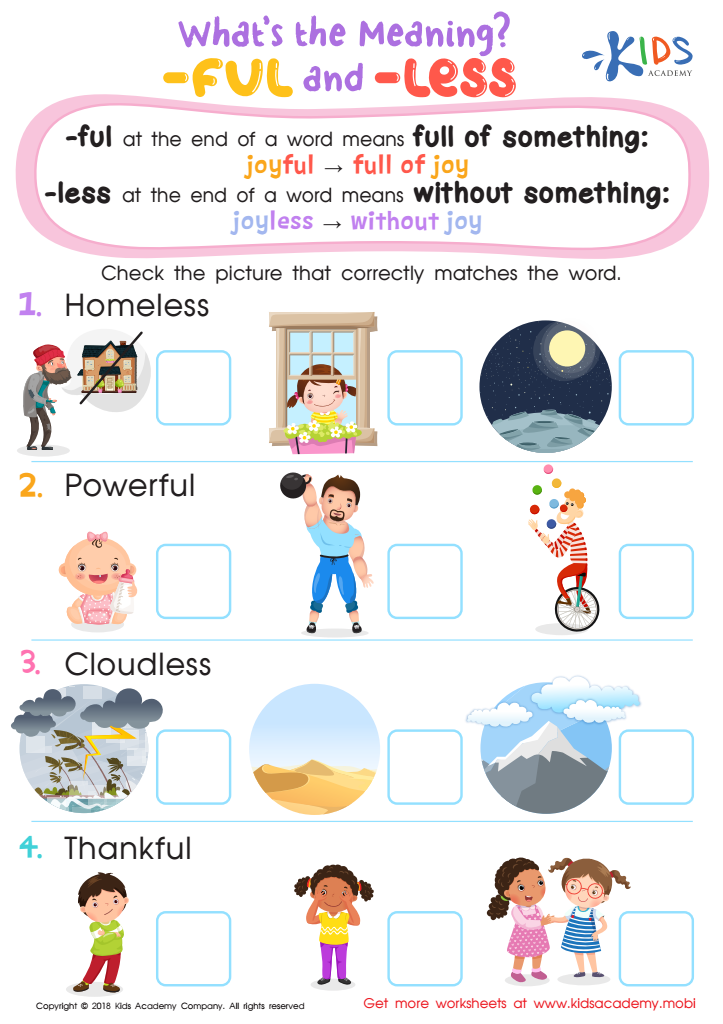
Look with your youngster through this colorful worksheet and match the pictures to the words at the top. These words have different meanings due to either a prefix or suffix being added, such as "ful" or "less".
What's the Meaning? Worksheet
Worksheet
What Does It Mean? Worksheet

What Does It Mean? Worksheet

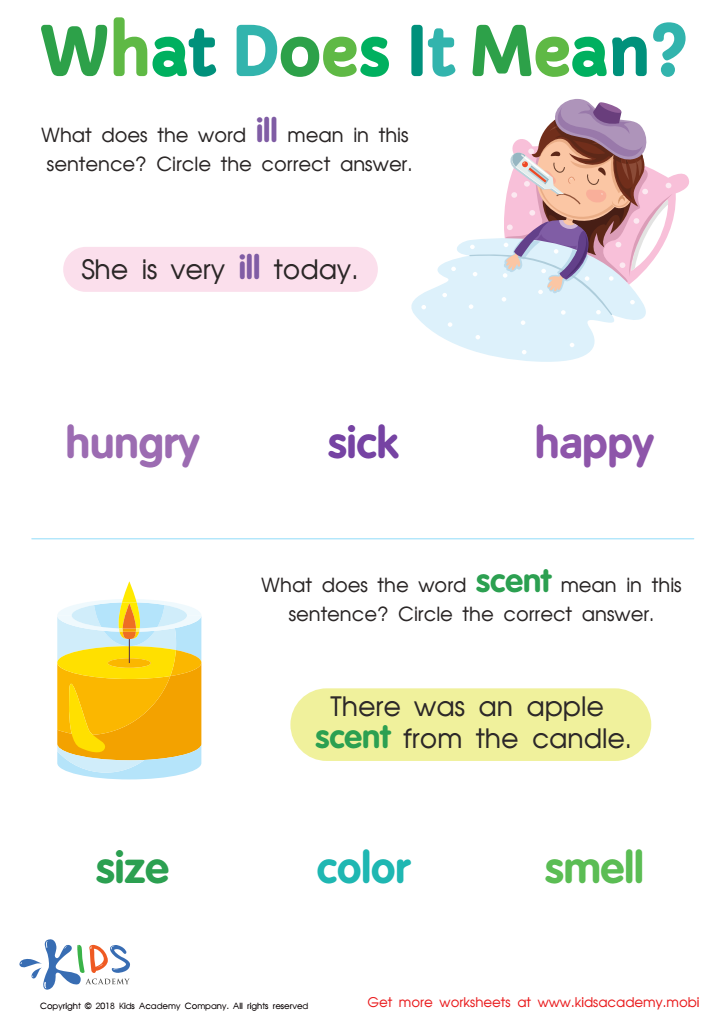
Students should know the meaning of words, even when used in different contexts. This worksheet has two sections. In the first, there's a picture on the right side. Ask students the meaning of 'ill' in "she is very ill today". Help them circle the correct answer from the options. The second section follows the same pattern. Make sure students circle the right answer.
What Does It Mean? Worksheet
Worksheet
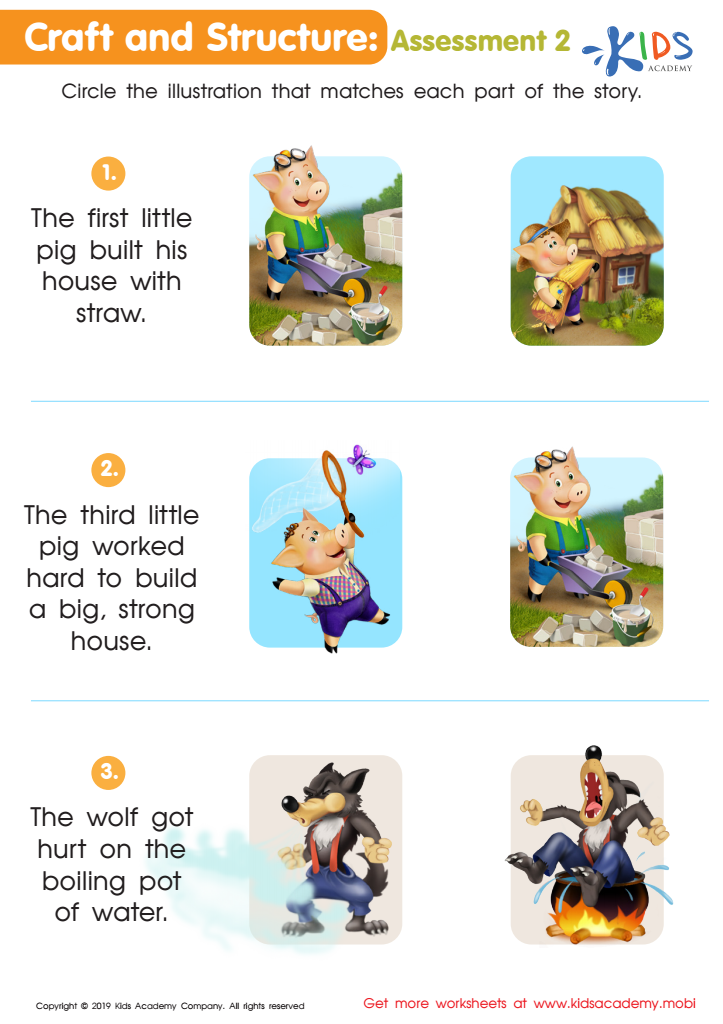
Craft and Structure: Assessment 2 Worksheet 2

Craft and Structure: Assessment 2 Worksheet 2

This fun printout with colorful illustrations will assess how much your kids pay attention to story time. Go through the pictures and help them circle the ones that match each part of the story. Stimulate their brains and have fun in the process!
Craft and Structure: Assessment 2 Worksheet 2
Worksheet
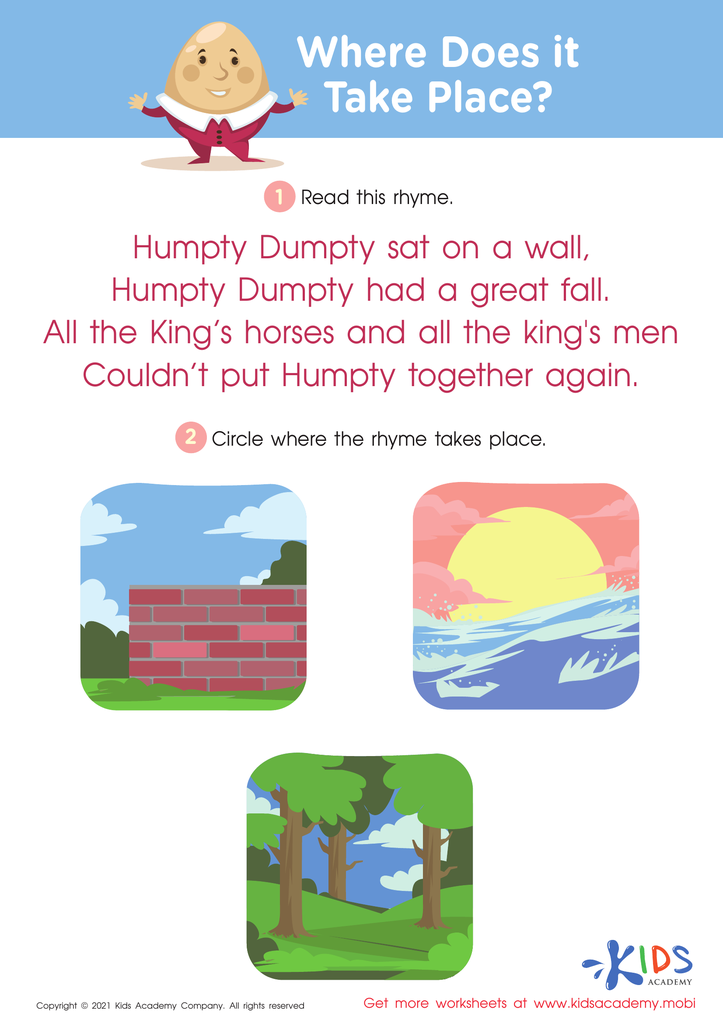
Where Does It Take Place? Worksheet

Where Does It Take Place? Worksheet

Original: The number of children who are enrolled in the school has increased by 10% from the previous year. Enrollment in the school has increased 10% from last year, with more children attending.
Where Does It Take Place? Worksheet
Worksheet
Guess the Meaning Worksheet

Guess the Meaning Worksheet

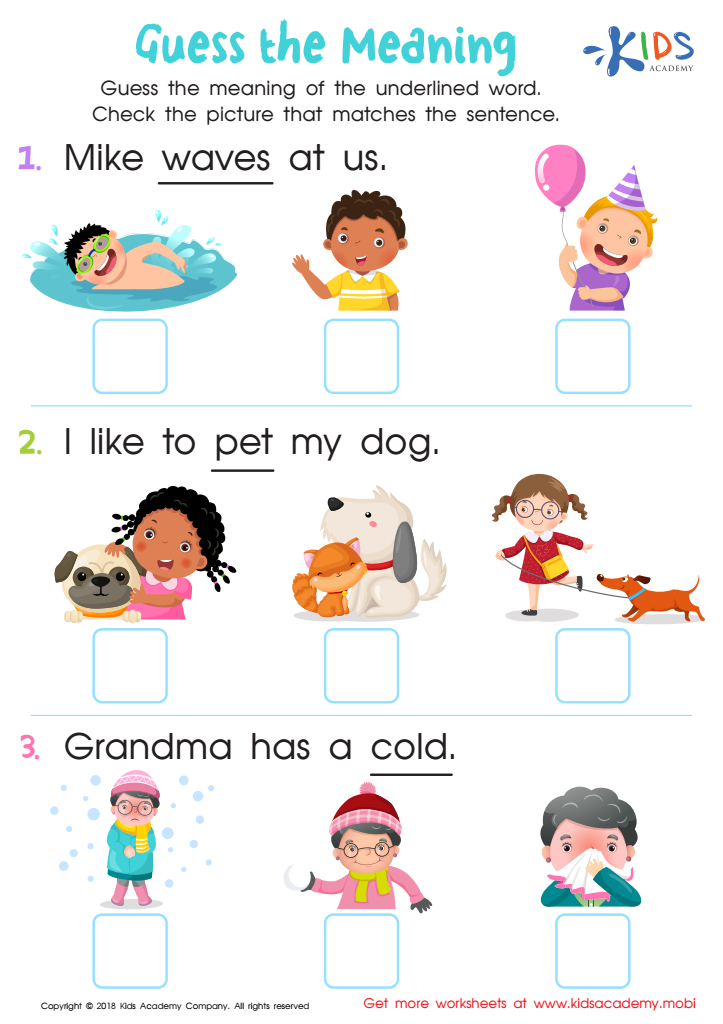
Help your child learn the meanings of words in different contexts by using this colourful, free worksheet. What is the meaning of the underlined words in each sentence? Look at the images and pick the one that accurately describes the word's context.
Guess the Meaning Worksheet
Worksheet
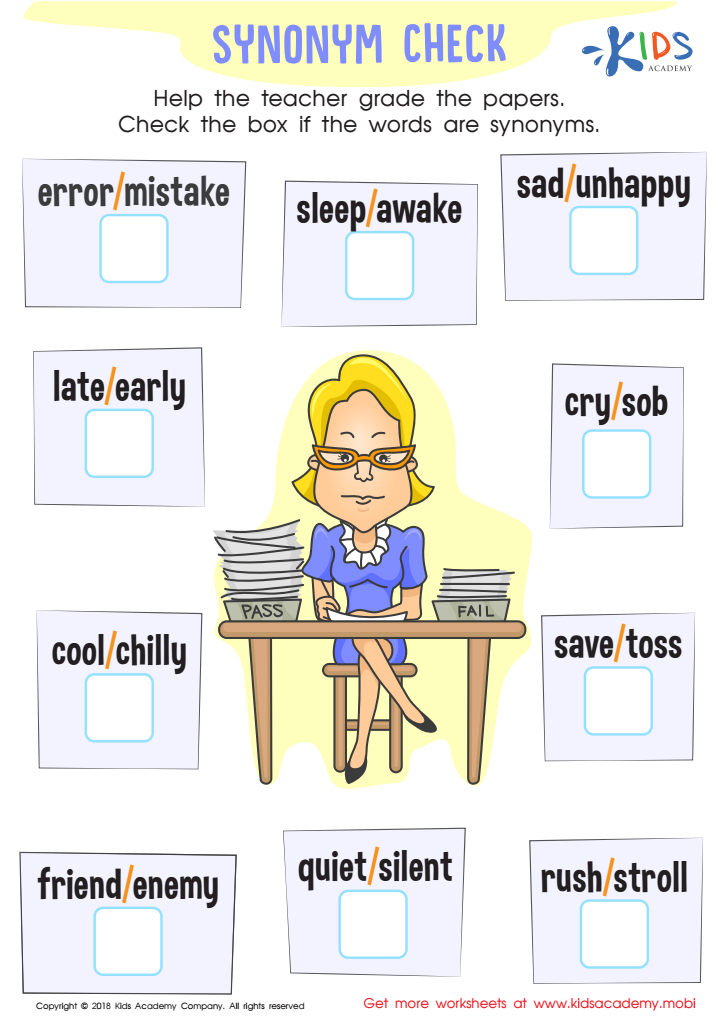
Synonym Check Worksheet

Synonym Check Worksheet

Ask your kids what a synonym is, and listen to their definitions. If needed, explain it's a word that has a similar meaning to another. Give examples, then ask them to do the same. For this worksheet, get them to help grade the papers. Have them check the boxes if the words are synonyms.
Synonym Check Worksheet
Worksheet
Reading: Fill in the Blank Worksheet

Reading: Fill in the Blank Worksheet

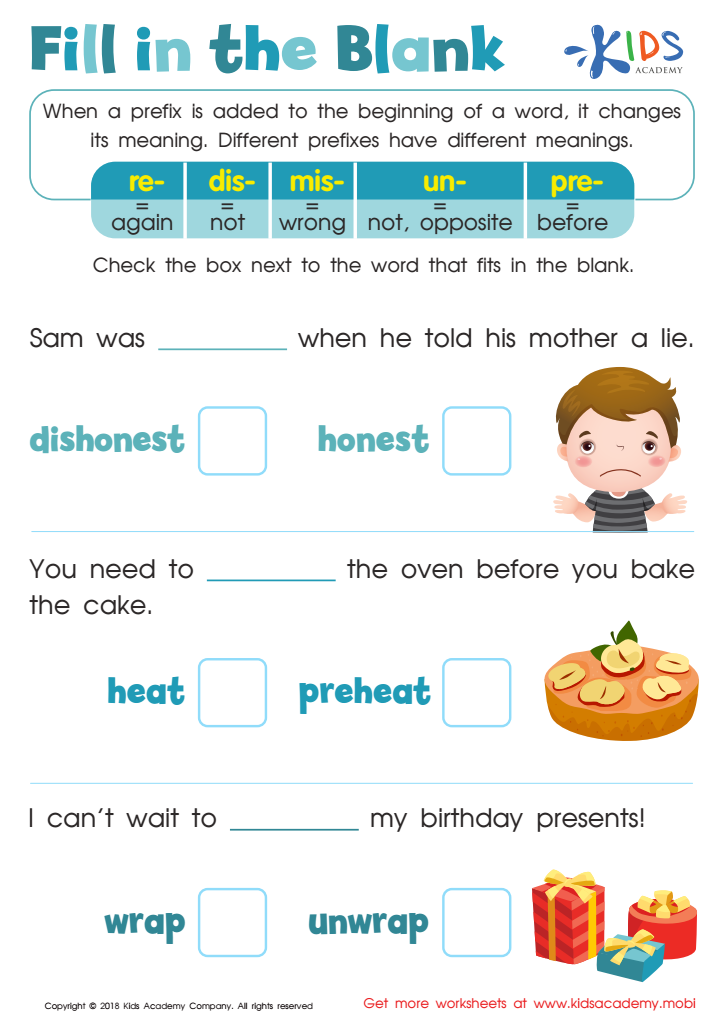
Students can practice understanding the meaning of common prefixes with this worksheet. They read sentences and pick the correct word with the appropriate prefix to complete it. Downloadable and a great addition to reading and vocabulary resources, this helps improve comprehension with mastery of the skill!
Reading: Fill in the Blank Worksheet
Worksheet
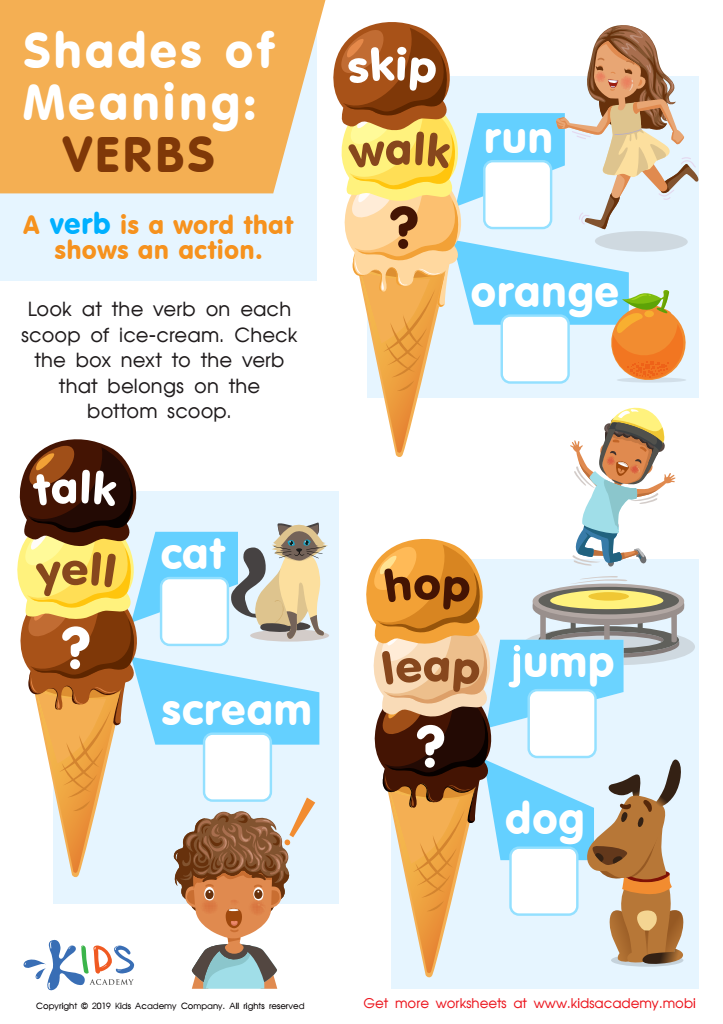
Shades of Meaning: Verbs Worksheet

Shades of Meaning: Verbs Worksheet

Verbs are words that show action. Introduce kindergartners to verbs by having them check the box next to the verb that belongs on the bottom scoop in a worksheet. This is a great way to teach them this important part of speech and help them learn to write proper sentences and speak correctly.
Shades of Meaning: Verbs Worksheet
Worksheet
Adjectives: At The Zoo Worksheet

Adjectives: At The Zoo Worksheet

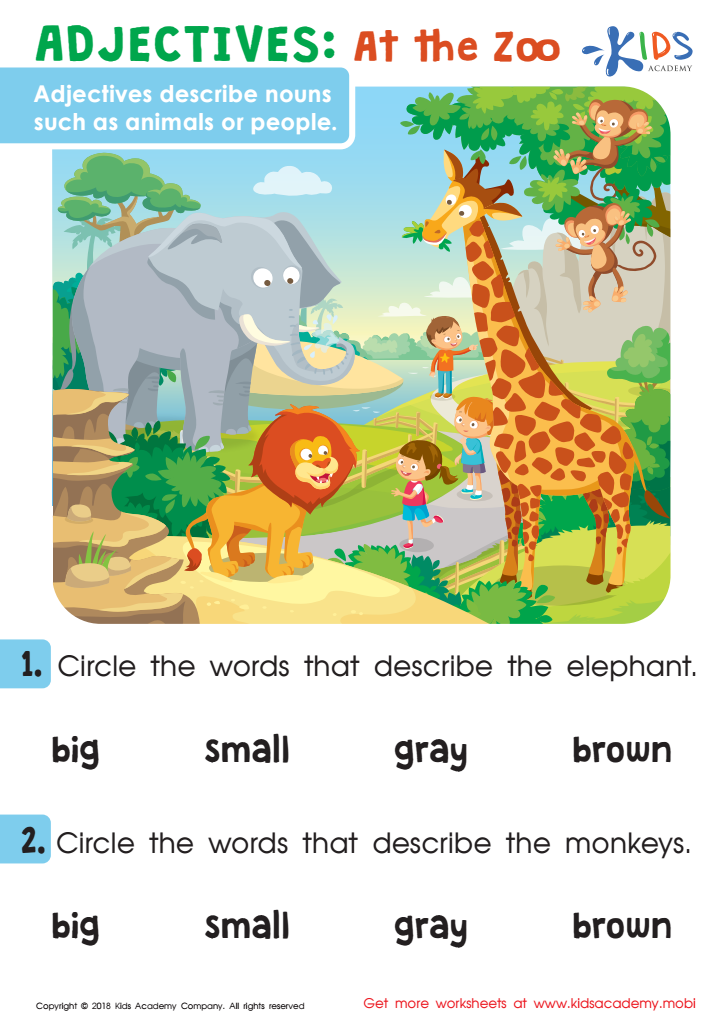
Take your kids to the zoo and ask them about their favorite activities and animals. This worksheet is a great way for kids to learn about adjectives. Explain that adjectives describe nouns like people or animals (e.g. big, tall, dark). Look at the printout with your kids and help them circle words that describe the animals in the picture.
Adjectives: At The Zoo Worksheet
Worksheet
Adding and Subtracting to 1 Worksheet: Assessment 1

Adding and Subtracting to 1 Worksheet: Assessment 1

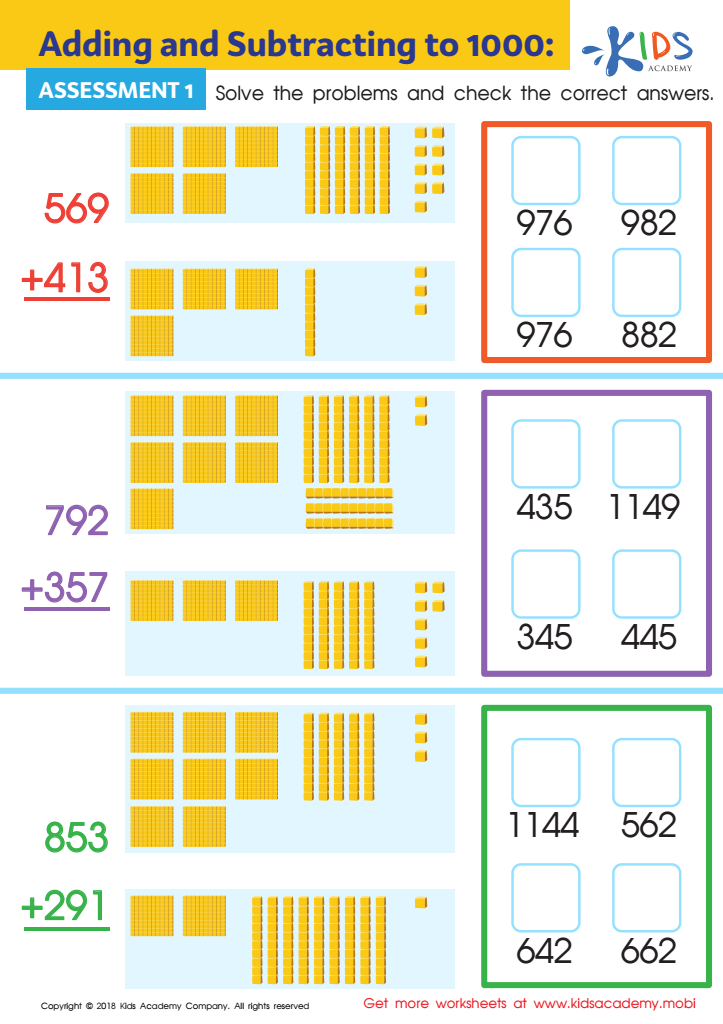
This assessment worksheet tests your child's addition skills. It has 3 3-digit problems with base ten blocks for visual aid. Encourage learners to use these visuals for better understanding. When they have solved the problems, they can check the box with the right answer. It's a quick and easy way to gauge numeracy development.
Adding and Subtracting to 1 Worksheet: Assessment 1
Worksheet
Free printable synonym worksheets for 2nd grade

Free Printable Synonym Worksheet

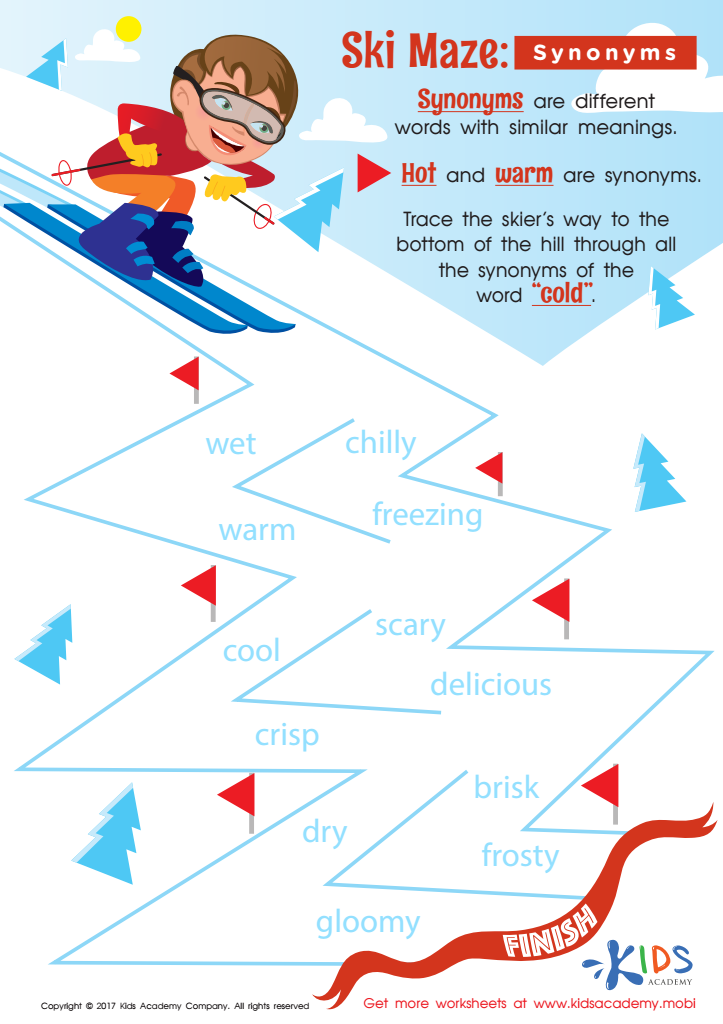
Our free printable synonym worksheet for 2nd grade will help kids learn similar words to expand their vocabulary. Kids will have fun challenging themselves to find all the words that are synonyms for “cold”. Enhance their language and writing with this joyful worksheet!
Free Printable Synonym Worksheet
Worksheet
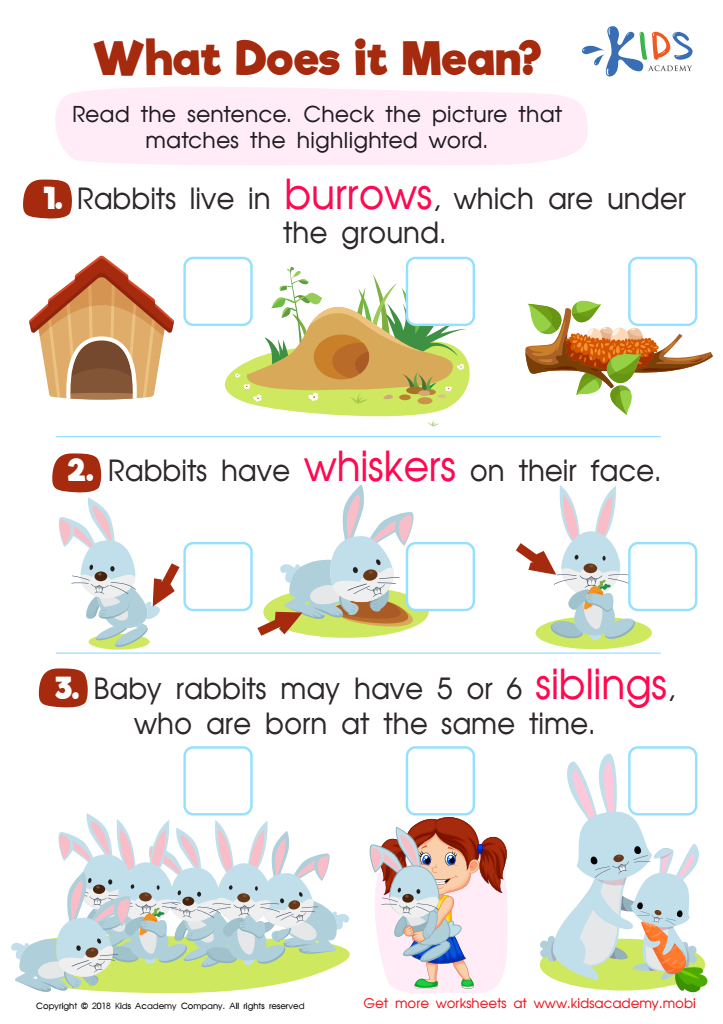
What Does It Mean? Worksheet

What Does It Mean? Worksheet

Teach your child to use context clues with this engaging Kids Academy worksheet. Read the sentences and find the pink-highlighted word. Use the other words in the sentence to figure out the meaning, then check the box next to the picture that represents it.
What Does It Mean? Worksheet
Worksheet
Word Choice Worksheet

Word Choice Worksheet

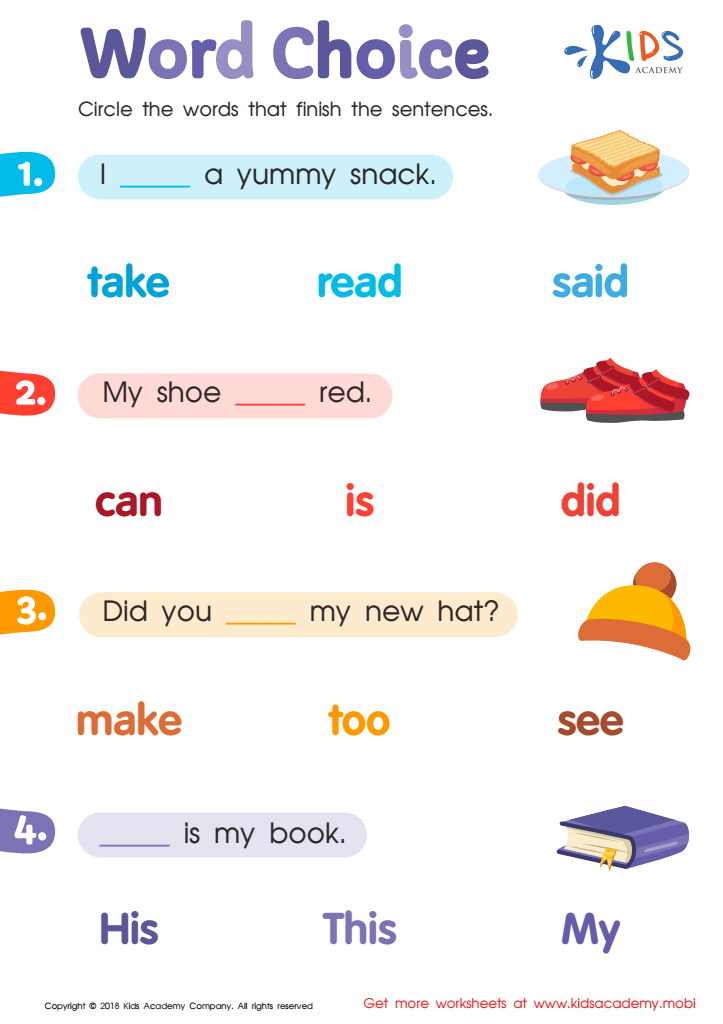
This worksheet can help your children become better readers. By now, you should have an idea of their reading level. Read the incomplete sentences aloud and point to the missing piece. Have your students pick the correct word they think best fits the sentence out of the options given.
Word Choice Worksheet
Worksheet


Contextual understanding is essential for ages 6-8 as it forms the foundation for effective learning and comprehension. At this stage, children are not just absorbing facts; they are beginning to make sense of how information fits into their world. This helps them connect new knowledge with their existing experiences, making learning more meaningful and memorable.

When teachers and parents prioritize contextual understanding, children are encouraged to see relationships between concepts. For instance, understanding why plants need sunlight goes beyond memorizing that plants need sun and incorporates understanding of photosynthesis, seasons, and ecosystems, helping children develop critical thinking skills. This holistic view fosters deeper comprehension as opposed to just rote learning.

Contextual learning also enhances motivation. When children see the relevance of what they are learning to their own lives, they become more engaged and enthusiastic participants in the educational process. It’s not just about knowing that math involves numbers and calculations; understanding its application in daily scenarios, like shopping or cooking, can make learning fun and practical.

By caring about contextual understanding, parents and teachers help children build a cognitive framework that supports complex problem-solving, adaptive thinking, and a lifelong love for learning. This holistic approach cultivates not only academic skills but also important life skills, preparing young learners for future success both in and out of the classroom.