
Fraction comparison Math Worksheets for Ages 6-8
33 filtered results
Difficulty Level
Grade
Age
-
From - To
Subject
Activity
Standards
Discover our engaging Fraction Comparison Math Worksheets for children aged 6-8! Designed to enhance young learners’ arithmetic skills, these resources offer an interactive way to understand fractions and their relationships. Students will practice comparing fractions with fun exercises that promote critical thinking and problem-solving. These worksheets are perfect for classroom or home use, allowing children to grasp essential mathematical concepts at their own pace. With colorful visuals and clear instructions, they make learning fractions an enjoyable experience. Help your child build a strong foundation in math and confidence in their abilities with our specially curated fraction comparisons!
Favorites
With answer key
Interactive
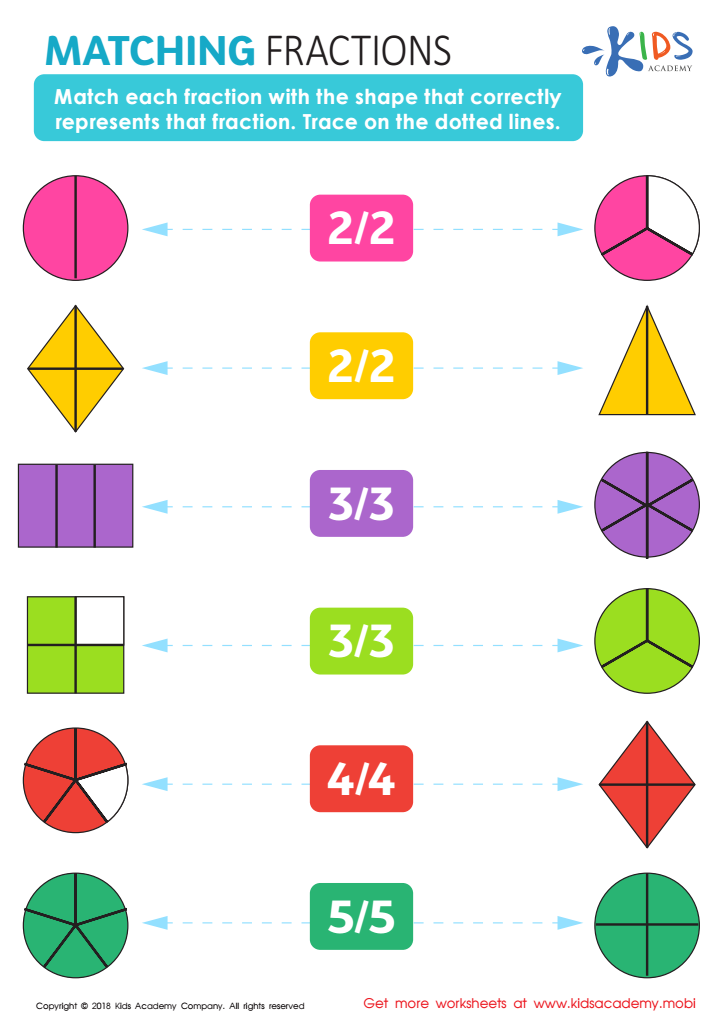
Matching Fractions Worksheet
This worksheet uses colorful images to engage students. On the left are six shapes, mirrored on the right, with fractions in the middle. Students must match up the fraction with the right shape. It's a fun way to sharpen fractions skills!
 Assign to My Students
Matching Fractions Worksheet
Worksheet
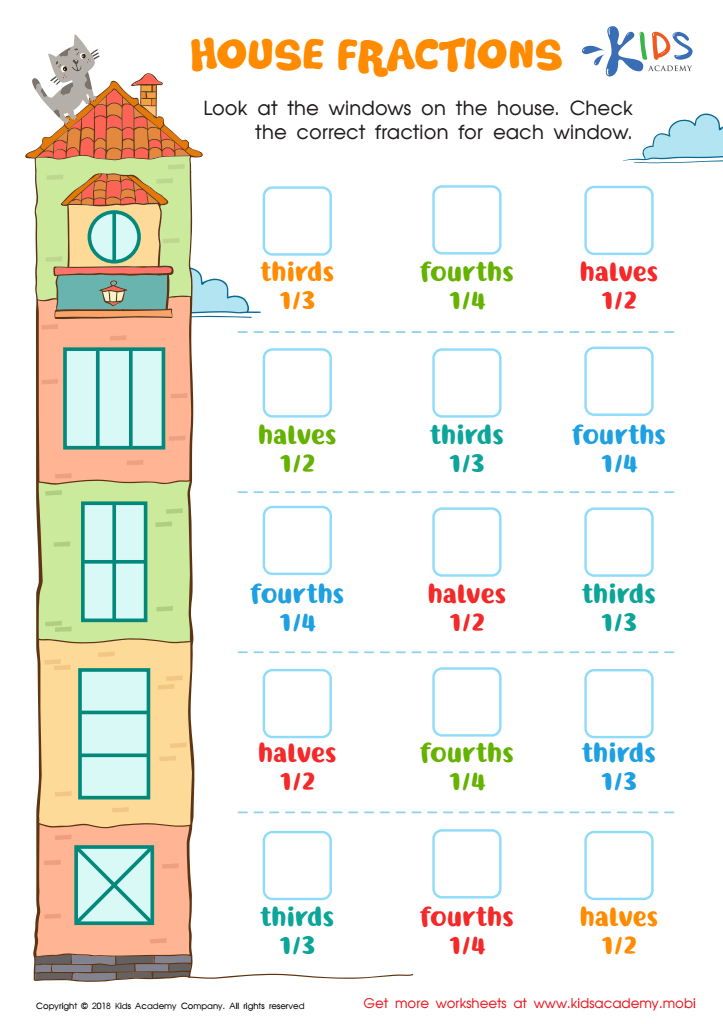
House Fractions Worksheet
Test your child's knowledge of fractions with this worksheet! Have them examine the windows of a house and select the correct fraction from the options given. This is a great way to see how much they understand about wholes, fractions, halves, one thirds, and one fourths.
House Fractions Worksheet
Worksheet
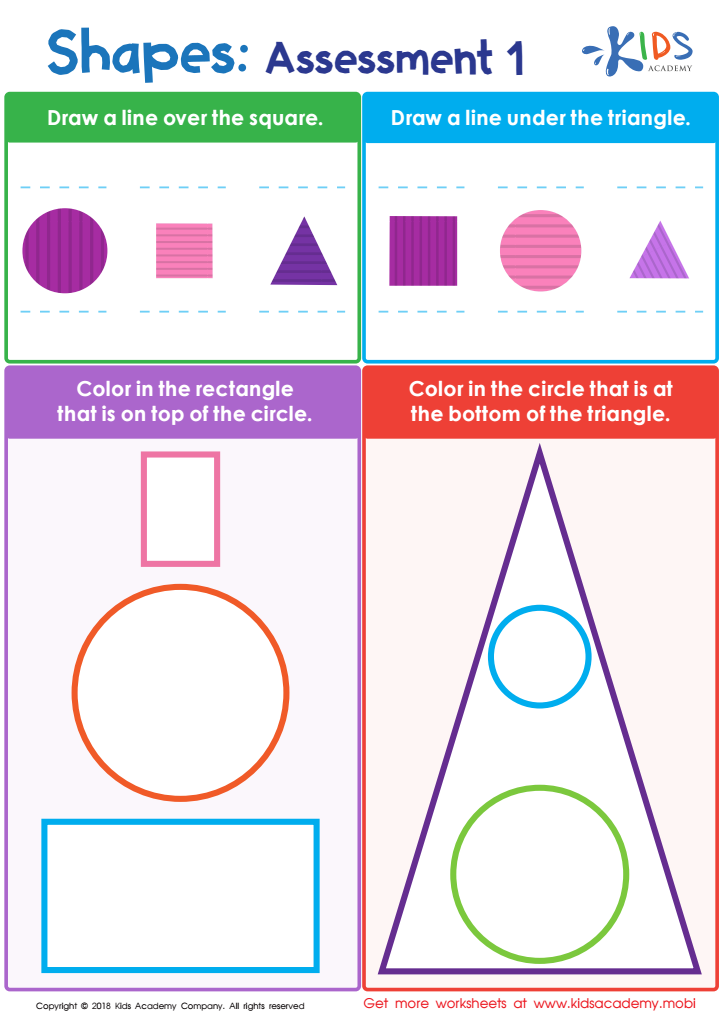
Shapes: Assessment 1 Worksheet
Test your students' understanding of the four basic shapes - circle, square, triangle and rectangle - with this assessment worksheet. Get them to draw a line over or under the shape indicated in the directions to show they can identify it correctly.
Shapes: Assessment 1 Worksheet
Worksheet
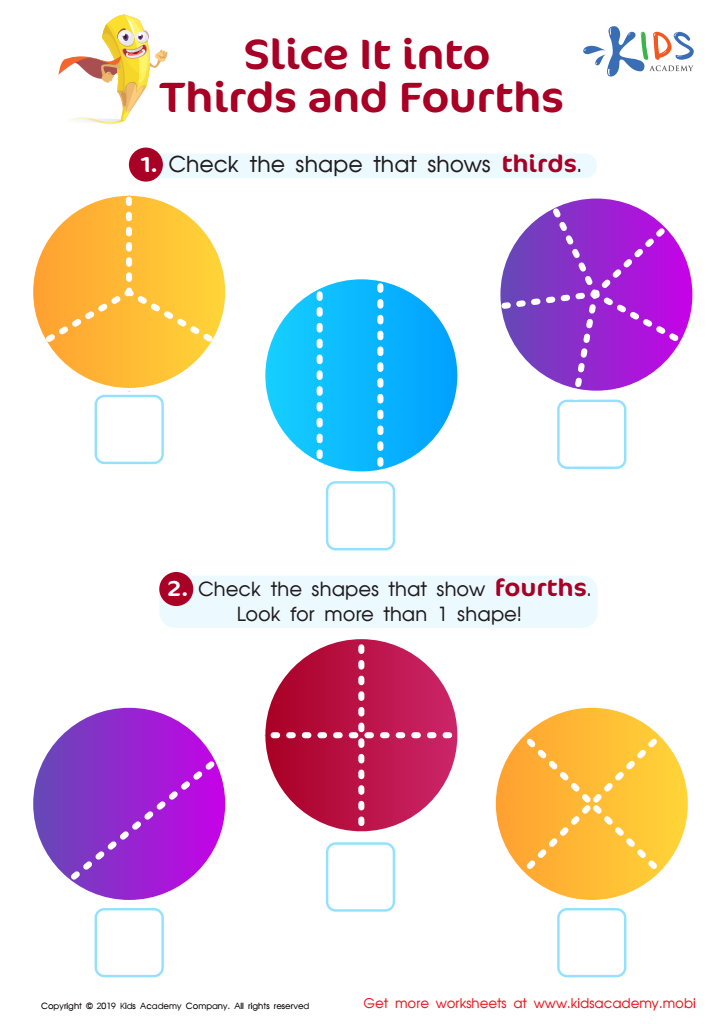
Slice in Thirds Fourths Worksheet
This worksheet helps kids learn fractions visually by dividing circles into thirds and fourths. They will learn that fractions must be equal parts, not just sets, by choosing the right colorful circles. It's an easy way to master fractions and have fun doing it!
Slice in Thirds Fourths Worksheet
Worksheet
Join Kids Academy for Free
Who is primarily going to use this learning content?








Understanding fraction comparison is essential for children aged 6-8 because it lays the foundation for more advanced mathematical concepts. At this age, students are beginning to explore various ways of representing numbers, and grasping fractions is critical as they encounter division and ratios in later grades.
Parents and teachers should care about this foundational skill because it develops critical thinking and problem-solving abilities. Comparisons help students understand relationships between numbers, making them more adept at recognizing patterns in math. For example, knowing that 1/2 is greater than 1/4 not only aids them in fraction comparison but also enhances their understanding of quantities in real-life contexts, such as sharing food or measuring ingredients.
Moreover, encouraging children to visualize fractions through manipulatives, drawings, or number lines promotes engagement and reinforces concepts. This hands-on learning often boosts confidence, making math less intimidating as they progress in their education.
By prioritizing the mastery of fraction comparison, parents and teachers can ensure that children are well-equipped for future mathematical challenges, ultimately fostering a positive attitude toward learning and contributing to their overall academic success.








