Enhance your child's counting abilities with our specially designed math worksheets for ages 6-8. Our engaging activities focus on improving counting skills through a variety of fun and educational exercises. With these worksheets, children will learn to count objects, numbers, and sequences effortlessly while strengthening their arithmetic foundations. Each worksheet is crafted to be both challenging and enjoyable, ensuring young learners stay motivated. Whether for classroom use or at-home practice, our counting skills worksheets are an invaluable resource to help your child build confidence in math. Explore our collection and watch your child’s counting skills flourish!
Check out this FREE Trial Lesson on Math for age 6-8!

Introduction to Line Plots

Favorites
With answer key
Interactive
  • 6-8
  • Improve counting skills
  • Math
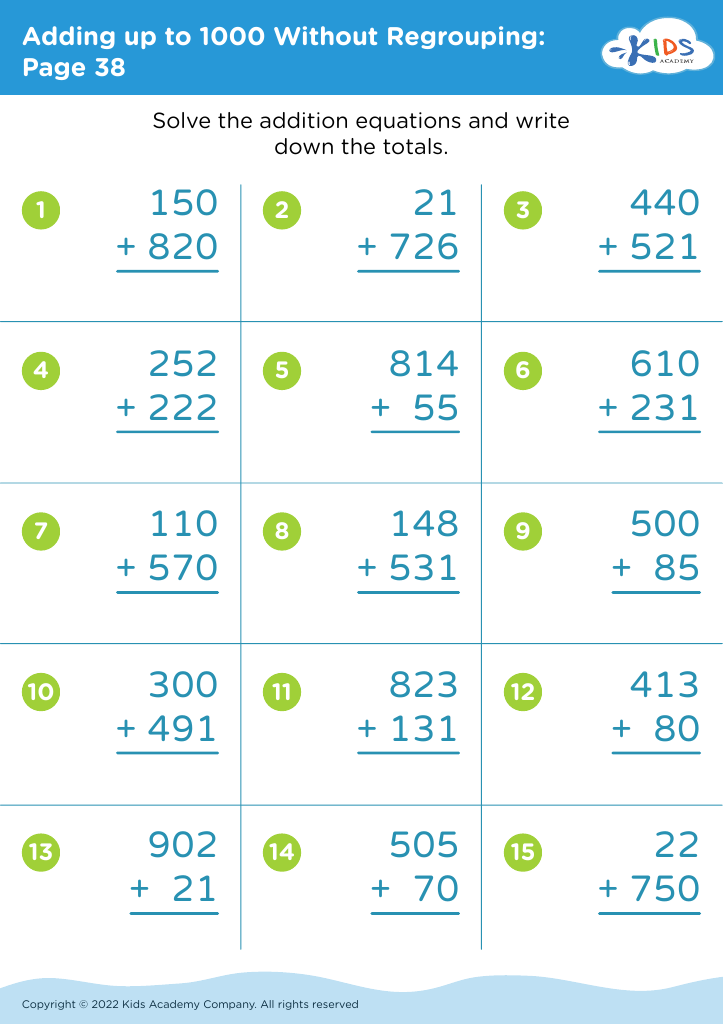
Adding up to 1000 Without Regrouping: Page 38
Worksheet
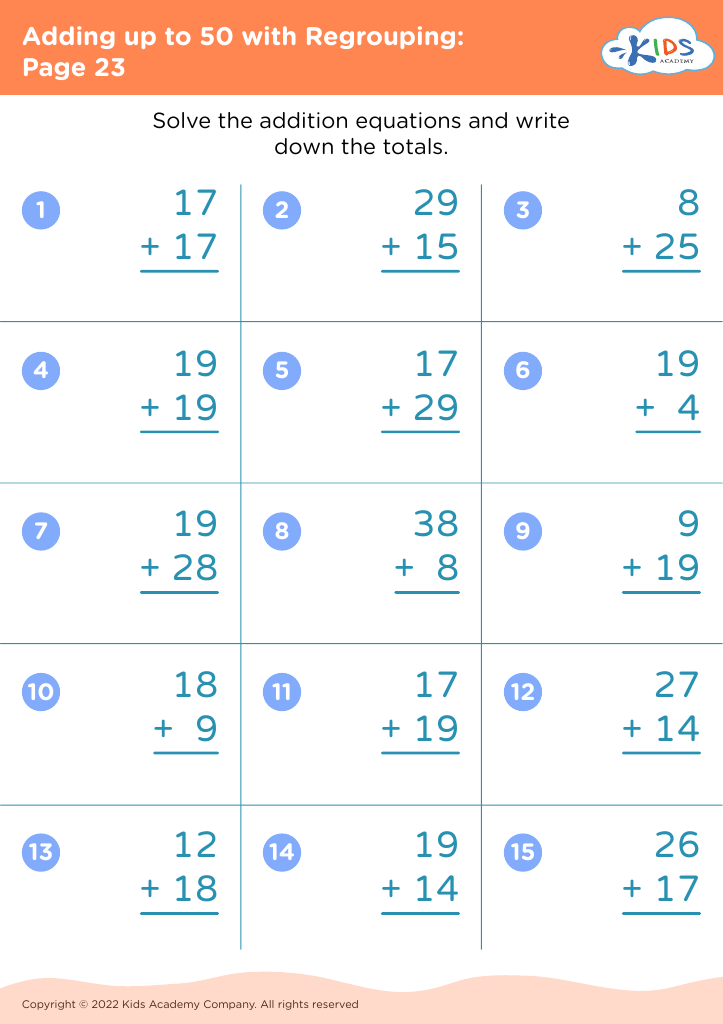
Adding up to 50 with Regrouping: Page 23
Worksheet
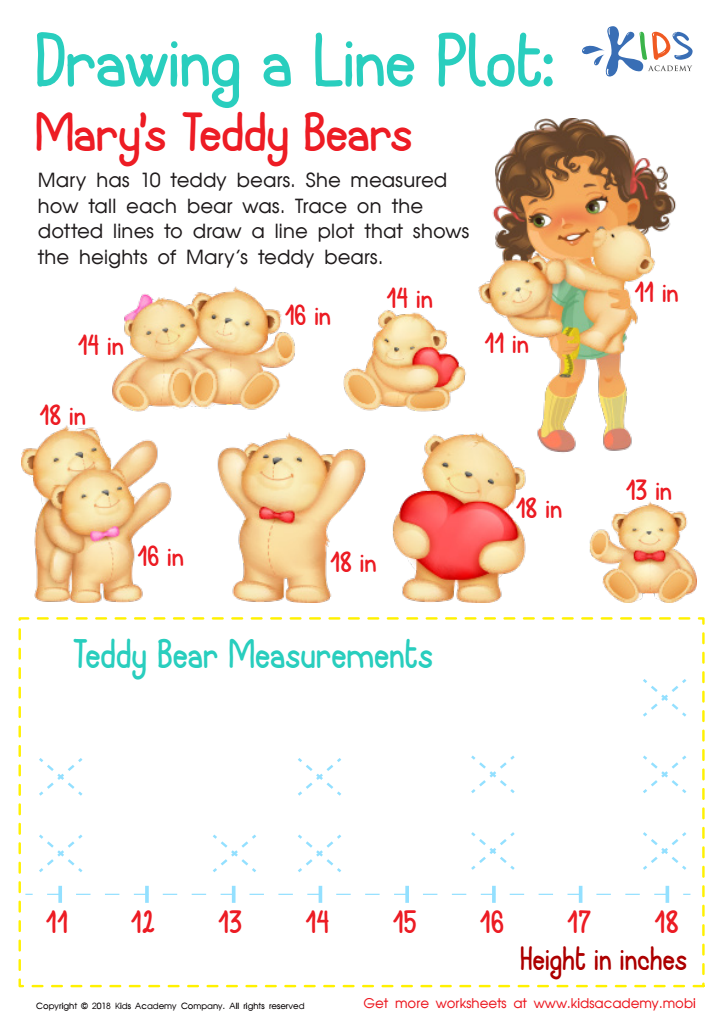
Drawing and Line Plot: Mary's Teddy Bears Worksheet

Drawing and Line Plot: Mary's Teddy Bears Worksheet

This worksheet teaches kids to draw and interpret line plots. Mary has 10 teddy bears and has measured their heights. Ask your child to draw a line plot showing the heights of Mary's teddy bears. It's a great way for little ones to learn how to organize information quickly and correctly.
Drawing and Line Plot: Mary's Teddy Bears Worksheet
Worksheet
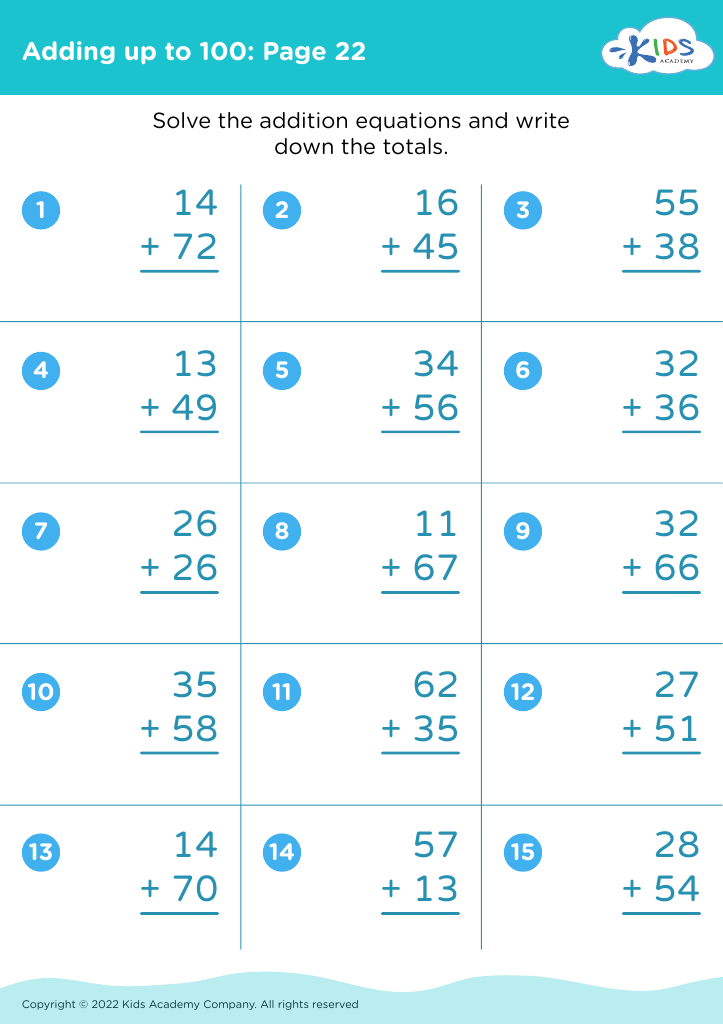
Adding up to 100: Page 22

Adding up to 100: Page 22

Adding up to 100: Page 22
Worksheet
Connect the Dots Numbers 1-10

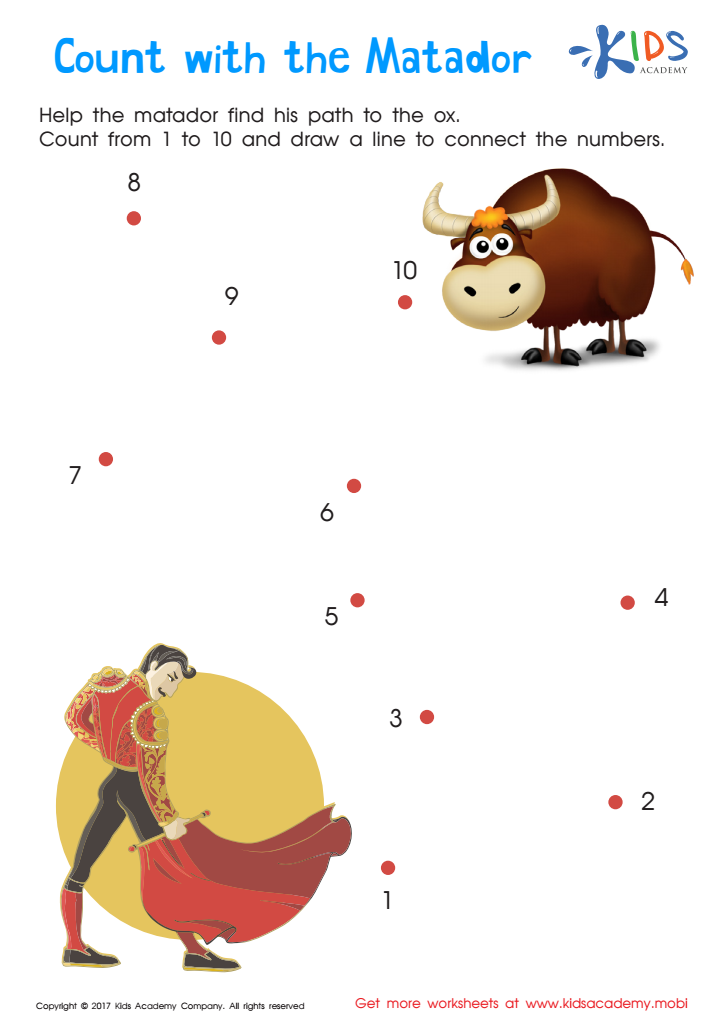
Count with the Matador Connect Dots Worksheet

Count with the Matador Connect Dots Worksheet
Worksheet
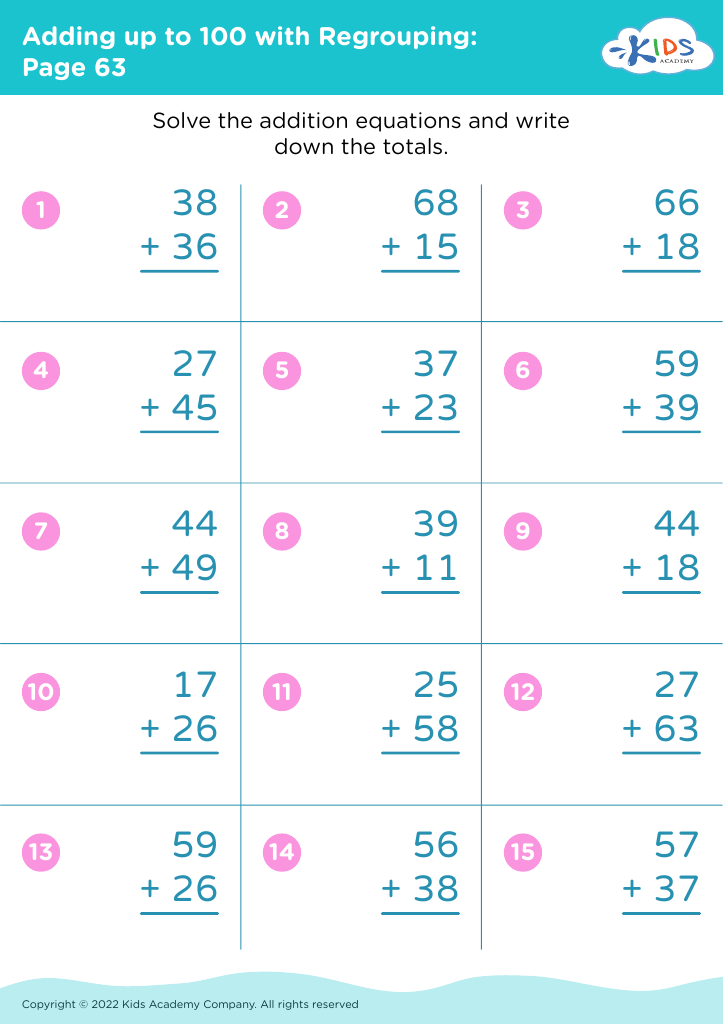
Adding up to 100 with Regrouping: Page 63
Worksheet
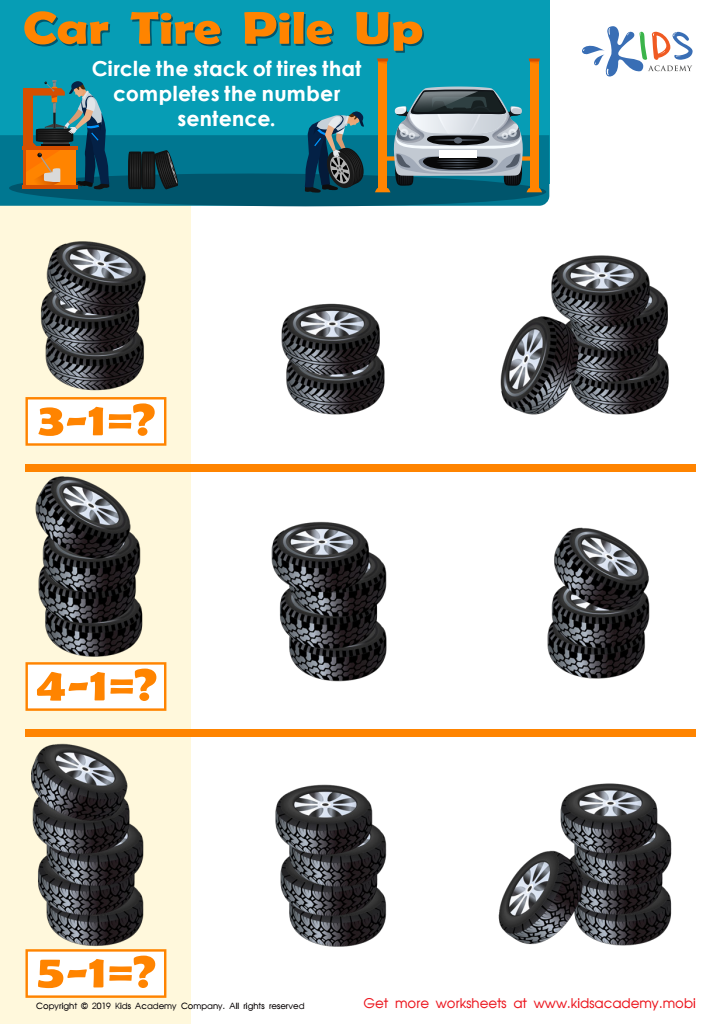
Car Tire Pile Up Worksheet

Car Tire Pile Up Worksheet

Examine the pic with your kids. Can they recognize the items piled up? The tires are organized in different quantities. Equations are on the left. Have your children work out the equations, counting the tire stacks to identify the correct answer.
Car Tire Pile Up Worksheet
Worksheet
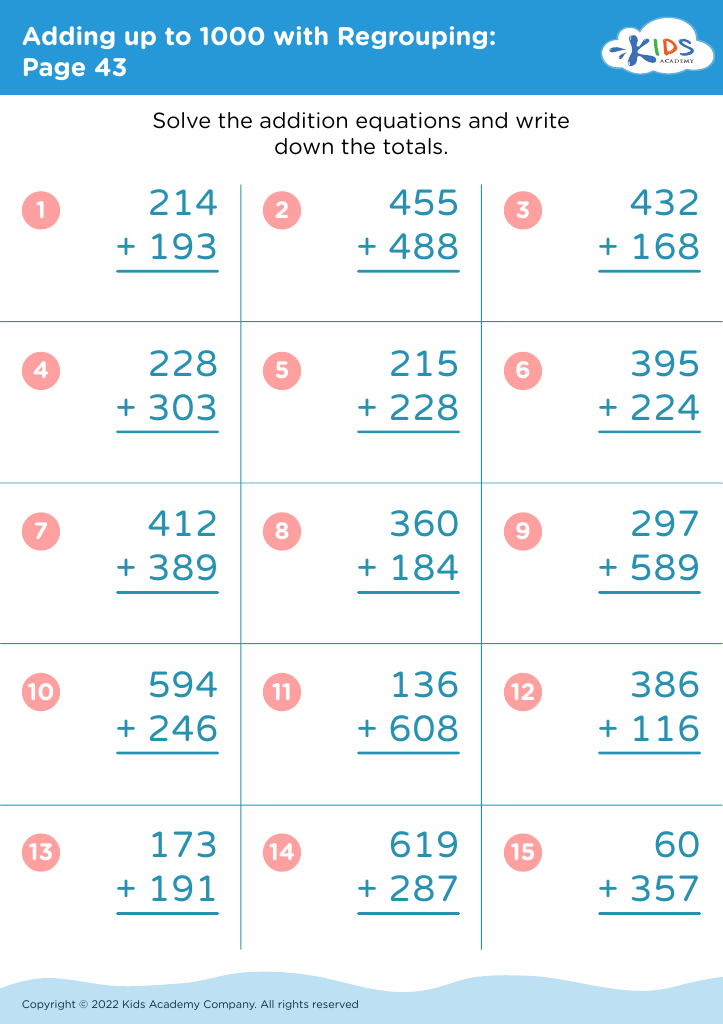
Adding up to 1000 with Regrouping: Page 43
Worksheet
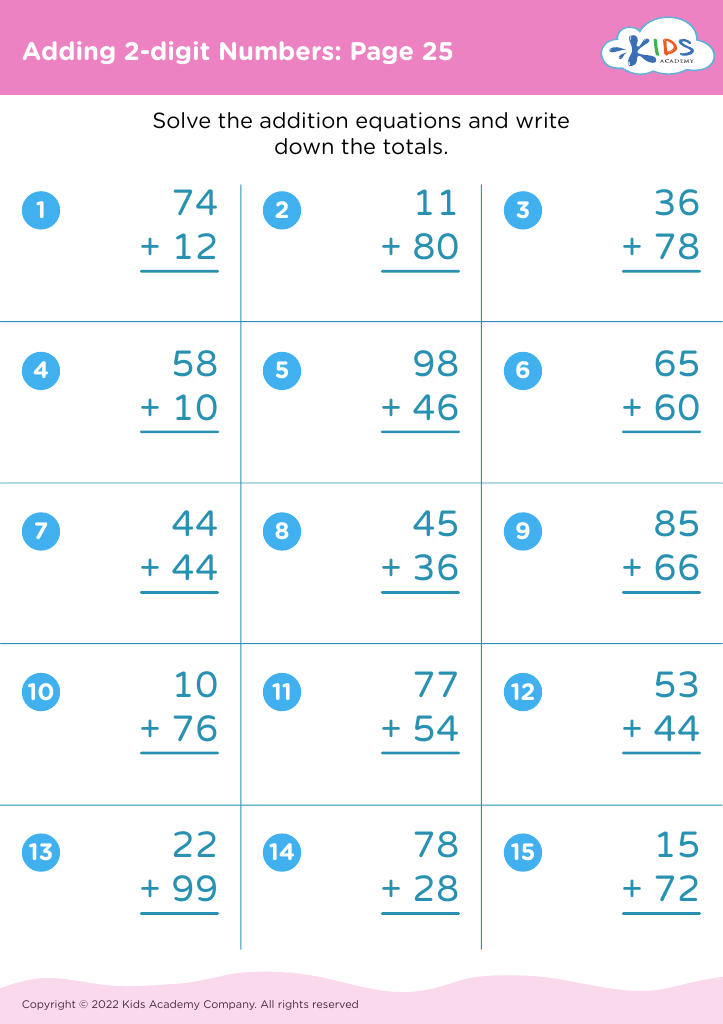
Adding 2-digit Numbers: Page 25

Adding 2-digit Numbers: Page 25

Adding 2-digit Numbers: Page 25
Worksheet
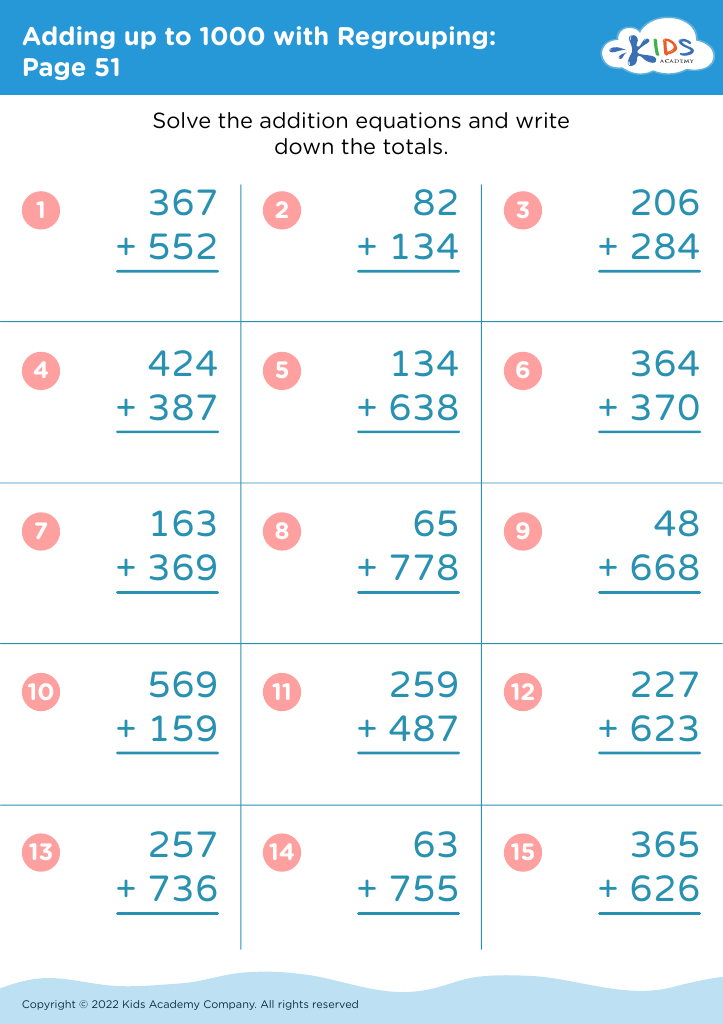
Adding up to 1000 with Regrouping: Page 51
Worksheet
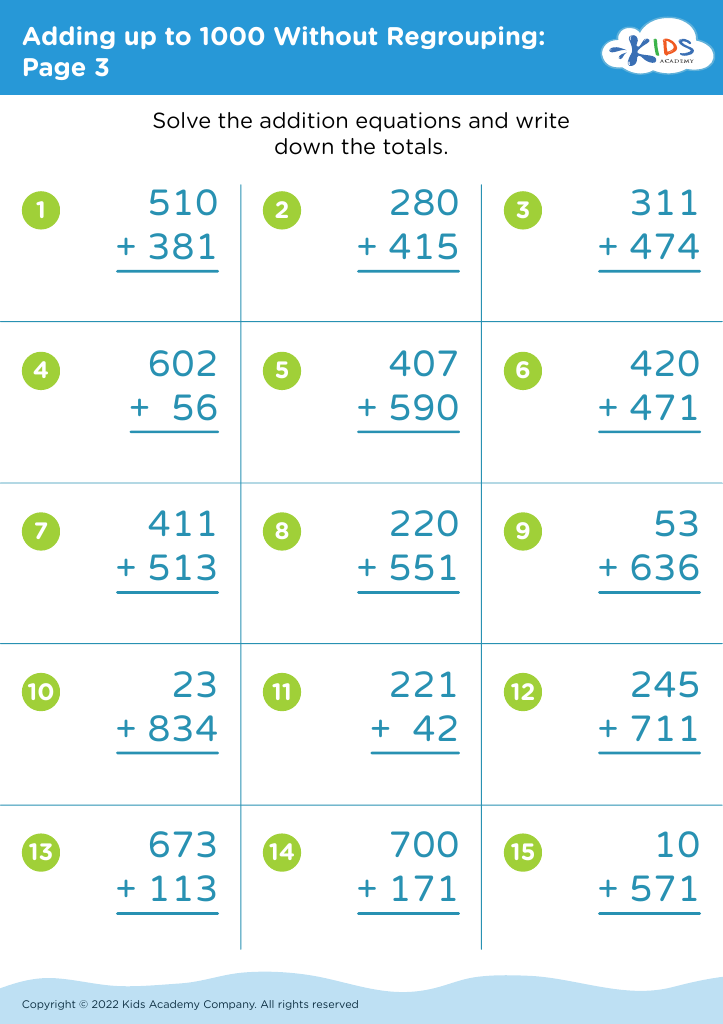
Adding up to 1000 Without Regrouping: Page 3
Worksheet
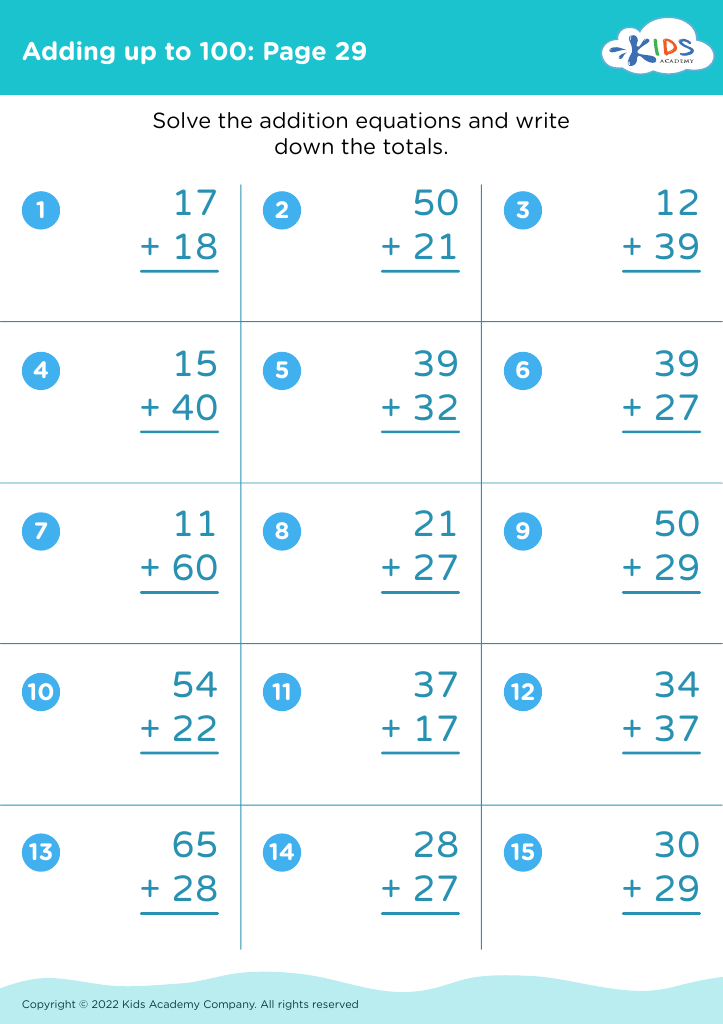
Adding up to 100: Page 29

Adding up to 100: Page 29

Adding up to 100: Page 29
Worksheet
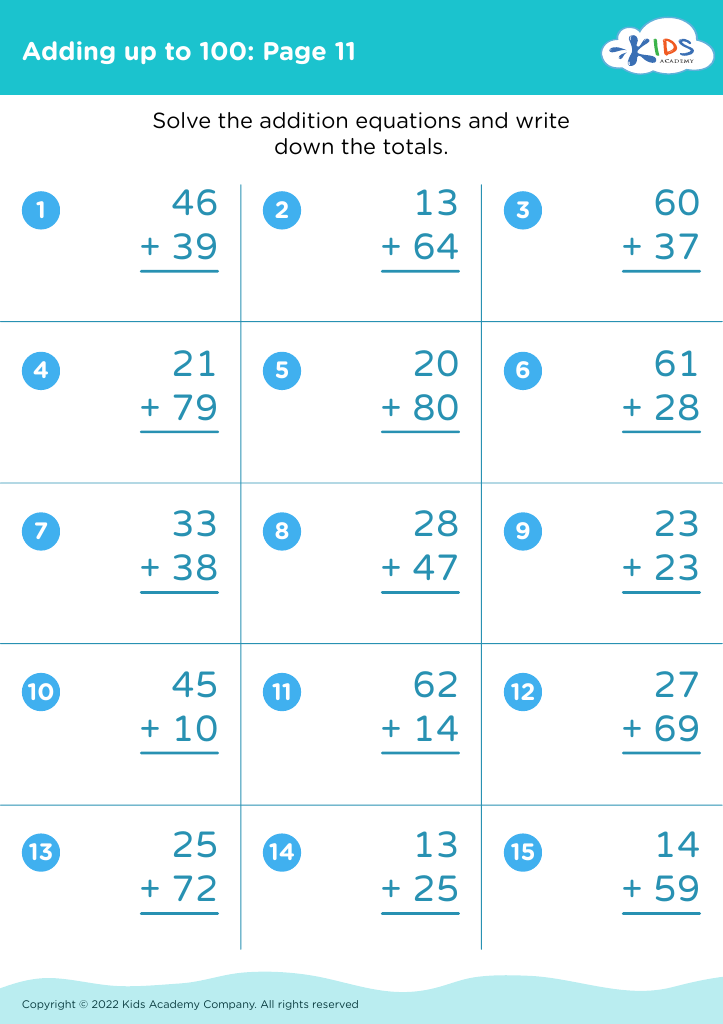
Adding up to 100: Page 11

Adding up to 100: Page 11

Adding up to 100: Page 11
Worksheet
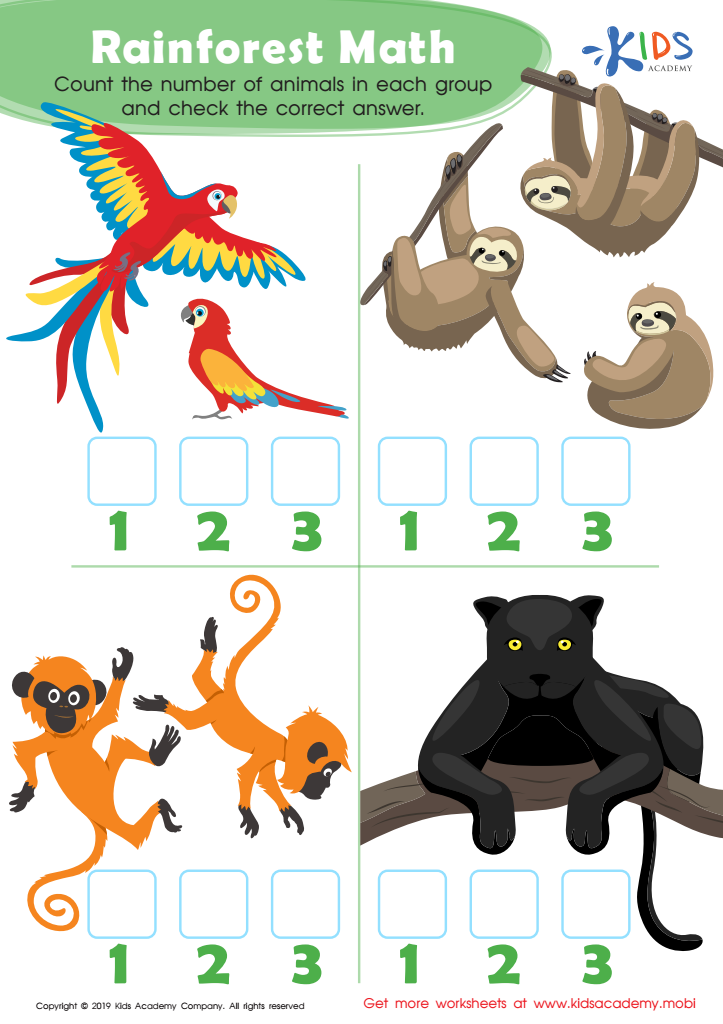
Rainforest Math Worksheet

Rainforest Math Worksheet

Kids love learning about rainforest animals! This worksheet helps them with counting and number sense. It features recognizable rainforest animals and asks children to choose the correct number from the answer choices. It's a fun way for children to build their skills - without even knowing it!
Rainforest Math Worksheet
Worksheet
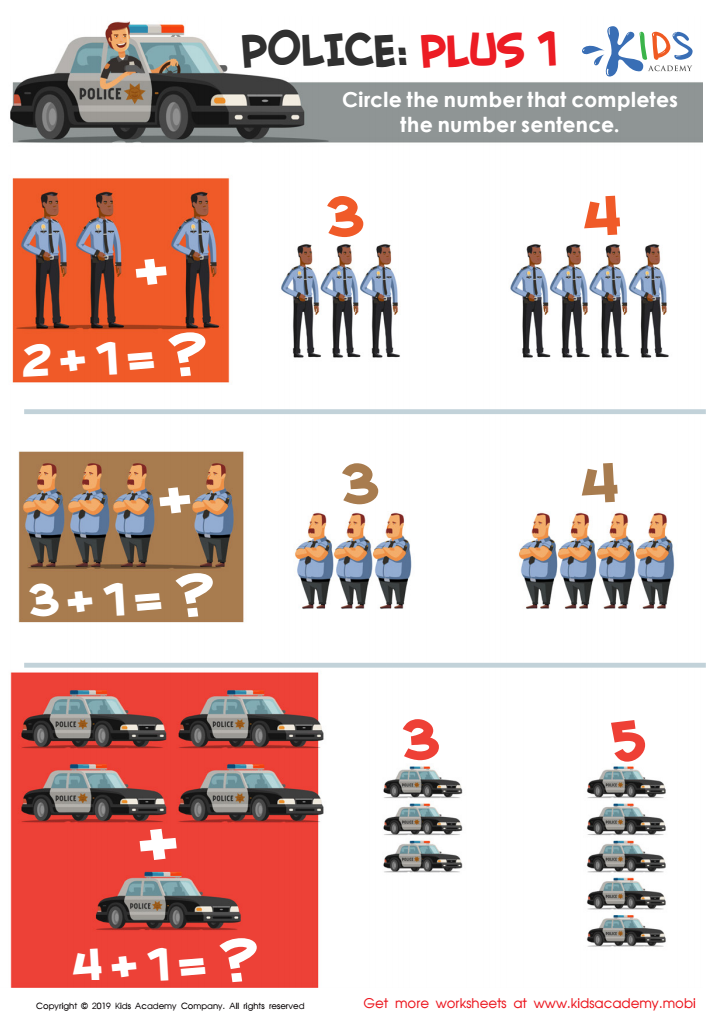
Police: Plus 1 Worksheet
Police: Plus 1 Worksheet
Help your kids count the policemen in the worksheet and circle the number that completes the number sentence. It's a great way to improve their counting and addition skills. Discuss with your kids how policemen contribute to the community too.
Police: Plus 1 Worksheet

Worksheet
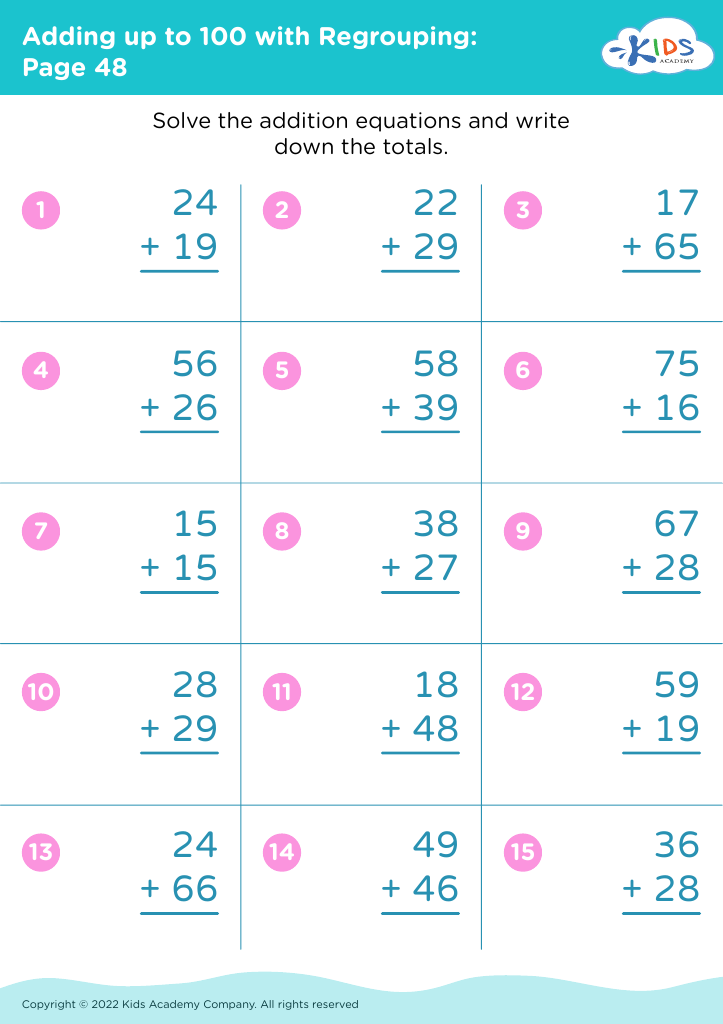
Adding up to 100 with Regrouping: Page 48
Worksheet
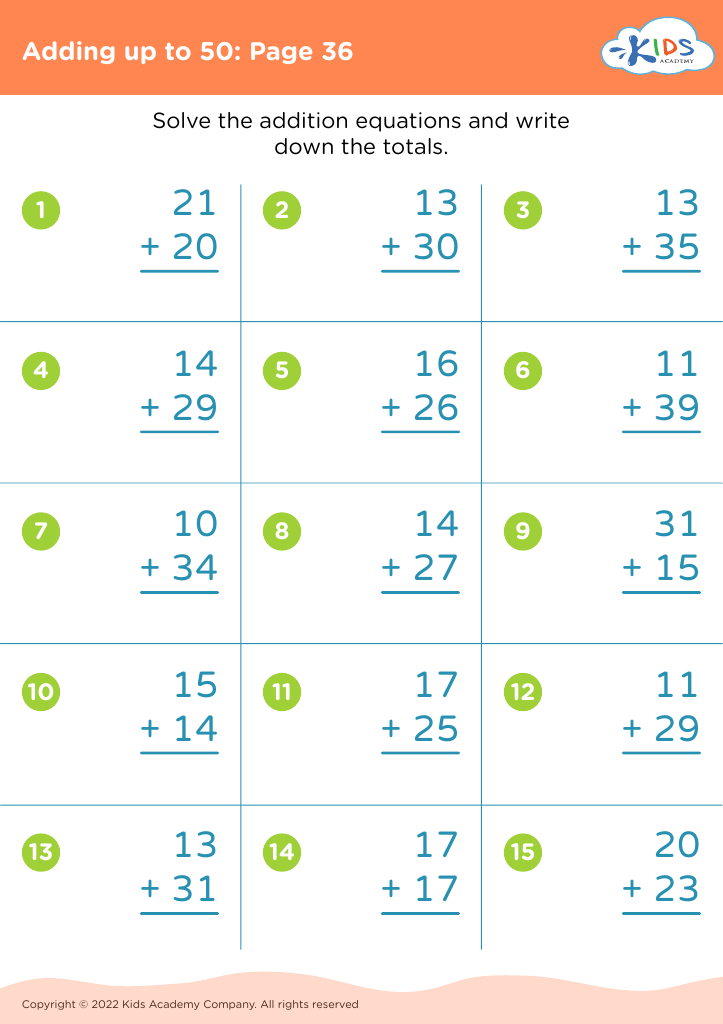
Adding up to 50: Page 36

Adding up to 50: Page 36

Adding up to 50: Page 36
Worksheet
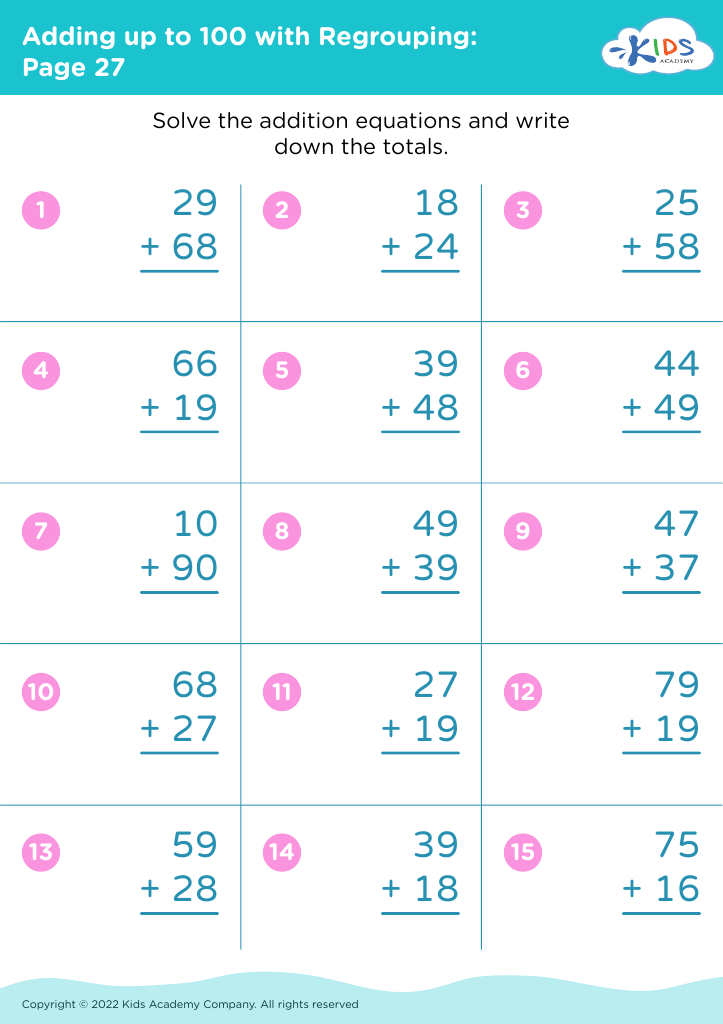
Adding up to 100 with Regrouping: Page 27
Worksheet
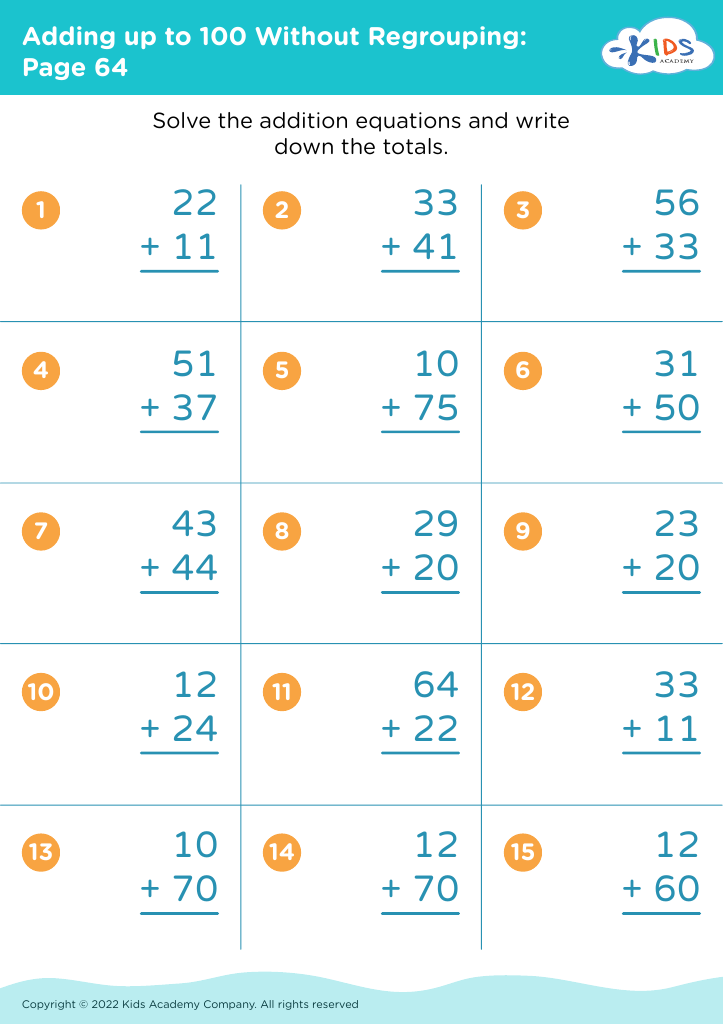
Adding up to 100 Without Regrouping: Page 64
Worksheet
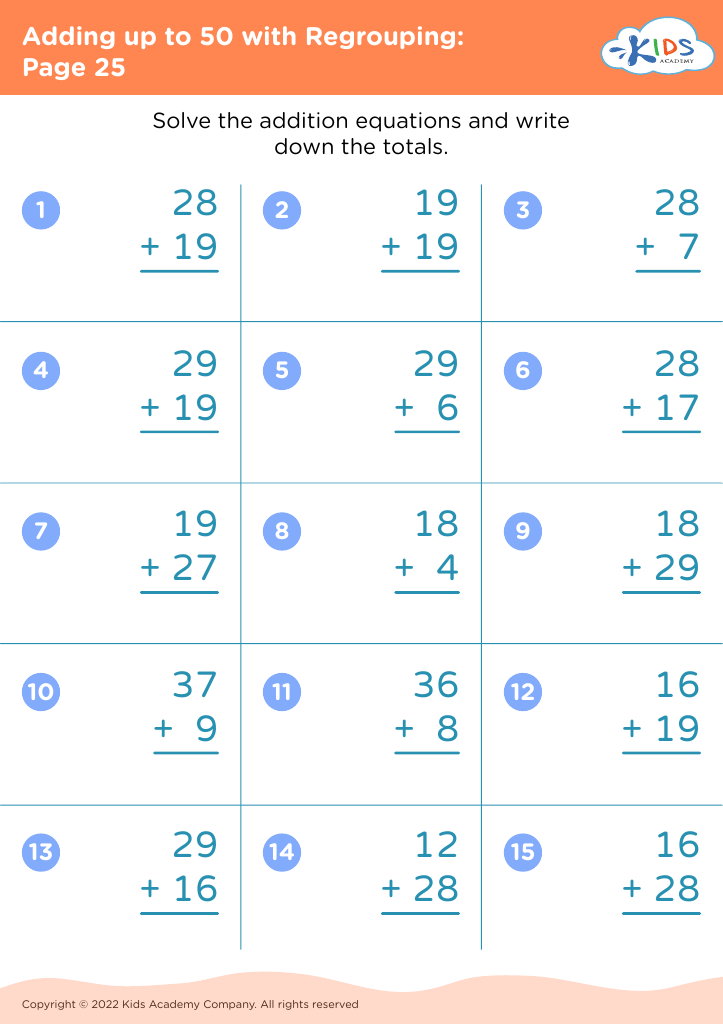
Adding up to 50 with Regrouping: Page 25
Worksheet
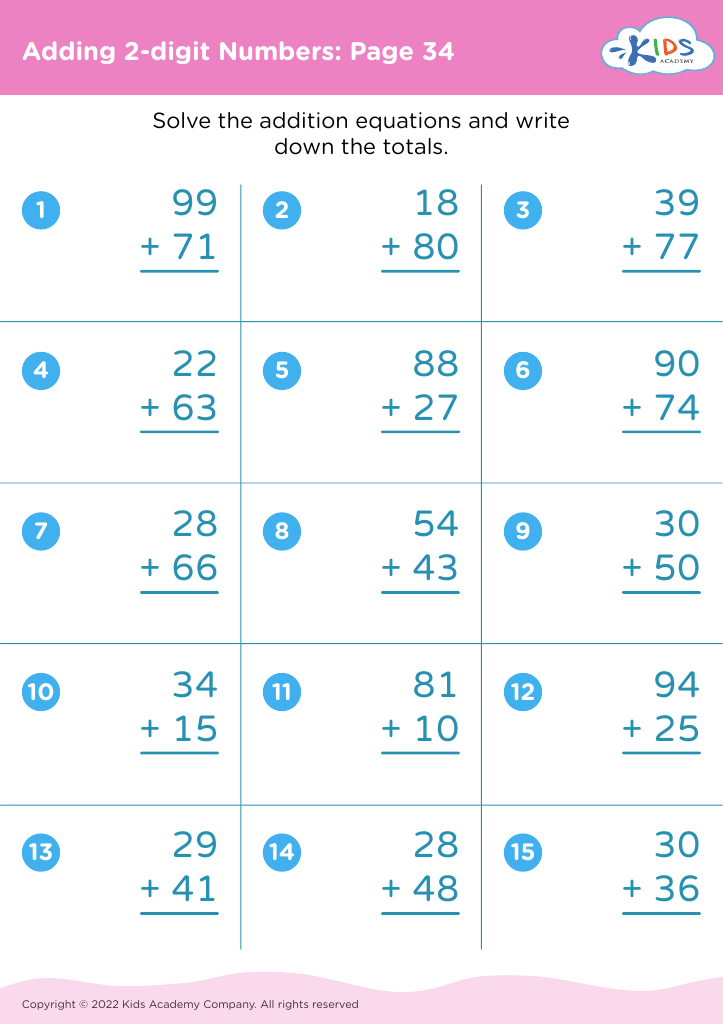
Adding 2-digit Numbers: Page 34

Adding 2-digit Numbers: Page 34

Adding 2-digit Numbers: Page 34
Worksheet
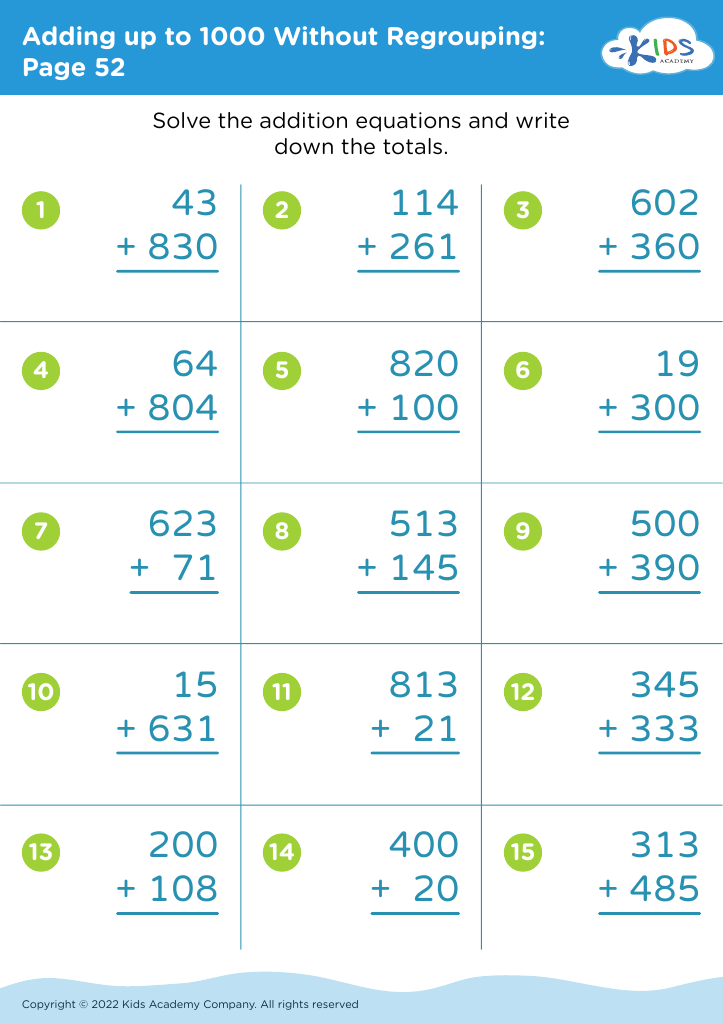
Adding up to 1000 Without Regrouping: Page 52
Worksheet
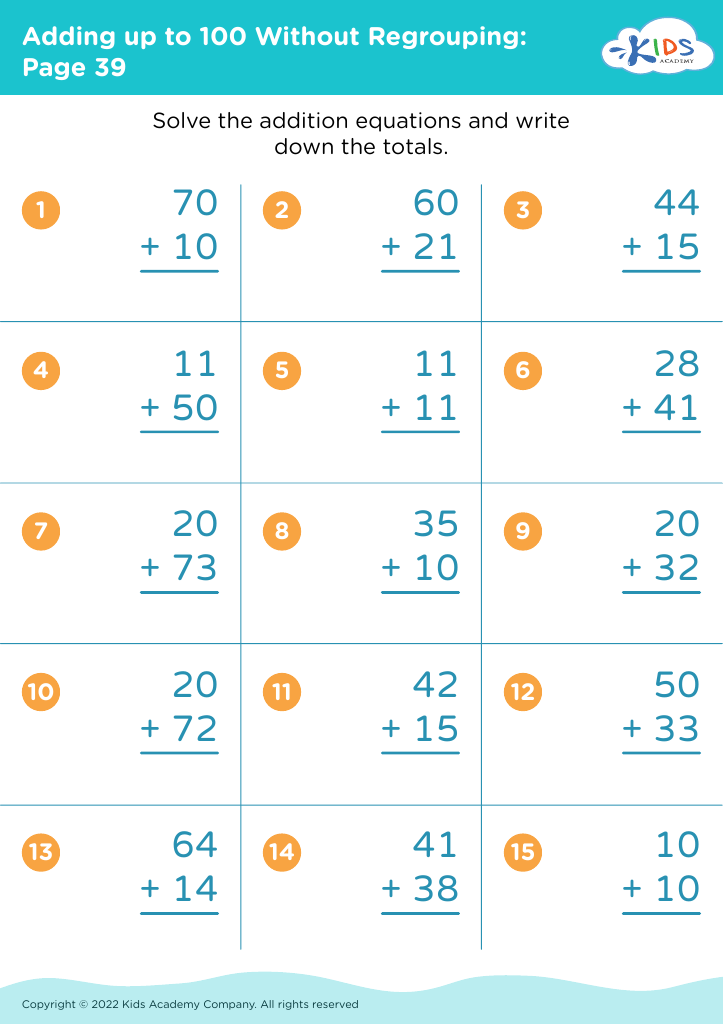
Adding up to 100 Without Regrouping: Page 39
Worksheet
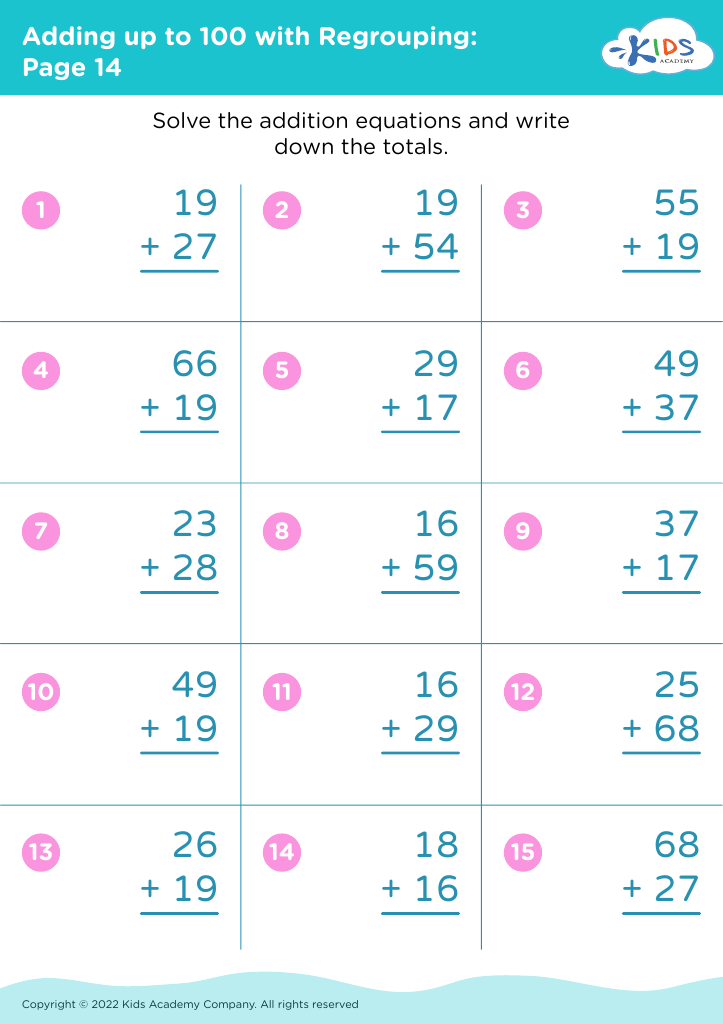
Adding up to 100 with Regrouping: Page 14
Worksheet


Improving counting skills in children aged 6-8 is crucial for their overall mathematical development and future academic success. During these formative years, children are in the early stages of understanding numbers and basic arithmetic, which are foundational for more complex math concepts they will encounter later on.

First and foremost, counting is an essential life skill. It lays the groundwork for understanding quantity, order, and patterns—key concepts not only in math but in everyday tasks like cooking, shopping, and time management. A strong foundation in counting enables children to perform more advanced operations such as addition, subtraction, and measurement with greater ease and confidence.

Moreover, enhancing counting skills boosts cognitive abilities like logical reasoning, memory, and problem-solving. These skills are transferable and advantageous across various subjects and real-life scenarios. For example, recognizing numerical patterns can improve data interpretation skills, which are valuable in science, technology, engineering, and math (STEM) fields.

In addition, mastering counting early on enhances a child's confidence and fosters a positive attitude toward learning. When children feel competent in their abilities, they are more likely to engage in and enjoy academic pursuits, creating a virtuous cycle of learning and curiosity.

Overall, investing time and resources into improving counting skills for children aged 6-8 sets the stage for their academic achievements and lifelong problem-solving capabilities.