
Pattern recognition Math Worksheets for Ages 6-8
17 filtered results
Difficulty Level
Grade
Age
-
From - To
Subject
Activity
Standards
Discover an engaging collection of Pattern Recognition Math Worksheets designed for ages 6-8. These worksheets help young learners develop crucial skills by identifying and analyzing patterns through fun activities. Your child will enhance their logical thinking and problem-solving abilities while enjoying colorful illustrations and age-appropriate exercises. Each worksheet fosters creativity and encourages independent learning, making math enjoyable. Perfect for home or classroom use, these resources support early math education and prepare children for more complex concepts. Download and print our interactive worksheets today to spark a love for learning in your child and help them build a strong math foundation!
Favorites
With answer key
Interactive
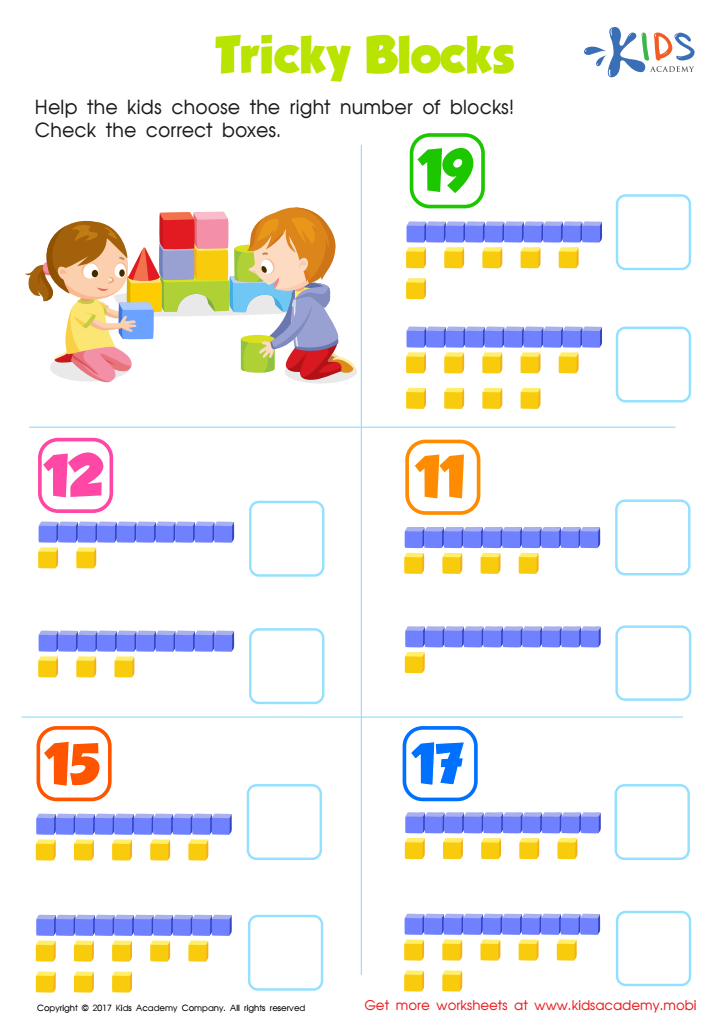
Tricky Blocks Worksheet
Help your child count with this printable worksheet. You'll be able to explain the technicalities of each answer as you work together to count the boxes and choose the correct number in the spaces provided. This will help your child better understand the concept and will go faster than if they do it alone.
 Assign to My Students
Tricky Blocks Worksheet
Worksheet
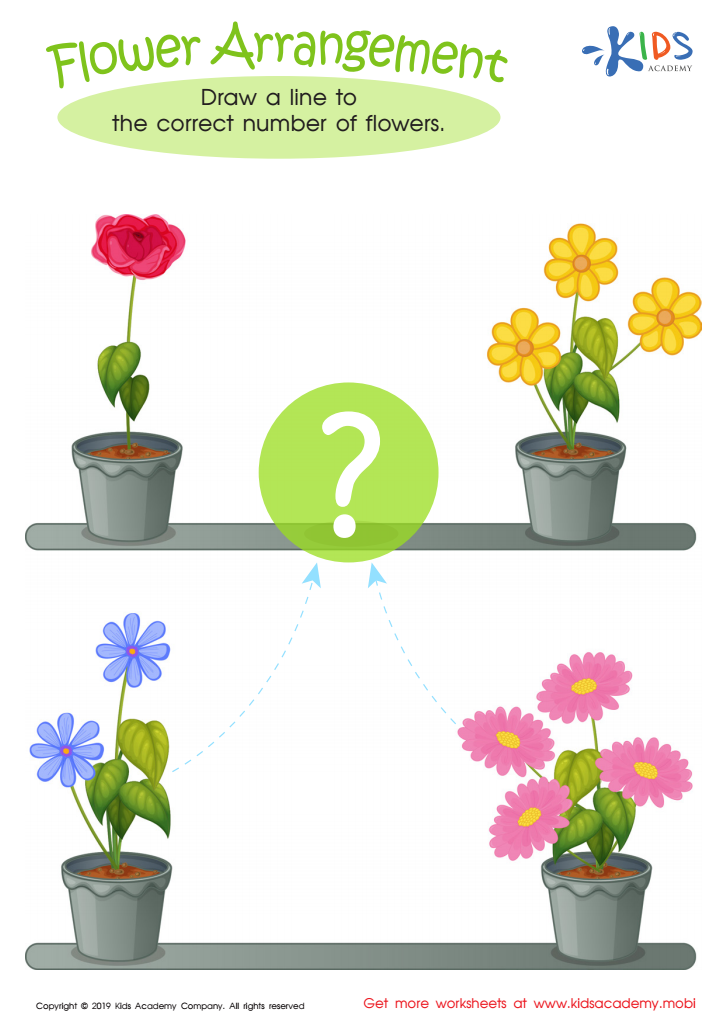
Flower Arrangement Worksheet
Your math whizzes can use flower power to showcase their counting skills with this bright PDF! One-to-one representation in pictures helps children build number sense, which leads to better math and computation efficiencies. This PDF features traceable lines for kids to draw to the correct number of flowers, all while practicing their counting with pretty pictures.
Flower Arrangement Worksheet
Worksheet
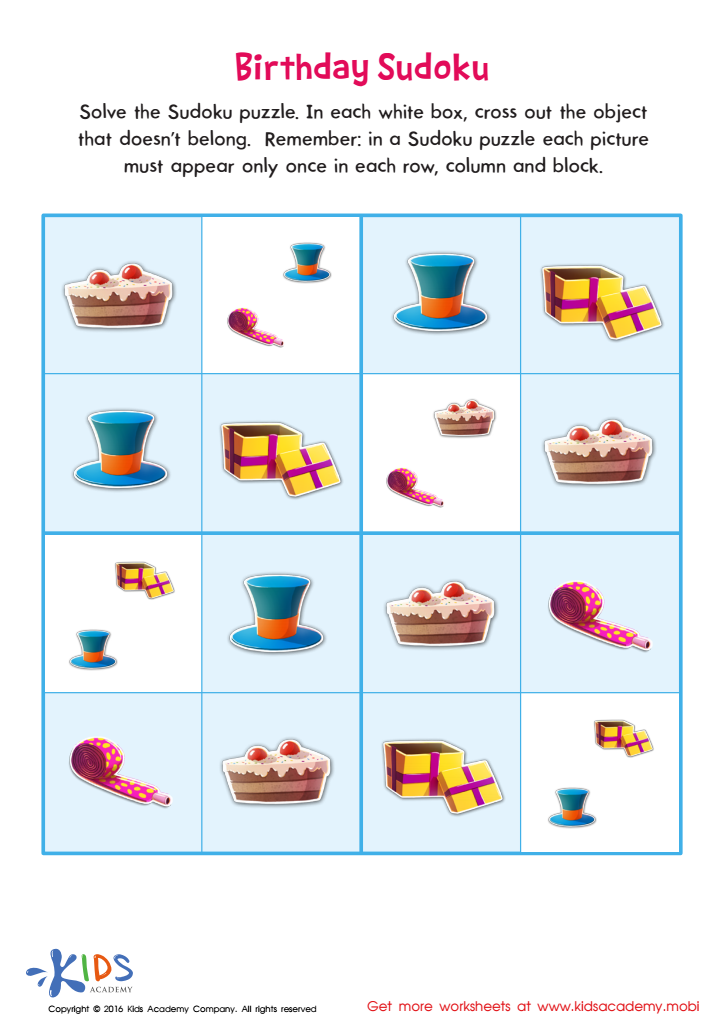
Birthday Sudoku Sorting Worksheet
With this Sudoku printable, your child will have fun and strengthen their problem-solving skills.
Birthday Sudoku Sorting Worksheet
Worksheet
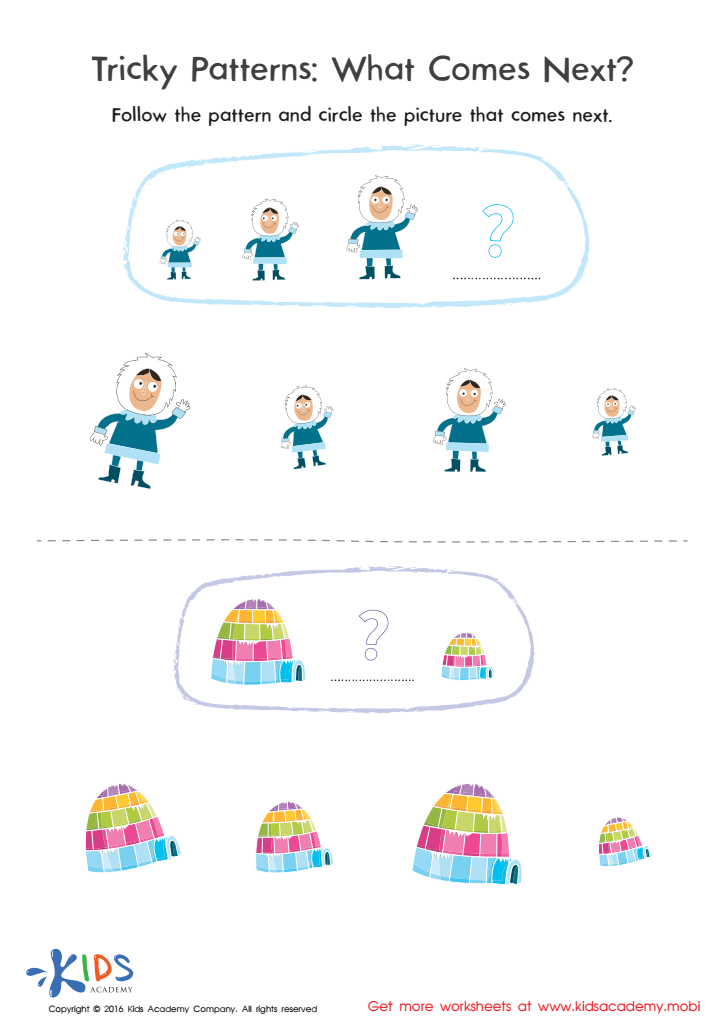
Tricky Patterns Size Worksheet
Give your child a head start on critical thinking with this picture pattern worksheet! It's an intriguingly fun way to help them master important skills like spatial reasoning, critical thinking, and logical reasoning. They'll differentiate between shapes, complete the pattern with a logical answer, and look for and understand patterns. It's the perfect foundation for future math skills, setting them up for future success!
Tricky Patterns Size Worksheet
Worksheet
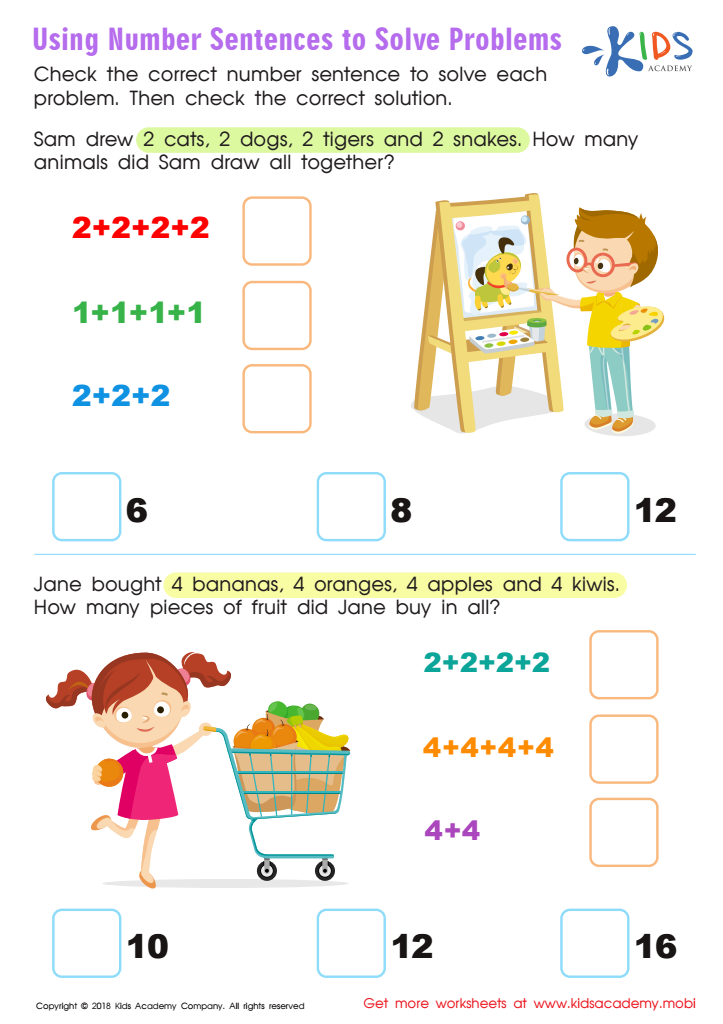
Using Number Sentences to Solve Problems Worksheet
Solving math problems requires an efficient strategy. Picture representation can help young mathematicians with basic addition problems, especially when it involves repeated addends. As they gain confidence, they'll be able to apply their number sentence solving abilities to more complex equations.
Using Number Sentences to Solve Problems Worksheet
Worksheet
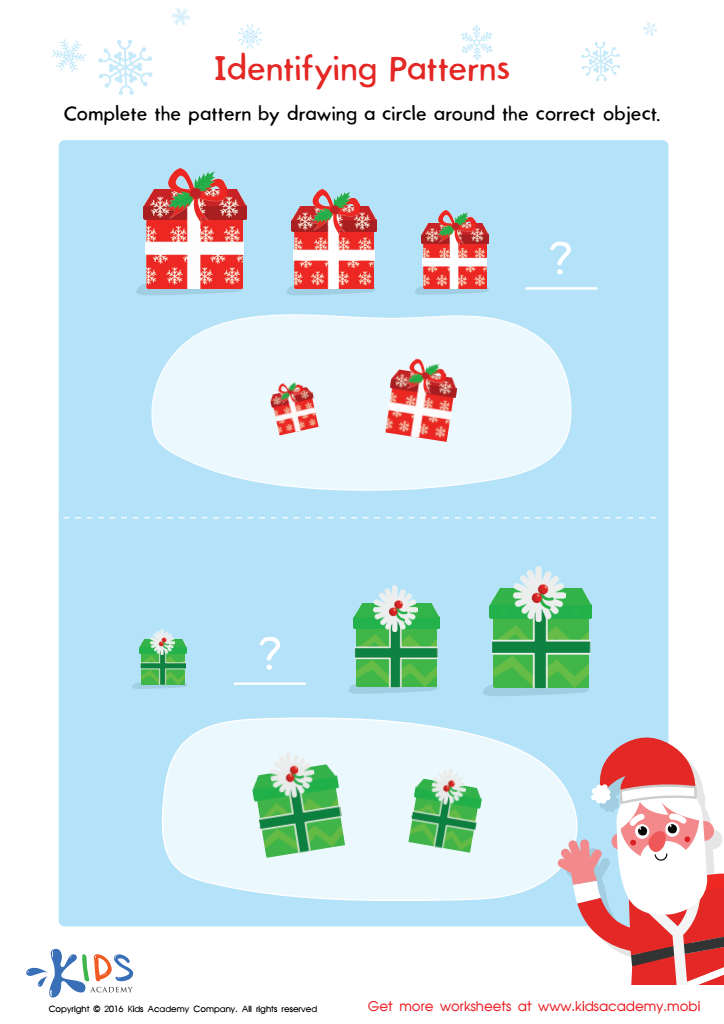
Identifying Patterns Worksheet
Kids can have fun as they learn with this festive worksheet! They'll practice early math skills while identifying patterns with colorful Christmas presents. Have your child get ready for the holidays by finding out which box comes next in the pattern!
Identifying Patterns Worksheet
Worksheet
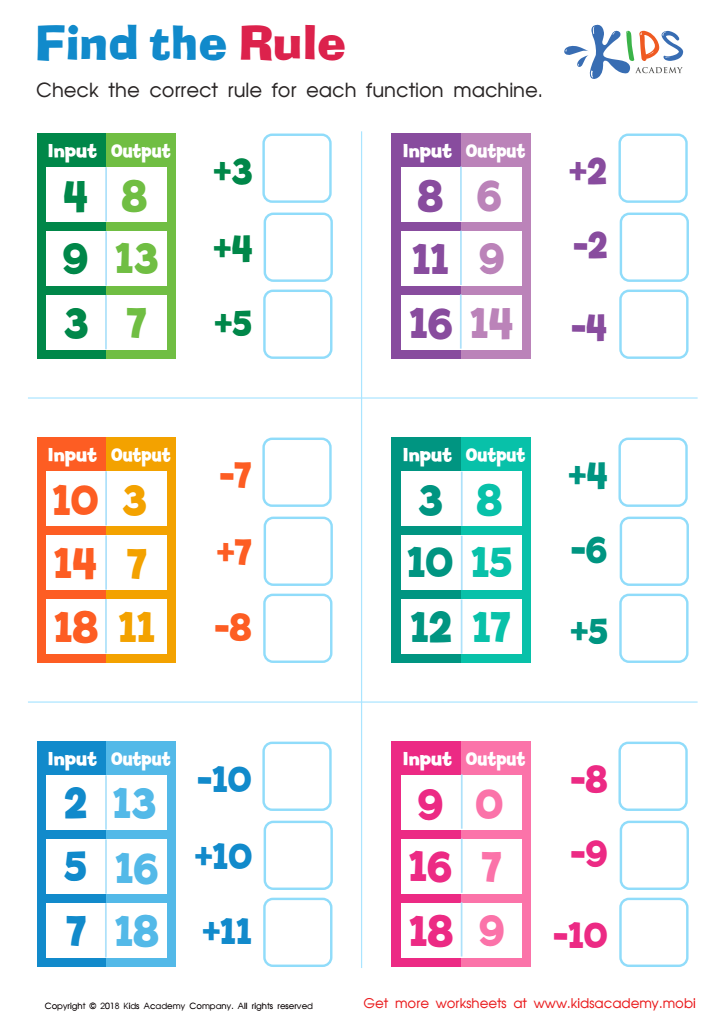
Find the Rule Worksheet
A function machine is an elementary math tool used to find an output by applying a rule, like addition or subtraction, to an input. Children use the diagram to understand the relationship between each input and output, with this worksheet helping them to analyze the machine and find the rule being used.
Find the Rule Worksheet
Worksheet
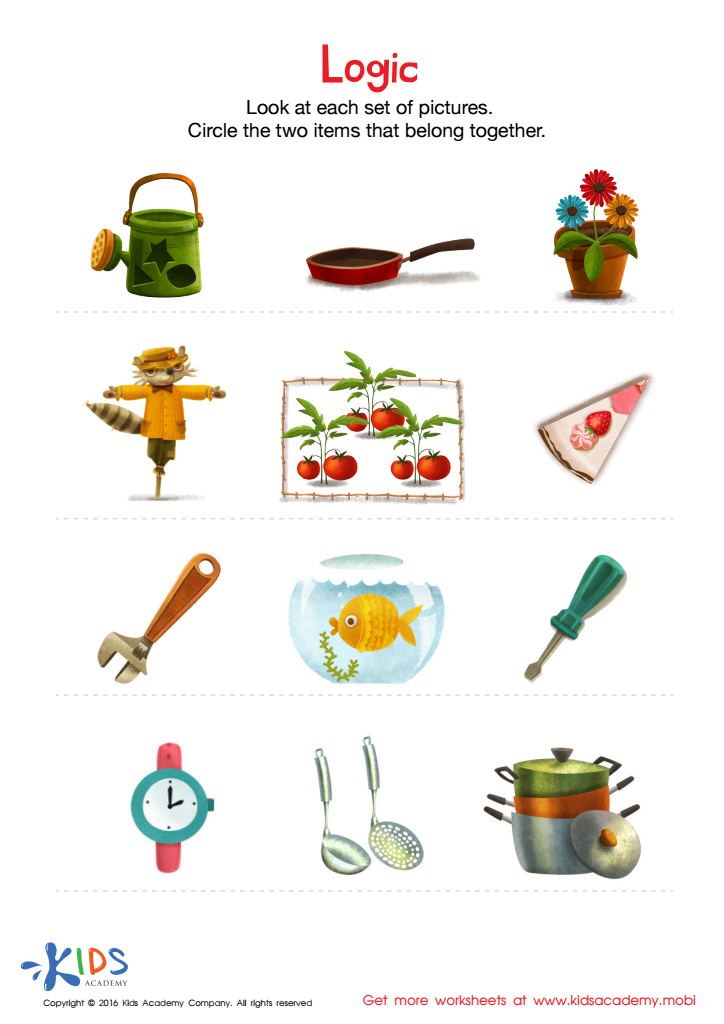
Logic Game Sorting Worksheet
Start your child's logic and reasoning development early with this fun matching worksheet! Through cute images and simple conversations, your little one can learn problem-solving, categorization, and matching skills. Plus, it's a great way for children to explore how items are used in real life. Try it and watch them boost skills with ease and fun!
Logic Game Sorting Worksheet
Worksheet
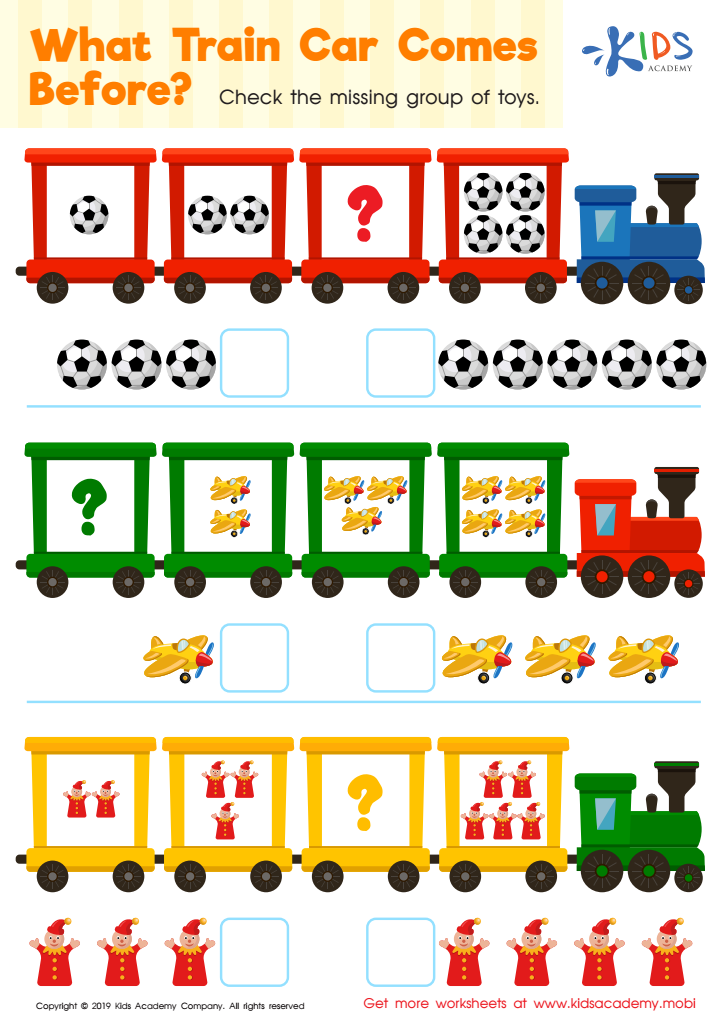
What Train Car Comes Before? Worksheet
Download this worksheet with your kids and have them identify the colorful objects pictured. Count the toys in the three trains together, then check the missing group of toys from the options provided. Have fun! (80 words)
What Train Car Comes Before? Worksheet
Worksheet
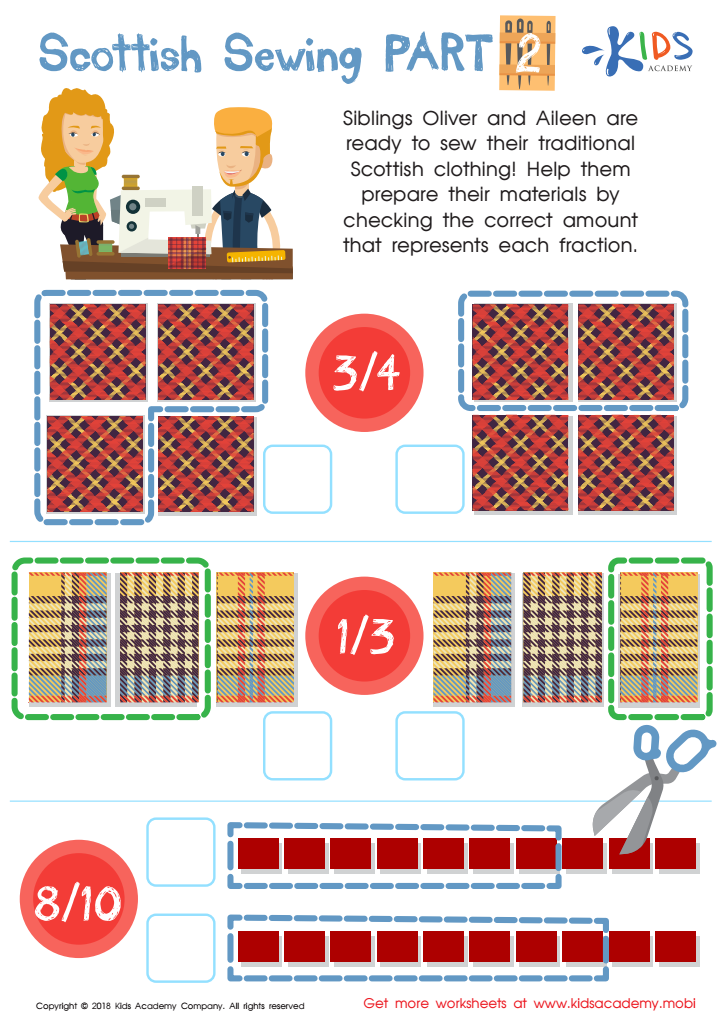
Scottish Sewing Part 2 Worksheet
Oliver and Alleen are sewing traditional Scottish attire. Help your kids count the cloth and check the correct fraction to support them. Have your kids check the correct amount that represents each fraction to help the brother-sister duo prepare their material.
Scottish Sewing Part 2 Worksheet
Worksheet
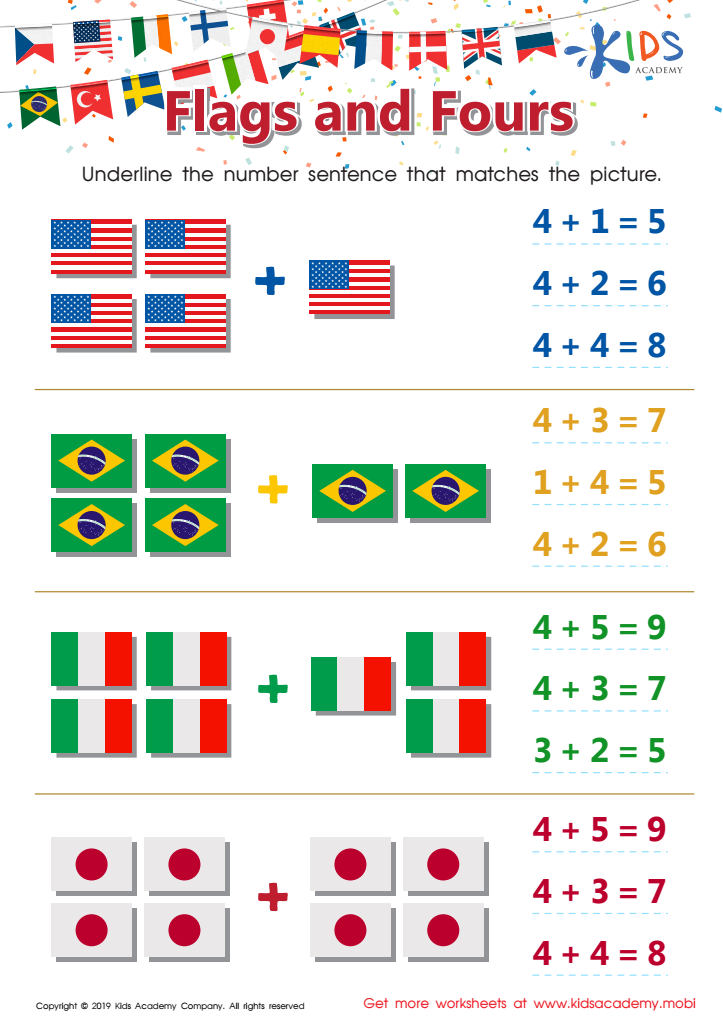
Flags and Fours Worksheet
Have your kids identify country flags from this colorful printout. Then, ask them to underline the number sentence that goes with each flag. Combining math with national flag recognition strengthens kids' knowledge of both, promoting an understanding of identity and numbers.
Flags and Fours Worksheet
Worksheet
Join Kids Academy for Free
Who is primarily going to use this learning content?





.jpg)
Pattern recognition is a fundamental skill in mathematics, particularly for children aged 6-8, and teachers and parents should prioritize its development for several reasons. First, it fosters logical thinking and problem-solving skills. Recognizing patterns helps children predict outcomes and derive rules, laying a strong foundation for more complex mathematical concepts. Engaging with patterns also enhances cognitive abilities like critical thinking and creativity, essential skills in all areas of learning.
Additionally, pattern recognition in math can boost children's confidence. When they identify and extend patterns, they experience a sense of achievement, which encourages a positive attitude toward math and learning in general. This emotional engagement is vital at this developmental stage, as it helps establish a lifelong appreciation for mathematics.
Furthermore, the skills acquired through pattern recognition extend beyond math. They are applicable in areas such as science, art, and daily problem-solving. For example, recognizing patterns in nature can ignite curiosity and encourage exploratory learning. By integrating pattern activities into learning experiences, teachers and parents can cultivate a robust mathematical mindset in young learners, promoting resilience and adaptability as they encounter more complex concepts in the future.








