
Counting skills Reading Worksheets for Ages 6-8
29 filtered results
Difficulty Level
Grade
Age
-
From - To
Subject
Activity
Standards
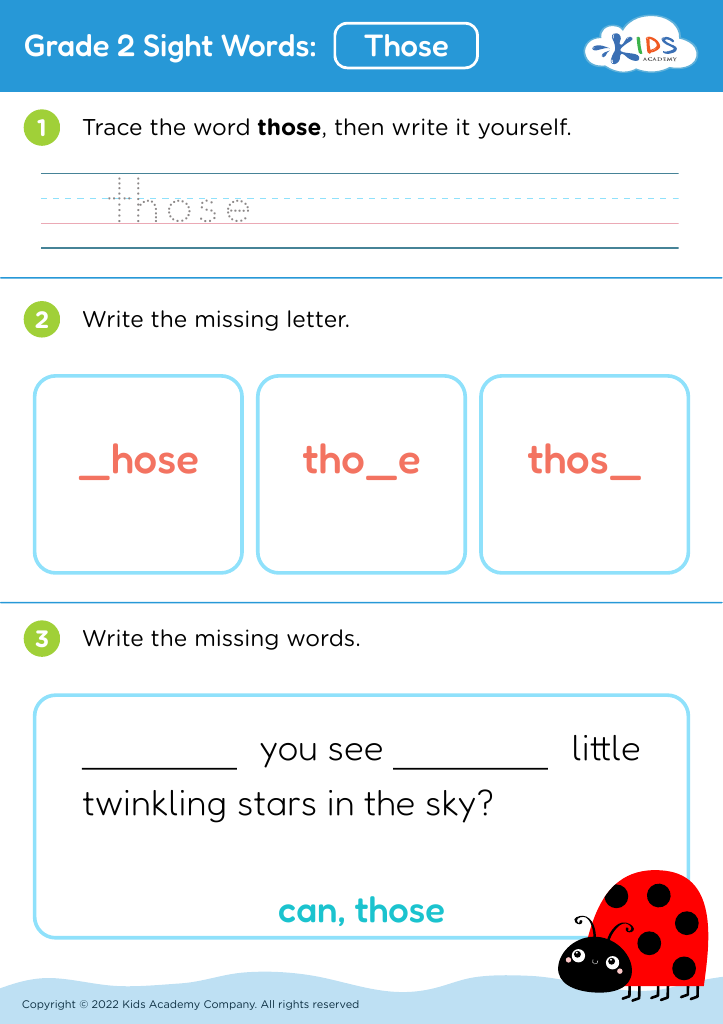
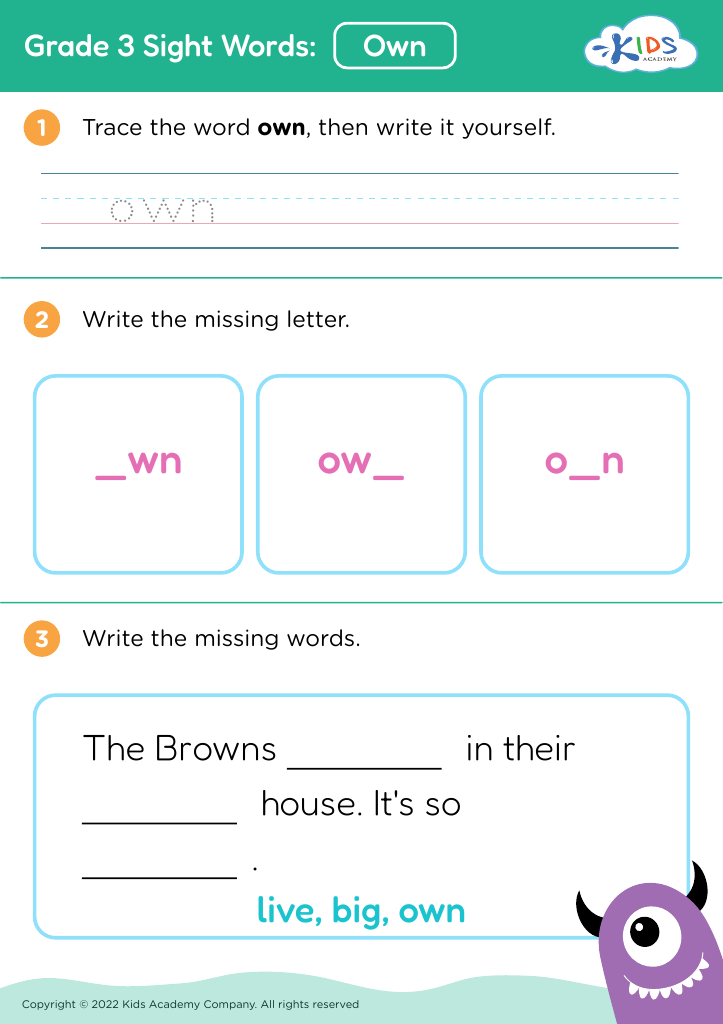
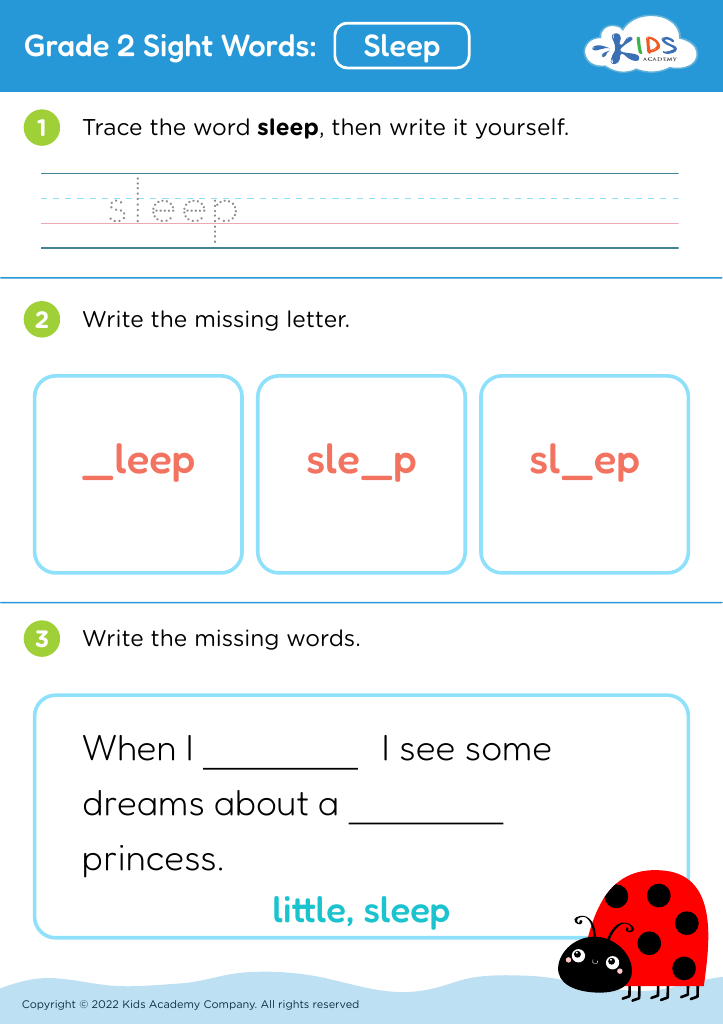
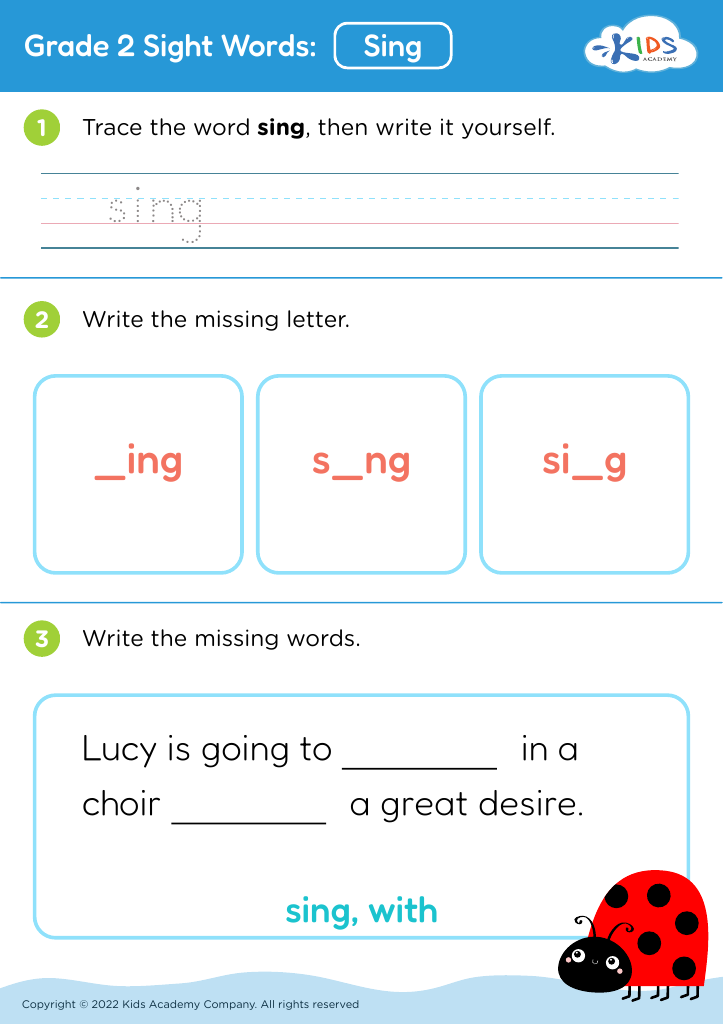
Our "Counting Skills Reading Worksheets for Ages 6-8" combine engaging exercises with entertaining stories to build a strong foundation in math essentials. These resources are designed to enhance young learners' counting abilities, improving their number sense and mathematical reasoning. Through fun puzzles, colorful illustrations, and interactive activities, children will enjoy mastering counting from 1 to 100, skip counting, and basic addition and subtraction. Perfect for classroom use or at-home practice, these worksheets present counting concepts in a captivating way, ensuring kids are not only learning but also having a blast while progressing through their early math education journey.
Favorites
With answer key
Interactive
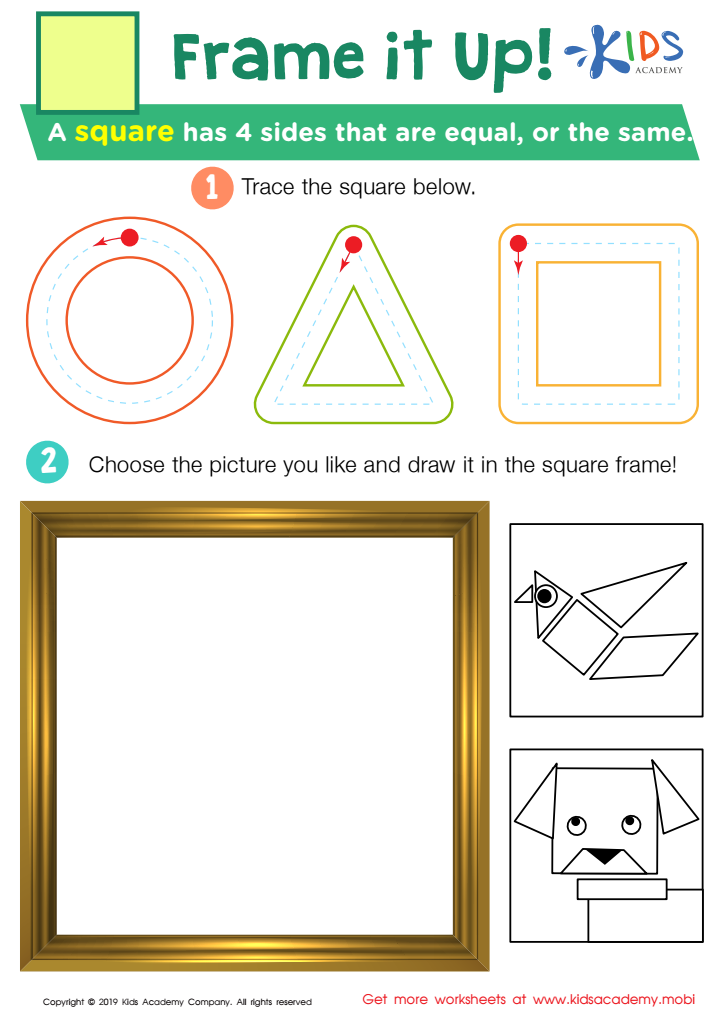
Frame it Up Worksheet
This worksheet helps kids learn the difference between squares and other shapes. It guides them to trace a square and draw a picture inside it. Examples of shapes-based drawings are included. Kids will have fun and clear up any confusion about squares.
 Assign to My Students
Frame it Up Worksheet
Worksheet
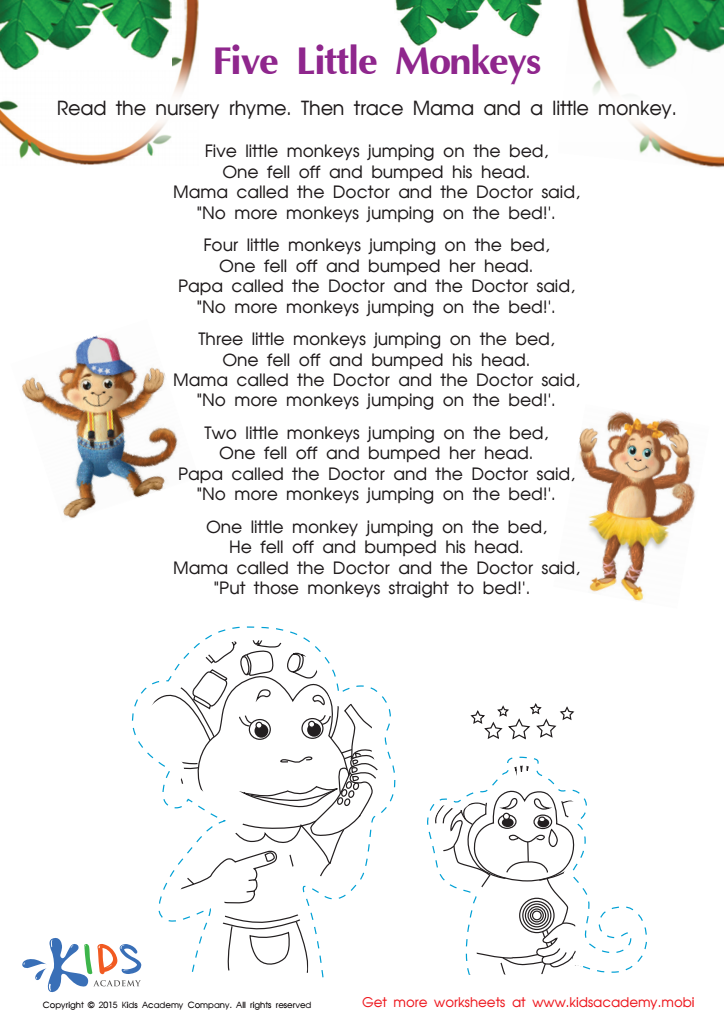
The Five Little Monkeys Nursery Rhyme Worksheet
Sing the beloved nursery rhyme "Five Little Monkeys" with your child, and add a finger play for extra fun! After a few times, encourage them to join in and fill the songs with laughter. Also, have fun coloring the worksheet featuring the monkeys and their Mama.
The Five Little Monkeys Nursery Rhyme Worksheet
Worksheet
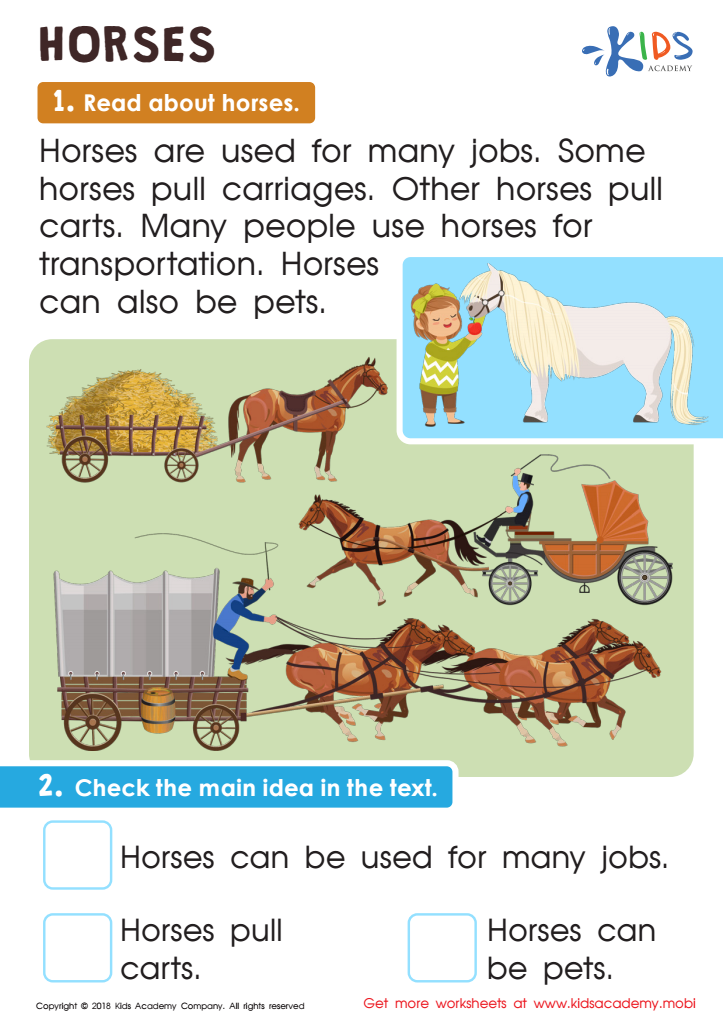
Horses Worksheet
Help your little reader differentiate between details and the main idea with this fun worksheet about horses. Kids will be excited to learn about the different roles horses play. To ensure they understand the overall concept, discuss it before having them choose the right statement at the end.
Horses Worksheet
Worksheet
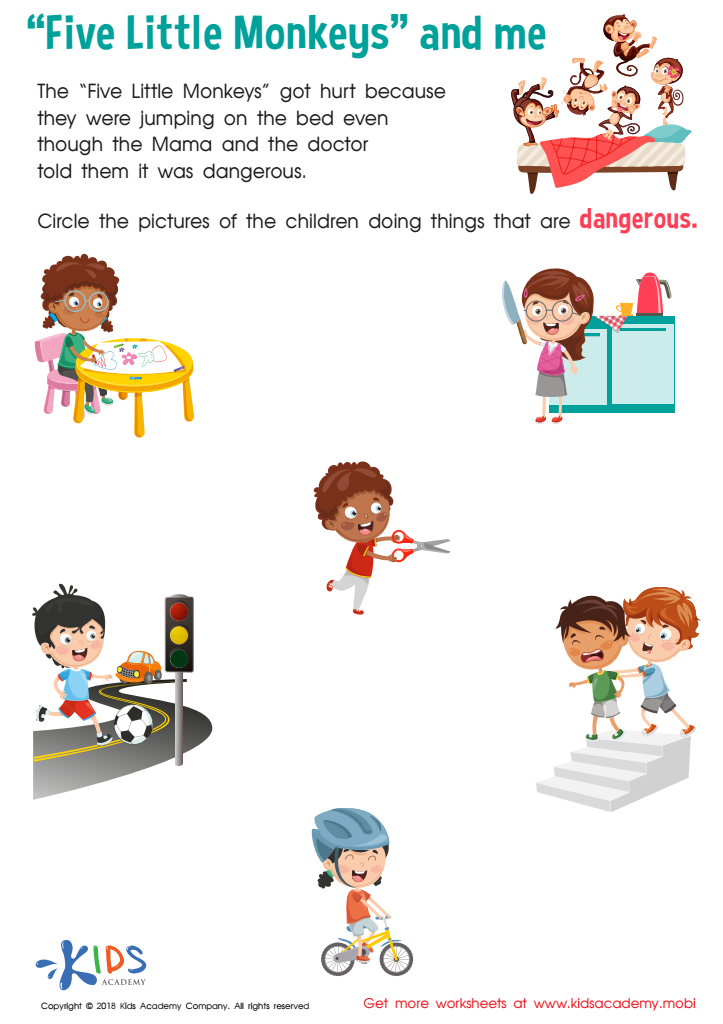
Five Little Monkeys and Me Worksheet
This free PDF worksheet provides preschoolers an understanding of danger and appropriate play. It allows them to recognize dangerous situations and why they can be risky, granting kids perspective from both parents and teachers. It's a fun, safe way to help them internalize what's dangerous and what's not.
Five Little Monkeys and Me Worksheet
Worksheet
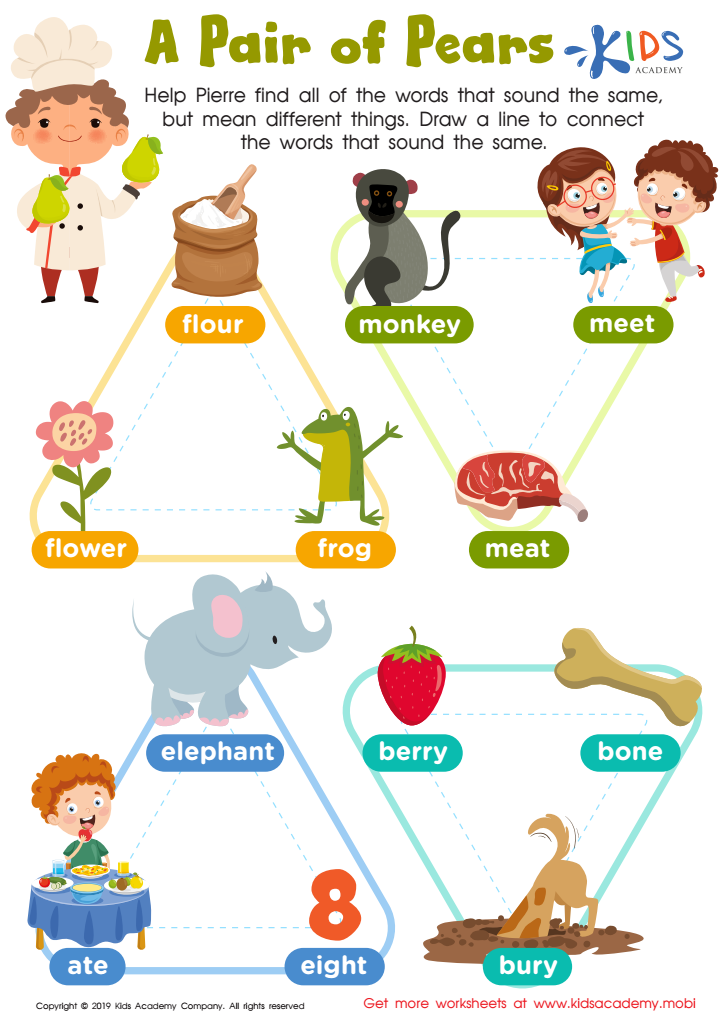
Pair Pears Worksheet
Young readers can have difficulty knowing when to use the right homophone. This free worksheet helps them use familiar imagery to understand better by connecting words that sound similar but are spelled and mean different things. Students will trace the lines to form a picture and have a reference image to differentiate between the different homophones.
Pair Pears Worksheet
Worksheet
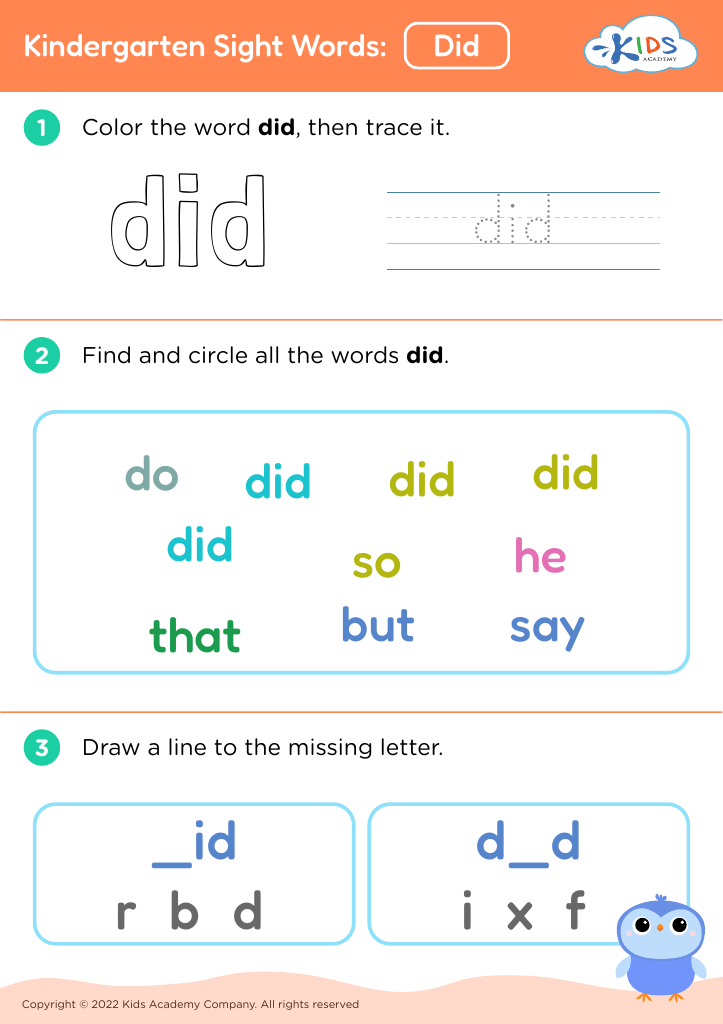
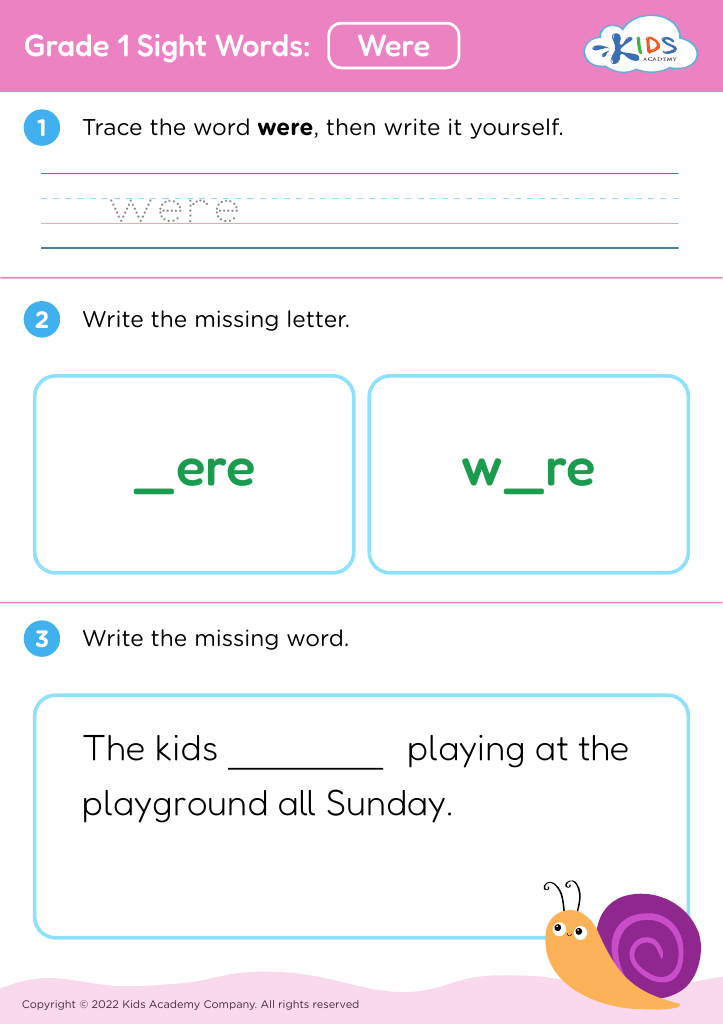
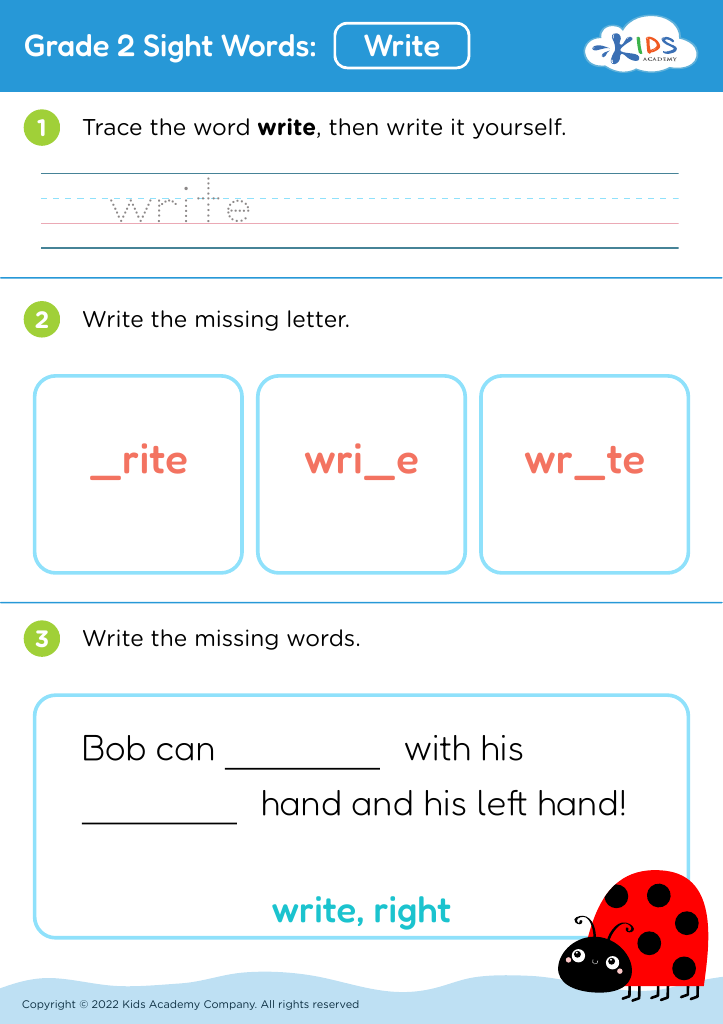
Join Kids Academy for Free
Who is primarily going to use this learning content?






Counting skills and reading ability are critical components of early childhood education for children aged 6-8. At this developmental stage, children are transitioning from learning foundational concepts to applying these skills in more complex ways. Counting goes beyond simple number recognition; it lays the groundwork for understanding mathematical operations and problem-solving skills. Proficiency in counting helps children grasp concepts such as addition, subtraction, sequencing, and even more advanced mathematics in the future.
On the other hand, reading skills are equally indispensable. Reading fluency and comprehension form the basis of all other learning, enabling children to access and engage with material across various subjects. Strong reading skills are associated with enhanced vocabulary, better communication abilities, and improved cognitive functions such as memory and critical thinking.
Parents and teachers who emphasize counting and reading are essentially equipping children with the tools they need for academic success and functional, independent living. Activities that support these skills also foster a love for learning, build confidence, and help children develop a sense of accomplishment. Given their long-term benefits, it’s crucial for educators and parents to nurture these skills through interactive lessons, supportive resources, and a stimulating learning environment.








