Filters

390 filtered results

Clear all filters
Favorites
With answer key
Interactive

390 filtered results

Difficulty Level

Grade


Subject

    Check out this FREE Trial Lesson on Science for age 6-8!

    Multiplication and Division Fact Families Multiplication Facts Part 1

    Favorites
    With answer key
    Interactive
    • 6-8
    • Science
    Stars and Constellations Worksheet
    Stars and Constellations Worksheet

    Stars and Constellations Worksheet

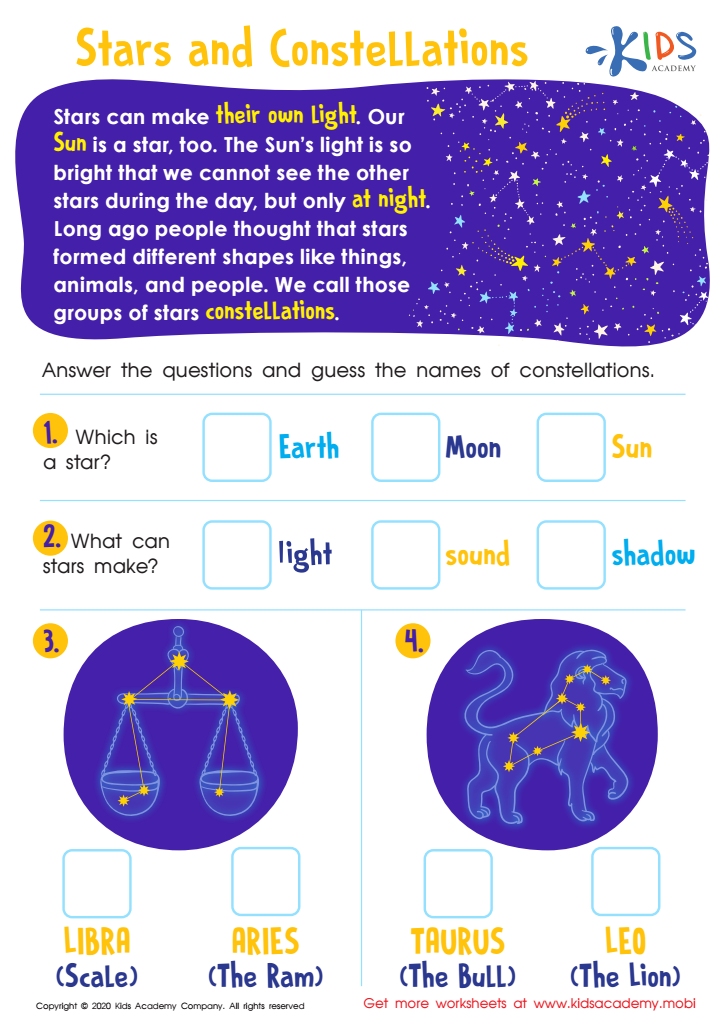
    Learn about stars and constellations with this entertaining worksheet! Read the passage at the top of the page to gain an understanding of stars, then test your child's knowledge with the questions below. Check the right answers and finish this science worksheet with your child - they'll be amazed that stars can make their own light, just like the sun!
    Stars and Constellations Worksheet
    Worksheet
    Animals and Plants: Assesment 1 Worksheet
    Animals and Plants: Assesment 1 Worksheet

    Animals and Plants: Assessment 1 Worksheet
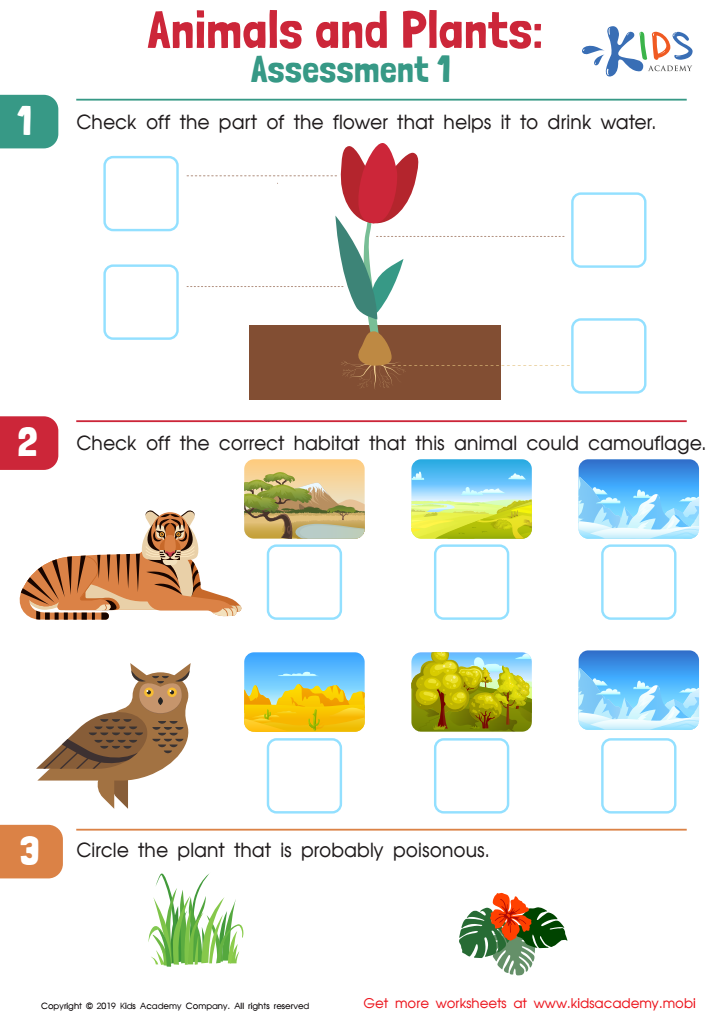
    Do you want to easily assess your child's understanding of basic science concepts? This colorful PDF offers a free opportunity for them to test their knowledge about parts of a flower, poisonous plants, animal habitats and more! Bright pictures make it fun and easy for you to see what they know.
    Animals and Plants: Assessment 1 Worksheet
    Worksheet
    Compare Two Sources Worksheet
    Compare Two Sources Worksheet

    Compare Two Sources Worksheet

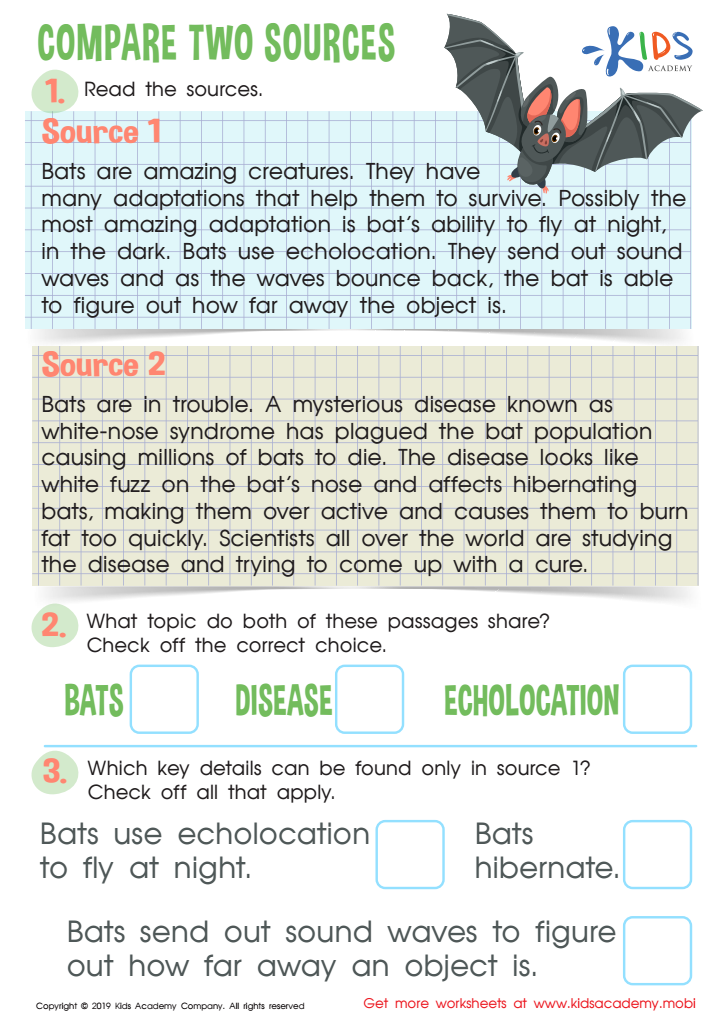
    Reading exposes us to new words, spelling, and info about different topics. Kids can practice their reading skills, and learn about bats, with this worksheet. Read the two sources in the picture, then help your kids answer the questions at the bottom.
    Compare Two Sources Worksheet
    Worksheet
    Multiplying 5’s: Telling Temperature Part 2 Worksheet
    Multiplying 5’s: Telling Temperature Part 2 Worksheet

    Multiplying 5’s: Telling Temperature Part 2 Worksheet

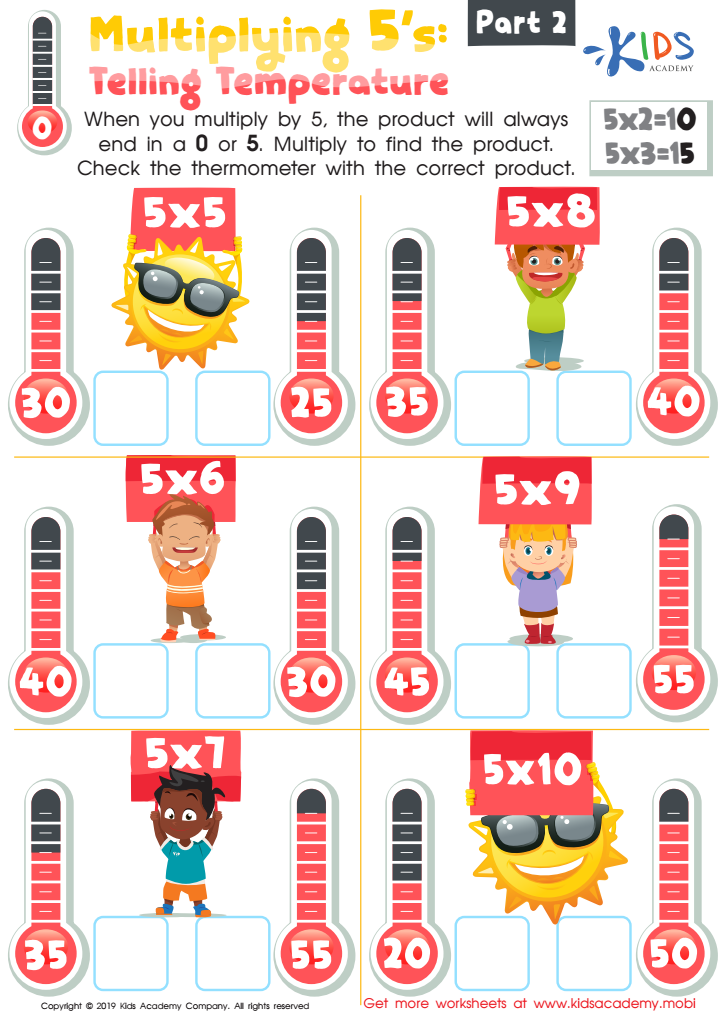
    To help your child with multiplication, teach them some simple tricks. For example, when multiplying 10's the product always ends in a 0, and when multiplying by 5, the product will end in 0 or 5. Look at the problems in this worksheet and help your child find the product. Then, check the thermometer with the correct answer.
    Multiplying 5’s: Telling Temperature Part 2 Worksheet
    Worksheet
    Bugs and Legs Fact Families Worksheet
    Bugs and Legs Fact Families Worksheet

    Bugs and Legs Fact Families Worksheet

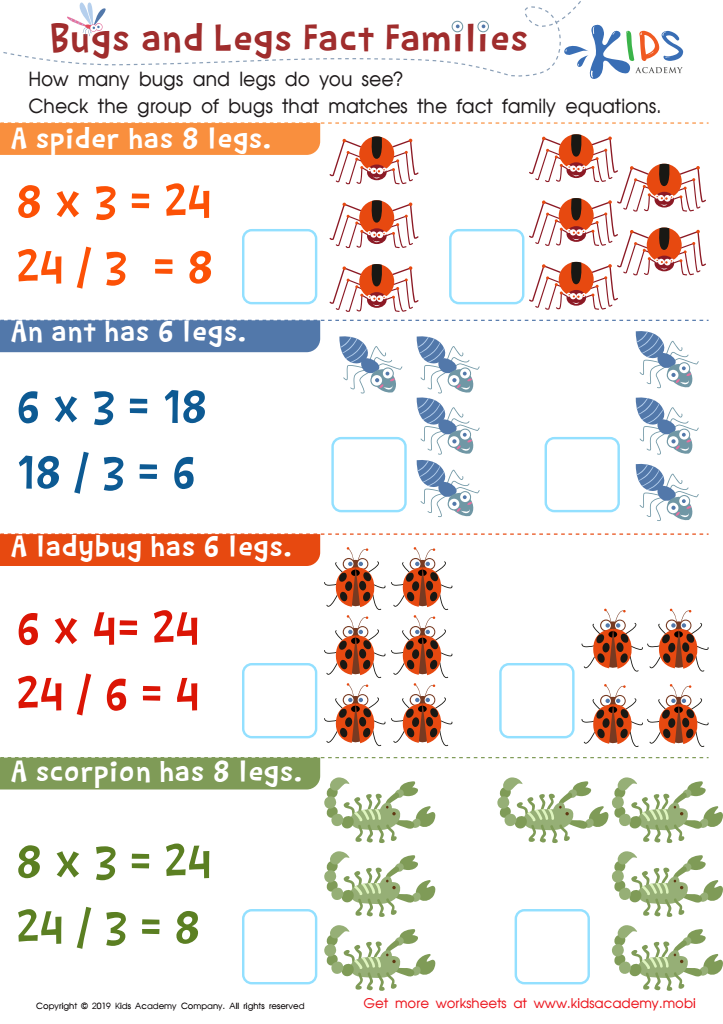
    This free worksheet uses bugs and insects to help young math students learn about fact families and recognize patterns in multiplication and division. It's a fun and colorful way to gain automaticity and efficiency in computation skills, without even realizing it's math!
    Bugs and Legs Fact Families Worksheet
    Worksheet
    Check Memory Worksheet
    Check Memory Worksheet

    Check Memory Worksheet

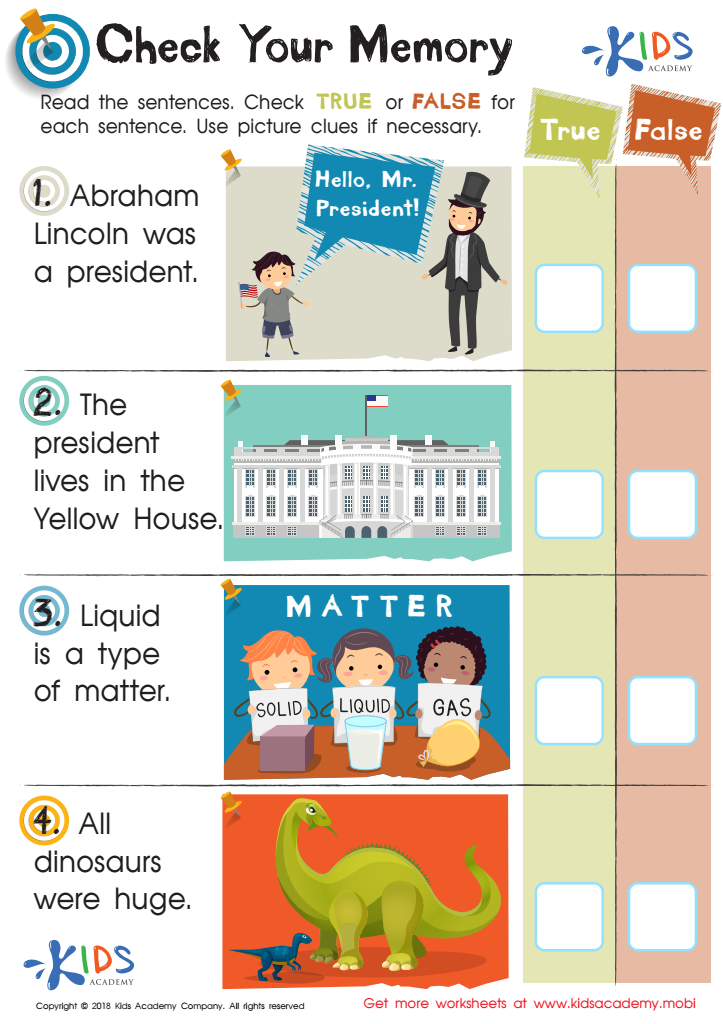
    Assisting your kids with their homework and using worksheets is a great way for them to learn. The vibrant visuals in this printout can help stimulate the mind and motivate your child. Have them read the sentences and then point to the associated images. Afterwards, ask them to state True or False for each sentence. If they are still uncertain, offer them the picture clues to assist further.
    Check Memory Worksheet
    Worksheet


    ... 16 17

    Science for ages 6-8 lays the groundwork for critical thinking and curiosity that children carry into their later years. At this young age, children are naturally curious about the world around them; introducing them to scientific concepts taps into this curiosity and helps them develop a deeper understanding of their environment. Exploring science encourages problem-solving skills and logical thinking. These skills are foundational for all kinds of future learning, not just in science but in subjects like mathematics and even reading comprehension.

    Moreover, engaging in simple experiments and observational activities helps children grasp the basics of cause and effect, an essential aspect of cognitive development. For instance, when children mix baking soda and vinegar and see the fizzy reaction, they learn to form hypotheses and draw conclusions based on their observations. These activities build their ability to ask questions, explore multiple outcomes, and understand the world in a structured way.

    For parents and teachers, nurturing an early love for science can set children on a path toward a lifelong interest in various fields. This early exposure also helps to normalize science, making it less intimidating as they encounter more complicated concepts later. Additionally, getting involved in science at an early age can help to even out future academic success across different groups of students and eliminate stereotypes that suggest certain people are more ‘naturally’ inclined towards science.