Observational skills development Science Worksheets for Ages 6-8
3 filtered results
-
From - To
Enhance your child's observational skills with our engaging Science Worksheets designed for ages 6-8! These worksheets aim to cultivate young learners' abilities to notice details, compare and contrast, and draw conclusions. By incorporating fun activities, such as identifying patterns and recording observations, children will develop essential skills that support their understanding of the world around them. Whether in the classroom or at home, these printable resources encourage curiosity and critical thinking. Perfect for teachers and parents alike, our worksheets make learning science enjoyable while fostering a strong foundation in observational skills. Download now and inspire the little scientists in your life!
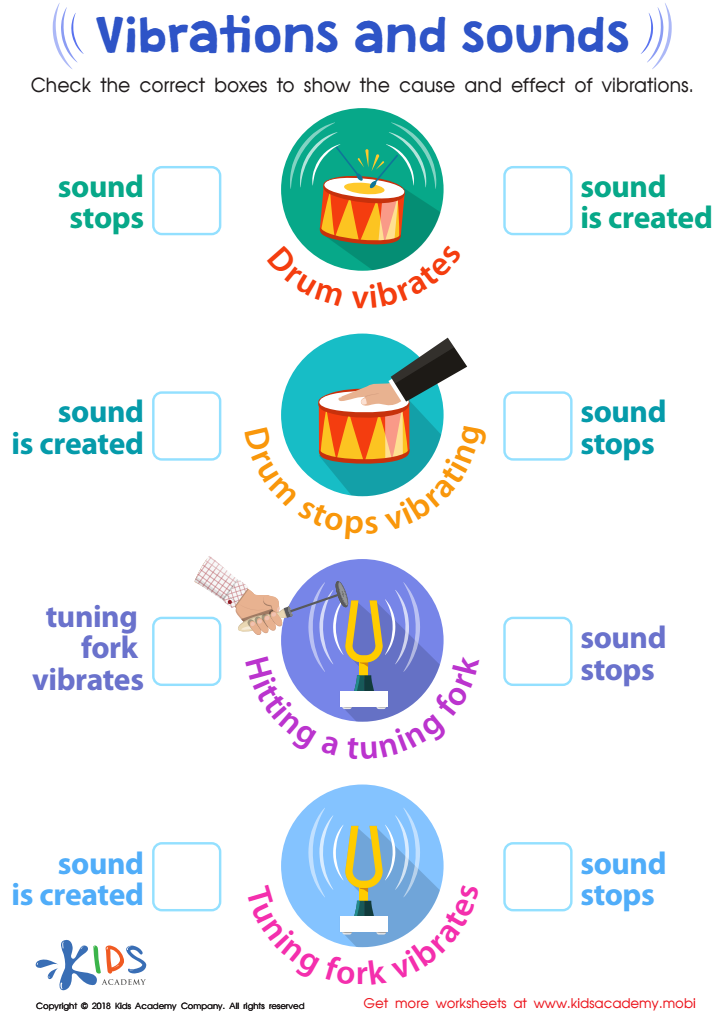
Vibrations and Sounds Worksheet
 Assign to My Students
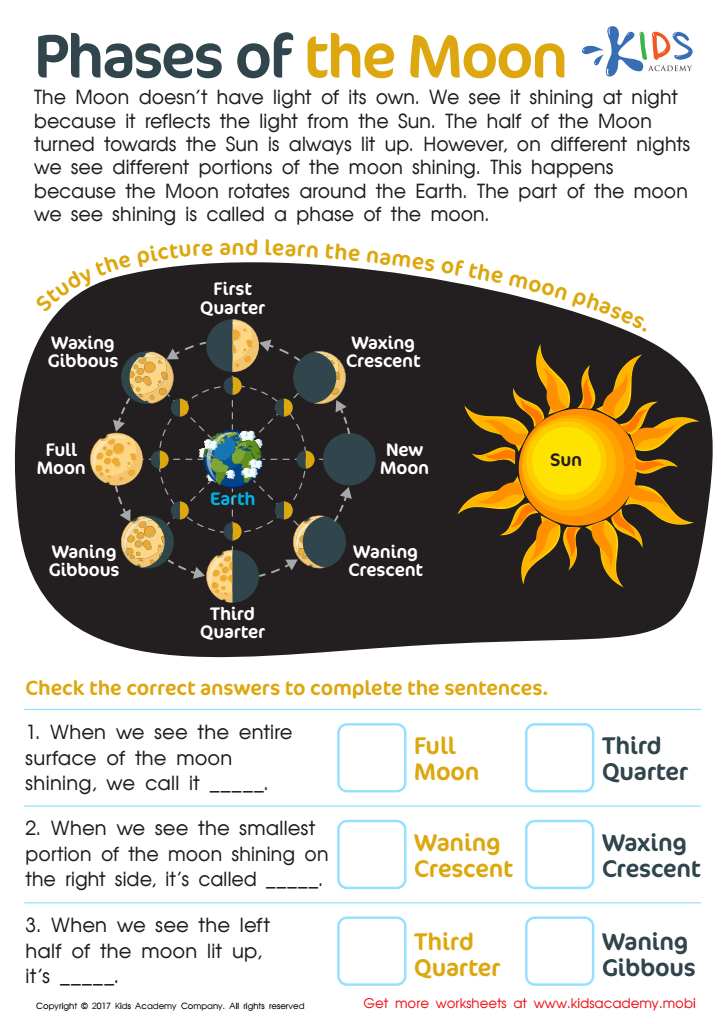
Phases of The Moon Worksheet
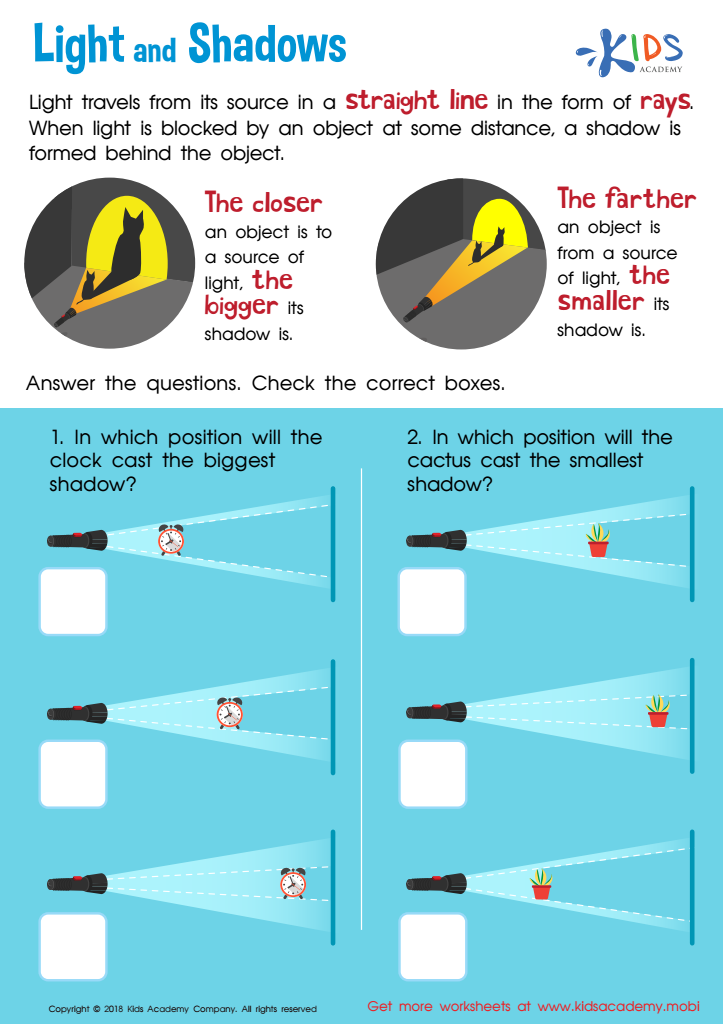
Light and Shadow Worksheet for Grade 3







.jpg)
Observational skills development in children ages 6-8 is crucial for their overall growth and learning, particularly in the field of science. During this formative age, children are naturally curious and eager to explore their surroundings. By nurturing their observational skills, parents and teachers can cultivate a love for science and inquiry.
Effective observation allows children to notice details, ask questions, and make connections between concepts, which are essential components of scientific thinking. For instance, observing natural phenomena, such as the changes in weather or the growth of a plant, can spark interest and lead to deeper understanding. This critical thinking fosters problem-solving abilities as children learn to generate hypotheses and seek evidence through their observations.
Furthermore, strong observational skills contribute to improved communication and language development, as children describe their findings and engage in discussions. Parents and teachers play a key role in encouraging this skill by providing opportunities for hands-on experiments, nature walks, and guided observations.
In summary, prioritizing observational skills not only enhances children’s scientific literacy but also instills a lifelong passion for learning, equipping them with the essential tools to navigate an increasingly complex world.







