Understanding matter Science Worksheets for Ages 6-8
3 filtered results
-
From - To
Discover an engaging collection of "Understanding Matter" science worksheets designed specifically for children ages 6-8. These interactive resources aim to demystify fundamental concepts of matter, including solids, liquids, and gases, through exciting activities tailored to young learners. Each worksheet fosters curiosity and encourages exploration, ensuring that students grasp essential scientific principles while developing critical thinking skills. Ideal for classroom use, homeschooling, or supplemental learning at home, these worksheets also align with educational standards. Spark your child's interest in science and help them build a strong foundation in understanding the world around them. Explore the fun of learning about matter today!
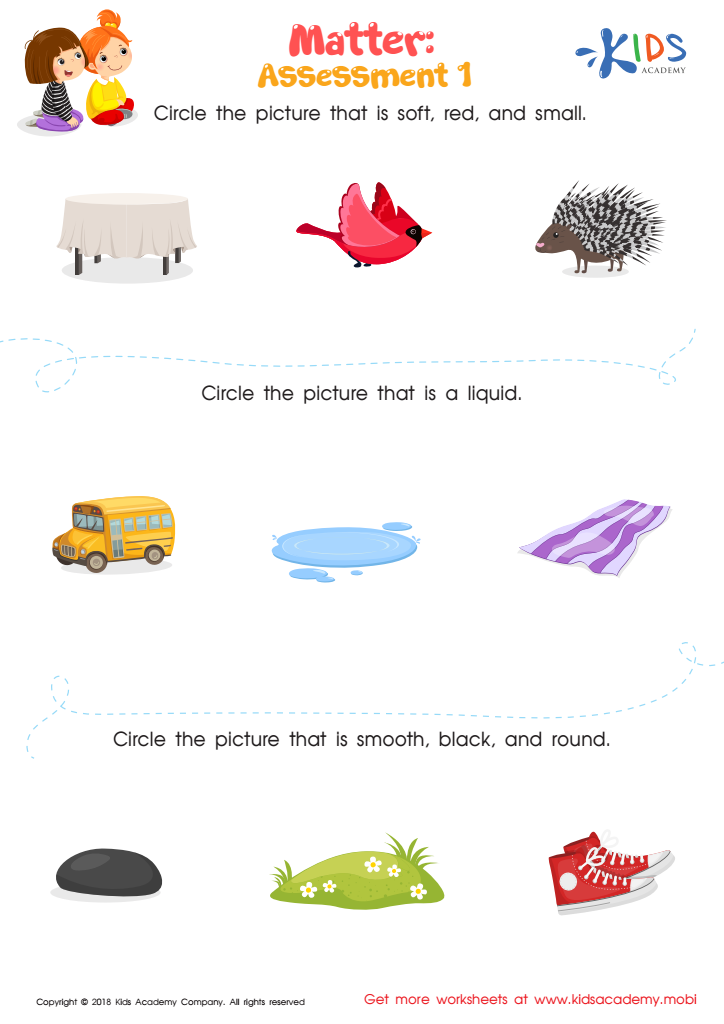
Matter: Assessment 1 Worksheet
 Assign to My Students
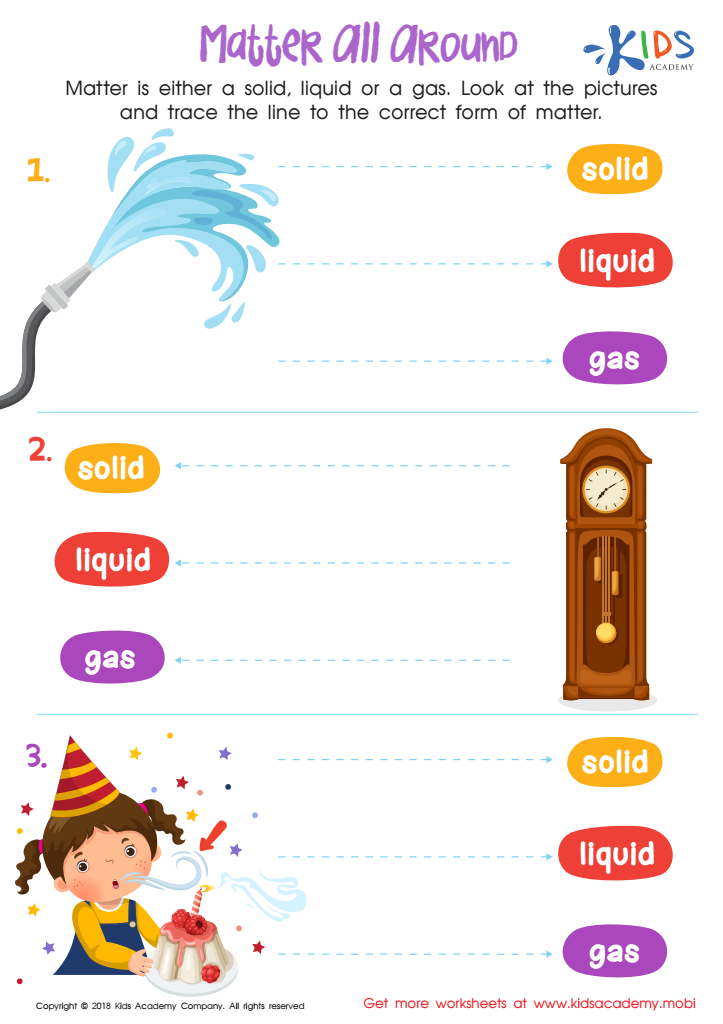
Matter all Around Worksheet
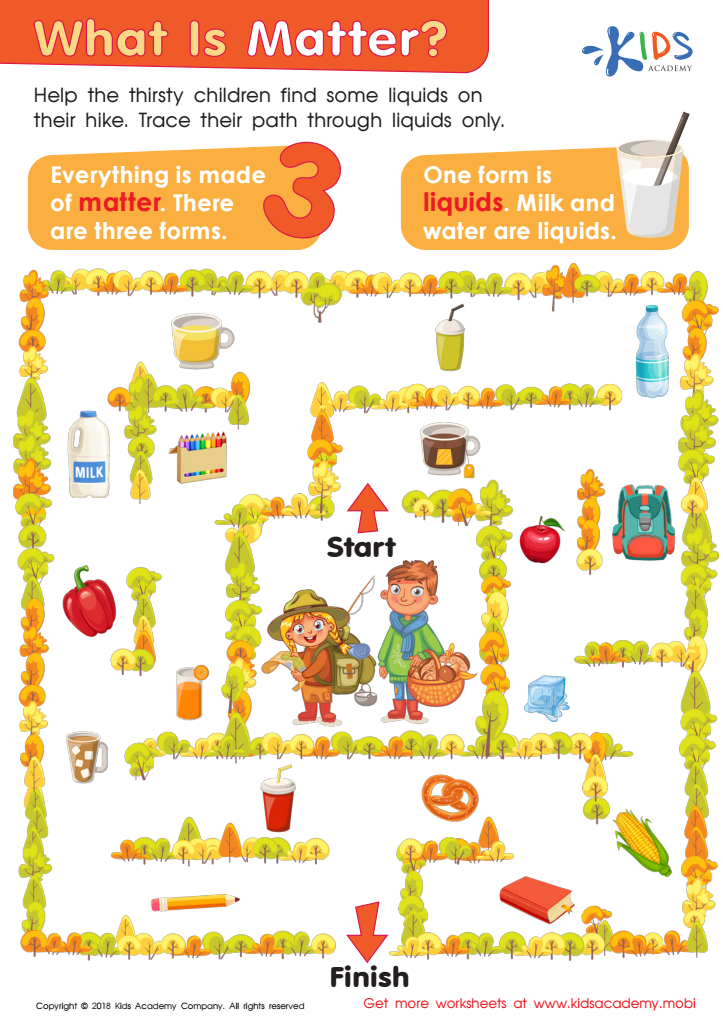
What Is Matter? Worksheet






Understanding matter is crucial for children ages 6-8 because it lays the foundation for their scientific literacy and critical thinking skills. At this age, children are naturally curious, and introducing concepts related to matter—solids, liquids, gases, and their properties—helps harness this curiosity into structured learning.
By exploring matter, children learn to categorize and describe the world around them, encouraging inquiry and experimentation. Engaging activities, like observing ice melting or mixing water with various substances, foster hands-on experiences that are vital for retaining knowledge. Additionally, understanding matter is tied to real-world applications, from recognizing states of matter in everyday life to grasping fundamental scientific principles.
For parents and teachers, promoting a foundational knowledge of matter is essential for developing future scientists, engineers, and informed citizens. It sets the stage for more advanced science topics, making the educational transition smoother as students progress. Furthermore, discussing concepts related to matter encourages scientific language and reasoning, empowering children to articulate their thoughts and discoveries. Thus, fostering an early understanding of matter not only enriches children's educational experiences but also cultivates a lifelong interest in science and the natural world.







