Understanding ecosystems Plants and Animals Worksheets for Ages 6-8
6 filtered results
-
From - To
Dive into the wonders of nature with our "Understanding Ecosystems: Plants and Animals Worksheets" designed for ages 6-8. These engaging printables from Kids Academy help young learners explore the intricate relationships within ecosystems, from plant growth to animal habitats. Perfect for early grade students, the worksheets use fun activities to simplify complex concepts, making science both captivating and educational. Each worksheet is crafted to promote critical thinking and curiosity about the natural world. Ideal for classroom learning or homeschooling, they'll spark a lifelong interest in the environment and its diverse inhabitants. Start your child's ecological adventure today!
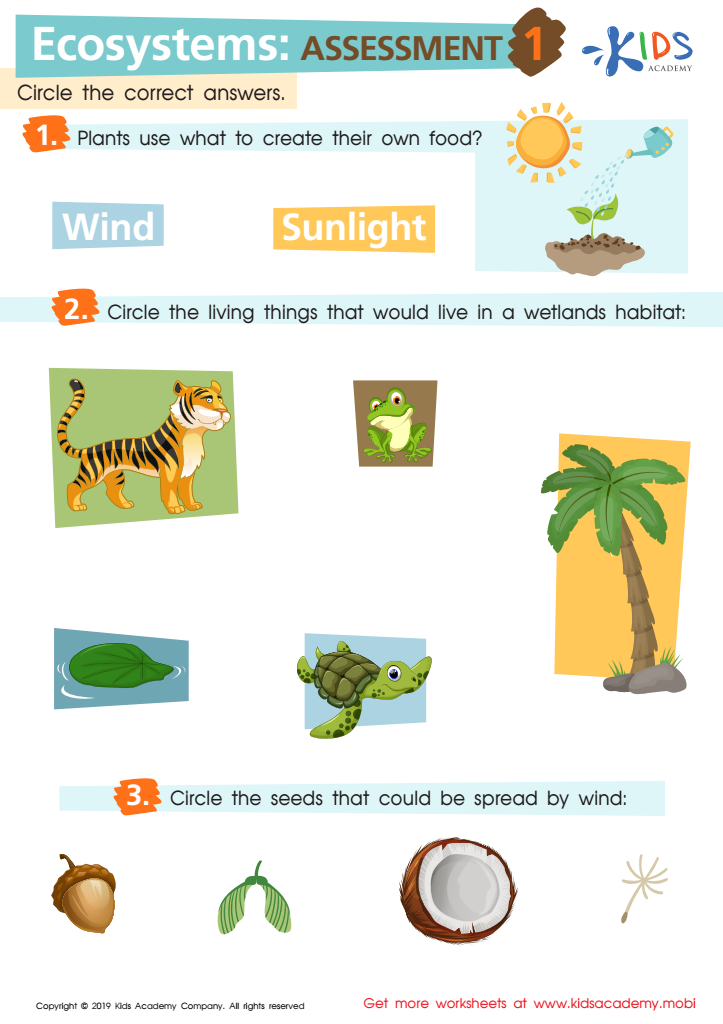
Ecosystems: Assessment 1 Worksheet
 Assign to My Students











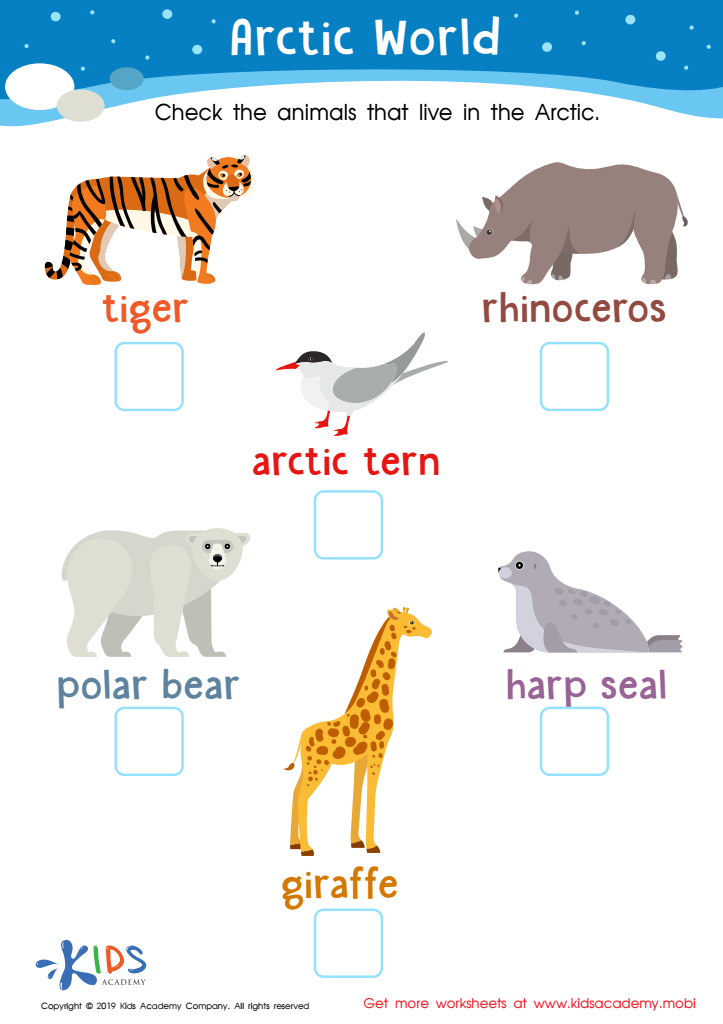
Arctic World Worksheet
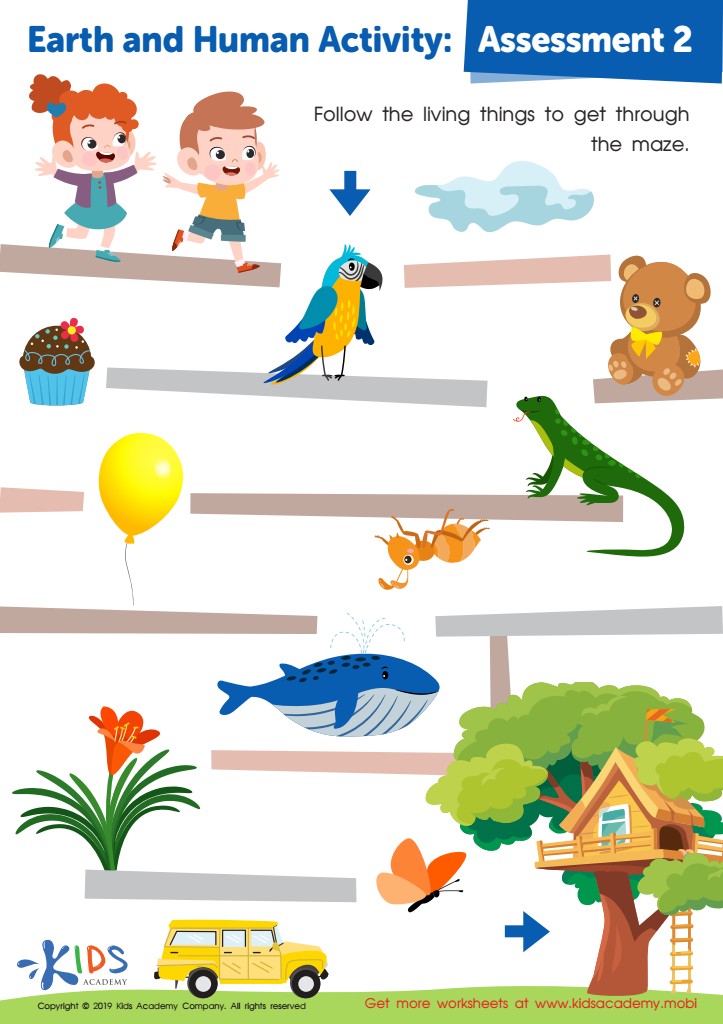
Earth and Human Activity: Assessment 2 Worksheet
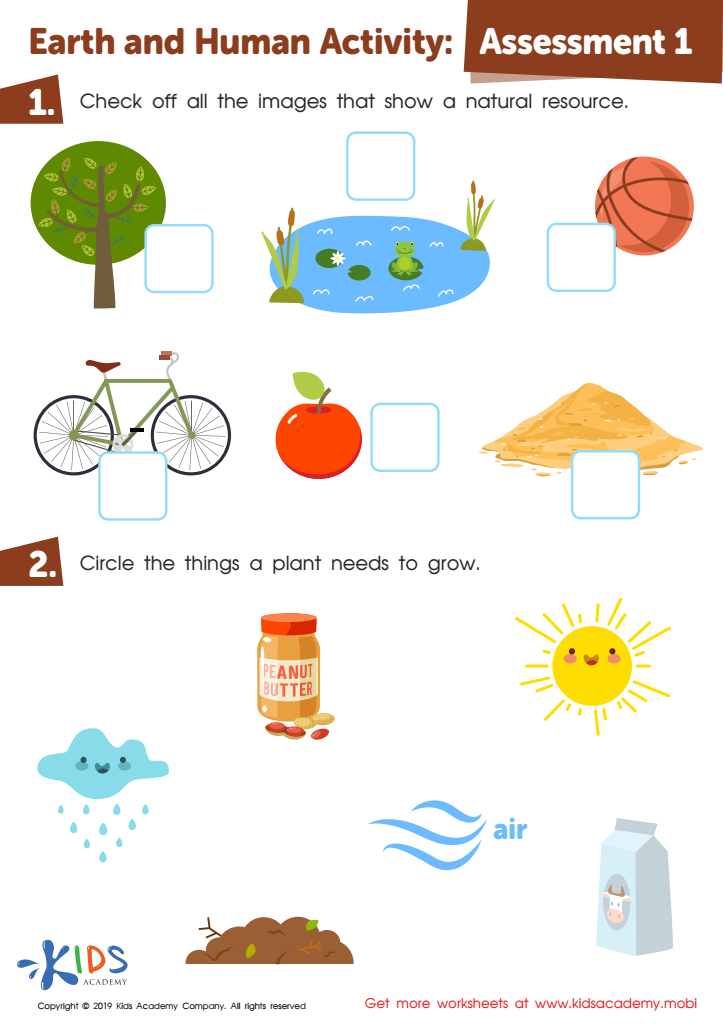
Earth and Human Activity: Assessment 1 Worksheet
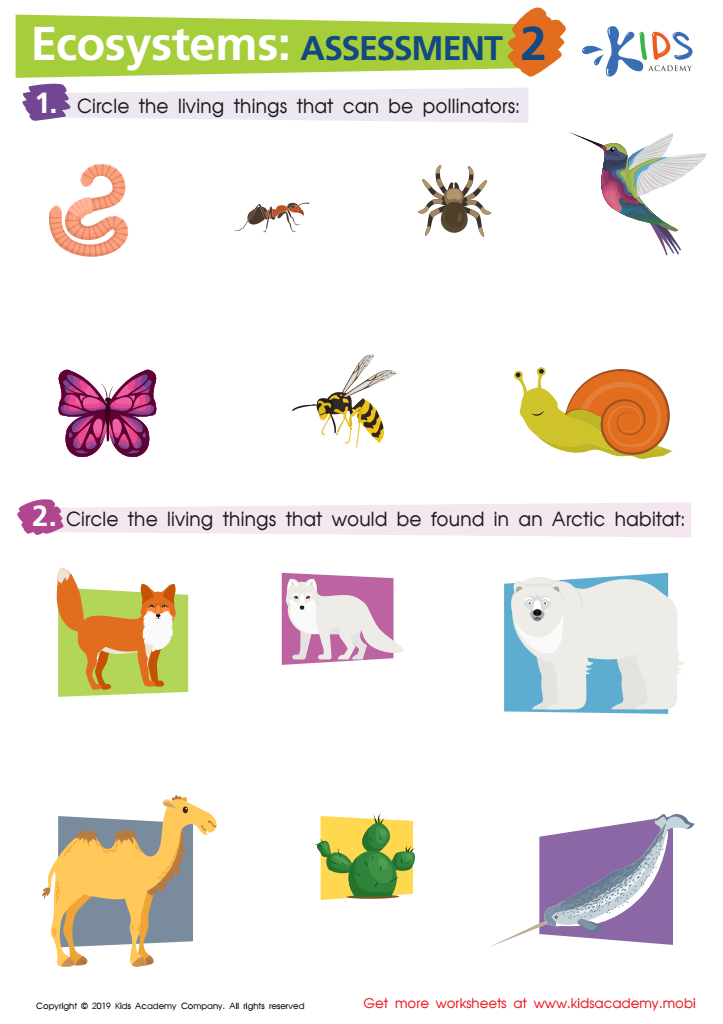
Ecosystems: Assessment 2 Worksheet
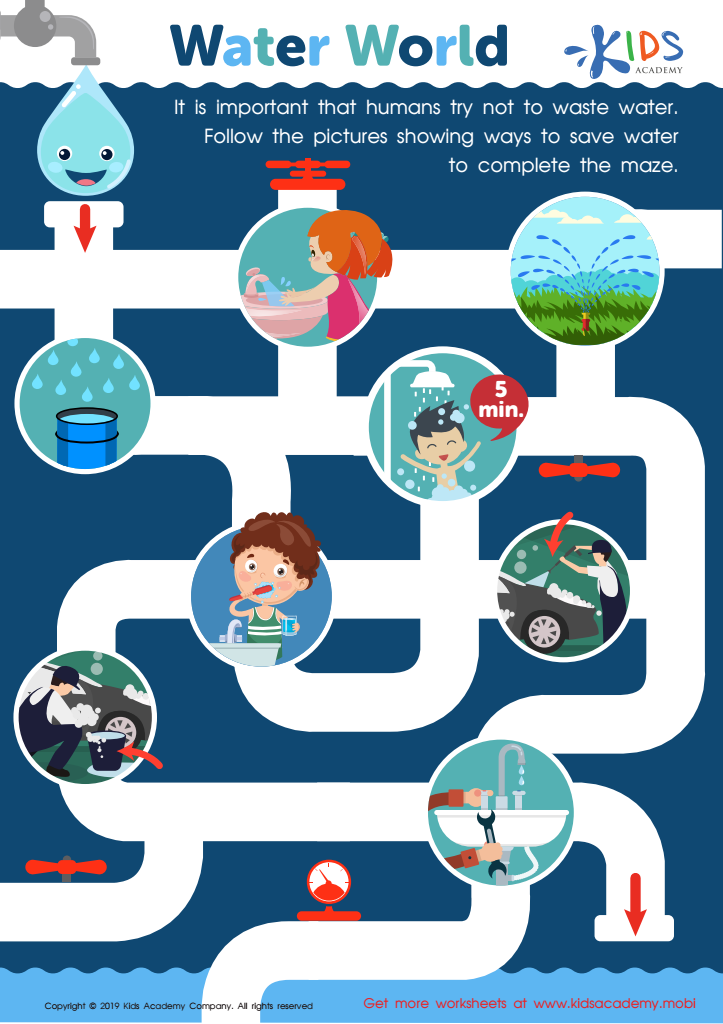
Water World Worksheet








Understanding ecosystems, including the roles of plants and animals, is essential for young children, as it lays the groundwork for lifelong environmental awareness and responsibility. At ages 6-8, children are naturally curious and receptive, making it an opportune time to introduce these concepts. Parents and teachers play a crucial role in nurturing this curiosity by teaching about ecosystems. This early learning helps kids understand the interconnectedness of life, emphasizing that every organism, from the smallest insect to the largest tree, plays a vital role in maintaining a balanced environment.
Comprehending ecosystems encourages empathy and respect for nature. Children learn that their actions have consequences on the environment, fostering a sense of stewardship. For instance, understanding how plants produce oxygen or how bees pollinate flowers can spark interest and appreciation. This knowledge can segway into more responsible behaviors, like recycling, conservation, and sustainable living.
Moreover, exploring ecosystems enhances scientific thinking and observational skills. Lessons can be hands-on, involving activities such as exploring a garden, conducting simple experiments, or observing wildlife. Such interactive learning makes abstract concepts tangible and engaging.
In summary, equipping children with an understanding of ecosystems prepares them to be thoughtful, informed citizens who are cognizant of their impact on the world, fostering a healthier and more sustainable future.








