Problem-Solving Skills Problem Solving Worksheets for Ages 6-8
3 filtered results
-
From - To
Enhance your child's critical thinking with our Problem-Solving Skills Worksheets for ages 6-8. Designed to stimulate young minds, these engaging activities help kids develop essential cognitive abilities. Our diverse worksheets cover real-life scenarios to improve analytical thinking and decision-making. With colorful and interactive exercises, children learn to approach problems methodically, fostering creativity and perseverance. Perfect for both classroom and home use, these worksheets support the development of foundational skills for future academic success. Give your child the tools they need to succeed with our expertly crafted problem-solving resources. Start nurturing young problem-solvers today!
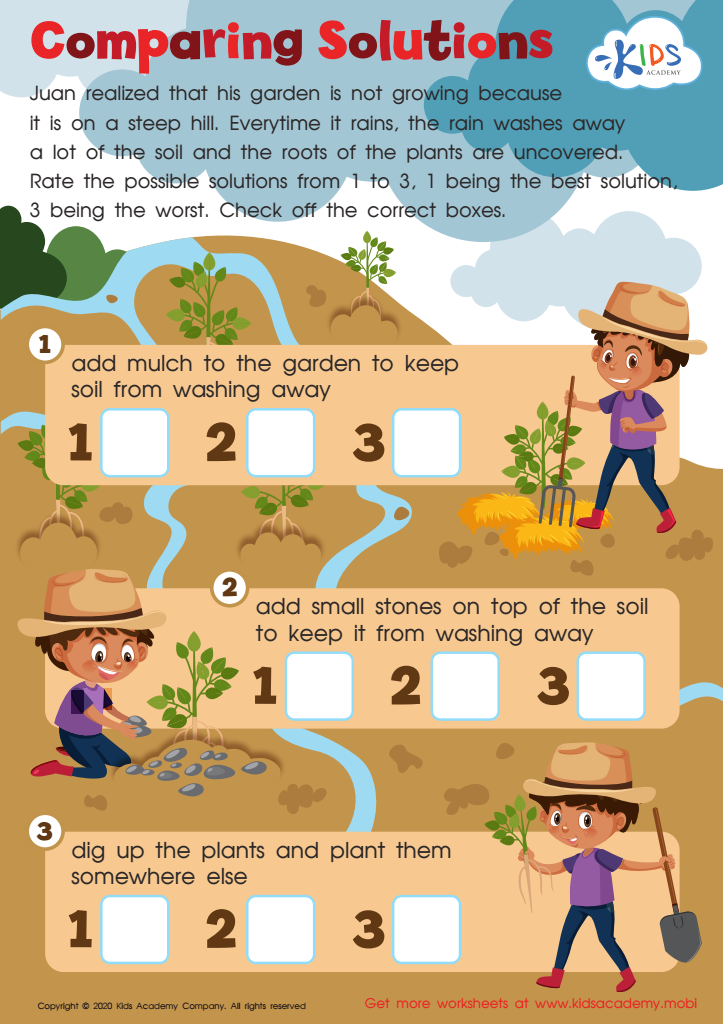
Comparing Solutions Worksheet
 Assign to My Students
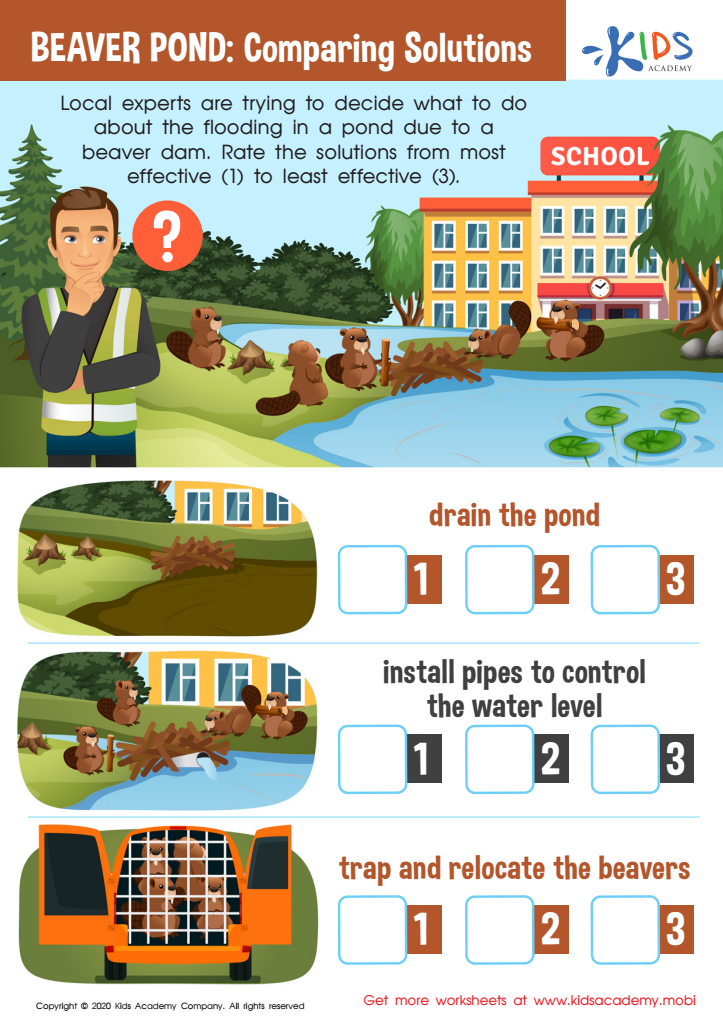
Beaver Pond: Comparing Solutions Worksheet
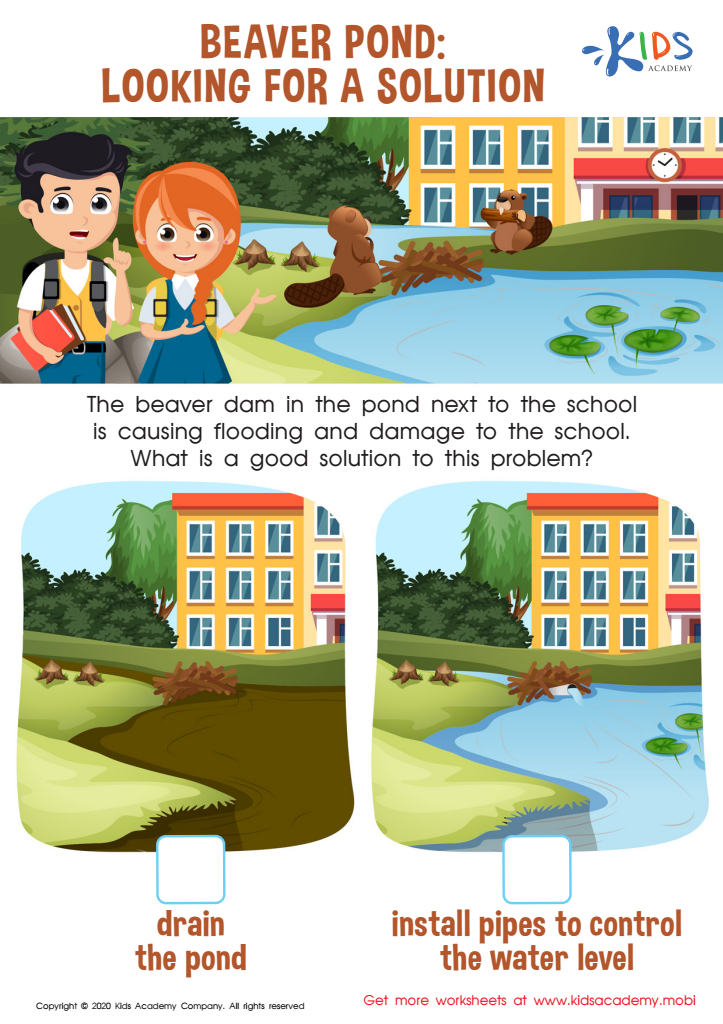
Beaver Pond: Looking for a Solution Worksheet








Problem-solving skills for children aged 6-8 are crucial as they lay the foundation for both academic success and personal development. At this formative stage, children are naturally curious and beginning to understand how the world works. By nurturing problem-solving skills, parents and teachers can enhance critical thinking, foster resilience, and build independence.
Firstly, problem-solving abilities are inherently linked to academic subjects ranging from math to reading comprehension. When children tackle puzzles or figure out how to approach a tricky question, they practice cognitive flexibility and analytical thinking. These skills not only help them grasp complex concepts but also improve overall academic performance.
Secondly, problem-solving promotes social and emotional development. Children learn to handle challenges, whether it's resolving a conflict with a peer or figuring out how to organize their homework. This builds resilience; children won’t easily give up when faced with difficulties. Moreover, effective problem-solving boosts self-esteem, as children gain confidence in their ability to overcome obstacles.
Lastly, fostering problem-solving skills in early childhood equips children with a toolkit for lifelong success. It instills a proactive mindset and the ability to think critically about any situation, personal or professional, they'll encounter in the future. Hence, developing these skills is an investment in a child’s immediate and long-term well-being and potential.







