
Understanding moon phases Space Worksheets for Ages 6-8
3 filtered results
Difficulty Level
Grade
Age
-
From - To
Subject
Activity
Standards
Dive into the fascinating world of moon phases with our engaging "Understanding Moon Phases" worksheets designed specifically for children aged 6-8. These fun and educational resources help young learners grasp the cycles of the moon, exploring concepts such as new, waxing, waning, and full moons. Each worksheet features colorful illustrations and interactive activities that make learning enjoyable while reinforcing essential science skills. Perfect for enhancing classroom lessons or homeschooling, our worksheets encourage curiosity and creativity as kids discover the importance of the moon in our solar system. Invest in your child's scientific knowledge and watch them shine as young astronomers!
Favorites
With answer key
Interactive
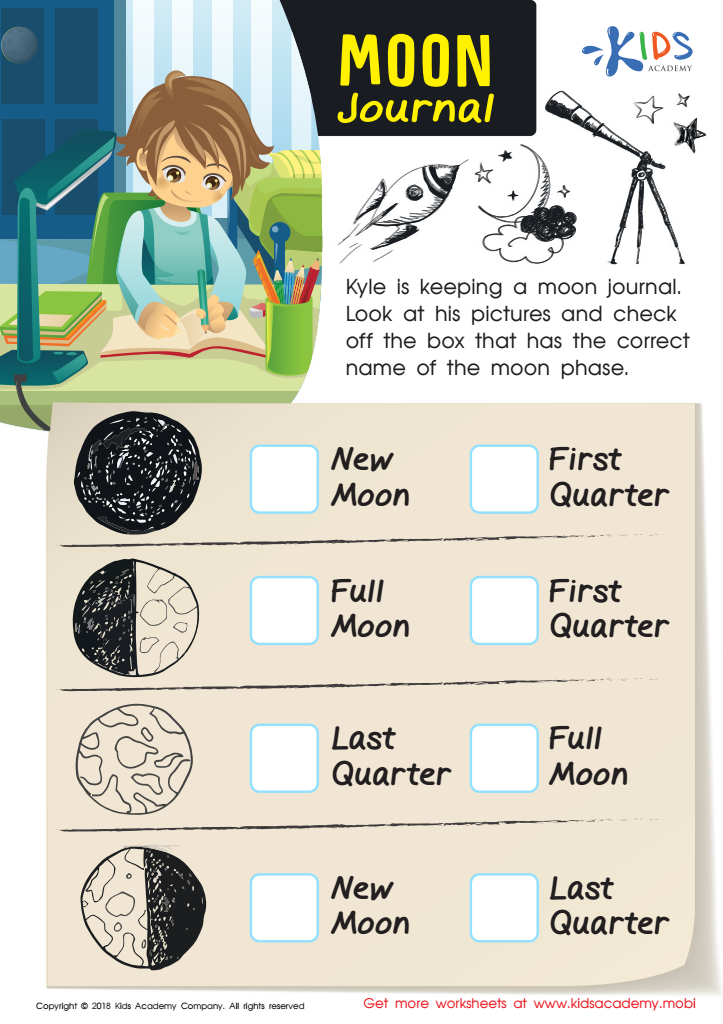
Moon Journal Worksheet
Observe the moon and its 8 phases with your child by downloading this free PDF worksheet from Kids Academy! Review the moon phases with them then help them label Kyle's moon journal. Select the right moon phase for each picture to complete the page!
 Assign to My Students
Moon Journal Worksheet
Worksheet
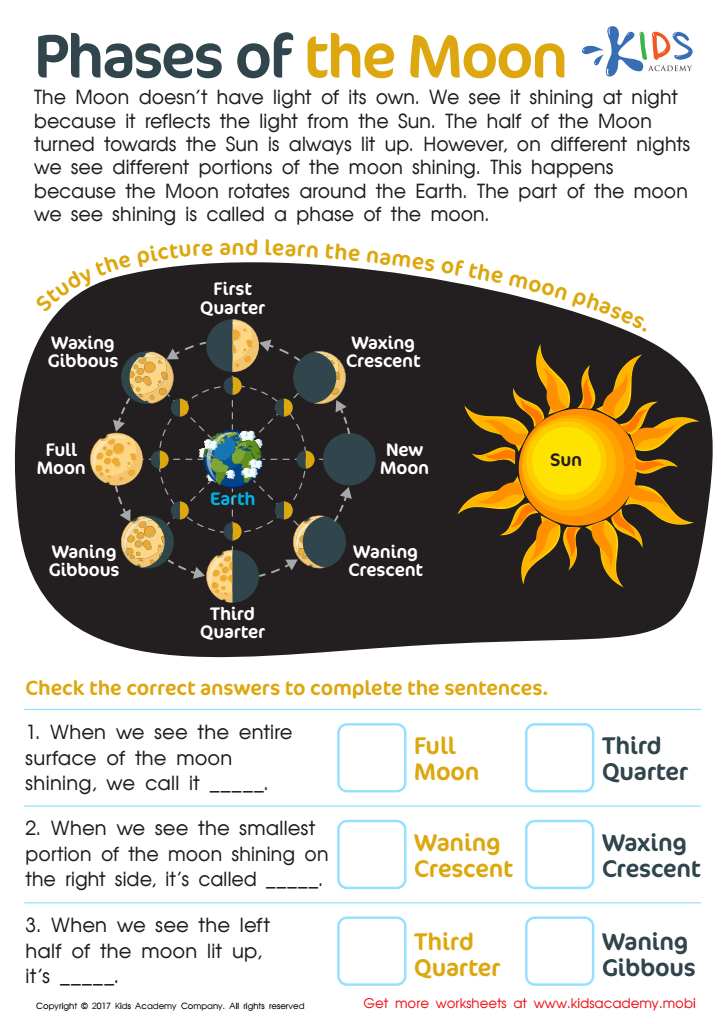
Phases of The Moon Worksheet
It'll show kids the fascinating phases and journey the moon takes around Earth. They'll be amazed to learn it's not always shining!
Phases of The Moon Worksheet
Worksheet
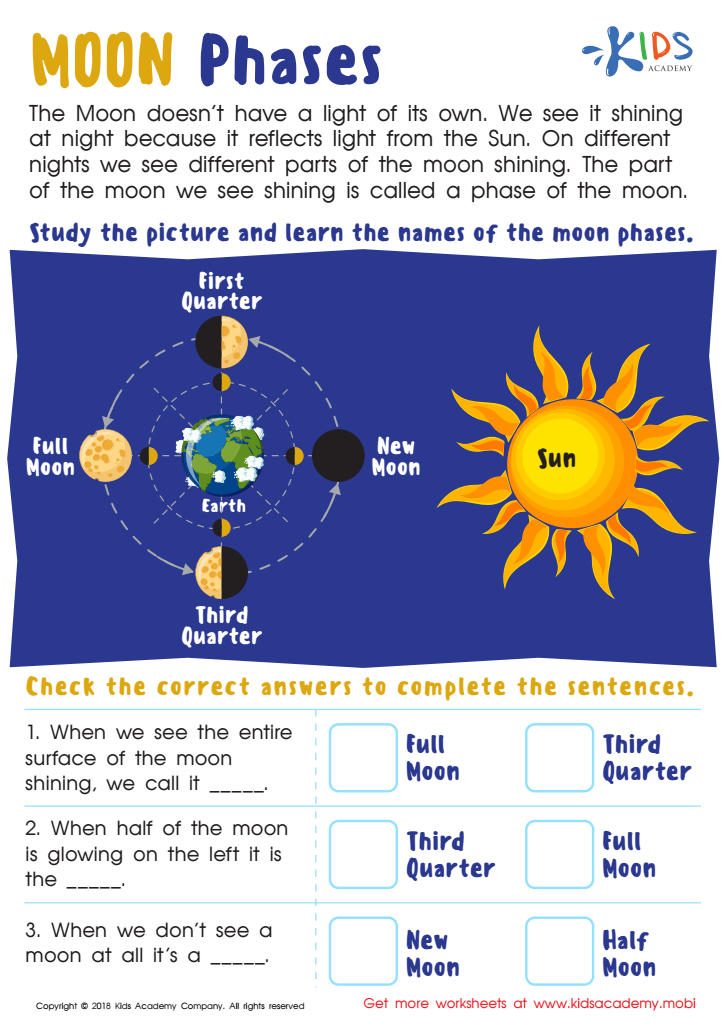
Moon Phases Worksheet
Gaze up at the night sky and the moon's appearance may change from night to night. Encourage your child to learn more about the sun, the moon, and space with this science worksheet. Have them read the text then study the picture. Finally, read the sentences and check the answers to identify the moon's phases.
Moon Phases Worksheet
Worksheet
Join Kids Academy for Free
Who is primarily going to use this learning content?


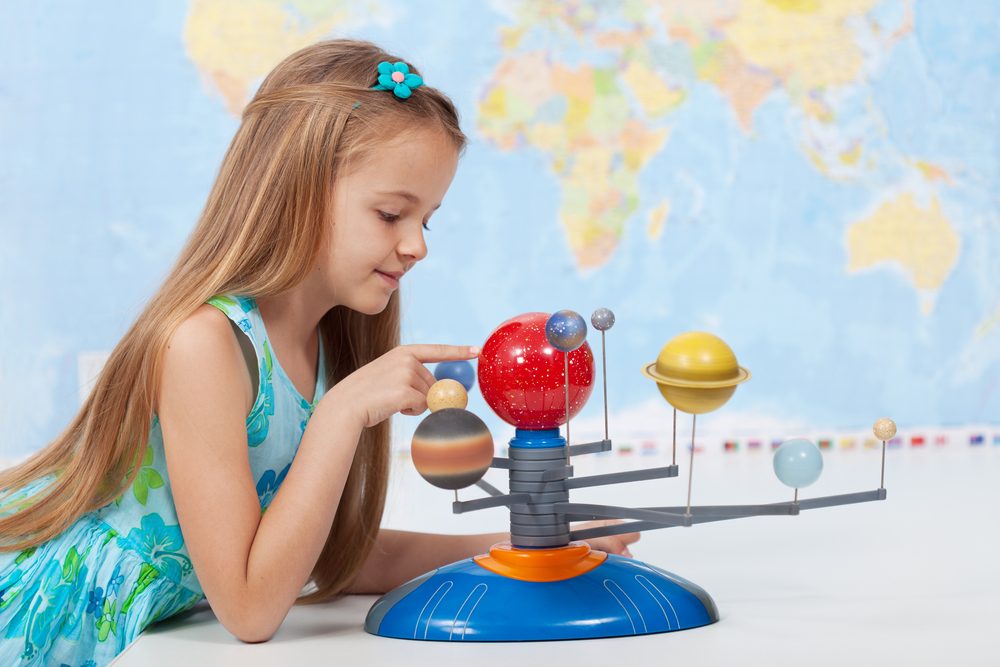



Understanding moon phases is vital for children aged 6-8 because it lays the foundation for essential scientific knowledge and curiosity. First, it cultivates a sense of wonder about space and our solar system. Engaging with the moon's phases enhances observational skills, encouraging children to notice changes in the world around them, sparking their natural curiosity.
Additionally, moon phases can be tied to cultural stories and traditions, fostering an appreciation for folklore and history, thereby enriching literacy and social studies lessons. Teaching about the phases supports core STEM education by introducing basic astronomical concepts. Children learn to understand cyclical patterns, an important mathematical idea that can help them grasp concepts in addition and subtraction.
Moreover, interactive lessons about the moon can strengthen critical thinking and promote teamwork through group activities, such as creating moon phase models or keeping moon journals.
For parents and teachers, understanding the moon’s phases serves as an engaging opportunity to connect learning across subjects, promoting holistic education. By caring about these concepts, they ignite a lifelong passion for exploration and learning, empower children to ask questions, and effectively intertwine science with daily life. Overall, it's a fun and meaningful topic that enriches a child's educational experience.







