Multiplication Worksheets for Ages 6-9 - Page 5
104 filtered results
-
From - To
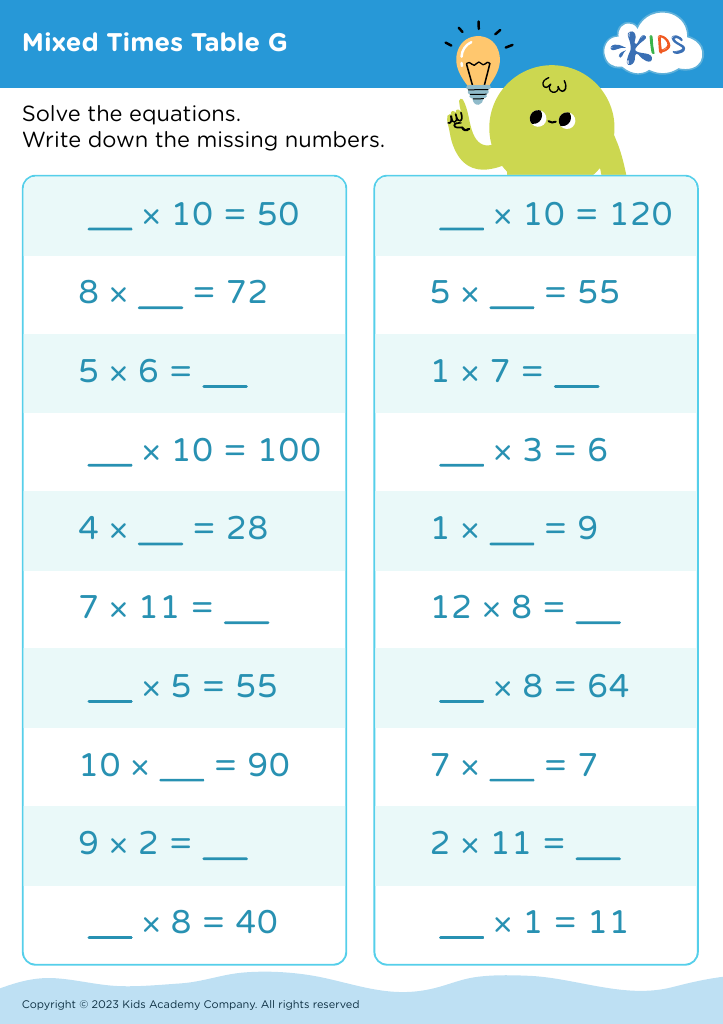
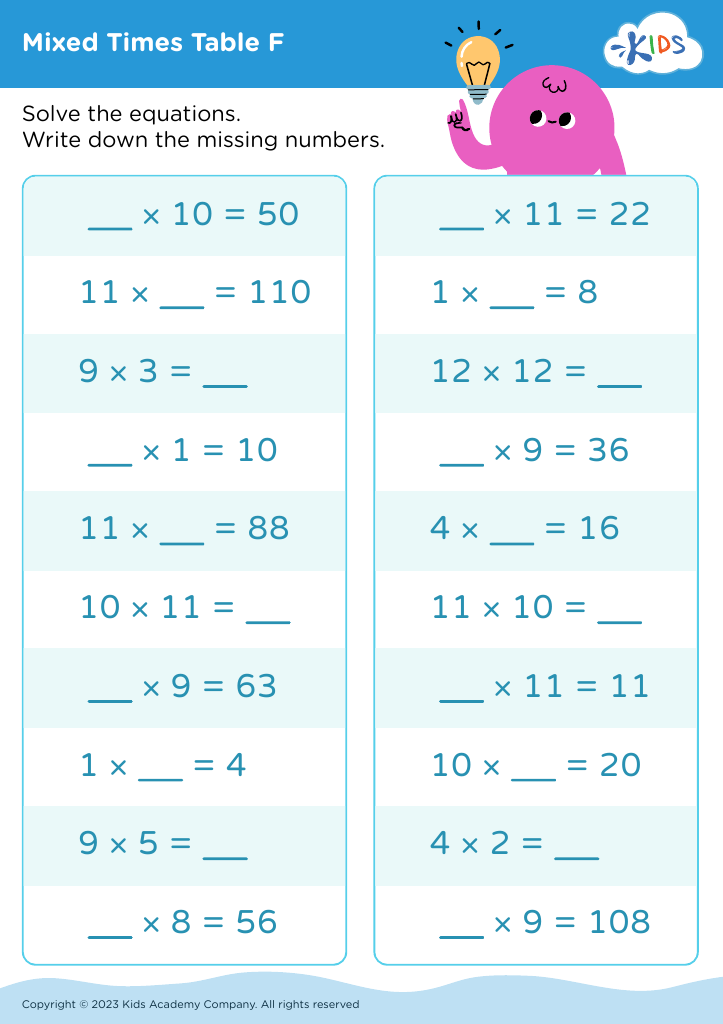
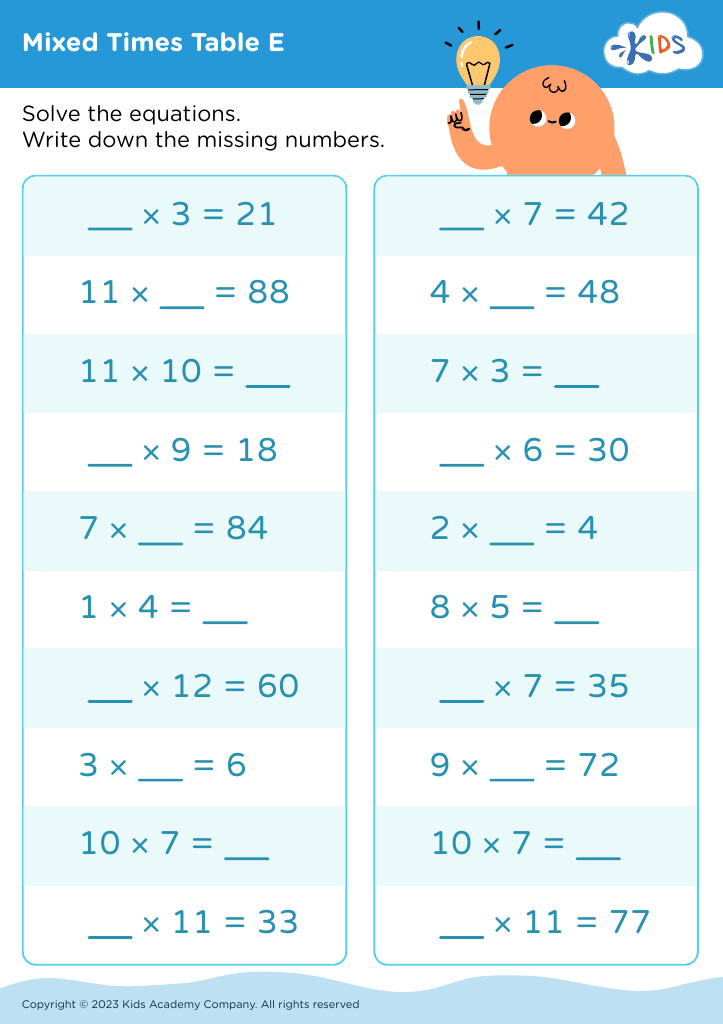
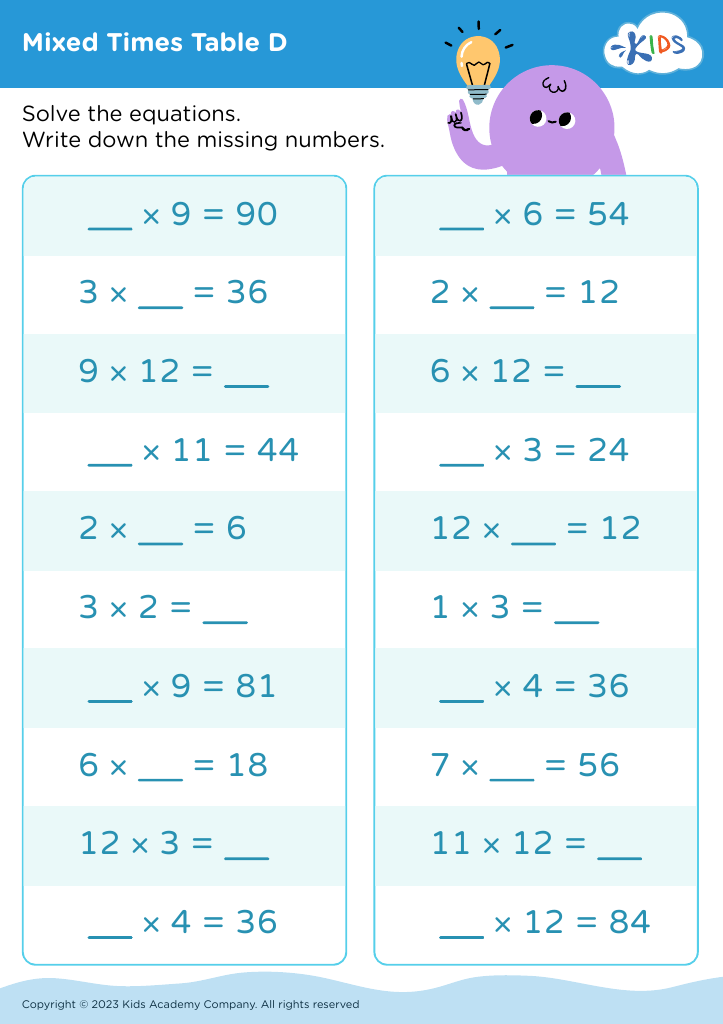
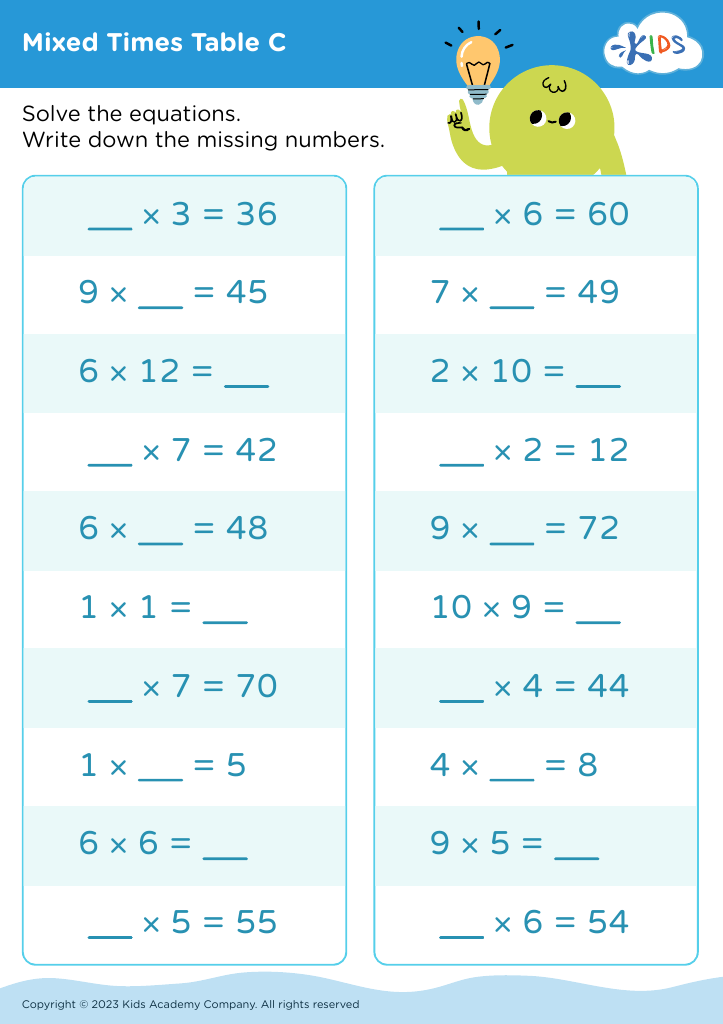
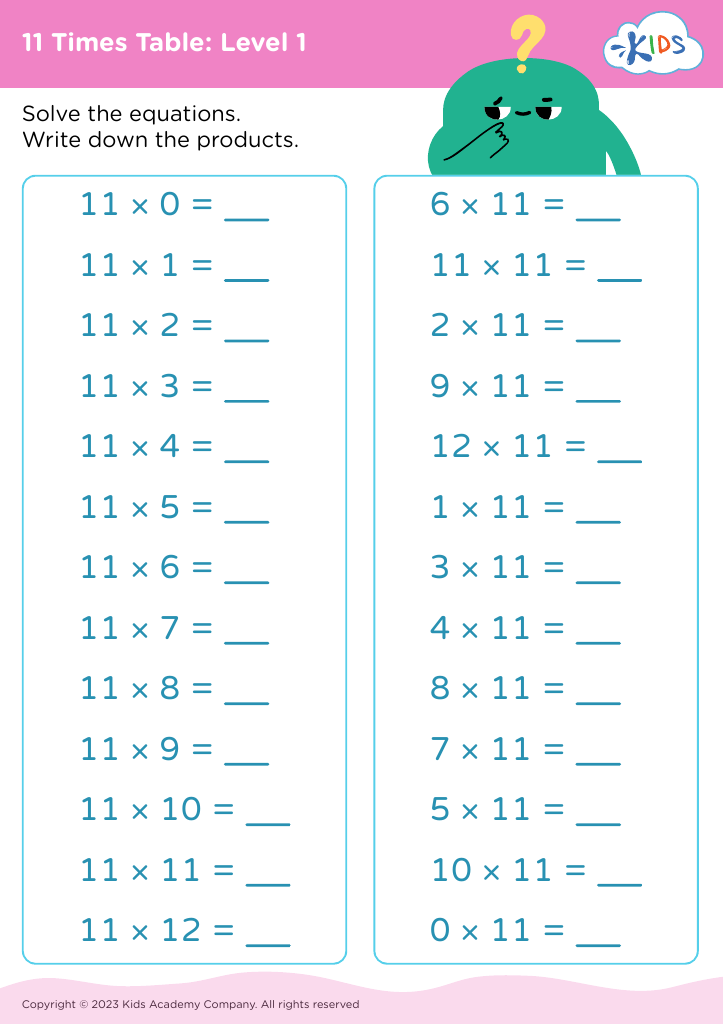
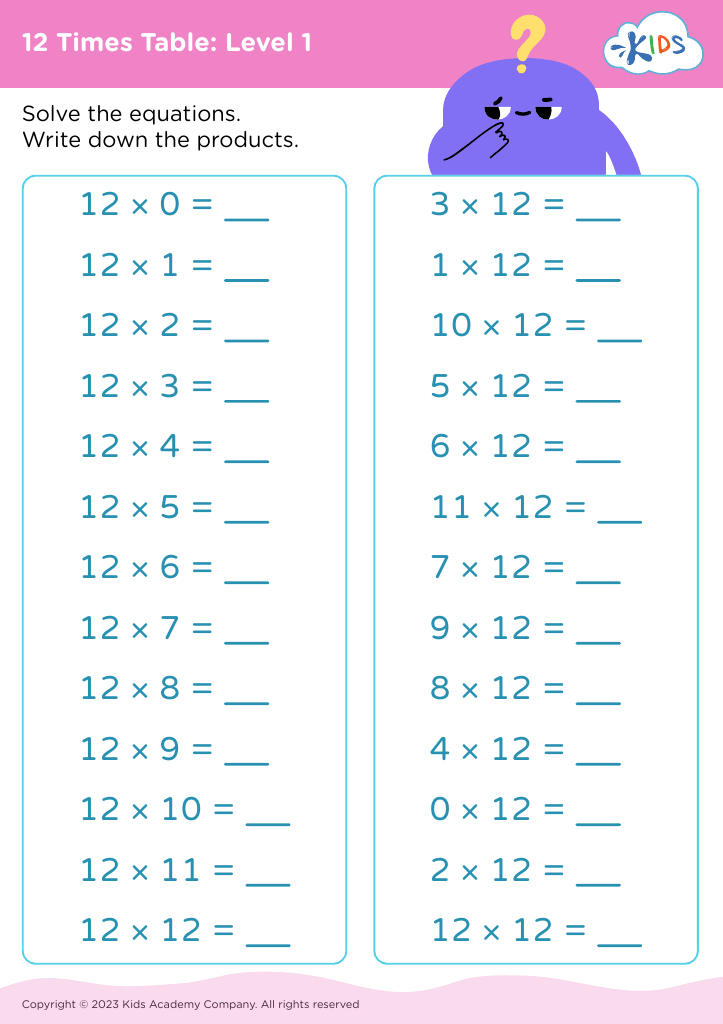
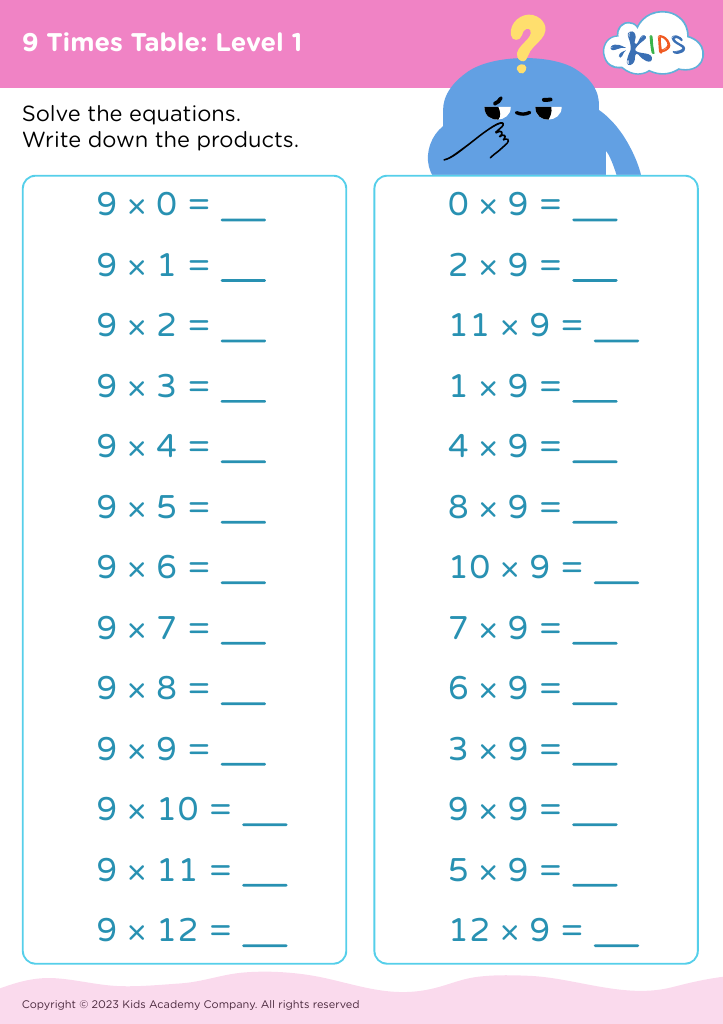








Multiplication is a foundational mathematical concept that plays a critical role in a child's overall academic development, especially for ages 6-9. During these formative years, children are naturally curious and eager to learn, making this an ideal time to introduce and solidify their understanding of multiplication. Mastering multiplication not only enhances their arithmetic skills but also builds confidence, fostering a positive attitude toward math.
Understanding multiplication helps children grasp the concept of grouping and repeated addition, which are crucial for solving more complex problems as they progress in their education. It also lays the groundwork for advanced topics such as division, fractions, and algebra in later grades. When children become proficient in multiplication, they gain proficiency in problem-solving, critical thinking, and reasoning skills which are essential across all subject areas.
Moreover, parents and teachers should recognize that multiplication skills can lead to improved performance in standardized tests and future academic pursuits. Engaging children in fun and interactive multiplication activities can make learning enjoyable, turning potential anxiety around the subject into excitement. Building a strong mathematical foundation during these years ultimately equips children with tools they need for success beyond the classroom, helping them navigate everyday life challenges with confidence.








