Understanding ecosystems Plants and Animals Worksheets for Ages 6-9
6 filtered results
-
From - To
Dive into the fascinating world of ecosystems with our "Understanding Ecosystems: Plants and Animals Worksheets" designed for kids aged 6-9. These engaging worksheets from Kids Academy help young learners explore the intricate relationships between plants, animals, and their environments. Interactive activities and vibrant illustrations make it easy and fun for children to grasp essential ecological concepts. Through hands-on experiences, kids will develop a deeper appreciation for nature, learn the importance of biodiversity, and understand how every organism plays a crucial role in maintaining ecosystem balance. Perfect for classroom or home learning, these worksheets inspire curiosity and foster a love for science.
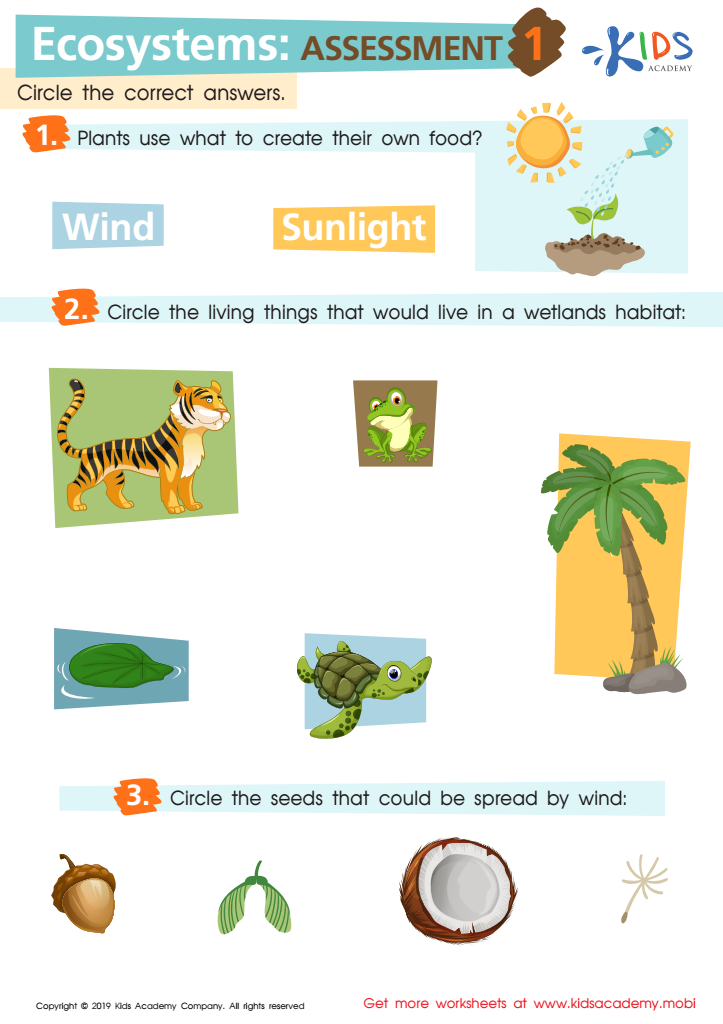
Ecosystems: Assessment 1 Worksheet
 Assign to My Students











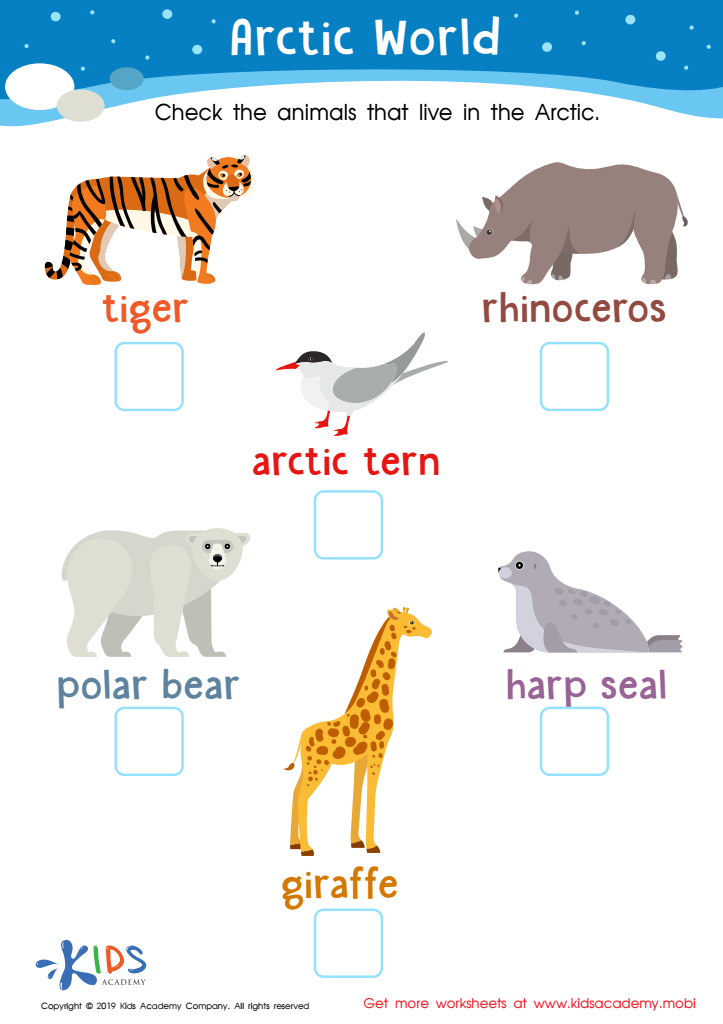
Arctic World Worksheet
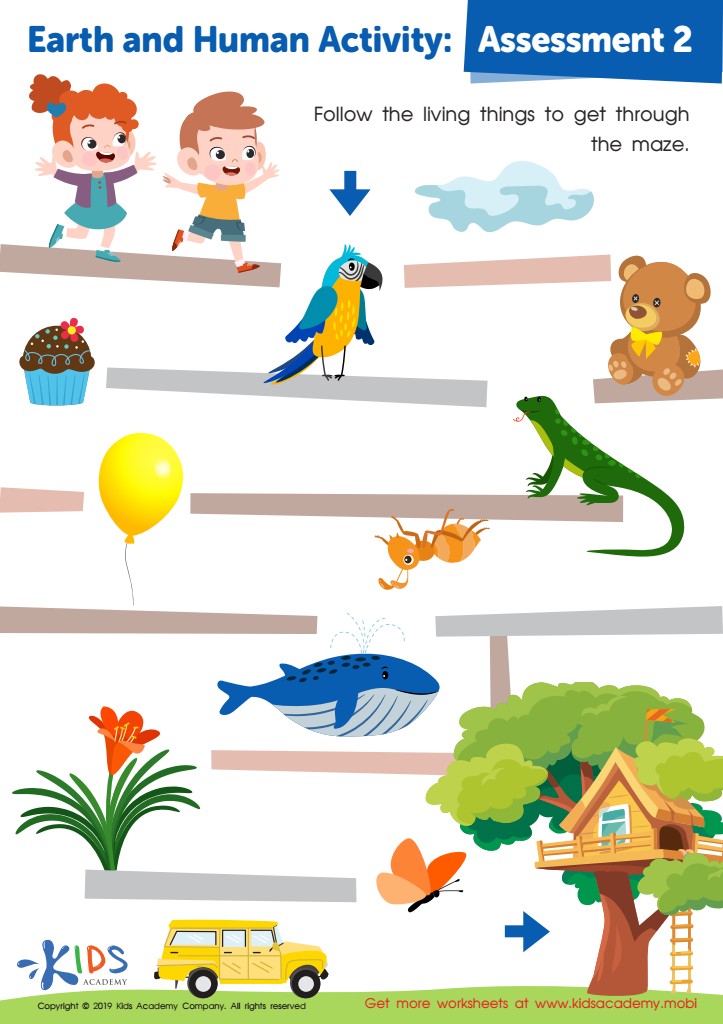
Earth and Human Activity: Assessment 2 Worksheet
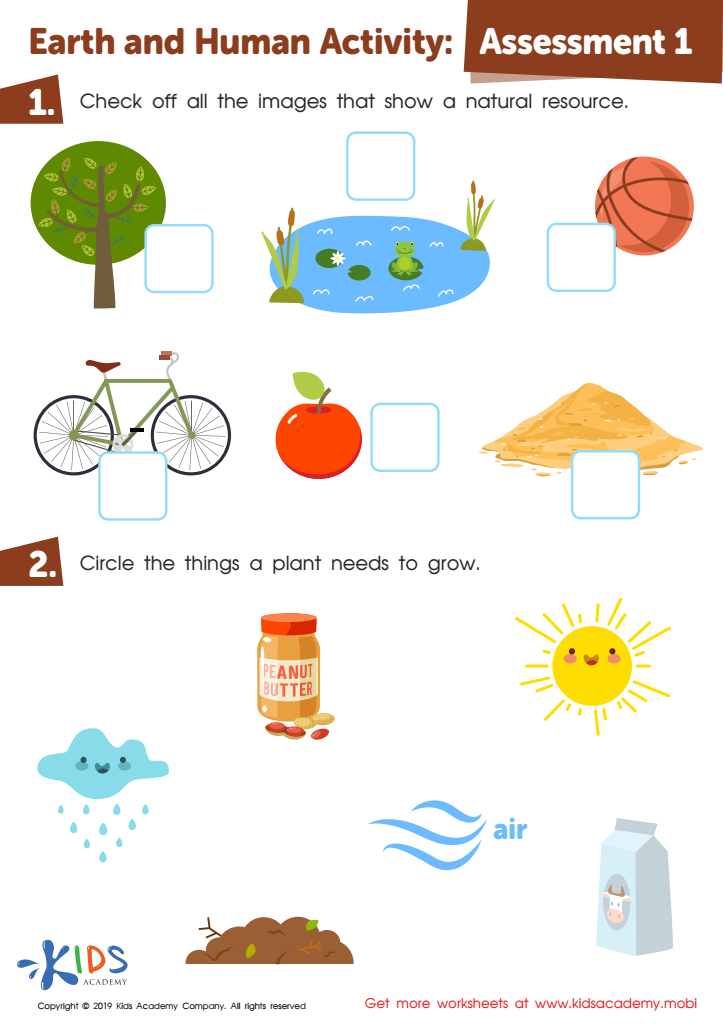
Earth and Human Activity: Assessment 1 Worksheet
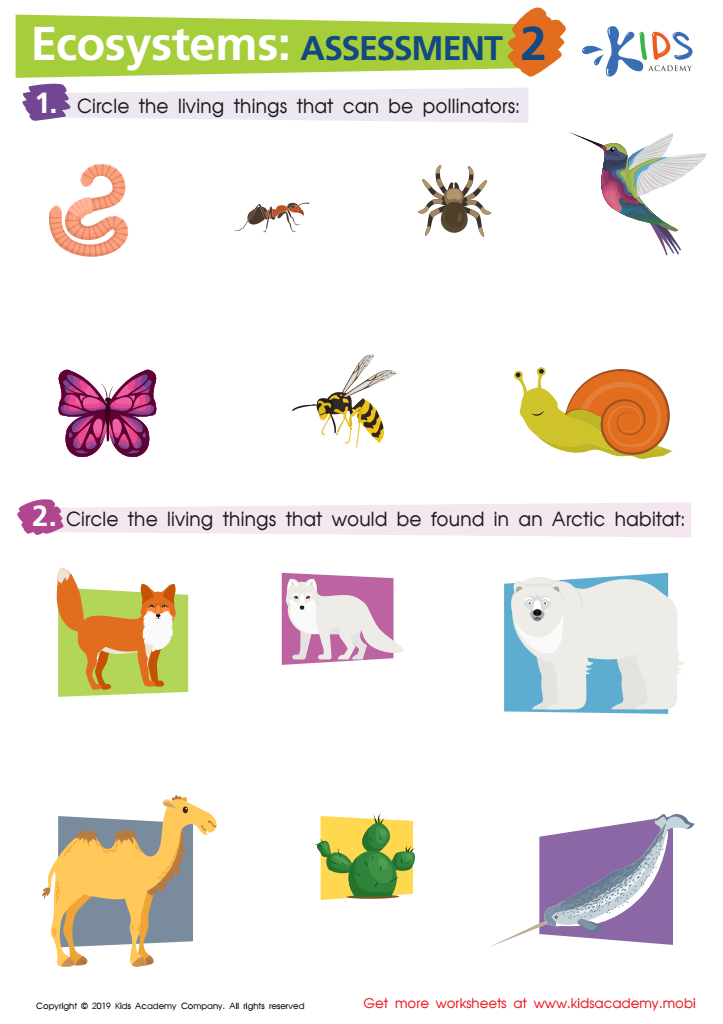
Ecosystems: Assessment 2 Worksheet
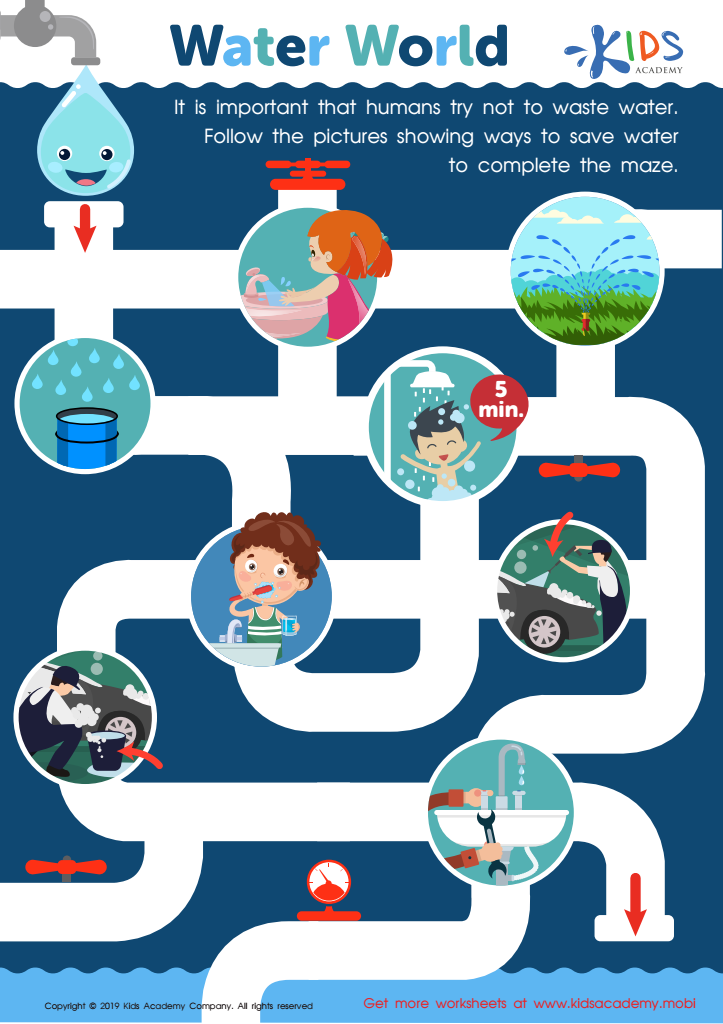
Water World Worksheet








Understanding ecosystems, including plants and animals, is crucial for children aged 6-9 as it forms the foundation for environmental awareness and responsibility. At this impressionable age, kids are naturally curious about the world around them, and introducing ecosystems can harness this curiosity into meaningful learning.
Firstly, knowledge of ecosystems fosters empathy and respect for all living things. When children learn how animals and plants coexist and depend on each other, they appreciate the intricate balance of nature. This awareness cultivates a sense of stewardship, encouraging future behaviors that support conservation and sustainability.
Secondly, studying ecosystems enhances critical thinking and observational skills. Children analyze patterns, make predictions, and observe relationships within nature, which can be applied to problem-solving in diverse academic subjects.
Lastly, integrating ecosystem studies into early education supports interdisciplinary learning. Lessons can incorporate science, geography, math, and even art, offering a well-rounded approach that stimulates cognitive development. Understanding ecosystems connects students to real-world issues, making their education relevant and grounded.
Overall, teaching children about ecosystems is an investment in their future, fostering informed, compassionate individuals who are likely to make positive contributions to their communities and the planet.








