Cursive Letters Worksheets for Ages 6-9
16 filtered results
-
From - To
Enhance your child's writing skills with our engaging Cursive Letters Worksheets, designed specifically for ages 6-9. These printable resources help young learners develop fluency in cursive handwriting while making learning enjoyable. Carefully crafted with colorful images and fun activities, these worksheets guide children in tracing, practicing, and mastering each cursive letter. Perfect for homeschooling or supplemental learning, our worksheets ensure that kids gain confidence in their writing abilities. Encourage creativity and improve fine motor skills as your child explores the world of cursive letters. Start their handwriting journey today and watch their skills flourish! Download your free worksheets now!
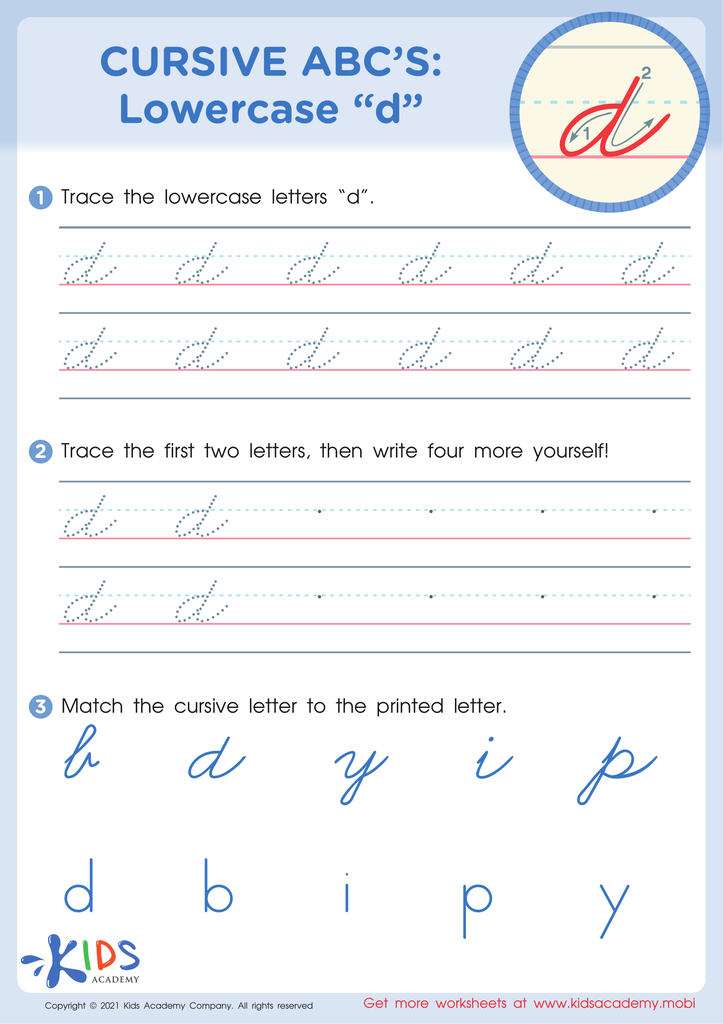
Cursive ABCs: Lowercase d
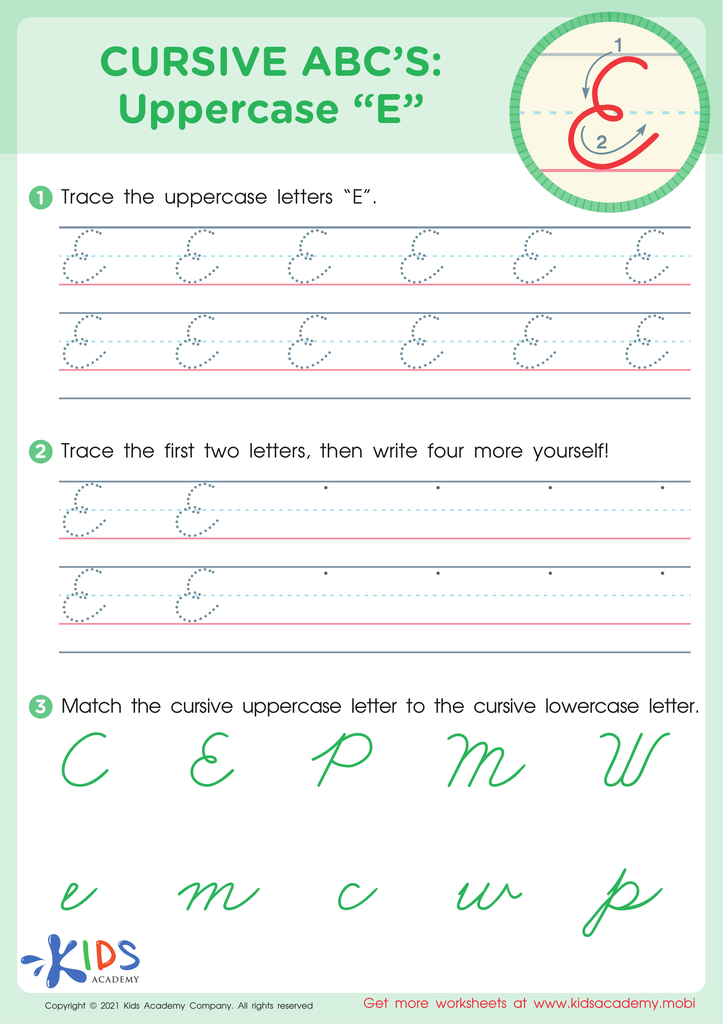
Cursive ABCs: Uppercase E
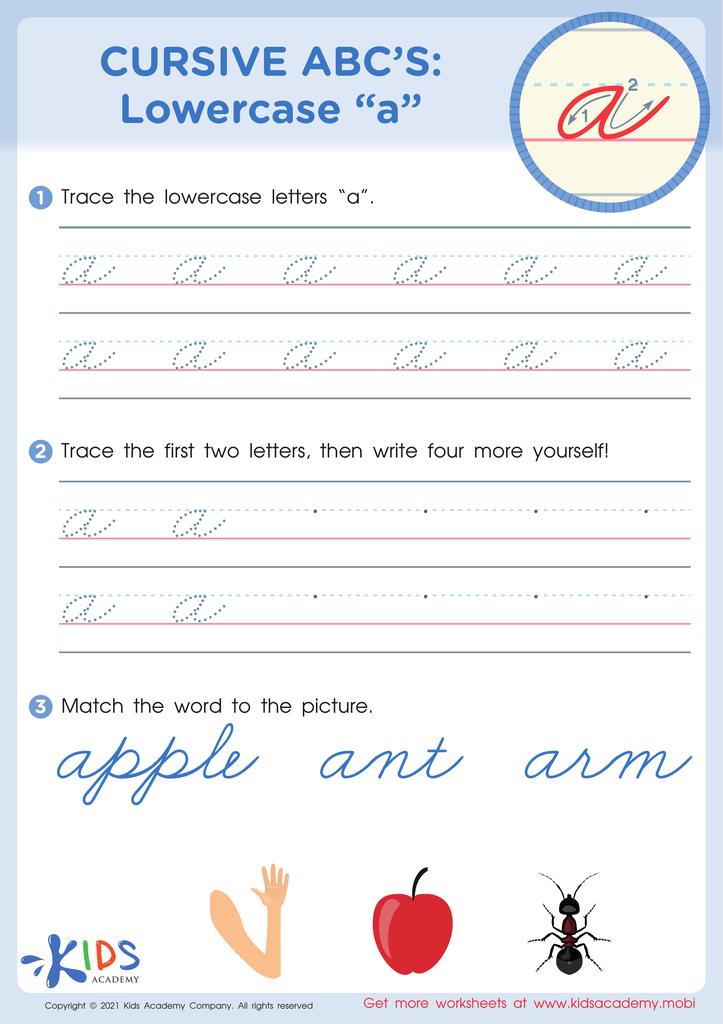
Cursive ABCs: Lowercase a
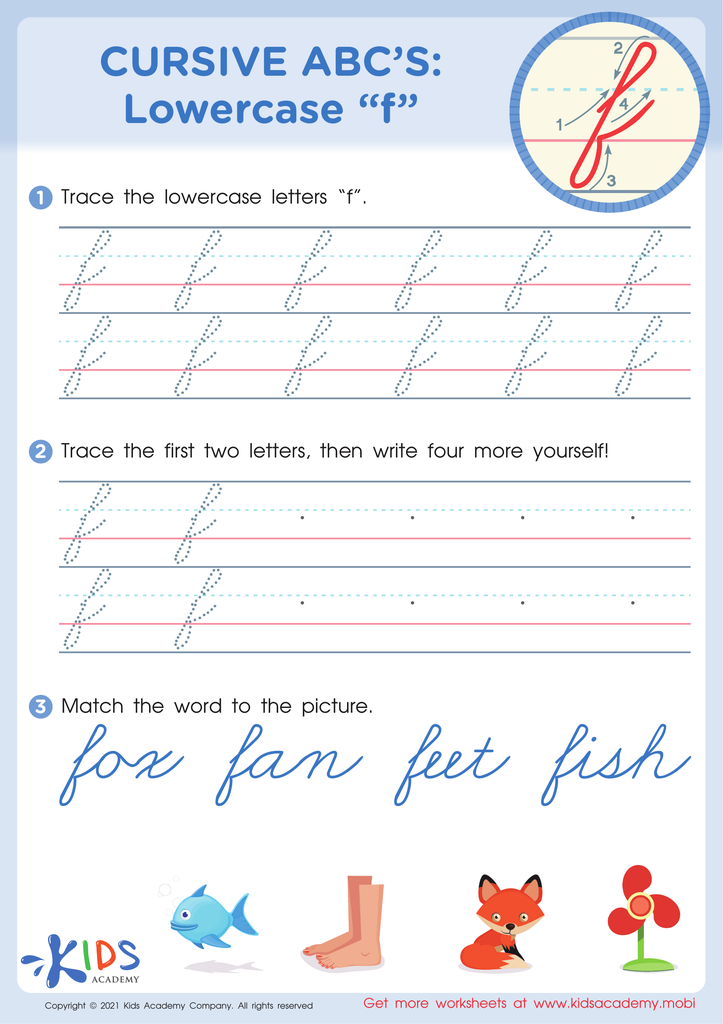
Cursive ABCs: Lowercase f
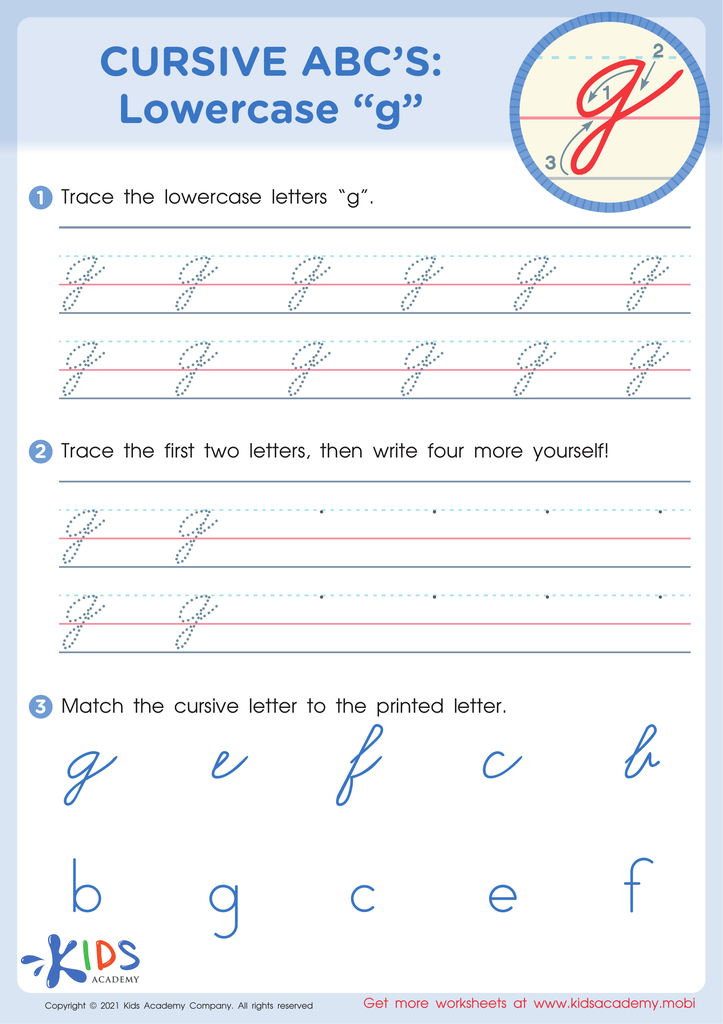
Cursive ABCs: Lowercase g
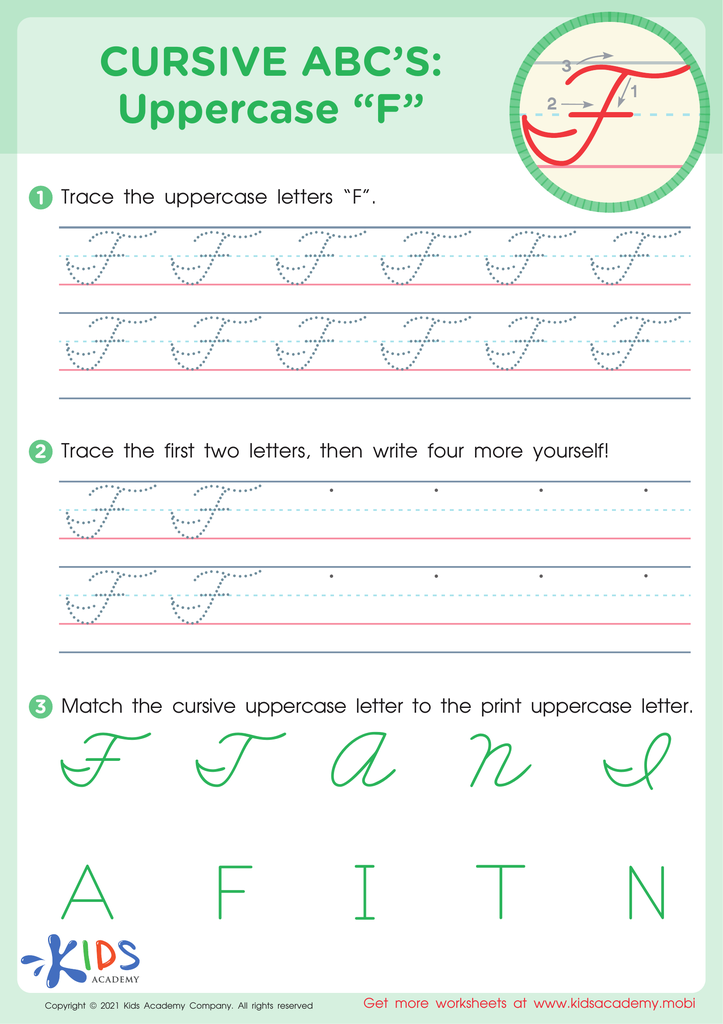
Cursive ABCs: Uppercase F
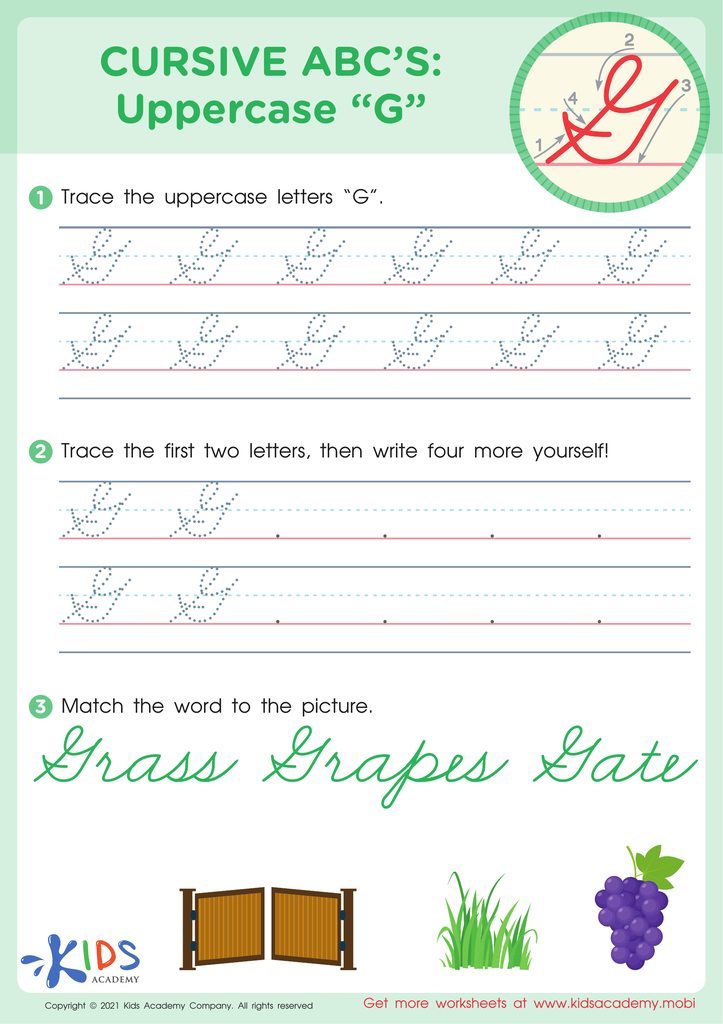
Cursive ABCs: Uppercase G
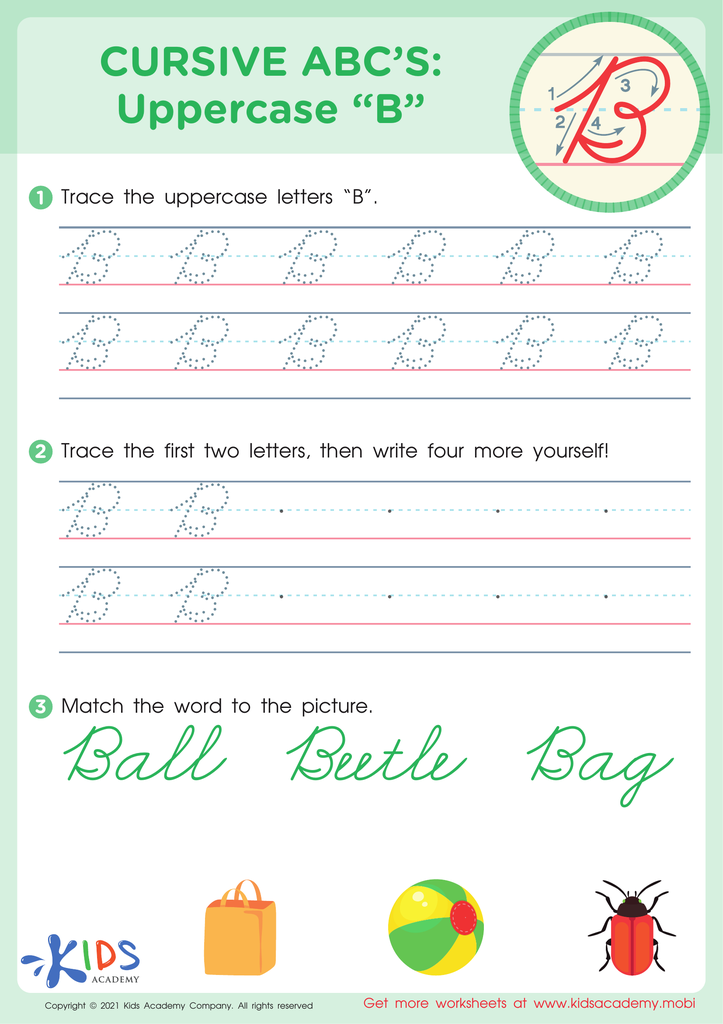
Cursive ABCs: Uppercase B
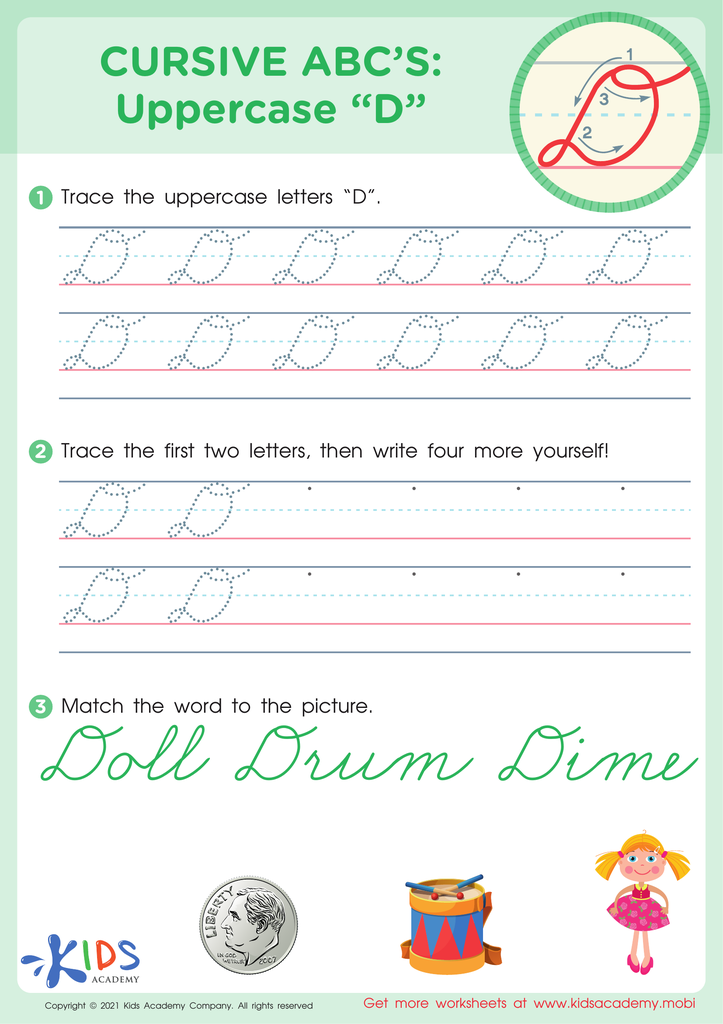
Cursive ABCs: Uppercase D
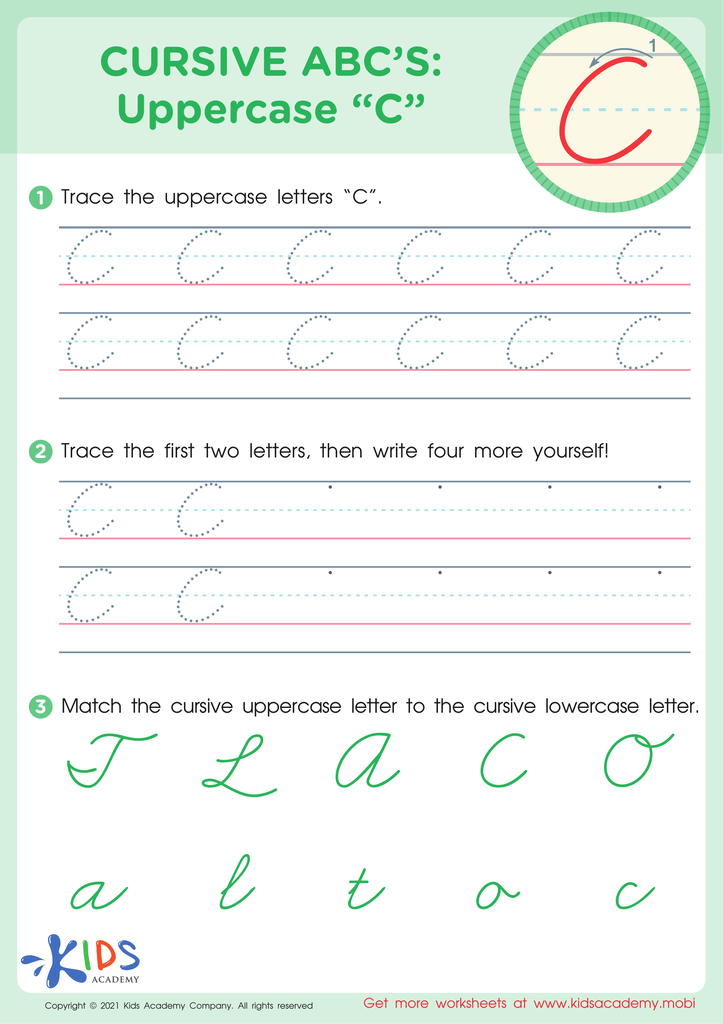
Cursive ABCs: Uppercase C
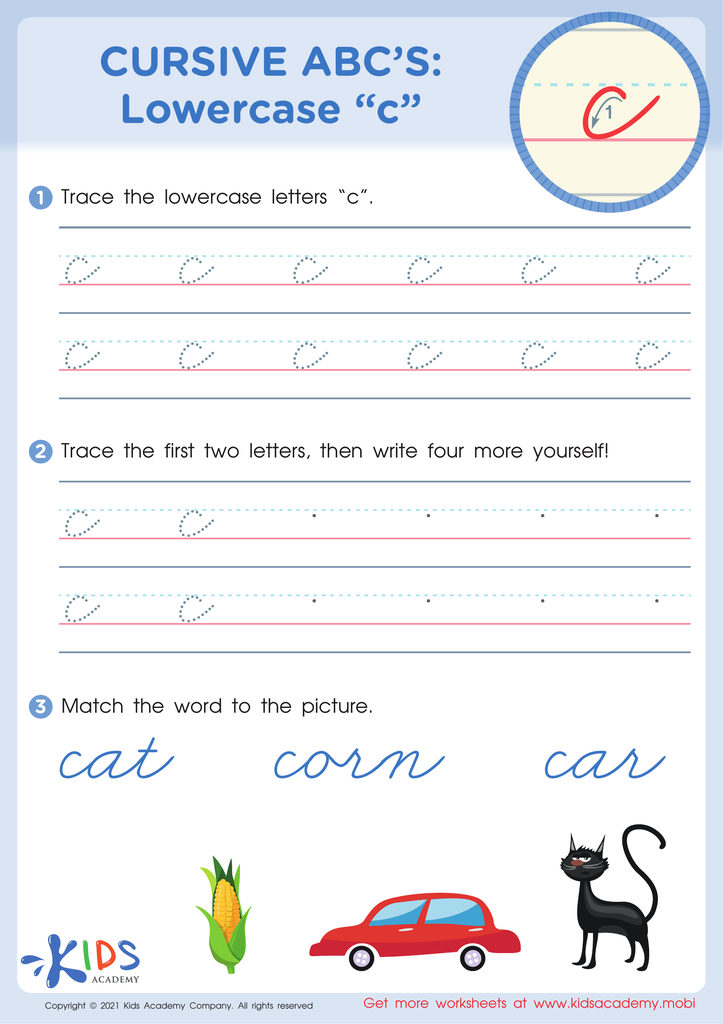
Cursive ABCs: Lowercase c
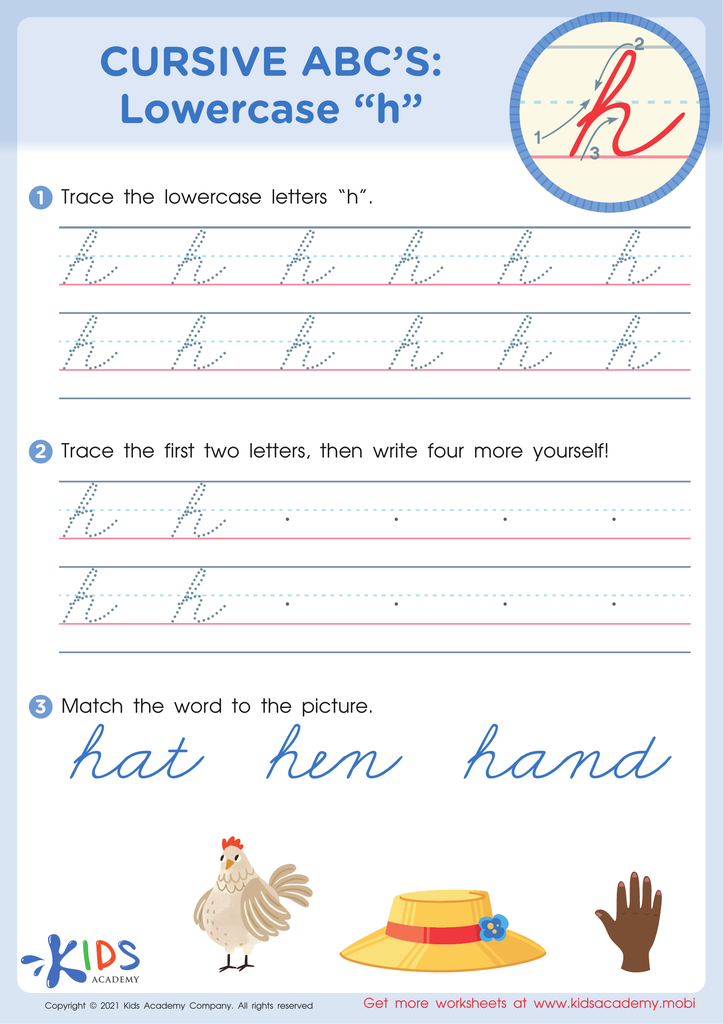
Cursive ABCs: Lowercase h
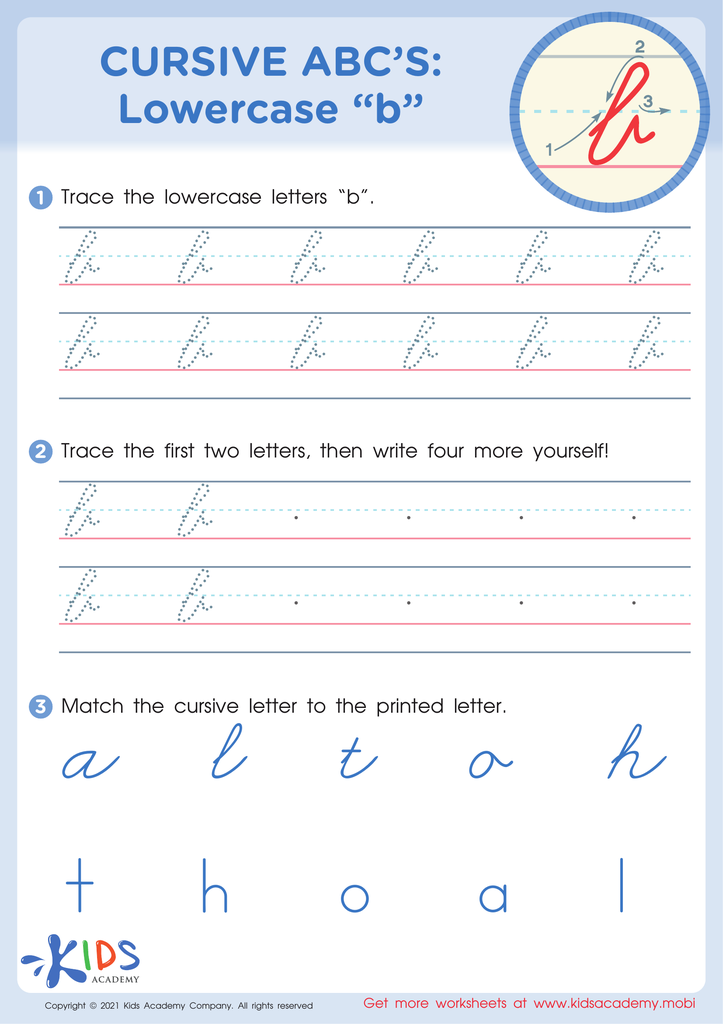
Cursive ABCs: Lowercase b
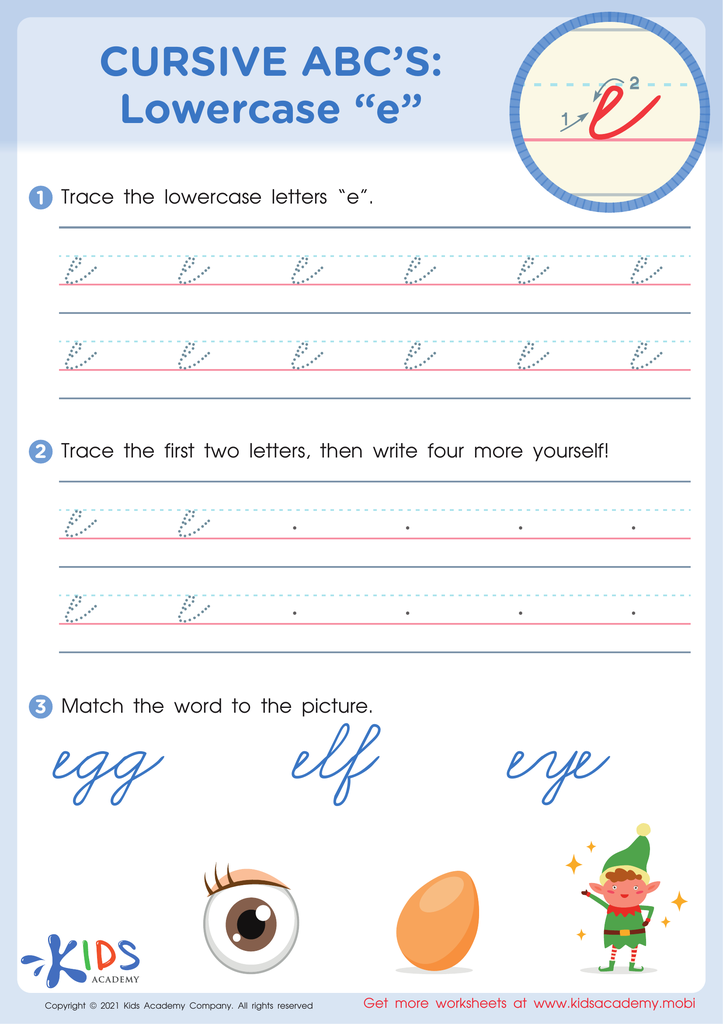
Cursive ABCs: Lowercase e
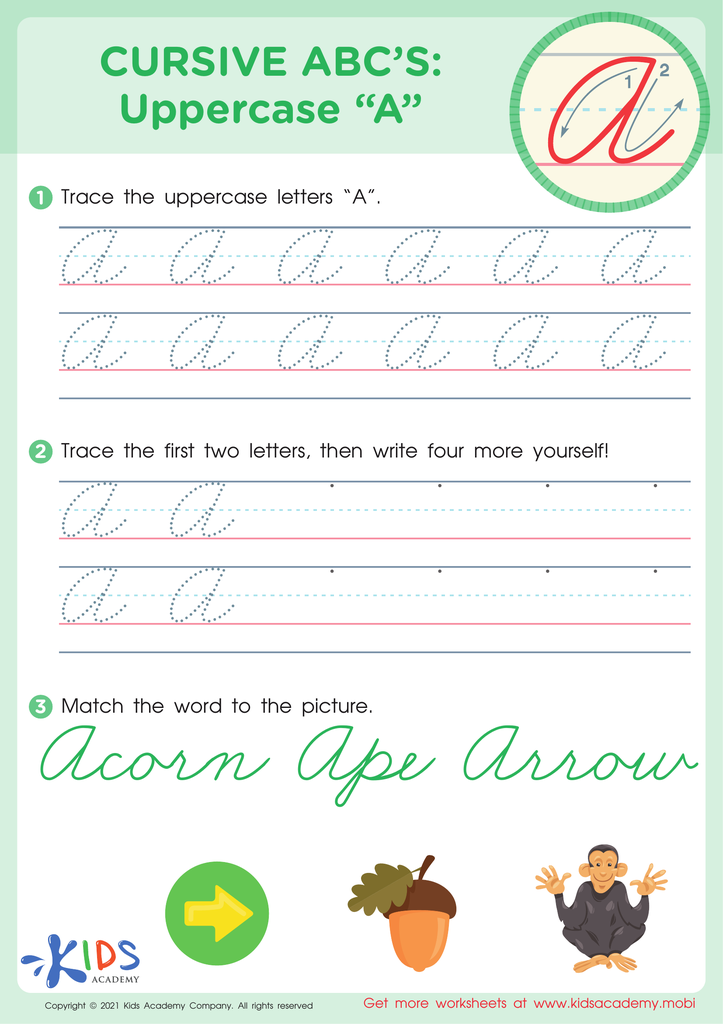
Cursive ABCs: Uppercase A
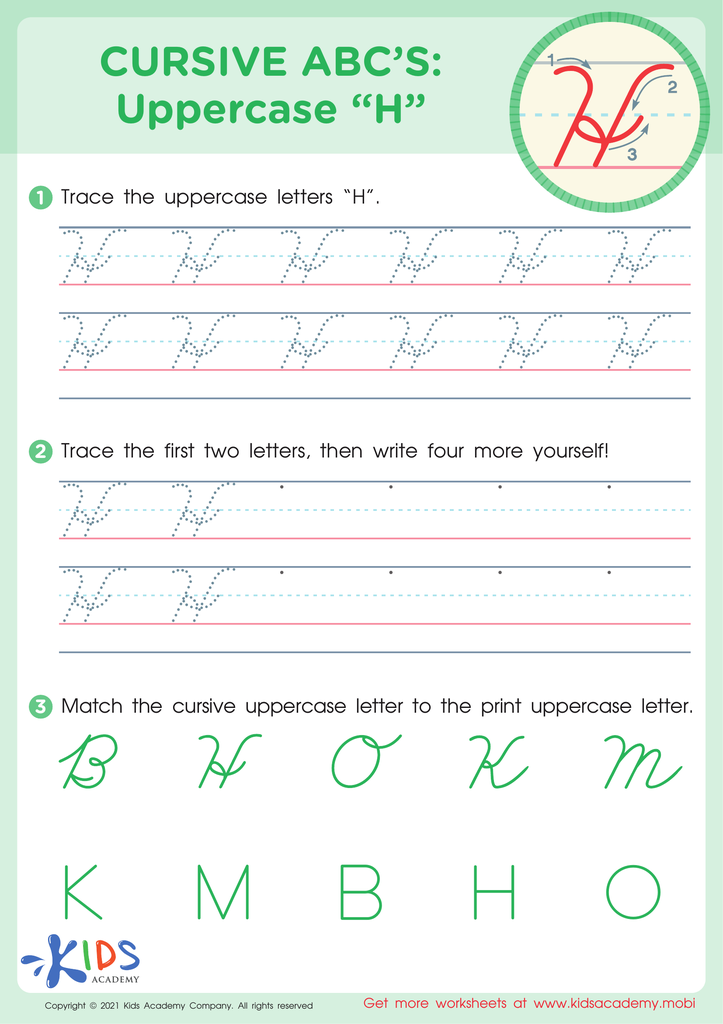
Cursive ABCs: Uppercase H







Cursive letters are essential for children aged 6-9 for several reasons. First, learning cursive supports fine motor skills development, enhancing hand-eye coordination and muscle memory. This engaged process helps children gain better control over writing instruments, fostering overall dexterity.
Secondly, cursive writing promotes cognitive development. It requires more brain involvement than printing, stimulating neural pathways that contribute to improved memory and comprehension. This connection encourages higher retention rates of information learned through writing.
Furthermore, cursive writing helps develop a personal style and identity in young learners. As children begin to create and perfect their distinct cursive handwriting, they express individuality, boosting their self-esteem and sense of achievement.
Additionally, cursive can improve reading fluency. Many historical documents and literature are penned in cursive, which older students will encounter; understanding cursive prepares children to engage with valuable texts that shape culture and knowledge.
Finally, cursive writing fosters focus and discipline. The slower, deliberate nature of writing cursively encourages mindfulness, interrupting distractions and nurturing patience in a fast-paced world.
Incorporating cursive writing into educational practices enriches children's literacy experiences and prepares them for various communicative opportunities. Thus, both parents and teachers ought to prioritize it.







